
Font size
 Worksheets
Blood
Total questions: 49
Worksheet time: 25mins
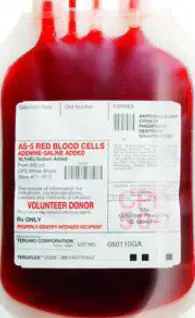
What is the function of erythrocytes (Red blood cells)?
Erythrocytes transport oxygen in the blood.
Erythrocytes produce antibodies to fight infections.
Erythrocytes help in blood clotting.
Erythrocytes regulate body temperature.
What is the role of thrombocytes (platelets) in blood?
Thrombocytes help in blood clotting.
Thrombocytes transport oxygen.
Thrombocytes fight infections.
Thrombocytes produce hormones.
What is the extracellular matrix of blood called?
Plasma
Serum
Hemoglobin
Leukocytes

Which of the following statements is true about freshly oxygenated blood?
It is dark blue
It is bright red
It is green
It is yellow
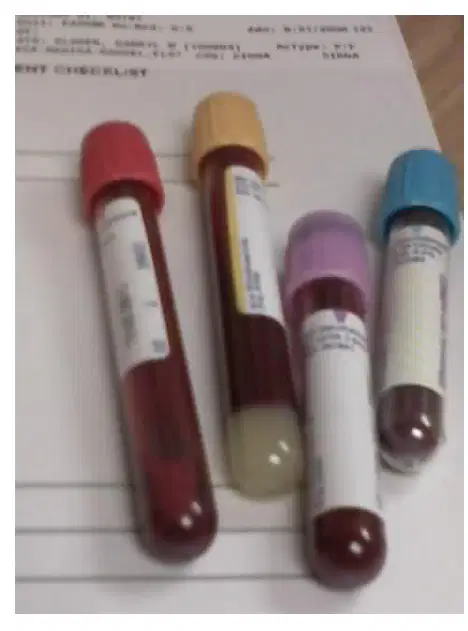
Deoxygenated blood is ________ red.
darker
lighter
bright
faint
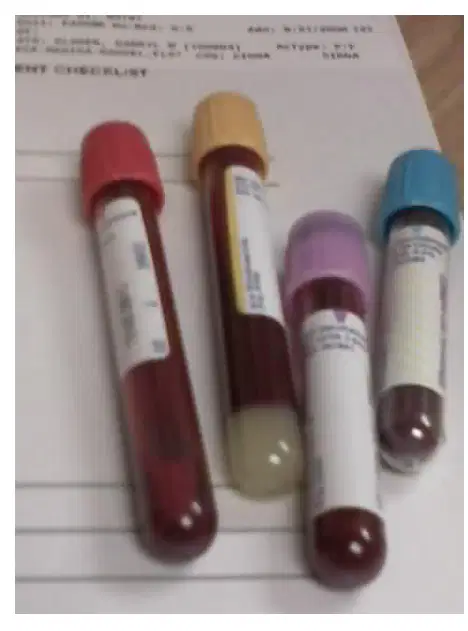
The color of blood is dependent on which of the following?
Platelets
Hemoglobin
Plasma
White blood cells

Fill in the blank: Blood is ________ (5x more than water).
viscous
transparent
alkaline
volatile
Fill in the blank: Blood is ________ to touch.
sticky
cold
rough
dry
Fill in the blank: The normal temperature of blood is about ________.
100.4F
98.6F
102.2F
96.8F
Fill in the blank: The pH of blood is about ________.
7.4
6.8
8.2
5.5
According to the characteristics of blood, what is the average amount of blood in males?
5-6 liters
3-4 liters
7-8 liters
2-3 liters
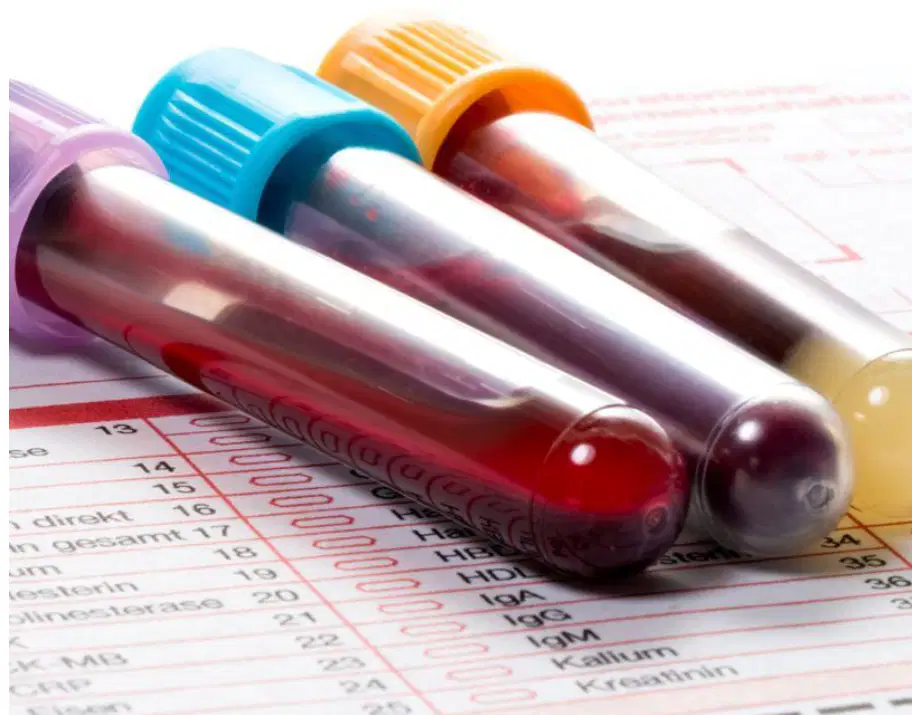
According to the characteristics of blood, what is the average amount of blood in females?
4-5 liters
2-3 liters
6-7 liters
8-9 liters
What is the primary component of blood plasma?
Plasma proteins
Water
Red blood cells
Platelets
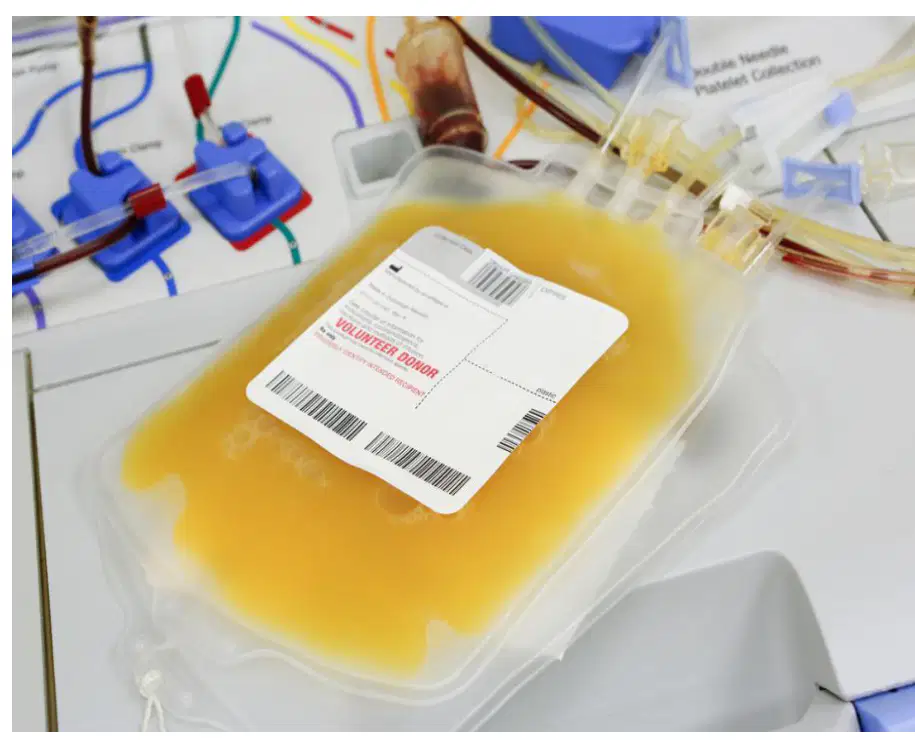
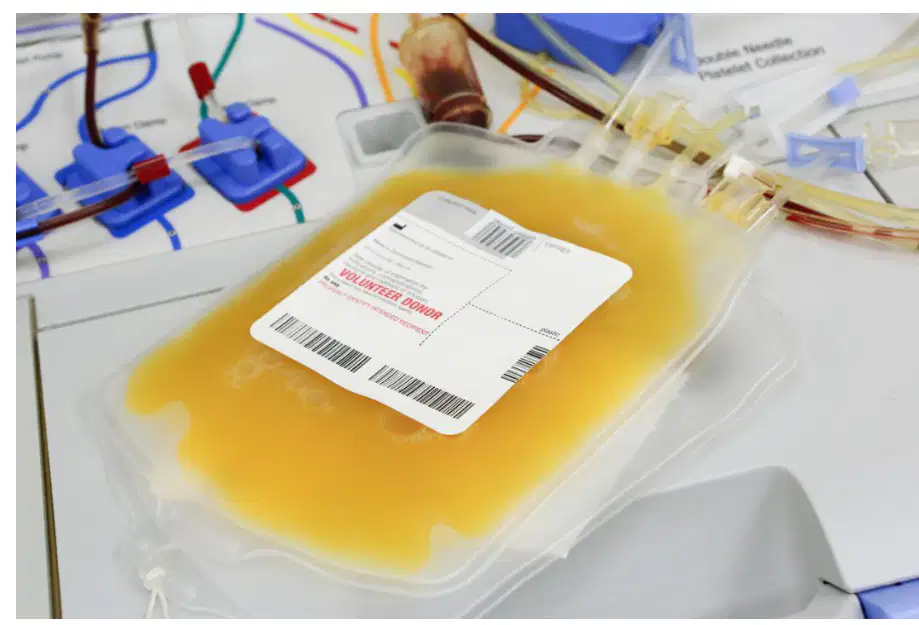
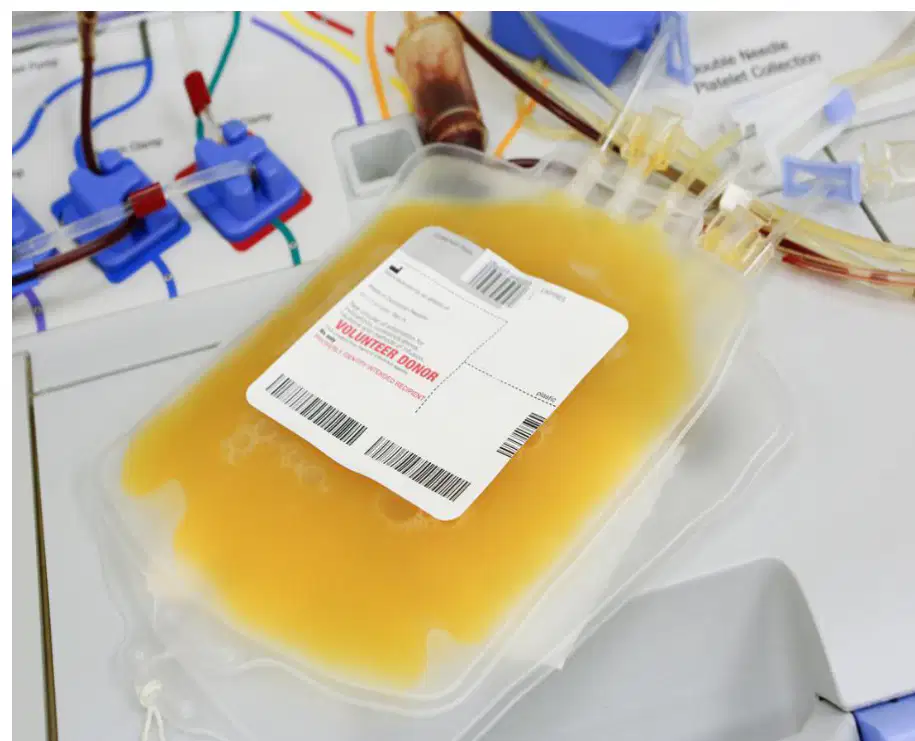
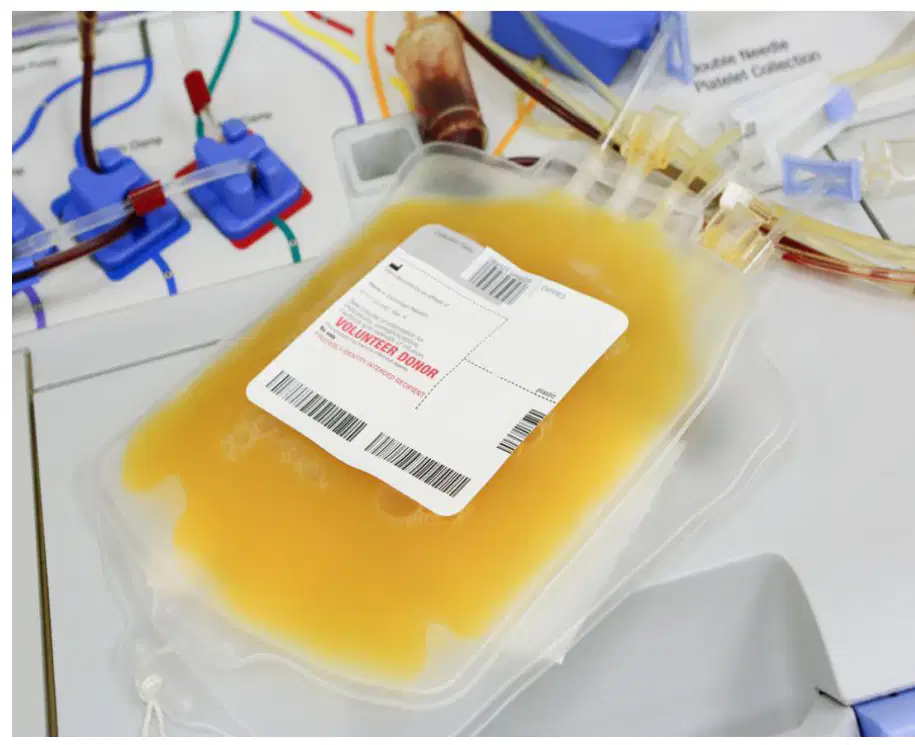
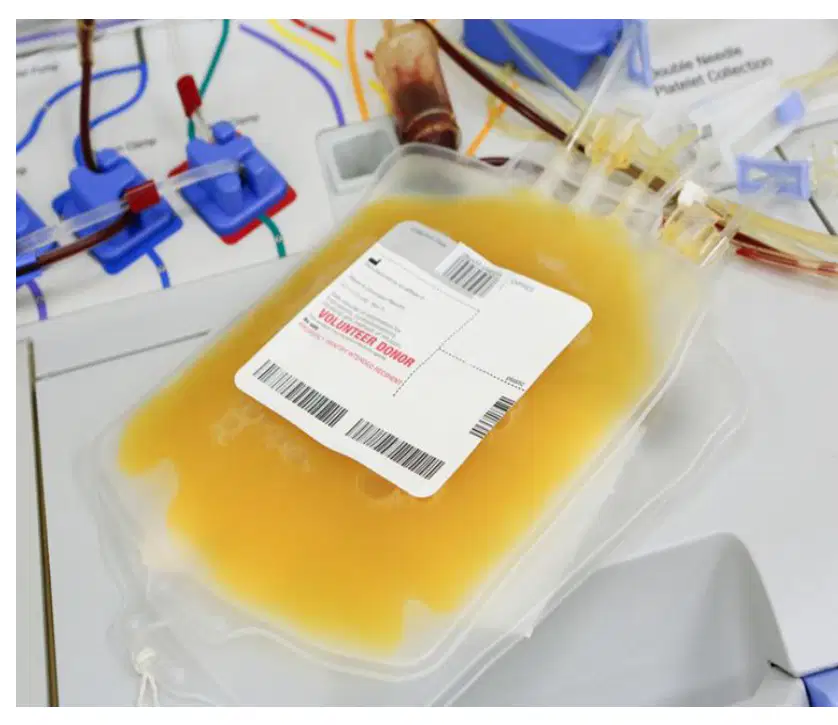
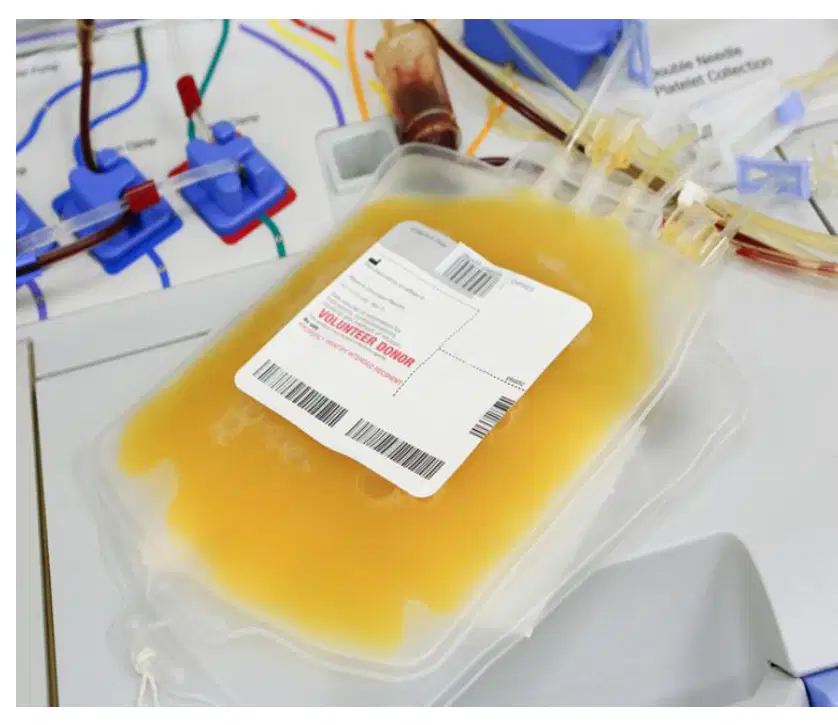
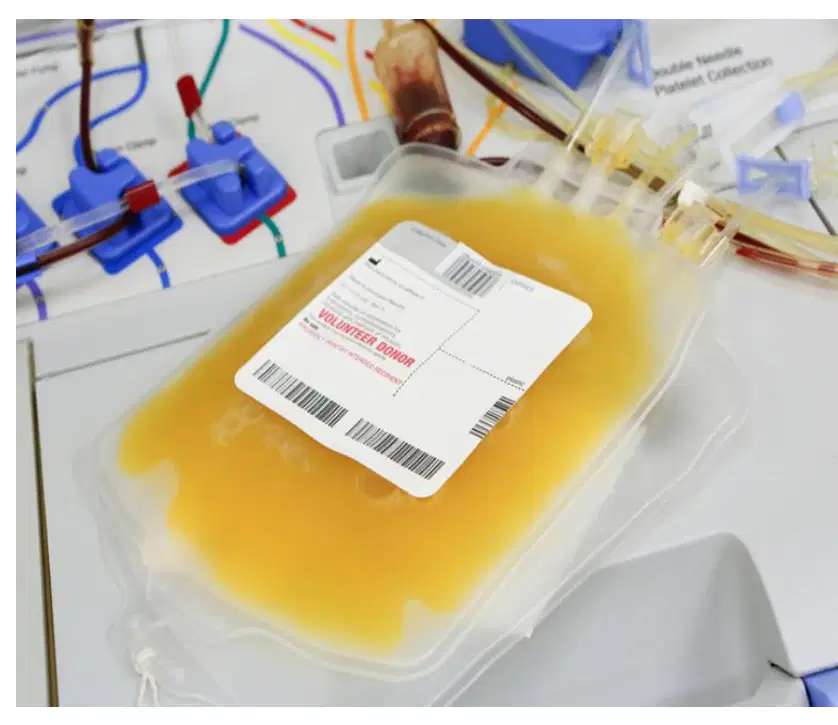
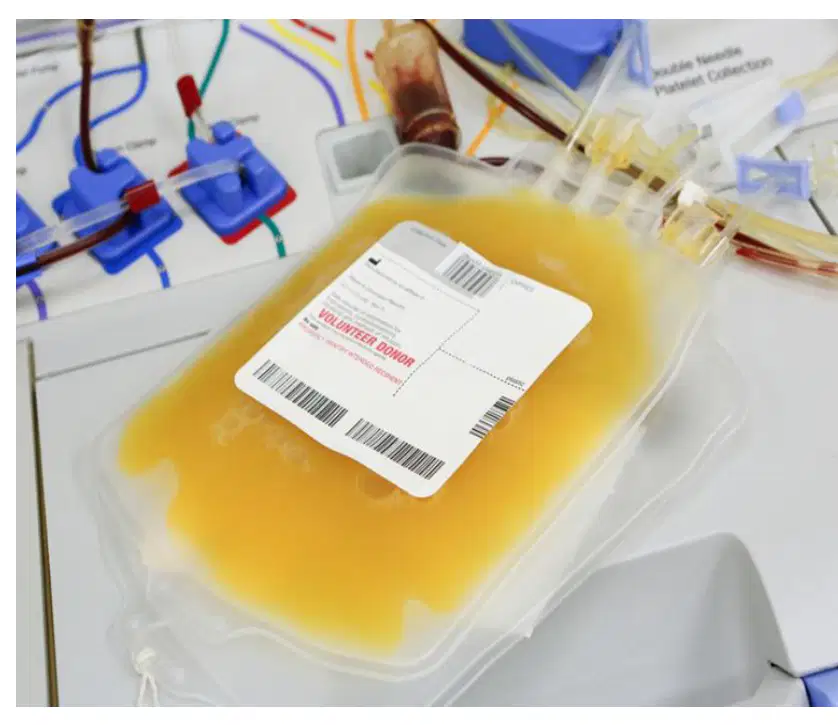
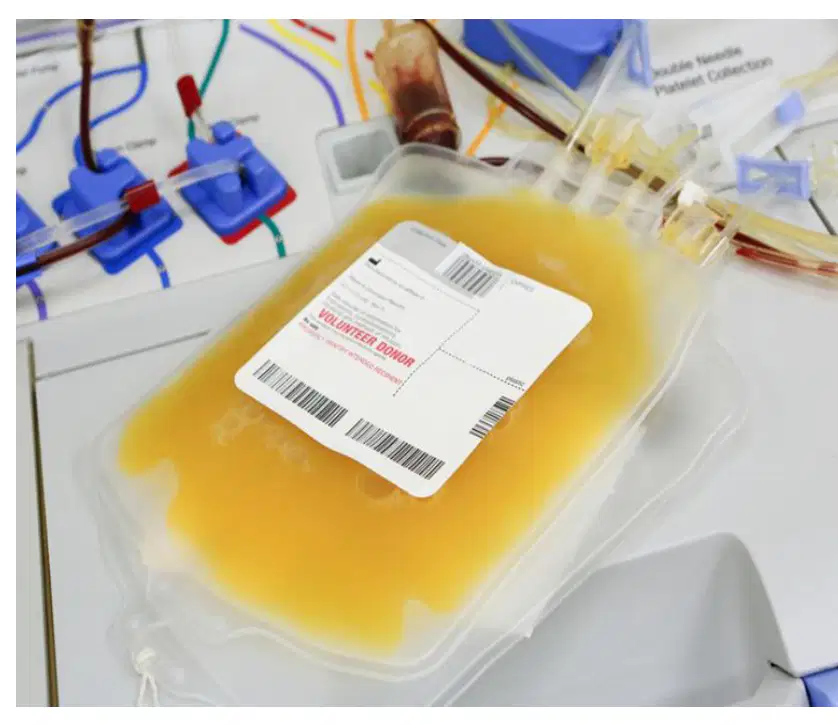
Refer to the image of the blood plasma bag. What color is blood plasma?
Straw colored
Red
Blue
Green
What percentage of blood plasma is made of plasma proteins?
7%
20%
50%
1%
What is the most abundant protein in blood plasma?
Hemoglobin
Albumin
Fibrinogen
Globulin
Where is albumin manufactured in the body?
Kidney
Heart
Liver
Lungs
Albumin plays a role in maintaining _______ pressure and water balance between blood and tissues.
osmotic
hydrostatic
atmospheric
pulmonary

What is the main function of globulins in blood plasma?
Involved with clotting
Most are involved with the immune system
Provide energy
Transport oxygen
What is fibrinogen involved with in blood plasma?
Immune response
Clotting
Oxygen transport
Nutrient absorption
Fill in the blank: Other plasma solutes make up ___% of plasma.
1%
10%
0.1%
5%
Which of the following are electrolytes found in blood plasma?
Sodium, potassium, calcium
Iron, zinc, copper
Glucose, fructose, sucrose
Vitamin C, vitamin D, vitamin B12
Which of the following gases is found dissolved in blood plasma?
Oxygen
Nitrogen
Carbon dioxide
All of the above
Blood plasma contains various nutrients. Which of the following is NOT a nutrient found in blood plasma?
A) Vitamins
B) Lipids
C) Glucose
D) Calcium
Fill in the blank: Blood plasma contains dissolved gases such as ________, carbon dioxide, and nitrogen.
oxygen
hydrogen
argon
helium
Blood plasma contains amino acids.
True
False
Blood plasma is the liquid component of blood that transports dissolved gases and nutrients.
True
False
Fill in the blank: The nutrients found in blood plasma include vitamins, lipids, glucose, and ________.
amino acids
starch
cellulose
chlorophyll
Fill in the blank: The lifespan of formed elements in blood is very _____
brief
long
uncertain
variable
Fill in the blank: When you donate blood, plasma is replaced within _____ hours, but it takes 4-6 weeks to replace blood cells.
24
2
48
72
The body must form new blood cells and platelets quickly and continuously.
True
False
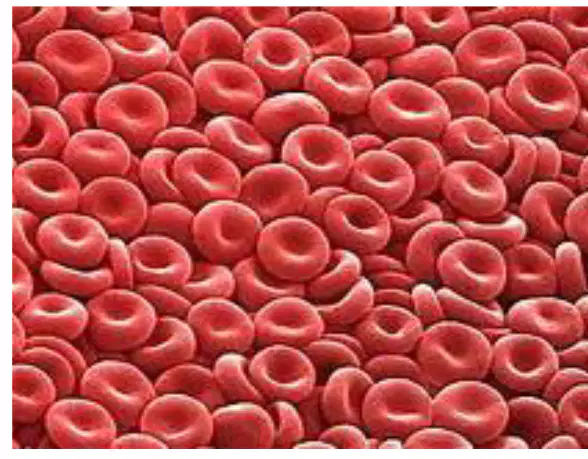
What is the most common formed element in blood?
Leukocytes
Platelets
Erythrocytes
Plasma

How many erythrocytes are present per microliter of blood in males?
About 4.8 million
About 5.4 million
About 6.2 million
About 3.5 million
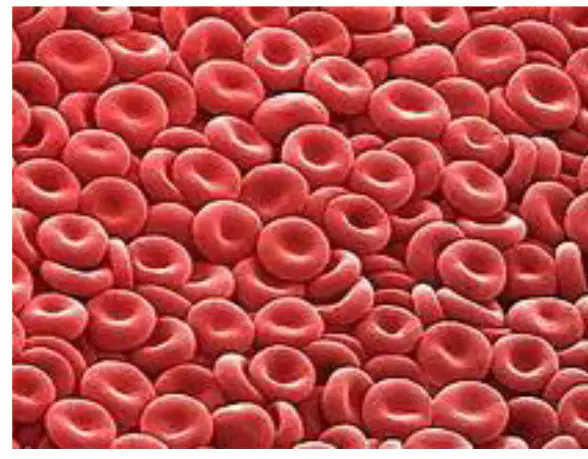
How many erythrocytes are present per microliter of blood in females?
About 4.8 million
About 5.4 million
About 6.2 million
About 3.5 million
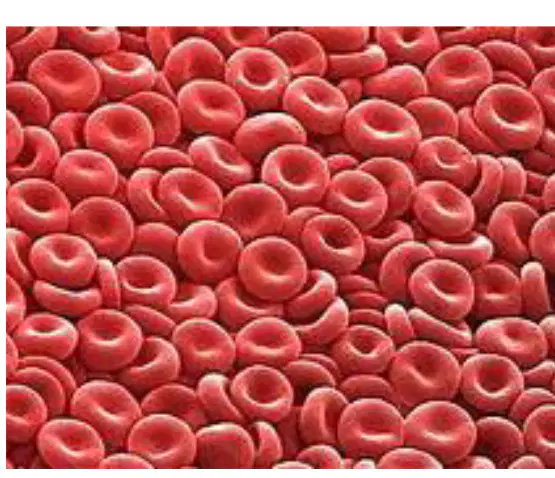
What is the primary function of erythrocytes?
To fight infections
To pick up inhaled oxygen from the lungs and transport it to the body's tissues
To produce hormones
To digest food
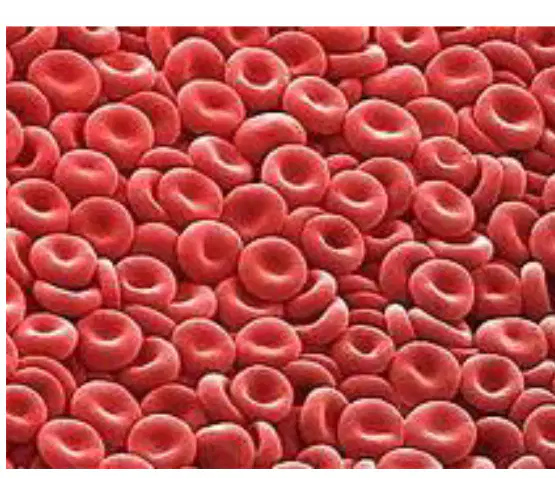
Erythrocytes also pick up some ________ waste at the tissues and transport it to the lungs for exhalation.
carbon dioxide
oxygen
nitrogen
glucose
What does hematocrit measure in a blood sample?
The percentage of erythrocytes in a blood sample
The concentration of platelets in a blood sample
The amount of plasma proteins in a blood sample
The level of white blood cells in a blood sample
What is the normal hematocrit percentage range for males?
37-47%
42-52%
30-40%
50-60%
What is the normal hematocrit percentage range for females?
42-52%
37-47%
30-40%
50-60%
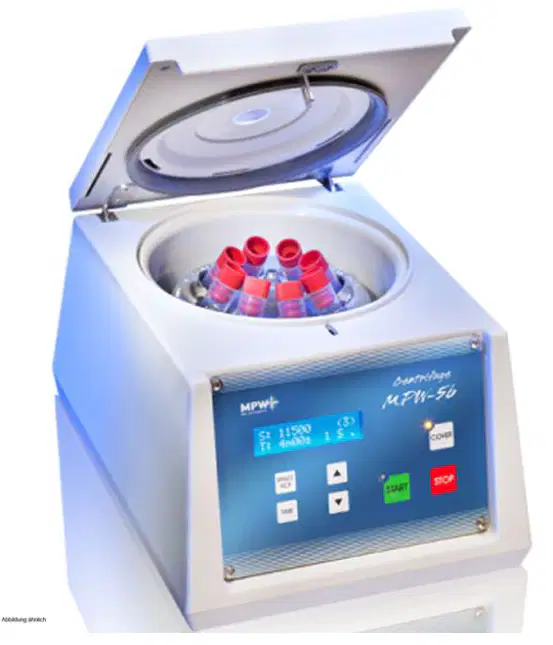
Hematocrit is performed by spinning the blood sample in a ________.
centrifuge
microscope
incubator
spectrophotometer
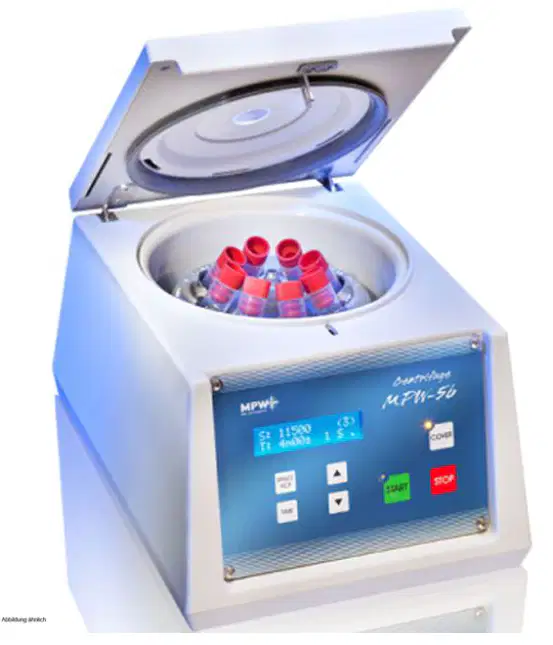
In the hematocrit process, which elements separate from the lighter, liquid plasma?
Heavier elements
Lighter elements
Gaseous elements
Soluble vitamins
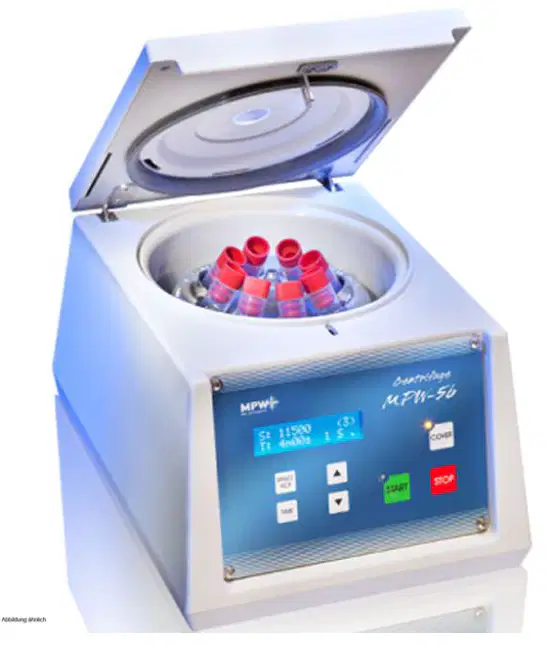
During hematocrit, erythrocytes settle at the ________.
bottom
top
middle
surface
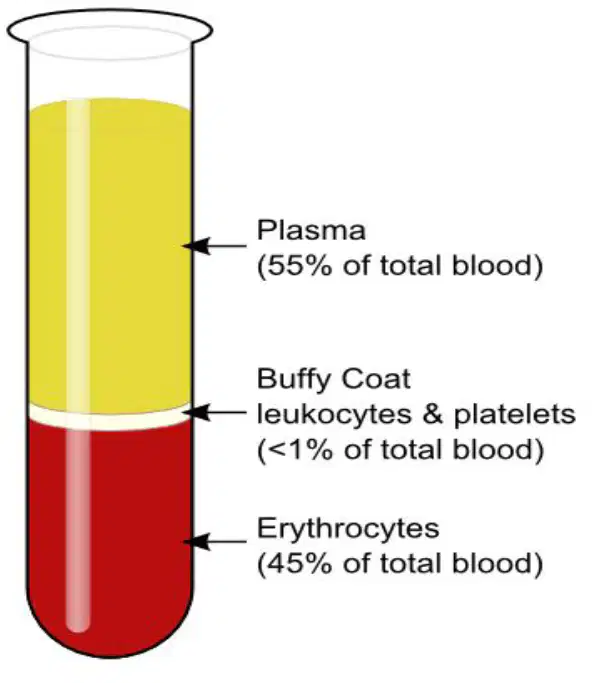
What is the volume of erythrocytes after centrifugation also called?
Plasma
Buffy Coat
Packed Cell Volume (PCV)
Serum
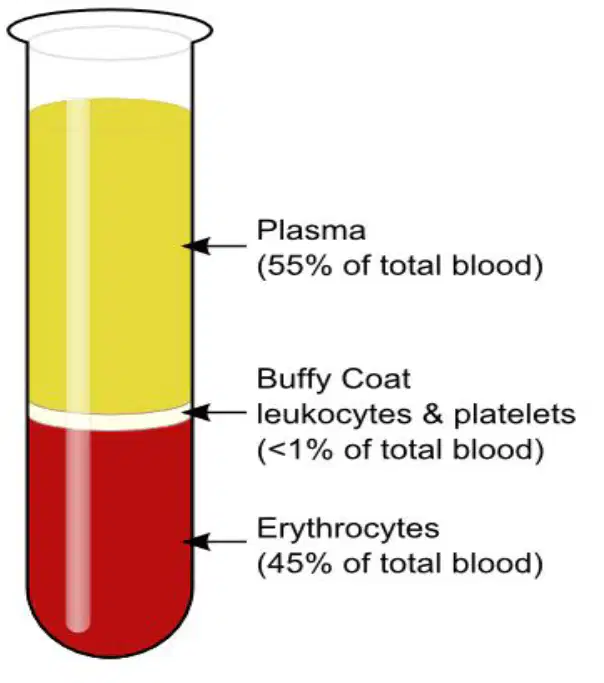
Match the following blood components with their approximate percentage of total blood after centrifugation:
Plasma
55%
Buffy Coat
<1%
Erythrocytes
45%
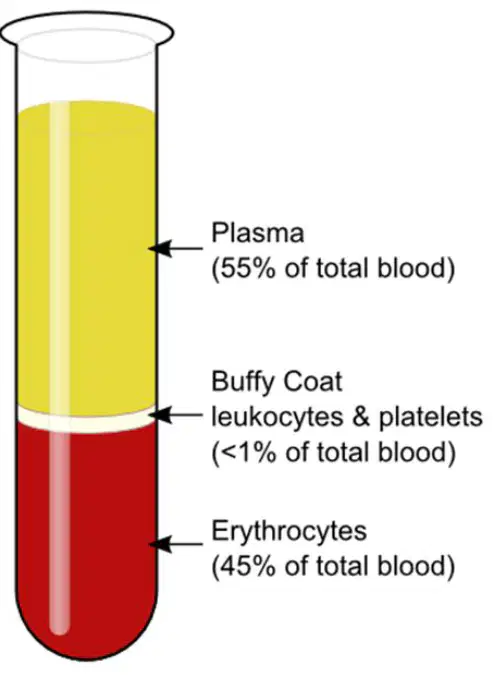
The buffy coat in a centrifuged blood sample contains ________ and ________.
leukocytes; platelets
erythrocytes; plasma
plasma; antibodies
erythrocytes; leukocytes
What is the function of leukocytes (White Blood Cells)?
Transport oxygen
Protect the body against invading microorganisms and body cells with mutated DNA, and clean up debris
Carry nutrients
Produce hormones
What is the normal value of leukocytes per microliter of blood?
1,000-3,000
4,000-11,000
12,000-15,000
500-1,000
Fill in the blank: The life span of leukocytes ranges from ______ to ______.
few days to few hours
few years to few months
few weeks to few days
few months to few weeks
Match the following white blood cells to their functions:
Neutrophils
Engulf bacteria and cellular debris
Basophils
Hypersensitivity, release histamine
Eosinophils
Parasitic infections, allergic response
Lymphocytes
Produce antibodies, regulate immune response
Monocytes
Engulf cellular debris, antigen processing

