
Font size
 Worksheets
The Muscular System: Overview
Total questions: 43
Worksheet time: 22mins
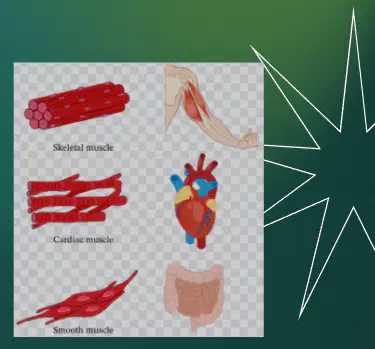
There are three types of muscle tissue (skeletal muscle, cardiac muscle, and smooth muscle), which characteristics are true for skeletal muscle? Select all that apply.
Voluntary control and striated appearance
Located in the walls of hollow organs
Forms the myocardium of the heart
Attached to bones via tendons
Which statement best describes a primary function of the muscular system?
It regulates hormone levels throughout the body.
It enables movement and supports vital bodily functions.
It stores minerals such as calcium as its main role.
It filters waste products from the bloodstream.
Select all roles the muscular system is responsible for.
Maintaining posture
Generating heat
Protecting vital organs
Producing red blood cells
Which claim about the muscular system’s composition and interactions is accurate?
It consists of fewer than 100 muscles that function independently of other systems.
It has over 600 muscles that work with the skeletal system and internal organs.
It is made exclusively of cardiac muscle that operates without skeletal involvement.
It contains exactly 300 muscles that do not interact with other organs.
Which term is correctly matched with its definition in the context of muscle characteristics?
Excitability: ability to contract and become short and thick
Contractibility: ability to respond to a stimulus
Excitability: also called irritability; ability to respond to a stimulus
Contractibility: capacity to sense external chemicals without responding
Select all statements that accurately describe muscle contractibility.
It is the ability to contract.
During contraction, the muscle becomes short and thick.
It is also called irritability.
It is the ability to respond to a stimulus.
A lab report notes that a muscle fiber showed irritability when exposed to a mild electrical input and later became short and thick. Which characteristic corresponds to the initial observation, and which to the later change?
Initial: contractibility; Later: excitability
Initial: excitability; Later: contractibility
Initial: elasticity; Later: excitability
Initial: conductivity; Later: contractibility
Which feature distinguishes elasticity from extensibility in muscle tissue?
Elasticity refers to a muscle returning to its original shape after stretch, whereas extensibility refers to the ability to be stretched.
Elasticity is the ability to be stretched, whereas extensibility is the ability to recoil after contraction.
Elasticity increases muscle strength, whereas extensibility decreases muscle flexibility.
Elasticity occurs only in tendons, whereas extensibility occurs only in muscles.
Select all statements that accurately describe muscle behavior based on the defined characteristics.
A muscle that lengthens during stretching demonstrates extensibility.
A muscle that recoils to its pre-stretch form demonstrates elasticity.
A muscle that produces tension without changing length demonstrates extensibility.
A muscle that remains elongated after stretching demonstrates high elasticity.
Which pairing correctly matches the muscle characteristic with its concise definition?
Extensibility—ability to be stretched; Elasticity—returns to original shape.
Extensibility—returns to original shape; Elasticity—ability to be stretched.
Extensibility—ability to contract; Elasticity—ability to lengthen under load.
Extensibility—resistance to fatigue; Elasticity—capacity to generate force.
Which explanation best connects the nervous system to dynamic body functions through muscles?
The nervous system sends signals that cause muscles to contract, producing movement and supporting ongoing functions.
Muscles contract spontaneously, and the nervous system later adjusts posture to match.
Dynamic functions occur only in organs without muscle tissue, so the nervous system bypasses muscles.
Nervous signals reduce muscle activity to conserve energy, preventing movement.
Which list correctly names the three main types of muscle found in the human body?
Cardiac, smooth, skeletal
Cardiac, tendinous, skeletal
Smooth, ligament, skeletal
Cardiac, smooth, connective
Where is cardiac muscle located, and what is its control type?
Located in limb muscles; under voluntary control
Located in heart walls; under involuntary control
Located in digestive tract; under voluntary control
Located in skin; under involuntary control
Select all statements that describe functions of cardiac muscle.
Generates continuous rhythmic contractions to maintain blood circulation
Contracts voluntarily to move bones at joints
Works without conscious control
Primarily lines hollow organs like the intestines
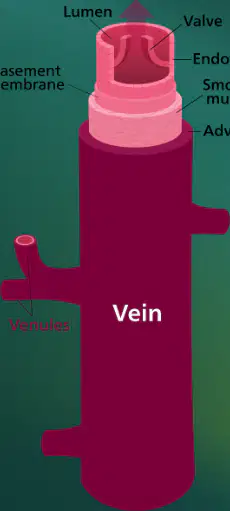
Which locations are typical for smooth muscle? Select all that apply.
Walls of blood vessels
Digestive tract
Biceps brachii
Eye
Smooth muscle facilitates digestive processes without conscious control. Which example most directly reflects this function?
Peristaltic waves moving food through the intestines
Deltoid contraction to raise the arm
Voluntary blinking during conversation
Maintaining balance through calf muscle activation
Skeletal muscle is involved in movement, production of heat, posture and protection of internal organs. Which is a primary characteristic of skeletal muscle control?
It is involuntary and automatic.
It is voluntary and consciously controlled.
It contracts only during sleep.
It functions independently of the nervous system.
Which statement best describes a tendon?
A tough sheet-like membrane that covers and protects tissue
A cord of strong connective tissue that attaches muscle to bone
A band of elastic tissue that connects bone to bone
A fluid-filled sac that reduces friction between muscle layers
Which structure is characterized as a tough, sheet-like membrane that covers and protects tissue?
Ligament
Fascia
Periosteum
Tendon
In the context of muscle attachment to bone, what is the origin of a muscle?
The end that does not move
The end that moves when the muscle contracts
The midpoint where the muscle belly lies
The region where tendons become fascia
Which statement correctly defines muscle insertion?
The fixed end of the muscle at a stationary bone
The end that moves when the muscle contracts
The proximal end that anchors the tendon to fascia
The segment that contains the highest concentration of myofibrils
Which statement best defines muscle tone in healthy skeletal muscle?
A complete relaxation of the muscle at rest
A state of partial contraction maintained by the muscle
An involuntary spasm causing joint bending
A loss of muscle size due to disuse
A patient has been immobilized with a cast for several weeks. Which outcomes are most consistent with atrophy? Select all that apply.
Muscles shrink in size over time
Muscle strength decreases if not used for a long period
Severe tightening of a flexor muscle occurs
Joint bending results from muscle shortening
Which scenario most accurately illustrates a contracture?
Gradual reduction in muscle circumference after prolonged bed rest
Persistent partial activation of muscle fibers while awake
Severe tightening of a flexor muscle leading to bending of the associated joint
Sudden cramp from dehydration that resolves with stretching
Which action best represents abduction of the arm?
Bringing the arm back to the torso after a lateral raise
Lifting the arm sideways away from the body’s centerline
Rotating the forearm so the palm faces downward
Bending the elbow to bring the hand toward the shoulder
Identify the correct description of adduction at the hip based on the material:
Swinging the leg outward away from the body’s center
Returning the leg from an outward position back toward the midline
Flexing the hip to lift the knee straight forward
Rotating the leg so the toes point inward without changing limb position
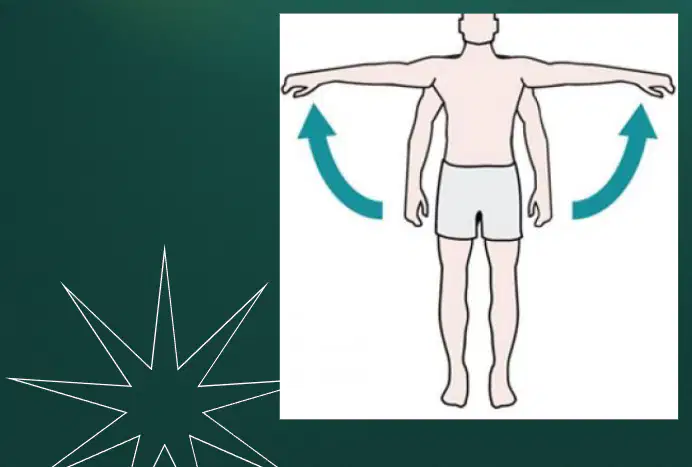
Which statements accurately distinguish abduction from adduction? Select all that apply.
Abduction moves a limb away from the midline; adduction moves it toward the midline.
Abduction is exemplified by lifting your arm sideways; adduction by lowering it back to your side.
Both abduction and adduction describe rotation around the longitudinal axis rather than movement relative to the midline.
Abduction decreases distance from the body’s center, whereas adduction increases it.
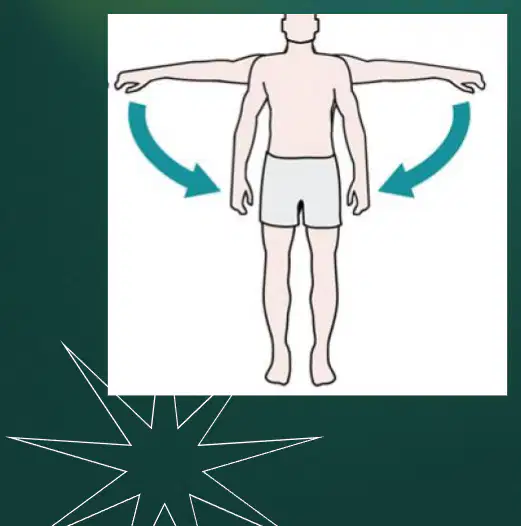
A patient performs a lateral arm raise, then slowly brings the arm back down until it rests against the torso. What sequence of movements occurred?
Adduction followed by abduction
Abduction followed by adduction
Flexion followed by extension
Internal rotation followed by external rotation
Which statement best defines flexion in joint movement?
Decreasing the angle between two bones or bending
Increasing the angle between two bones or straightening
Rotating a bone around its longitudinal axis
Moving a limb away from the midline of the body
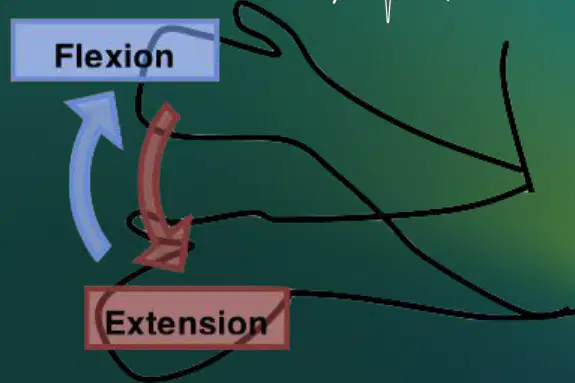
Based on the illustrated elbow diagram, which action represents extension?
Bringing the forearm closer to the upper arm, reducing the joint angle
Holding the elbow at a constant angle without movement
Straightening the elbow to increase the angle between the forearm and upper arm
Bending the wrist forward while keeping the elbow fixed
Select all statements that correctly describe flexion and extension.
Flexion decreases the angle between adjacent bones.
Extension increases the angle between adjacent bones.
Flexion is synonymous with straightening a joint.
Extension is associated with bending a joint.
A clinician asks a patient to bend the elbow and then return to a straight arm. Which sequence correctly names these movements?
Extension followed by flexion
Flexion followed by extension
Rotation followed by abduction
Supination followed by pronation
Which movement describes turning a body part around an axis, such as moving the head from side to side?
Rotation
Circumduction
Pronation
Supination
Which movement is characterized by moving a limb in a circular path at a joint, such as swinging the arm in a circle?
Rotation
Circumduction
Pronation
Supination
Select all options that represent turning the forearm or body part upward.
Supination
Pronation
Rotation
Circumduction
A patient is asked to place their palm facing downward on a table. Which term best describes the motion needed?
Supination
Pronation
Circumduction
Rotation
Which statement correctly distinguishes rotation from circumduction?
Rotation moves a limb in a circle at a joint; circumduction turns around an axis.
Rotation turns a body part around its own axis; circumduction moves a limb in a circular path at a joint.
Rotation turns the forearm upward; circumduction turns the forearm downward.
Rotation is specific to the wrist; circumduction is specific to the neck.
Which muscle group is primarily responsible for chest movements?
Deltoids
Quadriceps
Pectoralis major
Hamstrings
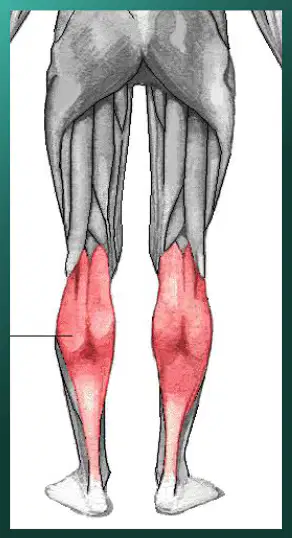
Which muscle is located at the back of the lower leg and primarily flexes the sole of the foot?
Quadriceps femoris
Gastrocnemius
Gluteus maximus
Tibialis anterior
Which movement is produced by the quadriceps femoris?
Flexion of the knee
Extension of the knee
Abduction of the thigh
Extension of the ankle
Which muscles are identified as intramuscular (IM) injection sites in the instructional material? Select all that apply.
Gastrocnemius
Quadriceps femoris
Gluteus maximus
Tibialis anterior
Where are the intercostal muscles located?
Along the vertebral column
Between the ribs
Across the abdominal wall
On the top of the shoulder
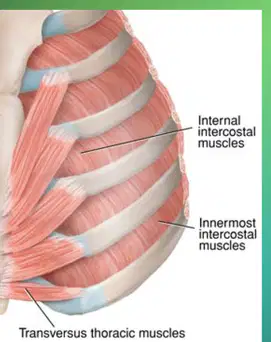
What role do the intercostals play in breathing?
They compress the abdomen to force air out.
They expand the ribs to make room for expanded lungs.
They flex the spine to increase chest volume.
They adduct the upper arm to elevate the chest.

