
Font size
 Worksheets
Retake
Total questions: 100
Worksheet time: 59mins
Which do you want the least amount of in your diet?
Protein
Sugar
Potassium
Calcium
Which do you want the most of in your diet?
Protein
Sugar
Trans Fat
Saturated Fat
Which of the following is considered a bad fat?
Monosaccharide
Unsaturated fat
Saturated fat
Carbohydrate
Which of the following assist in digestion by keeping movement and bulk in the stool?
Monosaccharides
Fiber
Lipids
Amino Acids
True or False. All cholesterol is bad for you.
True
False
True or False. Monounsaturated fats are the only good fats for you.
True
False
True or False. When reading a nutrition label it is important to know the serving size?
True
False
True or False. Sodium is needed in high amounts?
True
False
True or False. Carbohydrates are necessary to build muscle and other body parts.
True
False
True or False. Carbohydrates and Proteins break down into sugars.
True
False
An example of a monosaccharide would be:
Maltose
Glucose
Sucrose
Cellulose
How many essential amino acids are needed in your diet?
8
9
10
20
Foods which contain all the essential amino acids are called:
Essential proteins
Incomplete proteins
Saturated proteins
Complete proteins
Saturated and unsaturated fats are examples of:
Compound fats
Derived fats
Simple fats
Neutral fats
A persons BMR is a measurement of which?
How many calories they need each day
How many calories they need for exercise
How many calories they need to stay alive
How many calories they need to maintain body weight
Which TWO chemical elements are NOT found in fundamental nutrients?
Nitrogen
Carbon
Chlorine
Hydrogen
Magnesium
Cellulose is more commonly referred to as:
Saturated fat
Unsaturated fat
Protein
Fibre
The relationship between enzymes and substrates is sometimes compared to:
Lock and key
Button
Zipper
Bolt and nut
Vitamins and minerals are considered to be:
Macronutrients
Micronutrients
Fundamental Nutrients
Essential Nutrients
An example of a cultural diet which forbids the consumption of pork products would be:
Halal
Hindu
Bhuddist
Kosher

Which of the following is classified as an accessory organ of the digestive system?
Pharynx
Esophagus
Pancreas
Duodenum

The alimentary canal site where a majority of nutrient absorption takes place is the
large intestine
small intestine
stomach
colon

Tooth enamel, the hardest substance in the human body, is naturally regenerated by the body as needed to continually protect underlying dentin.
True
False

Which type of teeth are chisel-shaped and specialize in biting smaller pieces of food?
Incisors
Cuspids
Bicuspids
Molars

The chief cells of the gastric glands in your stomach produce which protein-digesting enzyme?
Amylase
Gastric Lipase
Pepsin
Bile

Food that looks and/or smells bad to you is not easily digested by the body compared to food that is more appealing to your senses.
True
False

The 3 macronutrients that provide most all of the calories we consume are... (matched with Cal/gram)
Carbohydrates, Lipids, and Nucleic Acids
Lipids, Protein, and Fiber
Protein, Vitamins, and Minerals
Lipids, Carbohydrates, and Protein

Which accessory organ to the digestive system produces digestive enzymes for the chemical breakdown of carbs, fats, proteins, and nucleic acids?
Pancreas
Liver
Spleen
Gall Bladder

Which of these functions DO NOT occur in the large intestine?
Reabsorption of water & electrolytes
Production of vitamin K & B12
Houses beneficial bacteria
Absorption of carbohydrate and protein nutrients

Which digestive substance, produced by the liver and stored in the gall bladder, is critical for digestion and absorption of fats and fat-soluble vitamins?
Amylase
Lipase
Bile
Pepsin
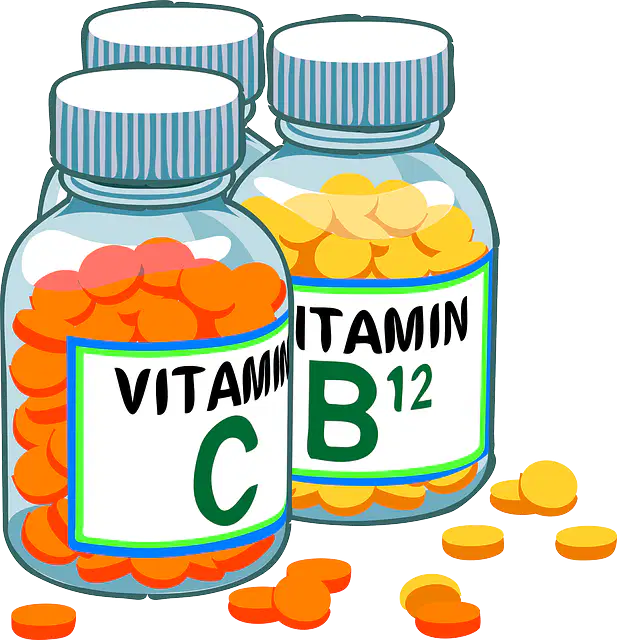
Which of the following is true regarding vitamins?
ADEK represents the fat-soluble vitamins
All B vitamins & Vitamin C are water-soluble
ACE represents antioxidant vitamins
All of these statements are true

The stomach produces ________________ that binds to and allows for absorption of (water-soluble) vitamin _______ in the small intestine, in which a deficiency can lead to fatigue and even type II diabetes.
intrinsic factor ; B12
hydrochloric acid ; D3
hydrochloric acid ; B6
bicarbonate ; B3

The most abundant mineral in the body is _______________.
Sodium
Calcium
Potassium
Phosphorus

Rate your level of healthy eating habits...
I plan balanced meals and monitor my results
I just eat whatever is available when I'm hungry
I live on sugar and caffeine
I just try to avoid eating disorders
Everything in moderation!


True or False; Bacteria are single celled organisms
True
False
What do you call the medicine that kills bacteria?
Yogurt
Antibiotics
Tylenol
Which of the following is NOT caused by bacteria
The flu
Tooth decay
Sore throat
Bacteria can help humans by?
Making hair grow
Digesting food
Making us smarter
How can bacteria spread?
unclean water
unclean surfaces
from other bacteria
all of the above
Which of the following could be caused by a microorganism?
hair cut
broken leg
tooth decay
broken fingernails
The term Cell was coined by
Robert Hooke
Robert Brown
JE Purkinje
AV Leeuwenhoek
The main site for synthesis of lipids
RER
SER
Golgi apparatus
Lysosomes
When viewing a cork through his homemade microscope, Robert Hook discovered small compartments that he called _____.
boxes
cells
prokaryotes
eukaryotes
Schleiden and Schwann believed _____.
that organisms were the basic unit of life
that both cells and organisms were basic units of life
that the questions of the basic unit of life were too abstract to answer
none of the above
The spherical object within a cell that controls its activity is the _____.
mitochondria
nucleus
ribosome
membrane
The part of the cell that contains the living substance of the cell, excluding the nucleus, is the _____.
nucleus
cell membrane
cytoplasm
cell wall
All prokaryotes are single-celled organisms. Compare prokaryotes and eukaryotes. Select the characteristics that only apply to prokaryotes.
These cells have DNA in a region called the nucleoid
Some of these cells have structures like flagella and microvilla
These cells have cell walls made of polypeptides and polysaccharides
These cells have cell walls made of cellulose
These cells have DNA contained in a nucleus
_________________ is the study of life.
Cytology
Physiology
Biology
Anatomy
Plants have a large ______________ for storing water.
mitochondria
nucleus
vacuole
golgi body

Cell B, because it contains genetic material


A mode of transport that does not require energy
Passive Transport
Facilitated Diffusion
Selectively Permeable
Slightly Permeable

The type of transport that requires the use of transport proteins
Passive Transport
Facilitated Diffusion
Active Transport
Vesicular Transport

The passage of a substance from an area of high concentration to an area of low concentration
Active Transport
Diffusion
Vesicular Transport
Exocytosis

Another name for the cell membrane
Vesicular Barrier
Plasma Membrane
Cell Wall
Insane in the Membrane

The head of a phospholipid is:
Hydrophobic
Hydrophilic
Polar
Nonpolar

Active Transport __________ require energy and uses the help of __________.
does, protein pumps
does, cytoplasm
does not, transport proteins
does not, sodium pumps

The door to your house is like the _______ of a cell membrane.
Phospholipid Bilayer
Gated Channel
Receptor Protein
Recognition Protein

A cell that is missing lysosomes would have a difficulty doing what?
Storing Energy
Packaging Proteins
Digesting Food
Moving Cytoplasm

Some cells move large particles out of the cell through the process of:
Protein Synthesis
Endocytosis
Exocytosis
Cytoplasmic Streaming

Which mode(s) of transport require energy?
Passive Transport
Facilitated Diffusion
Active Transport
Vesicular Transport

Transport proteins for water are called:
Glu-T
Sodium-Potassium Pump
Aquaporins
Cohesive Channels

Transport that occurs directly across the cell membrane
Vesicular Transport
Active Transport
Facilitated Diffusion
Passive Transport

The energy molecule that powers some modes of transport
ADP
ATP
AGP
ABP

The cell membrane is composed of a:
Protein Shield
Carbohydrate Barrier
Phospholipid Bilayer
Blanket of Hopes and Dreams

A water box divided with a membrane has 60 mg of salt placed on the right. What will happen?
Water will move to the left.
Salt will move to the right.
Water will move to the right.
Salt will move to the left.
2.The function accomplished by the light-dependent reactions is ______________.
Energy and electron storage
Sugar production
Carbon fixation
Conversion of sugar
Where does dark reaction or light independent specifically occur?
thylakoid membrane
Stroma of the chloroplast
Grana
nuclear membrane
Which of the following light color is absorbed by plants?
Red
Green
yellow
Light green
The gas produced by photosynthesis
Carbon Dioxide
Oxygen
Water
Glucose
The process by which autotrophs use energy from sunlight to produce glucose
Cellular Respiration
Light Reaction
Photosynthesis
Calvin Cycle
Pigment primarily responsible for photosynthesis
Carotene
Chloroplast
Photosynthesis
Chlorophyll
Membranous sacs inside the chloroplast where the light reactions take place
Thylakoid
Stroma
Chloroplast
Mitochondria
Where the Calvin Cycle takes place
Thylakoid
Stroma
Mitochondria
The photosynthetic reaction that turns light and water into oxygen and energy
Calvin Cycle
Photosynthesis
Light Reaction
Cellular Respiration
The photosynthetic reaction that ends with the production of glucose
Calvin Cycle
Photosynthesis
Light Reaction
Cellular Respiration
The glucose created during photosynthesis comes from the ________ molecules.
Carbon Dioxide
Oxygen
Water
Glucose
Most of the energy used by life on Earth comes from the…
Sun
Moon
Oxygen
Glucose
Chlorophyll is green because
It reflects green wavelengths of light
Of an optical illusion caused by transmitted light
It absorbs blue and yellow, which make green
It absorbs green wavelengths of light
Which of the following environmental factors does not affect the rate of photosynthesis?
Light intensity
Carbon dioxide concentration
Temperature
Oxygen concentration

Refer to the illustration below. Graph A demonstrates that the rate of photosynthesis
Increases indefinitely in response to increasing light intensity
Increases in response to increasing light intensity, but only to a certain point
Decreases in response to increasing light intensity
Is unaffected by changes in light intensity

