
 Worksheets
Unit 4 EM waves/spectrum Review 2025
Total questions: 47
Worksheet time: 15mins
Which of the following is an example of a transverse wave?
Sound waves
Water waves
Seismic P-waves
Radio waves
What does a larger amplitude in a wave indicate?
The wave is moving faster
The wave is carrying more energy
The wave has a shorter wavelength
The wave has a lower frequency

How is frequency defined in the context of waves?
The distance between two crests
The time taken for one complete cycle
The number of complete wave cycles per second
The height of the wave

Which type of electromagnetic wave has the highest frequency?
Radio waves
Visible light
Gamma rays
Infrared waves
What is the significance of the electromagnetic spectrum?
It shows the relationship between sound and light
It categorizes waves based on their energy and wavelength
It only includes visible light
It describes the speed of sound waves

What happens to the energy of a wave as its frequency increases?
Energy decreases
Energy remains the same
Energy increases
Energy becomes zero
Which of the following is NOT a type of electromagnetic wave?
X-rays
Microwaves
Sound waves
Ultraviolet waves
How does the amplitude of a wave relate to its energy?
Higher amplitude means lower energy
Higher amplitude means higher energy
Amplitude has no effect on energy
Amplitude is unrelated to wave energy

What type of wave requires a medium to travel?
Transverse waves
Electromagnetic waves
Mechanical waves
All waves
Which of the following statements about visible light is true?
It has the highest energy in the electromagnetic spectrum
It is the only type of electromagnetic wave
It lies between ultraviolet and infrared waves
It cannot be seen by the human eye

If the wavelength of a wave increases, what happens to its frequency?
Frequency increases
Frequency decreases
Frequency remains the same
Frequency becomes zero
Which type of wave has the longest wavelength?
Gamma rays
X-rays
Radio waves
Visible light

If the frequency of a wave increases, what happens to the wave's wavelength?
Wavelength increases
Wavelength decreases
Wavelength remains the same
Wavelength becomes zero

In a transverse wave, the vibrations occur in what direction relative to the wave's energy transfer?
Parallel to the wave's motion
Perpendicular to the wave's motion
Diagonal to the wave's motion
Randomly oriented
Which of the following is NOT an example of a transverse wave?
Guitar string vibrations
Water waves
Sound waves in air
Light waves

What does amplitude measure in a wave?
Wave speed
Wave energy
Wave frequency
Wave length

What is the relationship between wavelength and frequency?
Directly proportional
Exactly the same
Inversely proportional
No relationship
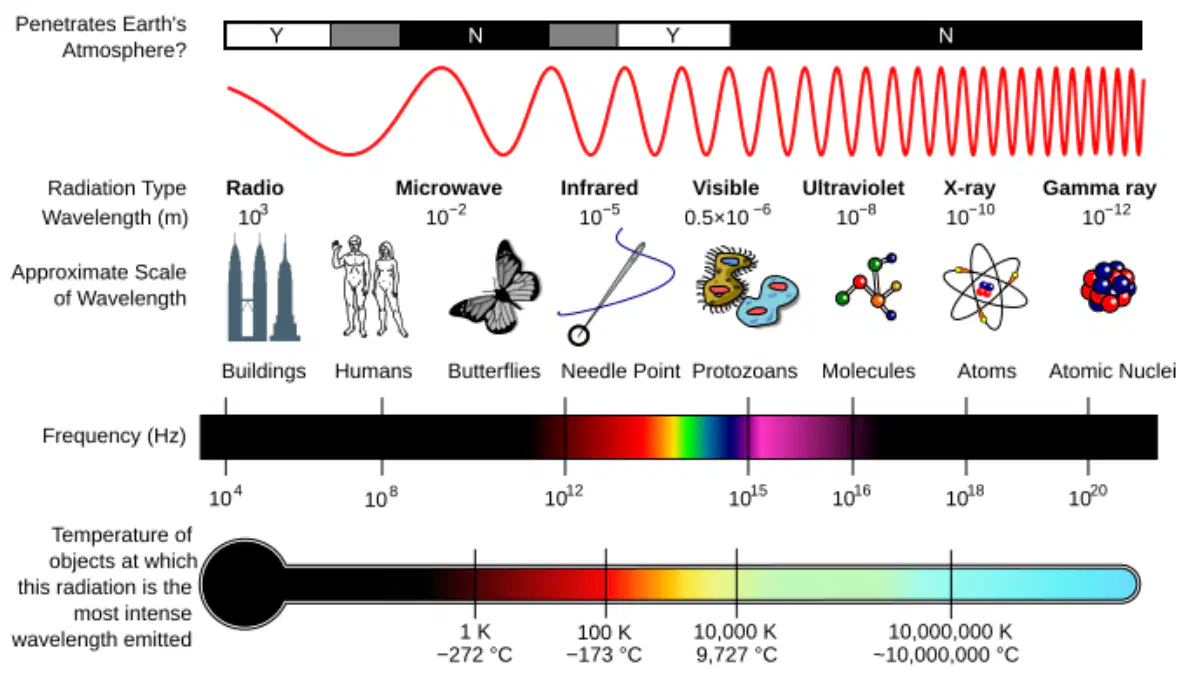
Which type of electromagnetic wave has the longest wavelength?
Gamma rays
X-rays
Radio waves
Visible light
What makes electromagnetic waves unique compared to mechanical waves?
They can travel through a vacuum
They always move faster
They have constant amplitude
They never lose energy
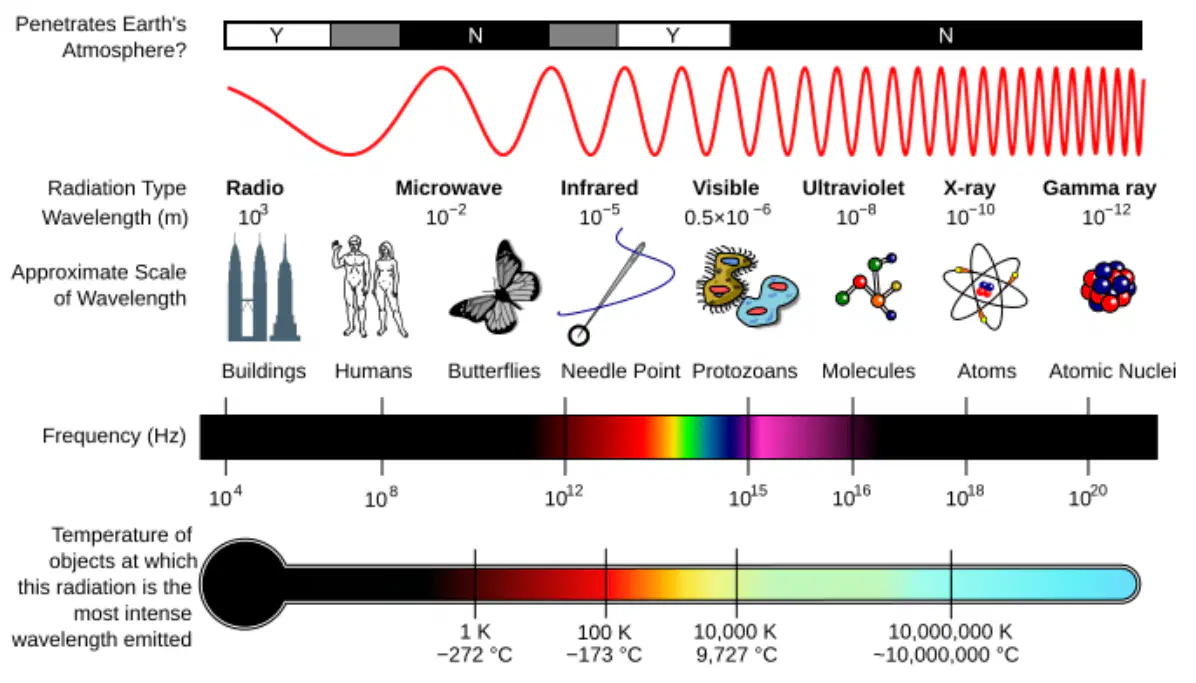
What does 1 Hz represent?
One wave cycle per minute
One wave cycle per second
One wave cycle per hour
One wave cycle per day

Which part of the electromagnetic spectrum has the highest energy?
Radio waves
Infrared
Visible light
Gamma rays

What happens to wave energy as frequency increases?
Energy decreases
Energy remains constant
Energy increases
Energy becomes zero
Which statement best describes the crest of a wave?
The lowest point of the wave
The middle point of the wave
The highest point of the wave
The point of zero amplitude
If a wave's wavelength doubles, what happens to its frequency?
Doubles
Halves
Remains the same
Becomes zero

Which electromagnetic wave type is most commonly used for communication?
X-rays
Gamma rays
Radio waves
Ultraviolet
What determines the amount of energy a wave carries?
Only wavelength
Only frequency
Amplitude and frequency
Wave color
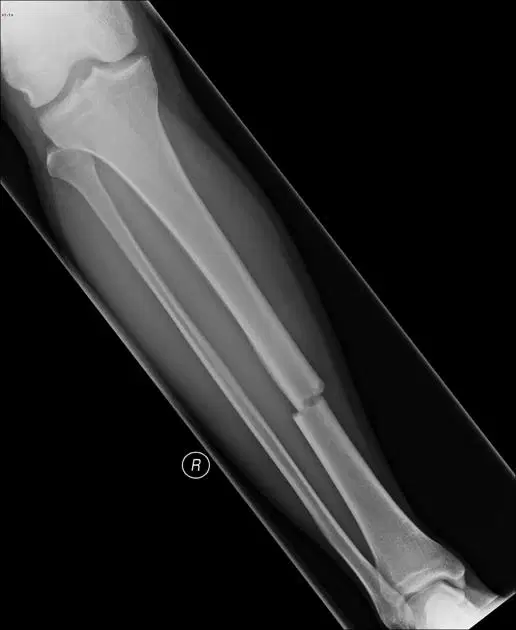
Which electromagnetic wave can penetrate human tissue?
Visible light
Radio waves
X-rays
Infrared
What is the primary difference between mechanical and electromagnetic waves?
Speed
Energy
Need for a medium
Amplitude
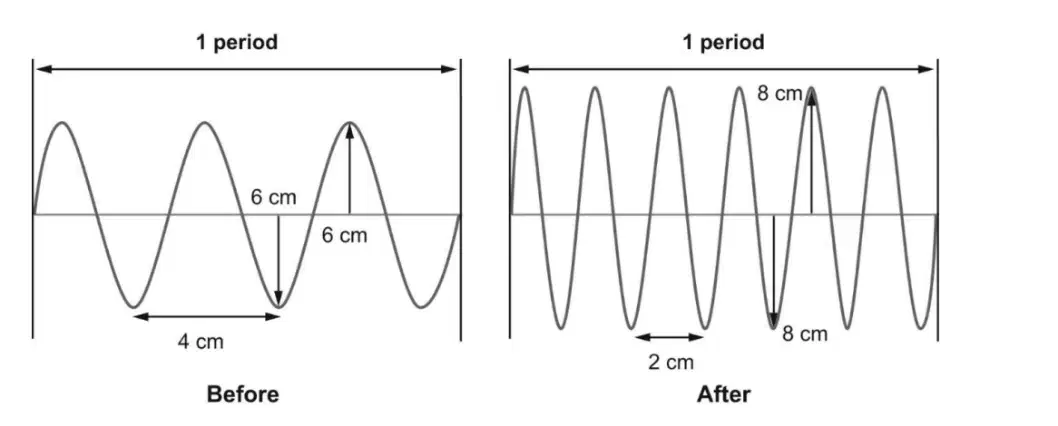
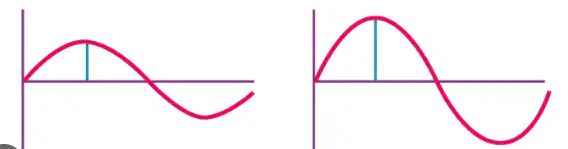
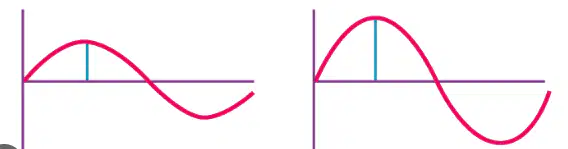
The diagrams show a wave before and after more energy was applied. Compare the original wave with the new wave after the change. How did the characteristics of the wave change after the energy was applied? Select TWO correct answers.
The energy applied increased the frequency.
The energy applied increased the amplitude.
The energy applied increased the wavelength.
The wavelength and frequency decreased after energy was applied.
The amplitude remained the same before and after energy was applied.
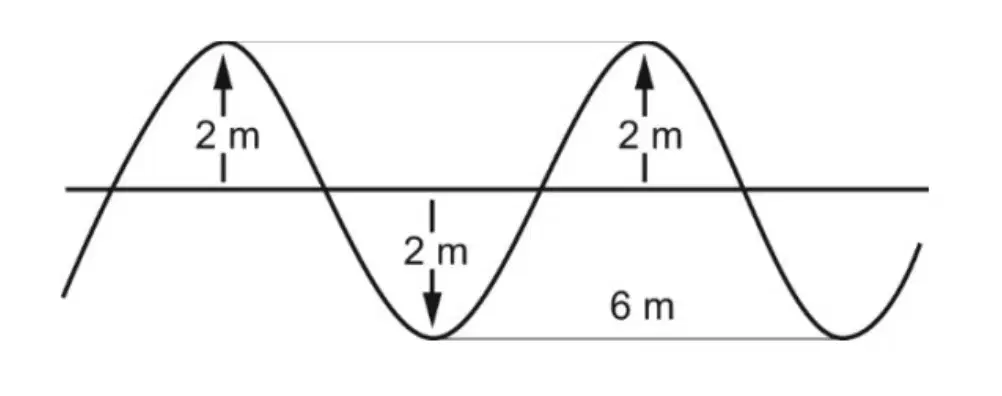
What is the amplitude of the wave?
2 m
4 m
6 m
8 m
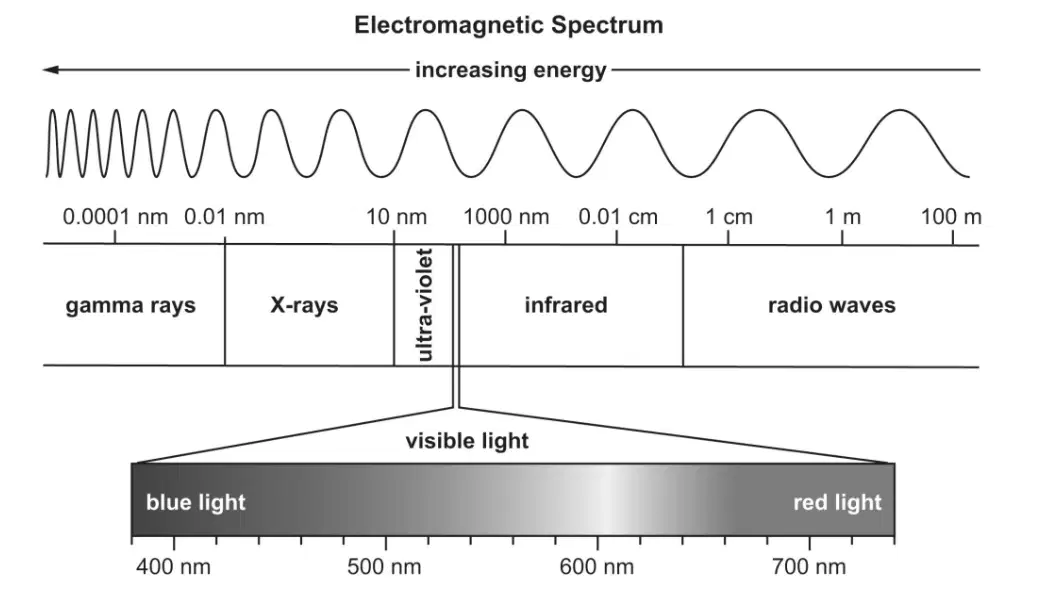
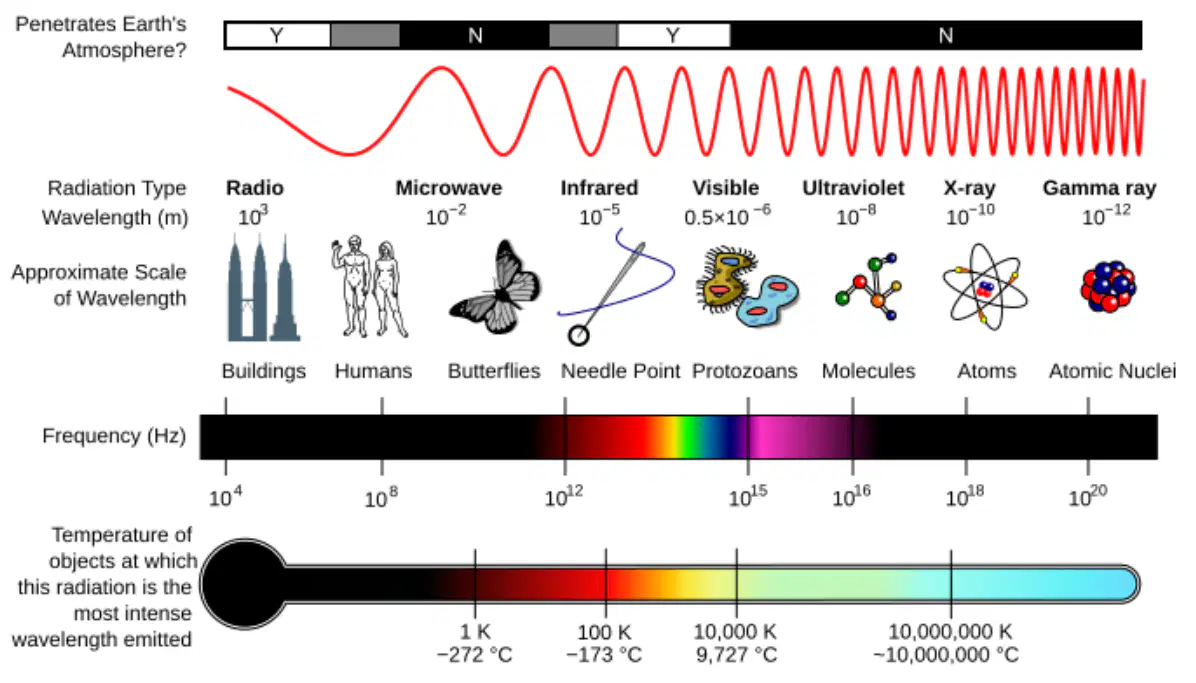
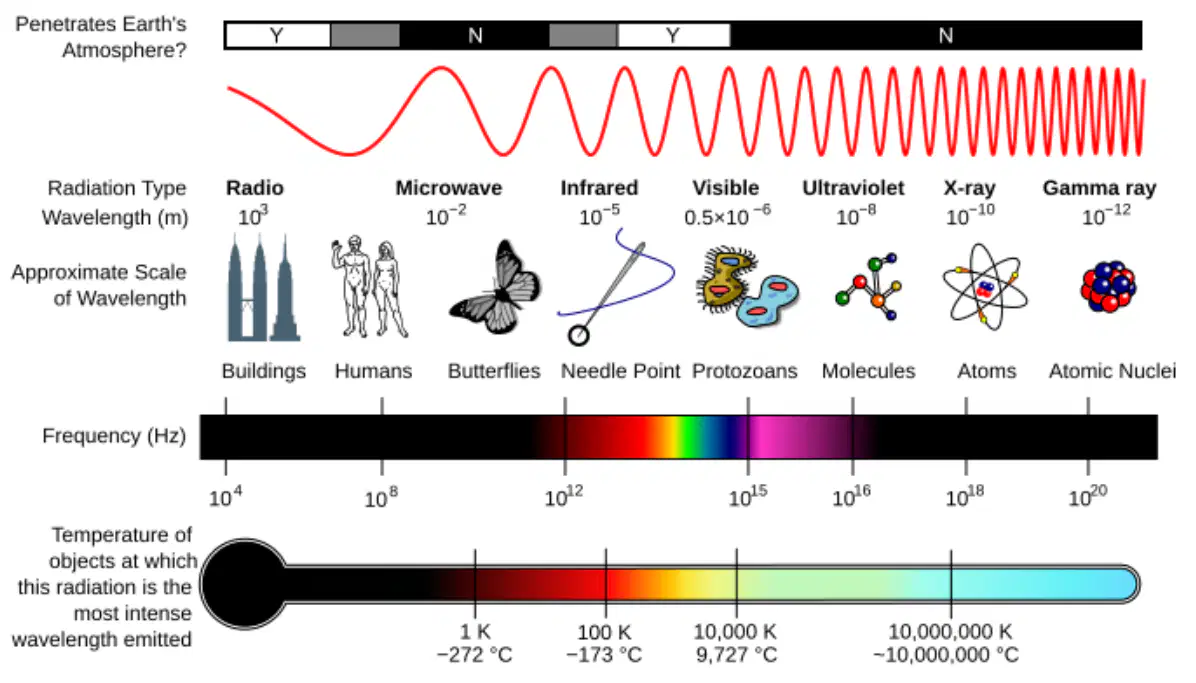
Jessie and Ada plan an investigation to examine the effect on plant growth of exposure to only blue light. After reviewing their supplies, they realized that they only have a red light. Based on the pattern in the EM spectrum diagram, how do the characteristics of the red light they have compare to those of the blue light they need?
The blue light needed for the investigation has a (a) wavelength than the red light they have. The blue light also has a (b) frequency and higher energy than the red light they have available to them..

A technician uses electromagnetic waves of a certain frequency range to sterilize a lab surface. Which type of electromagnetic waves would be best for this purpose?
radio waves
microwaves
infrared waves
ultraviolet waves
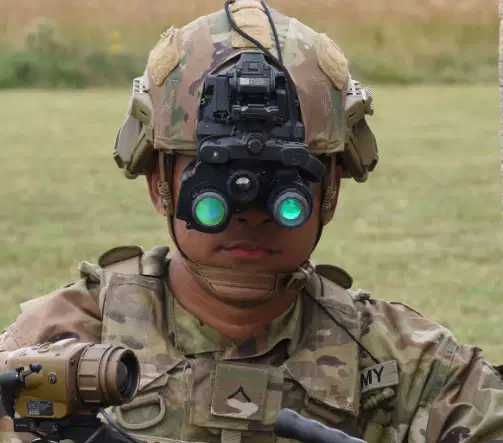
Night vision goggles were invented in the 1930s and first used in World War II. They allow a person to “see” in the dark by converting radiated heat into visible light waves that the eyes can detect. Which statement explains how night vision goggles convert a type of electromagnetic radiation into a visible image?
They use microwaves because microwaves can cause objects to become hot
They use visible light because the eyes can pick up and see only wavelengths in the visible region.
They use infrared waves because warm objects, such as human bodies, emit radiant heat in the form of infrared electromagnetic waves.
They use ultraviolet waves because these high energy waves are radiated from the sun, reflect from objects, and convert to visible wavelengths.

Animal tracking is an important technique used to follow the movement of wild animals and to locate lost pets. One method is to implant a small device in the animal that can receive and send long-wavelength, low-energy radiation using global positioning satellites (GPS). Which type of electromagnetic wave would be best suited for this process?
radio waves
visible waves
gamma waves
ultraviolet waves

The two waves have different...
amplitudes
speeds
wavelengths
frequencies

What travels through a wave?
mass
energy
mass and energy
neither mass nor energy
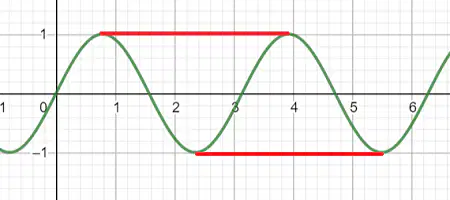
What is the red line showing?
crest
trough
wavelength
amplitude


Which letter represents amplitude?
A
B
C
D

What is the amplitude of this wave?
4
8
2
6.3
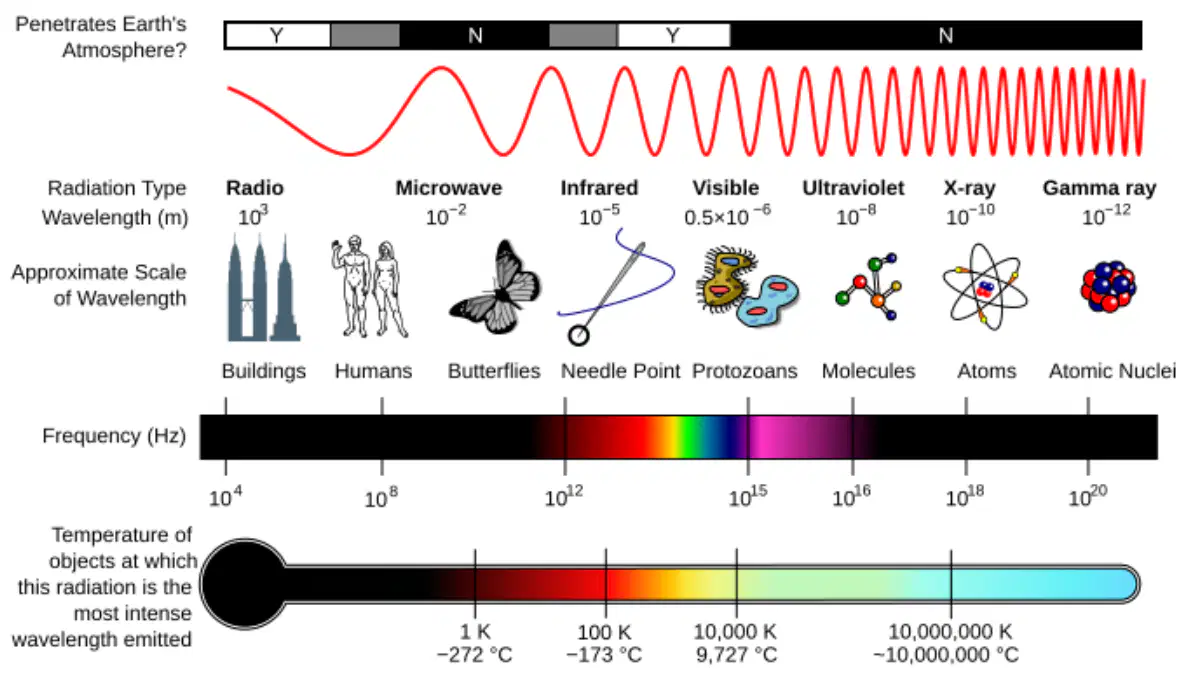
Wavelengths are usually measured in ....
seconds
Hz
inches
meters

What wave do you find at a wavelength of 10-12?

What type of wave do you find at frequency 1018?
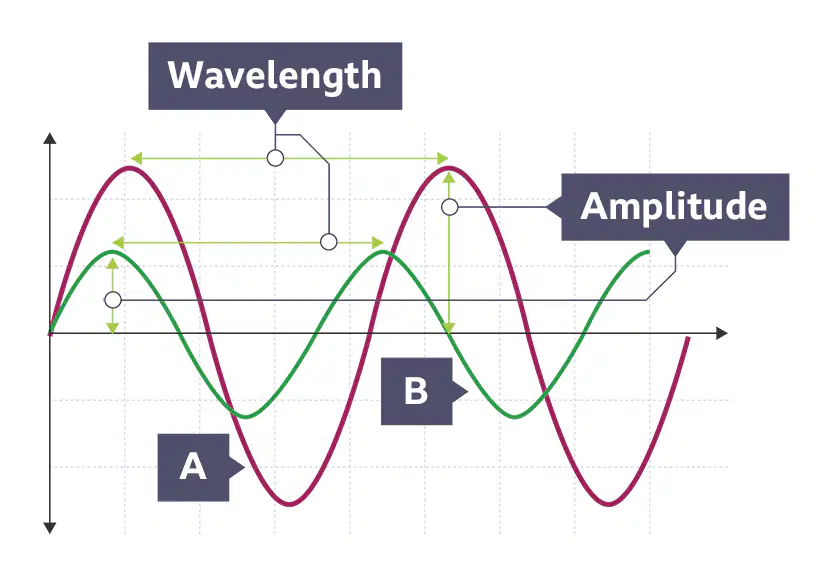
Compare waves A and B. Which of the following TWO STATEMENTS are correct about the two waves?
A has greater energy than B.
B has greater frequency than A.
A & B have the same wavelength.
B has a greater amplitude and energy than A.
A & B have different amplitudes but the same energy.

If you were looking for evidence of a HIGH-ENERGY event, on what portion of the EM spectrum would you expect to find evidence for that event?
Radio waves
Visible light waves
Ultraviolet waves
Gamma waves
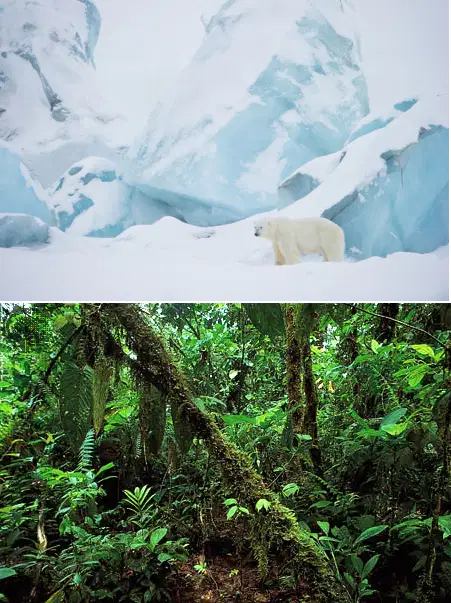
Plants are more successful growing at the Equator than at the North Pole due to the different amounts of sunlight available at those locations. Why is this?
Plants transform light energy into chemical energy in photosynthesis. More light means more growth.
The cold at the North Pole prevents the flow of water through the zylem in the plants' stems.
Plants must have liquid water and the water at the North Pole is frozen.
The North Pole is made of frozen salt water, which plants cannot grow in.
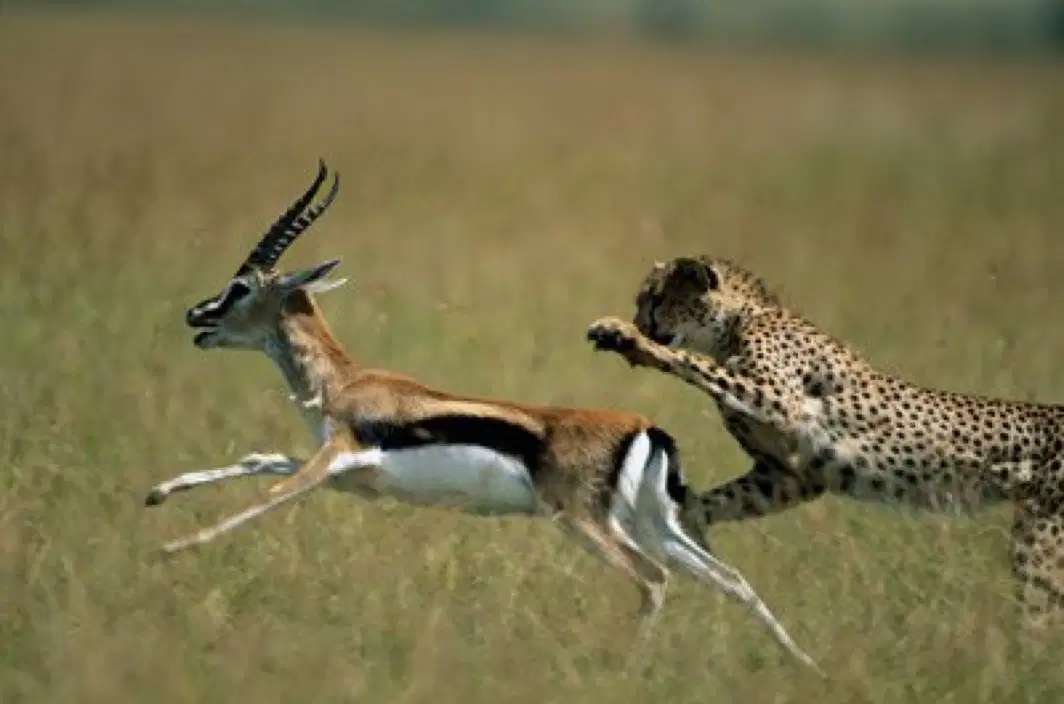
The Cheetah needs to catch the Impala. Why?
The Cheetah's body can get the chemical energy from the Impala and transform it into mechanical energy to stay alive.
The Cheetah's body can get the mechanical energy from the Impala and transform it into chemical energy to stay alive.
The Cheetah's body can get the thermal energy from the Impala and transform it into mechanical energy to stay alive.

