
Font size
 Worksheets
Presidents Ford, Carter, Reagan & HW Bush Slides Quiz
Total questions: 100
Worksheet time: 50mins
Which U.S. president is associated with the phrase "No New Taxes"?
Ronald Reagan
Jimmy Carter
George H. W. Bush
Gerald Ford
What was the main message of the "Peace Through Strength" policy?
Promoting peace by reducing military spending
Achieving peace by maintaining a strong military
Negotiating peace treaties with adversaries
Avoiding international conflicts at all costs
Which event is depicted by the headline "Nixon Resigns"?
The end of the Vietnam War
The Watergate scandal
The Iran-Contra affair
The Camp David Accords
Which president is most closely associated with the term "Evil Empire" in reference to the Soviet Union?
Jimmy Carter
Gerald Ford
Ronald Reagan
George H. W. Bush
What was the significance of the headline "Bush Halts Offensive Combat; Kuwait Freed, Iraqis Crushed"?
The end of the Vietnam War
The conclusion of the Gulf War
The signing of the Camp David Accords
The Watergate scandal
Which of the following presidents served between 1974 and 1993?
Ford, Carter, Reagan, H. W. Bush
Nixon, Ford, Carter, Clinton
Johnson, Nixon, Ford, Reagan
Carter, Reagan, Clinton, Bush
What was the main focus of the Camp David Accords, as depicted in the image?
Immigration reform
Peace agreement between Israel and Egypt
Ending the Gulf War
Tax reform
A collage of historical images and newspaper headlines related to U.S. presidents Ford, Carter, Reagan, and H. W. Bush, including references to major events such as the Watergate scandal, the Gulf War, the Camp David Accords, and the "Evil Empire" speech.
A timeline of U.S. economic policies
A collage of events from the presidencies of Ford, Carter, Reagan, and H. W. Bush
A map of Cold War conflicts
A chart of presidential election results
Which U.S. President took office after Richard Nixon resigned in 1974?
Gerald Ford
Jimmy Carter
Ronald Reagan
Lyndon B. Johnson
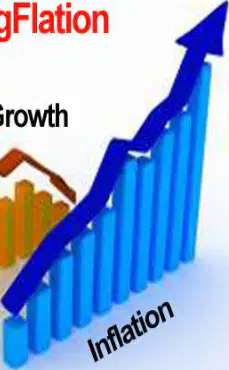
What major economic issue is depicted in the image with the terms "Stagflation," "Economic Growth," and "Inflation"?
Stagflation
Hyperinflation
Recession
Deflation
During the Ford Presidency, what was a significant problem related to gasoline in the United States?
Gas shortage
Gas surplus
Gas price decrease
Gas export ban
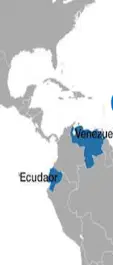
Which international organization, shown on the map, was influential in the oil crisis during the Ford Presidency?
OPEC
NATO
UN
EU
What term describes the combination of stagnant economic growth and high inflation experienced during the Ford Presidency?
Stagflation
Depression
Boom
Recovery
What year did Gerald Ford become President of the United States?
1974
1972
1976
1970
Which event led to Gerald Ford becoming President?
Nixon’s resignation
Election victory
Assassination of previous president
Impeachment of Ford
What was a major challenge faced by the Ford administration related to the economy?
Stagflation
Industrial boom
Technological revolution
Agricultural surplus
Who is the president discussed in the material titled "Healing a Divided Country"?
Gerald Ford
Richard Nixon
Jimmy Carter
Ronald Reagan
Who presented the material "Gerald Ford: Healing a Divided Country"?
Hugh Hewitt
Gerald Ford
PragerU
Jimmy Carter
Based on the title, what was the main focus of President Gerald Ford's leadership?
Healing a divided country
Expanding the military
Increasing taxes
Building new infrastructure
Which unique distinction did Gerald Ford hold as Vice-President before becoming President?
He was the only Vice-President to win two elections.
He was the only Vice-President to not win an election.
He was the first Vice-President to serve two Presidents.
He was the only Vice-President to resign before becoming President.
Why did Gerald Ford become President after Nixon resigned?
He was elected by popular vote.
He was appointed by Congress.
He was Vice-President after being appointed by Nixon when VP Agnew resigned.
He was next in line as Secretary of State.
What was one of Gerald Ford’s first acts as President?
Declaring war on another country
Pardoning Nixon for any crimes
Resigning from office
Passing a new healthcare law
How did the public generally react to Ford’s pardon of Nixon?
The pardon was very popular.
The pardon was not popular.
The public was indifferent.
The public demanded Ford’s resignation.
What was President Ford’s reasoning for pardoning Nixon?
He wanted to punish Nixon further.
He felt Nixon had suffered enough and wanted the nation to heal.
He was pressured by Congress.
He wanted to run for re-election.
Which of the following best describes the concept of stagflation?
Rising prices with full employment
Inflation with high unemployment
Economic growth with low inflation
High unemployment with falling prices
During President Gerald Ford's presidency, which economic issue was a major concern?
Deflation
Stagflation
Hyperinflation
Recession
How does inflation typically differ from stagflation?
Inflation involves high unemployment, stagflation does not
Inflation is associated with economic growth and full employment, stagflation includes high unemployment
Inflation is only present during recessions, stagflation is not
Inflation means falling prices, stagflation means rising prices
Based on the diagram, what happens to economic growth during stagflation?
Economic growth increases rapidly
Economic growth remains stable
Economic growth declines while inflation rises
Economic growth and inflation both decrease
Which country was founded in 1948 as the first democracy in the Middle East and became a close ally of the USA?
Israel
Saudi Arabia
Iran
Egypt
What was the main purpose of forming the Organization of Petroleum Exporting Countries (OPEC) in September 1960?
To control the production and price of oil among its members
To promote democracy in the Middle East
To establish trade agreements with Israel
To create a military alliance
Strategically, why did the relationship between Israel and OPEC member countries become strained after OPEC was formed?
Most OPEC members were Middle Eastern countries that did not get along with Israel
Israel refused to export oil to OPEC countries
OPEC members wanted Israel to join their organization
Israel controlled the oil prices in the region
Which event led OPEC to place an oil embargo on the USA and Western Europe in 1973?
The Vietnam War
The Yom Kippur War
The Gulf War
The Korean War
What was the immediate effect of OPEC's oil embargo in 1973?
The price of gas decreased overnight
The price of gas remained unchanged
The price of gas shot up overnight
The price of gas slowly increased over several years
After the Yom Kippur War ended, how did OPEC's actions continue to affect U.S. consumers?
OPEC lowered petroleum prices
OPEC stopped exporting oil to all countries
OPEC continued high petroleum prices, increasing costs for fuel and electricity
OPEC provided discounts on oil to the U.S.
Explain how OPEC used oil as a political weapon during the Energy Crisis of 1973.
By increasing oil production to help the USA
By placing an oil embargo on the USA and Western Europe for supporting Israel
By reducing oil prices worldwide
By investing in alternative energy sources
What was the main purpose of establishing the Strategic Petroleum Reserve according to the Energy Policy & Conservation Act of December 1975?
To provide oil for military use only
To establish a reserve of up to one billion barrels of petroleum
To ban the use of petroleum in the U.S.
To increase the price of gasoline
How can selling petroleum from the Strategic Petroleum Reserve help address the Energy/Oil Crisis?
By increasing the cost of energy
By slowing the rise of prices and lowering energy costs
By reducing the amount of petroleum available
By encouraging people to use more oil
Which U.S. President is associated with efforts to solve the Energy/Oil Crisis through the Strategic Petroleum Reserve?
President Carter
President Ford
President Reagan
President Nixon
What was the main purpose of the Corporate Average Fuel Economy (CAFE) standards introduced in 1975?
To reduce energy consumption by increasing the fuel economy of cars and light trucks.
To increase the production of oil in the United States.
To lower the cost of manufacturing vehicles.
To promote the use of electric vehicles only.
Since 1978, what requirement must each automaker meet regarding CAFE standards?
Achieve fleet-wide average fuel economy for its car and truck fleet each year.
Produce only electric vehicles.
Reduce the number of cars manufactured annually.
Increase the size of their vehicle fleet every year.
Based on the information provided, how did the Energy/Oil Crisis influence automotive policy in the United States?
It led to the creation of the first fuel economy standards to address energy consumption.
It resulted in banning the sale of gasoline-powered vehicles.
It caused automakers to stop producing trucks.
It led to the immediate adoption of solar-powered cars.
What does the graph in the image illustrate about fuel economy standards over time?
It shows the increase in fuel economy standards for cars and light trucks from 1978 to 2014.
It shows the decrease in vehicle production over time.
It shows the average price of gasoline from 1978 to 2014.
It shows the number of cars sold each year.
What was one intended effect of raising CAFE and Fuel Economy Standards during President Ford's administration?
To create a more fuel-efficient fleet, improving energy security and saving consumers money
To increase the price of gasoline for consumers
To reduce the number of vehicles on the road
To eliminate the need for gasoline entirely
According to the information, what problem was President Ford unable to solve during his administration?
Stagflation
Unemployment
Inflation only
The Vietnam War
Explain how raising fuel economy standards can impact both national energy security and consumer expenses. Use evidence from the provided information.
It leads to more fuel-efficient vehicles, which reduces fuel consumption, improves energy security, and saves consumers money.
It increases the cost of vehicles, making them less affordable for consumers.
It causes automakers to produce fewer vehicles, reducing transportation options.
It has no impact on energy security or consumer expenses.
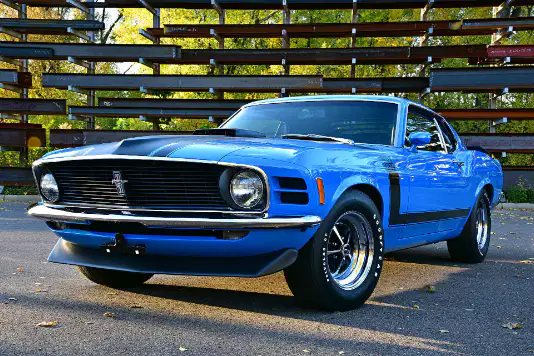
Which of the following is a benefit of using petroleum, oil, or gas?
Pollutes air
Used to power vehicles
Not renewable
Can pollute water
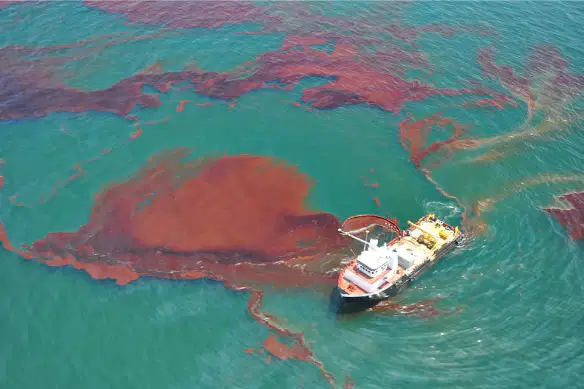
Which of the following is a disadvantage of petroleum, oil, or gas?
Used for dyes
Used for drugs
Pollutes air
Used for synthetics
Petroleum is used for all of the following EXCEPT:
Lubricating machines
Making dyes
Polluting water
Making synthetics
Explain why petroleum is considered "not renewable" and discuss one environmental impact associated with its use.
Petroleum is not renewable because it is produced quickly and does not pollute; it helps plants grow.
Petroleum is not renewable because it is made from unlimited resources and cleans water; it is good for the environment.
Petroleum is not renewable because it takes millions of years to form and can pollute air or water when used.
Petroleum is not renewable because it is made from recycled materials and does not affect the environment.
A factory uses petroleum to produce synthetic materials and dyes. What is a possible environmental consequence of this practice?
Increased water pollution
Improved air quality
Enhanced renewable resources
Reduced machine lubrication
During which years did the Carter Presidency take place?
1973-1977
1977-1981
1981-1985
1975-1979
Which economic issue is depicted in the image with declining economic growth and rising inflation during the Carter Presidency?
Recession
Stagflation
Hyperinflation
Deflation
What major international crisis involving American hostages is referenced in the New York Times headline shown in the image?
Cuban Missile Crisis
Iran Hostage Crisis
Watergate Scandal
Bay of Pigs Invasion
The image of the nuclear power plant and sign refers to which significant event during the Carter Presidency?
Chernobyl Disaster
Fukushima Accident
Three Mile Island Accident
Manhattan Project
Compare the maps labeled "1967 Borders" and "2011 Borders." What is the main difference shown between these two maps?
The size of the Mediterranean Sea
The territorial changes of Israel and Palestinian areas
The location of Jerusalem
The population density
What diplomatic achievement involving a handshake in the Oval Office is associated with the Carter Presidency?
Camp David Accords
Paris Peace Accords
Treaty of Versailles
SALT II Agreement
Why was the issue of "Stagflation" particularly challenging for the Carter administration?
It involved only rising unemployment.
It combined high inflation with stagnant economic growth.
It was easily solved by lowering interest rates.
It was unrelated to the global economy.
What was the significance of the Three Mile Island incident during Carter's presidency?
It led to the end of nuclear power in the United States.
It was the worst nuclear accident in U.S. history, raising concerns about nuclear safety.
It resulted in immediate evacuation of the entire state.
It had no impact on public opinion.
Who is the U.S. President featured in the learning material titled "Farmhouse to White House"?
Jimmy Carter
Ronald Reagan
George H.W. Bush
Bill Clinton
Based on the title "Farmhouse to White House," what does the phrase most likely suggest about Jimmy Carter's background?
He was born in a city and became president.
He had a rural upbringing before becoming president.
He was a businessman before entering politics.
He was a lawyer before becoming president.
Who is credited as the presenter of the material about Jimmy Carter titled "Farmhouse to White House"?
Tevi Troy
Jimmy Carter
PragerU
Bill Clinton
Who won the U.S. presidential election of 1976?
Jimmy Carter
Richard Nixon
Gerald Ford
Ronald Reagan
What was one of Jimmy Carter’s main campaign promises during the 1976 election?
To increase military spending
To clean up Washington and end corruption
To lower taxes for the wealthy
To expand the space program
Which major issue did both President Ford and President Carter face during their presidencies?
The Vietnam War
The U.S. economy
Civil Rights Movement
The Cold War
Analyze the economic conditions in the U.S. during the 1976 election. Which of the following best describes the situation?
Low inflation, low interest rates, and stable oil prices
High inflation, high interest rates, and rising oil prices
High employment, low inflation, and falling oil prices
Low interest rates, high economic growth, and stable prices
Why did many Americans continue to blame Nixon and the Republican party during the 1976 election?
Because of the Vietnam War
Because of the Watergate scandal
Because of the Cuban Missile Crisis
Because of the Great Depression
Identify the subject of the magazine cover.
A campaign poster for Ronald Reagan
A TIME magazine cover about the Democratic Party's resurgence
An advertisement for oil prices
A political cartoon about inflation
What does the political cartoon illustrate?
The impact of rising prices on wages during the 1970s
The benefits of economic growth
The effects of tax cuts on the economy
The increase in employment rates
Which event led OPEC to place an oil embargo on the USA in 1973?
The USA's support for Israel in the Yom Kippur War
The USA's withdrawal from Vietnam
The USA's signing of the Paris Peace Accords
The USA's boycott of the Olympic Games
What was one immediate effect of the OPEC oil embargo on the United States?
The price of gas shot up
The price of gas decreased
The USA increased oil exports
The USA stopped using oil
After the Yom Kippur War ended, how did OPEC's actions continue to affect the United States?
OPEC continued with high oil prices, costing the USA increased prices for fuel and electricity
OPEC lowered oil prices, making fuel cheaper in the USA
OPEC stopped selling oil to all countries
OPEC started importing oil from the USA
Why did President Carter create the Department of Energy in 1977?
To try to solve the energy and gas problems caused by dependence on foreign oil and rising gas prices
To increase oil imports from OPEC
To promote the use of coal in the USA
To regulate the price of electricity only
Evaluate the effectiveness of the Department of Energy in solving the energy crisis quickly after its creation in 1977.
It did not solve the energy/gas problems quickly
It immediately solved all energy problems
It had no impact on energy issues
It made the energy crisis worse
Which event led President Carter to create the Department of Energy in 1977?
Dependence on foreign oil and rising gas prices
Increase in domestic oil production
Decrease in renewable energy sources
Expansion of nuclear power plants
What was one of the main goals of the Department of Energy when it was created under President Carter?
To provide incentives for renewables and coal
To increase dependence on foreign oil
To ban all forms of energy production
To reduce the use of solar energy
Which of the following actions did the Department of Energy NOT take according to Carter’s domestic policy?
Deregulated oil and natural gas prices
Banned new power plants from using gas or oil
Provided incentives for renewables and coal
Increased tariffs on foreign oil
Explain why the creation of the Department of Energy did not quickly solve the energy/gas problems in the United States. Use evidence from Carter’s domestic policy.
The solutions required long-term changes and did not produce immediate results
The Department of Energy immediately solved all energy problems
The U.S. stopped using foreign oil overnight
Gas prices dropped instantly after the department was created
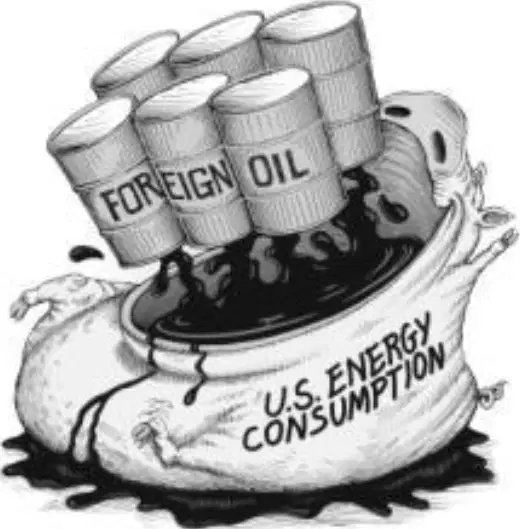
What was the main purpose of the National Energy Act passed in 1978 during President Carter's administration?
To increase the consumption of gas and oil in the United States
To lower the consumption of gas, oil, and petroleum by imposing a tax on gas guzzler cars
To eliminate all taxes on automobiles
To encourage the use of foreign oil
Which action did the Federal government take in response to the energy crisis during Carter's presidency?
Increased subsidies for gas guzzler cars
Passed the National Energy Act to reduce gas/oil/petroleum consumption
Removed all restrictions on oil imports
Encouraged higher consumption of petroleum products
How did the National Energy Act aim to address the energy crisis in the United States?
By promoting the use of foreign oil
By putting a tax on gas guzzler cars to lower energy consumption
By banning the sale of all cars
By increasing oil production in the U.S.
Which of the following best describes the main idea presented in the images and text about the Fort Worth Stockyards?
The Fort Worth Stockyards have remained unchanged over time.
The Fort Worth Stockyards show how human activities can change the natural environment over time.
The Fort Worth Stockyards were abandoned in the 1970s.
The Fort Worth Stockyards only benefited the environment.
Based on the comparison between the early 1900s and the 1970s, what skill or concept is being illustrated regarding human impact on ecosystems?
Humans can only improve natural ecosystems.
Human activities can both positively and negatively change natural ecosystems over time.
Ecosystems never change unless humans intervene.
Human impact on ecosystems is always negative.
Strategically thinking, what evidence from the images supports the idea that the natural environment has been significantly altered between the early 1900s and the 1970s at the Fort Worth Stockyards?
The presence of more buildings and infrastructure in the 1970s image compared to the open pens in the early 1900s.
The number of cattle appears to be the same in both images.
The color of the images changed from black and white to color.
The stockyards were moved to a different location.
Which of the following was a result of the Three Mile Island nuclear accident in 1979 during President Jimmy Carter's administration?
The creation of the Nuclear Regulatory Commission to set standards for nuclear energy use
The shutdown of all nuclear power plants in the United States
The immediate ban on nuclear energy nationwide
The privatization of nuclear energy companies
What was the main purpose of the Community Reinvestment Act of 1977?
To encourage banks to make loans available in low income, minority communities, and moderate-income neighborhoods
To restrict banks from lending to minority communities
To provide direct government grants to wealthy neighborhoods
To eliminate all banking regulations
How did President Jimmy Carter promote diversity in government positions?
By appointing women and minorities to government positions
By limiting government positions to men only
By abolishing all government positions
By appointing only military officials to government positions
Explain how the Community Reinvestment Act of 1977 could impact economic opportunities in minority communities. Use evidence from the policy’s stated goals.
By increasing access to loans, the Act could help minority communities start businesses and buy homes, leading to greater economic growth.
By restricting loans, the Act could decrease economic opportunities in minority communities.
By focusing only on wealthy neighborhoods, the Act could ignore minority communities.
By eliminating all banking regulations, the Act could destabilize minority communities.
Which of the following best describes a key goal of President Jimmy Carter's foreign policy?
Expanding U.S. territory in Latin America
Setting a moral example for the world and prioritizing human rights
Increasing military alliances in Europe
Promoting economic isolationism
What action did President Carter take regarding the Panama Canal Zone in 1977?
He increased U.S. military presence in Panama
He signed a deal to return control of the Panama Canal to Panama by 2000
He sold the Panama Canal to a private company
He built a new canal in Central America
How did President Carter respond to apartheid in South Africa?
He supported the South African government
He condemned apartheid and opposed segregation
He ignored the issue
He sent military aid to South Africa
President Carter pressured the USSR to allow which group to emigrate?
Christians
Muslims
Jews
Buddhists
Why did President Carter stop sending financial aid to certain dictators?
They were allies of the USSR
They violated human rights
They refused to trade with the U.S.
They supported apartheid
Which international organization created Israel as a homeland for Jewish people in 1948?
The United Nations
The European Union
The League of Nations
The World Bank
Why does the United States strongly support Israel?
Because Israel is a pro-Western democracy surrounded by Arab nations
Because Israel is a member of NATO
Because Israel is the largest country in the Middle East
Because Israel has no conflicts with neighboring countries
Which two countries have fought several wars since the creation of Israel, including conflicts over the Sinai Peninsula?
Egypt and Israel
Jordan and Israel
Syria and Israel
Lebanon and Israel
Explain the significance of the Camp David Accords in the context of Jimmy Carter’s foreign policy.
It was a peace agreement between Egypt and Israel brokered by the U.S.
It was a trade agreement between Israel and the U.S.
It was a military alliance between Israel and Arab nations
It was a treaty to create the United Nations
Which two leaders did President Carter bring together at Camp David in 1978 to negotiate peace?
Egypt’s Anwar Sadat and Israel’s Menachem Begin
Egypt’s Hosni Mubarak and Israel’s Yitzhak Rabin
Jordan’s King Hussein and Israel’s Ariel Sharon
Syria’s Hafez al-Assad and Israel’s Shimon Peres
What was the main outcome of the Camp David Accords negotiated in 1978?
Creation of a single unified state
Conditions for peace between Israel and Egypt
Immediate independence for Palestine
Annexation of the Sinai Peninsula by Israel
Which Arab nation was the first to officially recognize Israel as a result of the Camp David Accords?
Jordan
Saudi Arabia
Egypt
Lebanon
As part of the Camp David Accords, what did Israel agree to do?
Give Egypt back the Sinai Peninsula
Withdraw from the West Bank
Recognize Palestinian independence
Annex Gaza Strip

