
 Worksheets
Properties of Matter Unit Test Review
Total questions: 65
Worksheet time: 51mins
Bubbles quickly appear but then they disappear and there is no solid in the final observation.
physical change
chemical reaction
The temperature of the solution dropped 18 °C and there was no color change.
physical change
chemical reaction
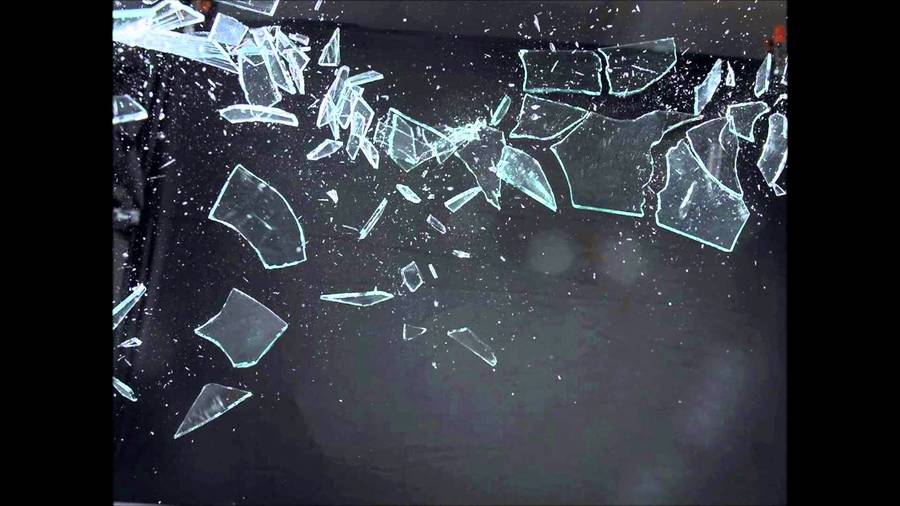

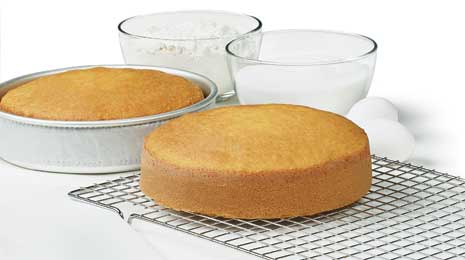


What type of particles does the image show?
Gas
Liquid
Solid

What type of particles does the image show?
Gas
Liquid
Solid

What type of particles does the image show?
Gas
Liquid
Solid
More kinetic energy makes liquid particles speed up.
True
False
An increase of kinetic energy will make gas particles slow down.
True
False

Which group of elements could have the characteristic of brittle?
Metal
Nonmetal

Noah and Enrique conducted a laboratory investigation to learn more about the physical properties of different elements. They observed four samples and recorded their observations in the table . Based on these observations, which sample is most likely a nonmetal?
Which element is classified as a metalloid?
Oxygen
Silicon
Gold
Sodium
A student is given four unknown elements and must classify each as a metal, metalloid, or nonmetal. The student observes the following properties: - Element 1: Shiny, conducts electricity, malleable - Element 2: Dull, does not conduct electricity, brittle - Element 3: Shiny, brittle, semiconducts electricity - Element 4: Gas at room temperature Which element is most likely a metalloid? Explain your reasoning.
Element 1, because it is shiny and conducts electricity.
Element 2, because it is dull and brittle.
Element 3, because it is shiny, brittle, and semiconducts electricity.
Element 4, because it is a gas.
You are given two unknown elements. Element X is shiny, malleable, and conducts electricity very well. Element Y is dull, brittle, and does not conduct electricity. How would you classify each element, and what evidence supports your classification?
X is a nonmetal, Y is a metal, because of their appearance.
X is a metal, Y is a nonmetal, because of their physical and electrical properties.
X is a metalloid, Y is a rare earth metal, because of their conductivity.
X is a rare earth metal, Y is a metalloid, because of their malleability.
What happens to particles when temperature decreases?
The get further apart
They get closer together
They stay the same.
What is the difference between mass and weight?
Mass measures the pull of gravity, weight does not
Mass measures the amount of matter, weight does not
Weight measures the amount of matter, mass does not.
What is the measurement of the amount of space an object takes up?
mass
volume
density
What is the measurement of the amount of matter in an object?
mass
volume
density
What is the amount of mass per unit of volume?
mass
volume
density
What happens to an object that is denser (more dense) than the liquid it is in?
floats
sinks
What happens to an object that is less dense than the liquid it is in?
floats
sinks
It has anything that has mass and occupies space.
A. matter
B. molecule
C. element
D. substance
It a state of matter wherein it has a definite shape and volume.
A. liquid
B. gas
C. solid
D. all of the above
It is a combination of two or more substances.
A. substance
B. mixture
C. compound
D. matter
It is a mixture wherein it has a single phase or uniform substances.
A. homogenous mixture
B. heterogenous mixture
C. solute
D. solvent

COFFEE IS
GAS
ELEMENT
HOMOGENEOUS MIXTURE
HETEREGENEOUS MIXTURE

BURGER IS
LIQUID
ELEMENT
HETEROGENEOUS MIXTURE
HOMOGENEOUS MIXTURE

CHOCOLATE CHIPS IS
SOLUTION
NOT A MIXTURE
HOMOGENEOUS MIXTURE
HETEROGENEOUS MIXTURE

TOMATO KETCHUP IS
HETEROGENEOUS MIXTURE
ELEMENT
MOLECULE
HOMOGENEOUS MIXTURE

MILK IS
MOLECULE
HETEROGENEOUS MIXTURE
SOLID
HOMOGENEOUS MIXTURE


What is the definition of a homogeneous mixture?
A mixture where the components separate into distinct layers according to density.
A mixture where the components are distributed unevenly and the composition varies throughout.
A mixture where the components are distributed uniformly and the composition is the same throughout.
A mixture where the components are distributed randomly and the composition changes at different points.

What is a homogenous mixture?
Something that you can mix and take out
You can mix it but it can not be separated
Heterogenous mixture
homogenous mixture is separating things and easily taking it out
6. Your science teacher showed in class a bowl of fruit and vegetables
salad. Your classmate examined the mixture and was able to
distinguish fruits from vegetables. What type of mixture was presented
by your teacher?
A. colloid
B. heterogeneous (Non-Uniform)
C. homogeneous (Uniform)
D. solution
What is the definition of a heterogeneous mixture?
A combination of two or more substances that are separated by a filter.
A combination of two or more substances that are not evenly distributed or mixed together.
A mixture that contains only one type of substance.
A combination of two or more substances that are evenly distributed or mixed together.
Give an example of a heterogeneous mixture.
Air
Pure water
Trail mix
Salt water
Identify which images are HETEROGENEOUS MIXTURES! (Check all that apply)


Why is a bowl of cereal with milk considered a heterogeneous mixture?
Because the cereal and milk are evenly distributed.
Because the cereal and milk are not evenly distributed and can be separated.
Because the cereal and milk cannot be separated.
Because the cereal and milk are both liquids.
How would you separate a mixture of sand and water?
by sorting by shape
by evaporation
by using a magnet
by filtering
_______________ is the combination of two or more different materials.
solution
mixture
filteration
evaporation
Which is a form of heterogeneous mixture?
gravel and water
sugar and water
powdered milk and water
powdered coffee and water
Salt is dissolved in water. How can you separate the salt from water?
add more salt
filter the water
dispose the water
boil the water and let it evaporate
Which of the following is a pure substance?
Saltwater
Oxygen gas
Salad
Sand and iron filings
Which of the following is an example of a pure substance?
Milk
Carbon dioxide
Soil
Orange juice

Aluminum:
Pure Substance or Mixture?
Pure Substance
Mixture

Diamond:
Pure Substance or Mixture?
Pure Substance
Mixture

Dr. Pepper:
Pure Substance or Mixture?
Pure Substance
Mixture

Sand:
Pure Substance or Mixture?
Pure Substance
Mixture

Salt:
Pure Substance or Mixture?
Pure Substance
Mixture

