
 Worksheets
BSP3153 POLYMERS CHAPTER 1
Total questions: 51
Worksheet time: 3hrs 33mins
Explain the difference between thermoplastics, thermosets, and elastomers.
Hydrocarbon polymers are defined as polymers with which elements in their chain?
Explain why polyethylene and polypropylene are classified as hydrocarbon polymers.
Explain the difference between homopolymers and copolymers.
Describe how copolymers might combine the characteristics and properties of the mixed monomers.
Discuss the significance of using mixed monomers in the formation of copolymers.
Explain how the properties of polymers are influenced by the details of their chain structure. Include at least three specific structural features that affect polymer properties.
List and briefly describe four types of copolymers.
What is a random copolymer? Provide an example of its monomer arrangement.
Describe the role of stereochemistry or tacticity in determining polymer properties.
Explain the significance of geometric isomerization in diene type polymers.
Why is the sequence of monomer units important in copolymers?
Explain the structural difference between a block copolymer and an alternating copolymer. Use examples in your explanation.
Describe the structure of a graft copolymer and explain how it differs from block and alternating copolymers.
List and briefly explain three factors that influence the production of graft copolymer architecture.
Given the polymer sequence AAAAAAAABBBBBBB, identify the type of copolymer and justify your answer.
Given the polymer sequence ABABABABABABABABA, identify the type of copolymer and justify your answer.
Explain why the arrangement of monomer segments is important in determining the properties of copolymers.
Describe how hydrophobicity and hydrophilicity of monomers can affect the structure and properties of graft copolymers.
Polymers can be classified based on their chain structure. What are the three main types of polymer chain structures?
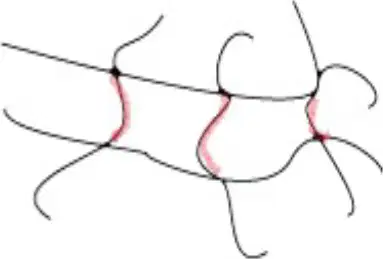
Examine the diagram showing linear, branched, and crosslinked polymer chains. Describe one key visual difference between a linear polymer and a crosslinked polymer.
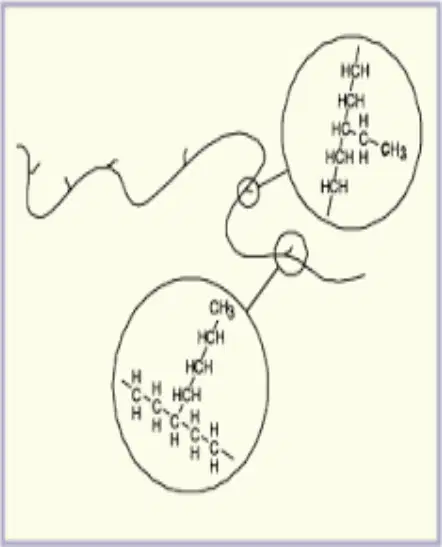
Polyethylene (PE) can exist in linear, branched, and crosslinked forms. Based on the chemical structure diagrams, explain how the structure of branched PE differs from linear PE.
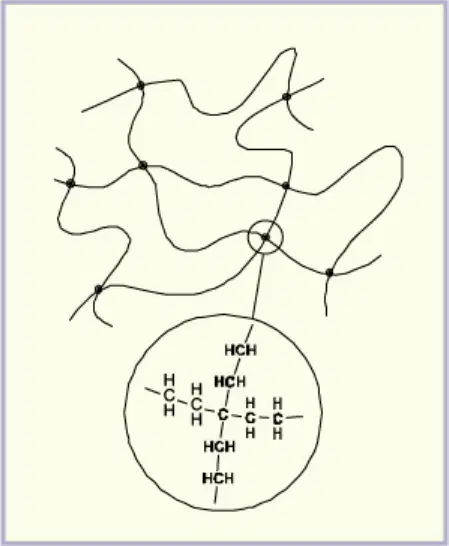
Refer to the chemical structure diagrams of polyethylene. What structural feature allows crosslinked PE to form a network?
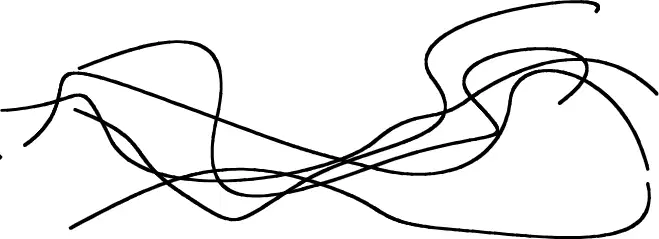
When a linear polymer is stretched, what happens to its chains and its ability to return to its original form?
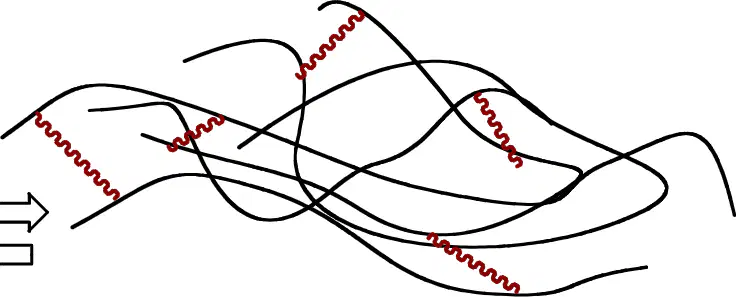
How does the behavior of a cross-linked polymer differ from a linear polymer when both are stretched and then released?
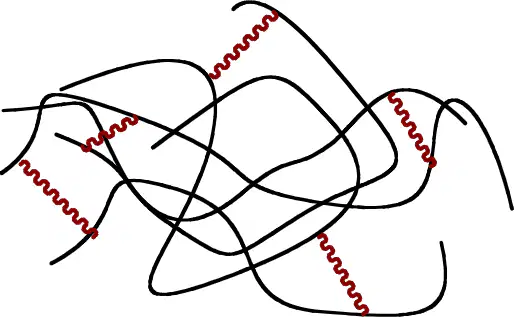
Explain the role of cross-links in the mechanical properties of polymers.
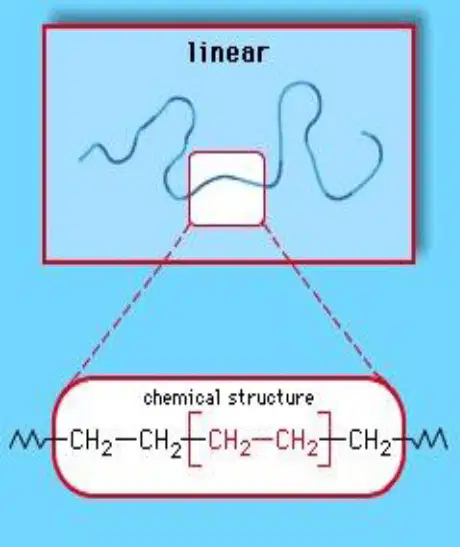
Describe how the chain structure of a polymer affects its physical properties, using examples from linear, branched, and crosslinked polyethylene.
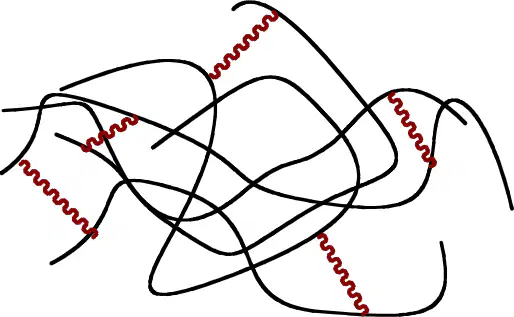
Based on the diagrams and explanations, why might crosslinked polymers be preferred for applications requiring shape memory or resilience?
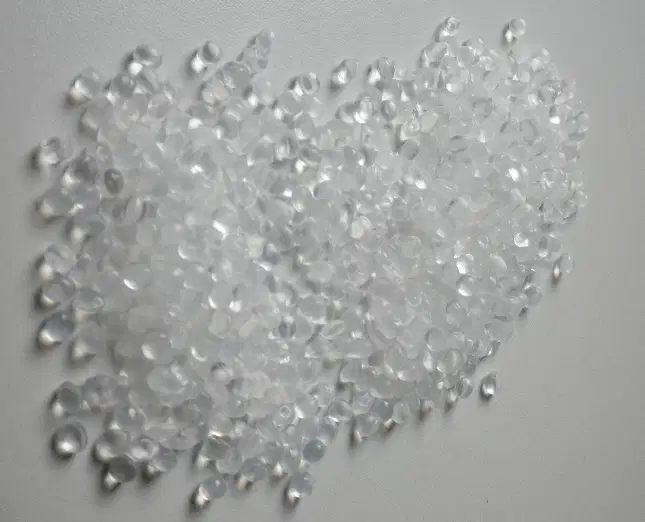
Examine the image showing granules of polyethylene (PE) and tubing made from crosslinked polyethylene (PE). Explain the difference between standard PE granules and crosslinked PE tubing in terms of their structure and typical applications.

Based on the visual comparison of granules PE and tubing (crosslinked PE), discuss how the process of crosslinking affects the properties and uses of polyethylene.
Explain what is meant by chemical bonding and describe the energy change that occurs when two or more atoms attract each other.

Analyze the diagram showing bonding energy as a function of distance. Describe what happens to the system energy as two atoms approach each other and form a bond.
Define ionic bonding and explain how it occurs between atoms.
Using the diagram of sodium and chlorine atoms, explain the process of ionic bond formation between Na and Cl.
Describe metallic bonding and the role of electrons in this type of bond.
Interpret the diagram showing the formation of metallic bonds in iron. Explain how the sea of electrons contributes to the bonding.
Define covalent bonding and explain how electron sharing leads to bond formation.
Using the diagram of carbon and hydrogen atoms, describe how covalent bonds are formed in a molecule containing these elements.
What is secondary bonding, and how does it differ from ionic, metallic, and covalent bonds? Give examples.
Analyze the diagram showing hydrogen bonds and induced dipole bonds. Explain the nature of these secondary bonds and how they form between molecules.
Explain the difference between homopolymers and copolymers in terms of the types of repeating units (RUs) present in their molecular chains.
List one example of a homopolymer and one example of a copolymer.
Describe the possible structures of homopolymers.
Describe the possible structures of copolymers.
Name and briefly describe the three chemical configurations of repeating units (RU) in polymers.
Explain how stereoregularity affects the physical properties of polymers, such as chain folding and crystallinity.
Define the terms 'stereo-regular' and 'stereo-irregular' in the context of polymer molecular structure, and state the consequences for polymer morphology.
Refer to the diagram showing three polymer structures labeled isotactic, syndiotactic, and atactic. Which type of polymer has all its side groups oriented on the same side of the polymer chain?
Based on the diagram of polymer tacticity, which type of polymer has side groups that alternate in orientation along the polymer chain?
In the diagram of polymer structures, which type of polymer displays a random orientation of its side groups?
Explain how the arrangement of side groups in isotactic, syndiotactic, and atactic polymers affects their physical properties.

