
 Worksheets
Chem Midterm Review 25-26
Total questions: 52
Worksheet time: 55mins

Which color in the visible spectrum has the shortest wavelength?
Red
Green
Yellow
Violet
Orange
Arrange the following elements in order of increasing atomic radius: Rb, Li, K, Na
Li, Na, K, Rb
Rb, K, Na, Li
Na, Li, K, Rb
Li, K, Na, Rb
A horizontal row in the periodic table is called a:
group
period
noble gas
halogen
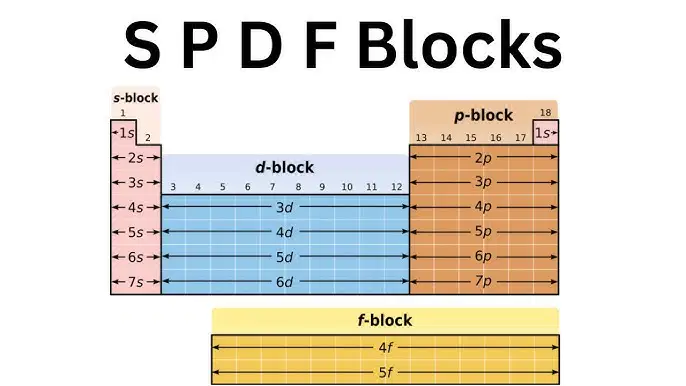
What is the general valence electron configuration of a halogen?
3s²3p¹
3s²3p²
3s²3p⁵
3s²3p⁶
Element B from group 2 bonds with Element E from group 15. What is the chemical formula of this compound?
B₃E₂
B₂E₃
B₃E
BE₃
The mass of a hydrogen atom is 0.00000000000000000000000167 g. What is this number in scientific notation?
1.67 × 10⁻²⁴ g
1.67 × 10²⁴ g
1.67 × 10⁻²³ g
1.67 × 10⁻²⁶ g
What is the result of converting 532 centigrams to grams?
0.00532 g
0.0532 g
0.532 g
5.32 g
A newly discovered element, Novium, has two naturally occurring isotopes: Nv-100 and Nv-104. In a sample, 75% of the atoms are Nv-100 and 25% are Nv-104. Calculate the average atomic mass of Novium.
101.0 amu
102.0 amu
103.0 amu
104.0 amu
How many protons, neutrons, and electrons are in this unknown ion? The ion is represented as: 1942X3+
19 protons, 19 electrons, 23 neutrons
19 protons, 16 electrons, 23 neutrons
19 protons, 16 electrons, 19 neutrons
16 protons, 19 electrons, 23 neutrons
What is the maximum number of electrons in the second principal energy level?
2
6
8
10
How many valence electrons does a sulfur atom have?
4
6
8
2
What is the total number of valence electrons in an atom with the following electron configuration: 1s²2s²2p⁶3s²3p³?
6
2
3
5
Which of the following sets correctly matches the symbol and name for each ion?
Pb2+: lead(II) ion; Pb4+: lead(IV) ion
Co2+: cobalt(II) ion; Co3+: cobalt ion
Sn2+: tin(IV) ion; Sn4+: tin(II) ion
I-: iodine ion; Cl-: chlorine ion
What is the correct name for Fe₂(SO₄)₃?
iron(II) sulfate
iron(III) sulfate
diiron trisulfate
ferrous sulfate
iron sulfate
Balancing chemical equations ensures compliance with which scientific law?
Law of definite proportions
Principle of Avogadro
Law of conservation of mass
Law of multiple proportions
What are the missing coefficients for the chemical equation below? FeCl₃ (aq) + NaOH (aq) → Fe(OH)₃ (s) + NaCl (aq)
1,3,1,3
2,6,2,6
1,6,2,3
2,3,2,3
What are the missing coefficients for the chemical equation below? C2H4(g)+O2(g)→CO2(g)+H2O(g)
1,3,2,2
2,2,4,2
1,2,2,2
2,3,2,2
Which of the following chemical equation symbols is correctly matched with its meaning?
(g), gaseous state
(aq), acid solution
(s), solution
(l), lithium
When the following equation is balanced, NaClO3(s)→NaCl(s)+O2(g) , the coefficient of NaClO3 is _____.
1
2
3
4
Which type of reaction is represented by the equation: N2+3H2→2NH3 ?
Decomposition reaction
Combustion reaction
Synthesis reaction (combination reaction)
Double replacement reaction
The equation Zn(s)+2HCl(aq)→ZnCl2(aq)+H2(g) is an example of which type of reaction?
Single replacement reaction
Double displacement reaction
Synthesis reaction (combination reaction)
Combustion reaction
Which of the following is a non-metal?
Potassium
Neon
Silver
Iron
What is the charge on a sodium ion when it forms?
+1
+2
-1
-2
Which pair of elements is most likely to form a covalent compound?
Chlorine and sulfur
Iron and copper
Calcium and magnesium
Silver and gold
What is the number of valence electrons in magnesium?
1
2
6
8
Which of the following elements is classified as a main group element rather than a transition metal?
Nickel
Chromium
Magnesium
Silver
Which element is most likely to attract electrons in a chemical bond?
Potassium
Bromine
Fluorine
Nitrogen
Compared to a 700 nm photon, a 480 nm photon has:
shorter wavelength, higher frequency, higher energy.
longer wavelength, lower frequency, lower energy.
shorter wavelength, lower frequency, higher energy.
longer wavelength, higher frequency, lower energy.
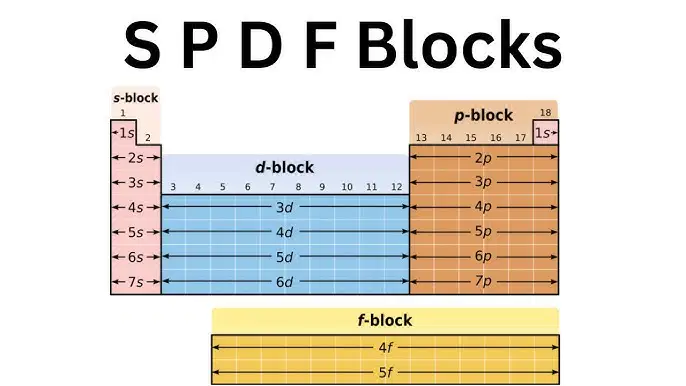
What is the maximum number of electrons that can occupy the f sublevel?
10
14
7
6
A double replacement reaction occurs when iron (III) nitrate (Fe(NO₃)₃) reacts with sodium hydroxide (NaOH). One of the products would be _____.
Fe(OH)₃
NaNO₃
FeNa₃
Na(OH)₃
Fe(NO₃)₂
Which gas is always required for a combustion reaction to occur?
carbon dioxide
oxygen gas
helium
chlorine gas
Which of the following pairs has the correct chemical name and formula?
potassium sulfide, K₂SO₄
magnesium bromide, MgBr₂
iron(III) oxide, FeO
calcium phosphate, CaPO₄
lead(II) nitrate, Pb(NO₃)₄
Which of the following correctly shows a prefix used in naming covalent compounds with its corresponding number?
tetra-, 4
penta-, 2
hepta-, 6
tri-, 8
When group 13 elements form ions, they ______.
lose three electrons.
lose three protons.
gain three protons.
gain three electrons.
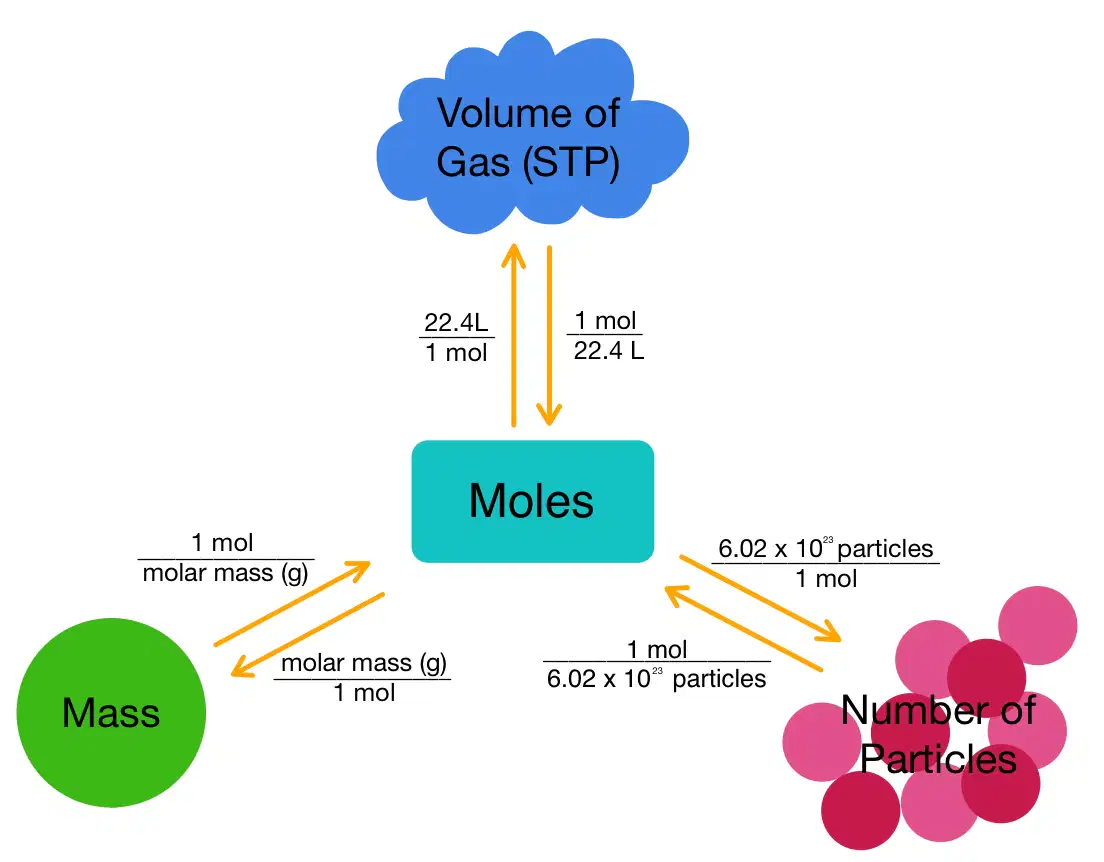
A chemist has 50.0 grams of solid magnesium. What should they do to calculate the number of moles of magnesium present?
They would divide by the molar mass of magnesium.
They would multiply by the molar mass of magnesium.
They would divide by Avogadro’s number.
They would multiply by Avogadro’s number.
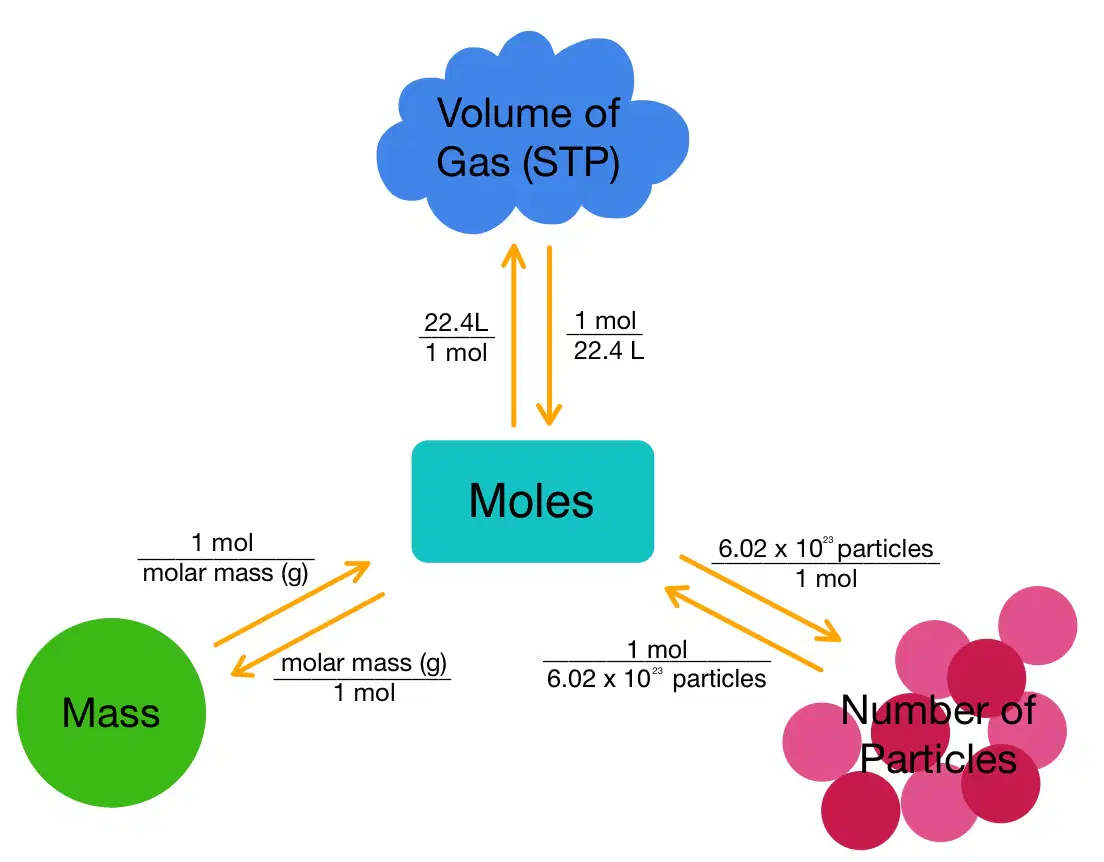
What is the volume, in liters, of 4.5 moles of Ne gas at STP?
101 L
22.4 L
4.5 L
0.20 L
How many representative particles are found in 11.2 L of CO₂ at STP?
3.0 x 10²³ particles
6.0 x 10²³ particles
1.2 x 10²⁴ particles
2.4 x 10²⁴ particles
What is the formula mass of FeSO₄?
151.9 g/mol
278.0 g/mol
207.9 g/mol
200.0 g/mol
If there is one mole of O₂ gas and one mole of He gas, which of the following statements is TRUE?
O₂ has a greater volume.
He has a greater volume.
They both have the same volume.
There is not enough information.

What is the percent composition of barium in BaCrO₄?
58.7%
52.1%
45.2%
36.4%
How many formula units of magnesium chloride are in 7.50 grams of the sample?
3.01 x 10²² formula units
1.50 x 10²² formula units
6.02 x 10²³ particles
2.51 x 10²² formula units
4.80 x 10²² formula units
What particles form the nucleus of an atom?
protons and electrons
neutrons and electrons
protons and neutrons
electrons only
Answer using the correct sig figs: 3.56×10−72.5×1010
7.0 × 10¹⁶
7
1.4 × 10⁻¹⁷
5.0 × 10¹⁶
Group 1 elements are called:
Halogens
Alkaline Earth Metals
Alkali Metals
Noble Gases
Which one of the following would result in a reaction?
Iron with magnesium chloride
magnesium with iron chloride
Iron with Zinc Sulphate
gold with silver nitrate

What will be the result of : Zn + AuCl2->
ZnCl2 +Au
ZnAu + Cl2
no reaction
ClAu + Zn

Which of the waves shown is the lowest energy radiation?
A
B
C
All three waves are at the same energy.
None of these.
What is the energy of a quantum of light with a frequency of 7.39x10¹⁴Hz. ( E=hν )
4.88x10¹⁹ J
4.88x10⁻¹⁹ J
2.22x10²³ J
2.22x10⁻²³ J
The frequency of violet light is 7.5x10¹⁴ Hz. What is its wavelength? ( c=λν )
4.0x10⁻⁷ m
4.0x10⁷ m
2.25x10²³m
2.25x10²³ Hz


Look at the periodic table that is provided. Where would semimetals/metalloids be located?
to the left of the table
to the right of the table
in the zigzag line

