
Font size
 Worksheets
Participating in the School Opening Ceremony
Total questions: 99
Worksheet time: 50mins
What is one of the specific skills required for students when participating in the school opening ceremony?
Arrange the order of activities and tasks in their daily routine
Sing the national anthem perfectly
Wear the fanciest clothes
Bring gifts for teachers
Students are required to follow the timetable they have set for themselves during the school opening ceremony.
True
False
Which of the following is a general skill required for students during the school opening ceremony?
A) Communication and cooperation
B) Cooking skills
C) Drawing skills
D) Swimming skills
Fill in the blank: Students should have a sense of safety when decorating the classroom.
Sense of safety
Sense of humor
Sense of adventure
Sense of style
Students are encouraged to participate in common activities of the school and class during the opening ceremony.
True
False
What is one of the qualities students should demonstrate during the school opening ceremony? Fill in the blank: Students should show ________ by participating in labor and arranging the order of daily activities.
Responsibility
Creativity
Curiosity
Friendliness
Which item should students bring for the school opening ceremony?
Uniform
Sports equipment
Books
Food
Fill in the blank: Students should ___ during the school opening ceremony.
Sing songs about their class
Eat lunch in the classroom
Play video games
Go home early
What is the content of the song?
The lyrics and message of the song
The singer's favorite color
The instruments used in the song
The length of the song
Which of the following activities usually happen during the day?
Eating breakfast
Sleeping at night
Watching stars
Turning on street lights
Which of the following is an activity that usually happens during the day?
Sleeping at night
Having breakfast
Watching stars
Going to bed
Which materials are needed to create your daily schedule and present it to your group?
Paper, colored pencils, scissors, and glue
Paper, markers, tape, and stickers
Notebook, crayons, stapler, and ruler
Cardboard, pens, eraser, and paint
Which of the following best describes the activity of recording your daily schedule and sharing your observations and self-assessment?
Keeping a daily log and reflecting on your activities.
Ignoring your daily schedule and not sharing any observations.
Only recording activities without any self-assessment.
Sharing observations without recording the schedule.
In the song, you love:
music
dancing
singing
love
Nature has something that you love, little one. What is it?
The trees
The buildings
The cars
The roads
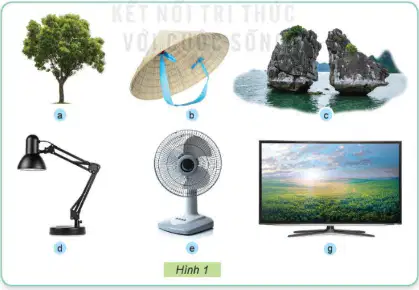
Observe the picture (Hình 1) and name the objects you see.
a. cây xanh; b. nón lá; c. núi đá trên biển; d. đèn đọc sách; e. quạt; g. Tivi.
a. xe đạp; b. ô tô; c. máy bay; d. tàu hỏa; e. thuyền; g. xe máy.
a. bút; b. sách; c. vở; d. bảng; e. ghế; g. bàn.
a. điện thoại; b. máy tính; c. máy in; d. máy ảnh; e. loa; g. máy chiếu.
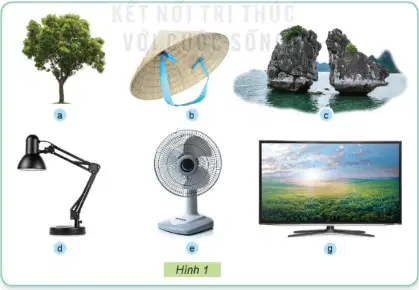
Among the objects in the picture (Hình 1), which ones are made by humans and which ones are not?
Objects made by humans: b. nón lá; d. đèn đọc sách; e. quạt; g. Tivi. Objects not made by humans: a. cây xanh; c. núi đá trên biển.
Objects made by humans: a. cây xanh; c. núi đá trên biển. Objects not made by humans: b. nón lá; d. đèn đọc sách; e. quạt; g. Tivi.
Objects made by humans: b. nón lá; c. núi đá trên biển; e. quạt; g. Tivi. Objects not made by humans: a. cây xanh; d. đèn đọc sách.
Objects made by humans: a. cây xanh; b. nón lá; d. đèn đọc sách; e. quạt. Objects not made by humans: c. núi đá trên biển; g. Tivi.
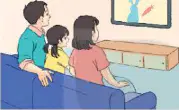
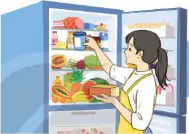
Based on the picture and the suggested words (giải trí, làm mát, chiếu sáng, bảo quản thực phẩm), state the uses of the technological products shown in the picture.
Tivi, máy thu thanh: entertainment; Quạt điện: cooling; Tủ lạnh: preserving food.
Tivi, máy thu thanh: cooling; Quạt điện: preserving food; Tủ lạnh: entertainment.
Tivi, máy thu thanh: preserving food; Quạt điện: entertainment; Tủ lạnh: cooling.
Tivi, máy thu thanh: lighting; Quạt điện: entertainment; Tủ lạnh: cooling.
A technological product is created by humans, while a natural object is found in nature. Which of the following best describes the difference between a technological product and a natural object?
A technological product is made by humans; a natural object occurs naturally.
A technological product is found in nature; a natural object is made by humans.
Both are created by humans.
Both are found in nature.
Look at the picture labeled (a). What is this technological product? Fill in the blank: This is a _________.
TV
Refrigerator
Microwave
Washing Machine
Look at the picture labeled (b). What is this technological product? Fill in the blank: This is a _________?
Refrigerator
Microwave
Washing Machine
Television
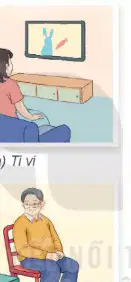
Look at the picture labeled (c). What is this technological product? Fill in the blank: This is a _________.
Radio
Television
Computer
Microwave
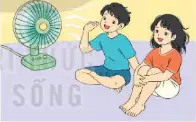
Look at the picture labeled (d). What is this technological product? Fill in the blank: This is a _________.
Fan
Refrigerator
Television
Microwave
Look at the picture labeled (e). What is this technological product? Fill in the blank: This is a _________.
Electric light bulb
Electric fan
Television
Refrigerator
What is the function of the electric light bulb? Choose the correct answer:
To keep food cold
To provide light
To play music
To cool the air
Give an example of a technology product that is used to cool a room.
Quạt, máy điều hoà (fan, air conditioner)
Bếp điện (electric stove)
Máy sưởi (heater)
Lò vi sóng (microwave oven)
Give an example of a technology product that is used to light up a room.
Bóng đèn điện (electric light bulb)
Máy giặt (washing machine)
Tủ lạnh (refrigerator)
Quạt điện (electric fan)
Give an example of a technology product that is used to preserve and store food.
Tủ lạnh (refrigerator)
Máy giặt (washing machine)
Quạt điện (electric fan)
Ti vi (television)
Give an example of a technology product that is used to show movies or films.
Tivi (television)
Refrigerator
Washing machine
Microwave oven
Give an example of a technology product that is used to heat food.
Bếp điện, bếp ga (electric stove, gas stove)
Tủ lạnh (refrigerator)
Máy giặt (washing machine)
Quạt điện (electric fan)
Trong hoạt động kể chuyện ngày hè theo bài học 'Ngày gặp lại', học sinh cần làm gì?
Kể lại một câu chuyện trong ngày hè của mình
Viết một bài thơ về mùa hè
Vẽ một bức tranh về kỳ nghỉ hè
Đóng vai nhân vật trong truyện cổ tích
The teacher reads the story with which of the following emotions or feelings?
Excitement
Boredom
Anger
Confusion
Việc giữ gìn vệ sinh môi trường sống luôn sạch đẹp là quan trọng vì:
Giúp bảo vệ sức khỏe con người và động vật.
Làm tăng lượng rác thải trong môi trường.
Gây ô nhiễm nguồn nước và không khí.
Làm giảm chất lượng cuộc sống.
Những chi tiết nào thể hiện niềm vui khi gặp lại nhau của Chi và Sơn?
Chi và Sơn cười nói vui vẻ khi gặp lại nhau.
Chi và Sơn không nói chuyện với nhau.
Chi và Sơn cảm thấy buồn khi gặp lại nhau.
Chi và Sơn tránh mặt nhau khi gặp lại.
Câu 2: Sơn đã có những trải nghiệm gì trong mùa hè?
Sơn theo ông bà đi trồng rau, câu cá; cùng các bạn đi thả diều.
Sơn ở nhà học bài suốt mùa hè.
Sơn đi du lịch nước ngoài với gia đình.
Sơn tham gia lớp học vẽ mỗi ngày.
Câu 3: Trải nghiệm mùa hè của Chi có gì khác với Sơn?
Trải nghiệm của Chi: ở nhà được bố tập xe đạp. Còn Sơn về quê theo ông bà đi trồng rau, câu cá, theo các bạn thả diều.
Trải nghiệm của Chi: đi du lịch cùng gia đình, còn Sơn ở nhà học thêm.
Trải nghiệm của Chi: tham gia lớp học vẽ, còn Sơn đi biển với bạn bè.
Trải nghiệm của Chi: ở nhà đọc sách, còn Sơn đi thăm họ hàng ở thành phố.
Theo em, vì sao khi đi học, Mùa hè sẽ theo các bạn vào lớp?
Vì các bạn vẫn nhớ chuyện mùa hè.
Vì các bạn sẽ kể cho nhau nghe những chuyện về mùa hè.
Vì các bạn sẽ mang những đồ vật kỉ niệm của mùa hè đến lớp.
According to this lesson, what rights and duties do children have?
Quyền được vui chơi, được làm những điều mình mơ ước. Bổn phận ngoan ngoãn, vâng lời ông bà, cha mẹ.
Quyền được đi làm từ nhỏ, bổn phận không cần nghe lời cha mẹ.
Quyền được tự do hoàn toàn, không có bổn phận nào.
Quyền được học tập, nhưng không cần tôn trọng ông bà, cha mẹ.
Điều em nhớ nhất trong kì nghỉ hè vừa qua là gì?
Chuyến đi biển cùng gia đình
Học thêm ở trường
Ở nhà xem tivi suốt ngày
Không làm gì đặc biệt
During summer vacation, what is something you might do?
Go to school every day
Travel to a new place
Attend winter camp
Take final exams
The activity in the video is fun and safe.
True
False
Only fun, not safe
Only safe, not fun
After the lesson, what should we do to keep our environment clean and beautiful?
We should always be conscious to keep things clean and protect the environment.
We should ignore litter and let others clean up.
We should only clean up when someone tells us to.
We should throw waste anywhere we like.
Trong hộp có 100 quả bóng, trong khay có 20 quả. Số đó là bao nhiêu?
120
110
100
80
Có 2 bó que tính, mỗi bó 100 que, có thêm 4 bó mỗi bó 10 que. Số đó là bao nhiêu?
240
210
204
140
Có 2 tấm mỗi tấm 100 ô vuông, có 3 cột mỗi cột 10 ô vuông, thêm 8 ô vuông nữa. Số đó là bao nhiêu?
238
218
248
228
Có 5 tấm mỗi tấm 100 ô vuông, có 3 cột mỗi cột 10 ô vuông, thêm 4 ô vuông nữa. Số đó là bao nhiêu?
534
504
514
544
Refer to the number line: 460, 470, 480, 490, 500. What is the number just before 470?
469
468
470
471
Refer to the number line: 460, 470, 480, 490, 500. What is the number just after 489?
490
491
495
500
715 consists of how many hundreds, tens, and units? Write 715 as the sum of hundreds, tens, and units.
715 = 700 + 10 + 5 (7 hundreds, 1 ten, 5 units)
715 = 700 + 15 + 0 (7 hundreds, 15 tens, 0 units)
715 = 700 + 1 + 15 (7 hundreds, 1 ten, 15 units)
715 = 710 + 5 + 0 (7 hundreds, 10 tens, 5 units)
Name the student who collected the most plastic bottles.
Hương (165 bottles)
Minh (120 bottles)
Lan (98 bottles)
Tú (143 bottles)
List the names of the students in order from most to least bottles collected.
Hương (165), Hải (148), Xuân (112), Mạnh (95)
Hải (148), Hương (165), Xuân (112), Mạnh (95)
Xuân (112), Mạnh (95), Hải (148), Hương (165)
Mạnh (95), Xuân (112), Hải (148), Hương (165)
Estimate the number of bees and the number of flowers in the picture.
There are 3 bees and 5 flowers.
There are 2 bees and 4 flowers.
There are 4 bees and 6 flowers.
There are 5 bees and 3 flowers.
How many bees are there?
32 bees
20 bees
15 bees
40 bees
Look at the picture of the bees and flowers. How many flowers are there?
23 flowers
15 flowers
30 flowers
10 flowers
Based on the diagram of theater seats, which row contains the seat numbers 231 and 232 for the father and Ngoc?
Row 23
Row 2
Row 31
Row 12
Look at the picture and guess the name of the object that starts with the letter 'c'.
cá chép (carp)
cây (tree)
cửa (door)
kẹo (candy)
Look at the picture and guess the name of the object that starts with the letter 'k'.
kẹo (candy)
kim (needle)
kính (glasses)
cá chép (carp)
To keep the environment clean and beautiful, you should:
Throw garbage in rivers
Plant trees and dispose of waste properly
Burn plastic waste openly
Ignore littering in public places
Viết tên các đồ vật trong hình bắt đầu bằng chữ 'c'.
cây (tree), cửa (door), cờ (flag), cân (scale)
bàn (table), ghế (chair), sách (book), đèn (lamp)
xe (car), nhà (house), mèo (cat), chó (dog)
bút (pen), giấy (paper), thước (ruler), sách (book)
Write the names of objects in the picture that start with the letter 'k'.
kính (glasses), kim (needle), kẹo (candy), kéo (scissors)
bút (pen), sách (book), bàn (table), ghế (chair)
đèn (lamp), thước (ruler), giấy (paper), cốc (cup)
mũ (hat), dép (slippers), áo (shirt), quần (pants)
Which of the following is an activity you could do during your school break but not during the school year?
Traveling for several weeks
Attending regular classes
Taking school exams
Participating in daily homework assignments
Select the correct order of activities and tasks in a typical daily routine.
Wake up, have breakfast, go to work/school, return home, have dinner, sleep
Go to work/school, have breakfast, wake up, return home, have dinner, sleep
Have dinner, wake up, go to work/school, have breakfast, return home, sleep
Sleep, have dinner, return home, go to work/school, have breakfast, wake up
The word 'kem' starts with the letter _____
k
m
e
a
Fill in the blank: The word 'cắt' starts with the letter _____
c
a
b
d
The song you listened to is about:
A) Your class
B) Your school
C) Your family
D) Your friends
Your class
Your school
Your family
Your friends
Which of the following best describes the main task in Activity 2: Learn about daily activities?
Observe pictures and identify daily and occasional activities.
Write a paragraph about your favorite activity.
Match activities to their correct time of day.
List all activities performed in the textbook.
Why do some activities in the pictures not happen every day?
Because some activities are special and only happen occasionally.
Because all activities must happen every day.
Because activities in pictures are imaginary.
Because people do not like doing activities every day.
Besides the activities you see, are there any other activities that happen during the day that you know of?
Yes, there are other activities that happen during the day.
No, there are no other activities during the day.
Only the activities you see happen during the day.
Activities only happen at night.
Fill in the blank: The song you sang in class is about ________.
school/class life
animals
sports
weather
Fill in the blank: An activity that does not happen every day is ________.
visiting relatives/going to the temple
brushing teeth
having breakfast
going to school
To create a daily schedule, how many steps do you need to follow? What are those steps?
You need to follow 3 steps: Set goals, allocate time, and review progress.
You need to follow 5 steps: Set goals, make a list, allocate time, prioritize tasks, and review progress.
You need to follow 2 steps: Set goals and allocate time.
You need to follow 4 steps: Set goals, make a list, allocate time, and review progress.
Making your daily schedule helps you to:
Organize your tasks and manage time effectively
Forget important activities
Increase daily confusion
Reduce productivity
The effect of following your daily schedule is:
Improved time management
Increased confusion
Reduced productivity
More missed deadlines
Sharing your daily schedule with your group and in front of the class involves:
Presenting your daily routine to your group and the class
Writing your schedule in your notebook only
Ignoring the group and presenting alone
Sharing your schedule only with the teacher
Evaluate your classmate's daily schedule.
It involves reviewing and assessing their daily activities.
It requires creating a new schedule for them.
It means ignoring their daily routine.
It is about copying their schedule exactly.
Số liền trước số 389 là số nào?
388
389
390
387
Số liền sau số 609 là số nào?
610
608
611
600
Số gồm 4 trăm và 5 đơn vị là số nào?
405
450
504
400
Số 901 và 899, số nào lớn hơn?
901
899
890
819
8 + 2 = ___
10
12
8
6
9 + 5 = ___
14
12
15
13
13 - 4 = ___
9
7
8
10
10 - 3 = ___
7
6
8
5
38 + 2 = ___
40
39
41
36
19 + 5 = ___
24
22
25
20
23 - 4 = ___
19
20
17
15
50 - 3 = ___
47
45
48
43
98 + 2 = ___
100
99
101
98
29 + 5 = ___
34
32
35
30
83 - 4 = ___
79
80
78
77
100 - 3 = ___
97
93
96
98
Bài 2: Đặt tính rồi tính (Làm việc chung cả lớp). Calculate the following: 1. 49 + 25 = ____
74
72
84
64
Bài 2: Đặt tính rồi tính (Làm việc chung cả lớp). Calculate the following: 2. 63 - 58 = ____
5
3
6
10
Bài 2: Đặt tính rồi tính (Làm việc chung cả lớp). Calculate the following: 3. 37 + 63 = ____
100
90
110
95
Bài 2: Đặt tính rồi tính (Làm việc chung cả lớp). Calculate the following: 4. 637 + 151 = ____
788
768
781
789
Bài 2: Đặt tính rồi tính (Làm việc chung cả lớp). Calculate the following: 5. 524 - 219 = ____
305
315
285
405
Bài 2: Đặt tính rồi tính (Làm việc chung cả lớp). Calculate the following: 6. 362 + 418 = ____
780
770
785
800
A book has 148 pages. Minh has read 75 pages. How many pages has Minh not read yet?
73
65
80
90
What is the number immediately before 655?
654
653
656
665

