
 Worksheets
Surgical Attire
Total questions: 77
Worksheet time: 39mins
Why should all persons entering the operating room suite be dressed in appropriate attire?
To look professional
To minimize microbial contamination
To impress patients
To follow hospital fashion trends
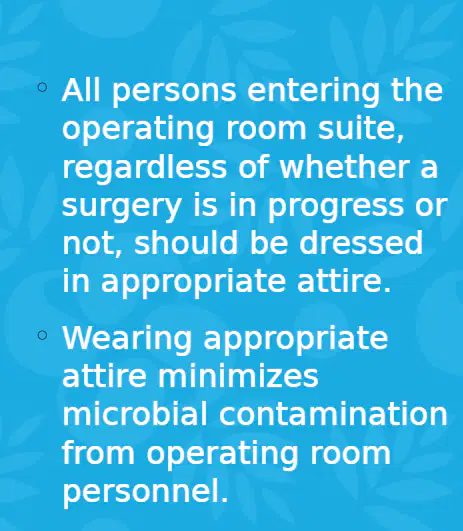
Wearing appropriate attire in the operating room helps minimize microbial contamination from personnel.
True
False
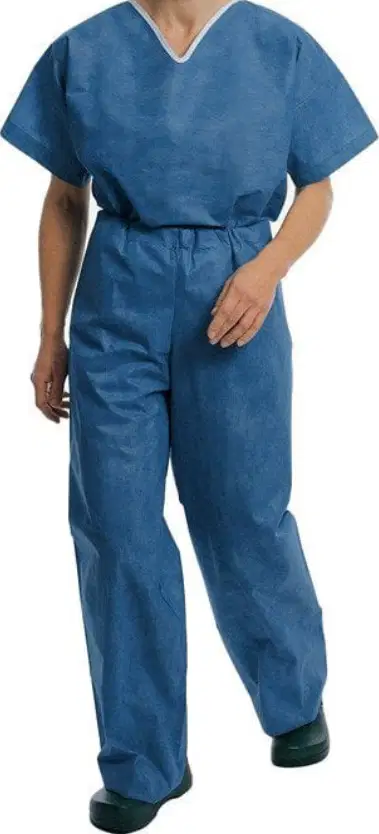
According to the guidelines for scrubbed personnel in the operating room, what type of clothes should they wear?
Casual clothes
Dedicated surgical scrub clothes
Jeans and T-shirt
Business attire
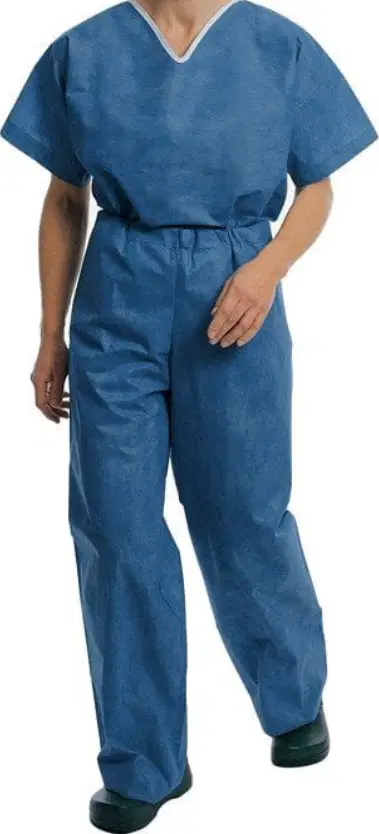
With two-piece pant suits, how should loose-fitting tops be worn by scrubbed personnel in the operating room?
Left outside the trousers
Tucked into the trousers
Worn over a jacket
Rolled up
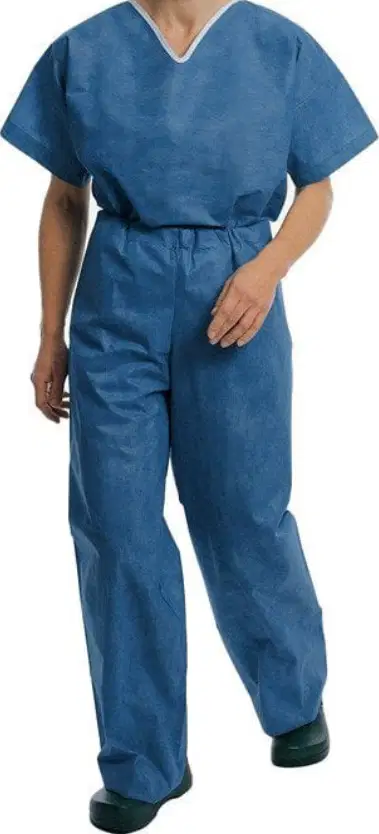
Tunic tops that fit close to the body may be worn ______ the trousers by scrubbed personnel in the operating room.
outside
inside
under
over
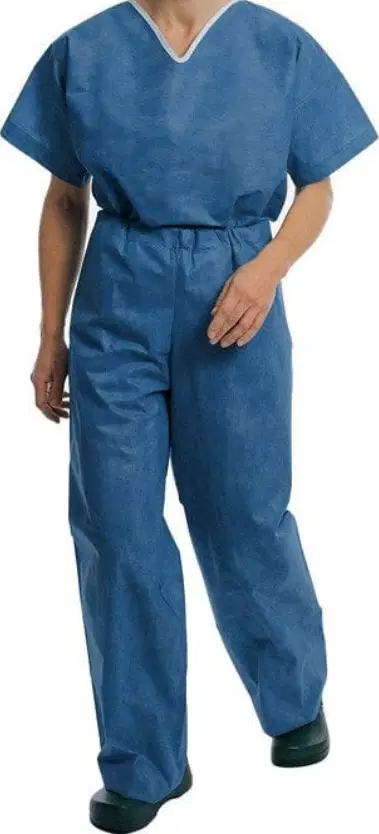
The sleeves of the top should be short enough to allow the hands and arms to be ______ by scrubbed personnel in the operating room.
scrubbed
covered
washed
hidden
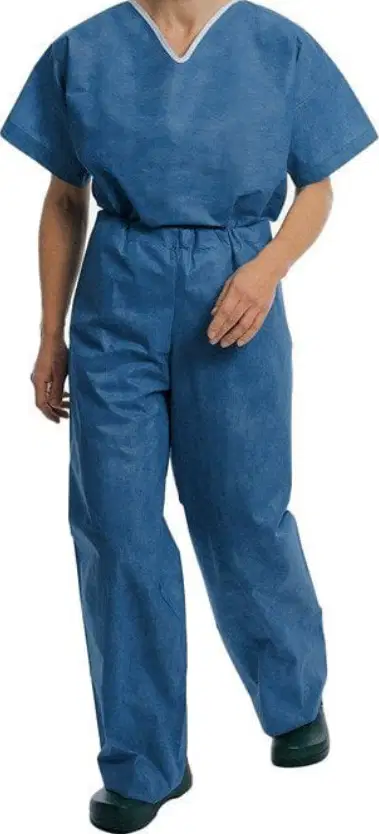
Pants worn by scrubbed personnel in the operating room should have which type of closure?
Zipper
Buttons
Elastic waist or draw-string closure
Velcro
According to the guidelines for Non-Scrubbed Personnel, what type of clothes should non-scrubbed personnel wear?
Casual clothes
Dedicated surgical scrub clothes
Lab coats
Street clothes
What should non-scrubbed personnel wear over their scrub clothes?
Apron
Jacket
Sweater
Nothing
Jackets worn by non-scrubbed personnel should be ________ or snapped closed during use to minimize the risk of the edges inadvertently contaminating sterile surfaces.
buttoned
unzipped
folded
tied
Surgical Attire: Scrub clothes should be laundered between wearings and changed if they are visibly soiled or wet to prevent transfer of microorganisms to the environment.
True
False
Wearing scrub clothes outside the surgical environment increases microbial contamination.
True
False
If a scrub suit must be worn outside the surgery room, what should be used to cover it?
A laboratory coat or single-use gown should be used to cover it.
A surgical mask should be used to cover it.
A pair of gloves should be used to cover it.
A cap should be used to cover it.
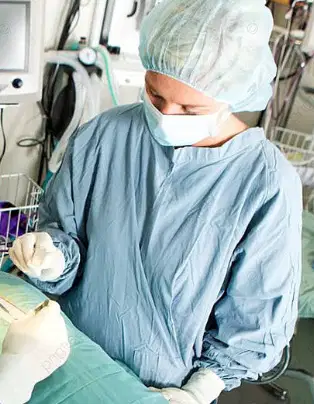
Which of the following are included in other surgical attire? (Select all that apply)
Hair coverings
Masks
Shoe covers
Gowns
Gloves

Hair is a significant carrier of ______. When left uncovered, it collects ______.
bacteria; bacteria
dust; germs
oil; dirt
water; moisture

Complete hair coverage is necessary because bacterial shedding from hair increases surgical wound infection rates.
True
False
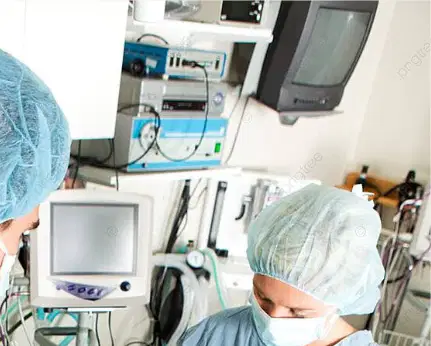
Even when surgery is not in progress, what items should be worn in the surgery suite?
Caps and masks
Gloves and aprons
Shoes and socks
Lab coats and ties
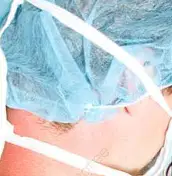
Caps should completely cover all ______ and ______ hair, and masks should cover the ______ and ______.
scalp; facial; mouth; nostrils
scalp; body; nose; ears
facial; scalp; eyes; mouth
body; facial; mouth; ears
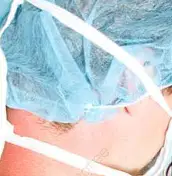
Sideburns and/or beards require a hood for complete coverage.
True
False
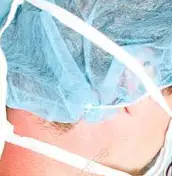
Skull caps that fail to cover the side hair above the ears and hair at the nape of the neck should be worn.
True
False
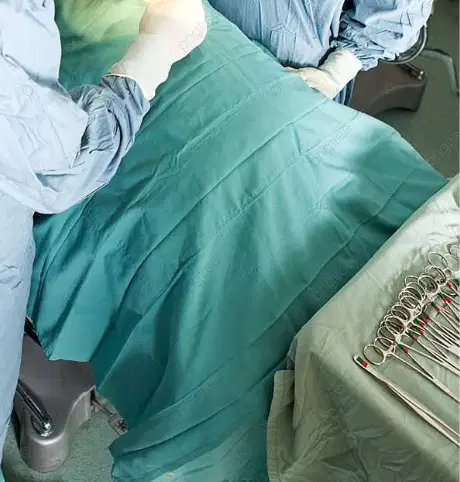
What should be removed from scrubs before entering the surgery room?
All animal hair
All buttons
All pockets
All zippers
Shoes & Shoe Covers: Any comfortable ______ can be worn in the surgical area. (Fill in the blank)
footwear
hat
gloves
mask
When should shoe covers be donned in the surgical area?
When leaving the surgical area
When first entering the surgical area
Only during surgery
Never
Shoes & Shoe Covers: New shoe covers are donned when returning to the ______ suite. (Fill in the blank)
surgery
waiting
conference
break
Shoes & Shoe Covers: Shoe covers are generally made of materials that are: Choose the correct option.
Water-repellant and tear resistant
Waterproof and fragile
Absorbent and soft
Sticky and rough
Which material is recommended for constructing masks to be worn when entering the sterile area?
Cotton
Lint-free material with hydrophilic filter web
Silk
Paper
What is the major function of the mask?
To keep the face warm
To filter and contain droplets of microorganisms expelled from the mouth and nasopharynx when talking, sneezing, or coughing
To improve breathing
To block sunlight
Masks must be fitted over the mouth and nose and secured in a manner that prevents _______.
venting
breathing
hearing
speaking
The dorsal aspect of the mask is secured by shaping the reinforcing top edge tightly around the _______.
nose
chin
ear
forehead
Which layer of the mask retains viruses in both directions?
1st layer
2nd layer
3rd layer
Outer layer
The 3rd layer of the mask adsorbs fluids from the wearer.
True
False
Which of the following materials is commonly used for reusable surgical gowns?
Nonwoven fibers
Loosely woven cotton
Plastic
Silk
Disposable (single-use) surgical gowns are made from:
Woven cotton
Nonwoven fibers made directly from fibers rather than yarn
Silk
Plastic
Fill in the blank: Fewer microorganisms contaminate the surgical environment when ________ (single-use) nonwoven materials are used.
disposable
reusable
sterile
cotton
Match the following types of surgical gowns with their descriptions:
Surgical gown made of cotton
Made of loosely woven cotton
Disposable surgical gown
Nonwoven, single-use
Reusable surgical gown
Can be reused
Reinforced surgical gown
Has extra protection in certain areas
Wraparound surgical gown
Provides full coverage around the body
Loosely woven cotton fabric is instantly permeable to bacteria when it becomes wet.
True
False
What is the purpose of surgical scrubbing?
To clean the surgical instruments
To reduce the numbers of bacteria that come into contact with the wound from scrubbed personnel during surgery
To sterilize the operating room
To disinfect the patient's skin
Who must perform a hand and arm scrub before entering the surgical suite?
Only the veterinarian
Only the veterinary technician
Both the veterinarian and veterinary technician
The patient
Surgical scrubs physically separate microbes from skin and inactivate them via contact with the ________ solution.
antimicrobial
saline
alcoholic
detergent
Which of the following is NOT an objective of a surgical hand scrub?
Mechanical removal of dirt and oil
Reduction of the transient bacterial population
Increase of skin's bacterial population
Reduction of the skin’s resident bacterial population
Fill in the blank: One objective of a surgical hand scrub is the ______ removal of dirt and oil.
mechanical
chemical
thermal
electrical
The reduction of the transient bacterial population is an objective of a surgical hand scrub.
True
False

What is the first step in the surgical hand scrub procedure according to the diagram?
Rub backs of hands and palms
Dispense hand rub into one hand using foot release or elbow
Apply in circular movement until forearm is covered
Interlace fingers to reach interdigital spaces
Repeat procedure for other hand and forearm is part of which pump in the surgical hand scrub process?
Pump 2
Pump 1
Pump 3
Pump 4
Match the following steps to the correct pump in the surgical hand scrub process:
Pump 1
Pump 3
Pump 2
Pump 1
Pump 3
Pump 3

What should you do after rubbing backs of hands and palms during a surgical hand scrub?
Interlace fingers to reach interdigital spaces and apply to thumbs
Dry hands with a towel immediately
Put on gloves before rinsing
Apply lotion to hands
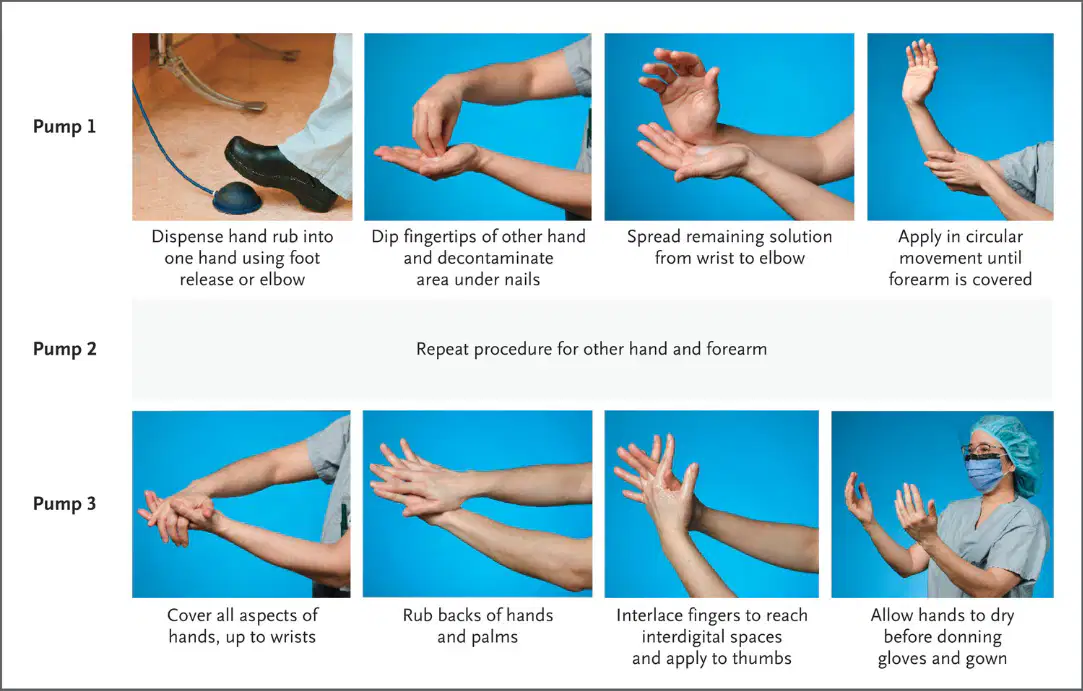
It is important to allow hands to dry before donning gloves and gown during a surgical hand scrub because:
Wet hands can promote microbial growth under gloves.
Dry hands increase the risk of glove tearing.
Wet hands improve glove fit and comfort.
Drying hands is only for comfort, not infection control.
What is another name for the Anatomic Timed Scrub?
The 2-minute Scrub
The 5-minute Scrub
The 10-minute Scrub
The Quick Scrub
Fill in the blank: All surfaces of the hand and arm are scrubbed for a total of ______ minutes during the Anatomic Timed Scrub.
five
two
ten
seven
Which anatomic areas are scrubbed during the Anatomic Timed Scrub?
Only the nails
Only the fingers
Nails, fingers (each side and web space), palmar surface, dorsal surface, and forearm
Only the forearm
What is the name of the method where each part of the hand and arm receives a specific number of scrub strokes?
The Counted Brush Stroke Method
The Quick Wash Method
The Rinse and Go Method
The Hand Rub Method
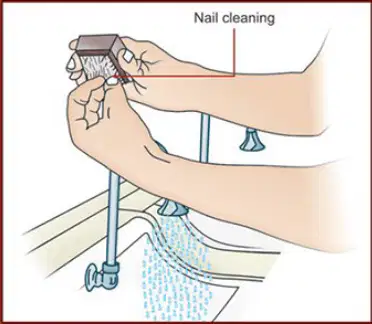
Which step involves cleaning under the nails using a brush?
Nail cleaning
Finger scrubbing
Washing down away from hands
Arm rinsing
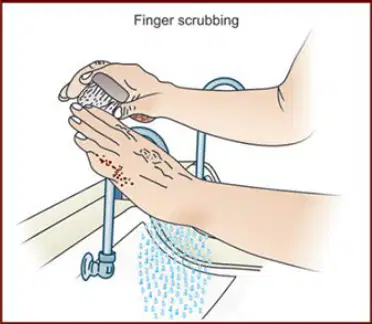
Which step involves scrubbing the fingers with a brush?
Nail cleaning
Finger scrubbing
Washing down away from hands
Arm rinsing
Fill in the blank: In the Counted Brush Stroke Method, each part of the hand and arm receives a specific number of ______ strokes.
scrub
circle
wipe
dab
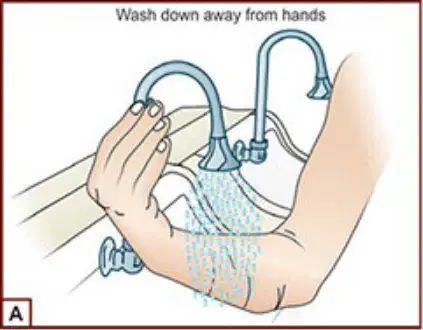
In the Counted Brush Stroke Method, water should be washed down away from the hands.
True
False
After the surgical scrub, what should scrubbed personnel do?
Don a surgical gown
Wash their hands again
Leave the operating room
Put on a mask
Gowns are another barrier between the skin of the surgical team and the patient.
True
False
Gowns should be constructed of a material that prevents passage of ______ between sterile and non-sterile areas.
microorganisms
air
water
dust
Gowning and gloving should occur away from the surgical table and patient because:
It helps maintain a sterile field and prevents contamination.
It allows for easier access to surgical instruments.
It speeds up the preparation process.
It reduces the need for additional staff.
Surgical gloves are sterile! Is this statement True or False?
True
False
What is the function of surgical gloves?
To act as a barrier between the skin of the surgical team and the patient
To decorate the hands
To keep hands warm
To make hands slippery
Fill in the blank: There are three methods of gloving: ________, Closed Gloving, Assisted Gloving.
Open Gloving
Sterile Gloving
Double Gloving
Reverse Gloving
Fill in the blank: There are three methods of gloving: Open Gloving, ________, Assisted Gloving.
Closed Gloving
Sterile Gloving
Double Gloving
Reverse Gloving
Fill in the blank: There are three methods of gloving: Open Gloving, Closed Gloving, ________.
Assisted Gloving
Sterile Gloving
Double Gloving
Reverse Gloving
What is open gloving used for?
When a surgical gown is necessary
When a surgical gown is not necessary
Only for major surgical procedures
Only for cleaning wounds
Which of the following is a procedure where open gloving is typically used?
Suturing wounds
Heart surgery
Brain surgery
Bone fracture repair
Fill in the blank: Open gloving is typically used for non-surgical, minor procedures such as ________ placement.
urinary catheter
central line
endotracheal tube
chest tube
Open gloving is used for small mass removals.
True
False

What is closed gloving used for?
When a surgical gown needs to be worn
When performing minor surgeries
When no gown is required
For dental procedures

Which of the following is a major surgical procedure where closed gloving is typically used?
A) Spays/Neuters
B) Dental Cleaning
C) Vaccination
D) Ear Cleaning

Fill in the blank: Closed gloving is typically used for ______ procedures.
Orthopedic
Dental
Ophthalmic
Cardiac

Fill in the blank: Closed gloving is typically used for large ______ removals.
Mass
Wound
Suture
Lesion

Fill in the blank: Closed gloving is typically used for foreign ______ surgeries.
Body
Heart
Brain
Joint

Assisted Gloving: When gloving another person, the person assisting with the gloving should have on a sterile gown and gloves.
True
False
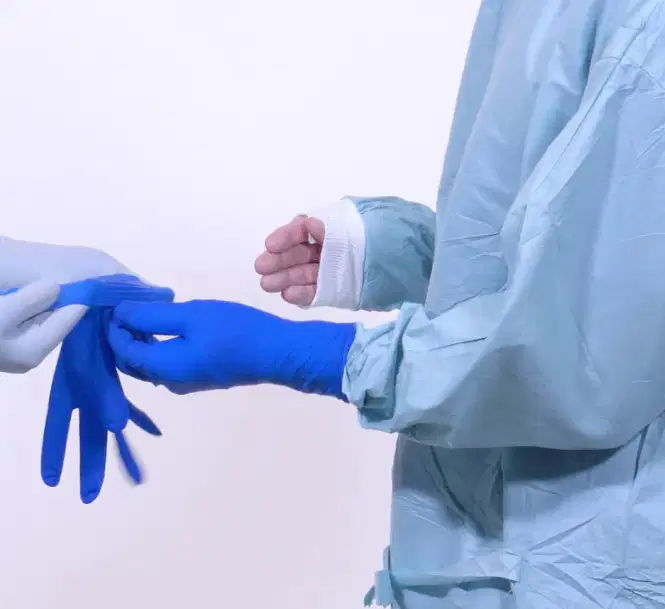
Assisted Gloving: The assistant’s hands should not touch the ______ surface of the person being gloved.
nonsterile
sterile
outer
inner
If gloves become contaminated during surgery, what must be done?
They must be replaced
They must be washed
They must be ignored
They must be double-gloved
It is common for both gloves to routinely be changed during 'dirty procedures' such as open GI tract caused by perforation, gastrotomy, or enterotomy.
True
False

