
 Worksheets
Chapter 13 Services - The Intangible Product
Total questions: 57
Worksheet time: 30mins
The marketing of services differs from the marketing of products in which of the following ways?
Products require more customer involvement than services.
Services are intangible and often require personal interaction, while products are tangible and can be standardized.
Which of the following correctly lists the four gaps in the Service Gaps Model?
Knowledge gap, Policy gap, Delivery gap, Communication gap
Service gap, Delivery gap, Communication gap, Feedback gap
The zone of tolerance refers to:
The minimum level of service a customer will tolerate.
The range of service performance that a customer considers acceptable.
Identify three service recovery strategies.
Reducing staff, cutting costs, and limiting services
Apology, compensation, and prompt resolution
What is a service? Fill in the blank: A service is any intangible offering that involves a deed, performance, or effort that cannot be physically possessed.
Any intangible offering that involves a deed, performance, or effort that cannot be physically possessed.
A physical item that is manufactured and sold.
By providing good customer service, what do firms add value to?
Their competitors' profits.
Their products and services.
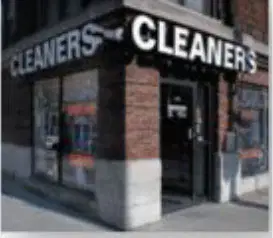
Fill in the blank: A _______ is an example of a business that primarily provides a service by cleaning clothes, but also returns a physical good to the customer.
Dry cleaner
Bookstore
Identify the 4 factors differentiating services from goods. Fill in the blank: 1. __________
Inseparable
Standardized
Identify the 4 factors differentiating services from goods. Fill in the blank: 2. __________
Durability
Heterogeneous
Inseparable
Perishable
Intangible
Identify 3 ways marketing differs for services.
cues
advertisements
images
warranties
money
What does it mean when a service is described as 'intangible'?
It cannot be touched, tasted, or seen.
It is available only online.
Why are cues important in marketing intangible services?
Cues are used to increase the physical presence of products.
Cues are used to aid customers in understanding the value of intangible services.

According to the image, why do amusement park owners use images in their advertising?
Because it is difficult to show a service, amusement park owners evoke images in their advertising of happy families and friends enjoying a ride at one of their parks.
Because images are required by law in amusement park advertising.
Production and consumption of services are _________
independent
simultaneous
There is little opportunity for a consumer to ________ a service before use.
advertise
test
Services can lower risk by offering ________ or warranties.
samples
guarantees
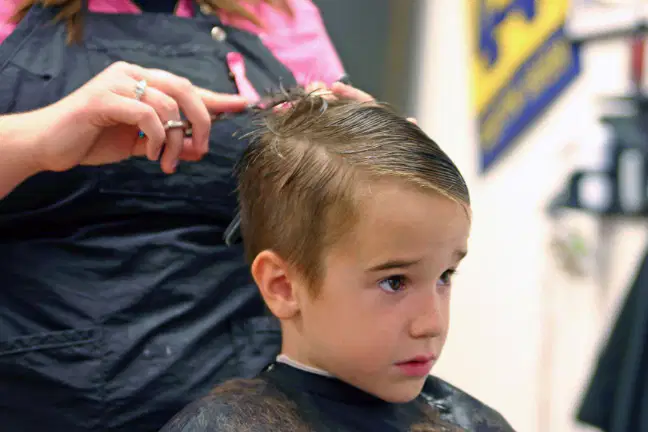
What does the term 'heterogeneous' mean in the context of service quality?
High quality
Variability in quality
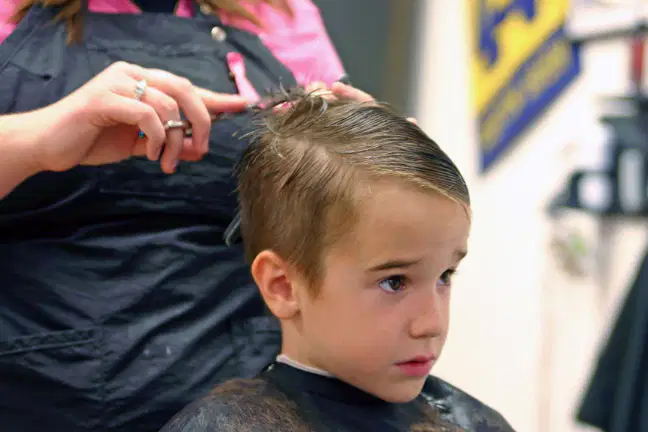
The more humans are needed to provide a service, the more likely there is to be ________ or variability in the service’s quality.
heterogeneity
uniformity
Which of the following is a solution to reduce heterogeneity in service quality?
Technology
Increasing prices
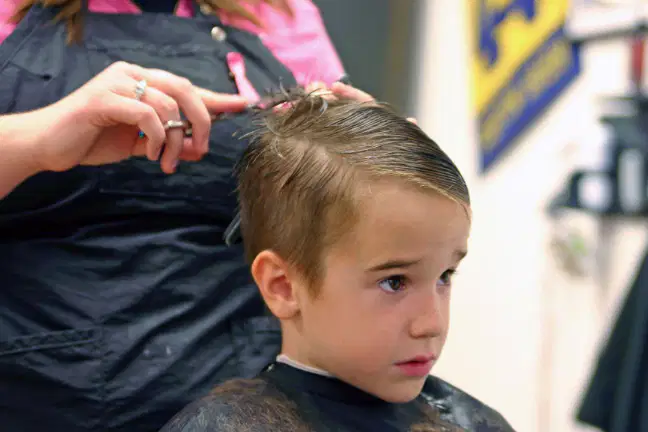
Select all possible solutions that can address heterogeneity in service quality.
Training
Price Reduction
Technology
Automation
What does it mean when a service is described as 'perishable'?
It is always available
It cannot be stored for future use
Services are perishable because they cannot be stored for use in the future.
True
False
Fill in the blank: The four Traditional 4Ps in developing a service strategy are ________, Price, Promotion, and Place.
Performance
Product
Fill in the blank: The four Traditional 4Ps in developing a service strategy are Product, ________, Promotion, and Place.
People
Price
Fill in the blank: The four Traditional 4Ps in developing a service strategy are Product, Price, ________, and Place.
Planning
Promotion
Fill in the blank: The four Traditional 4Ps in developing a service strategy are Product, Price, Promotion, and ________.
Place
People
Match the Additional 3Ps to their descriptions:
Presentation
Can have an impact on consumers’ judgments of the service quality.
Personnel
In person-to-person transactions, more important for services than for goods.
Processes
Describe the actions required to get the good or service to the customer.
Match the following service gaps to their definitions:
Knowledge
Difference between customer expectations and firms perception of those expectations.
Standards
Difference between the company's perceptions of customer expectations and the service standards it sets.
Delivery
Difference between the firm's service standards and the actual service provided.
Communication
Difference between the actual service provided and the service the firm promises.

Which of the following is NOT a key component in reducing the knowledge gap in understanding customer expectations?
A) Marketing research: understanding customers
B) Understanding customer expectations
C) Evaluating service quality
D) Increasing product prices
Fill in the blank: To reduce the knowledge gap, companies should focus on ________ customer expectations.
understanding
ignoring
complicating
misleading
Evaluating service quality is one way to reduce the knowledge gap in understanding customer expectations.
True
False
Match the following service quality dimensions with their correct definitions:
The ability to perform the service dependably and accurately
Reliability
The willingness to help customers and provide prompt service
Responsiveness
The knowledge of and courtesy by employees and their ability to convey trust and confidence
Assurance
The caring, individualized attention provided to customers
Empathy
The appearance of physical facilities, equipment, personnel, and communication materials.
Tangibles
Fill in the blank: The ability to perform the service dependably and accurately is known as ________.
Reliability
Empathy
Tangibility
Responsiveness
Fill in the blank: The willingness to help customers and provide prompt service is called ________.
Responsiveness
Reliability
Empathy
Assurance
Fill in the blank: The knowledge of and courtesy by employees and their ability to convey trust and confidence is referred to as ________.
Assurance
Empathy
Reliability
Tangibles
Fill in the blank: The caring, individualized attention provided to customers is known as ________.
Empathy
Reliability
Tangibility
Responsiveness
Fill in the blank: The appearance of physical facilities, equipment, personnel, and communication materials is called ________.
Tangibles
Reliability
Empathy
Responsiveness
Identify what the zone of tolerance is used for.
Measuring acceptable levels of service quality
Determining employee satisfaction
Calculating profit margins
Assessing market share
Identify the 2 things a firm wants to understand through the zone of tolerance.
The desired service level and the minimum acceptable service level
The maximum price customers will pay and the average wait time
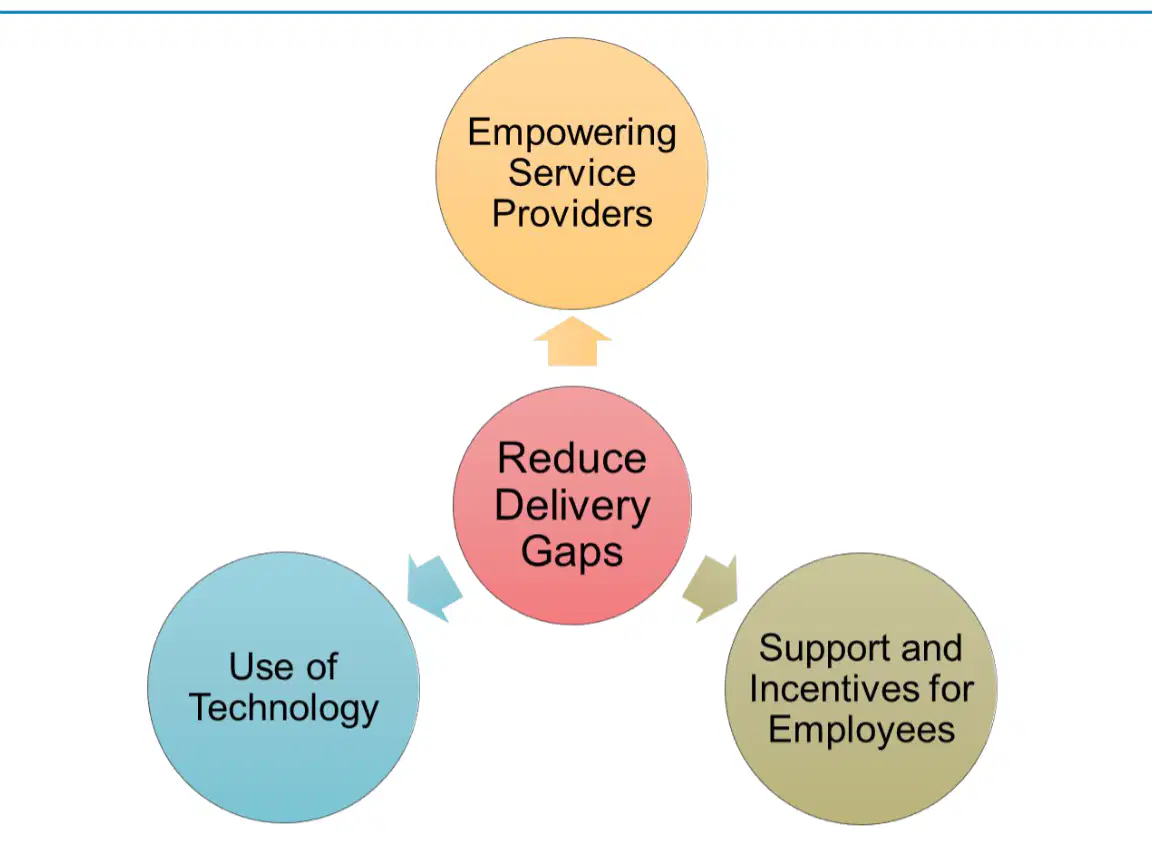
Which of the following is a method to reduce delivery gaps in service quality?
Empowering Service Providers
Increasing Prices
Reducing Employee Training
Limiting Technology Use
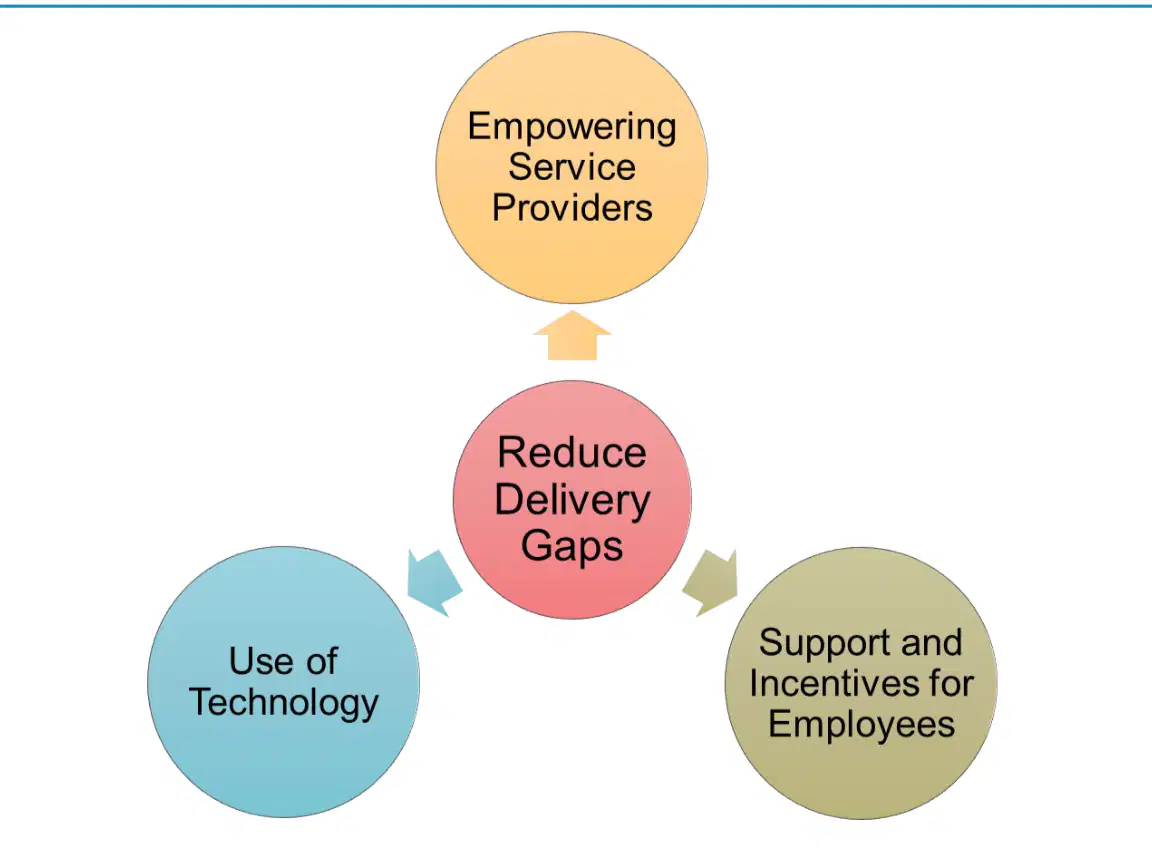
Fill in the blank: One way to reduce delivery gaps in service quality is the use of _________
Technology
Manual paperwork
Ignoring feedback
Reducing staff training
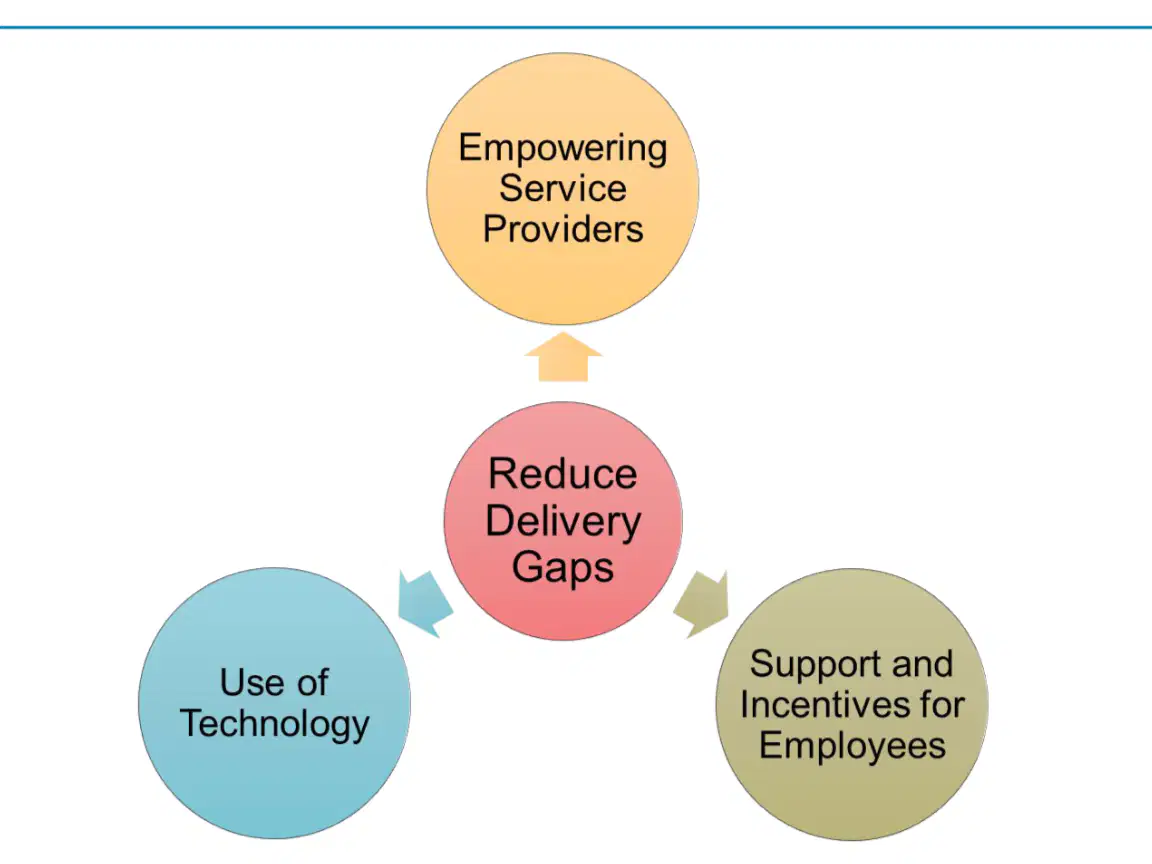
Which of the following supports employees to help reduce delivery gaps?
Support and Incentives
Reducing Salaries
Increasing Workload
Limiting Training
(a) is necessary to deliver service and reduce the delivery gap.
Fill in the blank: ________ and coherent management is important for reducing the delivery gap.
Consistent
Random
Irregular
Disjointed
Rewarding employees for excellent service is a strategy to reduce the delivery gap.
True
False

Identify three service recovery strategies.
Listen to the customer
Ignore the complaint
Find a fair solution
Blame the customer
Resolve the problem quickly
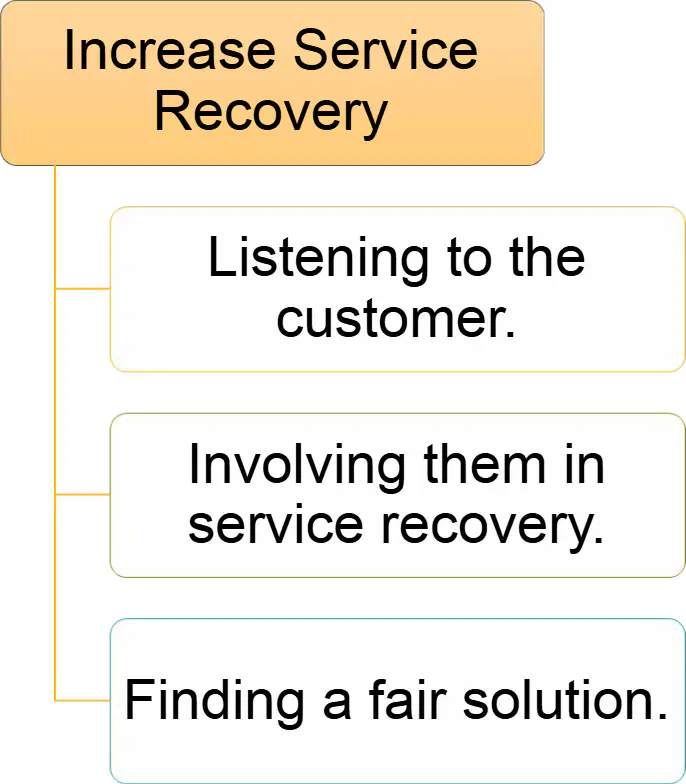
Fill in the blank: One way to increase service recovery is ________ to the customer.
Listening
Ignoring
Arguing
Interrupting
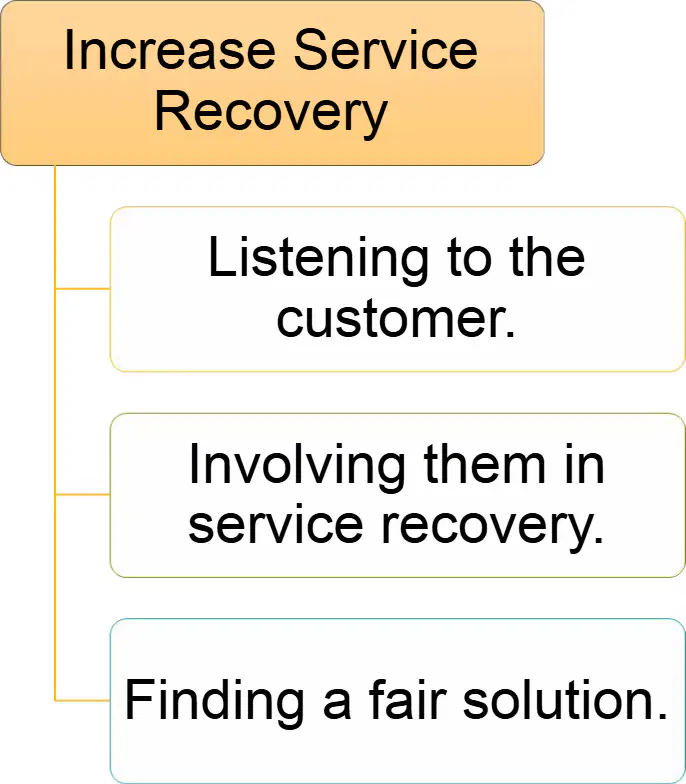
A way to increase service recovery is (a) .
Distributive Fairness is (a) perception of the benefits received compared to the cost.
Define Procedural Fairness: Perceived fairness of the process used to ______ complaints.
solve
ignore
delay
complicate
Why is it important to resolve problems quickly in service recovery?
Because customers will be less irritated and tell fewer people about the failure
Because it increases the number of service failures
Service recovery is important to companies because:
it helps retain customers and improves company reputation.
it eliminates the need for customer service.
Match each recovery action with its description regarding how companies can respond to a service failure.
Offering compensation to affected customers.
Providing something of value to customers who experienced a problem.
Ignoring customer complaints.
Not addressing or responding to feedback from dissatisfied customers.
Blaming customers for the issue.
Assigning responsibility for the issue to the customer rather than the company.
Delaying response to the problem.
Taking a long time to address or resolve the issue after it is reported.
Fill in the blank: ______ is any intangible offering that involves a deed, performance, or effort that cannot be physically possessed.
service
product
commodity
asset
Fill in the blank: ________ is the customers’ perceptions of how well a service meets or exceeds their expectations.
Service quality
Customer loyalty
Market share
Fill in the blank: A __________ collects customer inputs and integrates them into managerial decisions.
voice-of-customer (VOC) program
marketing campaign
sales pitch
customer loyalty program
Match each type of gap with its correct description.
delivery gap
The difference between the firm's service standards and the actual service it provides to customers.
communication gap
The difference between what a firm communicates to customers and what is actually delivered.
knowledge gap
The difference between customer expectations and the firm's perception of those expectations.
standards gap
The difference between the firm's perception of customer expectations and the service standards it sets.

