
 Worksheets
Southeast Asia, Oceania, Australia Antarctica Geography Test
Total questions: 55
Worksheet time: 28mins
Name
Class
Date
1.
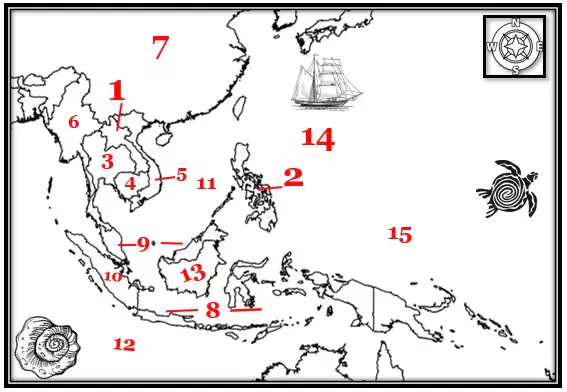
Identify country #1
a)
Laos
b)
China
c)
Burma
d)
Thailand
e)
Cambodia
2.
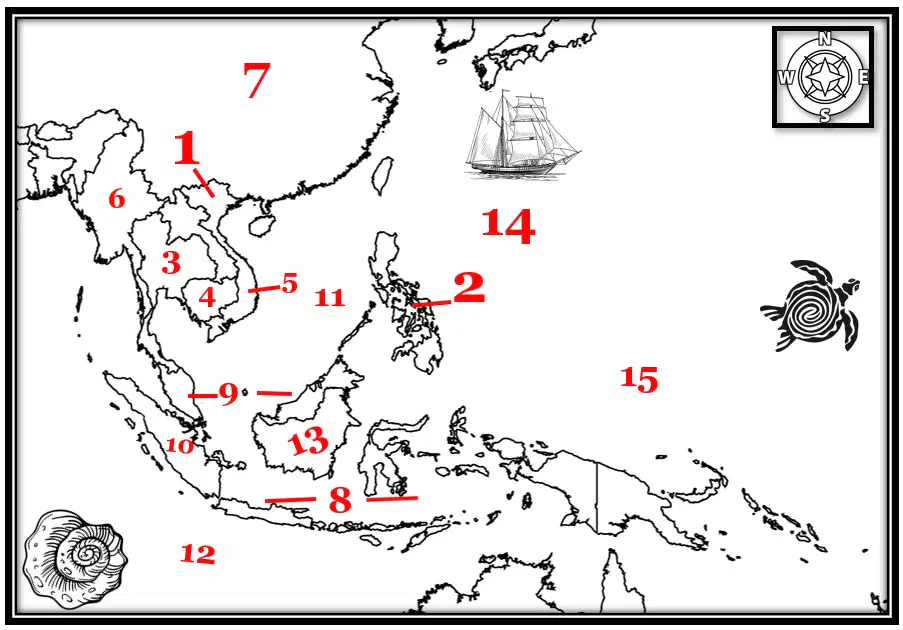
Identify country #2
a)
Philippines
b)
China
c)
Burma
d)
Thailand
e)
Cambodia
3.
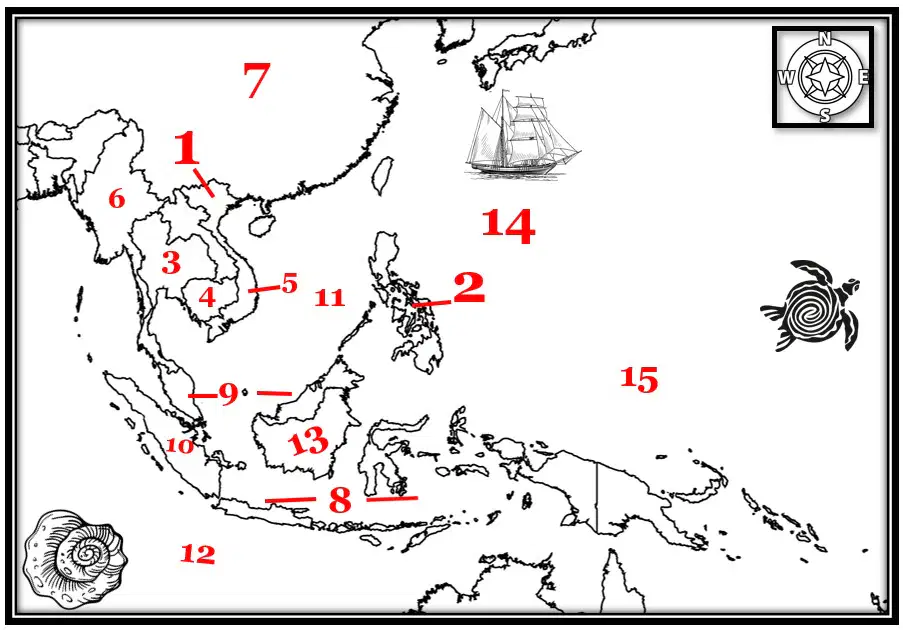
Identify country #3
a)
Thailand
b)
China
c)
Burma
d)
Cambodia
e)
Laos
4.

Identify country #4
a)
Cambodia
b)
China
c)
Burma
d)
Thailand
e)
Laos
5.
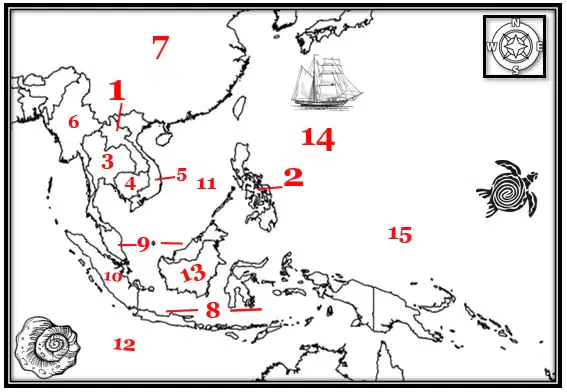
Identify country #5
a)
Vietnam
b)
China
c)
Burma
d)
Thailand
e)
Cambodia
6.
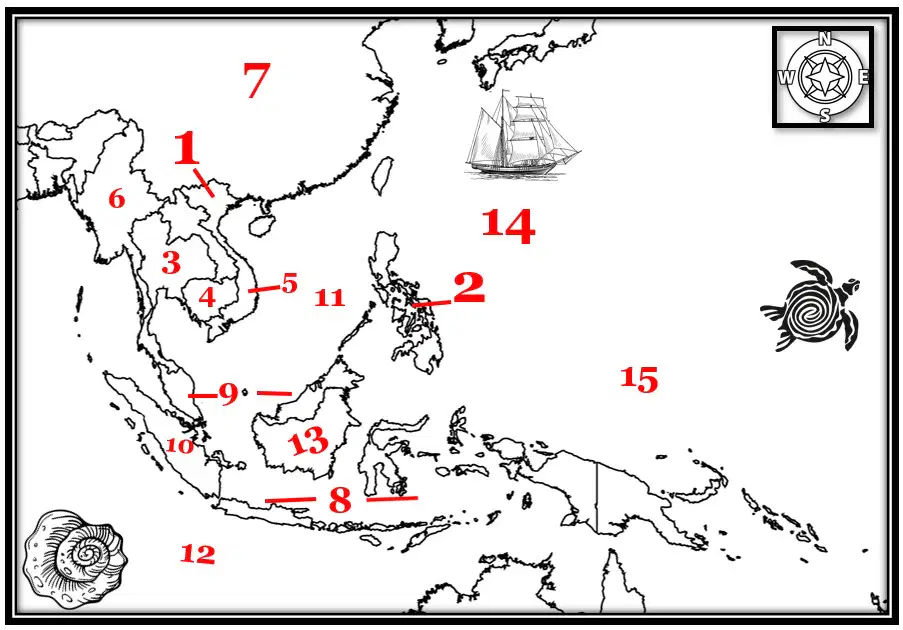
Identify country #6
a)
Myanmar
b)
China
c)
Thailand
d)
Cambodia
e)
Laos
7.
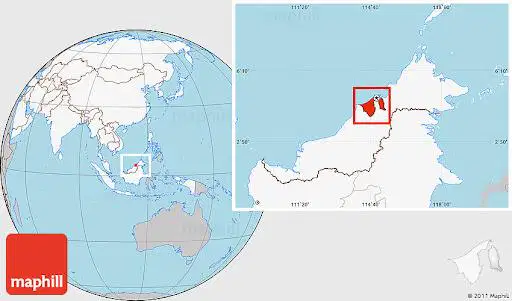
What country is being depicted by the highlighted image below?
a)
Brunei
b)
Singapore
c)
Malaysia
d)
Burma
e)
Guam
8.

What highlighted island is depicted below?
a)
Tasmania
b)
Singapore
c)
Malaysia
d)
Burma
e)
Guam
9.
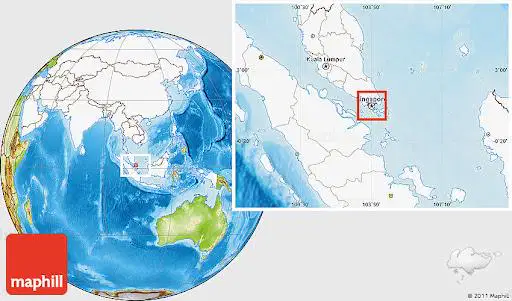
What country is being depicted by the highlighted image below?
a)
Singapore
b)
Malaysia
c)
Burma
d)
Brunei
e)
East Timor
10.
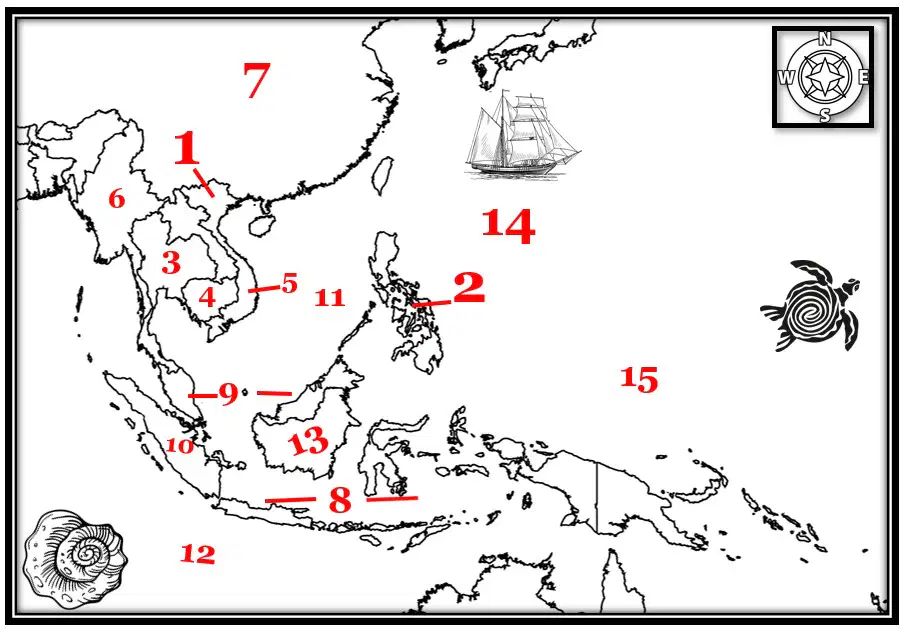
Identify country #7
a)
China
b)
Burma
c)
Thailand
d)
Cambodia
e)
Laos
11.
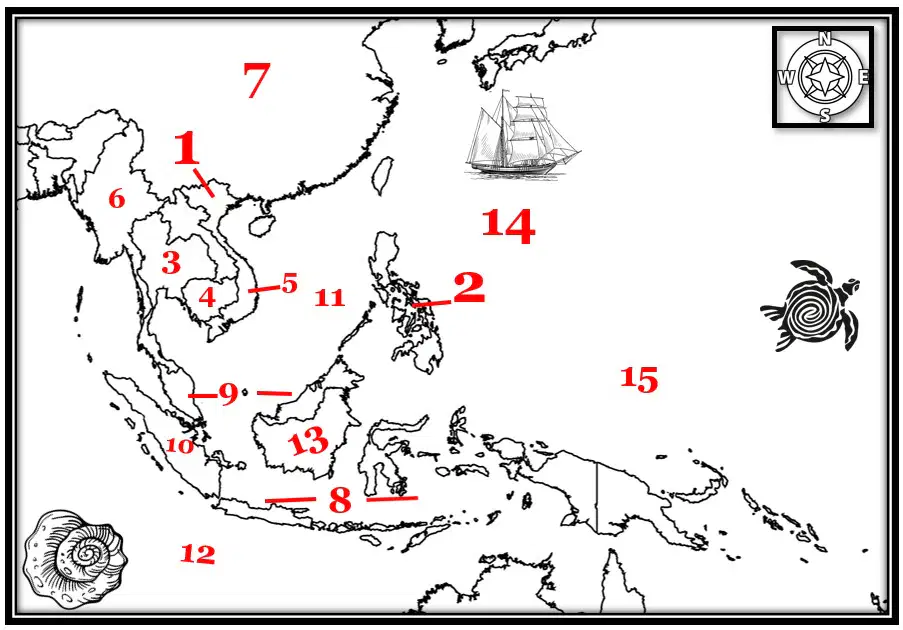
Identify the country #8
a)
Indonesia
b)
Malyasia
c)
Sumatra
d)
Borneo
e)
The South China Sea
12.
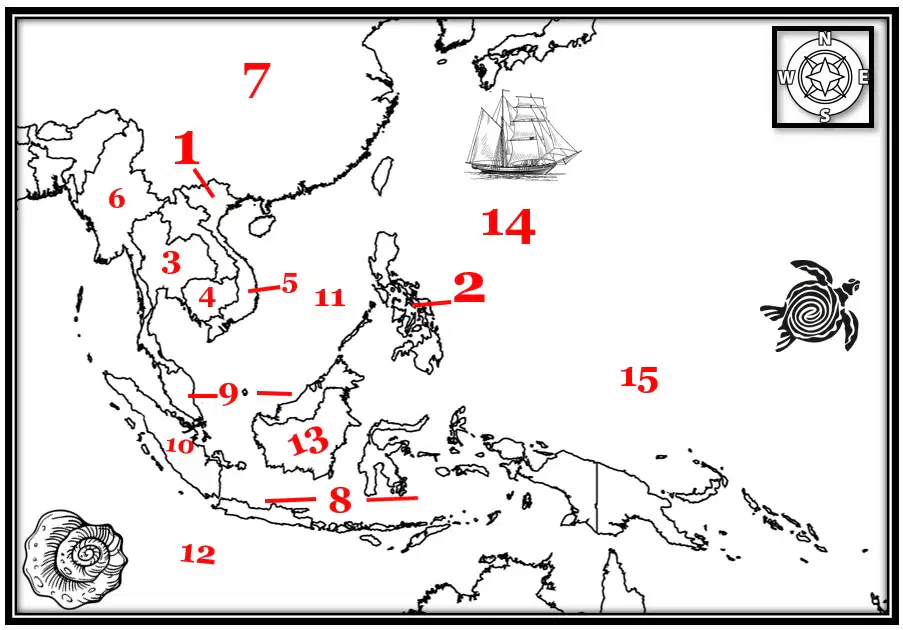
Identify country #9
a)
Malyasia
b)
Indonesia
c)
Sumatra
d)
Borneo
e)
The South China Sea
13.
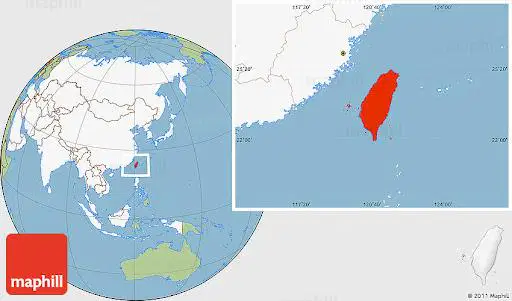
What county is highlighted below?
a)
Taiwan
b)
Japan
c)
Sumatra
d)
Indonesia
e)
East Timor
14.
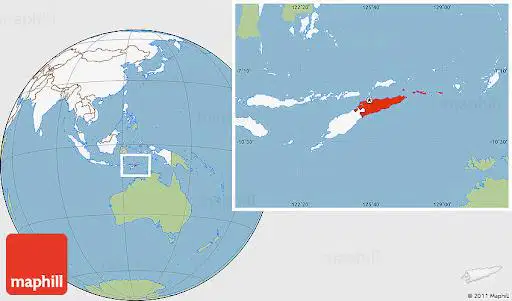
What county is highlighted below?
a)
East Timor
b)
Japan
c)
Sumatra
d)
Taiwan
e)
Indonesia
15.
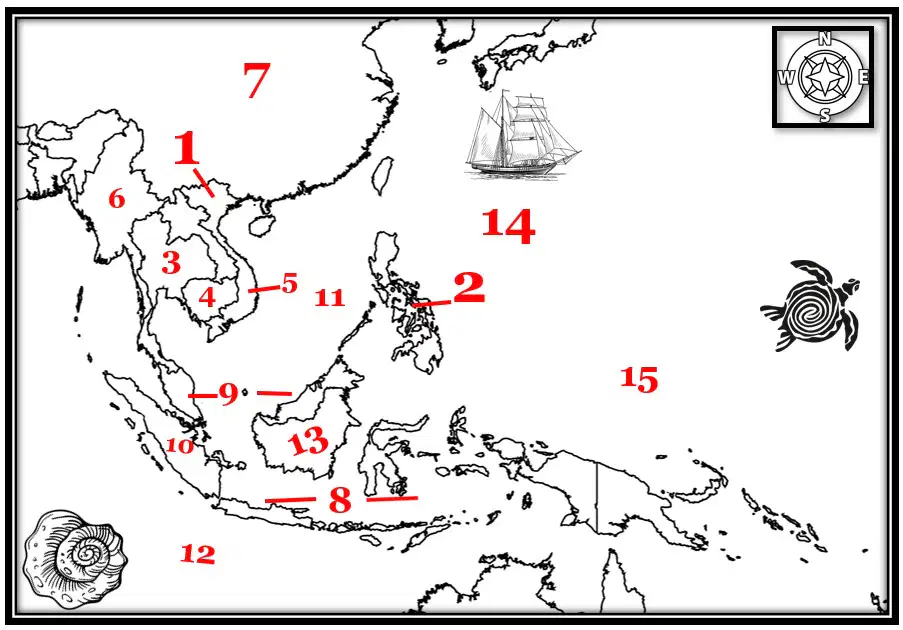
Identify #10
a)
Sumatra
b)
Indonesia
c)
Malyasia
d)
Borneo
e)
The South China Sea
16.
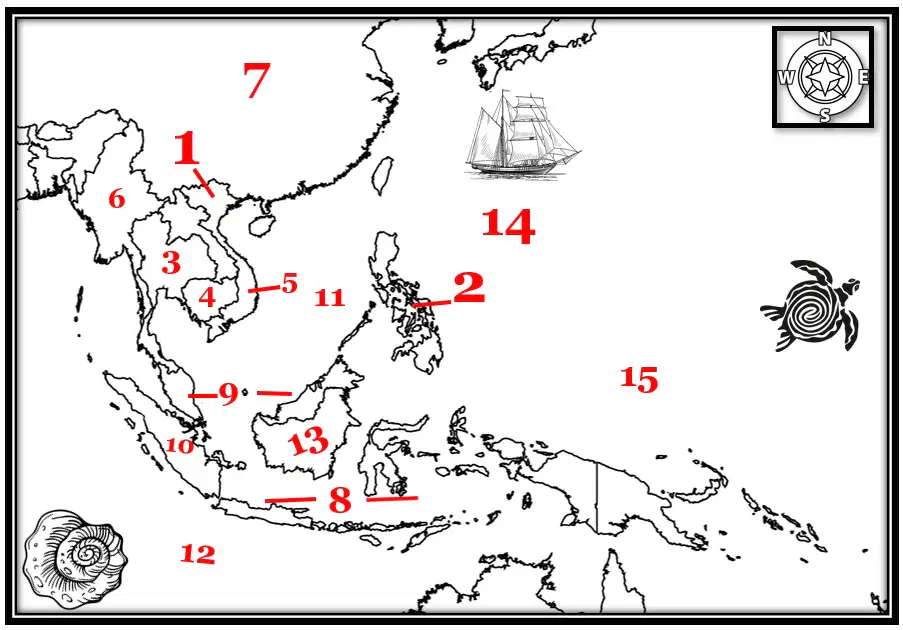
Identify #13
a)
Borneo
b)
Indonesia
c)
Malyasia
d)
Sumatra
e)
The South China Sea
17.
What is the name of the island in which the western portion belongs to Indonesia and the eastern portion is part of Papa New Guinea?
a)
New Guinea
b)
Java
c)
Sumatra
d)
Borneo
e)
Tasmania
18.
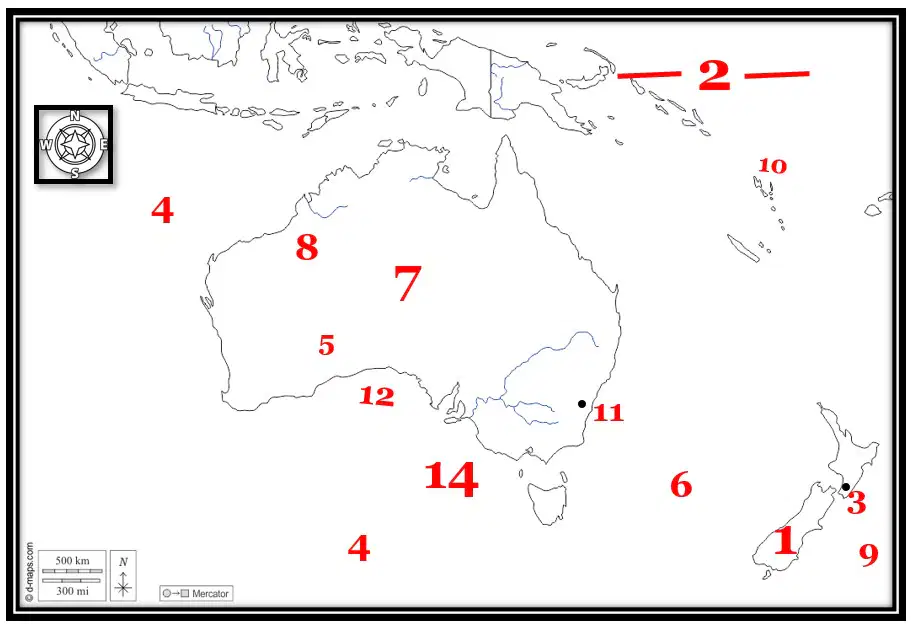
Identify #1
a)
New Zealand
b)
Indian Ocean
c)
Tasman Sea
d)
South Pacific Ocean
e)
Kiribati
19.
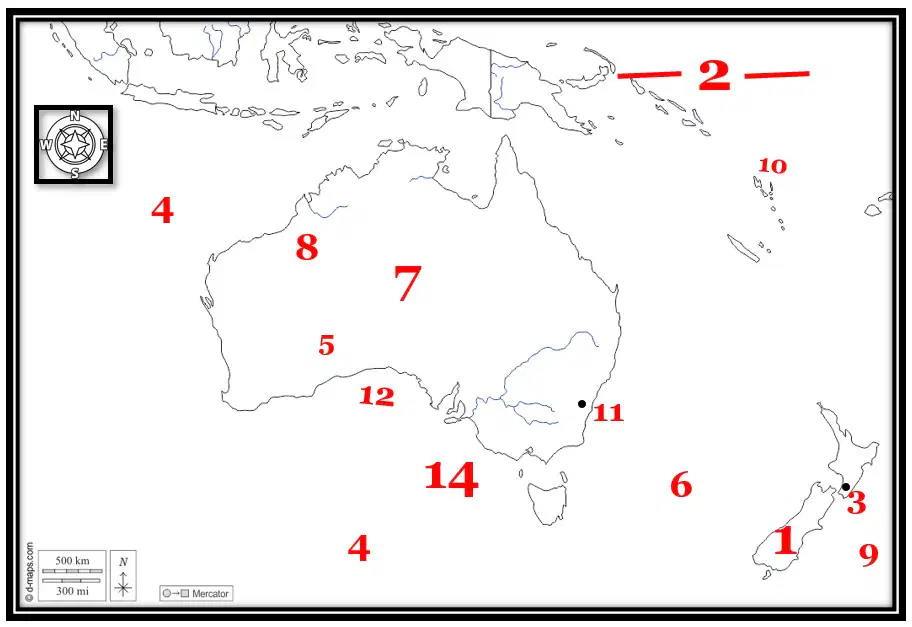
Identify country #7
a)
Australia
b)
Indian Ocean
c)
Tasman Sea
d)
South Pacific Ocean
e)
Kiribati
20.
In Oceania, many of the low islands are __________________.
a)
volcanoes
b)
coral reefs
c)
mountains
d)
plateaus
21.
Where are the Southern Alps?
a)
Australia
b)
Southern Myanmar
c)
The North Island of New Zealand
d)
The South Island of New Zealand
22.
The __________________________ is the world’s largest coral reef.
a)
Great Victorian
b)
Great Barrier Reef
c)
Outback Reef
d)
Hanuma Bay Reef
23.
Antarctica is around:
a)
The North Pole
b)
The South Pole
c)
New Zealand
d)
The Prime Meridian
24.
Which of the following are common in a tropical wet and dry climate?
a)
monsoons
b)
earthquakes
c)
tornadoes
d)
blizzards
25.
Australia and New Zealand have a _______________ climate.
a)
temperate
b)
moderate
c)
continental
d)
humid
26.
In Oceania, many of the high islands are __________________.
a)
volcanoes
b)
coral reefs
c)
mountains
d)
plateaus
27.
Australia is the ____________________.
a)
largest subcontinent
b)
largest continent
c)
smallest climate region
d)
flattest continent
28.
The __________________ is the largest supply of freshwater in the world
a)
coral reef around Australia
b)
ice sheet around the South Pole
c)
continent of Australia
d)
waterfalls in Fiji
29.
Deserts are found _________________.
a)
At the oval center of Australia
b)
Inland Antarctica
c)
Both of the above
d)
Neither of the above
30.
Where did the Pacific Island settlers come from?
a)
Australia
b)
Japan
c)
East Asia
d)
Southeast Asia
31.
Which of the following was NOT attempted to reduce the rabbit population?
a)
spray chemical weapons
b)
bring in foxes
c)
build a fence
d)
infect the rabbits with a disease
32.
_________________ was the site of US atomic weapons tests.
a)
Fiji
b)
Tahiti
c)
Philippines
d)
Bikini Atoll
33.
When did European control of Southeast Asia begin?
a)
the 1100s
b)
the 1200s
c)
the 1400s
d)
the 1500s
34.
How did European control change Southeast Asia?
a)
It changed the type of government
b)
It sparked nationalism
c)
It changed the commodities produced
d)
All of the above
35.
_______________once occupied Southeast Asia.
a)
Russia
b)
Japan
c)
Vietnam
d)
Australia
36.
What is the main source of industry in Southeast Asia?
a)
tires
b)
fishing
c)
agriculture
d)
petroleum
37.
Which of the following words describes Southeast Asia’s religion?
a)
primitive
b)
weak
c)
diverse
d)
declining
38.
_____________________ is a country in Southeast Asia that is mostly Catholic.
a)
Philipinnes
b)
Myanmar
c)
Thailand
d)
Vietnam
39.
When did missionaries arrive in Oceania?
a)
the 1700s
b)
the 1800s
c)
the 1900s
40.
_________________ is when families produce only the food, clothing, and shelter they need.
a)
limited growth
b)
planned economy
c)
substinence activities
d)
underdeveloped economy
41.
Which of the following is a chief crop grown in Oceania?
a)
corn
b)
beans
c)
coffee
d)
wheat
42.
What is the major religion in Oceania?
a)
Buddhism
b)
Animism
c)
Taoism
d)
Christianity
43.
How many different languages are there in Oceania?
a)
300
b)
800
c)
950
d)
1100
44.
______________________ migrated to Australia 40,000 years ago.
a)
The Maori
b)
Aboriginal people
c)
Nomads
d)
Kikuyu
45.
Which of the following belong to the British Commonwealth?
a)
Australia
b)
New Zealand
c)
Both A and B
d)
Neither A nor B
46.
Antarctica:
a)
is controlled by the United Nations
b)
remains unsettled
c)
Is settled by the major world powers
d)
remained controlled by 26 nations
47.
Australia, New Zealand, and Antarctica:
a)
was the first area of the planet to have humans
b)
was the last region to be explored by Europeans
c)
is the only region that does not belong to the European Union
d)
All of the above
48.
____________ was discovered in Australia in 1851.
a)
oil
b)
wheat
c)
diamonds
d)
gold
49.
The _________________ migrated to New Zealand from Polynesia 1,000 years ago.
a)
Aboriginese
b)
Maori
c)
Bantu
d)
New Zealanders
50.
__________________ has great concern for the welfare and rights of their citizens.
a)
Australia
b)
New Zealand
c)
Antarctica
d)
Oceania
51.
By the year 2000, ______ countries had research stations in Antarctica.
a)
8
b)
10
c)
12
d)
18
52.
When did the Aboriginal people earn their full citizenship?
a)
1932
b)
1967
c)
1941
d)
1776
53.
_____________ cause people to leave their homeland.
a)
pull factors
b)
displacement
c)
assimilation
d)
push factors
54.
_____________ bring people to a new place.
a)
pull factors
b)
displacement
c)
assimilation
d)
push factors
55.
The ________________ claimed land without making a treaty with the aborigines.
a)
Australians
b)
British government
c)
Americans
d)
New Zealanders
100 %

