
Font size
 Worksheets
Introduction to Business Activity
Total questions: 44
Worksheet time: 22mins
Which of the following are recognized as factors of production used in business activity to produce goods and services? Select all that apply.
Land
Labor
Capital
Enterprise
Marketing
Read: Business activity is any activity that provides goods and services to satisfy people's needs and wants. Which statement best captures this definition?
It focuses solely on manufacturing physical goods, ignoring services and consumer preferences.
It involves producing goods and services aimed at meeting human needs and wants.
It is limited to government operations rather than private organizations.
It refers only to financial trading without creating goods or services.
Which of the following are recognized as factors of production used in business activity to produce goods and services? Select all that apply.
Land
Labor
Capital
Enterprise
Marketing
Match each factor of production to the most accurate brief description.
Land: natural resources used in production
Labor: human effort, skills, and time applied
Capital: tools, machinery, and finance enabling production
Enterprise: organizing, risk-taking, and decision-making to combine resources
Land: office buildings only
Which statement best distinguishes a need from a want?
A need is a basic requirement for survival, while a want is a non-essential item we would like to have.
A need is anything expensive, while a want is anything cheap.
A need is something businesses sell, while a want is something individuals produce themselves.
A need is a personal preference, while a want is a legal obligation.
According to the section on scarcity, why does the economic problem arise?
Resources are limited but human wants are unlimited, forcing choices about resource use.
Resources are unlimited but human wants are limited, eliminating the need for choices.
Resources and wants are both unlimited, so choices are irrelevant.
Resources are limited and human wants are limited, so opportunity cost does not exist.
A student spends AED 20 on cinema tickets. Based on the example provided, what could be the opportunity cost of this decision?
The meal they could have bought instead with the AED 20.
The enjoyment of watching the movie.
The price of the cinema ticket.
The total amount of money they have saved this month.
Which of the following are goods rather than services?
Clothes and cars
Teaching and transport
Food items
Healthcare
Which factor of production is best described as man-made resources used to produce goods and services?
Land
Labour
Capital
Enterprise
Select all benefits of specialization listed in the material.
Increases efficiency and productivity
Reduces cost of production
Leads to higher quality and faster production
Eliminates all business risk
A country focuses heavily on producing a single oil-based product. According to the risks of specialization described, what is the most likely downside if global demand declines?
The country automatically diversifies into new industries
The business/country may suffer due to demand fall
Costs instantly drop to zero
Quality improves regardless of demand
Match each factor of production to its UAE example.
Land → Oil, water, sunlight
Labour → Airports, machines, factories
Capital → Teachers, engineers, doctors
Enterprise → Entrepreneurs (e.g., airline founders)
Using the formula provided, what is the added value if the selling price of a product is AED 120 and the cost of inputs is AED 80?
AED 40
AED 80
AED 120
AED 200
Which method is identified as a way to add value?
Increasing taxes on competitors
Branding and packaging
Reducing wages without changing quality
Outsourcing accounting
What is the key difference between added value and profit as defined in the material?
Added value is calculated after all costs are paid; profit is before costs
Added value is the difference between selling price and cost of inputs; profit is what remains after all costs are paid
Added value equals revenue; profit equals expenses
Added value and profit are identical measures
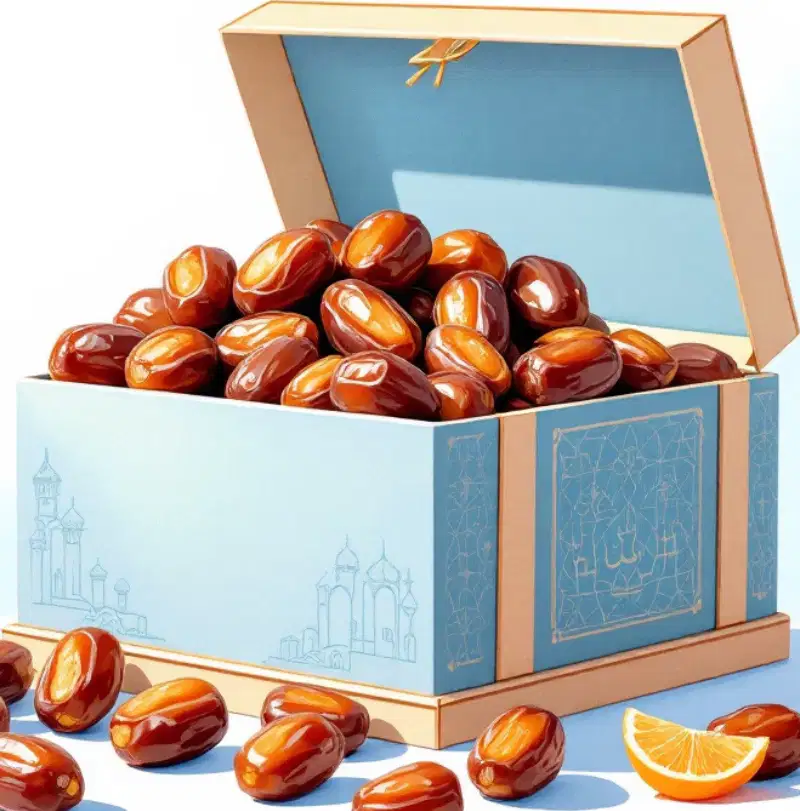
Refer to the image of luxury gift boxes filled with dates. Which statement best explains how this example demonstrates added value?
Packaging dates in luxury gift boxes with Arabic designs increases perceived value compared to selling plain dates
Adding more dates without changing presentation decreases value
Selling dates at a lower price than cost of inputs increases added value
Plain packaging always creates higher value than designed packaging
Which statement best describes the primary sector in an economy?
It focuses on customer service and support for other sectors.
It processes raw materials into finished goods using factories and technology.
It extracts or harvests natural resources from land, sea, or underground.
It distributes and sells goods to final consumers through retail channels.
Select all key features of secondary sector activities.
Products are natural and usually unprocessed.
Adds value to natural resources.
Uses factories, machinery, and technology.
Requires skilled labor.
Which example belongs to the tertiary sector?
Petrochemical refining in Ruwais
Date farming in Al Ain
Emirates Airlines
Aluminium manufacturing in Dubai
A business cutting trees for timber primarily operates in which sector, and why?
Secondary, because it transforms raw materials into finished goods.
Tertiary, because it provides services to consumers and businesses.
Primary, because it involves extracting natural resources.
Tertiary, because it focuses on communication and finance.
Which statement about the tertiary sector is correct?
It mainly involves refining, manufacturing, and construction.
It grows rapidly in developed countries and focuses on customer service.
It provides raw materials for the other sectors and is affected by weather.
It uses natural resources and is usually unprocessed.
In the chain of production example provided, what is the correct sequence linking the three sectors?
Selling petrol at stations → Refining oil → Oil extraction
Oil extraction → Refining oil → Selling petrol at stations
Refining oil → Oil extraction → Selling petrol at stations
Oil extraction → Selling petrol at stations → Refining oil
Which set correctly matches sector to a UAE example listed?
Primary: Emirates NBD Bank; Secondary: Date farming; Tertiary: Petrochemical refining
Primary: Fishing in Fujairah; Secondary: Aluminium manufacturing in Dubai; Tertiary: Emirates Airlines
Primary: Construction companies; Secondary: Etisalat; Tertiary: Forestry
How does sector interdependence affect the economy according to the material?
Weakness in one sector has little impact on others because they operate independently.
Each sector relies on the others; for example, less oil reduces manufacturing and transport.
Only the tertiary sector supports GDP; primary and secondary are not essential.
Interdependence means the secondary sector provides raw materials to the primary sector.
Select the traits that characterize successful entrepreneurs.
Innovative and determined
Risk-averse and dependent
Leadership and resilient
Single-skilled and narrowly focused
Which example best illustrates the trait of resilience in an entrepreneur?
Avoiding projects with any chance of failure
Recovering from setbacks and continuously improving after a failed product launch
Stopping operations after the first delay to prevent losses
Delegating all decisions to external consultants
Which component would you expect to find in a well-developed business plan?
Objectives stated using SMART criteria
Market research on customers and competitors
Lifestyle tips for employees’ wellness only
Operations plan covering location, suppliers, and staffing
What is a primary reason a business plan is important for start-ups?
It guarantees profits regardless of market conditions
It helps secure funding, guides decisions, tracks progress, and reduces risk
It replaces the need for market research and financial planning
It eliminates competition by setting exclusive rights
Governments support start-ups for several reasons. Which set aligns with the material?
Job creation and economic growth
Innovation and social development
National identity and cultural pride
Maintaining monopolies and reducing market entry
According to the material, which is a type of government support for start-ups with a correct UAE example?
Financial support—Khalifa Fund and Dubai SME
Infrastructure—private villas for founders
Legal help—lengthier registration processes
Promotion—secret investor clubs with no public access
Which description best matches “Training & Mentorship” support for start-ups?
Events that promote products to customers
Workshops, incubators, and expert advice for new entrepreneurs (e.g., Sheraa, Hub71)
Grants and loans to reduce start-up costs
Instant licensing to shorten approvals
Refer to the illustration of a business meeting with charts and a presenter. Which business plan component is most directly connected to the rising line graph being discussed?
Risk assessment outlining potential disruptions
Marketing strategy for customer retention
Financial plan including expected revenue and profit forecasts
Operations plan describing staffing and suppliers
Which type of business integration involves a company moving closer to the customer, such as a manufacturer buying a retailer?
Horizontal integration
Forward vertical integration
Backward vertical integration
Conglomerate integration
Market share can be misleading when comparing firm sizes. Which statement best reflects the material’s guidance?
A firm with a larger share is always bigger than competitors
A small share in a large market can still mean a firm is big
Market share directly measures total staff employed
Market share only applies to retailers, not manufacturers
Which method of measuring business size focuses on the total investment in assets, illustrated by comparing a bakery with a bread factory?
Capital Employed
Market Share
Number of Employees
Value of Output
Which is NOT listed as a reason why owners may want to expand their business?
Increase in profits through higher sales
Access to new opportunities such as new markets and talent
Reduced costs from economies of scale
Greater independence to maintain personal service
Select all examples of internal growth described in the material.
Expanding operations
Hiring more staff
Merging with another business
Acquiring another firm
In the integration table, which pairing is correct?
Horizontal: same industry and stage—two oil refineries merge
Backward vertical: retailer buys a manufacturer
Conglomerate: different industries—fruit canning firm buys a hotel
Forward vertical: moving closer to supplier
Refer to the diagram showing horizontal, vertical, and consolidative mergers. Which statement aligns with the visual’s classification of integration types?
Horizontal integration combines firms at different stages
Vertical integration links firms at successive stages in the supply chain
Consolidative mergers occur within the same product stage
Vertical integration is only possible in unrelated industries
Which is a listed reason some businesses choose to stay small?
They seek wider market share
They prefer independence and flexibility
They aim to benefit from economies of scale
They need access to global finance
Which advantages of staying small are highlighted in the material? Select all that apply.
Easier to manage
Closer customer relationships
Lower operating costs
Unlimited growth potential
Which cause of business failure is described as having no clear goals or strategy?
Poor planning
Cash flow problems
Poor marketing
Strong competition
Which factor affecting business growth is correctly matched with its impact?
Owner’s choice—large markets limit growth
Market size—small markets limit growth
Access to finance/labor—reduces costs through scale
Domination—small firms dominate and push others out
Which economic influence would most directly make borrowing more expensive for businesses?
Unemployment
Interest rates
Taxation
Globalisation

