
 Worksheets
Year 7 Unit 1 Particles ( Revision)
Total questions: 142
Worksheet time: 2hrs 13mins
Which statement best defines diffusion for particles in air or a solution?
Particles spread out from an area of low concentration to high concentration
Particles move randomly without any net change in distribution
Particles spread out from an area of high concentration to an area of low concentration
Particles stop moving once they reach equilibrium
Right after perfume is sprayed, why is its smell strongest near the nozzle?
The concentration of perfume particles is highest near the source before diffusion spreads them
The air near the nozzle is colder so particles condense there
Perfume particles are heavier and sink to the ground
Air currents immediately carry all particles far away
Which factor will generally increase the rate of diffusion according to the particle model?
Lower temperature because particles have less energy
Higher temperature because particles move faster and push farther through other particles
Larger, heavier particles because they have more mass
A smaller concentration gradient because particles have less distance to travel
In which state does diffusion typically occur most quickly, based on particle spacing and movement?
Solids, because particles are fixed in place
Liquids, because particles are packed closely
Gases, because particles are far apart and can travel long distances without hitting each other
All states equally, because diffusion does not depend on state
What is the main reason diffusion does not occur in solids?
Solid particles move too quickly to collide
Solid particles do not move; only particles that can move can diffuse
Solids have too much empty space between particles
Diffusion only happens in gases
Which change would slow down diffusion when comparing two substances with the same temperature and concentration gradient?
Using smaller, lighter particles
Increasing the amount of energy in the particles
Using larger, heavier particles
Placing particles farther apart
Which scenario shows a greater concentration gradient and therefore faster diffusion?
A strong scent in one corner of a room and very little elsewhere
A faint scent evenly spread throughout a room
Equal amounts of particles everywhere already
A sealed container where particles are fixed in place
Which statement correctly contrasts melting with freezing in terms of particle behavior?
Melting causes particles to lose energy and become fixed; freezing causes particles to gain energy and move freely
Melting increases energy so attractive forces between particles weaken; freezing removes energy so particles slow, vibrate in place, and forces form
Both melting and freezing increase particle energy and motion
Melting and freezing both occur without changes in particle energy or forces
Recall: What is the change of state called when a substance transitions from a solid to a liquid?
Freezing
Melting
Evaporation
Condensation
Concept: During melting, how do the particles of a substance behave as it changes state?
They stop moving and lock in place
They vibrate more quickly and move around
They slow down and become fixed
They spread out less and cluster together
Recall: What is the term for the temperature at which a substance melts?
Boiling point
Room temperature
Melting point
Freezing temperature
Concept: Which state of matter has particles that move around freely and spread out the most, making diffusion fastest?
Solid
Liquid
Gas
Plasma remains fixed
Strategic thinking: A student smells perfume released at one corner of a room after a short time. Which explanation best uses evidence about particle motion to justify this observation?
Perfume particles in a gas move randomly and quickly, spreading throughout the air
Perfume particles stay in one place because gases have fixed positions
Diffusion only happens in liquids, not in gases
Smell travels only by sound waves, not by particle motion
Concept: Compare diffusion in liquids and solids. Which statement is most accurate?
Diffusion is faster in solids because particles are fixed tightly
Diffusion in liquids is slower than in gases but faster than in solids
Diffusion does not occur in liquids at all
Diffusion occurs at the same rate in solids and gases
Recall: Which key concept describes the movement of particles from a region of higher concentration to a region of lower concentration?
Conduction
Diffusion
Insulation
Filtration
Strategic thinking: Hot tea cools while sugar dissolves and spreads through it. Which reasoning best connects temperature to diffusion rate in this scenario?
Higher temperature increases particle motion, so sugar diffuses faster
Higher temperature makes particles stop moving, slowing diffusion
Temperature has no effect on diffusion in liquids
Sugar only spreads by gravity, not by particle motion
Skill/Concept: Choose the statement that correctly links particle spacing to diffusion rate across states of matter.
Tightly packed particles in solids allow fastest diffusion
Moderately spaced particles in liquids allow moderate diffusion rates
Widely spaced gas particles prevent diffusion
Particle spacing does not affect diffusion
Strategic thinking: If a substance has a high melting point, what can you infer about particle attractions and how this affects diffusion in the solid state?
Weak attractions lead to easy diffusion
Strong attractions keep particles fixed, so diffusion is very slow
Moderate attractions make diffusion faster than in gases
Attractions do not relate to diffusion

Which statement best describes diffusion as you would observe with Skittles (coloured sweets) in water?
Color spreads from areas of low concentration to high concentration.
Color stays attached to the candy and does not move.
Color particles move from areas of high concentration to areas of low concentration.
Color moves only when the plate is shaken.
Recall: When comparing two beakers of the same liquid, which change will most directly increase the diffusion rate of particles?
Lowering the temperature so particles move less
Raising the temperature so particles have more energy
Keeping temperature constant but stirring less
Using a narrower beaker to reduce surface area
Skill/Concept: Pasta cooks faster when salt is added to boiling water mainly because adding salt can change the boiling point. If the boiling point increases, what happens to the average kinetic energy of water particles at the new boiling temperature?
It decreases because more salt makes water heavier
It stays the same because boiling always means the same energy
It increases because higher temperature means particles move faster
It becomes zero because particles stop moving at boiling
Recall: What is the boiling point of pure water under standard classroom conditions?
60 °C
80 °C
100 °C
Recall: What is the melting point of pure water?
60 °C
20 °C
0 °C
Strategic Thinking: A class investigates how adding different amounts of salt affects water’s boiling point using a beaker, tripod, gauze, Bunsen burner, thermometer, and measured salt amounts. Which plan most strengthens the reliability of their conclusion?
Use different thermometers for each trial without calibration
Keep the amount of water constant and repeat each salt level three times
Change both the water volume and salt amount to see more variation
Record the first bubble seen as the boiling point without waiting for constant temperature
Recall: Which statement best describes diffusion in gases compared to liquids?
Diffusion is slower in gases because gas particles are tightly packed.
Diffusion is faster in gases because gas particles are far apart and move freely.
Diffusion happens only in liquids because gas particles cannot mix.
Diffusion rate is identical in gases and liquids because particle motion is the same.
Skill/Concept: A student adds a drop of food coloring to cold water and to warm water. Which observation most likely occurs and why?
Color spreads faster in warm water because particles move more quickly.
Color spreads faster in cold water because particles are closer together.
Color spreads at the same rate in both because liquids do not diffuse.
Color does not spread in either because liquids have fixed particle positions.
Recall: Which statement about particle arrangement is correct for solids, liquids, and gases?
Solid particles are fixed in a regular pattern; liquid particles are close but can move; gas particles are far apart and move randomly.
Solid particles are far apart; liquid particles are fixed; gas particles are tightly packed.
Solid and liquid particles are both far apart; gas particles are fixed.
Solid particles move freely and randomly; liquid particles are fixed; gas particles are arranged in a regular pattern.
Skill/Concept: Which factor most directly affects the rate of diffusion of a substance?
The color of the particles.
The size of the particles; smaller particles diffuse faster.
The shape of the container.
The material of the stirring rod.
Strategic Thinking: Two rooms are connected by an open doorway. Room A has a sprayed air freshener; Room B does not. Predict where the scent will be detected first and justify your reasoning using particle motion.
Near the spray can in Room A because particles in solids do not move.
Only in Room B because particles move from low to high concentration.
Near the doorway first because gas particles move freely and spread from high to low concentration.
Equally in both rooms immediately because gases do not diffuse.
Strategic Thinking: A scientist compares diffusion of the same dye in oil and in air. Which conclusion is most reasonable based on particle spacing and motion?
Diffusion is faster in air because gas particles are farther apart and move more freely than liquid particles.
Diffusion is faster in oil because liquids have stronger particle forces that speed mixing.
Diffusion rates are equal because the dye is the same in both media.
Diffusion cannot occur in air because gases have no particles.
Which statement best explains why diffusion occurs in liquids and gases but not in solids?
Particles in liquids and gases move freely and can spread out; particles in solids vibrate in fixed positions.
Particles in solids move faster than those in liquids and gases, so they diffuse too quickly to observe.
Liquids and gases have heavier particles than solids, preventing them from staying together.
Diffusion only happens when substances are heated to very high temperatures, which solids cannot reach.
In which state of matter do particles mainly vibrate in fixed positions with strong forces keeping them together?
Gas
Liquid
Solid
Plasma
A drop of food dye is added to a beaker of water and slowly spreads without stirring. What process is occurring, and why does it happen?
Evaporation, because water particles escape into the air.
Diffusion, because water and dye particles move randomly and mix.
Condensation, because dye particles lose energy and stick together.
Filtration, because water particles pass through the dye.
Which description correctly compares particle movement in liquids and gases?
Liquid particles move randomly but stay close together; gas particles move randomly and are far apart.
Liquid particles are fixed in a lattice; gas particles vibrate in place.
Liquid particles are arranged in rows; gas particles are arranged in layers.
Liquid particles move in straight lines only; gas particles do not move.
Which factor would most likely increase the rate of diffusion of a gas in air?
Lowering the temperature of the air
Decreasing particle motion
Increasing the temperature so particles move faster
Using larger containers to hold the gas
A perfume sprayed at one end of a room is smelled at the other end after a short time. Which reasoning best supports this observation?
Perfume particles dissolve into the walls and travel through them.
Air currents carry particles that are at rest, so they do not spread by themselves.
Gas particles move randomly in all directions and spread out until evenly mixed.
Smell travels only with sound waves created by the spray.
Which scenario shows that diffusion does not occur in solids under normal conditions?
Two metal blocks placed together slowly mix at the surface without heating.
Sugar crystals in a jar remain separate unless dissolved in water.
Salt sprinkled on food disappears instantly without moisture.
A frozen dye cube spreads its color through ice without melting.
Which statement best describes diffusion in a particle model?
Particles move from areas of low concentration to high concentration until they stop
Particles stay fixed in place and only vibrate in solids
Particles spread from areas of high concentration to low concentration due to random motion
Particles only move when heated during melting
In the context of changes of state, melting is most directly explained by which idea from the particle model?
Particles gain energy, overcome some attractions, and move from fixed positions to slide past each other
Particles lose energy and become more tightly packed into a fixed arrangement
Particles break into atoms and change chemical identity
Particles gain energy and stretch into longer chains
Freezing is best described as:
Particles gaining energy and increasing their spacing
Particles losing energy, becoming locked into a fixed arrangement
Particles reacting chemically to form a new substance
Particles spreading from high to low concentration through random motion

Which statement best defines melting in the context of a chocolate investigation?
A solid changes to a liquid when heated to its melting point.
A liquid changes to a solid when cooled below its freezing point.
A gas changes to a liquid when condensed at room temperature.
A liquid changes to a gas when boiled at any temperature.
In a controlled investigation of chocolate melting points, which variable should be the independent variable?
Type of thermometer used to measure temperature
Time taken for chocolate to start melting
Temperature applied to the chocolate samples
Mass of each chocolate piece after melting
During a melting point investigation, what is the dependent variable students would most reasonably measure?
The brand name of the chocolate chosen
The temperature at which the chocolate begins to melt
Whether the hot plate is plugged in
The color of the chocolate wrapper
Which statement correctly defines freezing?
The process where a gas turns into a liquid when cooled
The process where a liquid turns into a solid when cooled to its freezing point
The process where a solid turns directly into a gas at high temperature
The process where a liquid turns into a gas at its boiling point
A student plans to compare milk chocolate and dark chocolate in a melting point test. To keep the investigation fair, which factor should be controlled (kept constant)?
Use different heating devices for each chocolate type
Keep the size and shape of each chocolate piece the same
Change the thermometer for each trial
Heat one sample in sunlight and the other in a microwave
A student claims their chocolate melted because it absorbed heat energy until reaching its melting point. Which reasoning best supports this claim?
Melting occurs when particles slow down and lock in place.
Melting happens when added heat increases particle motion enough to break the solid structure.
Melting requires removing heat so particles stop moving.
Melting only occurs if the substance is exposed to air.
Which factor most significantly affects the rate of diffusion in gases compared to liquids?
Pressure
Temperature
Particle size
Viscosity
In which scenario would diffusion occur the slowest?
In a gas at low pressure
In a gas at high temperature
In a solid at low temperature
In a liquid at room temperature
Diffusion occurs only in solids
True
False
How do the particles move in diffusion?
From a region of low concentration to a region of high concentration
From a region of high concentration to a region of low concentration
From a region of low concentration to a region of low concentration
From a region of high concentration to a region of high concentration
How long does diffusion last?
Until the concentration of particles in the system is equal
(Select this answer and I swear i'll make it harder for you in the assessment task)
Until a region in the system has a greater concentration of particles than the other
Until the particles disappear from the system
What happens to the coffee particles when coffee is added to hot water?
They sink to the bottom of the cup
They spread out
They clump together
Select the 4 correct answers. A particle _____.
can be a solid.
can be a liquid.
can be a gas.
has random motion.
remains stationary.

Something that goes from liquid to gas is...
Evaporation
Melting
Freezing
Sublimation
When something goes from gas to liquid, it is called...
Evaporation
Condensation
Deposition
Freezing
Which of the following sentences are true about solids?
Solids are rigid, have a fixed shape but not a fixed volume
Solids are not rigid, have a fixed shape and no fixed volume
Solids are rigid, have a fixed shape and a fixed volume


The amount of matter affects it's melting point.
True
False
The freezing point of a pure substance is ............................. melting point.
the same as its
different from its
Every substance has its own freezing point.
True
False
The temperature at which a substance freezes is its ..................................
freezing point
sublimation point
boiling point
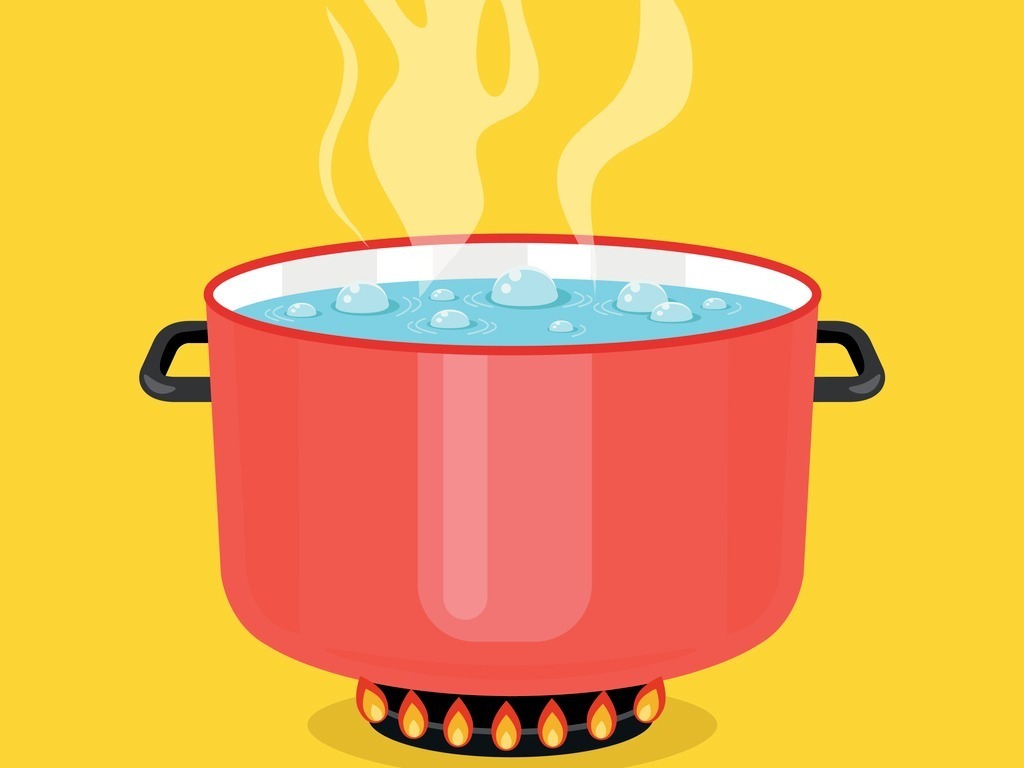
What is happening at the boiling point?
liquid to gas
solid to liquid
gas to liquid
liquid to solid
When a substance changes from one state to another, its particles don’t change.
True
False
When a liquid becomes a gas, we call it..............
boiling/evaporation
melting
sublimation
Can happen at any temperature.
Evaporation
Boiling
Occurs throughout the whole of a liquid when a liquid is hot enough.
Evaporation
Boiling

Determine the boiling point for this substance.
0 C
5 C
80 C
100 C

Name the change in state of matter number 1.
Melting
Freezing
Condensation
Boiling
Sublimation
If the boiling point of a substance is more than the room temperature, the substance will be in the .................state
liquid
gas
Air hole closed means __________ safety flame and air hole open means _________ heating flame.
Yellow, blue
Blue, yellow
Blue, orange
Yellow, green
During an experiment, a bunsen burner is placed on:
Gauze mat
The laboratory bench
A heatproof mat
Tripod
The different parts of a bunsen burner include:
Barrel, collar, air hole, gas hose and base
Barrel, collar, air vent, gase hose and base
Barrel, collar, air vent, gas hose and bottom
Barrel, neck, air hole, gas hose and base
When heating a test tube you.....
Wear safety goggles, use a test tube holder and hold the test tube away from you
Wear safety goggles, use tongs and hold the test tube close to you
Wear safety goggles, use a test tube holder and make sure the flame is only yellow
Wear safety goggles, use tongs and hold the test tube away from you
When you first light a bunsen burner, the flame should be:
Yellow
Blue
Either
Non existent. You shouldn't be using a bunsen burner to light things in the lab

What does this symbol warn us about?
Health hazard
Lung disease
Irritant
Corrosive

What does this symbol mean if found as a label on a substance?
Flamable
Flammable
Set this on fire
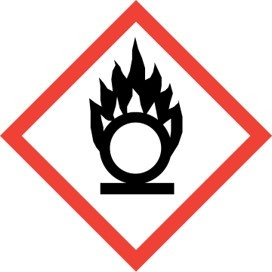
What does this symbol stand for?
Flammable
Oxidising
Non-flammable
Explosive
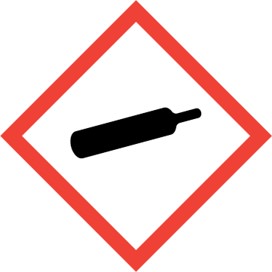
What does this symbol stand for?
Flammable
Oxidising
Gas under pressure
Explosive

What does this symbol stand for?
Flammable
Oxidising
Irritant
Corrosive

What does this symbol stand for?
Flammable
Toxic
Deadly
Corrosive

What does this symbol warn us of?
Danger
Alert
Toxic
Irritant/harmful

This symbol tell us the chemical it is labelling is:
Harmful to the environment
A pressurised container
Explosive
Corrosive

This lab student is wearing her googles and an apron. But what is she doing wrong?
Pointing the test tube toward her while heating it.
She actually is doing everything correctly.
Her loose hair is too close to the fire.
Not paying attention
Which symbol means that a substance is acutely toxic?


It is not safe to touch chemical materials as they are
poisonous
Harmful
Corrosive as they burn or damage skin
Oxidizing
Match the pictogram to the correlating hazard
EXPLOSIVES


Complete the following conclusion:
As the volume of water increased, the time to boil ___________.
increased
decreased
stayed the same

How many times greater is the time to boil 30cm3 of water than the time to boil 10cm3 of water?
(a)

How many people votes for Ice Age as their favourite movie?
4
5
6
7

Which film was the least favourite amongst the participants?
Brave
Ice Age
Cars
Up
Which film was the most favourite amongst the participants?
Brave
Ice Age
Cars
Up

The graph shows the time in minutes that Tommy spent playing video games.
Which day did he spend the least time playing games?
1
2
3
4
Calculate the average of the following figures:
1g, 5g, 12g, 14g and 20g
11g
12g
13g
14g
Calculate the average of the following figures:
21km, 28km, 56km, 35km, 14km, 28km, 14km
21km
28km
35km
42km

Determine which bar graph matches the table


When presenting data in graphs one should...
use 3D pie charts
show some label that looks nice and with a catchy word
have labels that are appropriate for the data shown
not use them and show data sheets


What is this graph showing you?
The worlds population has been growing and will continue to grow
The worlds population was growing but now is decreasing
The worlds population is staying the same

What is used to measure (but not precise), heat, and mix large amounts of liquids?
beaker
flask
test tube
graduated cylinder

What equipment allows you to see small objects?
beaker
compound light microscope
flask
test tube

Which equipment holds, measures, and mixes liquids (not a precise measurement), and measures in milliliters?
flask
test tube
beaker
graduated cylinder

Which equipment measures temperature in liquid or gas, and measures in degrees Celsius?
hot plate
beaker
thermometer
bunsen burner

Which equipment holds liquids and allows reactions in a small space?
test tube
hot plate
dropper
beaker

Which equipment heats objects with an open flame?
hot plate
thermometer
bunsen burner
beaker

Which equipment allows you to drop a small amount of liquid?
dropper
test tube
graduated cylinder
flask

Used to measure specific volume of liquid
beaker
graduated cylinder
test tube
erlenmyer flask

Used to hold the test tubes and keep from spilling
test tube
test tube rack
pipette
mortar

Used to find the mass of an object
meter stick
digital scale
petri dish
triple beam balance
What is the independent variable?
The result or outcome that you measure in the experiment.
The variable that you change in the experiment
The variables that you control for in the experiment
Always the temperature.
An experiment is performed on plants to see how different liquids affect plant growth. Each plant in the experiment is given a different liquid; water, apple juice, or milk. Each plant has the same amount of soil, and sunlight. In this investigation, the independent variable is ...
The type of plant
The amount of sunlight
The type of liquid that is given to the plants
An experiment is performed on plants to see how different liquids affect plant growth. Each plant in the experiment is given a different liquid; water, apple juice, or milk. Each plant has the same amount of soil and sunlight. In this investigation, what are the controlled variables?
Two control variables would be you would have to ensure that the plants have the same amount of solid and that they receive the same amount of sunlight
Water, apple juice, milk
Plant growth
A student is planning an experiment to find out how the height from which he drops a ball affects how high the ball bounces. The dependent variable is the _____.
Diameter of the ball
Force acting on the ball
How high the ball bounces
A student is planning an experiment to find out how the height from which he drops a ball from affects how high the ball bounces. What is one thing you have to control for in this experiment?
You need to make sure you are using the same type of ball each time
How high the ball bounces after it hits the floor
Height above the floor that the ball is dropped from
Mr. S set up an experiment to see how the mass of a ball affects the distance it rolls off a ramp. Identify the independent variable.
Distance traveled by the ball
Height of the ramp
Mass of the ball used in the experiment would be different.
Mr. S set up an experiment to see how the mass of a ball affects the distance it rolls off a ramp. What is the dependent variable?
The distance the ball rolled off the ramp
Height of the ramp
Mass of the ball
How close a measurement is to the accepted value is called..
Accuracy
Precision
Significant
Estimate

the variable in an experiment that constant and unchanged
controlled
manipulated
responding
observe

You create an experiment to see which which size skateboard wheel goes the fastest. Which of the following is the dependent variable?
The type of skateboard used
The type of surface the skateboard is rolling on
The speed of the skateboard
The size of the skateboard wheel
Information or data based on countable measurements of something
quantitative observations
qualitative observations
Information based on the qualities of something
Quantitative observations
Qualitative observations
The students grades are the ___________ variable.

If plants receive more water, then the number of leaves will increase.
This is an example of
What is the primary reason that diffusion occurs more rapidly in gases than in liquids?
Gases have a higher density than liquids.
Liquid particles are fixed in place.
Gas particles have more energy and move faster.
Gas particles are larger than liquid particles.
In a melting point experiment, which factor is most likely to affect the results?
The amount of chocolate being tested
The time of day the experiment is conducted
The color of the chocolate
The type of container used for heating
Which statement best describes the behavior of particles during the process of freezing?
Particles vibrate randomly and spread out.
Particles react chemically to form a solid.
Particles lose energy and become more ordered.
Particles gain energy and move apart.
Which condition would most likely decrease the rate of diffusion of a gas in a closed container?
Lowering the temperature of the gas
Reducing the volume of the container
Increasing the temperature of the gas
Adding more gas particles to the container
Concept: How does the arrangement of particles in a liquid differ from that in a gas?
Liquid particles are far apart and move randomly; gas particles are close together and vibrate.
Liquid particles are close together but can slide past each other; gas particles are far apart and move randomly.
Liquid particles are fixed in place; gas particles are tightly packed.
Liquid particles are tightly packed and fixed; gas particles are loosely packed and can move freely.
Recall: What is the process called when a gas turns into a liquid?
Condensation
Evaporation
Melting
Freezing

