
NEW
Font size
 Worksheets
Biosphere/energy Test Study Guide (Worksheet Extraction)
Total questions: 35
Worksheet time: 18mins
Which set lists only abiotic factors in an ecosystem?
Sunlight, temperature, rocks
Plants, animals, fungi
Bacteria, trees, insects
Predators, prey, parasites
Which statement best explains a major difference between a food chain and a food web?
A food chain shows one pathway of energy flow; a food web shows many interconnected pathways.
A food chain shows multiple producers; a food web has only one producer.
Which action would most directly reduce human impact on the biosphere and help maintain biodiversity?
Protect habitats and establish wildlife reserves
Increase deforestation to expand agriculture
Which of the following is a primary cause of biodiversity loss worldwide?
Habitat destruction and fragmentation
Increased recycling programs

What is an example of a biotic factor in an ecosystem?
water
temperature
soil
tree
Which of the following is considered an abiotic factor?
deer
grass
sunlight
bacteria
What is biodiversity?
The number of species in a specific area
The interaction between predators and prey
The ability of an ecosystem to recycle nutrients
The amount of sunlight an area receives
Which term refers to the place an organism lives AND its role in the ecosystem?
niche
biosphere
community
habitat
What is an invasive species?
A native species that adapts well to its environment
A species that is introduced to a new area and causes harm
A species that becomes extinct
Which of the following is a producer in an ecosystem?
rabbit
hawk
grass
mushroom
What is a primary consumer?
A plant
An herbivore
A carnivore
A decomposer
Which organism is an example of a carnivore?
cow
deer
mushroom
lion
What is an omnivore?
An organism that only eats plants
An organism that only eats meat
An organism that eats both plants and animals
Which type of organism breaks down dead organic material?
producer
consumer
decomposer
herbivore
Which of the following is a renewable energy source?
a. Coal c. Geothermal energy
b. Oil d. Natural gas
coal
oil
geothermal energy
natural gas
What distinguishes a nonrenewable resource from a renewable one?
Nonrenewable resources can be quickly replaced
Renewable resources are found in limited amounts
Nonrenewable resources cannot be replaced once used
Renewable resources are only found underground
How is hydroelectric power generated?
By burning fossil fuels
By harnessing the energy of moving water
By using wind turbines
By capturing sunlight
What best describes geothermal energy?
It is nonrenewable
It is produced using the heat of the Earth (from the mantle)
Its energy comes from the heat of the sun
It involves building a dam to hold back water energy
What happens when there is too much carbon in the carbon cycle?
It leads to global warming
It increases biodiversity
It stabilizes the climate
It decreases plant growth
Which is a pro of solar energy?
It is a limited resource
It produces harmful emissions
It reduces reliance on fossil fuels
It is always available 24/7
What is NOT a con of using natural gas?
It is nonrenewable
it emits carbon dioxide
It is a cleaner energy
its production in fracking can contaminate water
Which term describes the area of the Earth that supports ALL life?
biome
biosphere
habitat
niche
A rabbit eats plants. What term best describes its role in an ecosystem?
producer
primary producer
secondary consumer
decomposer
The study of the interactions of living things with other living things is called
geology
ecology
meteorology
chemistry
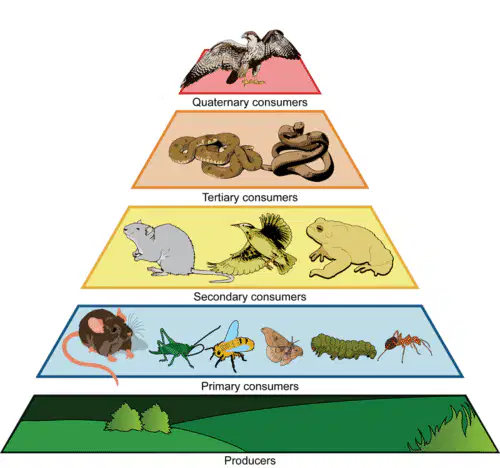
In the trophic pyramid, the amount of energy _______ as it moves level to level (moves bottom to the top).
Increases
Stays the same
Decreases
Changes by 5%
Food webs are more realistic models than food chains because
Organisms have multiple food sources instead of just one
Organisms always eat the same thing
All of the following are threats to biodiversity loss EXCEPT
deforestation
human population growth
invasive species
habitat protection
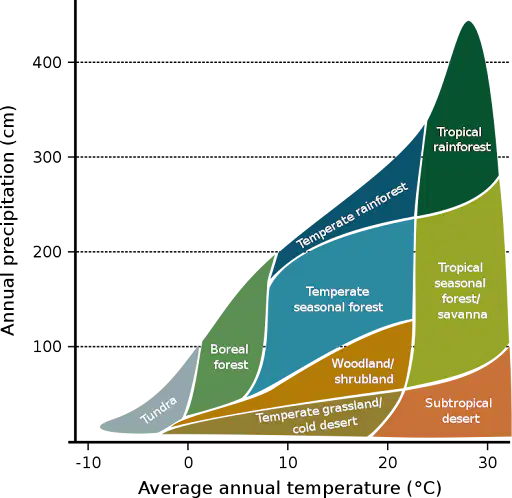
Which biome appears to have the coldest range of temperature?
tundra
boreal forest
temperate grassland
How does a tropical rainforest differ from a desert biome?
Deserts have more plant species
Rainforests receive less rainfall
Rainforests have a closed canopy of trees & plant life
What is a common feature of deciduous forests that distinguishes them from grasslands?
Presence of evergreen trees
Trees lose their leaves seasonally
Dominance of grasses and shrubs
Extremely cold temperatures & permafrost
In the carbon cycle, how is carbon primarily returned to the atmosphere?
Through photosynthesis by plants
Through the consumption by animals
By the decay of dead organisms
By the combustion of fossil fuels
A biome is classified according to
Precipitation & temperature
Only precipitation
Only temperature
The amount of oil & gas
All of the following are mining methods to extract coal EXCEPT
Surface mining
mountaintop removal
Underground mining
Spinning wind turbines
The use of uranium & nuclear power can be problematic due to
Its release of small amounts of carbon
The risk of accidents & radioactive waste
Its production of coal ash

