
 Worksheets
Topic 2.1 - 2.3 Review
Total questions: 72
Worksheet time: 36mins
The huge Roman Empire was split into two parts (West and East) around ______ to make it easier to rule.
285 AD
476 AD
1492 AD
1066 AD
Who moved the capital from Rome to Byzantium, renaming it Constantinople in 330 AD?
Julius Caesar
Augustus
Constantine
Nero
Fill in the blank: Constantinople was located on a ______, making it easy to defend and a center for trade between Europe and Asia.
peninsula
island
mountain
desert
Fill in the blank: The name 'Byzantine' was created by ______.
modern historians
ancient Greeks
Roman emperors
medieval monks
Who was the emperor during the Golden Age of the Byzantine Empire?
Justinian I
Constantine XI
Leo III
Basil II
What is Justinian's Code?
An organized set of laws that influenced many legal systems.
A collection of religious texts from ancient Rome.
A famous architectural structure in Constantinople.
A military strategy used by the Byzantine Empire.
What famous church did Justinian I order to be built in 537 AD?
Hagia Sophia
St. Peter's Basilica
Notre-Dame Cathedral
Westminster Abbey
What was central to life in Byzantine religion?
Eastern Orthodox Christianity
Islam
Hinduism
Judaism
Byzantine art is known for which of the following?
Sculptures
Mosaics and religious icons
Pottery
Calligraphy
Constantinople was a major hub for what?
World trade
Mountain climbing
Desert farming
Polar exploration
In what year did the Christian church split into Roman Catholic (West) and Eastern Orthodox (East)?
1054
1492
1517
800
Who attacked and sacked Constantinople in 1204, severely weakening the empire?
Ottoman Turks
Western European Crusaders
Mongols
Roman Catholics
Which event marked the end of the Byzantine Empire?
Church Splits (1054)
Crusaders Attack (1204)
Constantinople Falls (1453)
Legacy
What was one legacy of the Byzantine Empire? (Fill in the blank) It protected Europe from ________ for centuries.
eastern invaders
western explorers
southern traders
northern settlers
What knowledge did the Byzantine Empire help preserve?
Greek and Roman knowledge
Chinese and Indian knowledge
Egyptian and Persian knowledge
Mayan and Aztec knowledge

The Renaissance was a period known for:
A revival of art, literature, and learning in Europe
The decline of scientific discoveries
The start of the Industrial Revolution
The fall of the Roman Empire
Which of the following was NOT a cause of the Renaissance?
Revival of Greek & Roman ideas
Trade growth
Decline of feudalism
Industrial Revolution
What is Italian Renaissance Humanism?
A) A religious movement based on supernatural beliefs
B) An intellectual movement that affirms the ability and responsibility of human beings to lead ethical and fulfilling lives based on reason and logic
C) A political movement focused on monarchy
D) A movement that rejects classical studies
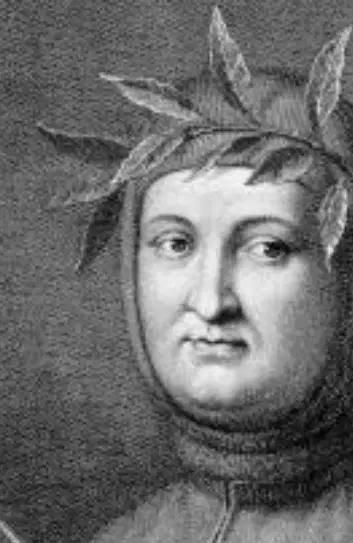
Fill in the blank: Petrarch is known as the ______ of Humanism.
Father
Founder
Leader
Pioneer
Who is identified as a Christian Humanist in Italian Renaissance Humanism?
Erasmus
Machiavelli
Petrarch
Leonardo da Vinci
Italian Renaissance Humanism emphasized classical studies and individualism.
True
False
Italian Renaissance Humanism differs from movements based on supernatural beliefs in that it:
focuses on human potential and achievements rather than supernatural explanations
emphasizes miracles and divine intervention
rejects the study of classical texts
is primarily concerned with religious rituals
Which subjects were included in Humanist Education during the Renaissance?
Mathematics, Science, Engineering
Grammar, Rhetoric, Poetry, History, Philosophy
Biology, Chemistry, Physics
Art, Music, Dance
The invention of the Printing Press during the Renaissance led to expanded literacy.
True
False
Fill in the blank: Education for women during the Renaissance was ______ but growing opportunities.
limited
universal
extensive
mandatory
Which of the following is NOT a reason why patrons were important during the Renaissance?
A) They allowed artists to focus on creativity without financial stress
B) They helped spread Renaissance ideas through commissioned works
C) They created artwork themselves
D) They supported artists, architects, and scholars
Fill in the blank: The Medici Family were Florence’s most ________ patrons.
influential
wealthy
famous
generous
Who commissioned Michelangelo for the Sistine Chapel?
Sforza Family
Pope Julius II
Medici Family
Leonardo da Vinci
Which family supported Leonardo da Vinci in Milan?
Medici Family
Sforza Family
Pope Julius II
Florence Family
Patrons helped spread Renaissance ideas by:
Funding artists and scholars, allowing their work to reach wider audiences.
Discouraging artistic innovation and new ideas.
Isolating artists from society and limiting their influence.
Suppressing the sharing of new knowledge and discoveries.
Which of the following is NOT a characteristic of Italian Renaissance Art?
A) Realism
B) Perspective
C) Abstract Expressionism
D) Use of light & shadow
Who painted 'The Last Supper'?
Leonardo da Vinci
Pablo Picasso
Vincent van Gogh
Claude Monet
Which artist created the sculpture 'David'?
Michelangelo
Leonardo da Vinci
Donatello
Raphael
The use of perspective is a characteristic of Italian Renaissance Art.
True
False
Which of the following works was painted by Raphael?
Mona Lisa
School of Athens
Sistine Chapel Ceiling
The Birth of Venus
Fill in the blank: The Sistine Chapel Ceiling was painted by ________.
Michelangelo
Leonardo da Vinci
Raphael
Donatello
Even though the machine in the video seems slow by modern standards, why was it so "revolutionary" compared to the only other option available at the time?
It automated tasks that were previously done manually, greatly increasing efficiency.
It was the first machine to use electricity for operation.
It was the fastest machine ever built at the time.
It was the only machine that could be used outdoors.
What was the Northern Renaissance?
A) A movement that started in France and spread to Italy
B) The Renaissance spread from Italy to Northern Europe (Flanders, Germany, England, France) in the late 15th century.
C) The Renaissance was limited to Italy only.
D) The Renaissance was a religious movement in Spain.
Who was the master of oil painting who perfected realism and incredible detail during the Northern Renaissance?
Jan van Eyck
Albrecht Dürer
Pieter Bruegel the Elder
Hans Holbein the Younger
Which German artist was known as the 'Leonardo of the North' and famous for woodcuts, engravings, and self-portraits?
Jan van Eyck
Albrecht Dürer
Pieter Bruegel the Elder
Hans Holbein the Younger
Who focused on vibrant landscapes and scenes of peasant life during the Northern Renaissance?
Jan van Eyck
Albrecht Dürer
Pieter Bruegel the Elder
Hans Holbein the Younger
Which artist was famous for his photorealistic portraits, especially in England (e.g., Henry VIII)?
Jan van Eyck
Albrecht Dürer
Pieter Bruegel the Elder
Hans Holbein the Younger
Who wrote The Praise of Folly, criticizing the Church and promoting a 'philosophy of Christ'?
Erasmus (Dutch)
Martin Luther (German)
Thomas More (English)
John Calvin (French)
Who wrote Utopia, an imaginary land free of greed and war, to critique his own society?
Thomas More (English)
Francis Bacon (English)
Niccolò Machiavelli (Italian)
Erasmus (Dutch)
Who is widely regarded as the greatest writer in the English language, drew on classical sources, and explored human nature during the Late Renaissance?
William Shakespeare (English)
Geoffrey Chaucer (English)
John Milton (English)
Christopher Marlowe (English)
What new artistic techniques emerged during the Renaissance?
Perspective and realism
Cubism and surrealism
Impressionism and expressionism
Minimalism and abstract art
During the Renaissance, art and artists gained new, respected status in society.
True
False
Writing in the ________ became common during the Renaissance.
vernacular
Latin
hieroglyphics
cuneiform
What philosophy celebrated individualism and human potential during the Renaissance?
Humanism
Feudalism
Scholasticism
Mysticism
Secular (non-religious) ideas and concerns became more prominent during the Renaissance.
True
False
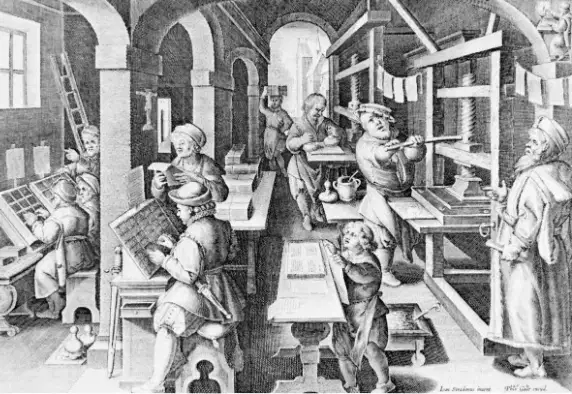
The ________ revolutionized learning, increased literacy, and spread information faster than ever during the Renaissance.
Printing Press
Steam Engine
Telegraph
Compass
The spirit of inquiry during the Renaissance fueled the ________ and Age of Exploration.
Scientific Revolution
Industrial Revolution
French Revolution
Reformation
Christian Humanism and criticism of the Church helped set the stage for the ________ Reformation.
Protestant
Industrial
Scientific
Renaissance
The Reformation was a significant movement in European history. Which of the following best describes the Reformation?
A religious movement that led to the creation of Protestant churches
A period of scientific discoveries in Europe
A series of wars between European kingdoms
A movement to unify all Christian churches under the Pope
Luther had the following impact on the Christian church:
He initiated the Protestant Reformation, challenging church practices.
He became the first Pope of the Christian church.
He unified all Christian denominations under one leadership.
He abolished the use of the Bible in Christian worship.
Fill in the blank: The East-West Schism occurred in the year _____
1054
1204
1492
800
Church Criticism: What were some issues facing the Catholic Church before major reforms?
Absenteeism and pluralism
Corruption and war
Poverty and famine
Science and technology
Indulgences: Who authorized the sale of indulgences to fund St. Peter’s Basilica?
Martin Luther
Pope Leo X
Johann Tetzel
Henry VIII
Who led the sale of indulgences in German states?
Martin Luther
Pope Leo X
Johann Tetzel
John Calvin
Indulgences: Fill in the blank with Tetzel’s phrase: "When a coin in the coffer rings, the soul from ______ springs."
purgatory
heaven
earth
limbo
Martin Luther: What did Martin Luther believe was the key to salvation?
Good works
Faith alone
Church traditions
Wealth
According to Martin Luther, what revealed God?
Scriptures
Church traditions
Indulgences
Pilgrimages
What did Martin Luther do on October 31, 1517, that started the Protestant Reformation?
He translated the Bible into German
He nailed the Ninety-Five Theses to the Wittenberg Church door
He was condemned by Rome
He invented the printing press
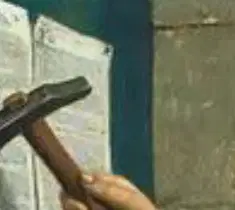
Why did the message of the Ninety-Five Theses spread quickly?
Because of the printing press
Because Luther traveled across Europe
Because of the Diet of Worms
Because the Pope supported Luther
What was the outcome of the Diet of Worms in 1521 for Martin Luther?
He was made Pope
He refused to recant and was condemned by Rome
He translated the Bible
He invented the printing press
Who hid Martin Luther after he was condemned by Rome, and what did Luther accomplish while in hiding?
Prince Frederick the Wise hid Luther, and Luther translated the New Testament into German.
King Henry VIII hid Luther, and Luther wrote the Ninety-Five Theses.
Pope Leo X hid Luther, and Luther founded the Jesuit order.
Charles V hid Luther, and Luther translated the Old Testament into Latin.
What was the main reason peasants revolted against their lords and the Church in the German Peasants’ War (1524-1525 CE)?
Desire for religious freedom
Social and economic freedom
Support for Catholicism
To support Luther's teachings
Who harshly condemned the German Peasants’ Revolt and sided with the German princes to crush it?
John Calvin
Martin Luther
Charles V
The Pope
From Germany, Protestant ideas rapidly spread across Europe, inspiring new denominations like ________ (led by Luther's followers) and ________ (founded by John Calvin in Switzerland).
Lutheranism; Calvinism
Anglicanism; Methodism
Presbyterianism; Anabaptism
Puritanism; Quakerism
The Imperial Diet of Augsburg in 1530 was an attempt by which Catholic Emperor to stop Protestantism?
Charles V
Henry VIII
Ferdinand II
Francis I
The Peace of Augsburg (1555) allowed German princes to choose between Catholicism and Lutheranism.
True
False
What was the Augsburg Confession?
A peace treaty
A formal statement of faith presented by Lutheran princes
A new Protestant denomination
A military alliance

