
Font size
 Worksheets
Clasificación de Máquinas Eléctricas y Conversión de Energía
Total questions: 86
Worksheet time: 43mins

According to the classification diagram, which category correctly lists the two main types of electrical output for a generator?
Single-phase and three-phase
Direct current (dynamo) and alternating current (alternator)
Mechanical power and electrical power
Primary and secondary windings

In the diagram, which machine is explicitly shown as converting electrical energy to mechanical energy?
Generator
Motor
Transformer
Alternator
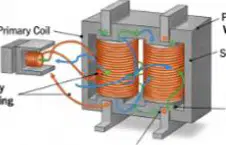
Which statement best describes the function of a transformer as illustrated?
It converts mechanical energy into electrical energy.
It converts electrical energy to mechanical energy.
It transfers electrical energy from one circuit to another, changing voltage through primary and secondary windings.
It produces direct current from mechanical rotation.

Based on the classification, which motor types are indicated by the diagram?
Only direct-current motors
Only alternating-current motors
Both direct-current and alternating-current motors
Only single-phase motors

Which pairing correctly matches generator subtype with current type, as shown in the diagram?
Alternator — direct current
Dynamo — alternating current
Alternator — alternating current
Dynamo — mechanical current

Using the energy flow arrows in the figure, what is the complete pathway when a generator feeds a transformer?
Electrical → Mechanical → Electrical
Mechanical → Electrical → Electrical
Mechanical → Mechanical → Electrical
Electrical → Electrical → Mechanical

Which statement accurately distinguishes motor and generator roles using the visuals?
Both motor and generator convert electrical energy to mechanical energy.
Motor converts electrical to mechanical; generator converts mechanical to electrical.
Generator converts electrical to mechanical; motor converts mechanical to electrical.
Transformer converts mechanical to electrical; motor converts electrical to electrical.

According to the classification diagram, which machine type is further categorized into single-phase and three-phase variants?
Generator only
Motor only
Transformer only
Both motor (for AC) and transformer
According to the definition provided, what is the primary role of a direct current (DC) machine?
It transforms mechanical energy into heat for braking applications
It converts electric energy (voltage and current) to mechanical energy (speed and torque) or vice versa
It stores electrical energy in magnetic fields without moving parts
It amplifies alternating current signals using semiconductor devices
Which statement correctly distinguishes a DC motor from a DC generator based on the description?
A DC motor uses mechanical energy to produce alternating current output
A DC generator converts electric energy into higher-frequency AC power
A DC motor converts electric energy to mechanical energy, while a DC generator converts mechanical energy to electric energy
A DC generator and DC motor both solely regulate voltage without energy conversion
Which characteristic is explicitly listed as a principal feature of a DC machine?
Operates only with alternating current (AC) supply
Functions based on interaction between magnetic fields and electric currents
Requires no electromagnetic interaction for torque production
Exclusively used for fixed-speed applications without torque control
A student proposes an application where precise control of speed and torque is required. Based on the stated characteristics, which reasoning best supports selecting a DC machine?
DC machines are widely used in speed and torque control applications due to their controllability
DC machines cannot vary speed, making them unsuitable for control systems
DC machines require AC supply, complicating speed regulation
DC machines are irreversible devices, so they only operate at a single torque
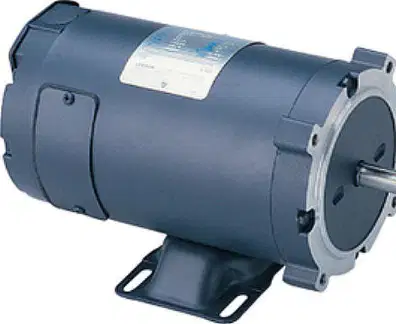
Consider the reversible nature of DC machines described. Which scenario correctly applies this property in planning an energy system?
Designing a device that can act as a motor during operation and as a generator during regenerative braking
Using the machine only as a heater to dissipate excess electrical energy
Ensuring the machine produces AC power when driven mechanically
Preventing any bidirectional energy flow to avoid component stress
Which component of a DC machine creates the main magnetic field and may consist of permanent magnets in small machines or field windings in large machines?
Rotor (armature)
Stator (magnets)
Commutator
Brushes
In a DC machine, what is the primary role of the rotor or armature (winding) as it turns within the magnetic field?
Provides a low-reluctance path for magnetic flux
Rectifies alternating current to direct current
Generates an EMF as a generator or experiences torque as a motor
Supports the shaft and allows rotation
Which statement best describes the function of the iron core in a DC machine?
It converts AC to DC through segmented copper parts
It carries current to and from the armature
It provides a path for magnetic flux and reduces magnetic reluctance
It houses the brushes and protects the rotor
Select the component that rectifies the alternating current induced in the armature into direct current and is located on the machine’s shaft.
Brushes made of carbon or graphite
Commutator made of insulated copper segments
Stator composed of permanent magnets
Bearings of ball or roller type
Which option correctly identifies the function of brushes in a DC machine?
They create the main field using permanent magnets
They mechanically support the shaft during rotation
They make sliding contact with the commutator to conduct current to (motor) or from (generator) the armature
They reduce the air gap to increase flux
Choose the statement that accurately describes bearings in a DC machine.
They form the cylindrical copper segments that rectify current
They are carbon contacts that rub the commutator
They support the shaft and permit rotation; they may be ball, roller, or sliding type
They generate torque within the magnetic field
Application scenario: A small DC motor uses permanent magnets for its field and a rotating copper-wound armature. Which pair of components is interacting to produce torque when current flows?
Brushes and bearings
Stator magnets and rotor (armature) windings
Commutator segments and iron core
Housing and shaft
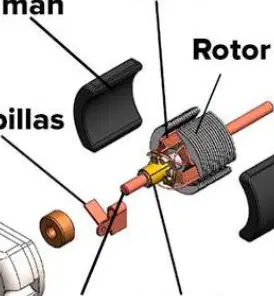
Refer to the labeled exploded view of a DC motor showing magnets, rotor with copper windings, commutator (collector), shaft, and brushes. Which labeled part directly provides mechanical support to the rotating assembly allowing it to spin with minimal friction?
Escobillas (brushes)
Imán (magnet)
Eje (shaft) supported by bearings
Bobinas de cobre (copper windings)
Recall: According to the fundamental Lorentz-based equation for a DC motor, which expression gives the magnitude of the electromagnetic force on a straight conductor in a uniform magnetic field when current flows?
F = I · L × B
F = V · I
F = B / L
F = I / B
Recall: In the equation F = I · L × B for a DC motor, what physical quantity does B represent?
Electrical resistance (Ω)
Magnetic flux density (tesla)
Length of the conductor (meters)
Current direction (unitless)
Skill/Concept: A rigid conductor of length L carries current I through a uniform magnetic field B perpendicular to the conductor. Which change will double the force magnitude on the conductor while keeping all other factors constant?
Halve the current and double the length
Double the magnetic flux density
Rotate the conductor 45° with no change in other quantities
Reduce the conductor length by half
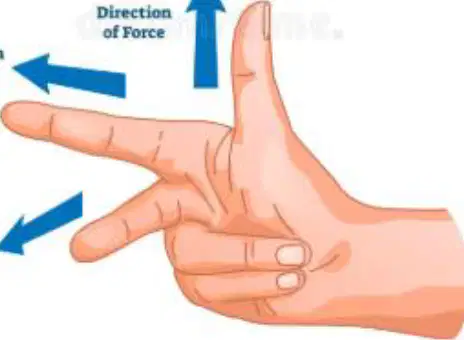
Skill/Concept: Using the right-hand rule for a DC motor, which mapping correctly associates the fingers with the physical directions when a straight conductor is in a uniform field?
Thumb: magnetic field, Index: current, Middle: force
Thumb: current, Index: force, Middle: magnetic field
Thumb: force, Index: magnetic field, Middle: current
Thumb: magnetic field, Index: force, Middle: current
Strategic Thinking: A straight conductor of length 0.20 m carries 5.0 A within a uniform magnetic field of 0.30 T. The conductor is oriented so current is perpendicular to the field. Based on F = I · L × B, what is the force magnitude on the conductor?
0.030 N
0.300 N
3.0 N
7.5 N
Recall the fundamental equation for the induced electromotive force (EMF) given: ε equals the product of magnetic flux density, conductor length, and conductor velocity. Which expression matches this definition?
ε = B · L · v
ε = B + L + v
ε = B · v / L
ε = L · v / B
According to Faraday’s Law stated here—“When a conductor moves in a magnetic field, an electromotive force (EMF) is induced”—which variable correctly represents magnetic flux density in the EMF equation and its SI unit?
B, measured in tesla (T)
ε, measured in volts (V)
L, measured in newtons (N)
v, measured in amperes (A)
Identify the role of the commutator in a DC generator as described: the rotor induces an EMF while spinning in the stator’s magnetic field. What does the commutator do in this process?
It rectifies the induced EMF to produce direct current
It increases the magnetic flux density B inside the stator
It measures the conductor length L for control feedback
It converts mechanical rotation into thermal energy for cooling
A straight conductor of length L = 0.20 m moves at v = 5.0 m/s perpendicular to a uniform magnetic field with B = 0.40 T. Using ε = B · L · v, what EMF is induced?
0.40 V
0.80 V
0.20 V
2.0 V
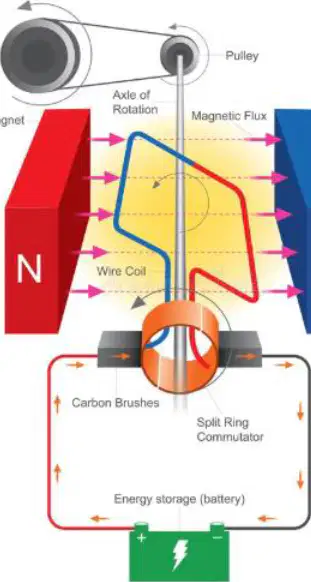
Which statement best describes the operational sequence in a DC generator based on the provided diagram and description?
Rotor motion in the magnetic field induces EMF in the wire coil; the split-ring commutator and carbon brushes deliver rectified DC to the external circuit
Stator coils supply DC directly; the rotor only supports mechanical bearings to reduce friction
The commutator generates magnetic flux; the rotor rectifies AC into DC before reaching the magnets
Battery current sets the rotor speed; EMF is induced in the magnets and converted to AC by the brushes
According to the description, what is the primary purpose of commutation in a DC motor?
To reverse the magnetic field of the stator every revolution
To maintain torque in the same direction by switching armature current
To increase the supply voltage to the armature during startup
To eliminate mechanical losses by stopping rotation periodically
In a DC generator, commutation is used to achieve which outcome?
Amplify the induced AC voltage to a higher frequency
Rectify the induced alternating EMF into direct current
Reverse the direction of mechanical rotation
Reduce electromagnetic flux in the air gap
What would happen without commutation in a DC machine, based on the text?
The armature current would remain constant and unidirectional
The torque would change direction and the motor would not function
The output would be smoother DC with less ripple
The brushes would no longer contact the commutator
Which components automatically perform the commutation in DC machines as described?
Slip rings and bearings
Commutator and brushes
Field windings and armature core
Rectifier diodes and controller
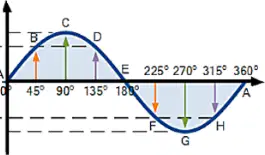
Refer to the diagram labeled "Sin conmutación" showing a single loop under a magnetic field and a sinusoidal waveform. What does the waveform represent?
Constant DC voltage produced without switching
Alternating EMF induced when the current direction is not switched
Mechanical torque ripple due to brush friction
Flux density remaining constant in the air gap
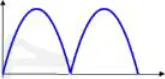
Refer to the pair of diagrams labeled "Con conmutación" showing a split-ring commutator and resulting waveforms. What is the effect of commutation on the output?
It converts the sinusoidal EMF into a pulsating unidirectional waveform
It doubles the frequency of the alternating voltage
It eliminates all ripple to produce perfectly flat DC
It reverses the field polarity every quarter turn
Step-sequence question: Which step correctly describes the change that occurs at half a turn in the process flow?
Current enters the coil through the brushes
The magnetic field is established in the stator
The commutator changes the direction of the current
The coil stops rotating to maintain torque
According to the process flow, what is the result of commutation and continuous force direction?
Intermittent rotation with periodic stops
Continuous rotation of the coil
Zero net torque over a full cycle
Alternating current supplied to the field windings
Which statement best explains why torque remains in the same direction with commutation?
Because the commutator keeps reversing the stator polarity to oppose motion
Because the commutator flips the armature current at each half-turn, aligning force direction
Because the brushes increase current magnitude during rotation
Because the magnetic flux magnitude is doubled by the battery
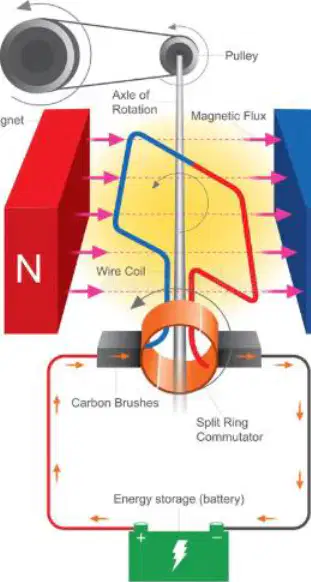
Refer to the labeled diagram of a DC motor with N and S magnets, carbon brushes, and a split-ring commutator. What role do the carbon brushes play in commutation?
They generate the magnetic flux between the poles
They mechanically lock the commutator during half-turn
They deliver current to the rotating coil and interface with the split-ring commutator
They rectify AC to DC using semiconductor junctions
Which DC motor connection scheme is characterized by very high starting torque and poor speed regulation?
Independent (separately excited)
Series
Parallel (shunt)
Compound
A design requirement prioritizes excellent speed regulation for loads like tools, pumps, and fans. Which connection is most appropriate?
Series
Parallel (shunt)
Independent (separately excited)
Compound
Which scheme typically offers high complexity and high cost but enables precise control of speed and torque?
Independent (separately excited)
Series
Parallel (shunt)
Compound
Elevators need both strong starting torque and good speed regulation under varying loads. Based on the operational characteristics, which DC motor connection best fits this application?
Series
Parallel (shunt)
Compound
Independent (separately excited)
Which connection scheme provides moderate starting torque, good speed regulation, medium complexity, and medium cost?
Parallel (shunt)
Series
Compound
Independent (separately excited)
Match each connection to its typical application context based on the table of characteristics.
Independent: precise control; Series: trains and cranes; Parallel: tools/pumps/fans; Compound: elevators
Independent: tools/pumps/fans; Series: elevators; Parallel: precise control; Compound: trains and cranes
Independent: elevators; Series: precise control; Parallel: trains and cranes; Compound: tools/pumps/fans
Independent: cranes; Series: fans; Parallel: elevators; Compound: precise control
Considering cost and complexity trade-offs, which connection combines medium-high complexity with medium-high cost while delivering excellent speed regulation?
Series
Compound
Parallel (shunt)
Independent (separately excited)
Recall: In a DC motor operating as a motor, which statement describes the interaction that produces torque?
The applied DC voltage directly creates mechanical rotation without current
The constant magnetic field interacts with armature current to produce torque
The armature resistance alone determines torque without magnetic flux
Torque is generated only by changing the number of poles
Recall: According to the simple torque equation T = Kt · Φ · Ia = Km · Ia, which variable represents armature current?
Φ
Ia
Kt
Km
Skill/Concept: If the magnetic flux per pole Φ is constant and Kt is grouped into Km, which proportionality best describes torque T as speed varies but current changes?
T is independent of Ia
T is proportional to Ia
T is proportional to Φ squared
T is inversely proportional to Kt
Recall: Which unit matches the electromagnetic torque T given in the section?
Ampere (A)
Weber (Wb)
Newton-meter (N·m)
Ohm (Ω)
Recall: The motor torque constant Kt aggregates fixed physical design properties. Which expression is provided for Kt?
Kt = Z · p · a
Kt = Z · p / (2 · π · a)
Kt = 2 · π · a / (Z · p)
Kt = (Z + p + a) / (2 · π)
Recall: In the Kt expression, which symbol denotes the total number of conductors in the armature (rotor)?
p
a
Z
Ia
Skill/Concept: If a DC motor has more parallel paths a in the armature winding while Z and p are unchanged, what is the effect on Kt according to Kt = Z · p / (2 · π · a)?
Kt increases linearly with a
Kt decreases as a increases
Kt is unaffected by a
Kt becomes zero
Recall: Which voltage equation relates terminal voltage Va to back-EMF Ea and armature resistance Ra?
Va = Ea − Ia · Ra
Va = Ea + Ia · Ra
Va = Ia / Ra
Va = Ea · Ia · Ra
Recall: What does back-EMF (Ea) do when the motor rotates?
It aids the applied voltage, increasing current
It opposes the applied voltage and limits current
It replaces the armature resistance
It sets the number of poles
Skill/Concept: Which expression gives back-EMF in terms of motor constant Ke, flux Φ, and angular velocity w?
Ea = Ke · Φ · w
Ea = Kt · Ia
Ea = Va + Ia · Ra
Ea = T · w
Recall: Which unit corresponds to Ra, the armature resistance?
Volt (V)
Ohm (Ω)
Ampere (A)
Newton-meter (N·m)
Strategic Thinking: A DC motor has Va = 120 V, Ra = 0.5 Ω, and it spins such that Ea = 100 V. What is the armature current Ia? Use Va = Ea + Ia · Ra.
20 A
40 A
0.5 A
100 A
Strategic Thinking: A motor’s back-EMF increases from 80 V to 96 V with constant Φ. By Ea = Ke · Φ · w, what happens to angular velocity w?
It decreases by 20%
It increases by 20%
It doubles
It remains unchanged
Recall: Which developed power relation is explicitly stated for the DC motor?
Pdesarrollada = Va · Ia
Pdesarrollada = Ea · Ia = T · w
Pdesarrollada = Ia2⋅Ra
Pdesarrollada = Φ · Ia
Strategic Thinking: A motor delivers T = 10 N·m at w = 300 rad/s. Using Pdesarrollada = T · w, what is the developed power?
3 kW
300 W
30 W
3 W
According to the excerpt, what is the primary reason the initial current in a DC motor can be dangerously high at start-up?
Back-EMF is zero because the speed is zero
Armature resistance suddenly increases
Supply voltage drops momentarily
Mechanical load instantly decreases friction
Which component is temporarily connected in series to limit the initial current during DC motor start-up?
Starting resistance
Shunt capacitor
Series inductor
Flywheel damper
Place the following steps of the described start-up process in the correct order: A) Motor accelerates, back-EMF increases. B) Apply voltage with controlled current. C) Finally, short-circuit the added element. D) Connect the protective element. E) Reduce the protective element when speed is sufficient.
D → B → A → E → C
B → D → A → E → C
D → A → B → E → C
D → B → E → A → C
Which statement best explains why the starting resistance is reduced gradually as the motor speeds up?
Increasing back-EMF naturally limits current, allowing resistance to be decreased without raising current
Higher speed increases mechanical friction, which requires lower electrical resistance
Voltage source becomes unstable at higher speeds, so resistance must be lowered to stabilize voltage
Gradual reduction prevents torque ripple caused by inductance saturation
What overall outcome is achieved by following the described start-up procedure with a starting resistance?
The motor is protected and starts smoothly
The motor reaches maximum speed instantly
The motor operates only at low voltage
The motor eliminates back-EMF entirely
Recall: Which statement best describes Method 1 for controlling the speed of a DC motor?
Change the applied voltage at the terminals
Adjust the number of poles mechanically
Change the armature resistance only by heating
Shift the commutator timing continuously
Recall: In Method 1, what happens to motor speed when the applied voltage is decreased?
Speed increases significantly
Speed decreases
Speed remains fixed at nominal
Speed oscillates unpredictably
Skill/Concept: Based on the listed ranges, which statement correctly contrasts the controllable speed ranges of the two methods?
Voltage control covers 0 to nominal speed; field control covers nominal to maximum speed
Voltage control covers nominal to maximum speed; field control covers 0 to nominal speed
Both methods cover 0 to maximum speed equally
Field control only allows speed reduction below zero
Skill/Concept: The material states that increasing magnetic field (Φ) makes the motor run slower. Which option aligns with that relationship?
Speed is directly proportional to Φ
Speed is inversely proportional to Φ
Speed is independent of Φ
Speed changes only with armature current and not with Φ
Recall: Which practical application example is given for varying voltage to change speed?
A conveyor that uses field weakening to increase torque
A forklift that varies voltage to lift slowly with heavy load or quickly with light load
A wind turbine that increases field to speed up in low wind
An electric vehicle that changes commutation to coast
Strategic Thinking: If Va is held constant and Ra and load remain constant, what action would most effectively increase speed beyond nominal according to Method 2?
Increase the armature resistance to reduce Ia
Decrease the magnetic field (field weakening) to reduce Φ
Increase the applied voltage Va above nominal
Increase back-EMF by adding a series capacitor
Skill/Concept: Using the equation w = (Va − Ia·Ra) / (Ke·Φ), which change tends to make the motor slower when Va and Ra are fixed?
Decreasing Φ
Increasing Φ
Decreasing Ke
Decreasing Ia
Strategic Thinking: A machine tool must adapt speed to different materials without sacrificing high torque at low speed. Which control approach is most appropriate based on the text?
Use voltage control to set speed from zero up to nominal for better efficiency and torque
Use field weakening exclusively to reach zero speed under heavy load
Use only mechanical gearing to change speed
Use field strengthening to increase speed while maintaining torque
According to the described operation, what immediately causes an induced voltage in the coil of a DC generator?
Application of a commutator to the output terminals
Rotation of the rotor within a magnetic field
Connection of the turbine to the mechanical shaft
Rectification of AC to DC in the external circuit
Which component’s role is to convert the generated voltage into DC in a basic DC generator?
Stator
Commutator
Turbine
Friction wheel
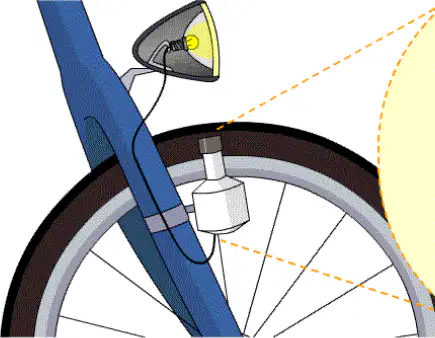
A bicycle dynamo powers a light as the wheel turns. Which sequence best explains the energy conversion pathway described?
Electrical energy → mechanical rotation → magnetic field → DC output
Mechanical motion → rotor rotation in magnetic field → induced voltage → commutator rectification to DC
Magnetic field → thermal energy → rotor rotation → DC output
Mechanical motion → battery charging → AC inversion → DC lighting
You are designing an emergency generator driven by a turbine. Based on the basic operation steps provided, which design decision is essential to ensure DC output without external electronics?
Include a commutator to rectify the induced voltage within the generator
Use a larger turbine blade to increase mechanical torque
Place the magnet outside the housing to reduce heat
Add a battery so the generator can start without motion
According to the pre-operational checklist for a DC machine, which action is essential before starting?
Monitor the machine’s temperature to ensure it is not very hot
Verify firm electrical connections and absence of physical damage
Adjust brush position to reduce sparking
Clean the commutator if it is dirty
During operation of a DC motor, which monitoring task helps ensure stable performance?
Checking lubricant level once per month
Listening for abnormal noises and verifying stable speed
Replacing brushes at every shift change
Increasing load to test thermal limits
Which maintenance activity is listed as part of periodic care for DC machines?
Realign the shaft weekly regardless of condition
Clean dust and dirt and lubricate bearings as specified
Increase field current to compensate for wear
Disable protective devices during inspection
A DC motor fails to start. Based on the troubleshooting guidance, what should be checked first?
Overheating due to excessive load
Connections and the condition of the brushes
Bearing alignment and shaft runout
Insulation resistance of field windings only
Excessive sparking at the brushes is observed. Which corrective action aligns with the recommendations?
Reduce lubricant to minimize contamination
Adjust brush position or replace worn brushes
Increase operating temperature to burn off debris
Ignore the sparking if speed is stable
A DC motor is running very hot. Which combined check is advised to address the condition?
Inspect only the commutator cleanliness
Verify load, lubrication, and brush condition
Measure ambient humidity and vibration levels
Replace the armature without testing

