
Font size
 Worksheets
Core Chemistry Revision
Total questions: 111
Worksheet time: 56mins
Which statement best defines an element, as used in chemistry?
A material made by mixing two or more substances in any ratio
A substance that cannot be broken down into other substances
A substance that can only exist as a gas
A substance that always contains carbon and hydrogen
Which instruction is correct when writing a chemical symbol?
Use all lowercase letters for every symbol
Write both letters in uppercase
Start with a capital letter; a second letter (if any) is lowercase
Always include three letters for every element
What does the Periodic Table do?
It lists the compounds and their formulas
It lists the elements and groups those with similar properties together
It organizes mixtures by color
It ranks elements by price
Which pair correctly matches an element to its chemical symbol from the table provided?
Carbon—Ca
Nitrogen—N
Nickel—Ne
Chlorine—Cl
From the table, which chemical symbol stands for iron?
Ir
Fe
In
I
Which of the following is a correct chemical symbol for chlorine, based on the table and rules?
CL
Cl
cL
cl
Reasoning with the rule for symbols: If an element’s symbol has two letters, which format is correct and why?
Both letters uppercase to show importance
First lowercase, second uppercase to avoid confusion
First letter uppercase; second letter lowercase to follow standard convention
Both letters lowercase to save space
Strategic thinking: The Periodic Table groups elements with similar properties. Which implication helps scientists worldwide use symbols consistently?
Grouping by properties leads to different symbols in different countries
Grouping by properties and using one- or two-letter codes promotes universal understanding
Grouping by color ensures each country picks unique symbols
Grouping by price standardizes trade but not scientific notation
Which statement best describes the placement of metals and non-metals in the Periodic Table pattern discussed: metals are on the left of the stepped line and non-metals are on the right.
Metals are on the right and non-metals on the left of the stepped line
Metals are above and non-metals below the stepped line
Metals are on the left and non-metals on the right of the stepped line
Metals and non-metals are randomly distributed without a pattern
Identify the property that is typical of a metal (when solid). Choose the best match.
Poor conductor of electricity
Dull surface
Brittle when hammered
Good conductor of electricity
Which property is typical of a non-metal (when solid)?
Shiny and sonorous
Good conductor of heat
Low density (light for its size)
Malleable into thin sheets
Metalloids are elements whose properties are between those of metals and non-metals. Which example matches this description in the material?
Mercury
Silicon
Sulfur
Magnesium
Most metals have high melting points and are usually solid at about 20 °C. Which statement about many non-metals at 20 °C is correct according to the material?
Many non-metals are solids with high melting points
Many non-metals are gases with low boiling points
Many non-metals are liquids with high boiling points
Non-metals are always ionic at room temperature
Which statement about mercury supports the idea that not all elements fit simple patterns?
Mercury is a solid at 20 °C, so it is a metal
Mercury is a gas at 20 °C, so it is a non-metal
Mercury is a liquid at 20 °C, yet classified as a metal
Mercury is a semiconductor, so it is a metalloid
Which list shows two physical properties of typical metals (when solid)?
Brittle and dull
Malleable and sonorous
Poor conductor of electricity and heat
Low density and not shiny
Which list shows two typical properties of non-metals (when solid)?
Good conductors of electricity and heat
Shiny and malleable
High density and sonorous
Dull and brittle
In the chemical reactions described, what product forms when magnesium reacts with oxygen?
Magnesium chloride
Magnesium oxide
Magnesium sulfate
Magnesium nitrate
According to the material, what product forms when sulfur reacts with oxygen?
Sulfur hydroxide
Sulfur dioxide
Sulfur carbonate
Sulfur nitride
Which pair correctly matches a property with the category it supports: sonorous and shiny suggest metal; dull and brittle suggest non-metal.
Sonorous and shiny → non-metal; dull and brittle → metal
Sonorous and shiny → metal; dull and brittle → non-metal
Both pairs suggest metal
Both pairs suggest non-metal
Which prediction approach did Mendeleev use when creating the Periodic Table according to the material?
He arranged elements by alphabetical order and guessed new ones
He used patterns in element properties, left gaps, and predicted undiscovered elements
He classified only gases and ignored solids
He relied on random placement without patterns
Recall: Which statement best defines a compound?
A group of identical atoms that are not joined
A substance made up of atoms of two or more elements strongly joined together
A single element that has unusual properties
A mixture of elements that can be easily separated by filtering
Recall: What is a molecule?
A group of two or more atoms strongly joined together
A single atom with extra electrons
A collection of different elements that are not bonded
A crystal lattice that cannot form bonds
Skill/Concept: Water has a higher boiling point than hydrogen. Which explanation from the section best accounts for this difference?
Water molecules are held together by stronger forces than hydrogen molecules, so more energy is needed to separate them
Hydrogen molecules contain more atoms than water molecules, so they boil at a higher temperature
Water is an element while hydrogen is a compound, so compounds always boil at higher temperatures
Hydrogen molecules are heavier than water molecules, so they require more energy to separate
Recall: Which pair of elements make up water?
Hydrogen and oxygen
Sodium and chlorine
Calcium and phosphorus
Oxygen and chlorine
Strategic Thinking: Sodium chloride does not fizz in water or smell poisonous like its elements. Based on the section, what reasoning best explains this observation?
The properties of a compound are different from the properties of the elements that make it up
Sodium and chlorine lose all mass when combined, so no reactions can happen
Compounds always retain the smell and reactivity of their elements
Sodium chloride is simply a loose mixture of sodium and chlorine that can be separated by sieving
Skill/Concept: Choose the statement that correctly contrasts water and its elements at room temperature.
Hydrogen and oxygen are both liquids, while water is a gas
Hydrogen is a gas and oxygen is a gas, while water is a liquid with molecules made of both elements
Hydrogen is a solid and oxygen is a liquid, while water is a gas
Hydrogen and oxygen are metals, while water is a compound nonmetal
Strategic Thinking: A dentist says tooth enamel is a compound of calcium, phosphorus, and oxygen. What conclusion can you draw about its properties compared with those of calcium, phosphorus, and oxygen individually?
They must be identical to the properties of the individual elements
They are a blend that smells like phosphorus gas and fizzes like calcium metal
They can be different from those of the separate elements because the atoms are strongly joined in a compound
They will change only if heated above the boiling point of water
Which subatomic particles are found in the nucleus of an atom?
Electrons only
Protons and neutrons
Protons and electrons
Neutrons and electrons
What does the atomic number tell you?
The total number of protons plus neutrons in the nucleus
The number of electrons in the outer shell
The number of protons in the nucleus (and equals the number of electrons in a neutral atom)
The number of shells occupied by electrons
What does the mass number represent for an atom?
Number of electrons orbiting the nucleus
Total number of protons plus neutrons in the nucleus
Difference between electrons and protons
Number of neutrons only
Using sodium (mass number 23, atomic number 11), how many neutrons are in a sodium atom? Use the relationship: number of neutrons = mass number − atomic number.
11
12
23
34
Which statement correctly describes electron placement in atoms based on the Bohr model?
Electrons are fixed inside the nucleus
Electrons orbit the nucleus arranged in shells
Electrons are outside the atom entirely
Electrons are mixed randomly with protons in the nucleus
What is the maximum number of electrons that the first electron shell of an atom can hold?
2
4
6
8
Argon has an atomic number of 18. Based on typical electron shell capacities stated, which electronic structure notation correctly shows argon’s electrons in each shell?
2,6,10
2,8,8
8,8,2
10,6,2
Sodium has 11 electrons. Using the rule that the first shell holds 2 and the next shells can hold up to 8, which electronic structure notation is correct for sodium?
2,8,1
2,7,2
1,8,2
2,9,0
The atomic number tells you the number of electrons in a neutral atom. If a neutral atom’s atomic number is 23, how many electrons does it have?
11
12
23
46
In the periodic table, the number of electrons in the outer shell of an element is the same as its group number (for main groups). If an atom has two electrons in its outer shell, which group is it in?
Group 1
Group 2
Group 3
Group 7
Periods in the periodic table correspond to the number of electron shells that contain electrons. If sodium is in Period 3, what does this indicate about its electrons?
It has electrons only in the first shell
It has electrons in the first and second shells only
It has electrons in the first three shells
It has more than three shells with electrons
Hydrogen has an atomic number of 1. Using shell rules given, which is the correct electronic structure notation for hydrogen?
1
2
0,1
2,8,1
Which statement best explains why elements in the same group of the periodic table have similar chemical behavior according to this section?
They have the same number of total electrons
They have the same number of neutrons in the nucleus
They have the same number of electrons in their outer shell
They are all metals with similar densities
Which statement best distinguishes mixing from reacting in forming substances?
Mixing combines materials without changing them, and they can be separated by physical methods.
Mixing always produces a new compound with different properties and cannot be undone.
Reacting keeps each element unchanged, so separation is easy by sieving or filtering.
Reacting simply dissolves substances without forming new particles.
In chemical reactions, what is a compound?
A mixture of two or more substances that can be separated easily.
Two or more elements that are chemically combined to form a new substance.
A single element that has gained energy.
Two metals blended together without bonding.
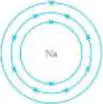
A sodium atom (electronic structure 2,8,1) forms a sodium ion during ionic bonding. Which statement is correct about the sodium ion Na+?
It has gained one electron to become 2,8,2 and carries a single negative charge.
It has lost one electron to become 2,8 and carries a single positive charge.
It has lost one proton to become 2,7 and is neutral.
It has gained one proton to become 2,8 and carries a double positive charge.
Chlorine is in Group 7 with electronic structure 2,8,7. When it reacts with a metal, what ion forms and why?
Cl+ forms because chlorine loses one electron to match neon.
Cl2− forms because chlorine loses two electrons to match helium.
Cl− forms because chlorine gains one electron to achieve the stable structure 2,8,8.
Cl0 forms because chlorine neither gains nor loses electrons when bonding.
Which statement best describes the position of Group 1 elements in the periodic table?
They are on the right of the stepped line.
They are to the left of the stepped line.
They are in the middle block only.
They are located below the transition metals.
Which is a way Group 1 elements are like other metals?
They are poor conductors of electricity.
They are dull when freshly cut.
They are good conductors of heat and electricity.
They all have very high melting points compared with other metals.
Which statement compares Group 1 elements with other metals in terms of melting points?
Group 1 elements have higher melting points than most metals.
Group 1 elements have lower melting points than other metals.
Group 1 elements have identical melting points to transition metals.
Melting points of Group 1 elements do not follow any pattern.
According to the table, which element is NOT in Group 1?
Lithium
Sodium
Copper
Rubidium
Which trend in physical properties down Group 1 is supported by the melting‑point data?
Melting point increases from lithium to rubidium.
Melting point decreases from lithium to rubidium.
Melting point stays constant down the group.
Melting point reaches a maximum at potassium then increases.
Based on the boiling‑point data provided, what happens to boiling point as you move down Group 1 from lithium to rubidium?
It increases steadily.
It decreases from top to bottom.
It remains the same for all elements.
It fluctuates with no pattern.
Which word best characterizes the chemical reactivity of Group 1 elements?
Unreactive
Reactive
Inert
Passive
What gas is produced when Group 1 elements react with water?
Oxygen
Hydrogen
Nitrogen
Carbon dioxide
What type of solution forms when Group 1 elements react with water, as indicated by universal indicator turning purple?
Acidic solution
Neutral solution
Alkaline solution
Salt solution
Which balanced word equation models the general reaction pattern for a Group 1 metal with water?
Metal + water → metal oxide + hydrogen
Metal + water → metal hydroxide + hydrogen
Metal + water → metal carbonate + oxygen
Metal + water → metal chloride + hydrogen
According to the pattern described, how does the vigour of the reaction of Group 1 elements with water change down the group?
It decreases down the group.
It stays the same.
It becomes more vigorous down the group.
It alternates between vigorous and gentle.
Which statement correctly links lithium’s reaction with water relative to potassium’s reaction?
Lithium reacts more vigorously than potassium.
Lithium reacts gently compared with potassium, which reacts very vigorously.
Both lithium and potassium do not react with water.
Potassium forms a neutral solution while lithium forms an acidic solution.
From the hardness table, which Group 1 element has the greatest Mohs hardness among lithium, sodium, rubidium, and caesium?
Lithium
Sodium
Rubidium
Caesium
Using the hardness pattern provided, which prediction about potassium’s Mohs hardness is most reasonable?
Higher than lithium because hardness increases down the group.
Between sodium and rubidium because hardness decreases down the group.
Equal to caesium because hardness is constant.
Lower than rubidium because hardness increases down the group.
Which name is used for the elements in Group 7 of the Periodic Table?
Noble gases
Alkali metals
Halogens
Transition metals
Which list correctly names the Group 7 elements in order from top to bottom?
Fluorine, chlorine, bromine, iodine, astatine
Chlorine, fluorine, bromine, iodine, astatine
Fluorine, bromine, chlorine, iodine, astatine
Fluorine, chlorine, iodine, bromine, astatine
Where is Group 7 located on the Periodic Table relative to the stepped line separating metals and non-metals?
Far left side
Towards the right of the table
Directly below the stepped line
In the central block
Which statement about the physical properties of halogens at room temperature is correct?
They have high melting points and conduct electricity.
They have low melting points and do not conduct electricity.
They are metals with shiny surfaces.
They are all colorless gases at room temperature.
According to the data provided, what is the trend in melting points down Group 7?
Melting point decreases from top to bottom.
Melting point remains constant.
Melting point increases from top to bottom.
Melting point fluctuates randomly.
Which halogen is described as pale green in appearance?
Fluorine
Chlorine
Bromine
Iodine
Which halogen is a dark red liquid at room temperature?
Fluorine
Chlorine
Bromine
Iodine
What is the general chemical behavior of Group 7 elements with iron?
They do not react with iron.
Only fluorine reacts with iron.
All Group 7 elements react with iron to form iron halides.
They form iron oxides when heated with iron.
Which balanced word equation represents a halogen reacting with iron to form the corresponding iron halide?
Iron + chlorine → iron chloride
Iron + chlorine → sodium chloride
Iron + bromine → iron oxide
Iron + iodine → iron fluoride
How does the vigor of reactions between halogens and iron change down Group 7?
Reactions get less vigorous from top to bottom.
Reactions get more vigorous from top to bottom.
Reactions stay equally vigorous.
Reactions stop after bromine.
In a displacement reaction, chlorine is added to potassium bromide solution. Which observation indicates displacement has occurred?
The solution remains colorless.
A pale green gas forms and the liquid stays colorless.
An orange substance appears as bromine is produced.
A purple vapor appears immediately.
Which displacement reaction is correctly predicted based on halogen reactivity?
Bromine + potassium iodide → potassium bromide + iodine
Chlorine + sodium bromide → sodium chloride + bromine
Iodine + potassium chloride → potassium iodide + chlorine
Fluorine + potassium chloride → potassium fluorine + chlorine
Which sentence best summarizes the overall pattern in Group 7 properties?
Melting and boiling points decrease down the group; reactions get more vigorous down the group.
Melting and boiling points increase down the group; reactions get less vigorous down the group.
Melting and boiling points increase down the group; reactions get more vigorous down the group.
Melting and boiling points decrease down the group; reactions get less vigorous down the group.
Which pair of products forms when calcium reacts with water?
Calcium oxide and oxygen
Calcium hydroxide and hydrogen
Calcium carbonate and carbon dioxide
Calcium chloride and chlorine
Group 1 metals reacting with water produce a metal hydroxide and hydrogen gas. Which balanced symbol equation matches potassium reacting with water?
2K(s) + 2H2O(l) → 2KOH(aq) + H2(g)
K(s) + H2O(l) → K2O(s) + H2(g)
2K(s) + H2O(l) → K2OH(aq) + H2(g)
K(s) + 2H2O(l) → KOH(aq) + 2H2(g)
Magnesium reacts slowly with cold water but reacts with steam. What are the products when magnesium reacts with steam?
Magnesium hydroxide and hydrogen
Magnesium oxide and hydrogen
Magnesium carbonate and water
Magnesium chloride and oxygen
Which statement best describes copper and gold in relation to water and steam?
They react with cold water but not with steam
They react with steam but not with cold water
They do not react with cold water or steam
They react vigorously with both cold water and steam
According to the reactivity series introduced, which metal is most reactive among the choices?
Copper
Iron
Sodium
Lead
Which observation indicates a more vigorous reaction of a metal with dilute hydrochloric acid in Tim’s tin investigation?
No visible change after several minutes
Slow formation of a white precipitate
Bubbles forming rapidly
Metal turning black without gas release
What general pattern does the reactivity series describe?
The order of metals by density
The order of metals by how vigorously they react with acids, oxygen, and water
The order of metals by melting point
The order of metals by electrical conductivity
Use the evidence: Nickel shows bubbles with dilute sulfuric acid; iron shows bubbles more vigorously than nickel; lead shows no change. Which predicted order (most to least reactive) fits the reactivity series pattern?
Lead > Nickel > Iron
Nickel > Iron > Lead
Iron > Nickel > Lead
Nickel > Lead > Iron
In the balanced equation for burning magnesium: 2Mg(s) + O2(g) → 2MgO(s), what do the state symbols (s) and (g) mean?
solid and gas
solution and gas
solid and liquid
gas and liquid
Which statement best describes what happens when magnesium burns in air?
It reacts with oxygen to form magnesium oxide.
It melts without reacting and becomes magnesium metal.
It reacts with nitrogen to form magnesium nitrate as the main product.
It does not react because magnesium is unreactive.
A strip of magnesium left in air forms a thin layer on its surface. What is this layer?
Magnesium oxide
Magnesium hydroxide
Magnesium nitrate
Magnesium carbonate
Which balanced equation shows zinc reacting with oxygen in a Bunsen flame to form white sparks?
2Zn(s) + O2(g) → 2ZnO(s)
Zn(s) + O2(g) → ZnO2(s)
Zn(l) + O2(g) → ZnO(g)
2Zn(g) + O2(s) → 2ZnO(l)
Copper does not burn in a Bunsen flame. What happens instead when heated in air?
It forms black copper oxide on its surface.
It remains shiny with no change.
It burns vigorously to make copper dioxide.
It melts and becomes copper hydroxide.
Which balanced formula best represents a typical reaction of a metal with oxygen to form a metal oxide?
Metal + oxygen → metal oxide
Metal + acid → metal oxide
Metal + water → metal nitrate
Metal + oxygen → metal hydroxide
Which pair of products is formed when a reactive metal such as zinc reacts with dilute hydrochloric acid?
metal oxide and water
salt (metal chloride) and hydrogen gas
carbon dioxide and water
metal sulfate and oxygen gas
A hyena swallowed many zinc coins. In the stomach, zinc reacted with hydrochloric acid. Which specific salt formed from this reaction?
zinc sulfate
zinc nitrate
zinc chloride
zinc carbonate
Which observation confirms the presence of hydrogen gas when testing with a lit splint?
blue flame that burns steadily
squeaky pop when the splint is introduced
green color change of the solution
formation of white smoke
Select the balanced word equation that describes the test for hydrogen resulting in water.
hydrogen + oxygen → water
hydrogen + chlorine → hydrochloric acid
hydrogen → hydrogen ions
hydrogen + sodium → sodium hydride
Which statement correctly names the type of solution produced when a metal reacts with hydrochloric acid?
a solution of a salt and hydrogen gas
a solution of an alkali only
a solution of water and oxygen gas
a solution containing only unreacted acid
Why was the hyena with a swollen foot diagnosed as suffering from zinc poisoning after swallowing coins?
zinc reacted with oxygen to form zinc oxide that blocked blood vessels
zinc reacted with hydrochloric acid to form soluble zinc chloride that traveled around the body
zinc reacted with water to form insoluble zinc hydroxide that stayed in the stomach
zinc did not react, so coins physically damaged tissues
Which procedure correctly describes the steps to test for hydrogen using a test tube that has just produced bubbles in an acid-metal reaction?
Collect gas with a syringe; ignite with a Bunsen burner; look for a blue flame
Hold an empty test tube above the reaction to collect gas; light a splint; bring the lit splint to the collected gas and listen for a squeaky pop
Add universal indicator; observe a red color; confirm hydrogen
Heat the test tube strongly; watch for condensation forming
Wood is a mixture that burns in oxygen to form products such as ash and carbon dioxide. According to conservation of mass, what relationship holds during this change?
Mass of wood equals mass of carbon dioxide only.
Mass of reactants plus mass of oxygen is less than mass of products.
Total mass of reactants equals total mass of products.
Mass of ash is greater than mass of all gases released.
A student burns 0.24 g of magnesium and obtains 0.80 g of magnesium oxide. Using conservation of mass, what is the mass of oxygen that reacted?
0.24 g
0.56 g
0.80 g
0.40 g
Balanced symbol equations show several things. Which option lists what they show?
Only the names of reactants and products.
The formulae of reactants and products, how atoms are rearranged, and the relative amounts of reactants and products.
The masses of reactants and products, but not how atoms rearrange.
Only the relative masses of products.
A student heats 12.5 g of zinc carbonate. It decomposes to make 8.1 g of zinc oxide and carbon dioxide. What is the mass of carbon dioxide produced?
4.4 g
8.1 g
12.5 g
0.4 g
In a word equation for a chemical reaction, which side lists the starting substances?
Left side shows reactants
Right side shows reactants
Left side shows products
Both sides list products only
Charcoal is a form of carbon. When it burns, it reacts with oxygen to make an invisible gas. Which product is formed?
Carbon dioxide
Carbon monoxide
Sulfur dioxide
Nitrogen gas
Which statement correctly defines reactants and products in chemical reactions?
Reactants are the starting substances; products are the substances made
Reactants are the substances made; products are the starting substances
Reactants and products are the same substances
Reactants are gases only; products are solids only
Identify the correct word equation for the reaction of iron with sulfur to form iron sulfide.
iron + sulfur → iron sulfide
iron + oxygen → iron oxide
sulfur + oxygen → sulfur dioxide
iron + chlorine → iron chloride
A hazard is described as a possible source of danger in a reaction. What is a risk?
The chance of damage or injury from a hazard
The total energy released during a reaction
The mass of reactants before the reaction
A method to remove oxygen from air
Magnesium burns in air to make a white powder. What is the product named in this reaction?
Magnesium oxide
Magnesium carbonate
Magnesium sulfide
Magnesium chloride
Which observation is a sign that a chemical reaction is taking place when magnesium burns?
A bright white flame transferring energy to the surroundings
No visible change and no temperature change
The mixture stays dull and cold
Only a color change to blue without flame
Choose the correct arrangement description of reactants and products for magnesium burning in oxygen.
Reactants: shiny magnesium and invisible oxygen gas; Product: white magnesium oxide powder
Reactants: white magnesium oxide powder; Product: shiny magnesium metal
Reactants: magnesium oxide and oxygen; Product: magnesium metal
Reactants and products look the same
Which arrow meaning is used in a word equation?
Arrow means 'reacts to make'
Arrow equals 'is the same as'
Arrow means 'is larger than'
Arrow means 'is less than'
Which control suggestion reduces the risks when burning magnesium, according to the safety note?
Protect eyesight from bright flame and ensure the flame can be put out
Add extra sulfur to reduce brightness
Use water to increase the flame’s intensity
Ignore hazards because magnesium is safe
Which statement best defines a chemical formula for a compound?
A list of all elements that exist in nature
A model showing the shapes of molecules
A notation that shows the relative number of each type of atom in the compound
A diagram that compares the sizes of atoms
Compounds made up of an element and oxygen are named using two-word names. What is the second word used in these names?
oxide
oxygenate
oxygenide
oxalate
What is the correct name for a compound made of sodium and chlorine?
sodium chloride
sodium chlorate
sodium chlorine
chlorine sodium
According to the instructional text, what does the formula CO2 indicate about the composition of a carbon dioxide molecule?
Two carbon atoms and one oxygen atom
One carbon atom and two oxygen atoms
Two carbon atoms and two oxygen atoms
One carbon atom and one oxygen atom
Which statement explains why carbon monoxide (CO) and carbon dioxide (CO2) have different properties?
They contain different elements
They have different numbers of carbon atoms
They have different numbers of oxygen atoms per carbon atom
They are both metals

