
 Worksheets
Osteoporosis, obesity, culture and diversity
Total questions: 108
Worksheet time: 59mins
Chronic, progressive metabolic bone disease characterized by low bone mass and structural deterioration of bone tissue
-increased bone fragility
(a)
Which of the following describes the bone pathophysiology of osteoporosis?
Remodeling-balance between osteoblast and osteoclast.
Bone pathophysiology of osteoporosis is described as:
Osteoclasts ________ _______ too much.
Osteoblasts can't _______ ____ quick enough.
What is the action of osteoblasts?
What is the action of the osteoclasts?
What are influencing factors of bone pathophysiology?
Vitamin D intake
Medication side effects
Infection rates
Hormones (estrogen, testosterone, parathyroid hormone)
Activity level
Bones are more brittle with sedentary lifestyle.
True
False
The following etiologies are primary or secondary?
Menopausal and age associated
The following etiologies are primary or secondary?
-endocrine, malnutrition, corticosteroid use
Primary
Secondary
Historical
Medical
Which type of etiology of osteoporosis is described below?
-Linked to estrogen deficiency
Which type of etiology of osteoporosis is described?
-Kidneys are unable to process vitamin D which causes a decrease in Ca absorption
Secondary (Malnutrition)
Secondary (Endocrine)
Primary (Age associated)
Primary (Menopausal)
Secondary etiology of osteoporosis include:
Genetic predisposition
Age-related changes,
Disease process
Deficiency
Corticosteroid use
Which of the following are common fracture sites?
Wrist, spine, hip
In osteoporosis, bone density increases.
Which of the following are non-modifiable risk factors for osteoporosis?
Age, gender, family history, ethnicity, body frame size
Which of the following are modifiable risk factors for osteoporosis?
Body weight, calcium/vitamin D intake, high protein/phosphate diet, smoking, alcohol
The use of what medication increases your risk for osteoporosis?
Osteoporosis patients are typically asymptomatic until a fracture occurs.
True
False
Which of the following are clinical manifestations of osteoporosis?
Nausea
Back pain
Loss of height
Stooped posture (kyphosis)
Fragility fractures
Abdominal protrusion, numbness and tingling, acid reflux, respiratory problems, early satiety, constipation, body image disturbance. All are associated with?
Kyphosis
Why do pts with kyphosis experience constipation?
Patients with kyphosis have increased physical activity promoting bowel movement.
Why might your patient with kyphosis experience malnutrition?
Kyphosis leads to satiety due to pressure on the stomach.
Which of the following pts are most at risk for osteoporosis?
68 year old male that quit smoking at age 50.
32 year old woman that is post partem.
76 year old woman that drinks three diet cokes a day.
80 year old male that drinks two cups of coffee a day.
Which of the following is the gold standard for diagnostic testing in osteoporosis?
Which T-score result when measuring bone density is considered normal?
A T score of this indicated osteoporosis...
Which adolescent pt is most at risk for osteoporosis?
15 year old female cross country runner with a BMI of 18.2
12 year old female that plays volleyball and has type one diabetes
13 year old male that plays video games and has a BMI of 24.
17 year old male that is involved with marching band.
As part of osteoporosis prevention in pregnancy, we want to encourage a diet rich in ________
iron
protein
sodium
calcium
Which of the following are good non pharmacological ways to manage osteoporosis?
Diet high in calcium and vitamin D
Weight bearing/strength training exercise
Assess home home for potential fall risks
Smoking/alcohol cessation
Which of the following pharm treatment for osteoporosis is described?
-(ex. alendronate) inhibits bone production
Biphosphates
Selective Estrogen Receptor Modulators (SERMS)
Calcitonin
Parathyroid Hormone Analogs
Which of the following pharm treatments for osteoporosis is described?
-(ex. raloxifene) mimics estrogen protective elements on the bone
Parathyroid Hormone Analogs
Selective Estrogen Receptor Modulators (SERMS)
Which of the following pharm treatments for osteoporosis is described?
-slows bone loss
Calcitonin
Denosumab
Which of the following pharm treatments for osteoporosis is described?
-(ex. teriparatide) stimulates bone formation
Denosumab
Selective Estrogen Receptor Modulators (SERMS)
Parathyroid Hormone Analogs
Calcitonin
Which of the following pharm treatments for osteoporosis is described?
-inhibits osteoclast formation
Biphosphate
Which of the following are supplements that can help manage osteoporosis?
Iron
Vitamin C
Calcium Gluconate
Vitamin D
Diet management is an important part in managing your pts osteoporosis. Patients with osteoporosis should avoid the following in their diet...
Excessive salt
Red meat
Juice
Caffeine
Diet Soda
Diet management is an important part in managing your pts osteoporosis. Which of the following should you encourage your pt to consume more of?
Steaks and red meat
Fish
Leafy green vegetables
Yogurt
Eggs
Which of the following actions allows calcium to be absorbed effectively?
You're getting ready to administer your patient's calcium to help manage their osteoporosis. What can you give with the supplement to ensure maximum absorption of calcium?
Jell-O
Pudding
A diet coke
Glass of orange juice
Your pt is post-menopausal and managing her osteoporosis. How much calcium should you recommend her to take a day?
1200-1500 mg
250-500 mg
600-800 mg
Which of the following independent nursing interventions could be helpful to a pt experiencing acute pain from osteoporosis?
Apply heat pack
What is a healthy behavior that would be simple and easy to promote to your pt with osteoporosis?
Get out in the sun
Major public health issue linked to cardiovascular disease, diabetes, and other chronic conditions.
(a)
A BMI of 30> indicates...
A BMI of 25-29.9 indicates...
A healthy BMI is...
Which of the following describes the pathophysiology of obesity?
Obesity is a multifactorial disorder involving hormonal dysregulation (such as leptin and insulin resistance), genetic predisposition, and environmental influences that promote increased fat storage.
Obesity results from positive energy imbalance, fat cells enlarge, adipose tissue secretes hormones and inflammatory markers.
Which of the following factors contribute to the etiology of obesity?
Genetic, behavioral, environmental, metabolic, and psychological factors.
Which of the following is the hunger center of the brain?
Which of the following etiology types for obesity is described?
-Account for 40-70% of obesity risks
-LEP (leptin gene): regulates appetite and energy balance
-MC4R: affect hunger and satiety signals
-Ex. Prader-Willi Syndrome
Family history
Which of the following types of etiology is described for obesity?
-Increases risk due to genetics but also shared lifestyle factors
Family history
Which of the following types of etiology for obesity is described?
-Sedentary lifestyle
-High calorie diet
-Portion sizes
-Socioeconomic status
Environmental factors
Behavioral factors
Which of the following etiology factors is described for obesity?
-Emotional eating
-Poor sleeping patterns
-Screen time
Psychological factors
Behavioral factors
Metabolic factors
Which of the following etiologies is described for obesity?
-Basal Metabolic Rate
-Insulin resistance
-Thyroid dysfunction
Metabolic Factors
Which of the following etiologies is described for obesity?
-depression
-anxiety
-stress
-food being used as a coping mechanism
Psychological factors
Metabolic factors
Environmental factors
Behavioral factors
Which of the following etiologies for obesity is described:
-Cushing's Syndrome-elevated cortisol levels
-Polycystic Ovarian Syndrome (PCOS)
-Medications-corticosteroids, antidepressants, and antipsychotics
Metabolic Factors
Endocrine/Medical Factors
Socio-Cultural Factors
Psychological Factors
Which of the following etiologies are described for obesity:
-Cultural norms: higher body weight associated with health or prosperity
-Marketing/media
Psychological Factors
Metabolic Factors
Endocrine/Medical Factors
Socio-Culture Factors
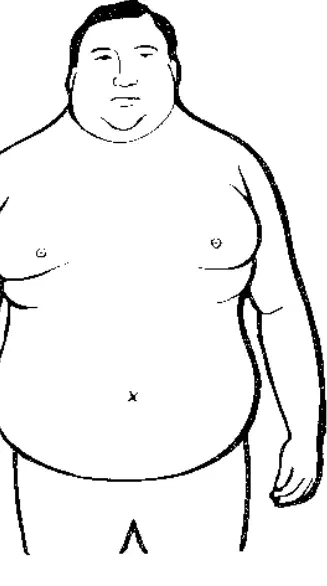
Which type of obesity is described?
-"apple shape"
-waist circumference: male =>40 inches female =>35 inches
-increase in visceral fat
Syndrome X
Upper Body Obesity
"Central"
Lower Body Obesity "Peripheral"
Metabolic Syndrome
People with upper body obesity (Central) are at risk for which of the following conditions?
Metabolic syndrome, cardiovascular diseases, type 2 diabetes, sleep apnea, HTN.
Which of the following describe metabolic syndrome?
A cluster of conditions including hypertension, Type 2 DM, obesity, and abnormal cholesterol levels.
A person with metabolic syndrome has an increased risk for which of the following?
Heart disease
Stroke
Diabetes
Cancer
Which of the following are the five conditions that would classify you for metabolic syndrome?
Abdominal pain, low blood pressure, high insulin levels, low trigylcerides, and normal cholesterol levels.
High physical activity, low body fat, normal blood sugar, and low triglycerides, high blood pressure.
Abdominal obesity, high triglycerides, high blood pressure, high blood sugar, and abnormal cholesterol levels.
Which of the following patients would you classify as having metabolic syndrome?
Waist circumference: 42 inches
Triglycerides: 120 mg/dL
HDL: 55 mg/dL
BP: 118/72
Fasting glucose: 90 mg/dL
Waist circumference: 38 inches
Triglycerides: 190 mg/dL
HDL: 32 mg/dL
BP: 128/84
Fasting glucose: 110 mg/dL
Waist circumference: 36 inches
Triglycerides: 160 mg/dL
HDL: 60 mg/dL
BP: 140/90
Fasting glucose: 95 mg/dL
Waist circumference: 41 inches
Triglycerides: 170 mg/dL
HDL: 38 mg/dL
BP: 136/88
Fasting glucose: 105 mg/dL
Which of the following conditions would put your client at risk for metabolic syndrome?
BP of 128/68
Waist circumference of 45
Fasting glucose of 118
HDL Cholesterol of 34
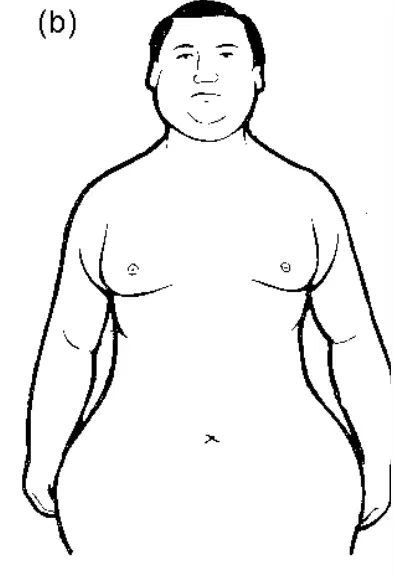
Which of the following types of obesity is described?
-Pear shape
-Fat accumulation in hips/thighs
-more common in women
-mechanical concern
*more difficult to treat but less complications
Upper Body Obesity (Central)
Lower Body Obesity (Peripheral)
Your patient with lower body obesity (peripheral) is at greater risk for which of the following conditions?
Joint Pain
Varicose Veins
Venous insufficiency
Obesity in children is classified as...
BMI >95th percentile for others in the same age and sex
BMI <25th percentile for others in the same age and sex
55th percentile and higher
10% and lower
Pregnant women have a decreased risk for metabolic syndrome.
True
False
Around which age do metabolic rates decrease?
80
65
50
35
Which of the following is an accurate representation of the plate method?
Half the plate is filled with protein foods, one quarter with fruits, and one quarter with grains.
One quarter of the plate is lean protein, one quarter is whole grains or starchy foods, and one half is non-starchy vegetables.
Half the plate is fruits, one quarter is vegetables, and one quarter is carbohydrates.
The plate is divided evenly into three sections: one third protein, one third vegetables, and one third desserts or snacks.
Which of the following are types of bariatric surgeries?
Gastric Banding
Sleeve Gastrectomy
Roux-En-Y
Your patient just had Roux-En-Y bariatric surgery. What possible complications from this surgery do you need to monitor for?
Band slip, band erosion, port infection
Staple line leaks, bleeding, stenosis
Dumping syndrome, cholethiasis, ulcerations
You are caring for a bariatric pt that just underwent a sleeve gastrectomy procedure. What possible complications do you need to look out for?
Staple line leaks, bleeding, stenosis
Dumping syndrome, cholethiasis, ulcerations
Band slip, band erosion, port infection
You are caring for a bariatric pt that just underwent a gastric banding procedure. What possible complications do you need to look out for?
Bandslip, band erosion, port infection
Staple line leaks, bleeding, stenosis
Dumping syndrome, cholethiasis, ulcerations
What are some long-term complications of weight loss surgery?
Acid-reflux, chronic nausea and vomiting, dilation of esophagus, food restrictions.
The patterns of behavior and thinking that people living in social groups learn, develop, and share
(a)
The array of differences among individuals, groups, and communities
-unique variations among and between individuals (genetics and cultural background, but refined by experience and personal choice)
Categorized around racial, ethnic, religious, or socially common patterns
Cultural groups
Group of individuals who have common characteristics, including nationality, language, values, and customs, and they share a cultural heritage
People within a culture whose practices or beliefs are separate from the dominant culture
Cultures and subcultures coexisting within a given society in which no one culture dominates
Multiculturalism
Supported and shaped by a culture's worldview
-perceived ideas and attitudes about the word, or other people and life in general
-how do they explain the meaning of life?
-help to: define meaning, identify acceptable behaviors, choose emotional reactions, determine appropriate actions
Emotional Regulation
Multiculturism
Values and Beliefs
Subculture
Influence individual decisions and actions
-passed on from generation to generation
*may be rooted in religious faith or practices
Values and Beliefs
Belief Systems
Religion
The nurse is assessing a postmenopausal client. What subjective data suggest a concern for osteoporosis?
A) Heart rate of 86 and blood pressure of 100/60
B) Patient reports lower back pain 8/10
C) Latest DEXA Scan result was -2.5
D) Reports not eating dairy due to lactose intolerance
A
B
C
D
The nurse is caring for four patients. Which patient is at greatest risk for developing Osteoporosis?
a ) 73-year-old man who has five alcoholic drinks per week and limits sun exposure to prevent recurrence of skin cancer.
b )84-year-old man who has recently been diagnosed with hypothyroidism and is prescribed levothyroxine (Synthroid).
c )69-year-old woman who had a renal transplant 5 years ago and has been taking prednisone to prevent organ rejection.
d )55-year-old woman who recently had a hysterectomy with bilateral salpingo-oophorectomy and refuses estrogen therapy.
A
B
C
D
Adapting to and integrating characteristics of the dominant culture
Accepting the majority group's culture as one's own
Cultural acculturation
Differential treatment of individuals or groups based on categories such as race, age, weight, gender, sexual orientation, or social class
Overgeneralization of group characteristics reinforcing societal biases
Favoring a group or individual over another
Judgements about cultural groups or vulnerable populations that are unfavorable
Prejudice
The ability to apply knowledge and skills to provide high-quality, evidence based care to patients of diverse backgrounds and beliefs
Culturally competence
When using interpreter services, which factor should the nurse consider in order to effectively facilitate communication with clients who do not speak English?
A. Use short questions that can be asked all at one time for the sake of efficiency.
B. Also make note of the nonverbal communication of the clients.
C. Encourage family members to interpret to promote client confidentiality.
D. Address questions and maintain eye contact with the interpreter at all times.
A
B
C
D
A nurse is preparing for a community health education program addressing health promotion, disease prevention, and illness management. Which sociocultural component is most important for the nurse to consider when anticipating individual client motivation in response to the education provided?
A. Sexual orientation
B. Immigration status
C. Environmental control
D. Physical characteristics
A
B
C
D
Is the following dialogue an example of change talk or sustain talk?
-"I know I should stop smoking because it is bad for my child's asthma."
Change
Sustain
Is the following dialogue change talk or sustain talk?
-"It is so hard to stop smoking"
Change
Sustain
Patient focused nursing (not traditional disease-focused)
-goal of healing the whole person
Family-oriented nursing
Disease-focused nursing
Holistic nursing
Combining traditional treatments with alternative therapies
-meditation, yoga, message therapy, herbal supplements
Holistic nursing
Natural remedies
Integrative therapy
Medicine therapy
combines nurse’s perception & communication
• Nurse immerses self in interaction with patient
• Patient has authority to make own decisions
• Nurse acts as guide, but lets patient lead without judging/labeling
• Could involve simply being there, leaving patient with memory of interaction
Presencing
Intentionality
Empowerment
Compassion
works in conjunction with others, not trying to impose nurse’s will
• Nurse must surrender idea of directing outcomes & setting goals
Intentionality
Presencing
Empowerment
Accountability
During a midterm evaluation, the nurse educator tells the students they need to
work on improving their aesthetic knowing. What is a good way for the students to accomplish this?
A. Study harder.
B. Take better notes.
C. Read about the same topic from a variety of sources.
D. Spend time in the clinical area with seasoned nurses.
A
B
C
D
The student nurse is following a preceptor on the assigned clinical shift. Which behavior of the nurse would the student interpret as caring?
A. Making sure that all medications and treatments ordered for the client are completed on time
B. Using aseptic technique correctly when performing all dressing changes ordered for the client
C. Advising the physician that the client wants to speak to them prior to a procedure being performed
D. Explaining an invasive procedure to the client, then asking whether it is alright to begin the procedure
A
B
C
D
A nurse educator teaches students about caring nursing practice. Which situation shows that the nurse is able to best implement the whole idea of caring?
A. The nurse is able to carve out time for a favorite hobby at least once a week.
B. The nurse is a volunteer at church and school events.
C. The nurse makes lists every morning so the day stays organized and planned.
D. The nurse takes care of aging parents in addition to providing care to the immediate family.
A
B
C
D
A nurse preceptor is working with a newly licensed nurse in the newborn nursery. The newly licensed nurse asked if infants experience pain, and if so, how it is managed. What is the nurse preceptor’s best response?
A. “Research shows that infants do not experience pain so there is no need to provide any interventions to address this.”
B. “Infants experience pain, but the healthcare providers do not choose to treat it unless it is severe.”
C. “Infants experience pain, and there are several nursing interventions that can comfort the infant during a painful procedure.”
D. “The nursing staff can only intervene if the healthcare provider writes an order for an intervention.”
A
B
C
D
Everyone gets the same resources, treatment, education
-everyone is treated identically without considering individual needs or barriers
Racism
Prejudice
Equity
Equality
All of your patients receive the same exact discharge instructions, regardless of reading level, culture, or support system. This is an example of...
Bias
Unfairness
Equality
Equity
This means that everyone gets the resources and support they specifically need to achieve the same health outcomes.
-individualizes care based on barriers, risks, and needs
Equity
Equality
Racism
Bias
The following is an example of what in nursing?
Providing discharge teaching using pictures for a patient with low literacy, giving interpreter services, or arranging transport for someone with limited access to care.
Equity
Equality
Justice
Fairness

