
Font size
 Worksheets
Anaemia in ICU
Total questions: 15
Worksheet time: 8mins
Which hemoglobin threshold defines anemia in women under WHO criteria?
Below 11 g/dL in women
Below 12 g/dL in women
Below 13 g/dL in women
Below 14 g/dL in women
which nutrients, when deficient, most impair red blood cell production?
Iron stores for heme synthesis
Vitamin B12 for DNA replication
Folate for thymidylate synthesis
Vitamin C for collagen crosslinks
A patient with chronic kidney disease develops anemia. What is the most likely direct pathophysiologic contributor?
Absolute erythropoietin deficiency due to renal dysfunction
Iron loss from occult gastrointestinal bleeding
Autoimmune hemolysis triggered by antibiotics
Coagulation abnormalities causing microthrombi
Which nutritional deficiency most directly causes megaloblastic anemia?
Low folate levels
Low iron levels
Low erythropoietin levels
Low copper levels
Mean corpuscular volume (MCV) of 72 fL would classify the anemia as which type?
Microcytic anemia present
Normocytic anemia present
Macrocytic anemia present
Dimorphic anemia present
Which two conditions are most linked to sickle-shaped erythrocytes on smear?
Sickle cell disease
Sickle–thalassemia syndromes
Warm autoimmune hemolysis
Liver disease

Which scenario best represents anemia due to red blood cell loss rather than production or destruction?
Chronic kidney disease reducing erythropoietin
Acute gastrointestinal bleeding causing hemorrhage
Autoimmune hemolysis with elevated LDH
Methotrexate suppressing bone marrow
Strict vegan diet lacking vitamin B12

Select all mechanisms that directly lead to decreased red blood cell production.
Inflammatory cytokines suppressing marrow
Iron deficiency impairing hemoglobin
Renal dysfunction lowering erythropoietin
Hereditary spherocytosis causing hemolysis

Which finding most strongly suggests increased red blood cell destruction (hemolysis)?
Low reticulocyte count with marrow suppression
High reticulocyte count with jaundice
Normal EPO with occult blood loss
Low iron with microcytosis
Low folate with hypersegmented neutrophils
What is the primary mechanism of action of erythropoietin in the treatment of anemia?
Enhances platelet aggregation
Increases red blood cell production in the bone marrow
Inhibits red blood cell destruction in the spleen
Stimulates iron absorption in the gut
Which laboratory finding is most indicative of iron deficiency anemia?
Increased ferritin levels
Low serum iron and high total iron-binding capacity
Elevated bilirubin levels
Normal reticulocyte count
In which condition would you expect to find a high level of haptoglobin?
Hemolytic anemia
Acute liver failure
Chronic inflammation
Iron overload syndromes
What is the most common cause of microcytic anemia?
Folate deficiency
Chronic disease
Vitamin B12 deficiency
Iron deficiency
In which condition would you expect to see a high mean corpuscular hemoglobin concentration (MCHC)?
Hereditary spherocytosis
Chronic kidney disease
Iron deficiency anemia
Thalassemia
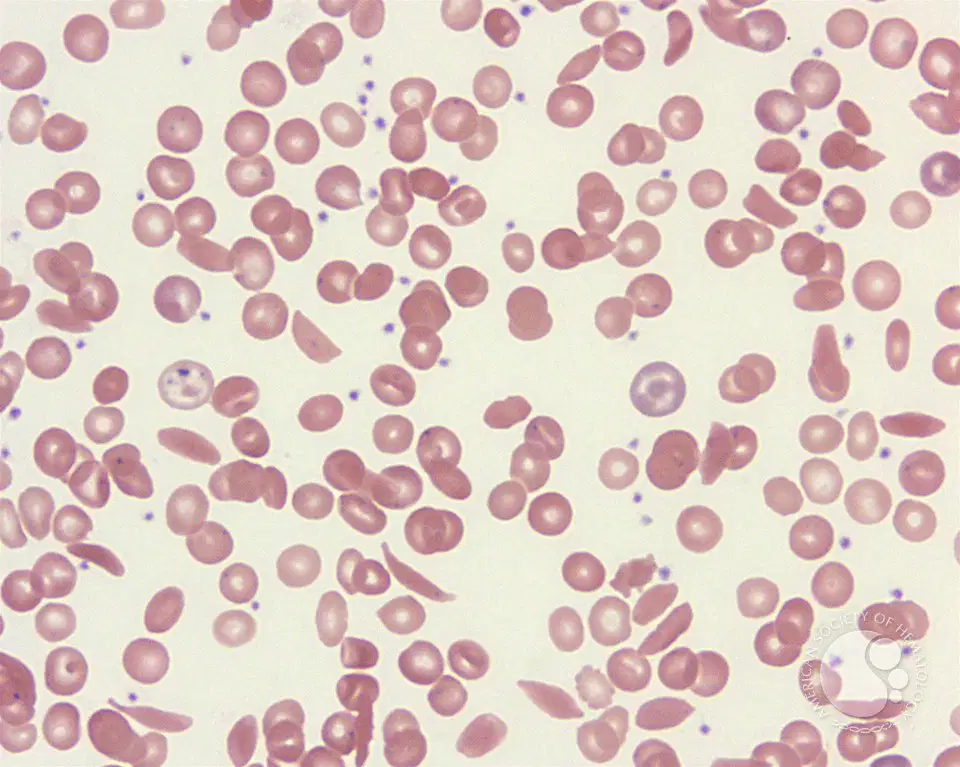
Identify type of anaemia
Hereditary sperocytosis
Sickle cell anaemia
Macrocytic anaemia
microcytic hypochromic anaemia

