
 Worksheets
cell, blood, respiration
Total questions: 115
Worksheet time: 5hrs 36mins
TRUE or FALSE:
All living things are made up of cells.
TRUE
FALSE
A cell is...
the basic unit of structure and function in living organisms
an organism
a basic part of everything that we see
found only in animals, not plants
The jelly-like fluid inside the cell holds the organelles in place.
cytoplasm
chloroplasts
cell membrane
mitochondria
cell wall
makes food for the plant using photosynthesis
outer barrier/support for a plant cell
stores water and nutrients for a plant cell
The control center of the cell. It houses DNA.
nucleus
nucleolus
mitochondria
cell membrane
A vacuole
makes food for the plant using photosynthesis
outer barrier/support for a plant cell
stores water, food, and waste for a plant cell
What separates the inside of the cell from the outside environment and lets some materials pass in and out of the cell?
Cell wall
Cytoskeleton
Cytoplasm
Cell membrane
This is where photosynthesis occurs, using sunlight to convert air and water into sugar. It gives plants their green color.
Cell Wall
Chloroplast
Cytoplasm
Which organelle is responsible for producing the power or energy needed in the cell? This is analogous to a city's power company.
mitochondrion
cell membrane
nucleus
organelle

The diagram below shows a typical plant cell and some of its parts. Which three parts of the cell indicate that this diagram represents a plant cell and not an animal cell?
Cell wall, cell membrane, large vacuole
Nucleus, cell wall, chloroplast
Cell wall, large vacuole, chloroplast
Chloroplast, cell membrane, large vacuole
Which part of a cell stores food, water, and waste?
Vacuole
Cell Wall
Cytoplasm
The outer layer of a cell controls what goes in and out of the cell.
Chloroplast
Cell membrane
Vacuole
Which of the following is a plant cell?


What is a cell?
The basic unit of structure and function in living organisms
An organism
A basic part of everything that we see
Found only in animals, not plants
How do the functions of the nucleus differ from those of the cell membrane?
The nucleus converts food energy, while the cell membrane stores minerals and wastes.
The nucleus controls the activities of the cell, while the cell membrane controls what enters and exits the cell.
The nucleus provides support, while the cell membrane converts carbon dioxide and water into food.
The nucleus stores food and water, while the cell membrane stores chemicals used by the cell for photosynthesis.
What is the difference between eukaryotic cells and prokaryotic cells?
Only eukaryotic cells have a cell membrane.
Only prokaryotic cells have cytoplasm.
Only eukaryotic cells have a membrane-bound nucleus.
Only prokaryotic cells have genetic material.
Which diagram best represents the levels of organization?


What is the gel-like fluid inside all cells called?
Nucleus
Vacuole
Cytoplasm
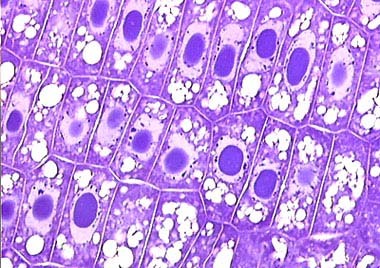
This is an example of ........
cell
tissue
organ
organ system
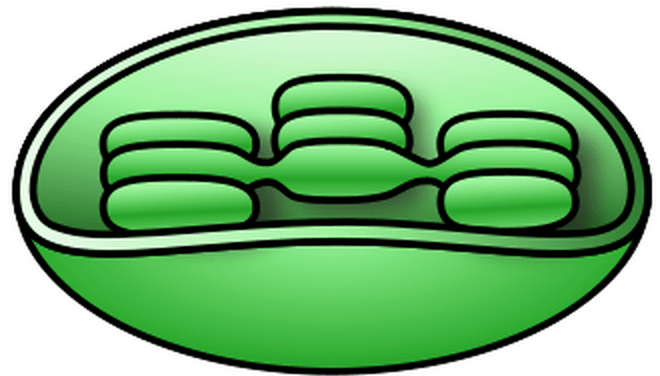
I am only found in a plant cell. What am I?
Cell wall
Mitochondria
Cytoplasm
Chloroplast
Which part of the cell releases energy from food?
mitochondrion
phloem
cytoplasm
vacuole
What do the mitochondria do?
Takes sugar molecules and bakes a cake ;)
Breaks sugar molecules down into energy, CO2, and water. This process is called Cellular Respiration.
Creates sugar out of energy, CO2, and water.
Nucleus
Animal Cells
Plant Cells
Both
Chloroplast
Animal Cells
Plant Cells
Both
Smaller Vacuole
Animal Cells
Plant Cells
Both
Cell Membrane
Animal Cells
Plant Cells
Both
Capable of making its own food
Animal Cells
Plant Cells
Both
Which is not part of the Animal Cell?
Cell Membrane
Cell Wall
Golgi apparatus
Ribosome
What carries oxygen around the body?
Plasma
Red blood cells
White blood cells
Platelets
What causes the blood to be the distinct red color?
Haemoglobin
Oxygen
Glucose
Hormones
What is the function (job) of white blood cells?
To transport oxygen around the body.
To carry dissolved sugars.
To clot and cover wounds like cuts and grazes.
To release antibodies to help destroy infections.
What is the function (job) of the plasma?
To release antibodies to fight infections.
To transport oxygen around the body.
To carry dissolved nutrients and sugars.
To transport carbon dioxide away from the body.
What is the function of red blood cells?
To transport oxygen around the body and to the muscles.
To release antibodies to fight infections.
To carry dissolved nutrients and sugars.
To clot and form scabs if there is a wound on the body.

What is plasma?
Only white blood cells
Fluid part of blood
Hemoglobin
Only red blood cells

Which cells receive oxygen from red blood cells?
All cells
Only muscle cells
Only skin cells
Only bone cells
Red blood cells contain _________ that is red and gives blood its color. It links up with oxygen and carries this oxygen to all parts of the body.
Myoglobin
Red Ferrine
Plasma
Hemoglobin
Plasma is 90% _____ and is beige in color. Plasma contains digested food, chemicals, and waste products.
These substances are carried to and from the cells by the plasma.
Red blood cells
Platelets
Water
Minerals
What is the function (job) of white blood cells?
To transport oxygen around the body.
To carry dissolved sugars.
To clot and cover wounds like cuts and grazes.
To release antibodies to help destroy infections.
What is the function (job) of red blood cells?
To transport oxygen around the body and to the muscles.
To release antibodies to fight infections.
To carry dissolved nutrients and sugars.
To clot and form scabs if there is a wound on the body.

What is blood made of?
oxygen and plasma
red blood cells and white blood cells
plasma, red blood cells, white blood cells, and platelets.
plasma and platelets
What is the function of the lungs?
organs where gas exchange takes place.
organs where blood is filtered.
organs where blood is pumped around the body.
organ where food is broken down into molecules that the body can use.
What is the function of the trachea?
It is the tube that air travels down after the bronchi. Another name is the throat.
It is the tube that air travels down to the lungs. Another name is the windpipe.
It is the tube that air travels down after the nose. Another name is the windpipe.
It is the tube that air travels down after the pharynx. Another name is the throat.
What is the pathway that air follows throughout the body?
Nose -> Trachea -> Bronchi -> Pharynx -> Lungs -> Alveoli
Nose -> Bronchi -> Pharynx -> Trachea -> Lungs -> Alveoli
Nose -> Trachea -> Alveoli -> Bronchi -> Lungs
Nose -> Trachea -> Bronchi -> Lungs -> Alveoli
Muscle that helps your lungs pull in air and push it out.
diaphragm
alveoli
heart
trachea
During exhaling, the diaphragm ______
contracts and moves downward
constricts
relaxes and moves upward
dilates

Which of the following shows what happens to the chest cavity when air rushes into the lungs?
decrease in volume
deflates
expands
relaxes

What are the tiny air sacs at the end of the bronchioles that transfer oxygen into the bloodstream?
Trachea
Bronchi
Alveoli
Larynx
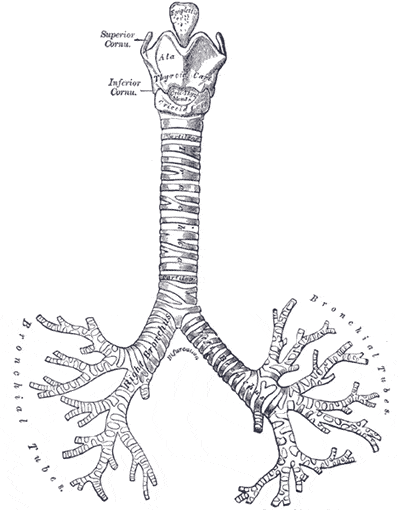
What is the name of the two main branches of the trachea (one to each lung)?
bronchi
alveoli
capillaries
bronchioles
Which muscle is involved in breathing?
diaphragm
biceps
abdominal
Which is the correct spelling for the muscle below the lungs that is involved in breathing?
diaphragm
diaphram
diafram
You have 2 bronchi, each one is called a _____________.
bronchiole
bronchus
bronchioley
What do the cilia do?
Catch dust and microbes
Waft mucus and trapped dust and microbes up and out of the lungs
Help the cells lining the windpipe move about
Why is mucus produced in the lungs?
To help you cough
To trap microbes to reduce the chance of infection
To help the air move in and out
Many chemicals in cigarettes are considered carcinogenic because they cause what?
Emphysema
Cancer
Heart disease
Liver Failure
Smoking interferes with the lungs' ability to provide what to the rest of the body?
Oxygen
Ammonia
Water
Carbon dioxide
Suggest the effect of long term smoking on the amount of oxygen transported in someone's blood?
Decreased
Increased
The air gets into the lungs through the bronchioles. Bronchioles end in little bags called...
Alveolus
Bronchioles
Bronchi
Lungs
The trachea is a tube that divides into two smaller tubes called _____
Bronchi
Nostrils
Lungs
Respiratory system present in .........
Chest cavity
Abdominal cavity
Mouth cavity
Nasal cavity
What is the process of respiration?
Breathing
The release of energy from food
Inhalation
Oxygen transfer
What is the process of breathing in also called?
Respiration
Exhalation
Combustion
Inhalation
What is the process of breathing out also called?
Respiration
Exhalation
Combustion
Inhalation
What substance do we need to breathe in?
Water
Carbon dioxide
Oxygen
Carbon monoxide
What are the tiny air sacs on the surface of the lungs?
Alveolus
Capillaries
A-Levels
Alveoli
What is the name of the body's fuel?
Protein
Oxygen
Glucose
Carbon dioxide
Cellular Respiration takes place in ________________ cell organelles
Mitochondria
Nucleus
Cytoplasm
Exchange of gases takes place in the ___________ part of the lungs
Bronchi
Bronchiole
Alveoli


Respiration is a vital function that all living things carry out.
True
False
Respiration takes place in
the cells
the lungs
the heart
the brain
Is respiration the same as breathing?
Yes
No
Cigarettes and e-cigarettes both contain:
Nicotine
Tobacco
Rat poison
Tar
B7.2 What is missing from this word equation for respiration: oxygen + ____________ --> carbon dioxide + water
water
nitrogen dioxide
glucose
oxygen
B7.3 What is diffusion?
Movement
Movement of particles from a low concentration to a high concentration
Movement of particles from a low concentration to a high concentration across a partially permeable membrane
Movement of particles from a high concentration to a low concentration across a partially permeable membrane
B7.3 What is needed for diffusion to take place
A concentration gradient
Energy
carrier proteins
water
B7.4 which organ is not in the respiratory system
stomach
lungs
trachea
Bronchi
B7.4 Which organ is involved in respiration
Trachea
heart
small intestine
liver
B7.5 What is the function of the lungs
To breathe
To exchange gases (respiration)
To inflate
To photosynthesize
B7.8 What happens to breathing rate when you exercise
increases
decreases
stays the same
B7.8 Why does your breathing rate increase when you exercise?
more oxygen is picked up at the lungs for delivery to the working muscles
less oxygen is picked up at the lungs for delivery to the working muscles
your muscles are resting
your lungs need more energy to function
B7.9 Why does your heart rate increase when doing exercise
To deliver more blood to the working muscles
To deliver more oxygen to the working muscles as oxygen is transported in the blood stream
It doesn't increase
To deliver more carbon dioxide to the working muscles as carbon dioxide is transported in the bloodstream

This is a ?
Nerve cell
Root hair cell
Nerve cells communicate through?
Electrical Impulses
Blood movement
We sense our surrounding, and nerve impulses are sent to the (a) (organ) to be processed before a response can be given out.
What mineral sticks to the bone cells?
Kalium
Calcium
Where can you find fat cells in your body?
Beneath the skin
Surrounding the organ
In between muscles
All of the above
White fat cells acts as a?
Insulator
Heat generator
What is the function of root hair cells?
absorb water and mineral salts
transport water and mineral salts
transport oxygen
provide mechanical support
How are red blood cells adapted to perform their function? You may choose more than 1 option.
long and narrow extension
no protoplasm
no nucleus
contain haemoglobin
Select the neurones


Which part of a plant is this cell found in?
flower
roots
stem
leaf
What type of cells are adapted to perform a specific function?
All cells
Animal cells
Plant cells
Specialised cells

How is a leaf cell adapted for absorbing light efficiently?
It has a cellulose cell wall
It has a large vacuole
It has lots of chloroplasts
It has a large nucleus

Which structure in a plant cell would you not find in a root hair cell?
Cell wall
Chloroplast
Vacuole
Cell membrane

How is a plant root hair cell adapted for absorbing water from the soil efficiently?
It has many chloroplasts
It has lots of mitochondria
It has a large surface area
It has a large vacuole

Suggest the job of a cell that has lots of folds on its surface, giving it a large surface area
Absorption
Movement
Protection
Secretion
What is a tissue?
A group of different cells performing the same function
A group of similar cells performing the same function
A group of different cells performing the same function
A group of different cells performing different functions

What is an organ?
A group of similar tissues performing the same function
A group of similar tissues performing different functions
A group of different tissues performing the same function
A group of different tissues performing different functions


What type of cell is this?
red blood cell
white blood cell
nerve cell
egg cell

What type of cell is this?
Ovum (Egg Cell)
Sperm Cell
Myocyte (Muscle Cell)
Cancer Cell

What type of cell is this?
White Blood Cell
Red Blood Cell
Red Nerve Cell
Bone Cell

What type of cell is this?
Ovum (Egg Cell)
Plant Cell
Cancer Cell
Sperm Cell

What type of cell is this?
white blood cell
sperm cell
egg cell
leaf (palisade) cell

What type of cells are these?
muscle cells
ciliated cells
nerve cell
root hair cells

What is the name for this cell?
Egg
Sperm Cell
Palisade Cell
Ciliated Cell
How is a sperm cell adapted?
It has a tail, so can swim towards the egg
It has no nucleus
It has lots of chloroplasts
It has lots of branches
What adaptation does a root hair cell have
Lots of chloroplasts for photosynthesis
It has animal cell parts
It can eat worms
Long extension of the cell wall to absorb water and nutrients
Ciliated cells...
in the lungs help to trap and remove dust and germs
in the lungs kill viruses
are found in the human brain
have a double membrane around their cell
Palisade cells are found in...
human hearts
paliotic cells in the kidney
the surface of leaves to carry out photosynthesis
viruses that cause disease

