
 Worksheets
Cloud Architecture Quiz
Total questions: 100
Worksheet time: 53mins

Which of the following cloud architectures focuses on distributing workloads across multiple resources to ensure efficiency and reliability?
Resource Pooling Architecture
Workload Distribution Architecture
Cloud Bursting Architecture
Elastic Resource Capacity Architecture
What is the primary purpose of Resource Pooling Architecture in cloud computing?
To dynamically scale resources based on demand
To share computing resources among multiple users
To balance service loads across servers
To enable bursting into external clouds during peak demand
Which cloud architecture is designed to handle sudden increases in demand by utilizing external cloud resources?
Dynamic Scalability Architecture
Cloud Bursting Architecture
Service Load Balancing Architecture
Elastic Resource Capacity Architecture
How does Elastic Resource Capacity Architecture differ from Dynamic Scalability Architecture?
Elastic Resource Capacity Architecture focuses on balancing loads, while Dynamic Scalability Architecture focuses on resource pooling.
Elastic Resource Capacity Architecture ensures resources are allocated based on demand, while Dynamic Scalability Architecture automates scaling.
Elastic Resource Capacity Architecture is used for external cloud bursting, while Dynamic Scalability Architecture is used for internal scaling.
Elastic Resource Capacity Architecture is for workload distribution, while Dynamic Scalability Architecture is for service load balancing.
Which cloud architecture is primarily responsible for balancing service loads across multiple servers to optimize performance?
Service Load Balancing Architecture
Resource Pooling Architecture
Workload Distribution Architecture
Cloud Bursting Architecture
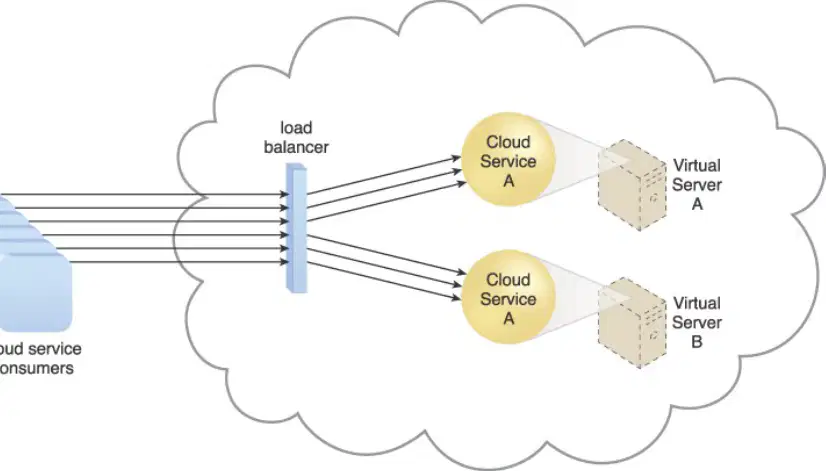
Which foundational cloud architectural model involves the addition of identical IT resources and a load balancer to evenly distribute workloads?
Resource Pooling
Workload Distribution
Multicloud
Redundant Storage
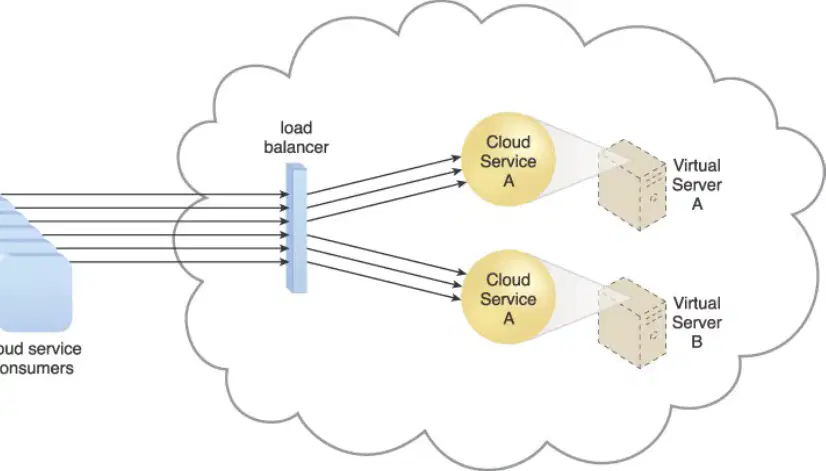
What is the primary benefit of workload distribution architecture in cloud computing?
It increases the number of virtual servers.
It reduces IT resource overutilization and underutilization.
It eliminates the need for load balancing algorithms.
It ensures all IT resources are identical.
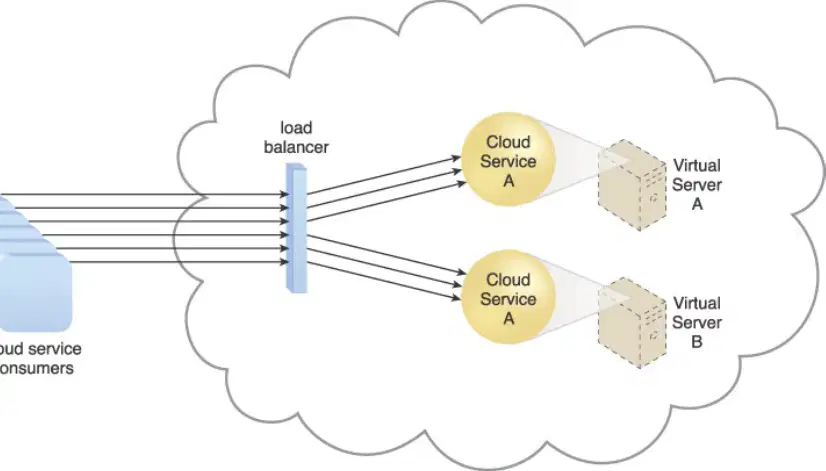
What determines the effectiveness of workload distribution architecture in reducing resource overutilization and underutilization?
The number of cloud service consumers.
The sophistication of load balancing algorithms and runtime logic.
The type of virtual servers used.
The amount of data processed by the cloud services.
Which of the following is NOT a foundational cloud architectural model mentioned in the text?
Cloud Bursting
Elastic Disk Provisioning
Virtual Machine Cloning
Dynamic Scalability
What is the primary function of a load balancer in the context of Cloud Service A implemented on Virtual Server B?
To store data for Virtual Servers A and B.
To intercept consumer requests and distribute them evenly between Virtual Servers A and B.
To monitor the geographical location of IT resources.
To replicate virtualized IT resources.
Which mechanism ensures legal and regulatory requirements are fulfilled when distributing runtime workloads?
Resource Cluster
Audit Monitor
Hypervisor
Resource Replication
What is the purpose of a resource pooling architecture?
To distribute workloads between hypervisors.
To group identical IT resources and maintain synchronization automatically.
To isolate cloud consumer network boundaries.
To generate new instances of virtualized IT resources.
Which mechanism is commonly used to support workload balancing between different cluster nodes in active-active mode?
Logical Network Perimeter
Resource Cluster
Cloud Usage Monitor
Audit Monitor
What does the Resource Replication mechanism achieve in cloud architecture?
It isolates cloud consumer network boundaries.
It generates new instances of virtualized IT resources in response to runtime workload distribution demands.
It monitors runtime workload tracking and data processing.
It distributes workloads between hypervisors.
What are physical server pools composed of?
Networked servers with operating systems and applications ready for immediate use
Virtual servers configured using templates
File-based or block-based storage structures
Preconfigured network connectivity devices
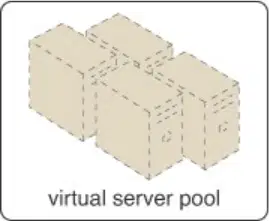
Which of the following is an example of a virtual server pool configuration?
A pool of mid-tier Windows servers with 4 GB of RAM
A pool of physical network switches for link aggregation
A pool of file-based storage devices
A pool of redundant connectivity devices
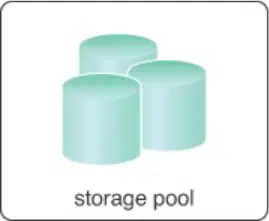
What do storage pools consist of?
File-based or block-based storage structures containing cloud storage devices
Networked servers with operating systems installed
Virtual servers configured using templates
Preconfigured network connectivity devices
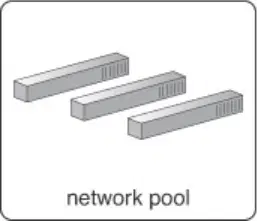
What is the primary purpose of network pools?
To provide redundant connectivity, load balancing, or link aggregation
To store empty or filled cloud storage devices
To configure virtual servers using templates
To install operating systems on networked servers
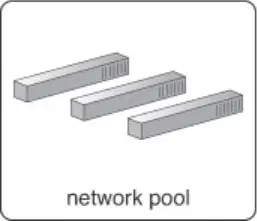
Which type of pool is composed of preconfigured network connectivity devices?
Network pools
Storage pools
Virtual server pools
Physical server pools

What is the primary function of CPU pools in virtual servers?
To store data for cloud applications
To allocate individual processing cores to virtual servers
To manage network connections
To vertically scale physical servers
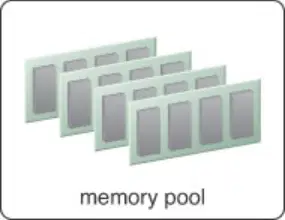
Which type of resource pool can be used to vertically scale physical servers?
CPU pool
Memory pool
Storage pool
Network pool
What does Figure 13.2 represent in the context of resource pools?
A single pool for cloud applications
A hierarchical structure of resource pools
A sample resource pool with four sub-pools
A network pool for virtual devices
How can resource pools be organized to manage diverse resource pooling requirements?
By creating a single pool for all resources
By establishing a hierarchical structure with parent, sibling, and nested pools
By allocating resources randomly to applications
By using only CPU and memory pools
What is the purpose of sibling resource pools in cloud computing?
To spread IT resources across different data centers.
To isolate IT resources for specific cloud consumers.
To allocate IT resources from a general reserve shared throughout the cloud.
To group IT resources by type for different departments.
What is the alternative to taking IT resources from a general reserve in the sibling pool model?
Allocating resources from Pool A to Pool B and Pool C.
Using nested pools to group IT resources by type.
Drawing resources from physically grouped IT resources.
Sharing resources across all cloud consumers.
What is the main characteristic of nested pools in the nested pool model?
They isolate IT resources for specific cloud consumers.
They divide larger pools into smaller pools grouping the same type of IT resources.
They allocate resources from a general reserve shared throughout the cloud.
They spread IT resources across different data centers.
Why are sibling resource pools isolated from one another?
To ensure each cloud consumer has access to all pools.
To prevent sharing of resources across cloud consumers.
To provide access to respective pools for each cloud consumer.
To group IT resources by type for different departments.
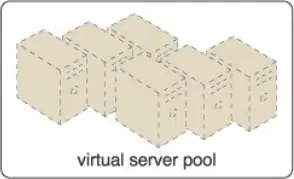
What is the primary purpose of nested pools in cloud architecture?
To provide compliance with privacy and regulation requirements.
To provision cloud services rapidly using the same type of IT resources with identical configuration settings.
To track runtime synchronization of pooled IT resources.
To store data loaded into memory.
Which mechanism ensures compliance with privacy and regulation requirements in cloud architecture?
Cloud Usage Monitor
Audit Monitor
Virtual Server Pool
Memory Pool
What is the role of the Cloud Usage Monitor in cloud architecture?
To monitor resource pool usage for compliance.
To track runtime synchronization and management of pooled IT resources.
To rapidly provision cloud services.
To store cloud data into memory.
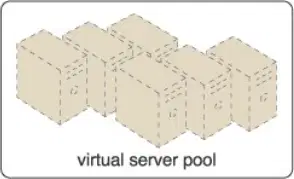
What type of IT resources are typically included in nested pools?
Virtual server pool, CPU pool, memory pool
Audit Monitor, Cloud Usage Monitor
Cloud storage devices, data loaded into memory
Runtime tracking systems
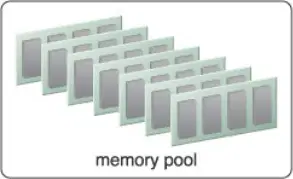
What can be created after resource pools have been defined in cloud architecture?
A compliance monitor for privacy regulations
An in-memory pool of “live” IT resources
A runtime synchronization system
A cloud storage device
Which mechanism is responsible for providing virtual servers with access to resource pools and sometimes hosting the resource pools themselves?
Logical Network Perimeter
Pay-Per-Use Monitor
Hypervisor
Resource Replication
What is the primary function of the Logical Network Perimeter mechanism?
To monitor usage and billing information
To logically organize and isolate resource pools
To generate new instances of IT resources
To provide resource pool administration features
Which mechanism is used to generate new instances of IT resources for resource pools?
Resource Management System
Resource Replication
Pay-Per-Use Monitor
Remote Administration System
What is the purpose of the dynamic scalability architecture?
To provide manual interaction for resource allocation
To trigger dynamic allocation of IT resources based on predefined scaling conditions
To monitor billing information for cloud consumers
To isolate resource pools logically
Which type of dynamic scaling involves scaling IT resource instances out and in to handle fluctuating workloads?
Dynamic Vertical Scaling
Dynamic Horizontal Scaling
Dynamic Relocation
Resource Replication
What happens during Dynamic Vertical Scaling?
IT resources are relocated to a host with more capacity
IT resource instances are scaled out and in to handle fluctuating workloads
IT resource instances are scaled up and down to adjust the processing capacity of a single IT resource
IT resources are logically organized and isolated
What is an example of Dynamic Relocation?
Scaling IT resources up and down to adjust processing capacity
Moving a database from a tape-based SAN storage device to a disk-based SAN storage device with higher I/O capacity
Monitoring requests and signaling resource replication
Allocating IT resources based on predefined scaling conditions
What is the role of the automated scaling listener in a cloud service environment?
It processes all incoming requests from cloud service consumers.
It monitors the cloud service to determine if predefined capacity thresholds are exceeded.
It directly scales the virtual server host without monitoring.
It blocks requests when the cloud service is overloaded.
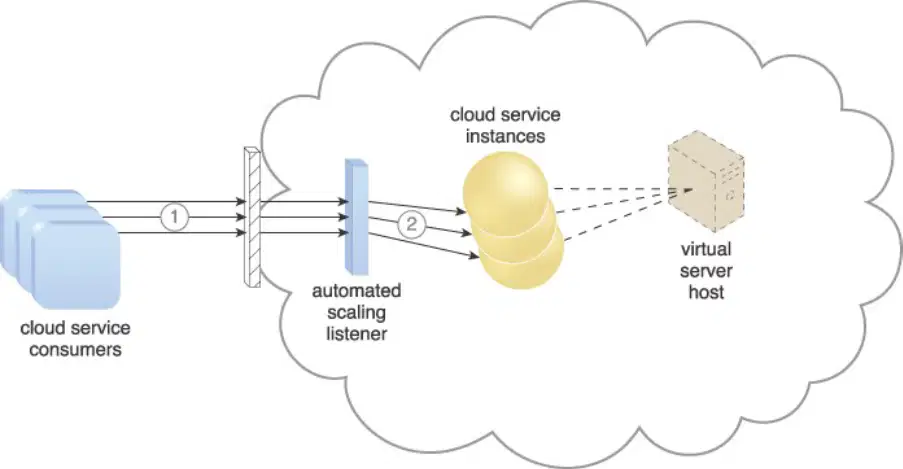
What happens when the number of requests from cloud service consumers exceeds the performance thresholds?
The automated scaling listener shuts down the cloud service.
The automated scaling listener determines the next steps to handle the overload.
The virtual server host automatically rejects all incoming requests.
The cloud service consumers are notified to reduce their requests.
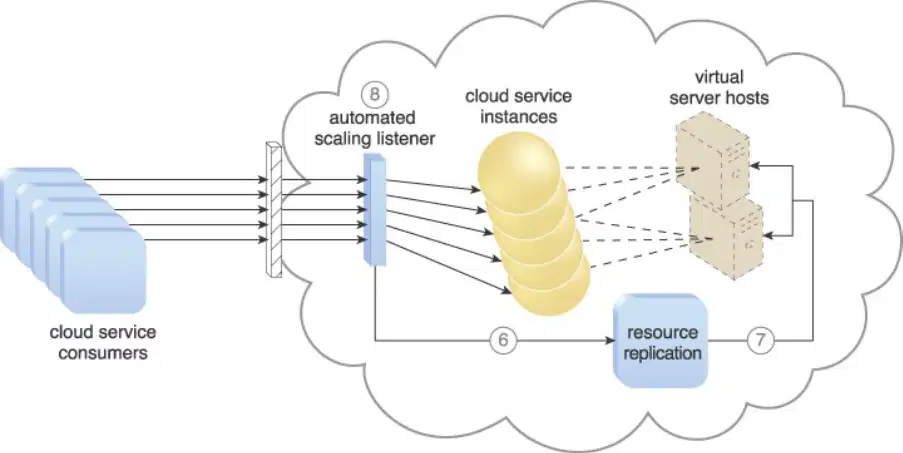
What is the primary function of the automated scaling listener in dynamic scalability architecture?
To monitor runtime usage fluctuations caused by dynamic scalability.
To send signals to the resource replication mechanism for scaling cloud services.
To allocate and reclaim CPUs and RAM dynamically.
To collect cost information in response to scaling IT resources.
Which mechanism in dynamic scalability architecture is responsible for creating or removing virtual server instances?
Cloud Usage Monitor
Hypervisor
Pay-Per-Use Monitor
Automated Scaling Listener
What is the role of the Pay-Per-Use Monitor in dynamic scalability architecture?
To track runtime usage fluctuations.
To invoke a system for creating or removing virtual server instances.
To collect cost information in response to scaling IT resources.
To allocate and reclaim CPUs and RAM dynamically.
What is the primary focus of the elastic resource capacity architecture?
Tracking runtime usage fluctuations.
Allocating and reclaiming CPUs and RAM based on fluctuating processing requirements.
Collecting cost information for scaling IT resources.
Creating or removing virtual server instances.
Which mechanism in dynamic scalability architecture tracks runtime usage fluctuations caused by dynamic scalability?
Hypervisor
Pay-Per-Use Monitor
Cloud Usage Monitor
Elastic Resource Capacity Architecture
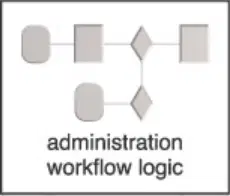
What is the primary function of the intelligent automation engine in cloud architecture?
To manually allocate resources to virtual servers.
To automate administration tasks by executing scripts containing workflow logic.
To monitor CPU and RAM usage without scaling.
To directly interact with hypervisors for resource allocation.
How does the intelligent automation engine interact with resource pools in cloud architecture?
It retrieves and returns CPU and RAM resources at runtime.
It directly scales virtual servers without monitoring.
It bypasses the VIM and interacts only with hypervisors.
It disables dynamic resource allocation for virtual servers.
Which mechanism in cloud architecture helps define future processing capacity thresholds of virtual servers?
Resource Replication
Pay-Per-Use Monitor
Cloud Usage Monitor
Intelligent Automation Engine
What is the role of the pay-per-use monitor in cloud architecture?
To replicate resources for scaling IT systems.
To collect resource usage cost information as it fluctuates with elastic provisioning.
To monitor resource usage before scaling.
To execute scripts for administration tasks.
Why might virtual servers require rebooting in elastic resource allocation systems?
To reset the hypervisor settings.
To allow dynamic resource allocation to take effect.
To disable scaling requests from the intelligent automation engine.
To manually allocate CPU and RAM resources.
What is the role of the automated scaling listener in the cloud service architecture?
It monitors requests sent by cloud service consumers to the cloud service.
It allocates resources directly to the cloud service consumers.
It acts as the hypervisor for the cloud service.
It stores data for the cloud service consumers.
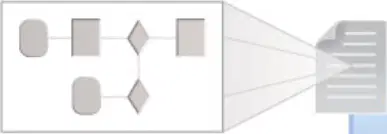
Which component in the cloud service architecture is responsible for notifying the resource pool using allocation requests?
Automated scaling listener
Intelligent automation engine
Hypervisor
Cloud service consumers
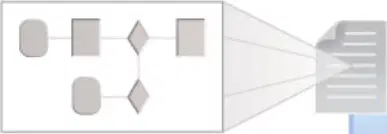
What is the primary function of the intelligent automation engine in the cloud service architecture?
To monitor requests sent by cloud service consumers
To deploy workflow logic and notify the resource pool using allocation requests
To act as the hypervisor for the cloud service
To store data for the cloud service consumers

In the cloud service architecture, what does the resource pool consist of?
Memory and CPU sub-pools
Hypervisors and cloud service consumers
Workflow logic and allocation requests
Automated scaling listeners and intelligent automation engines
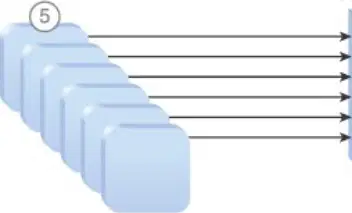
What is the primary function of the automated scaling listener in the cloud service load balancing architecture?
To allocate additional CPU and RAM to virtual servers.
To signal the intelligent automation engine to execute scripts.
To organize duplicate cloud service implementations into a resource pool.
To act as a load balancer for distributing workloads dynamically.

Which component in the service load balancing architecture is responsible for allocating more IT resources from resource pools?
Automated scaling listener.
Intelligent automation engine.
Hypervisor.
Load balancer.
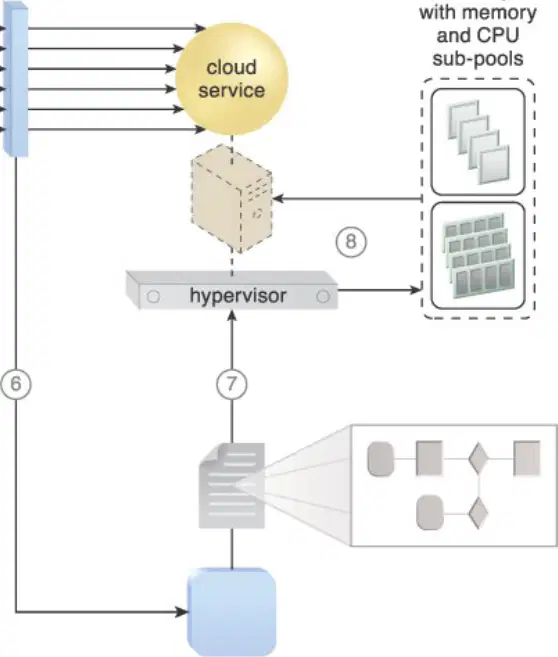
What is the purpose of the service load balancing architecture in cloud computing?
To execute scripts for intelligent automation.
To dynamically distribute workloads across redundant cloud services.
To allocate additional CPU and RAM to virtual servers.
To signal the hypervisor to allocate IT resources.
How are duplicate cloud service implementations organized in the service load balancing architecture?
They are distributed across multiple hypervisors.
They are organized into a resource pool.
They are managed by the automated scaling listener.
They are allocated additional CPU and RAM.
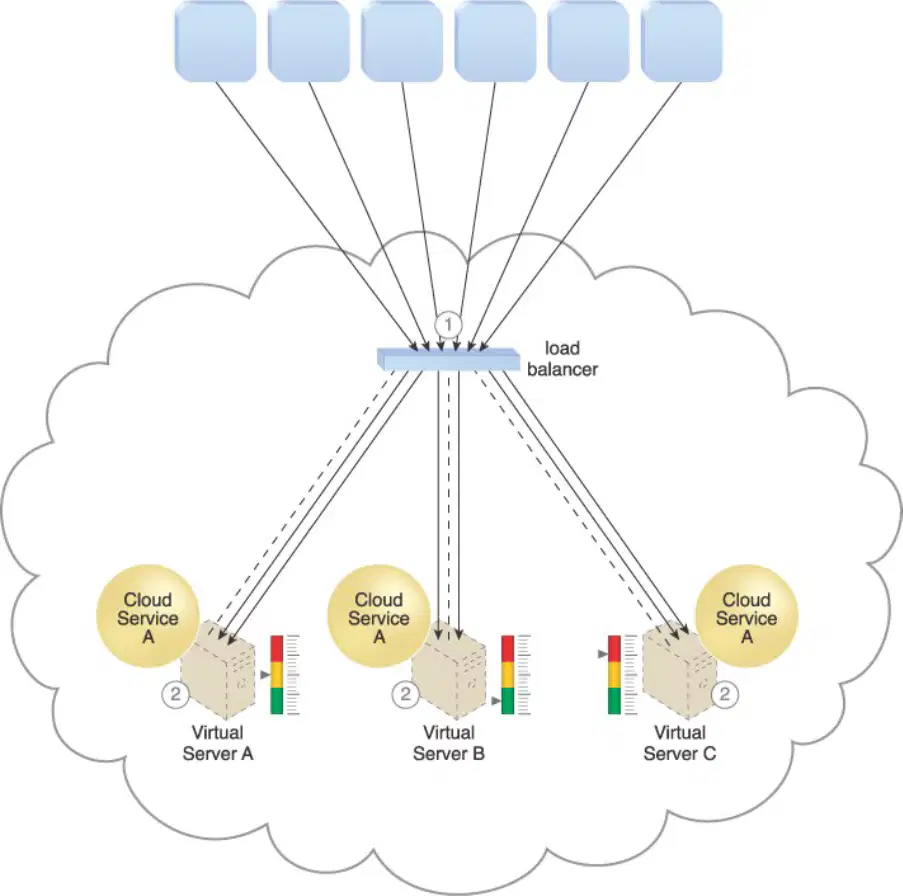
What is the primary function of a load balancer in a cloud service environment?
To store data for cloud service consumers.
To intercept and forward messages to virtual servers for workload processing.
To act as a backup server in case of failure.
To directly manage cloud service consumers.
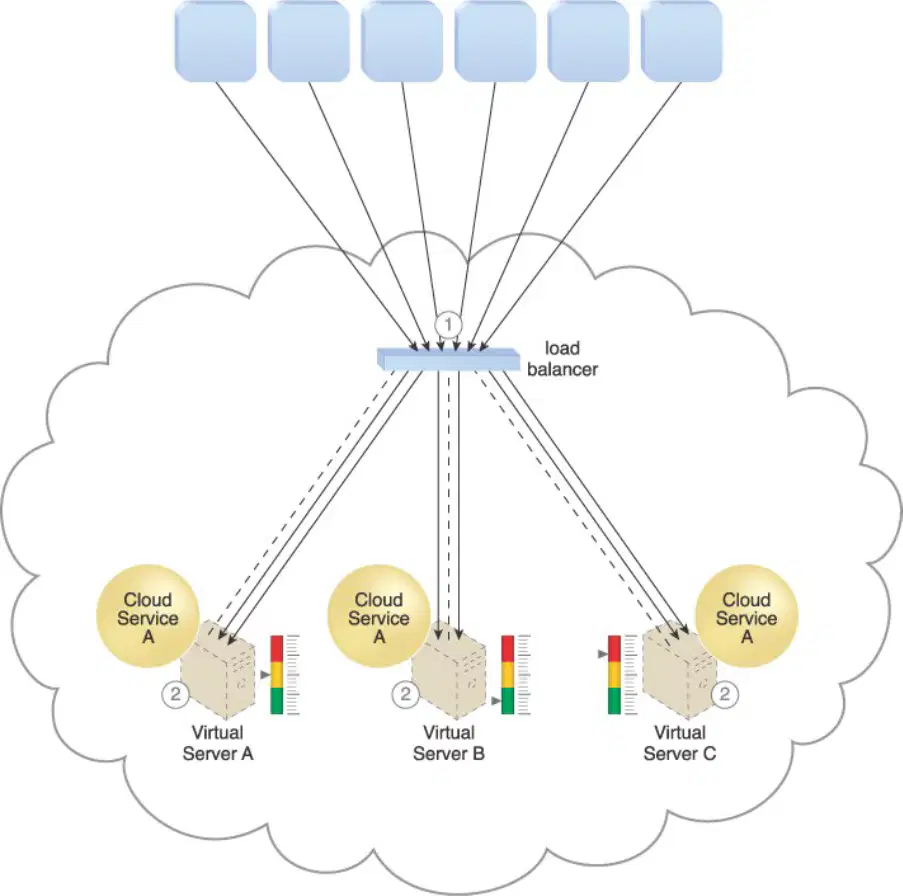
How can the load balancer be positioned in a cloud service environment?
Only as part of the application or server’s environment.
Only independent of the cloud services and host servers.
Either independent of the cloud services or built-in as part of the application or server’s environment.
Only as a backup for virtual servers.
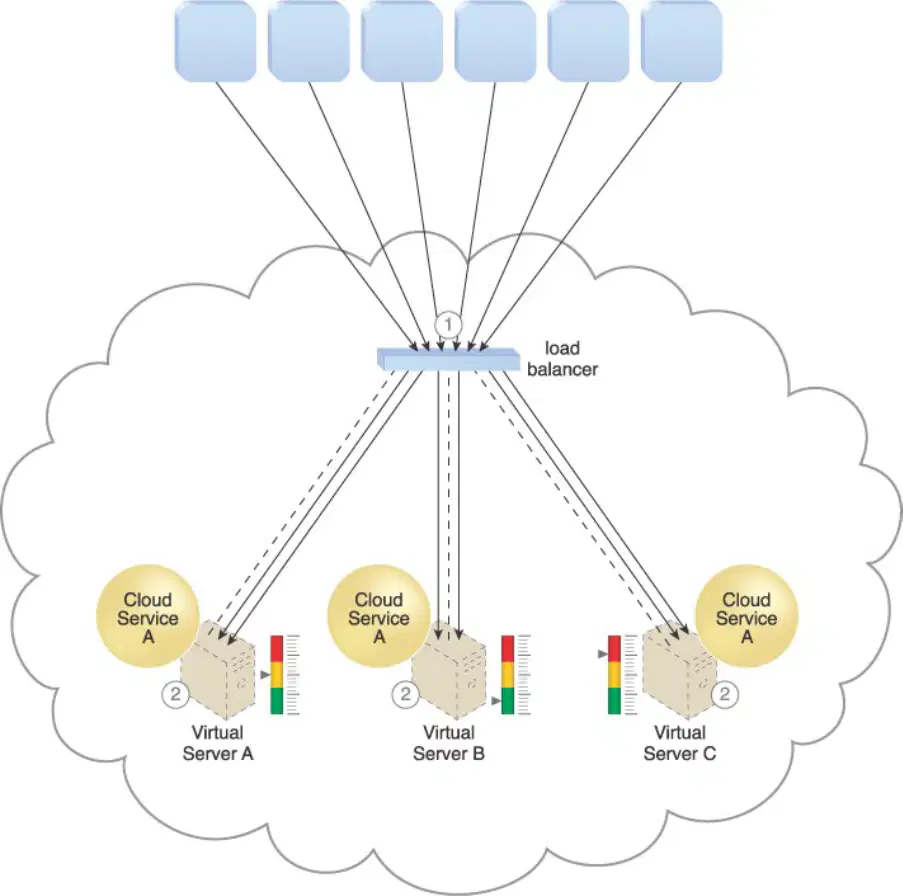
What does horizontal scaling in workload processing refer to in the context of cloud services?
Increasing the size of a single server to handle more workload.
Distributing workload across multiple virtual servers.
Reducing the number of virtual servers to optimize performance.
Using a single server to process all requests.
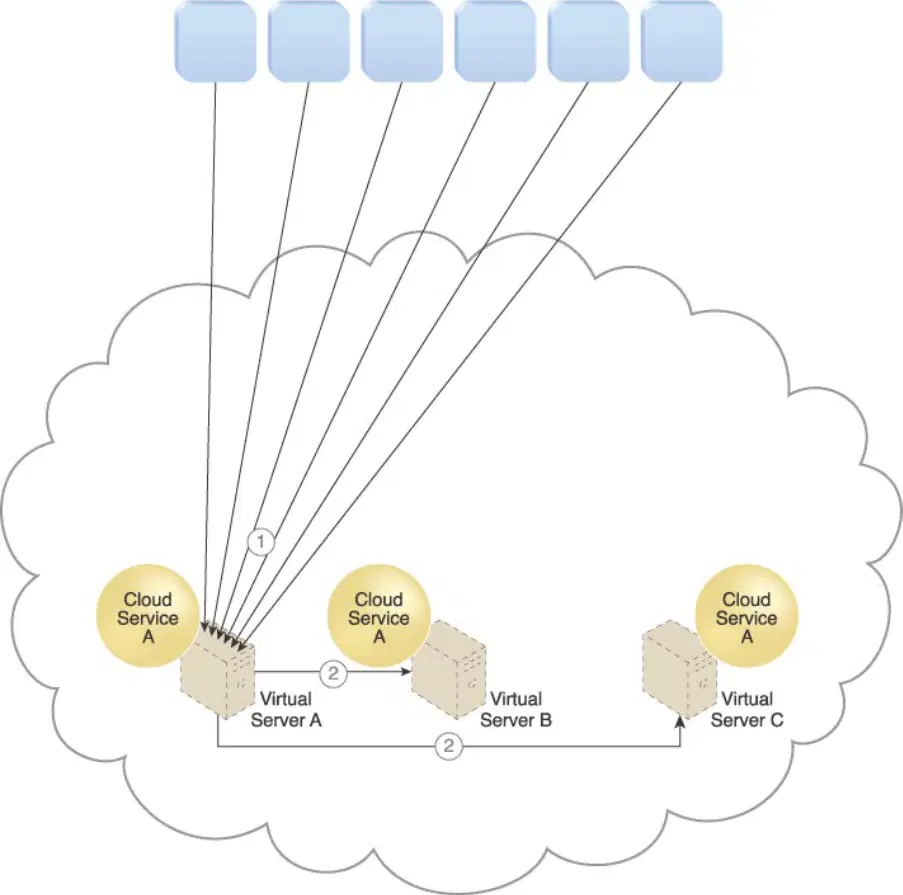
What is the primary function of the built-in load balancing logic in the cloud service implementation shown in the diagram?
To monitor IT resource consumption levels.
To distribute requests to neighboring cloud service implementations.
To collect runtime monitoring data.
To deactivate inactive cluster groups.
Which mechanism in the service load balancing architecture helps balance workloads across different members of the cluster?
Cloud Usage Monitor.
Resource Cluster.
Virtual Server Monitor.
Load Balancer.
What is the role of the Cloud Usage Monitor in the service load balancing architecture?
To deactivate inactive cluster groups.
To monitor cloud service instances and IT resource consumption levels.
To distribute requests to neighboring cloud service implementations.
To balance workloads across different members of the cluster.
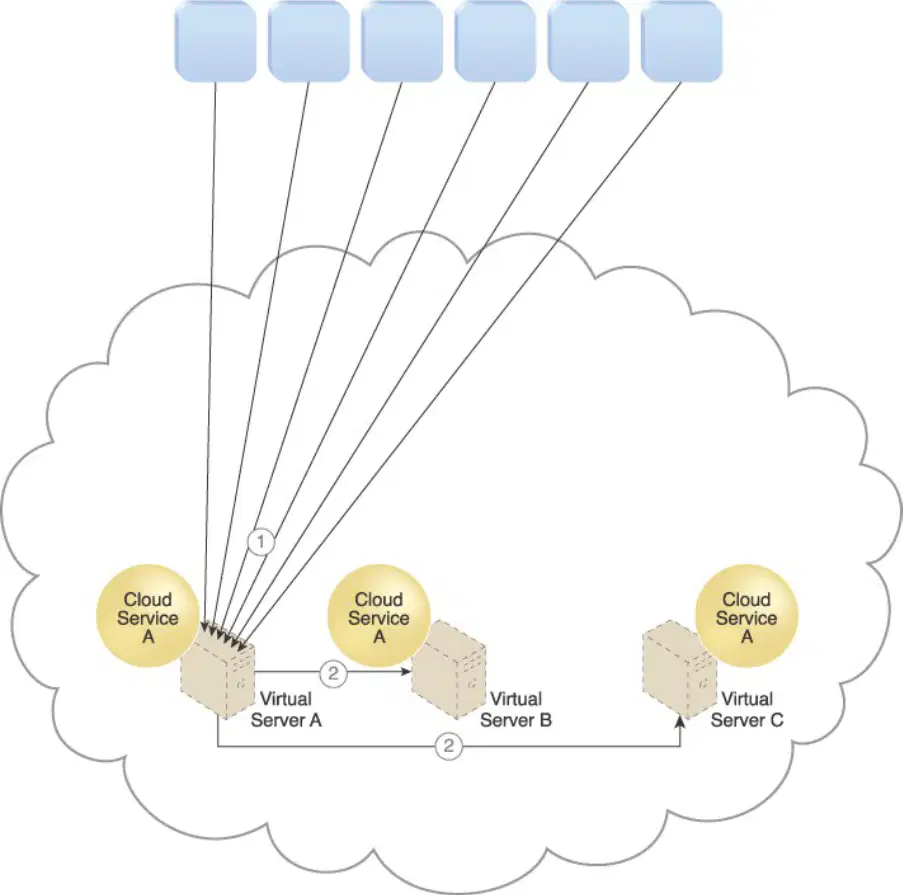
In the diagram, what is the purpose of distributing requests to Virtual Servers B and C?
To increase the number of cloud service consumers.
To ensure efficient load balancing and resource utilization.
To deactivate unused virtual servers.
To monitor runtime data collection tasks.
What is the primary purpose of the cloud bursting architecture?
To permanently migrate all IT resources to the cloud.
To scale on-premises IT resources into the cloud when predefined capacity thresholds are reached.
To eliminate the need for on-premises IT resources entirely.
To reduce the redundancy of cloud-based IT resources.
Which mechanism is used to maintain synchronicity between on-premises and cloud-based IT resources in cloud bursting architecture?
Automated scaling listener.
Resource replication.
Load balancing.
Virtualization.
What role does the automated scaling listener play in cloud bursting architecture?
It permanently redirects all requests to cloud-based IT resources.
It determines when to redirect requests to cloud-based IT resources based on usage thresholds.
It eliminates the need for resource replication mechanisms.
It scales IT resources automatically without monitoring usage.
What is the foundation of the cloud bursting architectural model?
Virtualization and load balancing.
Automated scaling listener and resource replication mechanisms.
Permanent migration of IT resources to the cloud.
Redundant deployment of cloud-based IT resources.
What determines the burst in and out dynamics in cloud bursting architecture?
The type of IT resource being scaled.
The number of cloud-based IT resources available.
The redundancy of on-premises IT resources.
The load balancing requirements of the system.
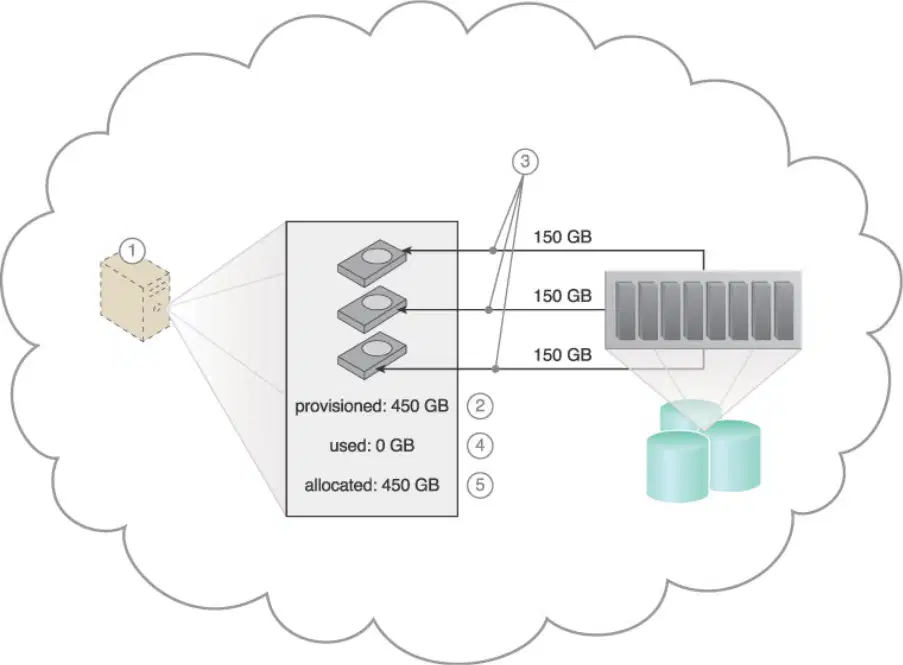
What does the elastic disk provisioning architecture ensure for cloud consumers?
Cloud consumers are billed for the total disk capacity regardless of usage.
Cloud consumers are billed for the exact amount of storage they use.
Cloud consumers are billed based on the number of virtual servers they provision.
Cloud consumers are billed for the maximum possible storage allocation.
What technology supports the dynamic allocation of storage space in the elastic disk provisioning architecture?
Thick-provisioning technology
Thin-provisioning technology
Virtual server technology
Cloud monitoring technology
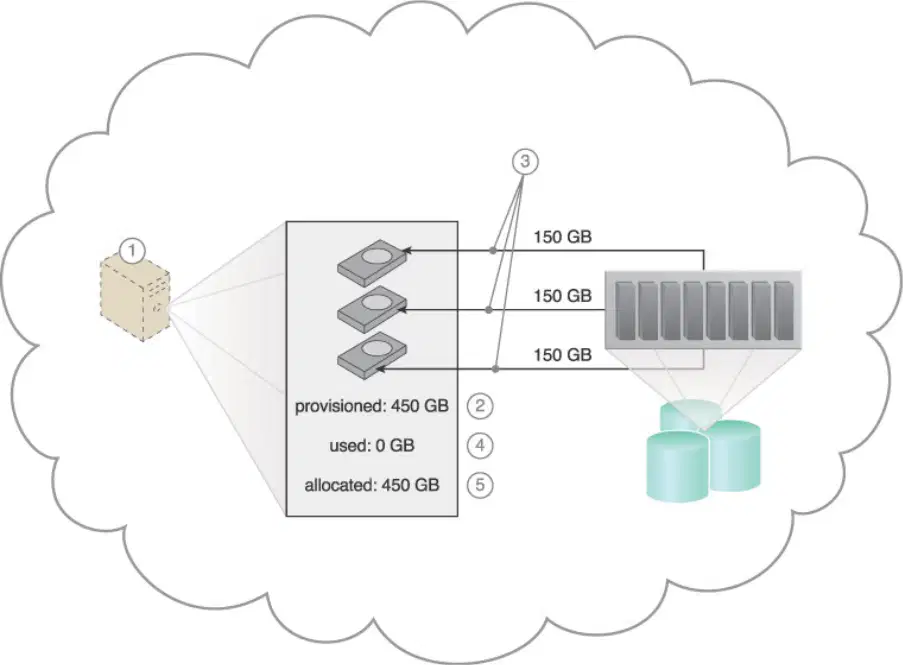
In the elastic disk provisioning architecture, what is the allocated storage space for a virtual server with three hard disks, each with a capacity of 150 GB?
150 GB
300 GB
450 GB
600 GB
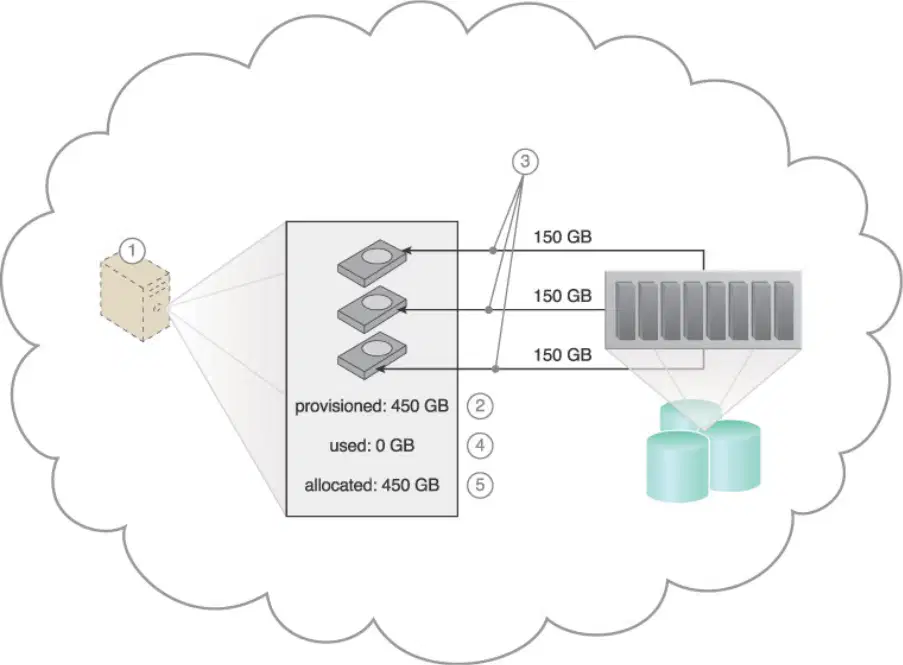
Why is the cloud consumer billed for 450 GB of disk usage even though no software has been installed?
Because the cloud consumer requested 450 GB of storage.
Because the allocated storage space is reserved for the cloud consumer.
Because the cloud provider charges based on the number of hard disks.
Because the cloud consumer has already used 450 GB of storage.
What is the role of runtime usage monitoring in the elastic disk provisioning architecture?
To allocate storage space dynamically.
To collect accurate usage data for billing purposes.
To provision virtual servers automatically.
To increase the total storage capacity.
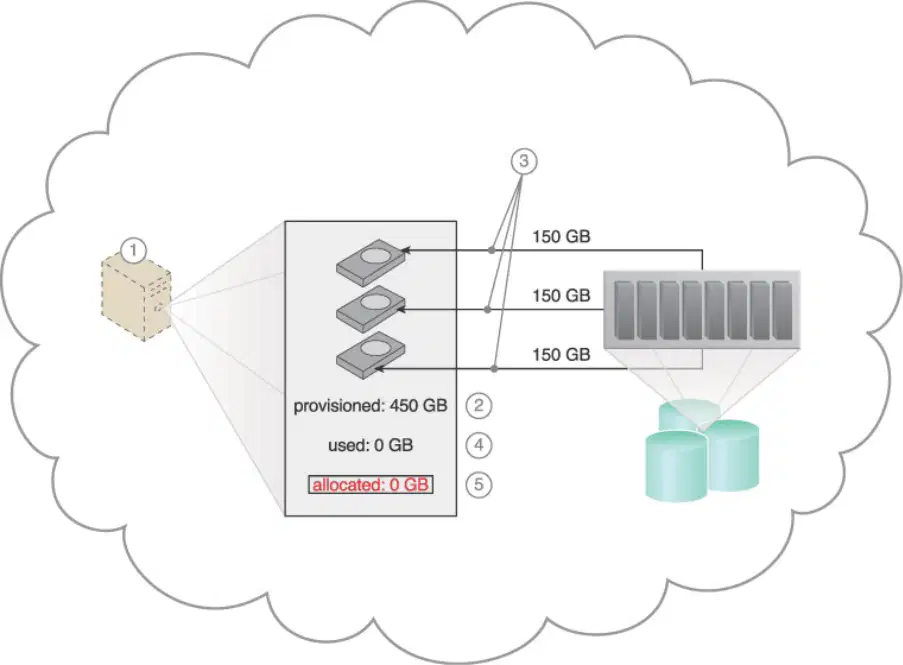
What is the total disk space provisioned for the virtual server in the described architecture?
150 GB
300 GB
450 GB
600 GB

Why is the cloud consumer not charged for any disk space usage in the described scenario?
Because the maximum disk usage is set to 450 GB
Because no physical disk space has been reserved or allocated yet
Because the allocated disk space equals the actual used space, which is 0 GB
Because thin-provisioning software is installed
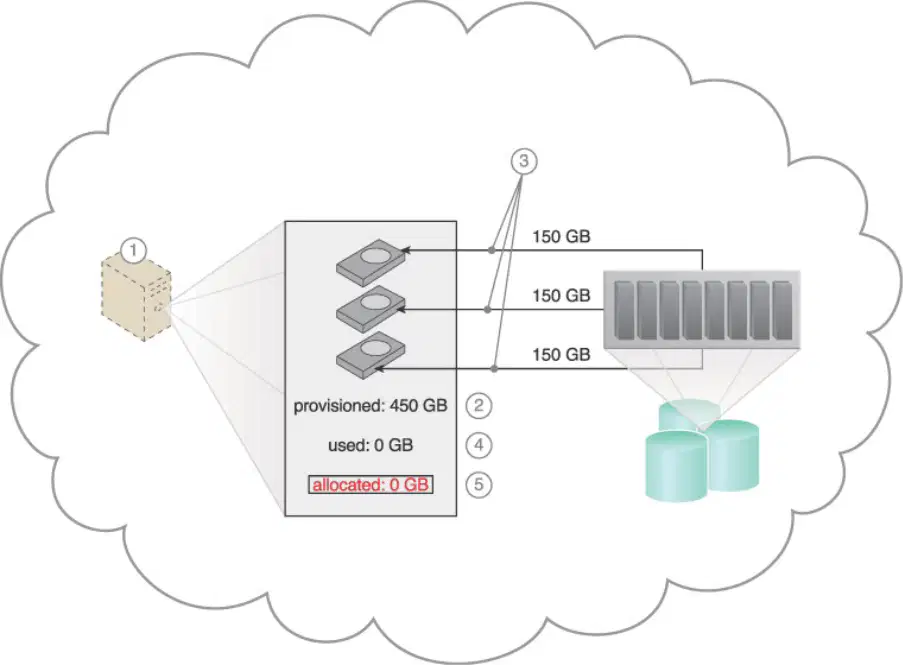
What is the role of thin-provisioning software in virtual servers?
It reserves physical disk space for virtual servers
It processes dynamic storage allocation via the hypervisor
It sets the maximum disk usage for virtual servers
It prevents the installation of software on virtual servers
What is the role of a Cloud Usage Monitor in cloud storage architecture?
To replicate resources for dynamic thin-disk storage conversion
To track and log storage usage fluctuations
To manage pay-per-use monitoring
To provision virtual server instances
What is Resource Replication used for in cloud storage architecture?
To monitor pay-per-use storage
To convert dynamic thin-disk storage into static thick-disk storage
To track storage usage fluctuations
To manage virtual server provisioning
What does a Logical Unit Number (LUN) represent in cloud storage?
A virtual server instance
A partition of a physical drive
A cloud usage monitor
A redundant storage architecture
What are some common causes of failures in cloud storage devices?
Excessive storage usage
Network connectivity issues, hardware failure, and security breaches
Improper LUN configuration
Inefficient pay-per-use monitoring
What is the primary function of a storage service gateway?
To act as the external interface to cloud storage services and redirect cloud consumer requests when the location of requested data changes.
To store data permanently in the cloud.
To provide encryption for cloud storage data.
To manage user authentication for cloud services.
What does the redundant storage architecture introduce as part of a failover system?
A secondary duplicate cloud storage device that synchronizes its data with the primary cloud storage device.
A backup server for managing user authentication.
A primary storage device that encrypts all data.
A cloud service that automatically deletes outdated data.
What happens when the primary cloud storage device fails in a redundant storage architecture?
The storage service gateway diverts cloud consumer requests to the secondary device.
The data is permanently lost.
The primary device automatically repairs itself.
The secondary device encrypts the data for security.
Choose the Correct Abbreviation for AWS EC2
Extended Compute Cloud
Extended Cloud Computation
Elastic Cloud Compute
Elastic Compute Cloud
Give the correct abbreviation of JSON
Java Script Object Notation
Java script Open Network
Java Script Overloaded Network
Java Script Object Network
Write the abbreviation for S3 and SSH?
Service for Simple Storage, Secure Shell Host
Simple Storage Service, Secure Shell
Simple Service Storage, Shell for Secure Hash
Storage Service Source, Secure Shell
Choose the Correct abbreviation for SaaS?
Software as a Service
Security as a Service
Storage as a Service
All the above
Which is/are related to AWS Storage?
AWS S3
AWS S3 Glaciers
AWS EFS
All the Above
Choose the Correct Abbreviation for ACL--------------------------
AWS Cloud Language
Access Control Language
Access Control List
AWS Control Language
Choose the correct order for the following--------------------------
Region, Data Centre, Availability Zone
Availability Zone, Region, Data Centre
Data Centre, Region, Availability Zone
Region, Availability Zone, Data Centre
IPV4 has ------------bit address
28 bits
32 bits
64 bits
128 bits
AWS RDS stands for --------------------------
AWS Relational Data Set
AWS Relational Database Service
AWS Relational Data Storage
AWS Relational Data Security
How many types of Reserved Instance are Available in AWS Economic and Price Billing
5
2
3
None of the above
Match the Following
Reserved Instance Discount
a) AURI 1) Small
b) PURI 2) Large
c) NURI 3) Less
a -2, b-1, c-3
a-2, b-1, c-3
a-3, b-2, c-1
a-2, b-3, c-1
EC2 is a AWS compute Service? True or False
True
False
Which of the following provides Security, Identity and Compliance?
AWS S3
AWS IAM
AWS EC2
AWS EFS
Advantage of Cloud is -------------------
On Demand Service
Cost Efficient
Both A & B
None of the Above

