
Font size
 Worksheets
Science Summary Exercise
Total questions: 66
Worksheet time: 1hrs 26mins
An atom has an atomic number of 26 and a mass number of 56. This atom contains (?) proton, (?) neutrons and (?) electrons.
(a)
An atom has a atomic number of 26 and a mass number of 56. The electrons are arranged as...?
(a)
There are some trends in Group 1.
As you go down the group, the size of an atom is ___.
Bigger
Smaller
Farther
Closer
There are some trends in Group 1.
As you go down the group, the size of the atom is bigger because ...
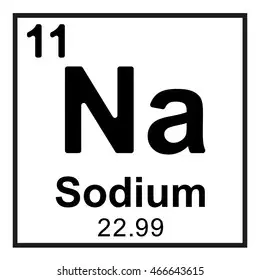
Complete the electronic structure of atomic symbol below.
(a)
Sodium, magnesium and aluminium are placed in the same period in the Periodic Table because ...
thwy have the same amount of atoms
they have the same amount of atoms on the outer shell
they have the same amount of shell
they have the same purpose
_____ + _____ => Sodium oxide
Sodium, Hydrogen
Sodium, water
Sodium, Oxygen
Sodium, Magnesium
_____ + _____ => Magnesium oxide
Magnesium, Oxygen
Magnesium, water
Magnesium, sodium
Magnesium, hydrogen
_____ + _____ => Calcium hydroxide + Hydrogen
Calcium, oxygen
Calcium, Hydrogen
Calcium, Sodium
Calcium, Water
What is the main purpose of photosynthesis for plants?
The main product of photosynthesis is ...
(a)
The by-product of photosynthesis is ...
(a)
Write the balanced chemical equation of photosynthesis. (write letters in all caps)
(a)
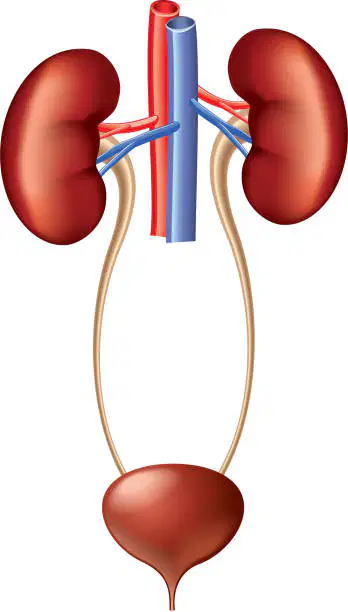
The diagram shows the human excretory system.
Write the name of each part.
(Dont forget to put the first letter in caps)
(a)
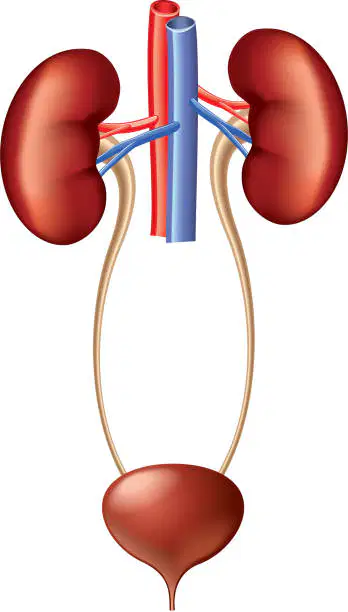
From the picture, which part of the excretory system filters to the blood?
Kidneys
Ureters
Bladder
Urethra
The kidneys are important organs in our body.
Select the answers to the statements that is true.
Urine leaves the body through the ureters.
The kidneys digest food.
Structures in the kidney filter the blood and return nutrient-rich blood back into the body.
Urine is made up of mostly water.
List out the composition of urine from the largest components to the least.
1. Urea
2. Water
3. Salts and uric acid
2-1-3
1-3-2
2-3-1
3-2-1
Unfiltered blood enters the kidney through the renal ...
vein
artery
ureters
filters
The kidney ... the blood.
changes
absorbs
drains
filters
Filtered blood re-enters the bloodstream through the renal ...
vein
filter
artery
urethra
The ... formed enters the bladder through the ... and is excreted through the ...
blood, ureters, urethra
urine, uterus, urethra
blood, ureters, urethra
urine, ureters, urethra
Seok Matthew tested a leaf for starch. The list of steps show what he did, but they are in the wrong order.
List the steps in the correct sequence.
(A) Put the leaf into hot ethanol
(B) Dip the leaf into water to soften it
(C) Put iodine solution into hot water.
(D) Put the leaf into boiling water for five minutes
(a)
Seok Matthew tested a leaf for starch. The list of steps show what he did, but they are in the wrong order.
Explain why Seok Mattchu carried out step D
(A) Put the leaf into hot ethanol
(B) Dip the leaf into water to soften it
(C) Put iodine solution into hot water.
(D) Put the leaf into boiling water for five minutes
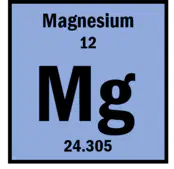
Complete the atomic symbol below. Some data are given to help you.
Protons = 12
Neutrons = 12
Electrons = 12
(a)
The element copper has an atomic number of 29 and a mass number of 64.
How many protons does copper have?
(a)
The element copper has an atomic number of 29 and a mass number of 64.
How many electrons does copper have?
(a)
The element copper has an atomic number of 29 and a mass number of 64.
How many neutrons does copper have?
(a)
The element copper has an atomic number of 29 and a mass number of 64.
What is the electronic configuration of copper?
(a)
Group VIII (8) in the Periodic Table is known as ___ gas.
Noble
Acid
Toxic
Normal
All the elements are (a) and do not form compounds in RTP.
The first three elements of Group VIII (8) are ___, ___, and ___.
Lithium, Sodium, Potasssium
Berylium, Magnesium, Calcium
Boron, Aluminium, Gallium
Helium, Neon, Argen
All elements from Group VIII (8) have the same number of valence electron, except ___ that has valence electron of ___
(a)
The composition of urine may vary depending on .... ??
Use the words below to complete the sentences that describe the structure of an atom.
[electrons, neutrons, nucleus, shells, protons]
An atom has positively charged ___ and neutral ___ in its ___.
(a)
Use the words below to complete the sentences that describe the structure of an atom.
[electrons, neutrons, nucleus, shells, protons]
The very small, negatively charged ___ circle around the outside in ___
(a)
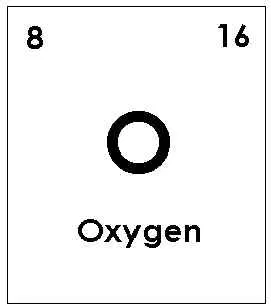
The diagram shows information of oxygen on the Periodic Table.
What is the atomic number of oxygen?
(a)
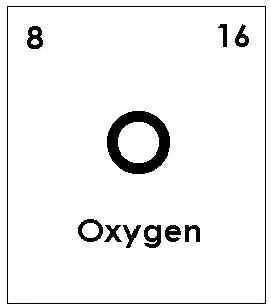
The diagram shows information of oxygen on the Periodic Table.
How many neutrons are there in a atom of oxygen?
(a)
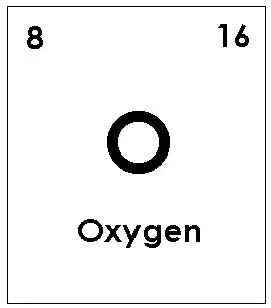
The diagram shows information of oxygen on the Periodic Table.
How many electrons are there in a atom of oxygen?
(a)
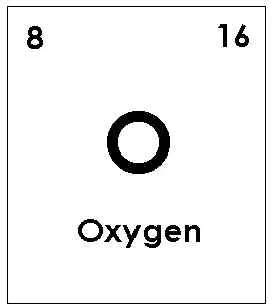
The diagram shows information of oxygen on the Periodic Table.
What is the electronic configuration of oxygen?
(a)
Lithium is an element in Group 1 of the Periodic Table.
What is another name for elements in Group 1?
Alkali Metals
Alkaline Earth
Noble Gas
Non-Metal
Lithium is an element in Group 1 of the Periodic Table.
Why are these elements placed in Group 1 of the Periodic Table?
Lithium is an element in Group 1 of the Periodic Table.
Draw a diagram to show the arrangement of electrons in a lithium atom.

An element has the electronic structure 2, 8, 8, 2
Which group does it belong to?
2
8
10
20
An element has the electronic structure 2, 8, 8, 2
Which period does it belong to?
1
2
3
4
Consider the following elements: C, N, O and F.
All these elements sre found in the same period in the Periodic Table. What period is this?
1
2
3
4
Consider the following elements: C, N, O and F.
Which one of the elements has the smallest number of protons?
C
N
O
F
Consider the following elements: C, N, O and F.
State one similarity in the electronic structure of these elements.
Use the words from the box to complete the descrriptions about hydrogen atom forms covalent bonds.
You may use some words more than once.
[ion] [metal] [molecule] [non-metal] [one] [two] [three] [four]
The hydrogen atom has (a) outer electron.
Use the words from the box to complete the descrriptions about hydrogen atom forms covalent bonds.
You may use some words more than once.
[ion] [metal] [molecule] [non-metal] [one] [two] [three] [four]
The hydrogen atom forms covalent bonds with other (a) atoms.
Use the words from the box to complete the descrriptions about hydrogen atom forms covalent bonds.
You may use some words more than once.
[ion] [metal] [molecule] [non-metal] [one] [two] [three] [four]
One hydrogen atom shares (a) electron with other atoms to obtain a stable electronic configuration.
Use the words from the box to complete the descrriptions about hydrogen atom forms covalent bonds.
You may use some words more than once.
[ion] [metal] [molecule] [non-metal] [one] [two] [three] [four]
In a hydrogen (a) , two hydrogen atoms combine to obtain a stable electronic configuration.
Use the words from the box to complete the descrriptions about hydrogen atom forms covalent bonds.
You may use some words more than once.
[ion] [metal] [molecule] [non-metal] [one] [two] [three] [four]
One carbon atom forms ___ covalent bonds with ___ hydrogen atoms to obtain a stable configuration.
(a)
Use the words from the box to complete the descrriptions about hydrogen atom forms covalent bonds.
You may use some words more than once.
[ion] [metal] [molecule] [non-metal] [one] [two] [three] [four]
One nitrogen atom forms ___ covalent bonds with ___ hydrogen atoms to obtain a stable electronic configuration.
(a)
Use the words from the box to complete the descrriptions about hydrogen atom forms covalent bonds.
You may use some words more than once.
[ion] [metal] [molecule] [non-metal] [one] [two] [three] [four]
One oxygen atom forms ___ covalent bonds with ___ hydrogen atoms to obtain a stable electronic configuration.
(a)
Lithium, berylium, oxygen and flourine are found in the second period of the Periodic Table. Complete this table without reffering to your Periodic Table.
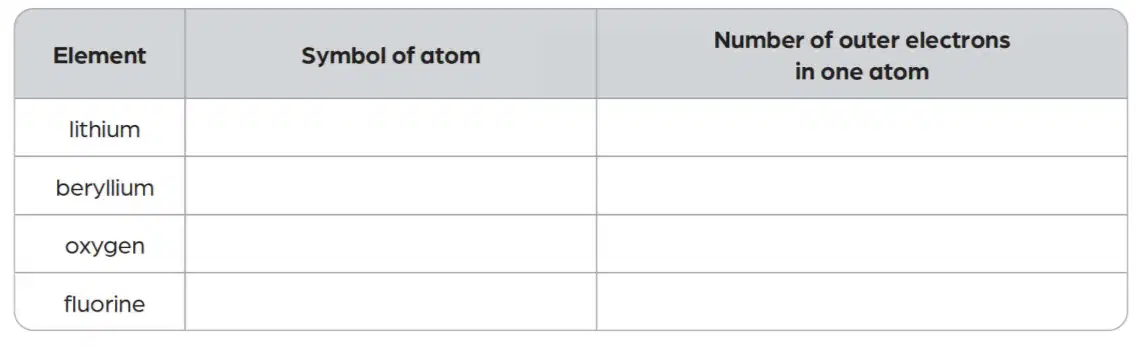
The number of outer electron tells us the (a) of every element in Periodic Table.
Sodium has a proton number of 11. Make the electronic configuration of its atom.
A solid block has a mass of 480 g and a volume of 160 cm3. Calculate its density.,
30g/cm3
300g/cm3
3g/cm3
0.3g/cm3
A liquid has a density of 1.2 g/cm3. If its volume is 250 cm3 , what is its mass?
3g
30g
300g
3000g
An object has a mass of 3.5kg and a density of 2.5g/cm3. Calculate its volume.
7000cm2
8750cm2
875cm2
700cm2
The density of water is 1.0g/cm3. An object has a density of 0.85g/cm3. Will it float or sink? Why?
A stone is placed in a measuring cylinder containing 50cm3 of water. The water level rises to 72cm3. The mass of the stone is 55g. Calculate the density of the stone.
22g/cm2
5g/cm2
2.2g/cm2
2.5g/cm2
A metal rod has length 20cm, width 4cm, and height 3 cm. Its mass is 720g. Calculate its density.
3
320
720
240
Sand, baby oil and water are placed in the same container. List each layer from top to bottom as seen in the mixture.
[Sand = 1] [Baby oil = 2] [Water = 3]
(a)
Draw a dot-and-cross diagram for a molecule of the compound formed from flouride and hydrogen. Show the outer electrons only. Then write the chemical formula under it.
Draw a dot-and-cross diagram for a molecule of the compound formed from nitrogen and hydrogen. Show the outer electrons only. Then write the chemical formula under it.

