
 Worksheets
Biology Semester 1 Exam Review
Total questions: 101
Worksheet time: 51mins
Name
Class
Date
1.
1. __________________ involve using one or more senses to gather information and collect data.
a)
Hypotheses
b)
Inferences
c)
Theories
d)
Observations
2.
2. Jillian is doing an experiment where she is testing whether the color of the light used will affect the rate of photosynthesis. "If I change the color of light to green light, then the rate of photosynthesis will decrease" is an example of a(n)....
a)
theory
b)
observation
c)
hypothesis
d)
conclusion
3.
3. The thing that is changed on purpose in a controlled experiment is called the....
a)
dependent variable
b)
independent variable
c)
data
d)
theory
4.
4. Jillian is doing an experiment where she is testing whether the color of the light used will affect the rate of photosynthesis. She uses red, blue, and green light to perform several trials on aquatic plants and records the time it takes for the plants to produce oxygen bubbles in the water. What is the dependent variable in the experiment?
a)
the type of plant
b)
the color of light
c)
the different trials
d)
the time it takes to form oxygen bubbles
5.
5. Jillian is doing an experiment where she is testing whether the color of the light used will affect the rate of photosynthesis. She uses red, blue, and green light to perform several trials on aquatic plants and records the time it takes for the plants to produce oxygen bubbles in the water. What is an example of a control that she should use in the experiment?
a)
the type of plant
b)
the color of light
c)
the different trials
d)
the rate measured
6.
6. What is Biology?
a)
the study of environments
b)
the study of all living things
c)
the study of chemical properties
d)
the study of animals
7.
7. Which of the following is NOT a characteristic of all living things?
a)
movement
b)
requires energy
c)
reproduces
d)
has a genetic code
8.
8. What is an organism that does not have a nucleus?
a)
eukaryote
b)
prokaryote
c)
autotroph
d)
heterotroph
9.
9. Which is NOT a difference between sexual and asexual reproduction?
a)
sexual has two parents and asexual has one parent
b)
sexual creates genetic diversity and asexual creates clones
c)
asexual is performed by bacteria and sexual is performed by animals
d)
sexual is performed in the warm months and asexual is performed in the cool months
10.
10. What type of organism can make its own food?
a)
autotroph
b)
heterotroph
c)
eukaryote
d)
prokaryote
11.
11. A zebra is peacefully eating in the tall grasses of the savanna when it hears the grass moving behind it. The senses that there is a lion nearby and immediately starts running. What was the response to the stimulus in this situation?
a)
the zebra eating
b)
the lion prowling
c)
the zebra running
d)
the grass moving
12.
12. When a population changes over time because of changing environmental conditions, it is called...
a)
homeostasis
b)
stimulus
c)
development
d)
evolution
13.
13. When a bird can stay outside in the winter months and survive, it is demonstrating maintaining _________, or stable internal conditions.
a)
evolution
b)
development
c)
homeostasis
d)
energy
14.
14. Which one of these levels of biological organization is the largest compared to the others?
a)
population
b)
community
c)
ecosystem
d)
organ system
15.
15. The level of organization where nonliving portions are added in is called a(n)_______________. Example: coyote, mice, rattlesnakes, cacti, desert sand, and hot, dry air.
a)
population
b)
community
c)
ecosystem
d)
species
16.

16.This is a ________________ of flamingos.
a)
population
b)
ecosystem
c)
community
d)
biome
17.
17. When using a microscope, what do you use FIRST?
a)
low power, coarse objective lens
b)
low power, fine objective lens
c)
high power, coarse objective lens
d)
high power, fine objective lens
18.
18. The smallest unit of matter is an atom. Which one of the following is NOT part of an atom?
a)
proton
b)
neutron
c)
ion
d)
electron
19.
19. What type of chemical bond involves the sharing of electrons?
a)
hydrogen bond
b)
van der Waals forces
c)
ionic bond
d)
covalent bond
20.
20.Table salt is made when sodium gives an electron to chlorine. Then the positive sodium ion is attracted to the negative chlorine ion. This is an example of a(n)...
a)
covalent bond
b)
ionic bond
c)
hydrogen bond
d)
van der Waals forces
21.
21. What is the most abundant COMPOUND in living things?
a)
carbohydrates
b)
protein
c)
water
d)
carbon
22.
22. A water molecule demonstrates _________ because its hydrogen end is a little more positive and its oxygen end is a little more negative.
a)
ionic bonding
b)
isomerism
c)
polarity
d)
van der Waals forces
23.
23. Which of the following is NOT a property of water?
a)
universal solvent
b)
acts as an enzyme
c)
polarity
d)
adhesion and cohesion
24.
24. On the pH scale, the solutions that are from 0-7 are called _____ and have more H+ than water.
a)
acids
b)
bases
c)
polar molecules
d)
nonpolar molecules
25.
25. Which of the following elements is found in all organic compounds?
a)
hydrogen
b)
oxygen
c)
phosphorus
d)
carbon
26.
26. In general, ______________ builds _______________.
a)
polymers, monomers
b)
monomers, polymers
c)
compounds, elements
d)
molecules, atoms
27.
27. Which of the following is NOT one of the main organic POLYMERS that make up living things?
a)
carbohydrates
b)
proteins
c)
amino acids
d)
nucleic acids
28.
28. Which of the following polymers is the main source of immediate energy in living things?
a)
carbohydrates
b)
proteins
c)
lipids
d)
nucleic acids
29.
29. Which of the following is the monomer that builds a protein?
a)
monosaccharide
b)
amino acid
c)
nucleotide
d)
fatty acid
30.
30. The only two examples of a nucleic acid on earth are...
a)
enzymes and hormones
b)
glucose and fructose
c)
DNA and RNA
d)
fatty acids and glycerol groups
31.
31. Another name for fats, oils, and waxes is a _____________.
a)
carbohydrate
b)
lipid
c)
nucleic acid
d)
protein
32.
32. Which of the following is NOT true of enzymes?
a)
they are proteins
b)
they speed up chemical reactions
c)
they increase the activation energy needed to start a reaction
d)
they are reusable
33.
33. Which of the following is NOT a part of the cell theory?
a)
all living things are made of one or more cells
b)
all cells come from preexisting cells
c)
the cell is the basic unit of structure and function
d)
all cells have a nucleus
34.
34. What is a difference between a prokaryote and a eukaryote?
a)
prokaryotes have a nucleus and eukaryotes do not
b)
eukaryotes have a nucleus and prokaryotes do not
c)
prokaryotes can make their own food and eukaryotes cannot
d)
eukaryotes can make their own food and prokaryotes cannot
35.
35. Which of the following is NOT true of a prokaryote?
a)
it is smaller than a eukaryote
b)
bacteria cells are examples
c)
they only have a few organelles
d)
they have a large nucleus to house the DNA
36.

36. Which organelle is #5?
a)
endoplasmic reticulum
b)
golgi apparatus
c)
mitochondria
d)
nucleus
37.

37. What is the function of organelle #13?
a)
to store food and water
b)
to package proteins for export
c)
to provide energy for the cell
d)
to help separate the cell during cell division
38.

38.What is the function of organelle #6?
a)
to store food and water
b)
to package proteins for export
c)
to provide energy for the cell
d)
to help separate the cell during cell division
39.

39. Organelle #10 stores food and water for the cell. Organelle #10 is the....
a)
Golgi apparatus
b)
mitochondria
c)
vacuole
d)
lysosome
40.
40. What does the mitochondrion do for the cell?
a)
transport proteins
b)
make energy
c)
clean up waste
d)
build proteins
41.
41. What two organelles are found in plant cells, but not in animal cells?
a)
centrioles, chloroplasts
b)
cell membrane, cell wall
c)
chromatin, mitochondrion
d)
chloroplast, cell wall
42.

42. This picture is of a....
a)
animal cell
b)
plant cell
c)
eukaryote
d)
prokaryote
43.
43. A cell that has a cell membrane, no cell wall, and a nucleus is likely a(n)....
a)
plant cell
b)
animal cell
c)
bacteria cell
d)
a virus
44.
44. What method of membrane transport relies on random particle movement from an area of high concentration to an area of low concentration?
a)
simple diffusion
b)
facilitated diffusion
c)
active transport
d)
endocytosis
45.
45. What method of membrane transport does water utilize?
a)
simple diffusion
b)
osmosis
c)
facilitated diffusion
d)
active transport
46.
46. If a molecule is needed inside the cell, and the concentration is HIGHER on the inside of the cell, what method of transport must be utilized?
a)
facilitated diffusion
b)
active transport
c)
osmosis
d)
simple diffusion
47.
47. Which of the following is an example of a specialized cell in an organism?
a)
a red blood cell in an animal
b)
a liver cell in an animal
c)
a guard cell in a plant
d)
all of the above
48.
48. How is energy stored in a cell?
a)
a phosphate group is added to ADP to make ATP
b)
a phosphate group is added to ATP to make ADP
c)
a phosphate group is removed from ATP to make ADP
d)
a phosphate group is removed from ADP to make ATP
49.
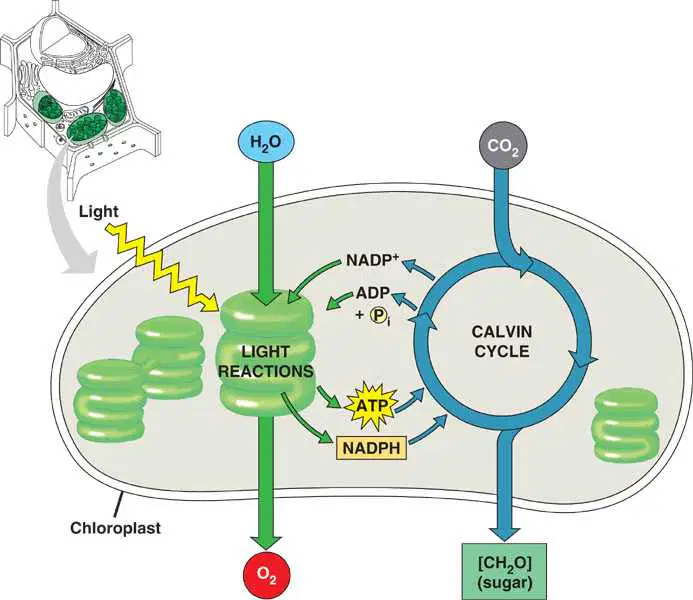
49. What is this diagram showing?
a)
cellular respiration
b)
mitosis
c)
photosynthesis
d)
meiosis
50.
50. Plants are _____, meaning they can make their own food from sunlight during photosynthesis.
a)
eukaryotes
b)
prokaryotes
c)
autotrophs
d)
heterotrophs
51.
51. What organelle is the site of photosynthesis?
a)
vacuole
b)
mitochondrion
c)
chloroplast
d)
lysosome
52.
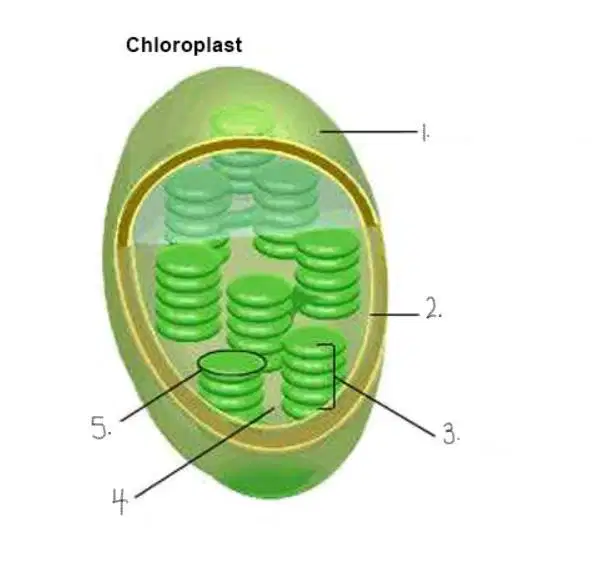
52. What is label #5?
a)
thylakoid
b)
granum
c)
stroma
d)
inner membrane
53.
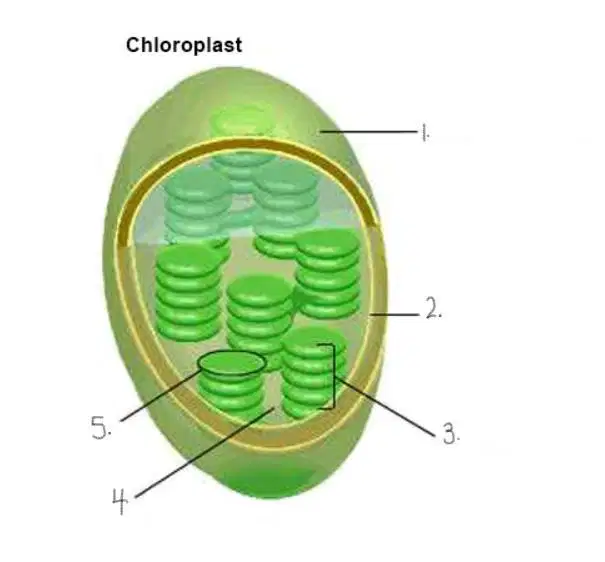
53. What is label #4?
a)
thylakoid
b)
granum
c)
stroma
d)
inner membrane
54.
54. What is the main source of energy for photosynthesis?
a)
water
b)
food
c)
sunlight
d)
ATP
55.
55. Which of the following are the reactants of photosynthesis?
a)
water and carbon dioxide
b)
oxygen and glucose
c)
water and oxygen
d)
carbon dioxide and glucose
56.
56. Which of the following are the products of photosynthesis?
a)
water and carbon dioxide
b)
oxygen and glucose
c)
water and oxygen
d)
carbon dioxide and glucose
57.
57. Which of the following are the correct stages (in order) of photosynthesis?
a)
Calvin Cycle, Krebs Cycle
b)
Light Dependent Reaction, Electron Transport Chain
c)
Electron Transport Chain, Glycolysis
d)
Light Dependent Reaction, Light Independent Reaction
58.
58. Where does the Calvin Cycle take place?
a)
in the stroma of the chloroplast
b)
in the cytoplasm
c)
in the intermembrane space of a chloroplast
d)
in the matrix of the mitocondria
59.
59. Which of the following is a factor that can affect the rate of photosynthesis?
a)
water
b)
light intensity
c)
temperature
d)
all of the above
60.

60. What is this diagram showing?
a)
mitosis
b)
cellular respiration
c)
photosynthesis
d)
meiosis
61.
61. In what organelle does cellular respiration take place?
a)
chloroplast
b)
endoplasmic reticulum
c)
mitochondrion
d)
golgi appartatus
62.
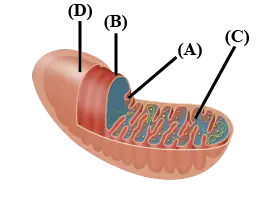
62. What is label B?
a)
outer membrane
b)
inner membrane
c)
stroma
d)
matrix
63.
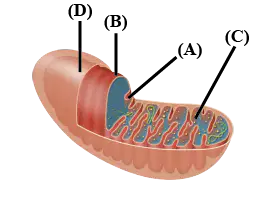
63. What is label C?
a)
outer membrane
b)
inner membrane
c)
stroma
d)
matrix
64.
64. What are the reactants of cellular respiration?
a)
oxygen and glucose
b)
carbon dioxide and water
c)
carbon dioxide and glucose
d)
water and oxygen
65.
65. What are the products of cellular respiration?
a)
oxygen, water, and energy
b)
carbon dioxide, glucose, and energy
c)
glucose, oxygen, and energy
d)
carbon dioxide, water, and energy
66.
66. What are the stages of cellular respiration (in the correct order)?
a)
glycolysis, Krebs cycle, electron transport chain
b)
Krebs cycle, electron transport chain, glycolysis
c)
light dependent reaction, Calvin cycle, Krebs cycle
d)
light independent reaction, Krebs cycle, electron transport chain
67.
67. Where does glycolysis take place?
a)
in the cytoplasm
b)
in the martix
c)
in the intermembrane space
d)
across the outer membrane
68.
68. Where does the Krebs cycle take place?
a)
in the cytoplasm
b)
in the martix
c)
in the intermembrane space
d)
across the outer membrane
69.
69. What is the whole point of cellular respiration?
a)
to make food from sunlight
b)
to make water from carbon dioxide
c)
to make energy from food
d)
to make food from oxygen
70.
70. What would occur after glycolysis if oxygen was not present?
a)
Krebs Cycle
b)
Calvin cycle
c)
Fermentation
d)
Diffusion
71.
71. What are the two main types of fermentation?
a)
lactic acid and glycolic
b)
lactic acid and alcoholic
c)
alcoholic and amino acid
d)
alcoholic and nucleic acid
72.
72. Which of the following is something that could happen if a cell got too large?
a)
there would be too much demand placed on the DNA
b)
there would be difficulty moving nutrients into the cell
c)
there would be difficulty moving wastes out of the cell
d)
all of the above
73.
73. What is chromatin?
a)
genetic material that has not wound up into chromosomes
b)
two sister chromatids ready to split
c)
the central structure of a chromosome that holds the sister chromatids together
d)
the organelle that helps divide a cell into two daughter cells
74.
74. Which of the following are the two sides of a duplicated chromosome?
a)
chromosomes
b)
chromatin
c)
sister chromatids
d)
centromeres
75.
75. Which of the following is NOT true of the daughter cells after cell division?
a)
they are identical to each other
b)
they are identical to the parent cell
c)
they are genetically different from the parent cell
d)
they are smaller than the parent cell
76.
76. Which of the following is the correct order of how DNA is organized into chromosomes?
a)
chromatin- nucleosomes-coils-super coils- chromsomes
b)
chromatin- coils- super coils-nucleosomes- chromsomes
c)
nucleosomes- coils- super coils- chromatin- chromosomes
d)
coils- super coils- nucleosomes- chromatin- chromosomes
77.
77. Which of the following is NOT one of the major phases of the cell cycle?
a)
glycolysis
b)
interphase
c)
mitosis
d)
cytokinesis
78.
78. Which of the following is NOT part of interphase?
a)
G1
b)
G2
c)
M
d)
S
79.
79. Which of the following is the correct order of phases in the cell cycle?
a)
G1, G2, S, M, C
b)
C, M, G2, S, G1
c)
G1, S, G2, M, C
d)
M, S, C, G1, G2
80.
80. Which of the following is the correct order of the events of the cell cycle?
a)
growth, division of the nucleus, DNA copied, division of the cytoplasm
b)
division of the nucleus, growth, DNA copied, division of the cytoplasm
c)
growth, DNA copied, division of the nucleus, division of the cytoplasm
d)
DNA copied, growth, division of the nucleus, division of the cytoplasm
81.
81. Which of the following is the correct order of the phases of mitosis?
a)
metaphase, prophase, telophase, anaphase
b)
anaphase, metaphase, prophase, telophase
c)
prophase, metaphase, telophase, anaphase
d)
prophase, metaphase, anaphase, telophase
82.

82. Identify which stage of mitosis the following cell is in.
a)
prophase
b)
anaphase
c)
metaphse
d)
telophase
83.
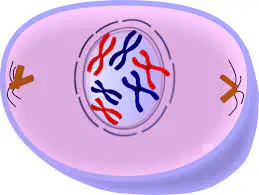
83. Identify which stage of mitosis the following cell is in.
a)
prophase
b)
anaphase
c)
metaphse
d)
telophase
84.

84. Identify what phase of mitosis the following cell is in.
a)
prophase
b)
telophase
c)
metaphse
d)
anaphase
85.
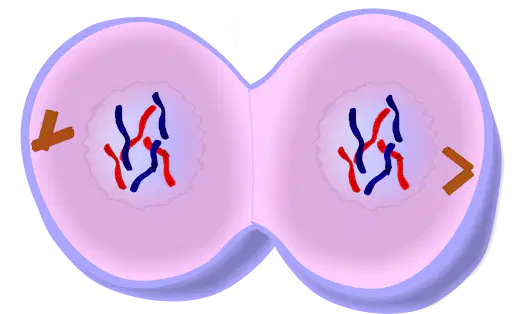
85. Identify what phase of mitosis the following cell is in.
a)
prophase
b)
telophase
c)
metaphse
d)
anaphase
86.
86. What could be the result if a cell does not respond to the cell regulator signals?
a)
uncontrolled cell division
b)
cancer
c)
tumor growth
d)
all of the above
87.
87. ________ is programmed cell death.
a)
cancer
b)
mitosis
c)
apoptosis
d)
meiosis
88.
88. What type of cells undergo meiosis and not mitosis?
a)
skin cells
b)
sex cells (gametes)
c)
brain cells
d)
pancreatic cells
89.
89. What are corresponding chromosomes from each parent called?
a)
sister chromatids
b)
homologous chromosomes
c)
daughter chromosomes
d)
analogous chromosomes
90.
90. Which of the following is NOT true of the parent cell of meiosis?
a)
it is diploid
b)
it is haploid
c)
it will divide twice
d)
it goes through an interphase before the first division
91.
91. What is the purpose of meiosis?
a)
to create four haploid cells with half the amount of genetic material to be combined with another haploid cell during fertilization
b)
to create two haploid cells with half the amount of genetic material to be combined with another haploid cell during fertilization
c)
to create four diploid cells with half the amount of genetic material to be combined with another diploid cell during fertilization
d)
to create two diploid cells with half the amount of genetic material to be combined with another diploid cell during fertilization
92.
92. During what phase of meiosis does crossing over occur?
a)
prophase I
b)
prophase II
c)
metaphase I
d)
anaphase II
93.
93. During what phase of meiosis do the homologous chromosomes separate from each other and move to opposite sides of the cell?
a)
prophase I
b)
metaphase II
c)
anaphase I
d)
anaphase II
94.
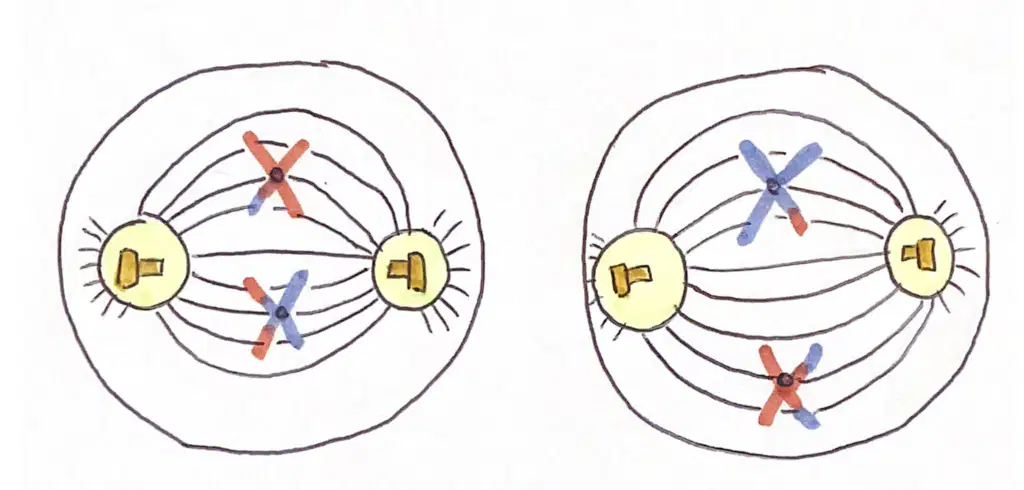
94. Identify what phase of meiosis the following cell(s) are in.
a)
metaphase I
b)
metaphase II
c)
prophase I
d)
prophase II
95.
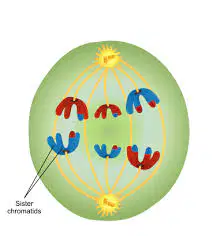
95. Identify what phase of meiosis the following cell(s) are in.
a)
anaphase II
b)
metaphase II
c)
anaphase I
d)
prophase I
96.
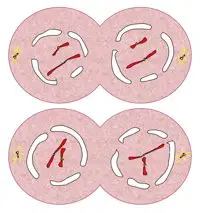
96. Identify what phase of meiosis the following cell(s) are in.
a)
anaphase II
b)
metaphase II
c)
telophase I
d)
telophase II
97.
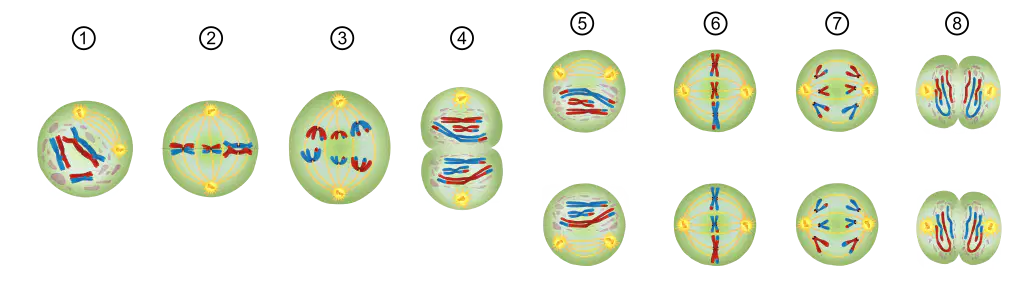
97. What phase is indicated by label 8?
a)
prophase I
b)
anaphase II
c)
telophase I
d)
telophase II
98.
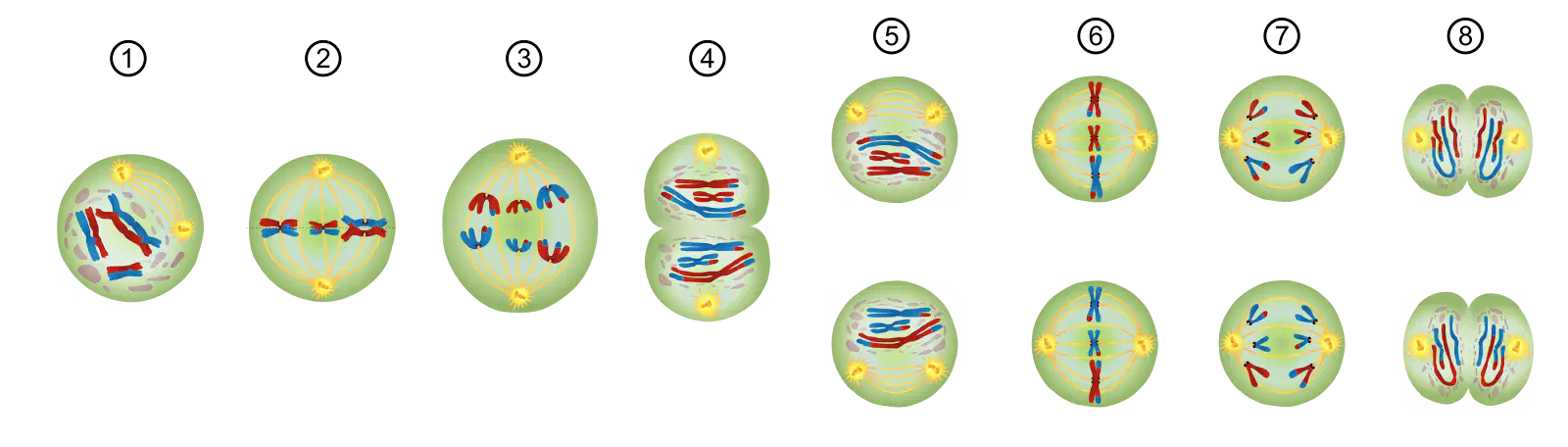
98. In what phase would the error of nondisjunction occur?
a)
label 2 metaphase I
b)
label 3 anaphase I
c)
label 6 metaphase II
d)
label 7 anaphase II
99.
99. If a parent sex cell has a diploid number of 8, what will be the haploid number of the gametes created?
a)
2
b)
4
c)
8
d)
16
100.
100. If a daughter cell of meiosis has a haploid number of 12, what was the diploid number of the parent cell?
a)
6
b)
12
c)
24
d)
36
101.
101. By typing your name, you agree to not discussing test questions with other students in this class or in the other classes. Type your first and last name below.
4 lines
100 %

