
 Worksheets
1409 Lab Practical Review
Total questions: 105
Worksheet time: 58mins
Nervous tissue is found in which part of the body and what is its primary function?
Brain and spinal cord; transmits electrical impulses
Bones; provides structural support
Muscles; enables contraction
Skin; acts as a barrier

Which type of epithelial tissue is characterized by a single layer of flat cells?
A. Simple squamous epithelium
B. Simple cuboidal epithelium
C. Simple columnar epithelium
D. Pseudostratified ciliated columnar epithelium

Which type of muscular tissue is found in the heart and contains intercalated disks?
Cardiac muscle
Smooth muscle
Skeletal muscle

Which type of epithelial tissue contains cilia and appears to have multiple layers due to the arrangement of nuclei?
Simple squamous epithelium
Simple cuboidal epithelium
Simple columnar epithelium
Pseudostratified ciliated columnar epithelium

Which type of muscular tissue is responsible for voluntary movements and is attached to bones?
Cardiac muscle
Smooth muscle
Skeletal muscle

Which type of epithelial tissue is made up of a single layer of cube-shaped cells?
A. Simple squamous epithelium
B. Simple cuboidal epithelium
C. Simple columnar epithelium
D. Pseudostratified ciliated columnar epithelium
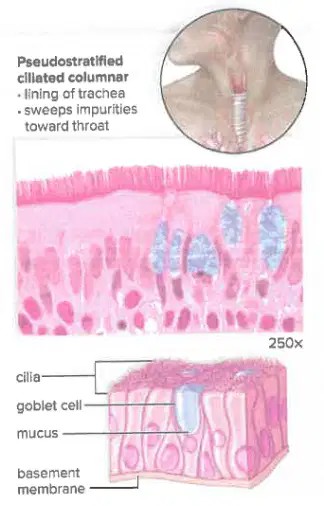
What is the function of the cilia in this tissue?
The cilia move mucus and debris up toward the throat so that they cannot enter the lungs.
The cilia absorb nutrients from the mucus.
The cilia produce hormones for the tissue.
The cilia secrete digestive enzymes into the mucus.
Where is simple cuboidal epithelial tissue located?
Surface of ovaries, linings of ducts and glands, lining of kidney tubules
Inner lining of the heart and blood vessels
Alveoli of lungs
Outer layer of skin
Compare compact bone and hyaline cartilage. Which of these types of connective tissue is more organized? Why?
Compact bone is more organized because its structure is more regular and dense compared to the flexible and less organized matrix of hyaline cartilage.
Hyaline cartilage is more organized because it has a more regular arrangement of cells and fibers than compact bone.
Both compact bone and hyaline cartilage are equally organized due to their similar structural patterns.
Neither compact bone nor hyaline cartilage is organized; both have random arrangements of cells and matrix.

Aside from being striated, cardiac muscle cells are rectangular and branched. What is the benefit of this arrangement?
The rectangular and branched arrangement aids communication and coordination between fibers.
It increases the storage of energy in the muscle cells.
It allows the muscle to contract without using oxygen.
It prevents the muscle from ever getting fatigued.
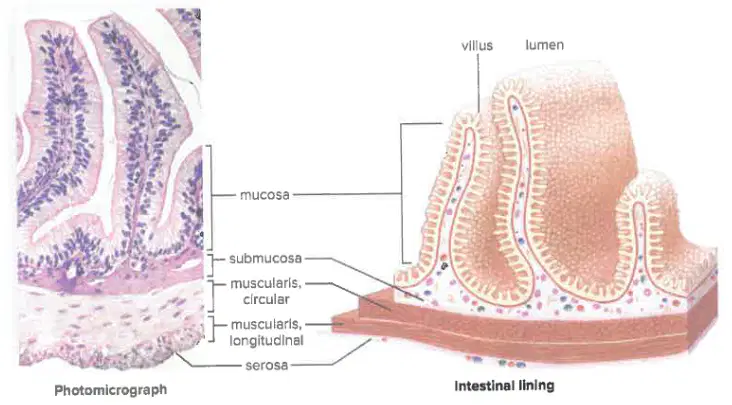
What is the function of the muscularis layer in the intestinal wall?
The muscularis layer causes peristalsis, a wavelike motion that moves food along the intestine.
The muscularis layer secretes digestive enzymes to break down food.
The muscularis layer absorbs nutrients from digested food.
The muscularis layer protects the intestine from pathogens.
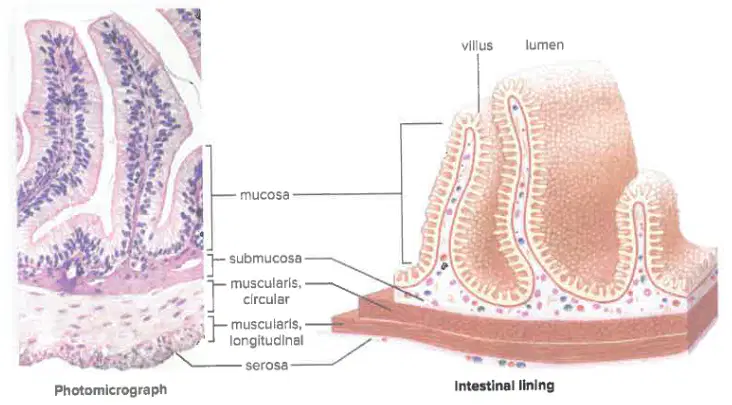
Refer to the diagram of the intestinal wall. Which structure increases the small intestine's absorptive surface?
Villi
Goblet cells
Lacteals
Crypts of Lieberkühn

Match the following layers of the intestinal wall with their correct descriptions:
Contains nerve fibers, blood vessels, and lymphatic vessels
Mucosa
Thin sheet of loose fibrous connective tissue underlies a thin, outermost sheet of squamous epithelium
Submucosa
Circular and longitudinal muscle tissue responsible for peristalsis
Muscularis
Lined with columnar epithelium and contains villi
Serosa
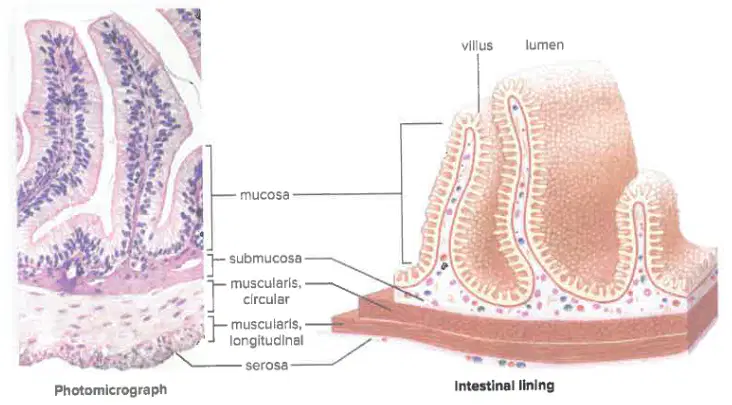
Which layer of the intestinal wall contains nerve fibers, blood vessels, and lymphatic vessels?
Submucosa
Mucosa
Serosa
Muscularis externa
The limbs of a pig can be compared to the limbs of a human in which way?
Both have similar bone structures adapted for different functions.
Pig limbs have no bones while human limbs do.
Human limbs are shorter than pig limbs.
Pig limbs are used for flying while human limbs are not.
What is a mycelium?
A network of filaments called hyphae
A type of plant root specialized for water absorption.
A single-celled organism found in water
A reproductive structure of flowering plants.
What is a sporangium?
A capsule that produces spores, which are black.
A root that absorbs water from soil.
A leaf that performs photosynthesis.
A stem that supports the plant.
Black bread mold is an example of _____ fungi.
zygomycete
ascomycete
basidiomycete
deuteromycete
Which fungi produces an antibacterial substance discovered by Alexander Fleming?
Penicillium
Aspergillus
Rhizopus
Mucor
What is the common name for club fungi?
Mushrooms
Yeasts
Molds
Lichens
Which type of symbiotic relationship is represented by mycorrhizae?
Mutualism
Parasitism
Commensalism
Predation
Fungi and animals differ in their method to obtain nutrients. Which statement best describes this difference?
Fungi absorb nutrients from their environment, while animals ingest and digest food internally.
Both fungi and animals photosynthesize to obtain nutrients.
Fungi and animals both absorb nutrients directly from sunlight.
Animals absorb nutrients from their environment, while fungi ingest and digest food internally.
What group of green algae is most closely related to land plants?
Chlorophytes
Charophytes
Rhodophytes
Phaeophytes
Which of the following is NOT a seedless vascular plant?
A) Fern
B) Horsetail
C) Liverwort
D) Lycophyte
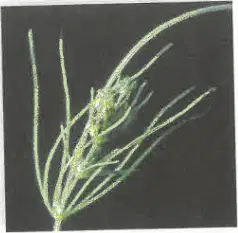
Chara are called stoneworts because:
they become encrusted with calcium carbonate
they grow only on stones
they have stone-like seeds
they are found in rocky areas
Ferns are largely restricted to moist, shady habitats because sexual reproduction requires adequate moisture. This is because:
sperm must swim through water to reach the egg
spores need sunlight to germinate
roots cannot absorb water in dry areas
leaves require constant moisture to photosynthesize
The zones of a root tip are named and described as follows:
Zone of cell division, zone of elongation, and zone of maturation
Zone of photosynthesis, zone of respiration, and zone of transpiration
Zone of absorption, zone of conduction, and zone of storage
Zone of protection, zone of reproduction, and zone of differentiation
Which type of tissue transports water?
Xylem
Phloem
Epidermis
Parenchyma
Which type of tissue (xylem or phloem) transports sugars in a plant?
Phloem
Xylem
Cambium
Epidermis
The function of lenticels is:
to facilitate gaseous exchange
to absorb water from soil
to transport food
to provide mechanical support
Match each bacterial example to its shape.
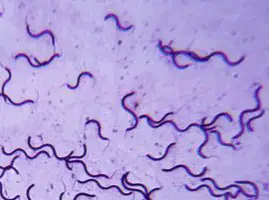
Spirillum
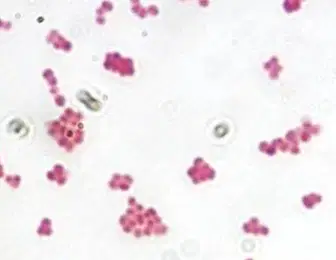
Coccus

Bacillus
What is the survival value of an endospore?
It increases the rate of binary fission.
It stores nutrients for long-term use.
It protects genetic material during harsh conditions, allowing later germination.
It enables bacteria to photosynthesize when light is low.
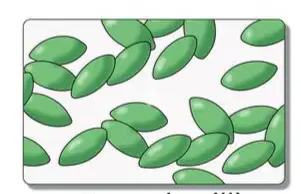
The “clothespin” shape of Yersinia that is in-between spherical and rod shaped is called what?
Coccobacillus
Spiral
Spherical
Filamentous
Why is Oscillatoria named so?
It oscillates in population size
Its filaments show oscillatory movements
Its pigment changes color
Its gene expression oscillates
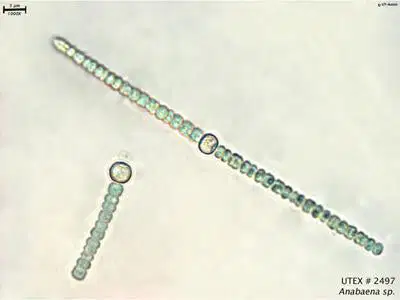
Which cyanobacteria is known to be a filamentous string of beads?
Anabaena
E. coli
Spirogyra
Rhizaria
Some brown algae look less green even though they have chlorophyll because:
They have other pigments that hide the green color.
They do not have chlorophyll.
They live where there is no light.
Their chlorophyll does not work.
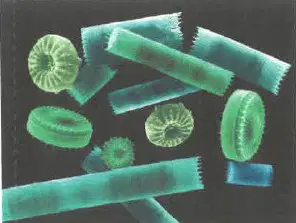
Select all statements that accurately describe diatoms.
Their cell walls decompose rapidly in marine environments.
They are photosynthetic and very abundant.
Their glass cell walls can be mined as diatomaceous earth.
They are important food sources for small heterotrophs in marine and freshwater environments.

How are the flagella arranged in dinoflagellates?
They lack flagella and move by cilia.
They have only one posterior flagellum.
They have two flagella; one free and one in a transverse groove.
They have four flagella at right angles.

Plasmodium spores multiply in red blood cells and break them open when leaving. Why is this important in malaria?
It destroys red blood cells, causing anemia and fever.
It helps the immune system remove the parasite quickly.
It stops malaria from spreading to other cells.
It makes red blood cells stronger against infection.
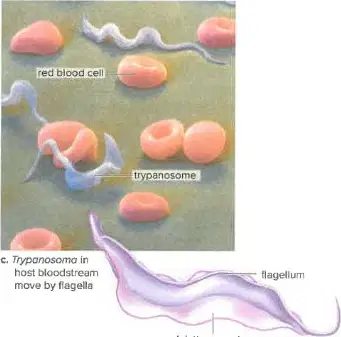
Which disease is caused by Trypanosoma?
Malaria
African sleeping sickness
Cholera
Influenza
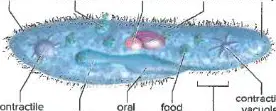
Select all structures found in Paramecium.
Pellicle
Oral groove
Undulating membrane
Trichocyst
Anal pore
Which domain includes protists, fungi, plants, and animals?
Archaea
Bacteria
Eukarya
Cyanobacteria
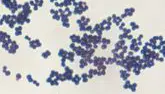
What color are Gram-positive bacteria after Gram staining?
Pink/red
Purple/violet
Green
Colorless

Which protists are called seaweed?
Brown, red, and green algae
Diatoms
Dinoflagellates
Slime molds
Select two key differences between Gram-positive and Gram-negative bacteria.
Gram-positive bacteria have a thick peptidoglycan layer and no outer membrane. Gram-negative bacteria have a thin peptidoglycan layer and an outer membrane.
Gram-positive bacteria have an outer membrane and produce endotoxins. Gram-negative bacteria do not have an outer membrane and do not produce endotoxins.
Gram-positive bacteria are always rod-shaped. Gram-negative bacteria are always spherical.
Gram-positive bacteria are resistant to antibiotics. Gram-negative bacteria are sensitive to antibiotics.
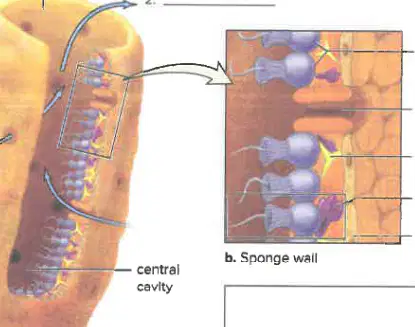
A sessile filter feeder is best described as:
An organism that remains attached to a surface and obtains food by filtering water.
An organism that moves actively to catch its prey.
An organism that produces its own food through photosynthesis.
An organism that lives inside another organism as a parasite.
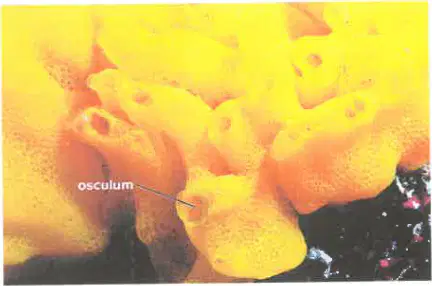
Which type of sponge has spicules of calcium carbonate?
Calcareous sponge
Bath sponge
Glass sponge
Radial symmetry can be a benefit to an animal because it allows the animal to:
Sense and respond to stimuli from all directions equally
Move quickly in one direction
Hide easily from predators
Digest food more efficiently
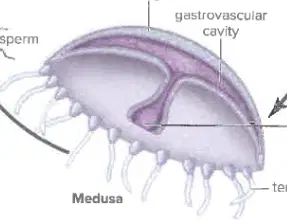
The two main body forms in the life cycle of a cnidarian are the _______ and the _______.
polyp, medusa
larva, adult
egg, sperm
planula, ephyra
It is advantageous for an animal to be hermaphroditic because:
it increases the chances of successful reproduction
it allows the animal to change its diet
it helps the animal move faster
it makes the animal immune to diseases
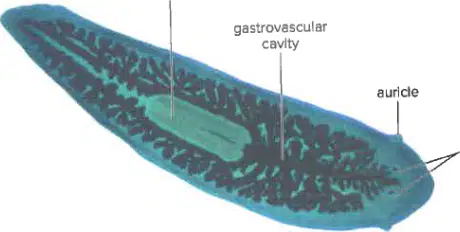
Which three types of cells must be present for flatworms to be able to respond to stimuli and move about?
Sensory cells, nerve cells, and muscle cells
Blood cells, bone cells, and skin cells
Fat cells, gland cells, and reproductive cells
Stem cells, epithelial cells, and immune cells
The function of a tapeworm’s hooks and suckers is to:
attach to the host’s intestinal wall
digest food for the host
produce eggs for reproduction
help the tapeworm move quickly
What is an incompletely lined body cavity called?
Pseudocoelom
Coelom
Acoelom
Haemocoel
What structure in a planarian digests food and ensures that nutrients get to all the cells?
Gastrovascular cavity
Pharynx
Nerve cord
Excretory pore
Animals in which the first embryonic opening becomes the mouth are called ________.
protostomes
deuterostomes
amniotes
cnidarians
Fill in the blank: In deuterostomes, the first embryonic opening becomes the ________.
anus
mouth
stomach
esophagus

Identify the mollusk labeled as a cephalopod in the diagram.
Chiton
Scallop
Snail
Nautilus
Match the following mollusk types with their characteristics:
Has a shell consisting of eight plates
Chiton
Has a body enclosed by a shell consisting of two valves
Bivalve
Contains marine, freshwater, and terrestrial species
Gastropod
Contains active marine predators with tentacles
Cephalopod
Sequence the organs in the digestive tract to trace the path of food from the mouth to the cloaca.
Mouth → esophagus → stomach → small intestine → large intestine → cloaca
Mouth → stomach → esophagus → large intestine → small intestine → cloaca
Mouth → esophagus → large intestine → stomach → small intestine → cloaca
Mouth → small intestine → esophagus → stomach → large intestine → cloaca
The term urogenital system refers to:
The combined organs of the urinary and reproductive systems
Only the organs of the digestive system
The organs responsible for respiration
Only the organs of the nervous system
Another name for the fertilized egg is
zygote
blastula
gastrula
morula
Which one is the Morula?


Which one is the Blastula?
What does the ectoderm become?
skin, nails, hair, nervous system
muscle, bones, cartilage, heart, blood
digestive tract and respiratory tracts
What does the mesoderm become?
skin, nails, hair, nervous system
muscle, bones, cartilage, heart, blood
digestive tract and respiratory tracts
What does the endoderm become?
skin, nails, hair, nervous system
muscle, bones, cartilage, heart, blood
digestive tract and respiratory tracts
Which of the following provide most of the energy in ecosystems?
keystone species
carnivores
producers
generalists
Which of the following can be both primary and secondary consumers?
detritivores
herbivores
carnivores
omnivores
Decomposers are important to ecosystems because they
can act as omnivores.
capture energy from the sun.
are producers.
return vital nutrients back to the environment.
Food webs are models that show
Only primary consumers in an ecosystem.
Networks of feeding relationships.
Stored energy in food chains.
One sequence of producers and consumers.
A food chain contains oak trees (producer), mice (herbivore), black rat snakes (carnivore), and bald eagles (carnivore). How many trophic levels does this food chain have?
four
three
two
one
An ecosystem consists of
the soil, water and weather.
a community of organisms.
energy.
all of the above.
All the populations of different species that live in a given area are collected a...
organism
community
biosphere
molecule
Sequence the organs of the digestive tract from the mouth to the anus.
Mouth, esophagus, stomach, small intestine, large intestine, anus.
Mouth, stomach, esophagus, large intestine, small intestine, anus.
Mouth, esophagus, large intestine, stomach, small intestine, anus.
Mouth, small intestine, esophagus, stomach, large intestine, anus.
Explain why stomach contents are acidic and how a warm body temperature aids digestion.
Stomach contents are acidic due to hydrochloric acid, which activates pepsin and helps break down food. Warm body temperature increases enzyme activity, aiding digestion.
Stomach contents are acidic because of bile, and warm body temperature slows down enzyme activity.
Stomach contents are acidic due to amylase, and warm body temperature has no effect on digestion.
Stomach contents are acidic because of mucus, and warm body temperature denatures all digestive enzymes.
Explain why a change in pH indicates that fat digestion has occurred.
Fat digestion produces fatty acids, which lower the pH, indicating that digestion has occurred.
Fat digestion produces glucose, which raises the pH, indicating that digestion has occurred.
Fat digestion produces amino acids, which do not affect pH, indicating that digestion has occurred.
Fat digestion produces water, which increases the pH, indicating that digestion has occurred.
To lose weight, some people with obesity undergo an operation in which (1) the stomach is reduced to the size of a golf ball, and (2) food bypasses the duodenum (first 2 feet) of the intestine. What is the outcome of this operation?
Food spends less time in the digestive tract.
The operation takes less time to perform.
Patients recover more quickly after surgery.
Meals take less time to prepare.
What organ produces the lipase and amylase that perform digestion in the small intestine?
The pancreas.
The liver.
The stomach.
The gallbladder.
Describe the environment in which pepsin functions.
Pepsin functions in an acidic environment (low pH, such as in the stomach).
Pepsin functions in a neutral environment (pH around 7, such as in the small intestine).
Pepsin functions in an alkaline environment (high pH, such as in the pancreas).
Pepsin functions in a dry environment (such as outside the digestive tract).
What organ stores bile?
The gallbladder.
The liver.
The pancreas.
The stomach.
What component of foods is digested by pancreatic amylase?
Starch (carbohydrates).
Proteins.
Fats (lipids).
Vitamins.
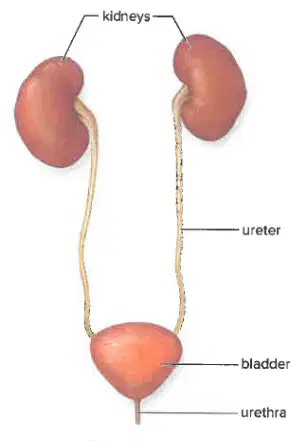
What is the function of the bladder?
The bladder stores urine before it is released to the exterior of the body.
The bladder produces digestive enzymes.
The bladder absorbs nutrients from food.
The bladder pumps blood throughout the body.
State a function of the kidneys in the urinary system.
The kidneys produce urine and regulate the volume and composition of blood, maintaining water and salt balance and acid-base balance.
The kidneys secrete digestive enzymes to break down food.
The kidneys are responsible for pumping blood throughout the body.
The kidneys help in the absorption of nutrients from the small intestine.
The urinary system and reproductive system are often considered together as the urogenital system in mammals.
True
False

Match the following anatomical terms with their correct description as shown in Figure 29.2 Anatomy of the kidney:
Renal cortex
The outermost portion of the kidney
Renal medulla
The inner region containing renal pyramids
Renal pelvis
The cavity-like reservoir at the center of the kidney
Ureter
The tube that carries urine from the kidney to the bladder
Nephrons
Microscopic tubules that produce urine
The function of nephrons in the kidney is:
to filter blood and form urine
to produce insulin
to transport oxygen
to digest proteins
Match the male reproductive organs with their functions:
Produces sperm and sex hormones
Testis
Stores sperm as they mature
Epididymis
Conducts and stores sperm
Vas deferens
Contributes secretions to semen
Seminal vesicle
Contributes secretions to semen
Prostate gland
What are the female gonads in the mammalian reproductive system?
Ovaries
Testes
Uterus
Fallopian tubes
Describe the anatomy and physiology of a spinal reflex arc.
A spinal reflex arc involves sensory neurons, interneurons in the spinal cord, and motor neurons, allowing quick responses without brain involvement.
A spinal reflex arc only involves the brain and motor neurons, bypassing the spinal cord entirely.
A spinal reflex arc consists solely of sensory neurons and does not include motor or interneurons.
A spinal reflex arc is responsible for voluntary movements controlled by the cerebral cortex.
Compare the eyes of various invertebrates, particularly those of an arthropod and a squid.
Arthropod eyes are compound, made of many lenses; squid eyes are camera-like, similar to vertebrate eyes.
Both arthropod and squid eyes are compound, made of many lenses.
Arthropod eyes are camera-like, similar to vertebrate eyes; squid eyes are compound.
Both arthropod and squid eyes lack lenses and are simple light-sensitive spots.
Relate the ability to distinguish foods to the senses of smell and taste.
Smell and taste work together to identify and distinguish flavors in food.
Only the sense of sight is used to distinguish flavors in food.
The ability to distinguish foods depends solely on texture.
Taste alone is responsible for identifying all flavors in food.
Which part of the brain is responsible for higher mental capabilities and is divided into right and left cerebral hemispheres?
Cerebrum
Cerebellum
Medulla oblongata
Thalamus
Trace the path of light from outside the eye to the retina.
Cornea → Aqueous humor → Pupil → Lens → Vitreous humor → Retina
Cornea → Lens → Aqueous humor → Pupil → Vitreous humor → Retina
Cornea → Pupil → Lens → Aqueous humor → Vitreous humor → Retina
Cornea → Vitreous humor → Lens → Pupil → Aqueous humor → Retina
Which cerebral lobe processes nerve impulses from an eye?
Occipital lobe
Frontal lobe
Temporal lobe
Parietal lobe
Match the following parts of the human eye with their functions:
Protects and supports eyeball
Sclera
Refracts light rays
Cornea
Absorbs stray light rays
Choroid
Contains receptors for sight
Retina
Make black-and-white vision possible
Rod cells

The function of the tympanum in the grasshopper is:
to detect sound vibrations
to help in digestion
to aid in flying
to assist in reproduction
Match the parts of the human ear with their correct function:
Collects sound waves
Pinna
Filters air
Auditory canal
Amplifies sound waves
Tympanic membrane and ossicles
Equalizes air pressure
Auditory tube
Rotational equilibrium
Semicircular canals
Which specialized substance produces blood cells and is present in spongy bone?
Bone marrow
Cartilage
Ligament
Tendon
Identify the series of concentric rings in compact bone.
Lamellae
Canaliculi
Osteons
Lacunae
Which bone is the only bone of the skull not immovably fused to another?
Mandible
Maxilla
Frontal bone
Parietal bone
What are ribs that do not have sternal attachment called?
Floating ribs
True ribs
False ribs
Costal ribs
Only the phalanges in the hindlimb of a frog, bird, and cat ever touch the ground, whereas the entire foot of a human touches the ground. This difference exists because:
Humans have a plantigrade posture, while frogs, birds, and cats have digitigrade posture.
Humans have more phalanges than other animals.
Frogs, birds, and cats walk on their heels, while humans walk on their toes.
The bones in the human foot are shorter than those in frogs, birds, and cats.
Match the following terms to their definitions:
Movement of joint parts toward each other
Flexion
Movement of joint parts away from each other
Extension
Movement of a part toward the midline of the body
Adduction
Movement of a part away from the midline of the body
Abduction

