
 Worksheets
TYPES OF WCMS
Total questions: 61
Worksheet time: 31mins
Which factor typically makes open source CMS platforms less costly over time?
Higher costs for advanced custom modules
Mandatory yearly enterprise license fees
Bundled premium vendor support plans
Usually free licensing and maintenance
A company needs advanced customisation and is willing to pay for vendor services. Which CMS type most likely fits this scenario?
Free blogging platform with ads
Open source CMS with community help
Proprietary CMS with paid customisation
Static site with no CMS features
Which statement best contrasts support in open source versus proprietary CMS?
Both rely only on peer forums for help
Both require hiring the original creator
Open source relies on community, proprietary relies on vendor
Open source has fixed SLAs, proprietary has none
Select all features that commonly favour open source CMS choices.
Easier to port between hosts
Lower ongoing maintenance costs
Advanced customisation always included by default
Large developer community
Which security view aligns with typical CMS trade-offs?
Both types never require patch management
Proprietary may be secure but still needs updates
Open source is always insecure by design
Security never depends on plugins or core updates
A team plans to migrate content frequently between platforms. Which risk is most associated with proprietary CMS?
Open licensing that ensures migration
Built-in automated multi-host mirroring
Complex export and developer dependence
Unlimited data portability guarantees
Which are noted disadvantages of open source CMS?
Not all platforms are equal
Custom builds may be costlier
More spam targeting
Guaranteed to handle every requirement
Which advantage is more commonly attributed to proprietary CMS offerings?
Unlimited customisation at no cost
Better support from dedicated developers
Complete lack of vendor involvement
Community-only updates with no roadmap
Which statement best defines a web server in the context of WCMS architecture?
A device that only caches files on a LAN
A program that stores cookies inside a browser
A database that manages user accounts only
A system that hosts a website on the internet
Which components are typically part of a web server stack?
Server operating system
Physical server hardware
Software to facilitate HTTP communication
Client-side spreadsheet software
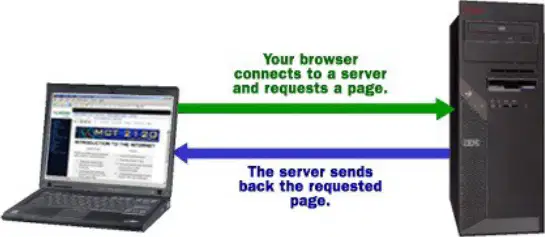
In the client-server model for web browsing, what is the correct order of the HTTP request-response cycle?
Browser requests a page, server sends back the page
Browser sends a page, server requests another page
Server requests a page, browser sends back a page
Server caches a page, browser stores server settings
What is the primary function of a web server regarding website content delivery?
Encrypt every client device without certificates
Create graphics for website user interfaces locally
Replace client browsers in peer-to-peer networks
Deliver website content to end users over the internet
Which scenario best illustrates the advantage of community when using a theme framework?
Unlimited hosting resources included
Automatic SEO ranking without effort
Cheaper because no fees are charged
Faster help due to many active users
A developer chooses a theme framework to reduce setup time by using pre-made widgets and modules. Which benefit is being leveraged?
Price for updates and support
Framework limitations requiring patches
Learning curve with framework lingo
Built-in functionality for quicker setup
Which of the following are common disadvantages of theme frameworks? Select all that apply.
Unnecessary code from unused features
Recurring costs for updates and support
Steep learning curve for framework terms
Higher code quality following best practices
Why might a team still prefer a framework despite some limitations?
Better code quality by enforcing practices
Complete freedom without constraints
Eliminates all development challenges
No need to ever update anything
Which scenario best illustrates Business-to-Business (B2B) e-commerce?
Two neighbors trading used books on an auction site
A commuter paying for music streaming on phone
A retailer buying supplies from a wholesaler online
A shopper ordering groceries from a mobile app
What primarily distinguishes Business-to-Consumer (B2C) e-commerce from Consumer-to-Consumer (C2C) e-commerce?
Companies sell goods directly to consumers
Consumers resell goods to manufacturers
Businesses exchange inputs with each other
Wireless devices are required for access
Which option correctly matches the model to the description?
C2C: consumers sell directly to each other
M-commerce: e-commerce via wireless technology
B2B: companies deliver services to consumers
B2C: auction sites linking individual users
An online marketplace where individual users list items and bid against each other is classified as:
Consumer-to-Consumer (C2C) model
Business-to-Business (B2B) model
Business-to-Consumer (B2C) model
Mobile-commerce (M-commerce)
M-commerce is best defined as:
Retail activity where users sell to users
Retail activity where firms trade with firms
Retail activity requiring desktop-only access
Retail activity accessed using wireless technology
Which statement about the freemium revenue model is most accurate?
Premium access is free but ads fund everything
Basic services are free while advanced features cost
Only business customers pay for basic content
All services are free with no paid upgrades
In the freemium model, what is a key business challenge?
Uncertainty of converting free users into paying
Difficulty delivering digital content to consumers
Lack of wireless networks for mobile commerce
Complexity of B2B inputs across suppliers
Select all examples that demonstrate a freemium approach.
Flickr selling a premium plan without ads
A wholesaler portal for retailer bulk purchases
Skype charging for certain premium services
Spotify offering free tier with ads and paid unlimited
Which pairing of platform and freemium feature is correct?
Flickr: premium plan includes high-definition video
Spotify: limited play time on free tier
Auction site: premium features for manufacturers
Skype: entirely free with no paid features
A startup launches a free basic app to attract many users, then offers a subscription for advanced tools. Which revenue model fits this plan?
M-commerce only model
Freemium revenue model
B2C e-commerce model
C2C peer-to-peer model
Which statement best describes e-cash in digital payments?
It derives from cryptocurrency concepts
It only works with magnetic stripe cards
It is printed paper issued by banks
It requires physical coins for validation
A smart card (chip card) is primarily a ______.
stored value card with a microprocessor chip
wireless router for home internet
magnetic stripe loyalty punch card
plastic ID without embedded electronics
How can smart cards typically be read during transactions?
Through chip slots or short-range NFC
By scanning long-range satellite links
Using handwritten signatures only
Via audio tones over telephone lines
Which options are advantages claimed for smart card transactions?
Data must always travel unencrypted
Payments require cryptocurrency mining
No extra data beyond what is needed
Encrypted transactions resist hacking
Which are common examples of smart cards used for payments?
Paper vouchers and coupons
Debit card magnetic stripe only
Bitcoin, Litecoin, Dogecoin
NETS Cashcard, Motoring Card, FlashPay
Which statement best defines a privacy policy in an organization?
A budget report for information technology resources
A statement describing how client data is gathered and used
A plan for software updates and hardware upgrades
A checklist for daily network maintenance tasks
What are core purposes of a security policy for an organization? Select all that apply.
Describe how to gather and disclose client personal data
Handle situations when security incidents occur
Protect the organization from computer security threats
Publish customer reviews about company services
Why should an organization identify all assets and potential threats to those assets?
To reduce software license fees each quarter
To prepare targeted protection and incident responses
To outsource all IT operations to vendors
To increase social media engagement metrics
Which step best describes the first security layer in a typical 2FA login process?
Typing a backup recovery code
Approving a push notification only
Scanning a fingerprint on the phone
Entering a username and a password
What is the role of the second security layer in 2FA after the password is accepted?
Verify your identity with another factor
Log you out after inactivity
Encrypt all files on the device
Store your credentials in the browser
A one-time password (OTP) used in 2FA is best characterized by which statement?
Shared across all accounts
Typed only during registration
Valid for a single use only
Reusable for a full day
Which options are valid benefits of using 2FA in organizations?
Improved security by requiring a second factor
Increased productivity through secure remote access
Higher helpdesk costs due to more password resets
Reduced fraud by preventing identity theft
Why does two-factor authentication decrease the chance of unauthorized access?
Emails are blocked from external senders
All devices are automatically whitelisted
Passwords become infinitely long by default
Attackers need both factors to impersonate a user
Which statement about OTP delivery in 2FA aligns with common practice?
Codes are guessed from previous logins
Codes are stored permanently in the browser
Codes are printed on the user’s ID badge
Codes are sent to a registered device or email
Select all outcomes that 2FA helps achieve for a business over time.
Elimination of all cyber risks entirely
Lower helpdesk and security management costs
More flexible access to corporate resources
Guaranteed prevention of phishing forever
Which example best fits owned media for a brand?
Influencer shoutout post
Third‑party news article
Customer word of mouth
Company website and blog
Which benefit is most associated with owned media?
Guaranteed rapid growth
Highest credibility always
Immediate reach at scale
Longer lifespan and control
Which challenge commonly affects paid media campaigns?
Hard to measure outcomes
Takes years to scale up
No control over messaging
Audience clutter and fatigue
Select all that describe earned media.
Customers become the channel
Often most credible to audiences
Brand pays to place messages
Can be negative for the brand
How do the roles differ across media types?
Owned builds relationships; paid amplifies; earned results
Owned buys reach; paid nurtures; earned purchases
Owned relies on virality; paid builds trust; earned controls
Owned guarantees scale; paid guarantees loyalty; earned directs
Which scenario best represents a Business-to-Business (B2B) transaction?
A factory buying steel from a mining company
A student ordering a burger from a food truck
A family purchasing groceries at a supermarket
Two neighbors trading used phones on Marketplace
Select all scenarios that are Business-to-Consumer (B2C).
An agency selling ads to a car manufacturer
A supermarket selling milk to households
Buying sneakers from an online store
Reselling a used laptop on eBay
Consumer-to-Consumer (C2C) commerce is BEST characterized by which features?
Wholesalers distribute products to national chains
Retailers sell inventory to the general public daily
Corporations sign long-term supply contracts with vendors
Private individuals trade goods directly or via mediators
Which pair correctly matches transaction type to a fitting example?
B2B — a software firm hiring a marketing agency
C2C — a restaurant serving lunch to commuters
B2C — two startups exchanging industrial equipment
B2B — a teen selling sneakers on Facebook
Which statement best describes Search Engine Optimization (SEO)?
Optimizing a website to match relevant search keywords
Buying banner ads to boost short-term campaign reach
Posting daily updates on every social platform
Sending promotional emails to existing subscribers
When should the process of optimizing a website for search engines ideally begin?
Just before launching paid ads
Only once traffic drops significantly
After the first advertising campaign
Early during website construction
Which action directly supports SEO for a business website?
Sharing posts to increase social mentions
Including business-relevant keywords in on-site content
Sending transactional emails after purchases
Streaming ads on multiple video platforms
Which benefits are commonly associated with video marketing?
Guaranteed placement at the top of search results
Ability to run across many online platforms
Higher engagement with appealing video ads
More shares than regular text and image ads
Which platform is listed as popular for video advertising?
Slack
YouTube
A brand wants more organic shares on social networks. Which approach aligns with this goal?
Buy more print ads for local newspapers
Add more keywords without improving content
Send only direct promotional emails weekly
Create engaging video ads for social platforms
Which statement about email marketing is accurate?
It replaces the need for websites entirely
It risks messages landing in spam folders
It is among the most cost-effective promotion methods
It markets brands and businesses through emails
Which are common types of email marketing mentioned?
Sponsored billboards
Cold calls
Transactional emails
Direct emails
What is a primary use of email marketing for a company?
Replace all social media advertising
Guarantee first position in search rankings
Increase billboard impressions across highways
Highlight product offers and send newsletters
Which action best describes how direct emails obtain recipients for promotional messages?
Rely on search engines to forward customer contacts
Send messages only to existing social media followers
Wait for random inbox discoveries by potential buyers
Collect, rent, or buy prospect email address lists
Which items are typical contents of a direct promotional email?
A unique promotional code for checkout
A product catalogue or featured items
A time-limited discount or special offer
A lengthy company annual report

