
 Worksheets
Outcome 2 Components used in electrical installations
Total questions: 39
Worksheet time: 20mins
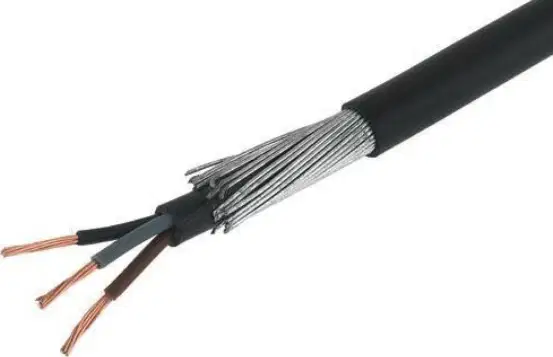
Armoured cable is used on the incoming mains or to supply an outhouse with power. What is the primary function of the metal armour on this cable?
Provide additional mechanical protection where the cable may be vulnerable
Improve electrical conductivity of the live core
Reduce electromagnetic interference for data transmission
Act as the primary earth conductor for all circuits
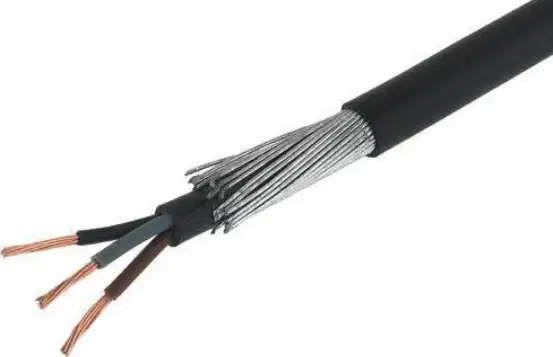
According to the description of armoured cable, which scenario best describes its typical use?
Feeding portable appliances indoors via flexible cords
Connecting incoming mains or supplying an outbuilding with power
Low-voltage lighting within a bathroom
Signal cabling for thermostats
Twin and earth (CPC) table: Which cross section size is associated with domestic lighting according to the table?
1.0 mm
2.5 mm
4.0 mm
6.0 mm
Twin and earth (CPC) table: What capacity (amps) is listed for a 2.5 mm cable?
14 A
18 A
25 A
32 A
Twin and earth (CPC) table: For sockets, which cross section size is shown?
1.5 mm
2.5 mm
6.0 mm
10 mm
Twin and earth (CPC) table: What fuse rating range accompanies sockets in the table?
6–10 A
16–20 A
30–32 A
45 A
Twin and earth (CPC) table: Which domestic usage is paired with a capacity of 32 A?
Lighting
Sockets
Shower
Cooker
If an incorrect, undersized cable is used for a circuit or an appliance, which outcomes are stated as possible? Select all that apply.
Cable can go brown
Cable can go brittle and damage the insulation
Cable can overheat and burn
A fire can start
Overall efficiency improves
When an incorrect, undersized cable is used, what is generally the first item that gets damaged?
The insulation
The copper conductors
The plug top
The consumer unit enclosure
Heat resistant flex is used on heat producing appliances. Which appliances are given as examples?
Kettles
Irons
Immersion heaters
Refrigerators
Fans
For an immersion heater usually rated at 2.5–3.0 kW, which cable type and size is specified?
1.0 mm standard PVC flex
1.5 mm butyl heat resistant flex
2.5 mm twin and earth
4.0 mm armoured cable
What maximum temperature can the specified heat resistant flex be heated to without being damaged or going brittle?
65ºC
75ºC
85ºC
95ºC
An immersion heater is classified as a continuous load. According to the guidance, how should it be connected regarding the ring circuit?
It should be connected directly to the ring circuit
It should not be connected to the ring circuit
It must share a spur with sockets on the ring
It should be connected via a plug and socket on the ring
For a typical 3 kW immersion heater installation, what rating is specified for the isolator switch and where should it be positioned?
10 amp isolator within 3 m of the heater
20 amp double pole isolator fixed within 1.5 m of the heater
32 amp single pole isolator adjacent to the consumer unit
45 amp isolator located outside the room
What MCB rating at the consumer unit is stated for the immersion heater setup described?
10 A
13 A
16 A
20 A
Which cable type and size is specified for connecting the immersion heater in the described setup?
1.0 mm PVC flex
1.5 mm butyl heat resistant cable
2.5 mm twin and earth
4.0 mm armoured cable
What additional requirement is noted on the immersion heater device in the image?
Fit a neon indicator on the heater body
Provide a resettable thermal cut-out on the immersion
Install a plug top with a 13 A fuse
Attach a flexible outlet plate
Select all main purposes of trunking stated in the worksheet.
Protect flexes from damage
Protect the customer from the flexes
Support the flexes
Increase voltage in the flexes
Select all main purposes of conduit stated in the worksheet.
Protect the flex from damage
Protect the customer from flexes
Support the flex
Increase current in the flex
How can conduit be installed according to the worksheet?
Only surface mounted
Only chased into a wall
Either surface mounted or chased into a wall
Only buried underground
Which quantity is described as the electromotive force that causes electrons to flow and is measured in V ?
Voltage
Current
Resistance
Power
The ampere is the unit of which quantity, denoted by I ?
Current
Resistance
Power
Energy
Which unit opposes the flow of current and is denoted by R ?
Ohm, the unit of resistance
Volt, the unit of voltage
Watt, the unit of power
Joule, the unit of energy
In the worksheet, what does W denote?
Power for an appliance
Electrical energy
Voltage
Current
In the worksheet, what does J denote?
Electrical energy
Power
Current
Resistance
In the triangle showing the relationship between watts, amps, and volts, which symbol is at the top segment?
W
A
V
R
If an appliance needs 3kW in a domestic property, what is the fuse size?
10 amp
12.5 amp
13 amp
15 amp
In a domestic property, an appliance has a fuse size of 3amp. What is the maximum power rating of the appliance?
480 W
720 W
960 W
1.2 kW
An appliance has a 5amp fuse and needs 1.2kW of power. What is the voltage required?
120 V
200 V
240 V
300 V
Try and work out the following: What would be the resistance of a domestic appliance if the fuse size was 3 amp?
40 ohms
80 ohms
120 ohms
800 ohms
Try and work out the following: What is the fuse size for a domestic appliance which has 1,200 ohms resistance?
0.2 amp
0.5 amp
2 amp
6 amp
Try and work out the following: If an appliance has a fuse rated at 13 amp, and the resistance is 32 ohms, what would the voltage be?
230 v
240 v
415 v
520 v
Domestic 3 pin plug: Which feature of modern appliances’ plugs improves safety and provides access to the fuse?
A moulded plug
A re‑wireable plug
An external adapter
A surge protector
Domestic 3 pin plug: Which type of plug is available with cartridge fuses?
Re‑wireable plug
Moulded plug
Two‑pin plug
USB plug
Domestic 3 pin plug: What is the maximum fuse size specified?
3 A
5 A
10 A
13 A
Domestic 3 pin plug: When the cable enters the plug, what must be ensured regarding the insulation?
It is fully inside the plug clamp
It is partly removed to expose conductors
It is taped outside the clamp
It is routed through the earth terminal first
Domestic 3 pin plug: If the cable looks brown or burnt at the point of entry to the plug, what may this indicate?
A loose wire inside the plug
Excessive cable length
A missing cable clamp
Incorrect plug type
Domestic 3 pin plug: What fault can a loose wire in a plug cause for an appliance?
Intermittent operation
Permanent shutdown
Over‑voltage protection
Continuous overheating
Domestic 3 pin plug: What is the recommended action for screw‑down terminals?
Always tighten them sufficiently
Leave them slightly loose to avoid damage
Cover them with insulation tape
Do not use them when clamping the cable

