
Font size
 Worksheets
Term 2 Benchmark Review
Total questions: 50
Worksheet time: 27mins
What is a unique characteristic of a mixture?
Sifting can always remove particles found within mixtures regardless of whether they are nonsolutions or solutions.
Both types of mixtures (solutions and non-solutions) react chemically, which creates a new substance that cannot be returned to its original form.
Mixtures that are solutions may have new physical properties but do not react chemically to form a new substance
Particles in mixtures (non-solution) cannot be separated by physical means, such as filtration or evaporation.
A group of students are given the task of changing the 10% salt (solute) concentration in a 2,000 ml beaker that contains 500 ml of water (solvent). The task requires the 10% salt concentration to increase to 20%. Which of the following strategies should the students use to accomplish the task?
Boil out the 500 ml of solvent, add 100 grams of salt, stir salt, and then determine the salt concentration.
Increase the solvent by 200 ml, leave the solute unchanged, stir solution, and then determine the salt concentration.
Place an additional 50 grams of solute in the beaker, leave the solvent unchanged, stir solution, and then determine the salt concentration.
Add 25 grams of solute, add 1,500 ml of solvent, stir solution, and then determine the salt concentration.
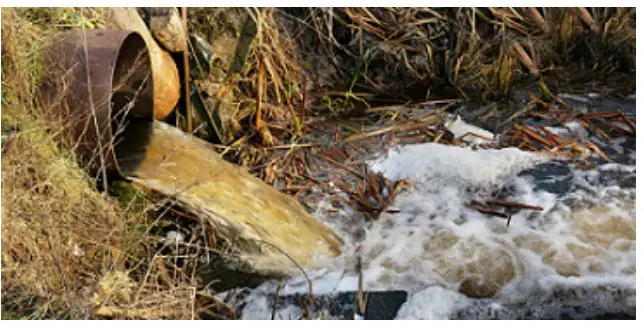
The pipeline runs from a factory that uses chemicals and pollutants to a freshwater stream. Which of the following statements would BEST help prevent future damage to this ecosystem?
Constantly replace the contaminated freshwater stream with clean water.
Add large fish and wildlife capable of surviving in the polluted environment.
Treat the water at the plant to remove chemicals before disposal.
Release fewer chemicals and pollutants during the day when most organisms use the water.
During science class, students combined 1 kg of iron filings with 1 kg of sand to create a mixture. Which of the following methods would be best for separating the iron filings from the sand?
Stir the mixture into hot water to dissolve the sand.
Shake the mixture to cause the iron filings to settle to the bottom.
Drag a magnet through the mixture to attract the iron filings.
Strain the mixture through a paper filter to collect the sand.
Jeanette is studying a substance. Which property of the substance is a chemical property?
temperature
melting point
flammability
density
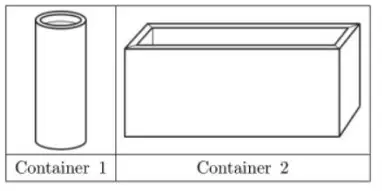
A student uses the two containers shown below to investigate the properties of a liquid. The student fills container 1 with a liquid and then pours all the liquid from container 1 into container 2. Based on the student’s investigation, which of the following statements best describes a property of a liquid?
It expands to completely fill its container.
It takes the shape of its container.
It has different weights in different containers.
It stays the same shape in different containers.
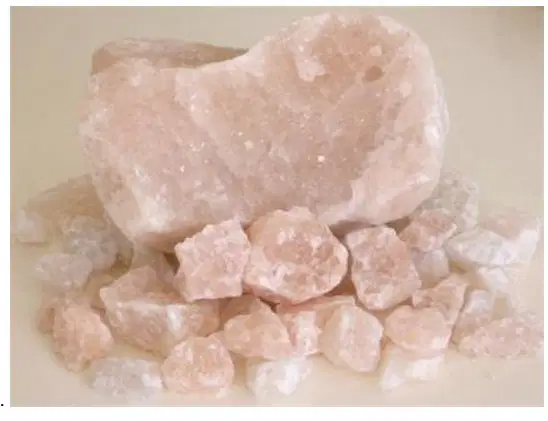
Mrs. Allen's 5th grade class is watching an experiment on-line. The scientist is attempting to reduce the amount of time rock salt will dissolve in a 200ml beaker of water. Which of the following will NOT reduce the amount of time the salt will take to fully dissolve?
heating the solution
grinding the salt into a powder
stirring the solution
freezing the water
A group of students combine 100 ml of water with 50 ml of vinegar. The students now have a ____________________.
150 ml compound
150 ml solution
50 ml solvent
50 ml element
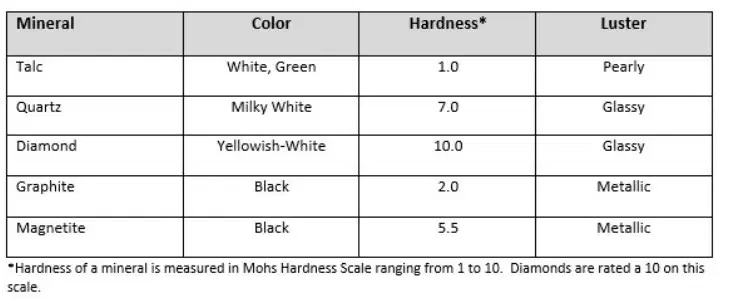
A student has an unknown mineral. Using the data within the above table, which of the following is a true statement?
The mineral must be graphite if it is black in color, and it can be scratched by talc.
The mineral must be quartz if it has a glassy luster, and it can only be scratched by a diamond.
The mineral must be magnetite if it has a metallic luster, and it can be scratched by both graphite and quartz.
The mineral must be a diamond if it has a glassy luster, and it can only be scratched by quartz.
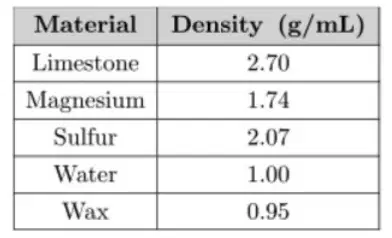
The table below lists the densities of several materials. Which material will float in water?
wax
limestone
magnesium
sulfur
A student took three ice cubes from the freezer and put them in a glass of freshly squeezed orange juice. After 10 minutes, the student tried to take the ice cubes out of the juice. There was no ice left. What type of change took place?
chemical, because the ice cubes' energy became heat
physical, because the ice cubes evaporated
physical, because the ice cubes changed state
chemical, because the ice cubes became a new substance
In terms of how long it will take for sugar to dissolve in a beaker of water, which of the following is not a true statement?
[Dissolution: the process of dissolving or breaking apart]
As the water molecules lose energy, the rate of dissolution will decrease
The sugar will dissolve quicker when the water molecules have more energy added.
The rate of dissolution will increase when the amount of energy among the water molecules is increased.
The colder the water’s temperature, the faster the sugar will dissolve.

A piece of bread is stuck in the toaster pictured below. Which of the following explains why it is unsafe to use a metal fork to remove the piece of bread from the toaster?
The fork will catch on fire.
The fork will melt in the toaster.
The fork will conduct electricity.
The fork will damage the toaster.
Two 250g sticks of butter are melted in a 500ml beaker. The beaker’s initial mass is 250g (before the butter is added). What is the total mass of only the melted butter?
500g
750g
1,000g
250g
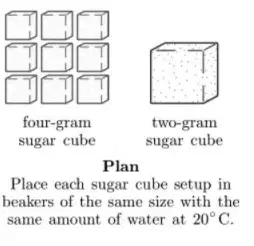
A student wants to investigate how surface area affects the time it takes sugar to dissolve. Which setup allows for a fair test of this variable?
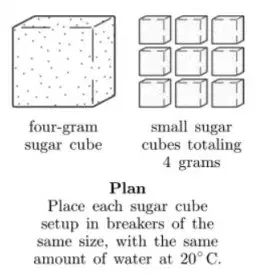
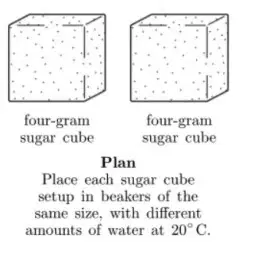
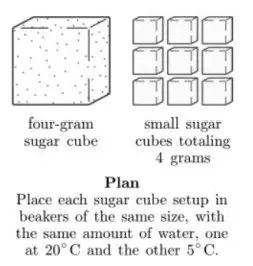
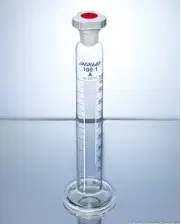
A student combines cooking oil, water, and a rock in a 100 ml graduated cylinder. Because of the density of the three ingredients, what should the student observe?
The oil is floating on top of the rock, and the water is at the top of the cylinder.
The water is floating on top of the oil, and the rock is at the top of the cylinder.
The oil is floating on top of the water, and the rock is at the bottom of the cylinder.
The water is floating on top of the oil, and the rock is at the bottom of the cylinder.
Which of the following statements describes one way that solids are different from liquids?
Solids have weight and liquids do not.
Solids take up space and liquids do not.
Solids have a definite shape and liquids do not.
Solids have a definite volume and liquids do not.
A group of students collected a bucket of water from a neighboring pond to analyze. The students noticed the bucket had dirt, sand, and wood particles at the bottom. What type of system would allow the students to analyze the liquid water by separating it from the particles in the bucket?
magnetic attraction
floatation
filtration
evaporation
Most electric power is generated by burning fossil fuels. One family in Mississippi uses electric appliances for cooking and air conditioning, and they use oil for fuel for heating. What change could this family make to conserve fossil fuels?
lower the temperature setting on the air conditioner
convert to natural gas as a fuel for cooking
install solar roof panels to generate additional electricity
switch to the use of less expensive coal for heat
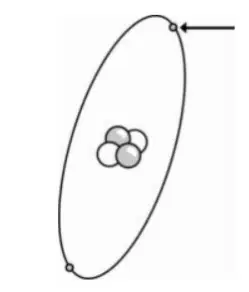
Use the picture of an atom below to answer the question. Which statement best describes the part of the atom that is shown by the arrow?
It is an electron, and it has a negative charge.
It is a proton, and it has a negative charge.
It is a proton, and it has a positive charge.
It is an electron, and it has a positive charge.
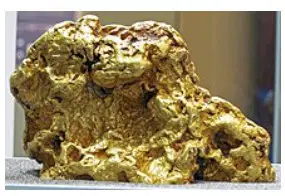
The element of gold (AU) is found within the Periodic Table of Elements. It has an atomic number of 79, is a solid, has a density of 19.3 g/cm , and appears metallic yellow in color. Which property supports the observation that gold will sink in water?
Its metallic yellow appearance.
Its density being greater than 1.0 g/cm
Its membership in Periodic Table of Elements.
Its atomic number being 79.
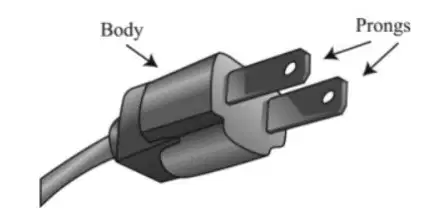
The picture below shows an electrical plug with a plastic body and metal prongs. Which of the following best explains why the body of the plug is made out of plastic?
Plastic is a conductor.
Plastic is slow to melt.
Plastic is easy to break.
Plastic is an insulator.
If enough heat is taken away from a container of water, what will happen to the water?
It will become a solid.
It will turn into a gas.
It will increase in weight.
It will begin to boil.
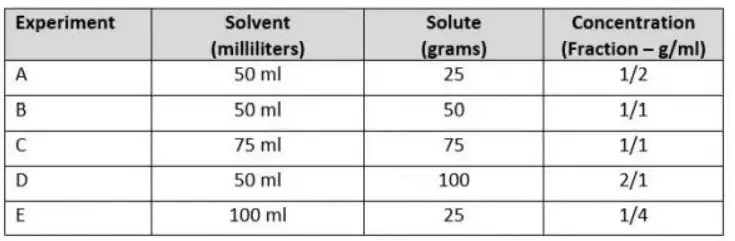
Which experiment had the most concentrated solution?
Experiment A
Experiment C
Experiment D
Experiment E
Experiment B
Mrs. Allen’s science class filled a test tube with 25 milliliters (ml) of heavy cream. They placed the test tube into a special machine that shook the tubes until the cream separated. Then, the students poured the contents of the test tube into an empty 200 ml beaker and weighed the beaker. Which of the following best describes the results of weighing the beaker with the contents from the test tubes?
The beaker contains 25 ml of heavy cream because the beaker weighs 200 ml and matter was gained because the cream was separated.
The beaker contains 175 ml of heavy cream because 25 ml of matter was lost as a result of the cream being separated.
The beaker contains 225 ml of heavy cream because the beaker weighs 200 ml.
The beaker contains 25 ml of heavy cream because no matter was either lost or gained.
Which of the following would be the best example of a solution?
A pet shop adding rocks and grass to the bottom of a fish tank.
A person mixing blue and yellow paint to make green paint.
A boy tossing a salad’s ingredients before adding the dressing.
A hiker creating a trail mix made of nuts, dried berries, and M&Ms.
Which of these is an example of a physical change of matter?
paper burning
iron rusting
ice melting
egg frying
Which of these mixtures is also a solution?
sand
salt water
fresh orange juice
oil and vinegar salad dressing
When an ice cube melts, it forms liquid water. Which statement correctly describes this process?
The process is a physical change that can be reversed because the water can be changed back to ice and no new substance is formed.
The process is a physical change that cannot be reversed because the water has a different shape than the ice cube that melted.
The process is a chemical change that can be reversed because water is a new substance that can be changed back to ice.
The process is a chemical change that cannot be reversed because water is a different substance than ice.
A student is making a solution by adding salt to water. What are two things the student can do to cause the salt to dissolve faster?
freezing the water after adding the salt
stirring the mixture after adding the salt
heating the mixture before adding the salt
adding ice to the water before adding the salt
shining a light on the container of water and salt
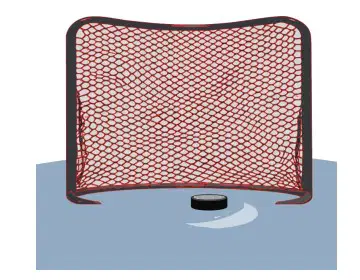
Ice hockey is a game played on ice. A player hits the puck, a hard rubber disk, and the puck slides across the ice toward the goal. The game is best when the puck moves quickly. During a game, a machine prepares the surface of the ice several times to make the puck slide better. How does the machine prepare the ice?
The machine makes the ice rougher so that the puck will slide across it faster.
The machine coats the ice with a thin layer of sand to make the puck move better.
he machine makes the ice thicker to reduce friction between the ice and the puck.
The machine makes the ice smoother so there is less friction between the ice and the puck.
A metal coin is matter in its solid state. Which of these observations is evidence that the coin is a solid?
The coin does not float in water.
The coin feels hard when you hold it in your hand.
The coin has a definite shape and volume.
The coin has mass.
Which of these are non-contact forces? Choose two answers.
Gravity pulls an object downward
A person pulls a child in a wagon
A magnet attracts a steel nail
A bowling ball knocks pins down
A soccer player kicks a ball into a goal
What subatomic parts of an atom contain most of its mass, and what parts make up most of its volume?
Protons make up most of the mass of the atom and electrons make up most of its volume.
Electrons make up most of the mass of the atom and neutrons make up most of its volume.
Protons and electrons make up most of the mass of the atom and neutrons make up most of its volume.
Protons and neutrons make up most of the mass of the atom and electrons make up most of its volume.
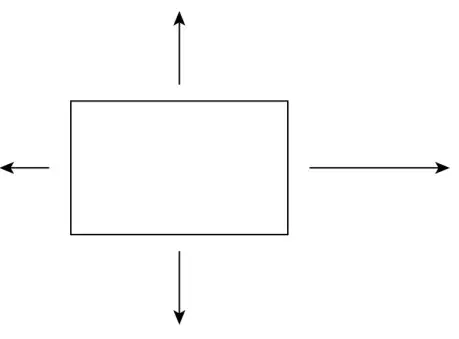
This diagram shows four forces acting on an object. Which two statements are correct based on the diagram?
If the object is not moving, it will not start to move.
If the object is not moving, it will start moving to the right.
If the object is already moving to the left, it will move faster.
If the object is already moving to the right, it will slow down.
If the object is already moving to the right, it will move faster.
Communities can work together to develop ways to conserve natural resources. Which two statements describe a way that humans can protect natural resources?
Add more lanes to a major highway to make travel faster.
Develop public transportation systems to reduce fuel use.
Approve a bottling plant so that fresh water can be shipped easily.
Build landfills for waste disposal to reduce the amount of trash along roads
Establish a community composting program to recycle food waste and other materials.
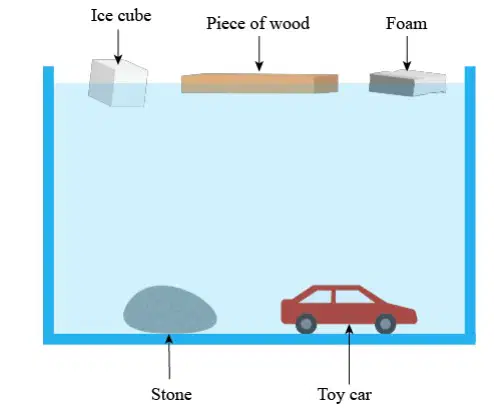
A student performed an investigation into what objects sink in water and what objects float in water. Which conclusion below is supported by these observations?
The plastic foam has a greater density than the stone.
The ice cube has a lower density than the toy car.
The piece of wood has less mass than the stone.
The toy car has more mass than the ice cube.
When a soccer player kicks the ball, it goes up into the air and then falls back down to the ground. Why does the soccer ball fall?
Gravity pulls the ball toward Earth.
The ball uses up all its energy and then falls down.
Gravity pushes the ball up and then the weight of the ball pulls it down.
The ball is too heavy to stay in the air, so it falls.
In which of these state of matter changes is energy removed from a substance?
Choose two answers.
Water vapor condenses
Ice melts to liquid water.
Liquid water freezes into ice.
Ice turns into water vapor.
Liquid water evaporates to water vapor.
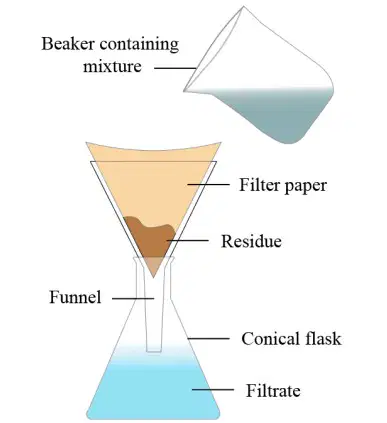
This illustration shows a system that can be used in the lab to separate some mixtures. Which of these mixtures could be separated using this system?
salt and water
sand and water
vegetable oil and water
sand and metal pieces
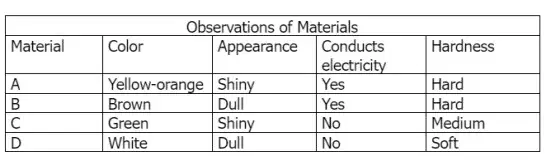
Which statement about the materials on the table is correct?
Material C is iron
Material B is plastic
Material A is copper
Material D is glass
When motor oil is replaced in a car, the old oil is dirty and must be disposed of. Which method of disposing of dirty motor oil would be part of a plan to conserve natural resources?
Pour the oil onto the ground so that soil filters it and it can be pumped out again.
Burn the oil so that it does not pollute ground or water systems.
Recycle the oil so that it can be cleaned and used again.
Store the oil in bottles so that it is not polluting.
Which letter indicates the place on the track where the car has the greatest kinetic energy?
Point W
Point X
Point Y
Point Z
Which two statements about a mixture of substances are correct?
A mixture can be a solid or a liquid, but not a gas.
The different components can be observed by sight.
A mixture contains at least two different components.
The parts of a mixture can be separated by physical methods.
The components of a mixture react with one another to form a new substance.
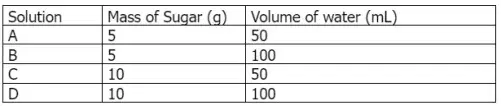
A student prepares four solutions of sugar in water. The table shows the amount of each substance used to make the solutions. Which solution has the highest concentration?
solution A
solution B
solution C
solution D
When an airplane is flying at a constant speed and direction, (a) forces are acting on it

Which of the following position vs. time graphs shows an object that is moving with a constant positive velocity?
A
B
C
D

Which of the following position vs. time graphs shows an object increasing its speed?
A
B
C
D
What is the changing of position over time?
motion
reference point
acceleration
speed

