
 Worksheets
PMA 2 Extra Credit Review - Fall 2025
Total questions: 60
Worksheet time: 1hrs 5mins
The northern elephant seal was almost hunted to extinction in the 1800s. By the late 1890s, approximately one hundred seals were left, reducing the gene pool of the population. What will be the consequence of this reduction?
Competition within the population will increase.
The surviving elephant seals will be better able to adapt.
Inbreeding will be less frequent among the remaining population.
The elephant seals will be more vulnerable to environmental change.
What would be the most likely result of cutting down a rainforest and planting a coffee crop?
an increase in photosynthetic activity
an increase in available fresh water
a decrease in erosion
a decrease in biodiversity

Observe the image and use the information to answer the following question.
As toxins are passed up through the food chain they tend to accumulate. This is known as biomagnification and is represented by the diagram shown above. An example of how these toxins enter the environment is building a golf course along the coastline in Hawaii. During the heavy rain, pesticides used to maintain the grass are carried by runoff from the golf course to the nearby ocean.
Based off the given scenario, which of the following marine organisms from the coral reef ecosystem will contain the most toxins?
Phytoplankton (Primary consumer)
Small bony fish (Secondary consumer)
Whitetip Reef Shark (Tertiary consumer)
Zooplankton (Primary consumer)
A region of the country is rapidly growing in population, causing the demand for electricity to go up each year. As a result, a new source of electricity is needed. This particular region of the country has plenty of agriculture, rivers, and access to coal deposits underground. Which of the following would be the cheapest way for this region of the country to make electricity, have minimal impact on the environment, yet not add carbon dioxide to the atmosphere?
Build dams along the rivers to generate electricity
Build a nuclear power plant in the middle of the region
Use the coal deposits to generate electricity in a few coal fired facilities
Use the agriculture biomass to generate a renewable fuel that can be burned to generate electricity
Cell theory was first proposed in 1838. Evidence obtained through additional scientific investigations resulted in the current cell theory. Which statement describes a component of the original cell theory that was removed because of the new scientific knowledge?
All living things are made of cells.
All cells come from other preexisting cells.
Cells form through spontaneous generation.
Cells are the basic structural and functional units of life.
There are some similarities between prokaryotic and eukaryotic cells. Which of the following structures is found in both prokaryotic and eukaryotic cells?
lysosome
mitochondrion
nucleus
ribosome
Cells need to bring in molecules to carry out cellular processes. Often, this requires moving the molecules across the cell membrane against the concentration gradient. How do these molecules get into the cell?
passive transport by diffusion
active transport using ATP
passive transport by osmosis
phagocytosis
I make proteins for the cell. What am I?
ribosome
mitochondria
chloroplast
lysosome
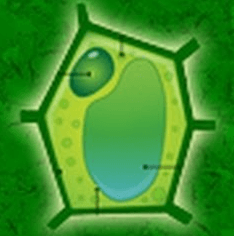
Main producer of ATP in all eukaryotes
chloroplast
mitochondria
lysosome
smooth ER

All cells.
Which organelle synthesizes steroids and also detoxifies poisons?
smooth ER
rough ER
lysosomes
vacuoles
Proteins made on the rough ER are sent here for packaging.
cell membrane
ribosomes
vesicles
golgi apparatus
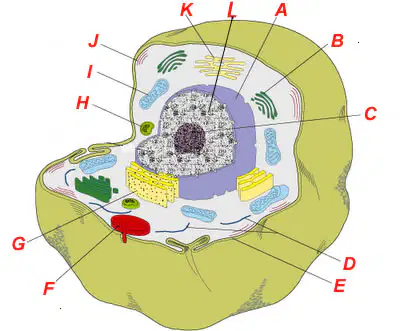
What organelle is I?
vesicles
vacoules
golgi bodies
mitochondria
When digestive enzymes are released from this organelle, it can cause apoptosis of the cell. (cell death)
vesicle
ribosome
lysosomes
nucleus
What 3 things do all cells have?
cell membrane, proteins, ER
cytoplasm, plasma membrane, ribosomes
nucleus, DNA, ribosomes
cell membrane, mitochondria, ER
Plant cells have some things that animal cells don't have. Which of the following is in both plant and animal cells?
large central vacuole
chloroplast
mitochondria
cell wall

The part labeled #1 represents the...
Protein bilayer
Proteins
Sugar chains
Lipid bilayer
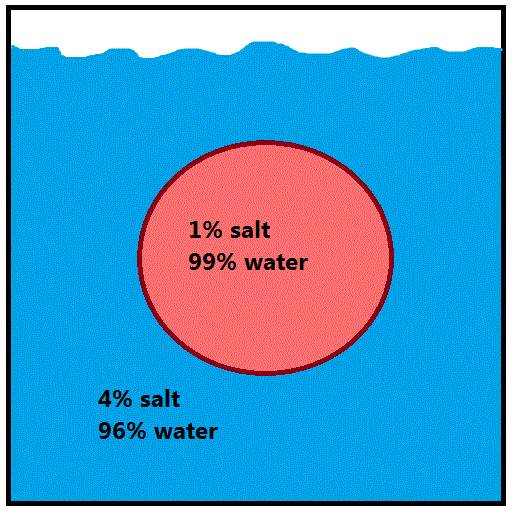
Movement of molecules from high concentration to low concentration is...
passive diffusion
osmosis
active transport
Facilitated diffusion requires...
energy
transport proteins
both energy and transport proteins
small molecules
Osmosis is...
movement of water molecules across a membrane from low to high concentration of water
movement of water molecules across a membrane from high to low concentration of water
The cell membrane...
is completely permeable
is selectively permeable
is completely hydrophobic
helps keep cells rigid
Semi-permeable means the plasma membrane
Allows most substances in, but keeps a few out.
Allows all substances in.
Allows some substance in and keeps others out.
Keeps most substances out and allows a few in.
There are 2 differences between active transport and passive diffusion. They are...
Active requires energy and goes down the concentration gradient.
Active requires energy and moves against the concentration gradient.

An egg was placed in syrup and after 24 hrs the egg weighed less. Why?
There was more syrup on the outside of the cell than the inside.
There was more water on the inside of the egg and less on the outside.
Because there was more water in the beaker and less water in the egg.
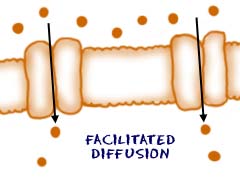
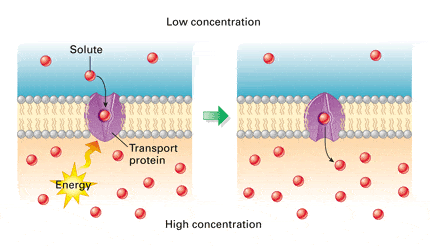
What is it called when molecules move across the cell membrane from an area of high concentration to an area of low concentration through a channel protein?
As food travels through the digestive system, it is exposed to a variety of pH levels. The stomach has a pH of 2 due to the presence of hydrochloride acid (HCl), and the small intestine has a pH ranging from 7 to 9. HCl converts pepsinogen into pepsin, an enzyme that digests proteins in the stomach. Which of the following most likely happens to pepsin as it enters the small intestine?
It becomes inactive.
It begins to replicate.
It's shape changes to engulf large proteins.
It's activity increases to digest more proteins.

The diagram below shows the general structure of an amino acid. Which type of molecule is formed from amino acids?
Lipids
Proteins
Carbohydrates
Nucleic Acids

In living cells, enzymes act as catalysts, which may reduce the amount of activation energy required for a chemical reaction to occur. In the graphs below, pathway x is a solid line representing the uncatalyzed reaction. The dotted line shows the catalyzed reaction. Which graph best illustrates the changes in a reaction when the catalyst reduces the amount of energy required?a
A
B
C
D
Fats, oils and cholesterol are all types of what?
Cell Membranes
Hormones
Lipids
Fatty Acids
RNA and DNA are which type of macromolecules?
Carbohydrate
Lipid
Nucleic Acid
Protein
What will most likely happen if an appropriate enzyme is added to a chemical reaction?
The reaction rate will increase.
The equilibrium of the reaction will be maintained.
The reaction rate will decrease.
The reaction will stop.
A sugar, a phosphate group, and a nitrogen base form the building blocks of which organic compound?
Carbohydrates
Lipids
Nucleic Acids
Proteins
The human body maintains a temperature of around 98.6 degrees at all times. Enzymes are involved in almost every chemical reaction in the body. Which of the following describes the connection between these two statements?
Enzymes function best at a specific temperature.
The body needs to be warm to prevent hypothermia.
The body is kept relatively warm to prevent too much enzyme action.
There is no connection between the two statements.

The diagram below shows the relationship between photosynthesis and cellular respiration and the organelles in which they occur.
Which statement describes how photosynthesis and cellular respiration are interrelated?
Oxygen is produced during cellular respiration and stored during photosynthesis.
Carbon dioxide and water released by cellular respiration are used in photosynthesis.
Photosynthesis releases the energy that is stored during the process of cellular respiration.
Glucose is used during cellular respiration to produce food that is broken down during photosynthesis.
Which gas is removed from the atmosphere during photosynthesis?
Hydrogen
Oxygen
Nitrogen
Carbon Dioxide
A weightlifter is using heavy weights in short bursts for a competition. Because his muscle cells are not able to take in enough oxygen to make very much ATP the weightlifter begins to get fatigue in his muscles. Which of the following processes is most likely going on in the muscles of the weightlifter as he competes in his event?
As the cells run out of oxygen they switch to anaerobic respiration, which allows the cell to make small amounts of ATP in the absence of oxygen.
As the cells run out of oxygen, they die off gradually and the weightlifter's muscles have fewer contracting muscle cells.
The cells will never run out of oxygen if the weightlifter is breathing.
As the cells run out of oxygen, they will continue to make the same amount of ATP, since oxygen is not required to make ATP.
What function does ATP carry out in living things?
aids in protein folding and coiling
used to capture and transfer energy
identifies DNA start sequences for transcription
helps maintain the fluidity of cell membranes
Two different species of bacteria are examined. Scientists find that species X always produces CO2 and H2O during cellular respiration. Species Y always produces ethyl alcohol and CO2. Which conclusion can be made from these observations?
Only species Y is aerobic.
Only species Y is anaerobic.
Both species X and Y are aerobic.
Both species X and Y are anaerobic.
What is one major impact of invasive species on native ecosystems?
They increase biodiversity by creating new habitats.
They often outcompete native species for resources, leading to population declines.
They always improve soil quality when they move into a new area.
They have no effect on native species.
Terrestrial plants have stomata on the surface of their leaves. A single stomata is surrounded by two guard cells that change shape in response to environmental factors and open or close the stoma. Which of the following best explains how the structure of the leaf is used in processes that occur in plants?
Water enters the plant through the surface of the leaf for transpiration
Gases for photosynthesis are exchanged through the surface of the leaf.
Energy for cellular reproduction is absorbed through the surface of the leaf.
Carbon dioxide enters the plant through the surface of the leaf for cellular reproduction.
Plant cells that are specialized for cell division are most likely found in what part of the plant?
root tips
leaf epidermis
stem epidermis
vascular tissue
If the xylem in a young tree is damaged, which process is first affected?
performing photosynthesis
transporting sugar to the roots
transporting water to the leaves
absorbing water from the soil
What is the main function of leaves?
Leaves provide support for growth and a place to store food.
Leaves provide a place for photosynthesis to occur.
Leaves absorb water and minerals and transport nutrients to the stem.
Leaves create a barrier that prevents water in the plant's tissues from evaporating.
The cambium is a section of cells in a plant that can become either part of the xylem or phloem, depending on the growth and needs of the plant. If the cambium of a particular plant was damaged, what would be the most likely effect on the plant?
The plant would lose its ability to carry out photosynthesis.
the plant would have uncontrolled growth.
The plant would not experience any change in physiology.
The plant would not be able to transport nutrients and water.
Which structure in the leaf controls the opening and closing of the stoma?
cuticle
epidermis
guard cell
spongy mesophyll

The diagram below shows a cross section of a plant leaf.
How does the structure marked X contribute to the survival of the plant?
It allows the intake of gases necessary for photosynthesis.
It allows the intake of minerals necessary for plant growth.
It allows the intake of sunlight necessary for ATP production.
It allows the intake of sugars necessary for plant reproduction.
Which statement describes the role of flowers in plant survival?
Flowers can absorb carbon dioxide for sugar production.
Flowers produce oxygen through cellular respiration.
Flowers contain cells that carry out photosynthesis.
Flowers contain cells that produce gametes.

The diagram below represents a flower, the reproductive structure of some plants. Most flowers have both male and female structures for fertilization and reproduction.
Which structure is represented by the letter A in the diagram above?
the stamen, a male structure which produces pollen
the pistol, a female structure which collects pollen and passes it to the ovary
the sepal, a modified leaf used for protection of the flower
the petals, decorative structures which attract pollinators
DDT and other pesticides used over 50 years ago are still affecting the environment today. Scientists have found these substances in recent glacier runoff. Glacier runoff occurs during the summer, when precipitation that has fallen on glaciers during the winter is released. Ice layers from existing glaciers have been analyzed. The results of this analysis show that the concentrations of DDT and other pesticides were highest about 10 years after the use of these substances was banned.
This information shows that
DDT and other pesticides cause glacier runoff during the summer.
it takes humans over 50 years to analyze a glacier.
precipitation helps to break down pesticides.
the decision of one human generation may have an impact on future generations.
When fertilizers run off farmland into streams and ponds, the nitrogen content of the water increases. This can lead to rapid growth of algae in a process called eutrophication. How can this process affect other organisms in the water?
Oxygen is used up as algae is decomposed, reducing the amount available to other organisms.
The water becomes better able to support aerobic organisms.
The algae provide food for fishes and other organisms, leading to decreased algae populations.
The extra nitrogen provides additional food for the other organisms, increasing their population.
A strip mining company wants to lease some land that is currently part of a national park. They promise to reclaim the land should any minerals be mined from the area, and they are willing to pay top dollar for the rights. As an ecologist, what factors would you raise with the local government?
the threat to local biodiversity
management of the land after the company leaves
the new jobs that would be created
the increased traffic in the area
Whaling was a very profitable profession until whale populations crashed. The global community came together to enact a ban on whaling. However, Japan and Norway have not agreed to stop whaling. Which of the following is the most likely consequence of their decision?
The whale populations are bouncing back very successfully and are unaffected by Japan and Norway continuing to whale.
The whale populations are not rebounding as quickly as they might if all of the countries agreed not to hunt whales.
The whale populations have mutated into new kinds of organisms.
The whales are getting better at avoiding capture.
ATP and ADP both play a role in cellular respiration involving energy. How are these two molecules related?
ADP breaks down to produce ATP and a phosphate group, releasing energy.
ATP breaks down to produce ADP and a phosphate group, releasing energy.
Adding a phosphate group to ATP produces ADP and releases energy.
Adding a phosphate group to ADP produces ATP and releases energy.

