
Font size
 Worksheets
Chapter 1 Test: Populations and Communities
Total questions: 56
Worksheet time: 38mins
All the members of one species in a particular area
community
habitat
population
ecosystem
A living part of an organism’s habitat
limiting factor
biotic factor
abiotic factor
ecosystem
An environmental factor that causes a population to decrease
limiting factor
biotic factor
abiotic factor
ecology
A relationship in which at least one species benefits
symbiosis
competition
succession
community
The largest population that an area can support
population density
death rate
immigration
carrying capacity
The number of individuals in an area of a specific size
population density
death rate
immigration
carrying capacity
A group of organisms that are physically similar and can mate with each other are called
ecosystem
community
species
population
All the different populations that live together in an area make up the
biotic factor
community
habitat
population density
Characteristic that allows a species to live successfully in its environment
natural selection
niche
adaptation
host
Process in which a species becomes better suited to its environment
natural selection
niche
adaptation
host
An interaction where one organism kills and eats another
competition
parasitism
commensalism
predation
A symbiotic relationship in which one species benefits and the other is neither harmed nor helped
mutualism
commensalism
parasitism
adaptation
A symbiotic relationship in which one species benefits and the other is harmed
mutualism
commensalism
parasitism
adaptation
A symbiotic relationship in which two species benefit from each other
mutualism
commensalism
parasitism
adaptation
A living thing is called a(n)
organism
abiotic factor
ecosystem
community
The process of plants and algae using sunlight, water, and carbon dioxide to make food
carrying capacity
oxygen reclamation
disapparition
photosynthesis
An approximation of a number based on reasonable assumptions
estimate
population
sampling
carrying capacity
Moving into an area is called
immigration
emigration
migration
U-hauling it
Moving out of an area is called
immigration
emigration
migration
dissaparating
In a parasitic relationship, the organism that lives in or on another organism and benefits from it is called the:
annoying little sibling
parasite
host
commensalism
The organism that is harmed is called the:
older and smarter sibling
parasite
host
commensalism
The number of deaths in an area over a certain amount of time is called
birth rate
death rate
doing math homework.
social studies projects
The struggle between organisms to survive as they attempt to use the same limited resources
niche
predation
mutualism
competition
What is the correct order from smallest to largest?
organism → population → community → ecosystem
organism → community → population → ecosystem
organism → population → ecosystem → community
population → organism → species → ecosystem
Which of the following is the correct definition for ecology?
The study of communities and organisms
The study of how living things interact with each other
The study of how living things interact with each other and with their environment
The study of abiotic factors in an ecosystem
The community of organisms that live in a particular area, including their nonliving surroundings is called a(n) ___.
ecosystem
community
habitat
ecology
The role of job an organism has in the ecosystem is called its ____.
biotic factor
niche
abiotic factor
limiting factor
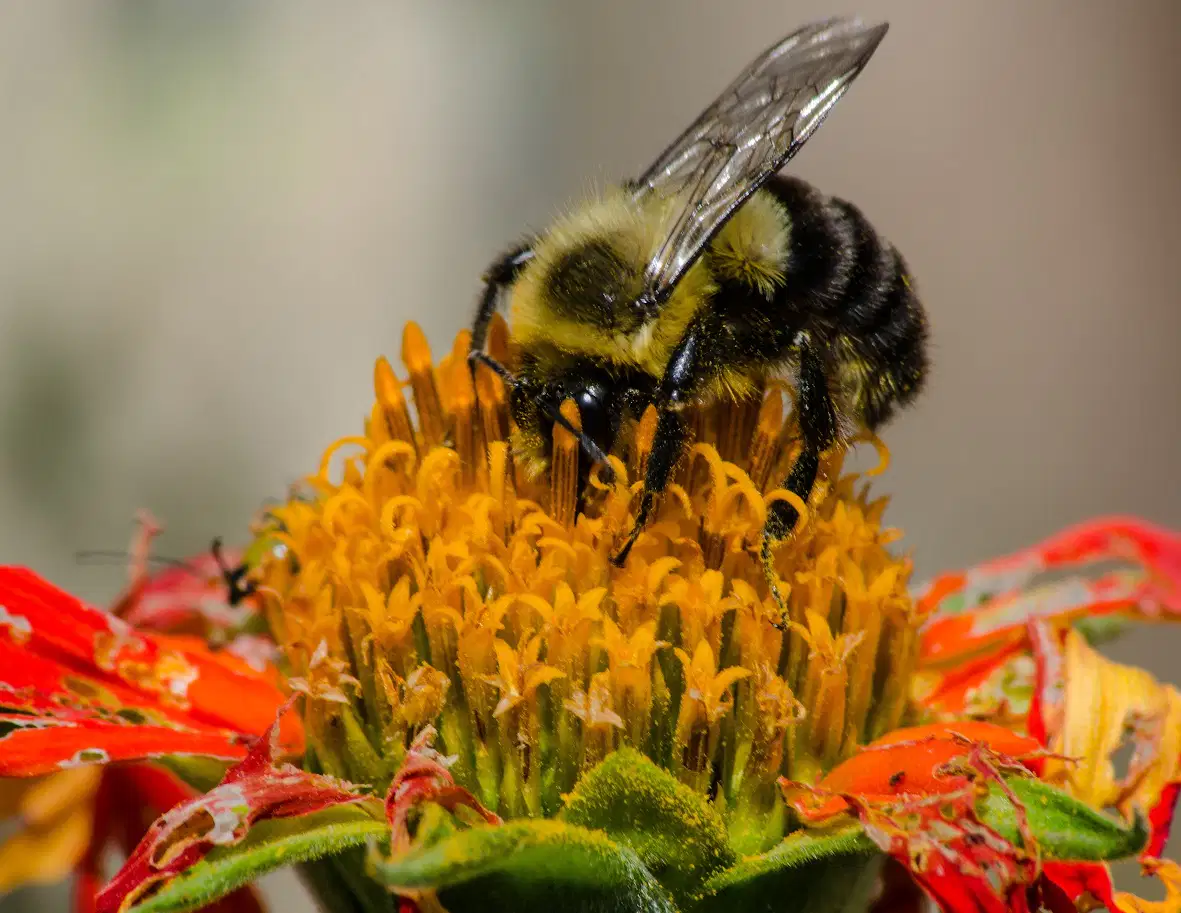
While gathering nectar to eat, this bee is also spreading the flowers pollen from one plant to another. This is an example of what type of symbiotic relationship?
mutualism
commensalism
parasitism
predation
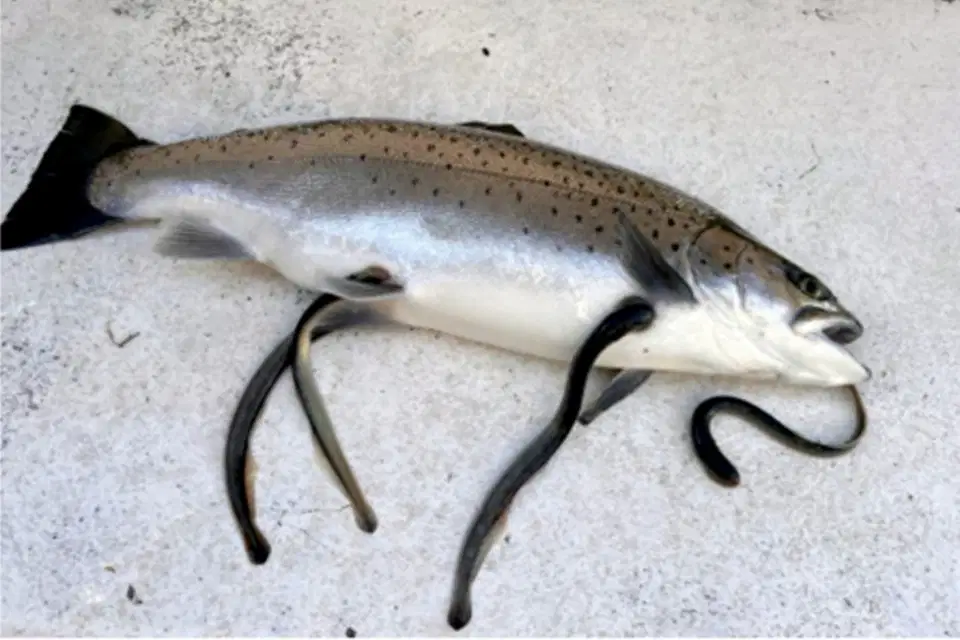
These sea lamprey attached to the lake trout are an example of what type of symbiotic relationship?
mutualism
commensalism
parasitism
abiotic factor
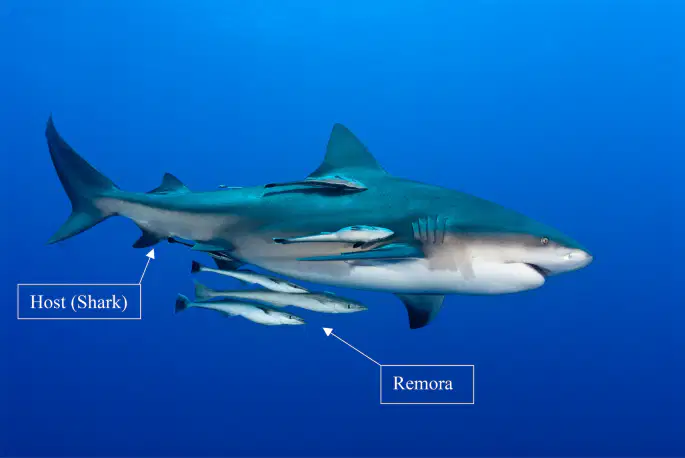
The Remora fish following the shark around the ocean to feed on scraps is an example of what type of symbiotic relationship?
commensalism
parasitism
mutualism
biotic factor

This bear was tagged by biologist in the summer of 2021 as part of a population study. What method were the scientists using?
mark-and-recapture
direct observation
indirect observation
sampling

Scientists want to know what impact moose are having on aspen trees inside Isle Royale National Park. First though, scientists will need to know how many aspen trees are in the park. Which method would be the best for them to use for estimating the Aspen population inside the park?
(a)
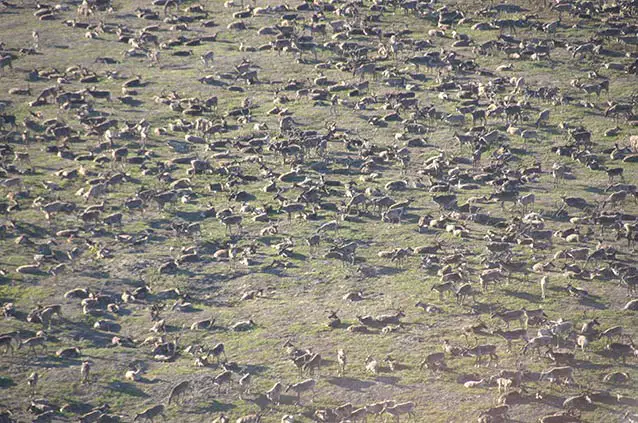
Recently scientists have started using aerial photos of caribou in the spring to count all the adults and calves. What method of studying population is this? (a)

Scientists studying great blue heron populations will often visit their breeding areas, called rookeries, to count the number of nests. What method of estimating populations is this an example of?
direct observation
indirect observation
sampling
mark-and-recapture

What term best describes this group of bison?
(a)

All the squirrels living on school property are an example of a (a)
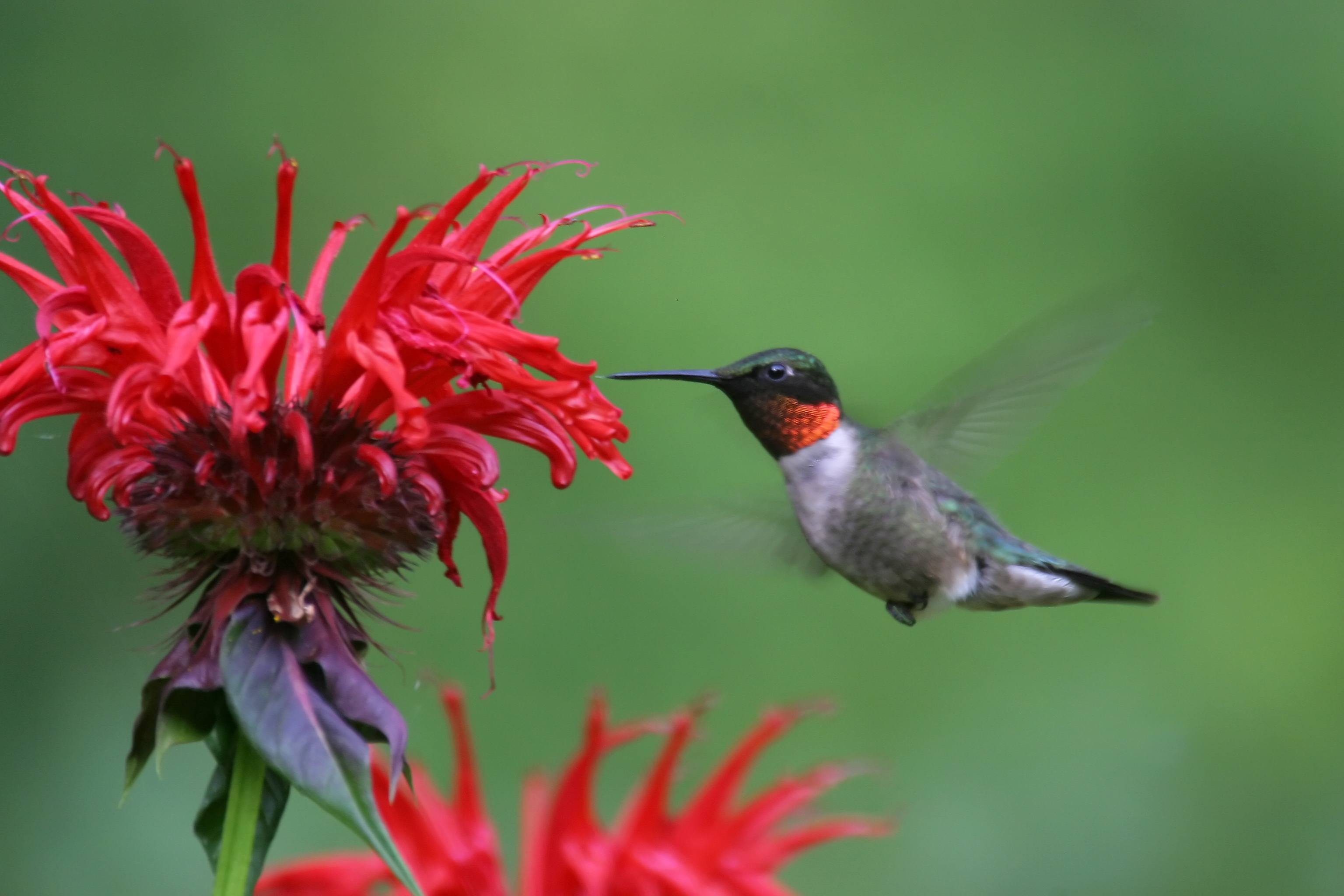
What type of symbiosis? Hummingbirds feed on nectar from flowers. The flowers are pollinated by hummingbirds as they move from flower to flower.
(a)
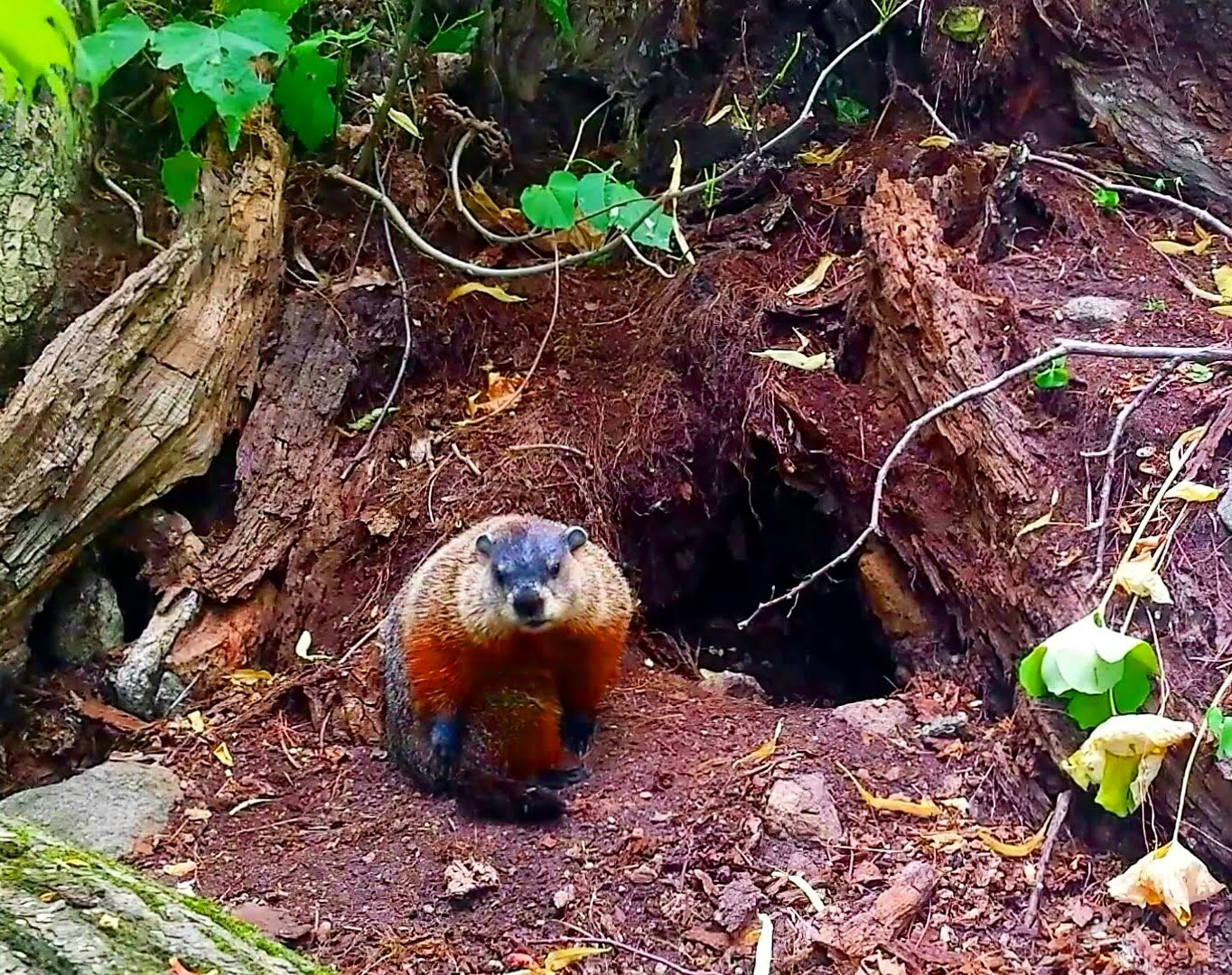

biotic factor

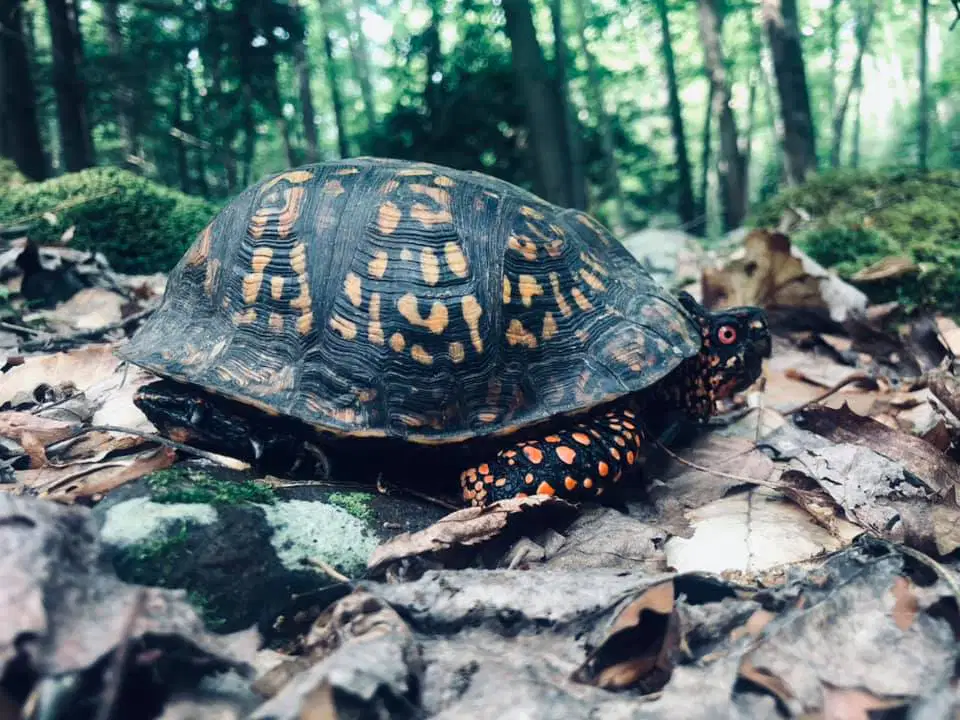
A turtle's shell is an example of what type of prey adaptation?
camouflage
protective covering
warning colors
mimicry
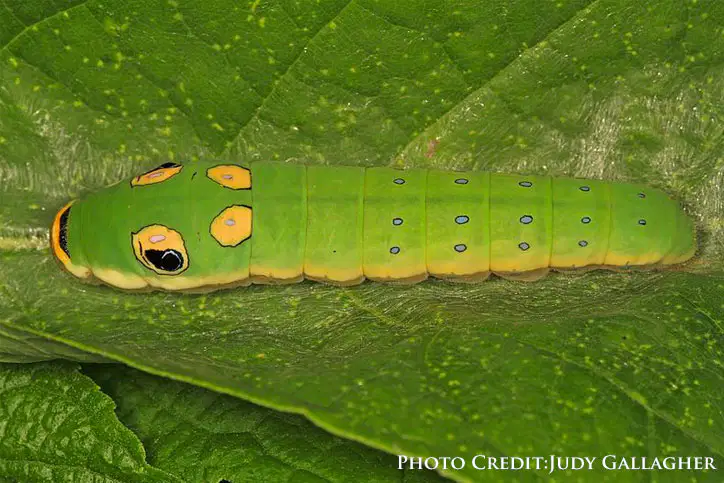
The spicebush swallowtail caterpillar in the picture is using what prey adaptation?
protective covering
warning colors
camouflage

Many brightly colored insects are poisonous to predators, what prey adaptation are they using?
(a)
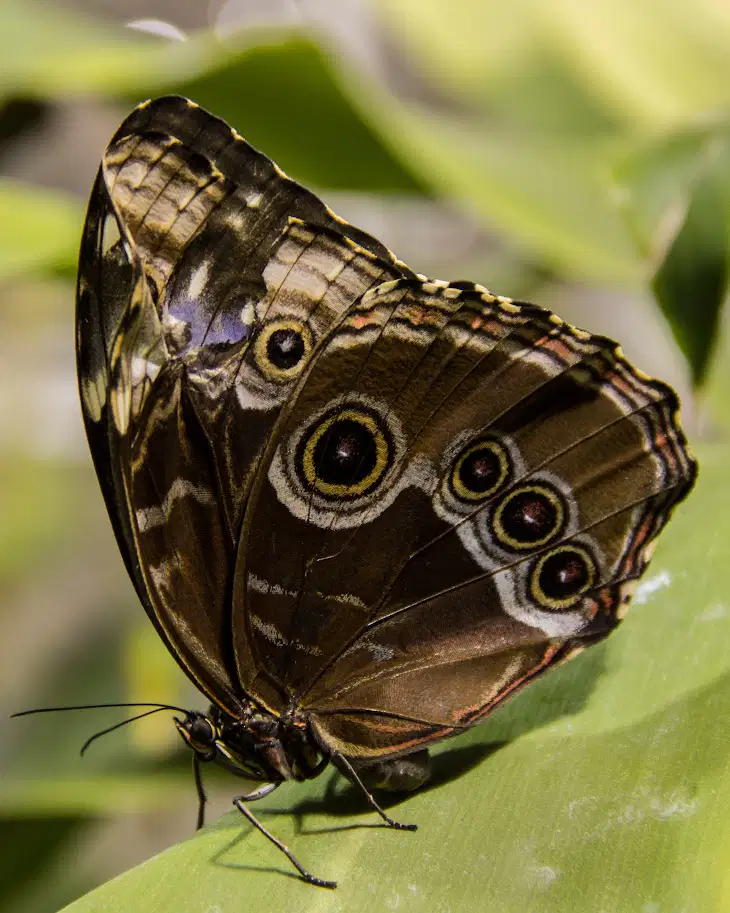
What prey adaptation is the butterfly using with the spots that look like eyes?
camouflage
false coloring
protective covering
warning colors

What happens if a population grows past its carrying capacity?
The population keeps growing
The population reduces untl it is below carrying capacity again
The entire species will go extinct
The carrying capacity just increases


This area suffered from a forest fire which is an example of (a) succession
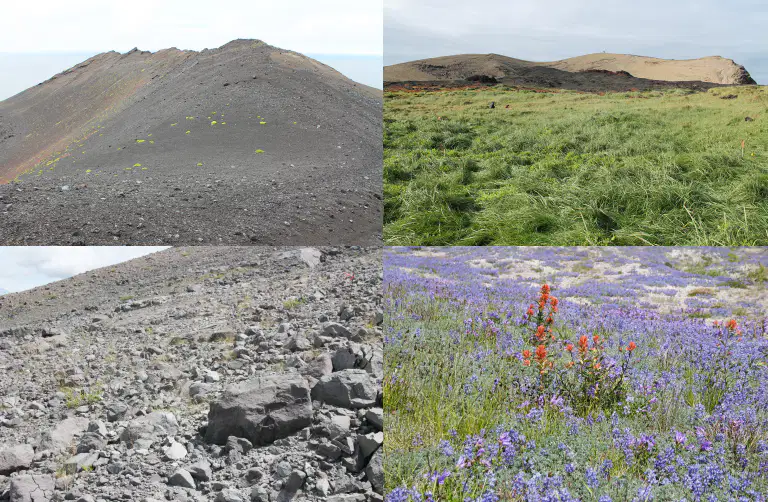
This picture shows the succession of a volcanic island. This is an example of (a) succession.
Which occurs more slowly, primary or secondary succession?
(a) succession
A group of scientists are studying the skunk population in an area. They have noticed that the population is starting to decline. They have already ruled out disease, predators, and over hunting as causes. What are some other possible reasons the population cold be declining? Choose all that apply.
lack of food
lack of water
loss of habitat (space)
severe winter weather
Mr. Reed Skunk virus

Barnacles are animals that cannot move. In order to get food, they attach to whales and catch any floating plankton in the water. The whale is neither helped nor harmed in the interaction. What type of symbiosis is this?
Mutualism
Commensalism
Parasitism
Neutralism


Mr. Weller's favorite spot to go fishing is the 1000 Islands region on the St. Lawrence River. The cool waters, island rock formations, variety of fish and birds, and ideal weather make it an enjoyable area for the best science teacher in the world to relax after teaching the best 8th graders in the world. What word best describes this location?
community
habitat
ecosystem
population


Barnacles do not affect whales as they grow, but receive the benefit of a food source. This is
parasitism
mutualism
commensalism
neutralism

