
 Worksheets
25-26 HS Physical Science Spiral Review
Total questions: 58
Worksheet time: 29hrs 0mins
Which is the correct symbol for an isotope of iodine with 53 protons and 78 neutrons?
78I53
131I
53I
131I
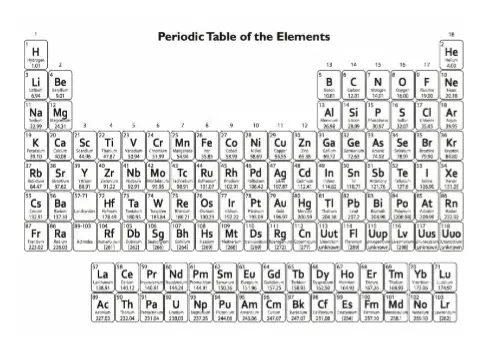
An element from Group 2 will form ionic bonds with
any other metal.
all transition metals.
a nonmetal, Groups 13-17.
any Noble gas in Group 18.
Which statement accurately describes covalent bonds?
Covalent bonds are formed by metals and nonmetals.
Covalent bonds are typical of carbon compounds.
Covalent bonds are created by the attractions between oppositely charged ions.
Covalent bonds break apart when dissolved in water and allow for the conduction of electricity.
What is the chemical formula for Aluminum fluoride?
Al3F
AlF3
Al2F3
AlF
Based on the Law of Conservation of Mass, describe the relationship between the mass of the reactants and the mass of the products.
The mass of the reactants equals the mass of the products.
The mass of the reactants is less than the mass of the products.
The mass of the reactants is greater than the mass of the products.
The mass of the products is always greater than the mass of the reactants.
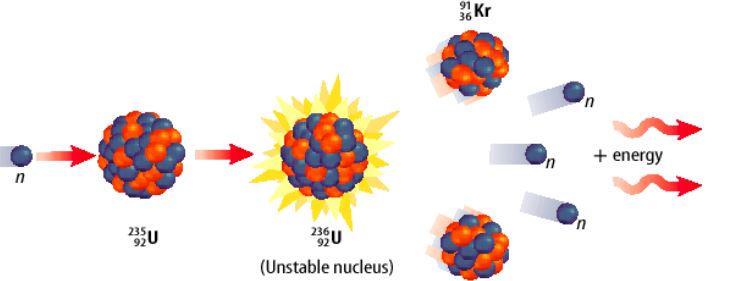
The source of the energy released in fission and fusion reactions is:
mass converted to energy
breaking of chemical bonds
formation of alpha particles
formation of new chemical bonds
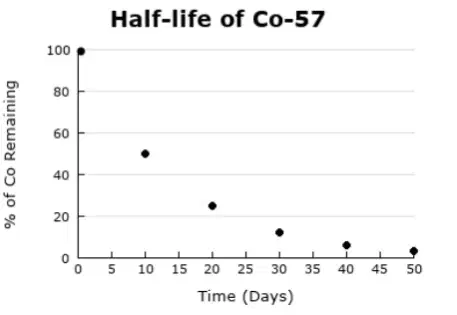
Using the chart, determine the amount of Co-57 present on January 21 if you had a sample of 8g on January 1st.
2 g
4 g
16 g
25 g
Which of these statements would best explain the problem encountered with nuclear waste disposal?
The isotopes have a long half-life and only remain radioactive for a long time period.
The isotopes have a short half-life and only remain radioactive for a long time period.
The isotopes have a long half life and only remain reactive for a short time period.
The isotope has a short half life and only remain radioactive for a short time period.
The molecules of a substance are moving rapidly in a container. The molecules do not interact with each other. If the container is opened, the molecules will escape from the container. In what phase of matter are the molecules in the container?
plasma
gas
liquid
solid
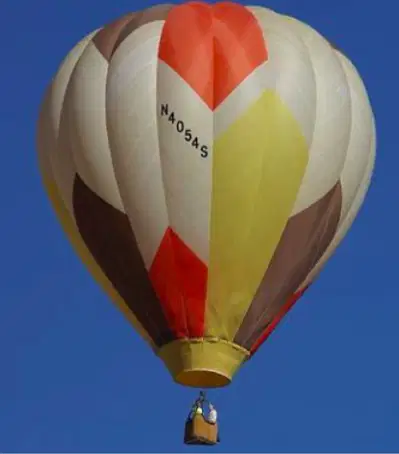
As we stand and watch the hot air balloon rise in the sky, we can imagine what is happening at the microscopic level to the gas molecules inside the balloon. As the balloon rises, the gas molecules are
moving faster and spreading apart.
slowing down and moving closer together.
Gradually escaping from the confines of the balloon
all collecting at the top of the balloon pushing upward
Describe the best way Ryan can increase the rate of dissolving of lead (II) chloride in a solution.
Increase the temperature of the water.
Increase the concentration of the salt.
Increase the particle size of the solute.
Agitate the lead (II) chloride in cool water.
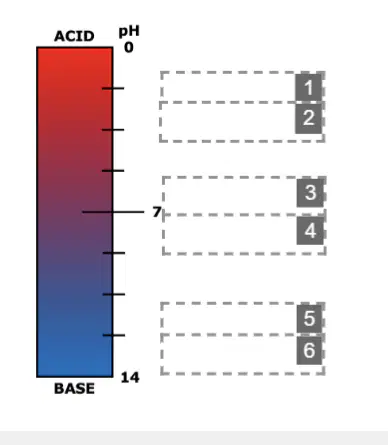
Listed in the Item Bank are some important labels for sections of the image below.
Put the following in the correct order from acidic to basic.
Lemon Juice Saliva HCl NaOH Blood Bleach
1. HCL
2. Lemon Juice
3. Saliva
4. Blood
5. Bleach
6. NaOH
1. NaOH
2. Lemon Juice
3. Saliva
4. Bleach
5. Blood
6. HCl
1. NaOH
2. Blood
3. HCl
4. Bleach
5. Lemon Juice
6. Saliva
1. NaOH
2. Bleach
3. Blood
4. Saliva
5. Lemon Juice
6. HCl
Jane puts some water into an electric kettle and then she connects it to the power source. She observes that after some time, the water inside the kettle heats ip and begins to boil. What is happening?
Light energy is transforming into heat.
Heat energy is transforming into electricity.
Electrical energy is transforming into heat energy.
Electrical energy is transforming into light and heat energy.
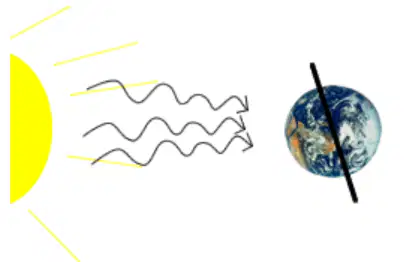
When light from the sun warms the ground, the transfer of heat energy is called
conduction.
power.
radiation.
reflection.
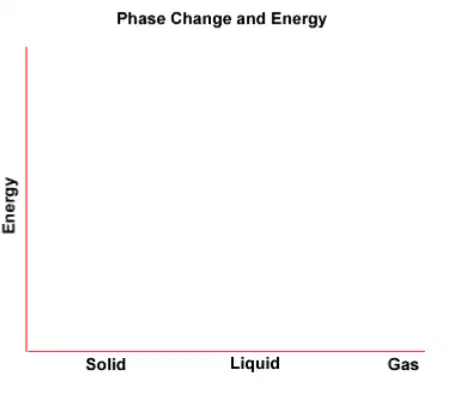
Predict the energy trend as a substance changes from a solid to liquid to gas on this graph.
It would increase from bottom left to top right.
It would decrease from top left to bottom right.
It would be a horizontal line as energy would remain constant.
It would increase from solid to liquid, then decrease from liquid to gas.
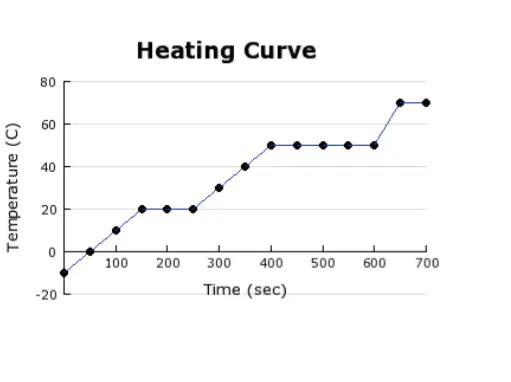
As temperature rises from 25°C to 60°C, the material _______ heat and its kinetic energy __________ as the material goes through vaporization to become a gas.
absorbs, increases
releases, does not change
multiplies its, is divided
remains the same, decreases
Consider these four line graphs representing speed in meters/second, where each X-axis is labelled in seconds and each Y-axis is labelled in meters.
Which line graph indicates the GREATEST speed at 5 seconds?

A. (Graph A)
A. (Graph A)

B. (Graph B)
B. (Graph B)


When a person jumps horizontally off of the end of an unanchored boat in a lake, the person goes forward and the boat goes backward. This is an example of:
inertia.
action and reaction.
Newton's First Law of Motion.
Newton's Second Law of Motion.
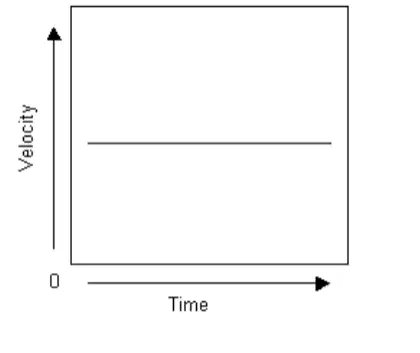
Based on the graph, how would you describe the net forces acting on the moving object?
Net force equals zero.
Net force is greater to the right.
There is no way to determine net force.
Net force is positive and to the right.
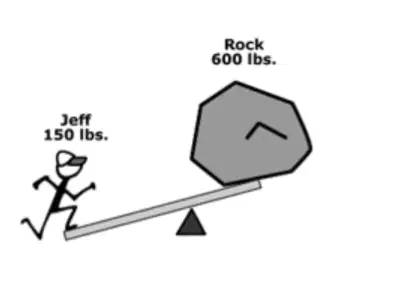
What evidence is there that work is being done?
A lever is being used.
A simple machine makes a task easier.
The rock has a larger force than the boy.
The boy uses force to move the rock a distance.
Ultraviolet rays are more likely to give you a sunburn than visible light. What statement would be the best possible explanation for this?
Visible light cannot penetrate the skin.
Ultraviolet rays have a higher frequency and therefore have more energy.
Visible light has a broader range of frequencies and amounts of energy.
Ultraviolet rays have a longer wavelength and therefore have more energy.
Which example is NOT a part of the electromagnetic spectrum?
microwaves
radio waves
electricity
purple light
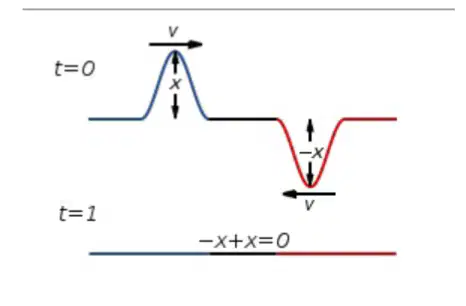
Two mechanical waves intersect and produce the straight line seen here. What is the result of this intersection called?
summative interference
destructive interference
subtractive interference
constructive interference
Sally Sizzle builds a circuit by connecting three resistors in parallel with a 9V battery. The current in this circuit is 3.6 amps. Sally wants to add another resistor in parallel to increase the current to 4.6 amps. What should the resistance of this new resistor be?
0.5 Ohms
5 Ohms
9 Ohms
10 Ohm
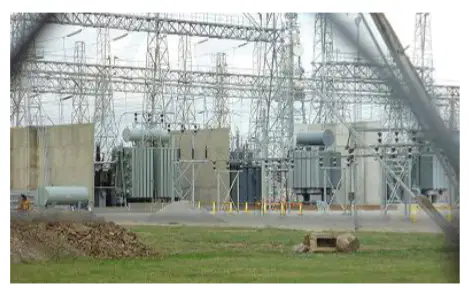
A major difference between AC and DC electricity is in its usefulness to effectively supply electricity to large groups. The best explanation for the difference is which of these statements?
DC current can be used in transformers while AC current cannot.
AC current can be used in transformers while DC current cannot.
AC current fluctuates too much to be used effectively in power generation.
DC current fluctuates too much to be used effectively in power generation.
An electric current is created in a long thin wire. How will increasing the current and changing the direction of the current effect the direction that a compass placed under the wire will point?
It compass will spin continuously.
The compass will flip exactly 180 degrees.
The compass will spin exactly 360 degrees.
The compass will not react and still point north.
Sulfur hexafluoride is represented by which formula?
SF2
SF7
S2F5
SF6
Magnesium is a highly flammable element which is easily combustible in the presence of oxygen: 2Mg + O2 → ?? + heat What is the unknown product?
MgO
MgO2
2MgO
Mg2O2
Which of these BEST describes why an ionic solution is a good conductor of electricity while a covalent solution is a poor conductor?
A. Ionic compounds form charged molecules in solution, and electricity cannot flow if charged molecules are present.
B. Ionic compounds form charged particles in solution, and electricity will only flow if charged particles are present.
C. Covalent compounds form charged molecules in solution, and electricity cannot flow if charged molecules are present.
D. Covalent compounds form charged particles in solution, and electricity will only flow if charged particles are present.
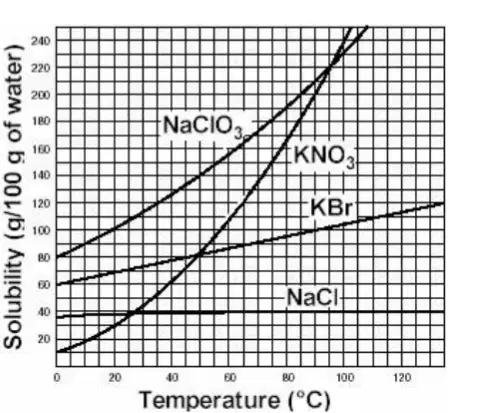
Marie and Calvin dissolved 10 grams of KNO₃ in 100 grams of water at 25ºC. Next they added 5 grams more. Calvin told Marie that they could continue to add solute until they reached 40 grams because the solution was still
saturated
semisaturated
supersaturated
unsaturated
During science class Billy used litmus paper to determine the pH of an unknown liquid. The blue litmus paper turned red but there was no change in the color of the red litmus paper.
The liquid Billy tested is probably
a base
neutral
an acid
pH of 7
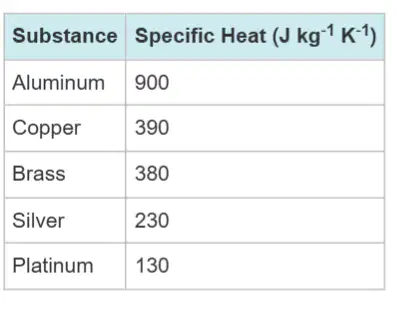
Five metal samples, with equal masses, are heated to 200ºC. Each solid is dropped into a beaker containing 200 ml 15ºC water. Which metal will cool the fastest?
aluminum
copper
gold
platinum
Free fall is a situation in which the only force acting upon an object is gravity. Why do all objects in free fall have the same acceleration?
their masses are always the same
acceleration due to gravity is always the same
the distance between two objects is always the same
the gravitational force between two objects is always the same

Based on the table, what might be a reasonable conclusion?
Sound travels faster through more dense materials.
The speed of sound depends only on the state of matter.
Sound travels slower through metals than any other materials.
Sound travels faster through aluminum than any other material that exists.
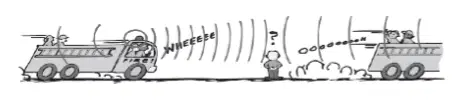
Observe the image above. Two fire trucks with sirens speeds towards and away from an observer. Which statement is true involving the Doppler effect observed by the observer?
the Doppler effect is not observed by the observer
Due to the Doppler effect, the fire truck traveling away from the observer is not heard
a firetruck traveling towards the observer produces a higher than normal apparant siren frequency
the foretruck traveling away from the oberver produces a higher than normal apparent siren frequency
Which statement about the fire truck's siren frequency is correct?
the fire truck traveling towards the observer produces a higher than normal apparent siren frequency
the fire truck traveling away from the observer produces a higher than normal apparent siren frequency
Nitrogen has (a) valence electrons, which means it has (b) bonding places to make covalent bonds with other nonmetals
If an atom (a) electrons, it will become negative.
If an atom (b) electrons, it will become positive.
Metals need to (a) electrons to become complete and therefore have a (b) charge.
Why do elements bond? (a)
To gain new properties
To create a new element
To become stable
To get bigger

What is the half-life of mercury-203?
50 years
50 days
50%
100 days
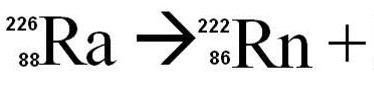
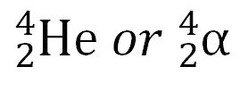

Label how heat is being transfered in the image
conduction
convection
radiation
radiation

Thermal is another word for... (a)
Label the forms of heat transfer
Conduction
Convection
Radiation
Match the following

Convection

Radiation

Conduction

Bubbles form when two or more substances are combined is a (a)
Chemical Change
Physical Change
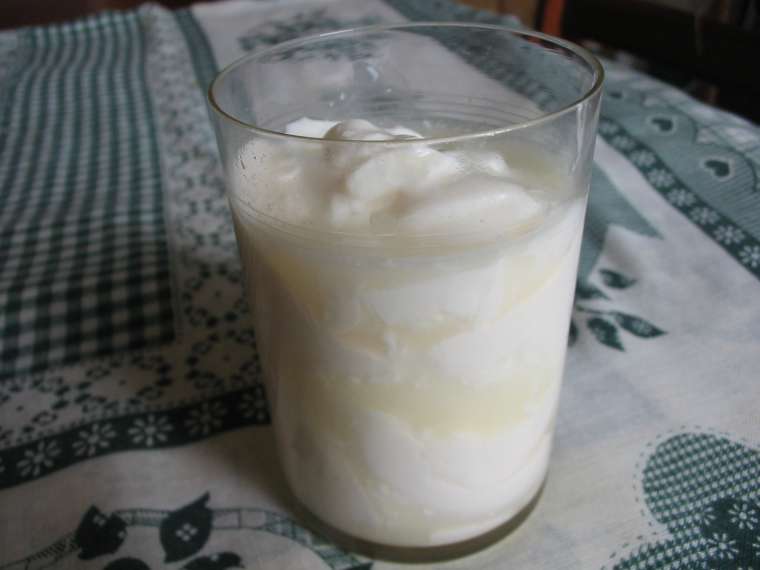
Olivia and Mason were having a science experiment in the kitchen. Olivia left a glass of milk on the counter overnight as part of their experiment. The next day, they discovered it had gone sour. This is a (a) change.
Physical
Chemical
Balance this reaction. (a) N2+ (b) H2 -> (c) NH3

Apply the correct state of matter
Solid
Liquid
Gas
Listed in the Item Bank are key terms and expressions, each of which is associated with one of the columns. Some terms may display additional information when you click on them. Drag and drop each item into the correct column.
Order does not matter.
dull and brittle
Semimetal
High Density
Good Insulator
Low boiling point
Listed in the Item Bank are key terms and expressions, each of which is associated with one of the columns. Some terms may display additional information when you click on them. Drag and drop each item into the correct column. Order does not matter.
high boiling point
two or more nonmetals
good conductors
crystalline lattice
contains a metal
high melting point
made of ions
NaCl
brittle
H2O
share electrons
low melting point
soft
nonconductors
transfer electrons
low boiling point

