Wayground logo

Free Printable Worksheets

Font size

S
M
L
XL
Worksheets

2nd 9 Weeks Test Review

Total questions: 71

Worksheet time: 1hrs 24mins

Name
Class
Date
1.

What does the law of conservation of mass state?

a)

Mass can be created and destroyed during chemical reactions.

b)

Mass is conserved during chemical reactions in closed systems.

c)

Mass is rearranged and increased during chemical reactions.

d)

Mass is only conserved in open systems.

2.

Which formula represents the relationship between force, mass, and acceleration?

a)

F = m/a

b)

F = ma

c)

F = m + a

d)

F = m - a

3.

What is the formula for calculating average speed?

a)

Average speed = distance × time

b)

Average speed = distance / time

c)

Average speed = time / distance

d)

Average speed = distance + time

4.

Which of the following is an example of a physical change?

a)

Burning wood

b)

Melting ice

c)

Rusting iron

d)

Cooking an egg

5.

Newton's three laws of motion are applied in real systems. Which of the following is an example of Newton's third law?

a)

A car accelerating due to engine force.

b)

A rocket launching as gases are expelled downward.

c)

A ball rolling due to inertia.

d)

A person pushing a box and the box moving forward.

6.

What drives interactions among the atmosphere, hydrosphere, and energy to influence weather and climate?

a)

Solar radiation

b)

Ocean currents

c)

Plate tectonics

d)

Fossil evidence

7.

Which phenomenon is caused by warm ocean currents interacting with air masses?

a)

Earthquakes

b)

Tropical cyclones

c)

Mid-ocean ridges

d)

Fossil formation

8.

What is the Coriolis effect responsible for?

a)

Influencing the rotation of hurricanes

b)

Forming mid-ocean ridges

c)

Creating volcanic hotspots

d)

Supporting fossil evidence

9.

Which type of plate boundary is responsible for forming mid-ocean ridges?

a)

Convergent boundary

b)

Divergent boundary

c)

Transform boundary

d)

Subduction zone

10.

What evidence supports Earth's changing surface and past climate?

a)

Fossil evidence

b)

Ocean currents

c)

Jet streams

d)

Trade winds

11.
Which runner had a head start?
a)
A
b)
B
c)
C
12.
What is happening at C?
a)
Stationary
b)
Accelerating
c)
Fast steady speed; moving away from the starting position
d)
Slower steady speed; moving away from the starting position
13.
Are forces balanced or unbalanced when a marble speeds up rolling down a ramp?
a)
Balanced
b)
Unbalanced
14.
If an object is stationary (not moving) the forces acting upon it are _____________
a)
unbalanced
b)
weak
c)
balanced
d)
Hulk Smash!
15.
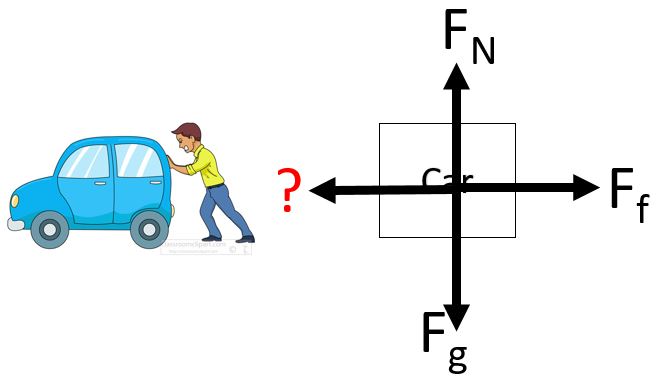
Name the missing force...
a)
applied force
b)
weight force
c)
tension force
d)
drag
16.
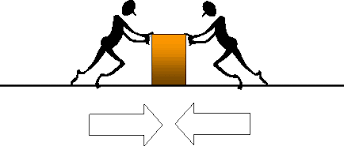
Is this a balanced or unbalanced force?
a)
Balanced
b)
Unbalanced
c)
Neither
d)
Both
17.

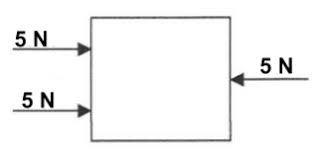
Is the Net Force balanced or Unbalanced?

a)

Balanced

b)

Unbalanced

18.
This is an example of what kind of force?
a)
Balanced Force
b)
Pushing Force
c)
Gravity Force
d)
Unbalanced Force
19.
What is C3H8 
(methane) made up of?
a)
1 carbon & 1 hydrogen
b)
3 carbons & 8 hydrogens
c)
8 carbons & 3 hydrogen
d)
11 carbons & 11 hydrogen
20.
What is HCl
(hydrochloric acid) made up of?
a)
1 hydrogen, 1 carbon,  1 Iodine
b)
1 hydrogen & 2 carbons
c)
1 hydrogen & 1 chlorine
d)
1 hydrogen & 2 chlorine
21.

Which of the following is not a compound?

a)

HCl

b)

Cl

c)

NaCl

d)

CO2

22.
Water, H2O, can be classified as.....
a)
Element
b)
Compound
c)
Heterogeneous Mixture
d)
Homogeneous Mixture
23.
How many elements are represented in the compound?
Na2CO3
a)
1
b)
2
c)
3
d)
4
24.
How many atoms of carbon (C) are in C6H12O6?
a)
3
b)
6
c)
12
d)
24
25.
Which is the correct formula for:
 three hydrogen (H)
one sulfur (S)
four oxygen (O)
a)
H3SO4
b)
HSO4
c)
H4S3O
d)
H2O
26.
How many atoms are there TOTAL in:
H2SO4
a)
6
b)
5
c)
7
d)
3
27.
The one or two letters used to represent elements 
a)
Yield sign
b)
Coefficient
c)
Symbol
d)
Subscript
28.
The one or two letters used to represent elements 
a)
Yield sign
b)
Coefficient
c)
Symbol
d)
Subscript
29.
Element or compound?
O2
a)
Element
b)
Compound
30.
How many elements are in C6H12O6?
a)
1
b)
2
c)
3
d)
4
31.
A way to show the number and type of elements (atoms) in a molecule or compound with a combination of symbols and numbers.
a)
Molecule
b)
Chemical formula
c)
Physical change
d)
Coefficient
32.
How many Hydrogen atoms are in H2O?
a)
zero
b)
one
c)
two
d)
three
33.
How do you count the number of different elements in a compound?
a)
Count the capital letters
b)
Count the numbers
c)
Count the lowercase letters
d)
Count all the letters
34.
What are the names of the elements in the following chemical formula: AsO4
a)
Argon and oxygen
b)
Arsenic and oxygen
c)
Oxygen and Berylium
d)
Actinium and oxygen
35.

How are the convection currents in the lava lamp different than convection currents in the atmosphere?

a)

warm air in the atmosphere sinks instead of rises

b)

The earth gets its heat from the sun and the lava lamp gets its heat from the light bulb below.

c)

Convection cells in the atmosphere flow in the same direction instead of opposite

d)

Cold air is less dense instead of being more dense.

36.

The number one thing hurricanes need is...

a)

warm water

b)

cold air from cold fronts

c)

cold water

d)

strong warm front

37.

What causes global convection currents

a)

Forests

b)

greenhouse gases

c)

more land forms

d)

uneven heating of the Earth's surface

38.

Where do warm ocean currents come from

a)

the poles

b)

near the land

c)

the equator

d)

middle of the oceans

39.

How to oceans form hurricanes?

a)

warm air over the equator rises and faster than cold air from the poles

b)

warm waters provide the energy for hurricanes

c)

cold water provides the energy for hurricanes

d)

cold air at the poles is more dense and falls faster than warm air from the equator

40.

How to warm waters contribute to hurricane development

a)

evaporating water adds heat to the atmosphere

b)

rising tides cause the ocean level to rise

c)

waves cause the hurricane to develope

d)

currents carry the warm water to the hurricane

41.

What city will experience decreasing temperatures in the next day?

a)

Denver

b)

El Paso

c)

Memphis

d)

Los Angeles

42.

What city is most likely going to see temperatures rise?

a)

San Jose

b)

El Paso

c)

Jacksonville

d)

Chicago

43.

Where do warm ocean currents come from?

a)

warm ocean currents come from the southern hemisphere

b)

warm ocean currents come from the equator

c)

Warm ocean currents come from the poles

d)

Warm ocean currents come from the beach

44.

Where do cold ocean currents come from?

a)

cold ocean currents come from the southern hemisphere

b)

cold ocean currents come from the equator

c)

cold ocean currents come from the poles

d)

cold ocean currents come from the beach

45.

What does this symbol represent?

a)

Cold Front

b)

Warm Front

c)

Stationary Front

d)

Occluded Front

46.

What does this symbol represent?

a)

Cold Front

b)

Warm Front

c)

Stationary Front

d)

Occluded Front

47.

What does this symbol represent?

a)

Cold Front

b)

Warm Front

c)

Stationary Front

d)

Occluded Front

48.

What does this symbol represent?

a)

Cold Front

b)

Warm Front

c)

Stationary Front

d)

Occluded Front

49.

Low Pressures are associated with what type of weather

a)

fair weather

b)

cold weather

c)

warm weather

d)

rainy weather

50.
What causes tectonic plates to move along the Earth's surface?
a)
wind
b)
ocean currents
c)
convection in the mantle
d)
expansion of the Earth
51.
What type of boundary occurs when two plates move away from each other?
a)
transform
b)
subduction
c)
convergent
d)
divergent
52.
What causes tectonic plates to move along the Earth's surface?
a)
wind
b)
ocean currents
c)
convection in the mantle
d)
expansion of the Earth
53.
What forms at a divergent boundary between two oceanic plates?
a)
rift valley
b)
mountain
c)
mid-ocean ridge
d)
trench
54.
Which type of crust is more dense?
a)
oceanic
b)
continental
c)
divergent
d)
pizza
55.
What type of boundary occurs when two plates move toward each other?
a)
convergent
b)
divergent
c)
transform
d)
lateral
56.
What forms at a convergent boundary between a continental plate and an oceanic plate?
a)
volcanoes
b)
rift valleys
c)
faults
d)
mid-ocean ridges
57.
A rift valley occurs at a ____________ boundary.
a)
divergent
b)
convergent
c)
transform
d)
horizontal
58.
What is the process in which hot molten rock rises, then cools and sinks back to the core?
a)
plate tectonics
b)
continental drift
c)
convection
d)
divergence
59.
A trench forms at a _________ boundary.
a)
convergent
b)
divergent
c)
transform
d)
vertical
60.
Mountains form at a ___________ boundary.
a)
transform
b)
divergent
c)
convergent
d)
subduction
61.
What type of boundary occurs when two plates slide past each other?
a)
divergent
b)
transform
c)
lateral
d)
convergent
62.
A fault forms at a _________ boundary.
a)
transform
b)
divergent
c)
horizontal
d)
convergent
63.
What type of boundary is shown at A?
a)
transform
b)
convergent
c)
divergent
d)
subduction
64.
What is happening at point B?
a)
subduction
b)
a divergent boundary
c)
convection
d)
an earthquake
65.
What is the process in which two plates move toward each other but one sinks under the other?
a)
subduction
b)
convection
c)
divergence
d)
transformation
66.
A chemical equation tells us 
a)
the reactants and the products.
b)
the elements that make up the reactants and the products.
c)
the number of atoms that make up the reactants and the products.
d)
All of the above.
67.
Which of the following describes the law of conservation of mass?
a)
In a reaction, atoms are created or destroyed.
b)
In a reaction, atoms are not lost or made.
c)
In a reaction, the mass of the product may be more or less than the reactants.
d)
In a reaction, mass never stays the same.
68.
For the equation:
2H2 +  O2 --> 2H2O
How much H2O will be produced if we react 4g of H2 and 32g of O2?
a)
4g
b)
32g
c)
36g
d)
28g
69.
Which  of the following is a balanced equation?
a)
Na   +   Cl2   -->  NaCl
b)
H2  +  O2  --> H2O
c)
Ca   +   Br  -->  CaBr2
d)
Na   +  F  -->  NaF
70.

The number to the lower side of an element is a  (H2O)

a)
Subscript
b)
Superscript
c)
Coefficient
d)
Charge
71.

The number in front of a compound or element is a  (3H2O)

a)
Subscript
b)
Coefficient
c)
Superscript
d)
Charge