
 Worksheets
Weather 1 Quiz
Total questions: 71
Worksheet time: 3570secs
Where would there be more pressure?
on top of a roof of a tall building
sitting in this classroom
on top of a mountian
sitting in the top row of a stadium
In which layer of the atmosphere is the most water vapor found?
thermosphere
mesosphere
troposphere
stratosphere
As you ascend (go up) in the troposphere what happens to the temperature?
It increases steadily
It decreases steadily
Which layer of the atmosphere would jets fly in to avoid a thunderstorm?
troposphere
thermosphere
mesosphere
stratosphere
As altitude increases, air pressure....
Increases
Decreases
Stays the same
Goes up and down
Why is the ozone layer vital to life on Earth?
Planes fly in the ozone layer
It is made up of oxygen (O2)
It shields the Earth from ultraviolet (UV) rays from the sun
It causes clouds to be created
In which layer of the atmosphere do meteors burn up?
Troposphere
Mesosphere
Thermosphere
Exosphere
This layer is the hottest layer of the atmosphere?
Troposphere
Stratosphere
Mesosphere
Thermosphere
What is the order of the layers of the atmosphere, starting with the layer closest to Earth's surface?
Stratosphere, Troposphere, Exosphere, Mesosphere, Thermosphere
Troposphere, Stratosphere, Mesosphere, Thermosphere, Exosphere
Troposphere, Stratosphere, Mesosphere, Exosphere, Thermosphere
Troposphere, Stratosphere, Thermosphere, Exosphere, Mesosphere

The current proportion of gases is approximately
20% nitrogen, 80% oxygen and small proportions of various other gases.
80% nitrogen, 20% oxygen and small proportions of various other gases.
70% nitrogen, 30% oxygen and small proportions of various other gases.
30% nitrogen, 70% oxygen and small proportions of various other gases.
What is it called when rainwater contributes to the flow of rivers and streams?
Transformation
Runoff
Irrigation
Desertification
Which of the following describes condensation?
Ice becoming water when placed into a warm liquid.
Water becoming ice in a freezer
Liquid water being heated until it turns into steam.
Steam from a teapot turning into liquid water.

What is the energy source that drives the water cycle?
The moon
The heat from our home in the winter all around the world
The sun
The heat generated soley from the core of the earth

What is it called when plants give off water vapor as a waste product?
condensation
sublimation
evaporation
transpiration
During which stage do clouds form?
condensation
precipitation
evaporation
runoff

The sun will cause water in the puddle to change from _____ ?
a gas to a liquid
solid to a liquid
a liquid to a gas
a liquid to a solid

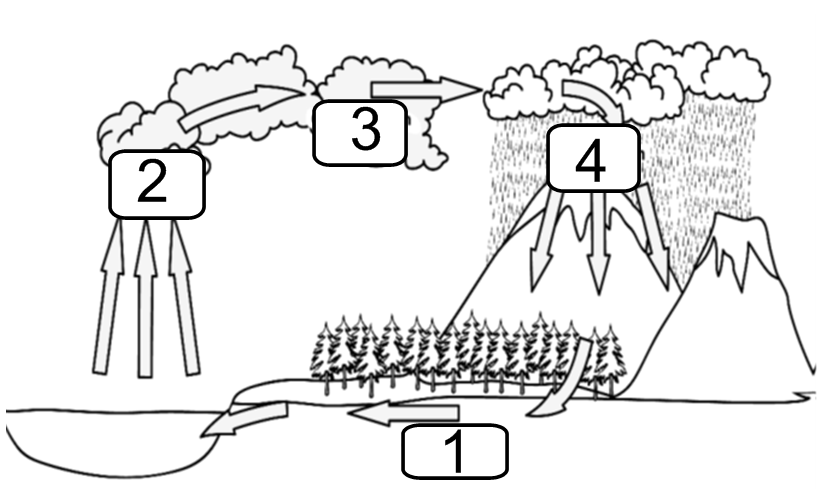
What could I add to improve this model?
An arrow from the trees to the clouds
A puddle evaporating
Birds in the sky
An arrow from the mountains to the clouds
In what layers of the atmosphere does temperature increase with altitdue?
Mesosphere & Thermosphere
Troposphere & Stratosphere
Stratosphere & Thermosphere
Troposphere & Mesosphere
In the stratosphere, the ozone layer is located in the...
Lower region
Upper region
Density is a relationship between mass and volume. If density goes up, that means there are _____ molecules in the same space.
more
less
True or False: The independent variable causes something to change.
True
False
True or False: The dependent variable changes in response to something else.
True
False
Hint: It may change as a result of your testing.
On a graph, the independent variable is located on the...
X axis
Y axis
On a graph, the dependent variable is located on the...
X axis
Y axis
Select the example that is NOT a method of humans increasing greenhouse gases.
Burning Fossil Fuels in Factories
Driving Cars That Use Gasoline
Erupting a Volcano
Setting Fire to a Forest to Clear Land

The greenhouse effect is about
warming the atmosphere because of increased CO2 levels
warming the atmosphere because of decreased CO2 levels
cooing the atmosphere because of increased CO2 levels
cooling the atmosphere because of decreased CO2 levels

The greenhouse effect is a natural process
true
false

The greenhouse effect is caused by
more heat arriving at the Earth from the sun
the Earth releasing more heat at night
gases in the air trapping heat released by the Earth

Which of the gases is NOT a greenhouse gas?
water vapour
carbon monoxide
carbon dioxide
methane
The greenhouse effect can be helpful.
True
False
What tool is used to measure liquids?
Graduated Cylinder
Beaker
Cup
Eye Dropper or Pipette
The group you use to compare your data to is called the
constant
control group
variable
observation
How many things do you change in an experiement?
0
1
2
3
What do you call the things you keep the same in an experiement?
control group
constants
variables
observations

The image shows various stages in the water cycle. During which stage does water flow back towards the sea as runoff?
W
X
Y
Z
Condensation occurs when water vapor_____________.
heats up and becomes liquid water
cools off and becomes liquid water
freezes and becomes ice
rains on the land



The things that are kept the same to ensure the results are due to the experiment is called..
Constant
Dependent Variable
Independent Variable

Boiling Water
Conduction
Convection
Radiation

Curling Iron
Conduction
Convection
Radiation

Sun Bathing
Conduction
Convection
Radiation

Radiation is how heat transfers through...
Fluids
Direct Contact
Empty Space
Which shows an example of convection?
Jose cooks an egg in a pot of boiling water.
Clara burns her hand by touching a light bulb.
Lucy wraps herself in an electric blanket to keep warm.
Ben holds the end of a metal rod in a fire to cook hot dogs.
Which is an example of radiated heat for cooking?
cooking a pot of soup
scrambling eggs on the stove
grilling hot dogs over a campfire
frying hamburgers in a frying pan
Which is an example of radiation?
boiling a pot of noodles for dinner
getting hot from lying in the sun
feeling warm while taking a shower
burning yourself after touching a hot plate
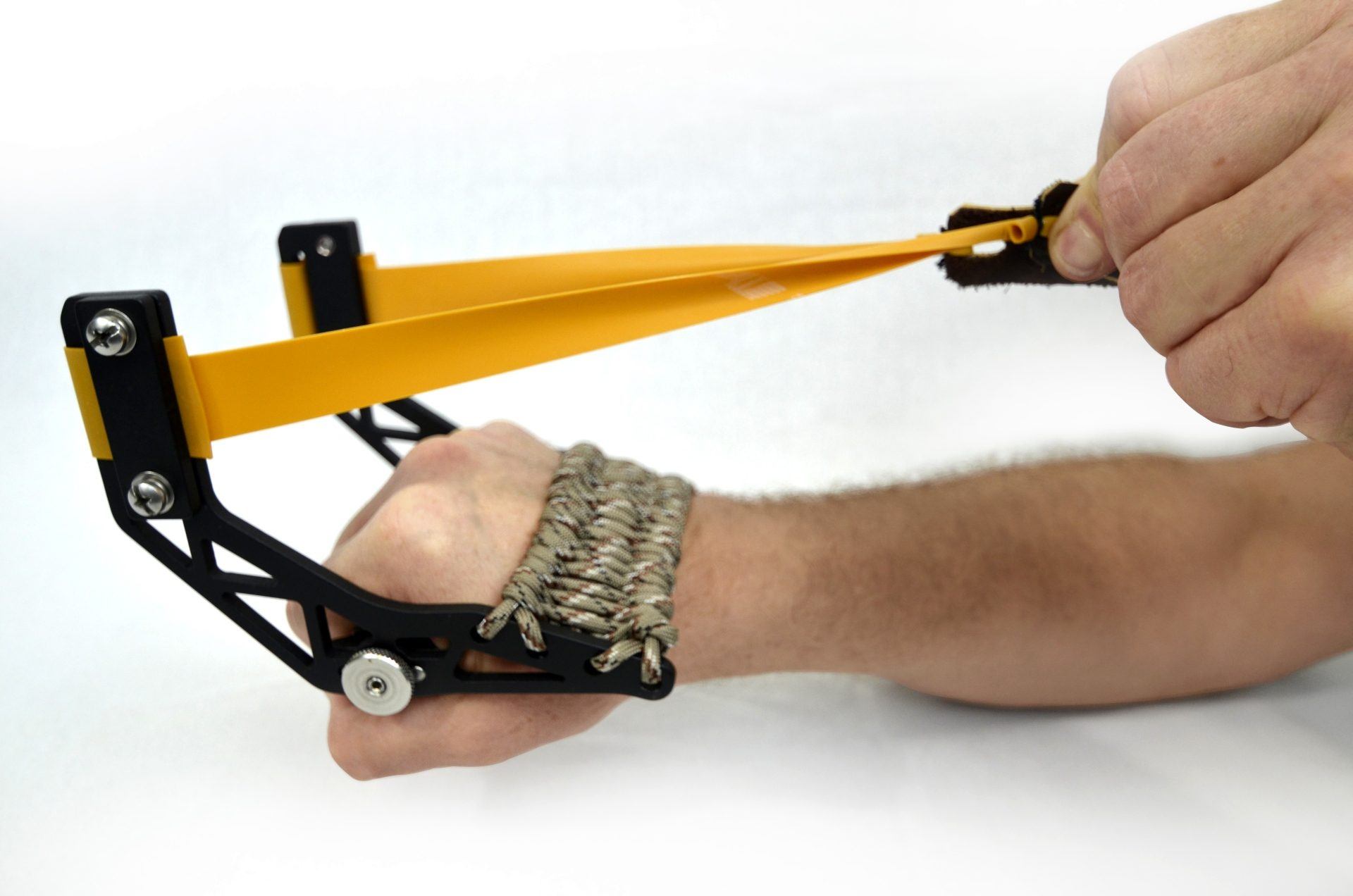


When you compress a spring, you are storing __________ energy.
sound
elastic
light
chemical


