
 Worksheets
25-26 World War I Review
Total questions: 21
Worksheet time: 11mins
Which incident played a major role in triggering the outbreak of World War I in Europe?
the assassination of Archduke Franz Ferdinand
the sinking of the Lusitania by German U-boats
the publication of the Zimmermann note
The acceptance of the Sussex Pledge
What defensive structure was consistently present throughout the Western Front to shield soldiers during World War I?
tanks
trenches
poison gas
U-Boat
When did the United States join World War I during the conflict?
At the start of the war
Soon after the war began
Three years after the war started
The United States remained neutral for the entire war
Under General John J. Pershing's leadership, what was the official name of the U.S. military forces?
the American Expeditionary Forces (AEF)
United States Militia.
Western Front Troops.
Foreign Legion
Which of the following World War I events happened most recently?
The United States enters the war after the Zimmerman telegram is revealed.
Austria-Hungary announces its entry into the conflict.
Archduke Franz Ferdinand is killed.
The Lusitania is sunk by a German submarine.
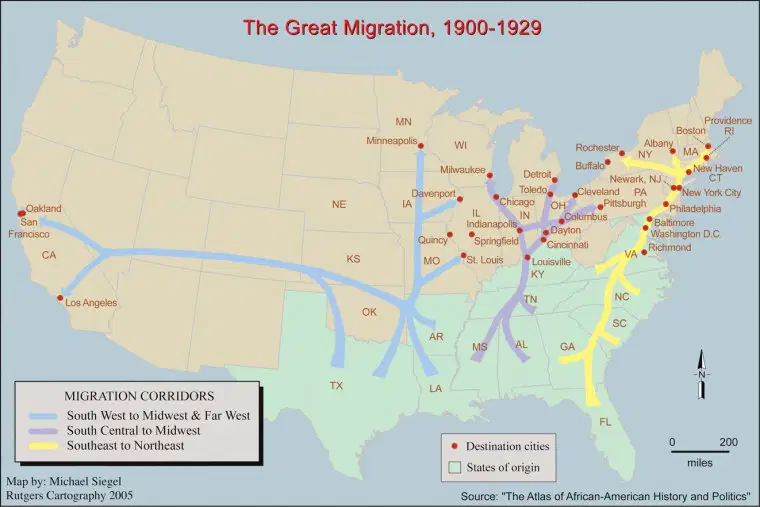
Based on the map and your knowledge of the 1920s, what inference can you make about population trends during this period?
Cities with larger populations experienced greater financial difficulties compared to less populated rural regions.
Suburban populations remained stable despite migration from rural communities.
Rural regions experienced population growth as people left cities due to economic disparities.
Rural populations decreased as individuals relocated to cities in search of improved economic prospects.
In what way did the arrival of the American Expeditionary Force benefit the Allies in their fight against Germany?
They drove German forces back into Russian territory.
They bolstered the Allies' ability to withstand German offensives.
They assisted in the training of French and British soldiers.
They organized convoys to safeguard Allied ships crossing the Atlantic.
Why did Senator Henry Cabot Lodge and other members of Congress resist President Wilson’s proposal for the League of Nations and his Fourteen Points?
They feared the United States would lose its economic dominance.
They considered Wilson’s ideas too progressive and idealistic.
They worried that joining the League would draw the United States into international conflicts.
They believed that promoting self-determination could harm Europe’s economic stability.
Which law mandated that men in the United States sign up for possible military duty?
Selective Service Act
Sedition Act
Espionage Act
Fourteen Points
Which law prohibited actions such as spying, assisting enemy forces, or obstructing military recruitment during wartime?
Selective Service Act
Sedition Act
Espionage Act
Fourteen Points
Which law prohibited individuals from expressing, publishing, or distributing criticism against the government or its actions during wartime?
Selective Service Act
Sedition Act
Espionage Act
Fourteen Points
Woodrow Wilson proposed this set of principles to promote lasting peace in Europe following World War I.
Selective Service Act
Sedition Act
Espionage Act
Fourteen Points
Which organization was responsible for converting civilian manufacturing facilities into producers of military equipment during wartime?
War Industries Board
National War Labor Board
Alien and Sedition Act
Espionage Act
Which organization was responsible for maintaining positive relations between employees and employers to avoid labor strikes?
War Industries Board
National War Labor Board
Alien and Sedition Act
Espionage Act
Which phrase describes the large-scale relocation of African Americans from Southern states to urban areas in the North?
Great Migration
African American Migration
World Migration
Great Depression
Identify the technology from the list below that was not developed or used in World War I.
Atomic Bomb
Tanks
Poison Gas
Submarines
Which of the following was NOT included in Woodrow Wilson's Fourteen Points?
Reduction of armaments
Promotion of self-determination
Establishment of the League of Nations
Expansion of military forces
Which agreement formally concluded World War I and imposed penalties on Germany?
the Treaty of Versailles
Treaty of Paris
Treaty of Ft. Laramie
Treaty of London
Which international organization, established after the First World War with the goal of maintaining global peace and preventing future conflicts, included representatives from many nations?
League of Nations
United Nations
Justice League
League of Extraordinary Gentlemen
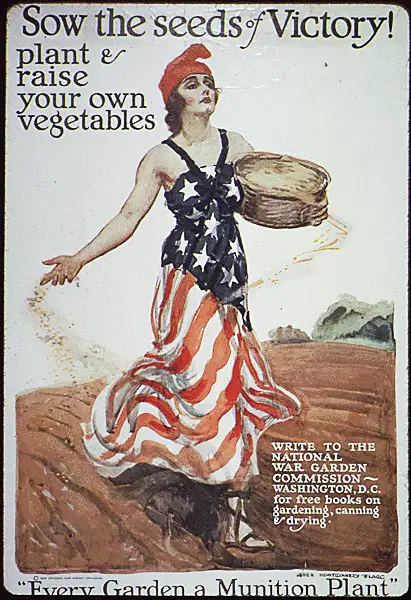
Which idea is most strongly promoted by this propaganda poster?
Save your equipment
Cultivate your own produce
Protect farmland
Join the military effort

