
 Worksheets
Digestive System Diseases & Disorders
Total questions: 20
Worksheet time: 20mins
Which statement best defines a cleft lip?
A congenital split in the roof of mouth
A congenital gap where upper lip fails to fuse
Temporary swelling of the upper lip after birth
An acquired injury to lower lip tissues
In cleft palate, what anatomical feature is primarily affected?
Roof of mouth showing a split or fissure
Upper lip fusion with upper jaw
Alignment of lower jaw with teeth
Tongue attachment to floor of mouth
Both cleft lip and cleft palate are best classified as what?
Nutritional deficiencies in infancy
Congenital anomalies present at birth
Traumatic injuries from accidents
Infectious diseases of oral cavity
If a newborn shows an open gap where the upper lip should meet the upper jaw, which condition is most likely?
Tonsillitis causing throat swelling
Gingivitis involving the gums only
Cleft palate affecting the roof of mouth
Cleft lip due to failed lip fusion
Which statement best defines Gastroesophageal Reflux Disease (GERD)?
Stomach acid repeatedly flows into the esophagus
Stomach enzymes stop digesting carbohydrates
Bacteria invade the upper small intestine only
Food moves too slowly through the large intestine
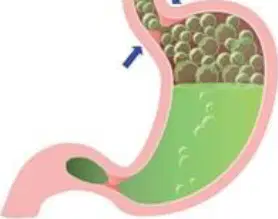
In the diagram, which structure does stomach acid flow back into during GERD?
Jejunum in the small intestine
Trachea leading to the lungs
Esophagus above the stomach opening
Colon in the large intestine
Peptic ulcer disease is best described as what condition?
Open sores forming in the esophagus, stomach, or duodenum
A viral swelling of the pancreas and gallbladder
A blockage at the lower end of the colon
An allergic rash on the lining of the small intestine
Where can peptic ulcers occur? Choose the most complete option.
Rectum, anus, or appendix
Lower esophagus, stomach, or duodenum
Mouth, trachea, or bronchi
Jejunum, ileum, or cecum
What is a perforated ulcer?
An ulcer that forms from a bacterial rash
An ulcer that only appears at night
An ulcer that heals with thick scar tissue
An ulcer that goes through the entire wall
Which symptom is most consistent with acid irritating the esophagus in GERD?
Sharp pain only in the right shoulder
Burning chest discomfort after meals
Sudden loss of voice for one month
Itchy skin rashes on the forearms
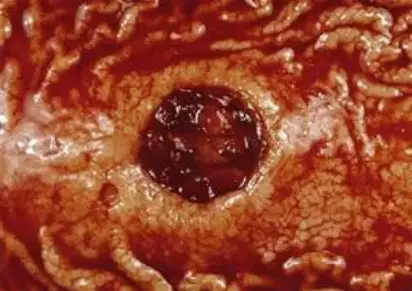
A patient with a bleeding duodenal ulcer is most likely to show which sign first?
Dark, tarry stools from digested blood
Skin peeling on the fingertips only
Frequent urination without any pain
Yellowing of the whites of the eyes
Which location pairing correctly matches the condition?
GERD: rash in duodenum; Ulcer: bruise on pancreas
GERD: sores in colon; Ulcer: acid in trachea
GERD: acid in esophagus; Ulcer: sore in stomach lining
GERD: enzyme loss in liver; Ulcer: mucus in bronchi
What might happen if you had your pancreas removed?
your intestines might have trouble breaking down food
your stomach might have trouble producing chyme
you might not be able to chew properly
you might have trouble producing saliva
Which of the following conditions does NOT usually produce symptoms for the patient
diverticulitis
crohn's disease
GERD
diverticulosis
Symptoms of Crohn's disease may include all of the following EXCEPT:
abdominal pain
diarrhea
joint pain
bradycardia
A patient with liver disease may experience:
jaundice
ascites
jaundice & ascites
NONE of these options are correct
Your patient is having bowel movements that contain bright red blood. What pathological condition might he have? Check all that apply.
a bleeding ulcer in the stomach
hemorrhoids
ulcerative colitis
a tear in the esophagus
Your patient is experiencing melena. What pathological condition might she have? Check all that apply
a bleeding ulcer in the stomach
hemorrhoids
Crohns disease
a tear in the esophagus
What procedure could help help to diagnose ulcerative colitis?
upper gastrointestinal series
bariatric surgery
UA
colonoscopy

