
 Worksheets
Great Depression Passage Questions
Total questions: 55
Worksheet time: 35mins
Directions: Read the passage below and answer the question(s) that follow. Passage excerpt: “We propose to limit the amount any one man can earn in one year or inherit to $1 million to the person… By limiting the size of the fortunes and incomes of the big men, we will throw into the government Treasury the money and property from which we will care for the millions of people who have nothing; and with this money we will provide a home and the comforts of home, with such common conveniences as radio and automobile, for every family in America, free of debt.” — Senator Huey Long, 1935 How did President Franklin D. Roosevelt respond to the circumstances described in this passage?
renewing New Deal programs to help big business
raising taxes to assure a balanced federal budget
stressing free market economic principles
increasing New Deal efforts for relief and reform
Directions: Read the passage below and answer the question(s) that follow. Passage excerpt: “We propose to limit the amount any one man can earn in one year or inherit to $1 million to the person… By limiting the size of the fortunes and incomes of the big men, we will throw into the government Treasury the money and property from which we will care for the millions of people who have nothing; and with this money we will provide a home and the comforts of home… for every family in America, free of debt.” — Senator Huey Long, 1935 Based on these statements by Senator Long, one reason for the suffering caused by the Great Depression was the
failure of President Franklin D. Roosevelt to sign relief legislation
overproduction of military equipment
uneven distribution of income that favored the rich
failure of labor unions to accept shorter work days
After the election of 1932, a friend told President Franklin D. Roosevelt that if he succeeded he would go down in history as the greatest American President. Roosevelt replied, “Yet if I fail, I may be the last one.” This response reflected President Roosevelt’s belief that the
Constitution limited him to two terms in the Presidency
military was seriously considering a takeover of the government
Great Depression threatened the people’s faith in democracy
American people were opposed to major changes in the role of government
A lasting effect of the New Deal has been that government began to
own the principal means of producing goods and services
allow natural market forces to determine economic conditions
maintain a balanced federal budget during hard economic times
assume more responsibility for the well-being of its citizens
By putting thousands of people immediately to work at good-paying jobs and providing access to low-cost electricity to a region lacking cheap electrical power, the _____ proved to be immensely popular among those Americans it served.
the Public Works Administration
Agricultural Adjustment Act
Tennessee Valley Authority
Civilian Conservation Corps
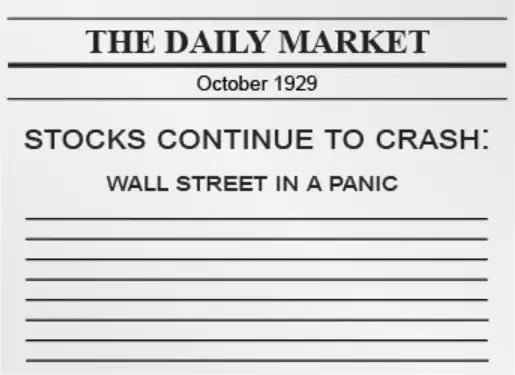
Use the newspaper headline describing the 1929 stock market crash in the United States to answer the question. In 1929, the US stock market crashed and investors lost over $25 billion. How did this affect the United States?
It deepened the economic depression in the country, causing the government to take a larger role in regulating the national economy.
It motivated the United States to engage in colonialism to secure new resources, which damaged its relationships with other countries.
It caused the Senate to authorize the country to join the League of Nations so that it could benefit from aid provided to member states.
It led to the reelection of Herbert Hoover in a landslide victory after he created numerous government programs to help those affected.

Use the quotation from a "fireside chat" delivered by President Franklin D. Roosevelt in 1934 to answer the question. "A few timid people, who fear progress, will try to give you new and strange names for what we are doing. Sometimes they will call it 'Fascism', sometimes 'Communism', sometimes 'Regimentation', sometimes 'Socialism'. But, in so doing, they are trying to make very complex and theoretical something that is really very simple and very practical." — President Franklin D. Roosevelt, "Fireside Chat," June 28, 1934 In the quotation, Roosevelt is discussing criticism of the New Deal. Why did critics of the programs equate them with these terms?
because the programs represented an effort by the federal government to grant states greater control over public policy
because the programs represented an effort by the federal government to prioritize the interests of the wealthy
because the programs represented an effort by the federal government to restrict freedom of speech and censor citizens
because the programs represented an effort by the federal government to exert greater control over the economy
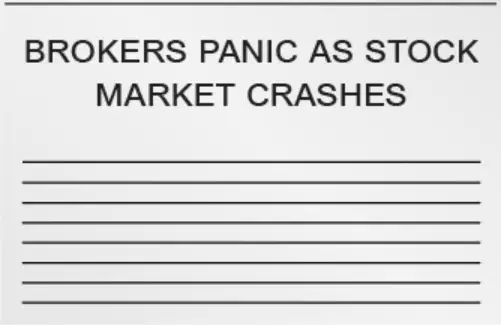
Read the newspaper headline and answer the question. Why did this 1929 event cause people who had not invested in the stock market to lose their savings? Headline: THE DAILY ECONOMIST — BROKERS PANIC AS STOCK MARKET CRASHES.
Banks failed after losing their depositors' money in the stock market.
The government had invested social security funds in the stock market.
Stockbrokers issued margin calls on debts that were owed to them.
Banks issued credit to people who could not afford to repay their debt.
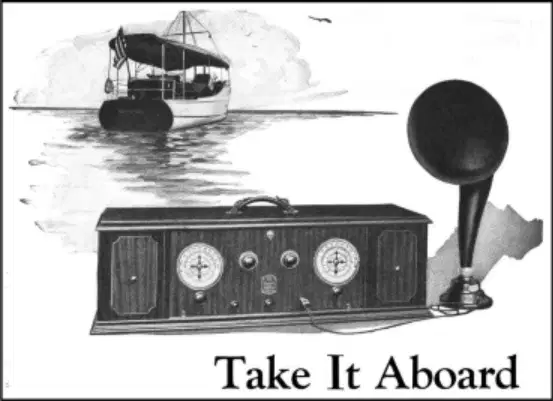
Use the 1920s advertisement for a radio to answer the question. Adjusted for inflation, radios such as this cost several thousand dollars in the 1920s. How did changing demand for high-cost products like radios affect employment in the late 1920s and early 1930s?
Demand fell because most people could not afford such products, leading to unemployment in related industries such as timber, mining, and glass working.
Demand rose because of the Gospel of Wealth philosophy popularized by Andrew Carnegie, leading to increased production and economic growth.
Demand rose because affluent people sought to display their wealth, increasing employment in related industries such as timber, mining, and glass working.
Demand fell because people viewed such products as too decadent during the Roaring Twenties, leading to falling production and economic decline.
Samuel is studying the history of the United States government. He learns that the Supreme Court declared the Agricultural Adjustment Act and the National Industrial Recovery Act unconstitutional. Later, President Franklin D. Roosevelt attempted to “pack” the Supreme Court. Which constitutional issue was raised by these events?
power of federal government to regulate interstate trade and taxes
separation of powers between the judicial and executive branches
extent of the implied powers of the legislative branch
authority of the states to nullify federal laws
Which statement describes the effect Herbert Hoover’s conservative tax policies had on the economy in the 1930s?
Rising inflation led to expansion of existing commercial development.
The Great Depression deepened because of declining individual incomes.
The Treasury Department was able to raise money to pay for New Deal programs.
Legislators were able to balance the federal budget after years of government deficits.
Which of the following best explains United States foreign policy between the First World War and the Second World War?
The United States enacted an imperialist policy in order to expand the territories it gained during the Spanish-American War.
The United States followed an isolationist policy in order to avoid becoming involved in another conflict abroad.
The United States established an expansionist policy in order to revive the concept of Manifest Destiny.
The United States created a cooperative policy that attempted to resolve disputes through international organizations.
Many of the New Deal programs that Franklin Roosevelt favored were based on economic policies originating with John Maynard Keynes’ theories that stated
government spending could help revive a failing economy.
a government should not spend money in order to “prime the pump” in a slumping economy.
the government should encourage consumers to save their money by investing it in the banks.
a failing economy would eventually revive if the government simply stood by and waited long enough for the system to work itself out.
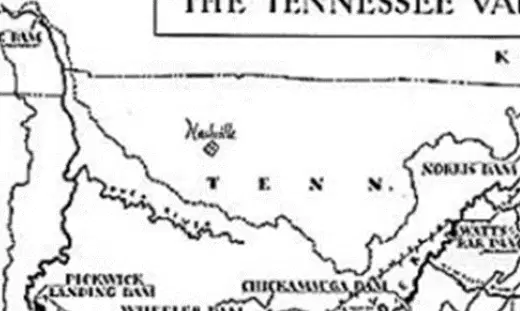
Refer to the map titled THE TENNESSEE VALLEY. How did the New Deal program improve life in this area?
by building dams that brought electricity to the region
by forcing residents to stop growing crops
by offering only direct relief programs to the poor
by developing new crops that could withstand the drought
How did the 20th Amendment to the Constitution change the presidential election process?
It limited the president to two terms in office.
It outlawed literacy tests and poll taxes as a requirement for voting.
It placed limits on the amount of money a candidate can spend.
It moved the inauguration date from March to January.
What was the original purpose of President Roosevelt’s radio talks known as “fireside chats”?
to encourage citizens to report suspicious activities
to restore confidence to citizens during economic difficulties
to provide instructions to citizens for resisting an enemy invasion
to inform citizens on the progress of World War II at home and abroad
Use the information in the list to answer the question. Smoot Hawley Tariff • Raised tariff rates on thousands of items • Enacted into law in June 1930 • U.S. imports from Europe declined by $944 million between 1929 and 1932 • U.S. exports to Europe declined by $1557 million between 1929 and 1932 Which statement BEST reflects a reason business might object to protectionist policies such as the Smoot Hawley Tariff?
The use of tariffs results in decreased prices on imports.
The use of tariffs often leads to a rise in tax rates.
Tariffs eliminate government subsidies for industries.
Tariffs often cause a decrease in world trade.
The phrase Hundred Days refers to the
worst months of the Great Depression
time it took for Congress to begin acting on President Roosevelt's plans for combating the Great Depression
flood of legislation passed by Congress in the first months of Franklin Roosevelt's presidency
"lame-duck" period between Franklin Roosevelt's election and his inauguration
A lasting effect of the New Deal has been that government began to
own the principal means of producing goods and services
allow natural market forces to determine economic conditions
maintain a balanced federal budget during hard economic times
assume more responsibility for the well-being of its citizens
Use the list to answer the question. Federal Deposit Insurance Corporation (FDIC) • Established in 1933 • Insures bank deposits • Reduces instability caused by bank failures Which conclusion is best supported by the list?
Regulations on financial institutions led to a decrease in state revenues.
Financial institutions were taken over by the national government.
National markets were collectivized to stabilize the economy.
Government reforms helped restore confidence in the economy.
What were the events of Black Tuesday that contributed to the Wall Street Crash of 1929?
the unemployment rate soared
an alarming number of banks closed
a massive number of people sold their stocks
a record number of businesses went bankrupt
Use the excerpts below to answer the question. The proposals of our opponents will endanger or destroy our system. ... I especially emphasize that promise to promote "employment for all surplus labor at all times ..." If it were possible to give this employment to 10,000,000 people by the government, it would cost upwards of $9,000,000,000 a year. ... It would pull down the employment of those who are still at work by the high taxes and the demoralization of credit upon which their employment is dependent. ... —Herbert Hoover, 1932 We have two problems: first, to meet the immediate distress; second, to build up on a basis of permanent employment. As to "immediate relief," the first principle is that this nation ... owes a positive duty that no citizen shall be permitted to starve. ... In addition to providing emergency relief, the Federal Government should and must provide temporary work wherever that is possible. ... —Franklin D. Roosevelt, 1932 Based on these excerpts, which policy would have been supported by Hoover and not by Roosevelt?
Worker unions should have more collective bargaining rights.
Economic stability can only be achieved through laissez-faire practices.
Business owners should hire more workers to support social programs.
Economic stability can only be achieved through increasing foreign tariffs.

How did the New Deal aim to address the problem of unemployment?
By encouraging the private sector to create more jobs
By implementing tax cuts for the wealthy to stimulate investment
By creating government programs that directly employed millions of people
By outsourcing government jobs to foreign countries

What was the primary effect of the Wagner Act (National Labor Relations Act) of 1935?
It made child labor illegal
It granted workers the right to form unions and bargain collectively
It established minimum wage laws
It provided unemployment insurance
How did the New Deal address unemployment?
By encouraging the private sector to create jobs
By implementing tax cuts for the wealthy
By creating government programs that employed millions
By outsourcing government jobs
What was the primary goal of the Social Security Act of 1935?
To regulate the stock market
To provide pensions for retired workers
To insure bank deposits
To create jobs through public works projects
Which program was established to regulate the stock market?
The Securities and Exchange Commission (SEC)
The Federal Emergency Relief Administration (FERA)
The Works Progress Administration (WPA)
The National Industrial Recovery Act (NIRA)
What was the main purpose of the Agricultural Adjustment Act (AAA)?
To increase the production of crops
To reduce crop surplus and raise agricultural prices
To provide direct financial aid to farmers
To encourage the use of modern farming techniques
What was the main goal of the Public Works Administration (PWA)?
To provide affordable housing
To reduce unemployment through large-scale public works projects
To improve rural electrification
To support the arts and culture
How did the government respond to the banking crisis during the Great Depression?
By closing all banks permanently
By implementing a nationwide bank holiday to prevent runs on banks
By removing the United States from the gold standard
By allowing foreign banks to take over American banks
What was the outcome of the Supreme Court's ruling on the National Industrial Recovery Act (NIRA)?
It was upheld as constitutional
It was struck down as unconstitutional
It was modified but ultimately kept in place
It led to the impeachment of several Supreme Court justices
How would you expect governments to respond to the Great Depression?


Which New Deal agency was created to specifically serve this population?
Federal housing Administration
Securities and Exchange Commission
Federal Deposit Insurance Corporation
Social Security Administration

This photograph shows a 1934 painting by an artist with the Public Works of Art Project during the Great Depression.
What is the MOST LIKELY reason the Public Works of Art Project commissioned this painting?
To promote optimism for US economic progress during the Great Depression
To demand federal worker safety laws during the Great Depression
To encourage competition for US technological superiority during the Great Depression
To question the success of nationalizing industries during the Great Depression

This poster was published by the Social Security Board in 1935.
How did the new program described in the poster affect the role of the Federal Government?
it provided the federal government with a role in administration and retired fund for workers
it limited the federal government's power to enforce minimum wage requirements
it provided the federal government with a role in managing workers bank accounts
it limited the federal government's power to assist workers in manufacturing plants

This political cartoon to the right illustrates one way in which the New Deal tried to solve the problems created by the Great Depression. What was is being suggested to solve these problems?
To provide federal aid to the economy despite growing costs
Reduce taxes on big businesses in hopes it would stimulate job growth
Lower federal spending to maintain a balanced budget
Decrease foreign competition in the economy
What is the NRA?
National Registration Administration
National Recovery Administration
National Reservation Act
National Redistribution Acts

