
 Worksheets
IT ACC
Total questions: 110
Worksheet time: 2hrs 50mins
Companies change their information systems for which of the following reason(s)?
Changes in user or business needs
Improved business processes
Productivity gains
All of the above are correct.
Which of the following is NOT a reason why companies make changes to their AIS?
gain a competitive advantage
increase productivity
downsize company operations
keep up with business growth
All of the above are reasons why companies change an AIS.
NOT listed as one of the five main drivers for why organizations change their information systems?
Employee Satisfaction
Competitive Advantage
Technological Changes
Improved Business Processes
Nashua Corporation reduced its order processing time from two days to three minutes. This is an example of which driver for change?
Systems Integration
Improved Business Processes
User/Business Needs
Technological Changes
Which phase of the SDLC is referred to as the 'Investigation' phase?
Implementation
Conceptual Design
Systems Analysis
Physical Design
The purchasing department is designing a new AIS. Who is best able to determine departmental information requirements?
steering committee
top management
purchasing department
controller
In which systems development life cycle (SDLC) step does the company translate broad, user-oriented systems requirements into the detailed specifications used to create a fully developed system?
physical design
operations and maintenance
conceptual design
implementation and conversion
systems analysis
Who in the organization is responsible for planning individual system development projects and monitoring the project to ensure timely and cost-effective completion?
project development team
information systems steering committee
management
users
systems analysts
In which systems development life cycle (SDLC) step do all the elements and activities of the system come together to form a completed operational system?
implementation and conversion
conceptual design
systems analysis
operations and maintenance
physical design
Who in the organization is responsible for planning and overseeing the information systems function?
users
systems analysts
information systems steering committee
project development team
management
Companies change their information systems for which of the following reason(s)?
Productivity gains
Changes in user or business needs
Improved business processes
All of the above are correct.
In which systems development lifecycle step is documentation completed?
Systems analysis
Operation and maintenance
Physical design
Conceptual design
Implementation and conversion
In which software development life cycle (SDLC) step do all the elements and activities of the system come together to form a completed operational system?
Physical design
Implementation and conversion
Operations and maintenance
Systems analysis
Conceptual design
In which software development life cycle (SDLC) step is the new system periodically reviewed and modifications made as problems arise, or as new needs become evident?
Systems analysis
Physical design
Operations and maintenance
Conceptual design
Implementation and conversion
In which software development life cycle (SDLC) step does the company decide how to meet user needs and develop a blueprint for detailed systems design?
Conceptual design
Systems analysis
Implementation and conversion
Implementation and conversion
Physical design
In which software development life cycle (SDLC) step is the information needed to purchase, develop, or modify a system gathered, and a list of systems requirements produced?
Systems analysis
Conceptual design
Physical design
Implementation and conversion
Operations and maintenance
In which software development life cycle (SDLC) step does the company translate broad, user-oriented system requirements into the detailed specifications used to create a fully developed system?
Conceptual design
Physical design
Operations and maintenance
Systems analysis
Implementation and conversion
Why do organizations usually change their information systems?
Because technology companies require them to
Due to specific internal or external pressures
To increase employee workload
For entertainment purposes
Which of the following is NOT listed as one of the main drivers for changing information systems?
User/Business Needs
Improved Business Processes
Desire to redesign the company logo
Competitive Advantage
The “Competitive Advantage” driver focuses on:
A. Improving the quality, quantity, and speed of information
B. Reducing operational costs
C. Only increasing market share without using IS
D. A and B
“Systems Integration” is described as a massive task most commonly seen in:
Small startups
Large government organizations (e.g., U.S. Department of Defense)
Retail stores
Local schools
Investing in technology for competitive advantage typically aims to:
Only reduce costs
Only improve information speed
Both improve information quality and lower costs
Only make financial reports look better
Which driver is explicitly described in the document as “a massive task”?
Improved Business Processes
Systems Integration
Competitive Advantage
Technological Changes
How many distinct drivers for changing information systems are presented in the document?
4
5
6
7
Which of the following is the planning technique that identifies implementation activities and their relationships, constructs a network of arrows and nodes, and then determines the critical path through the network?
Gantt chart
PERT diagram
physical model
data flow diagram
Which of the following is the long-range planning document that specifies what the system will consist of, how it will be developed, who will develop it, how needed resources will be acquired, and its overall vision?
master plan
systems development life cycle
steering committee agenda
project development plan
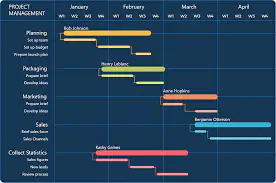
The advantage(s) of the Gantt chart include
showing the greatest amount of time to complete a project.
showing the relationships among project activities.
showing graphically the entire schedule for a large and complex project.
All of the above are correct.
Two different types of plans are used to manage the system development process. A plan that contains developmental and operational requirements and a schedule of the activities required to develop and operate a new application is called a(n):
master plan
application activities plan
strategic plan.
project development plan.
Two different types of plans are used to manage the system development process. A plan that specifies what a system will consist of, how it will be developed, who will develop it, and how needed resources will be acquired is called a(n):
master plan.
project development plan.
application activities plan.
strategic plan.
Two different types of charts are used to schedule and monitor systems development activities. One charting technique uses activities, and the precedent and subsequent relationships among them, to identify a critical path so that resources can be shifted to critical path activities in order to reduce project completion time. This is called a:
progam evaluation review technique (PERT) chart.
critical path chart.
Gantt chart.
project completion chart.
Two different types of charts are used to schedule and monitor systems development activities. One charting technique graphically shows the entire schedule for a project, including the progress to date and the different development activities. This is called a:
Gantt chart.
critical path chart.
progam evaluation review technique (PERT) chart.
project completion chart.
There are several different types of feasibility analyses. The analysis that seeks to answer the question, ''Can the system be developed and implemented in the time allotted?'' is called:
economic feasibility.
operational feasibility.
technical feasibility.
legal feasibility.
scheduling feasibility.
According to the Standish Group study mentioned, what percentage of software projects were considered unsuccessful?
A. 34%
B. 54%
C. 66%
D. 70%
Projects that consume huge resources but deliver little or no usable results are called:
Success stories
Runaways
Minor delays
Budget-friendly projects
The Systems Development Life Cycle (SDLC) consists of how many distinct phases?
3
4
5
6
The main goal of Phase 1 (Systems Analysis) is to:
Write code
Understand the problem and determine what the new system must do
Install hardware
Train users
A feasibility study is primarily conducted during which SDLC phase?
Systems Analysis
Conceptual Design
Physical Design
Operations and Maintenance
Which phase is referred to as the “Blueprint” phase?
A. Systems Analysis
B. Conceptual Design
C. Physical Design
D. Implementation
Which of the following activities belongs to the Physical Design phase?
A. Conducting a feasibility study
B. Designing database tables and structures
C. Training employees
D. Performing post-implementation review
The phase where the system finally “goes live” is called:
A. Physical Design
B. Operations and Maintenance
C. Implementation and Conversion
D. Conceptual Design
Planning, managing behavioral reactions, and assessing feasibility are:
A. Only done once at the beginning
B. Ongoing activities throughout the entire SDLC
C. Only performed during maintenance
D. Not important in modern SDLC
Who ensures the system aligns with corporate strategy and sets major objectives?
A. Users – communicate information needs and help test systems
B. Management – sets goals, provides support, and aligns systems with corporate strategy
C. Systems Analysts – analyze requirements and design system solutions
D. External Players – influence development through regulations or requirements
Who communicates information needs and actively helps with testing and auditing?
A. Users – participate in committees, testing, and control design
B. Management – provides resources and sets strategies
C. Project Development Team – monitors project progress
D. External Players – provide outside requirements
Which group provides top-management guidance by setting IS policies and overseeing the IS function?
A. IS Steering Committee – sets policies and oversees major IS projects
B. Systems Analysts – design and analyze system needs
C. Users – provide operational insight
D. Programmers – write and test code
Who guides project tasks, monitors progress, and communicates status to management?
A. Project Development Team – plans tasks, monitors milestones, reports progress
B. Management – sets overall strategic direction
C. Users – participate in testing
D. External Players – influence via regulations
5. Which role determines user needs and creates system specifications?
Programmers – write and test code
A. Systems Analysts – gather requirements, design systems, prepare specs
Management – sets system goals
IS Steering Committee – provides IS policy guidance
Which group influences development because of legal, regulatory, or industry requirements?
Management
Systems Analysts
External Players
Users
Who considers human factors, coordinates project activities, and ensures communication?
External Players
Management
Systems Analysts
Project Development Team
Who provides both technical and non-technical support, manages schedules, and communicates progress?
Project Development Team
Systems Analysts
Management
External Players
What is the primary focus of a Project Development Plan?
Long-term strategy for the entire company's IT needs
A specific plan for a single project, including cost-benefit analysis and resources
Prioritizing all company projects over a three-year period
Detailing system components and development processes for multiple projects
Which of the following is NOT a component of the Project Development Plan?
Cost-benefit analysis.
Resource requirements for people, hardware, software, and financial aspects
Schedule of activities
Prioritization criteria for company-wide projects
What does the Master Plan primarily represent?
A short-term schedule for individual project activities
A long-term strategy (usually 3 years) for the whole company's IT needs
Resource requirements for a single project
Cost-benefit analysis for hardware and software
In what way do the Project Development Plan and Master Plan differ in scope?
The Project Development Plan is company-wide, while the Master Plan is for single projects
The Master Plan is long-term and prioritizes projects, while the Project Development Plan is project-specific with resources and schedules
Both plans are identical in focusing on cost-benefit analysis only
The Master Plan excludes timetables, unlike the Project Development Plan
Determining whether the organization has access to people who can design, implement, and operate the proposed system is referred to as which of the following?
economic feasibility
operational feasibility
legal feasibility
technical feasibility
scheduling feasibility
Which type of feasibility answers the question “Will system benefits justify the costs?”
a) Technical feasibility
b) Operational feasibility
c) Economic feasibility
d) Scheduling feasibility
Which of the following is NOT one of the tangible or intangible benefits a company might obtain from a new system?
improved customer service and productivity
improved data processing
improved decision making
cost savings
All are benefits of a new system.
There are several different types of feasibility analysis. Which type of analysis seeks to answer the question: "Does the system comply with all applicable federal and state laws, administrative agency regulations, and contractual obligations?"
scheduling feasibility
technical feasibility
legal feasibility
economic feasibility
operational feasibility
There are several different types of feasibility analysis. The analysis that seeks to answer the question "Can the system be developed and implemented using existing technology?"
scheduling
legal
technical
economic
operational
Which of the following statements is false?
When data gathering is complete, the current system's strengths and weaknesses are evaluated to generate ideas for how to design and structure the new system.
When a project is deemed feasible, user needs are identified and system requirements are documented.
Determining information needs is a relatively easy task because most employees can adequately explain their information needs.
A feasibility analysis is updated regularly as a project proceeds and costs and benefits become clearer.
All the following represent possible initial outlay or operating costs of a new system
except:
payments to foreign government officials.
payments to consultants.
new hardware and software.
site preparation improvements.
Grizzley Corp implemented a new system three months ago. Although the changes were well-planned, well-designed, and thoroughly tested before and after conversion, the changes haven't resulted in any productivity increases or process improvements. What would be the best course of action for the management of Grizzley Corp to take in order to find out what may be the issue?Make observations of how the system is currently working.
Make observations of how the system is currently working.
Conduct interviews with employees to find out why the changes weren't as effective as planned.
Study the system documentation to find out what may have gone wrong.
Have employees answer questionnaires about the system.
There are several different types of feasibility analyses. The analysis that seeks to answer the question, ''Can the system be developed and implemented in the time allotted?'' is called:
legal feasibility.
technical feasibility.
operational feasibility.
economic feasibility.
scheduling feasibility.
There are several different types of feasibility analyses. The analysis that seeks to answer the question ''Will system benefits justify the time, money, and resources required to implement it?'' is called:
operational feasibility.
economic feasibility.
scheduling feasibility.
technical feasibility.
legal feasibility.
There are several different types of feasibility analyses. The analysis that seeks to answer the question ''Does the organization have access to people who can design, implement, and operate the proposed system, and will people use the system?'' is called:
scheduling feasibility.
technical feasibility.
economic feasibility.
legal feasibility.
operational feasibility.
There are several different types of feasibility analyses. The analysis that seeks to answer the question ''Can the system be developed and implemented using existing technology?'' is called:
operational feasibility.
economic feasibility.
technical feasibility.
scheduling feasibility.
Resistance is often a reaction to the methods of instituting change rather than to change itself.
false
true
Increased error rates, disruptions, and sabotage are examples of which of the following?
avoidance
projection
aggression
payback
What is often the most significant problem a company encounters in designing, developing, and implementing a system?
technology
legal challenges
planning for the new system
the human element
All the following are ways that behavioral problems can be prevented
except:
Provide training
Obtain management support
Tell users what they need
Avoid emotionalism
All the following are reasons why people resist the introduction of a new information system except:
open, honest, and frequent communication.
bad experience with prior change.
the manner in which change is introduced.
fear of the unknown or loss of their job.
A good rule to follow to prevent behavioral problems associated with implementing a new system is to ''provide assurances (to the extent possible) that job losses and responsibility shifts will not occur.'' What expression is used to describe this system design rule?
Humanizing the system
Avoid emotionalism
Control users' expectations
Allay fears
Resistance to change often takes one of three forms. Blaming the new information system for everything that goes wrong is called:
projection.
transference.
aggression.
avoidance.
Resistance to change often takes one of three forms. Ignoring a new information system in the hope that it will eventually go away is called:
projection
avoidance.
aggression.
shunning.
Resistance to change often takes one of three forms. Behavior that destroys, cripples, or weakens an information system's effectiveness is called:
projection.
avoidance.
aggression.
sabotage.
Which of the following are guidelines for minimizing behavioral problems associated with implementing a new or significantly changed information system? (Select the three that apply.)
Keep communication lines open to help those affected have an attitude of trust and cooperation
Control users' expectations by being realistic when describing the merits of the system
Deal immediately with all emotional reactions to the change by explaining the logic behind change decisions
Keep the system simple and, where possible, make the changes conform to existing organizational procedures
Implement system as soon as possible and have all users help test it
To minimize adverse behavioral reactions, one must understand why resistance takes place. Which of the following are reasons why people resist change? (Select the two that apply.)
Top management support for change
Good experience with a prior change
Fear of the unknown or failure
Disruptive nature of change
Which of the following is the correct order of the steps in system analysis?
initial investigation, system survey, feasibility study, determination of information needs and system requirements
determination of information needs and system requirements, system survey, feasibility study, initial investigation
initial investigation, determination of information needs and system requirements, feasibility study, system survey
system survey, initial investigation, determination of information needs and system requirements, feasibility study
When a new or improved system is needed, which document describes the problem, explains the need for a change, lists the proposed system's objectives, and explains its anticipated benefits and costs?
request for feasibility analysis
request for systems development
request for initial investigation
request for systems analysis
A systems survey is an extensive study of the current accounting information system (AIS) that has a number of objectives. Which of the following is not one of those objectives?
Gain an understanding of company operations, policies, and procedures
Develop working relationships with users, and build support for the AIS
Make preliminary assessments of current and future processing needs
Collect data that identify user needs and conduct a feasibility analysis
Develop a blueprint for detailed systems design that can be given to management
At the end of the systems analysis process, systems developers need to do all of the following except ________.
prepare a detailed and technical document of all user requirements for top management.
create and document detailed system requirements that explain exactly what the system will produce.
explain the requirements to users, obtain their approval, and have user management sign system requirements documents to indicate their approval.
prepare a systems analysis report to summarize and document all analysis activities.
With respect to an initial investigation, which of the following statements is false?
A new accounting information system (AIS) is often the answer to organizational problems because it provides needed structures and processes.
A new accounting information system (AIS) is useful when the identified problem is a result of the lack of information or inefficient data processing.
The initial investigation should determine a project's viability and recommend it be initiated as proposed, modified, or abandoned.
Approved projects should be assigned a priority and added to the organization's master plan
A project's scope is a description of what a development project should and should not accomplish.
Which approach to gathering data about an organization's existing information system can help verify how a system operates?
observation
questionnaires
interviews
systems documentation
Which of the following strategies for determining system requirements is least likely to be successful?
Analyze external systems so you do not have to "reinvent the wheel."
Ask management what information their employees need.
Create a prototype so users can identify what they like and dislike about the system.
Examine existing systems to find what is working well in the current system.
A system description that focuses on what essential activities are performed and the flow in information irrespective of how the flow is actually accomplished is called
specifications model.
physical model.
tactical model
logical model.
When a new or improved system is needed, the following document describes the problem, explains the need for a change, lists the proposed system's objectives, and explains its anticipated benefits and costs:
Request for systems analysis
Request for feasibility analysis
Request for systems development
Request for initial investigation
Requests for systems development must be screened to determine the exact nature of the problem and to make sure the perceived problem is the real problem. This process is referred to as a(n):
System survey.
Initial investigation.
Systems analysis study.
Information needs analysis.
With respect to an initial investigation, which of the following statements is
false?
A new accounting information system (AIS) is useful when the identified problem is a result of a lack of information or inefficient data processing.
A new accounting information system (AIS) is often the answer to organizational problems, as it provides needed structures and processes.
The initial investigation should determine a project's viability and recommend for it to be initiated as proposed, modified, or abandoned.
Approved projects should be assigned a priority and added to the organization's master plan.
A project's scope is a description of what a development project should and should not accomplish.
Which approach to gathering data about an organization's existing information system best describes how a system should operate?
Questionnaires
Interviews
Systems documentation
Observation
Which of the following is most likely to help improve program development?
IT strategic plan
physical model
record layout
walk-through
Which of the following describes the systems testing approach that uses real transactions and files rather than hypothetical ones?
walk-through
processing of test transactions
parallel conversion test
acceptance test
The _____ identifies factors that decrease the likelihood of successful implementation and develops a strategy for coping with each factor.
design team.
operation team.
implementation team.
conversion team.
Step-by-step reviews of procedures or program logic to find incorrect logic, errors, omissions, or other problems is known as
logic reviews
walk-through
processing test data.
acceptance tests.
With respect to implementation planning and site preparation, which of the following statements is
false?
An implementation plan consists of implementation tasks, expected completion dates, cost estimates, and who is responsible for each task
An implementation team should identify factors that decrease the likelihood of successful implementation and develop a plan for coping with each factor
Installing a large computer may require changes, such as additional power outlets, raised floors, humidity controls, air conditioning, and fire protection
Implementing a new system may require organizational changes, such as creating a new department, eliminating a department, or changing the IS department
Site preparation is a relatively quick process, if the proper implementation planning takes place
With respect to selecting and training personnel, which of the following statements is
false?
In most instances, training employees to use a new system should be scheduled just before systems testing and conversion
Many companies provide insufficient training because management feels that it is too time consuming and expensive
Hiring new employees is less costly than transferring internal employees, since new employees already understand the firm's business and operations
A hidden cost of inadequate training is users turning to coworkers who mastered the system for help, decreasing productivity and increasing costs
A company will not achieve the expected benefits and return on its investment in a new system if users are not adequately trained
The text mentions three different types of documentation that must be prepared for new systems. Which of the following was not mentioned?
Policies and procedures documentation, which explains all the policies and procedures to be used in the new system
Operations documentation, which includes operating schedules, files and databases accessed, and equipment and security requirements
User documentation, which includes a procedures manual and training materials, and teaches users how to operate the system
Development documentation, which includes a system description and copies of output, input, and file and database layouts, as well as test results
There are three ways to test a system. Which of the following is not one of those ways?
Acceptance tests use copies of real transactions and files, rather than hypothetical ones, to help make the final decision whether to accept a system
Walk-throughs are step-by-step reviews of procedures or program logic that find incorrect logic, errors, omissions, or other problems
Controls testing tests each internal control built into the system to make sure they work as intended
Processing test data, including all valid transactions and all possible error conditions, determine whether a program operates as designed
Which of the following puts system implementation activities in the proper order?
Prepare site, implementation planning, conversion, complete documentation and test system
Implementation planning, prepare site, conversion, complete documentation and test system
Select and train personnel, implementation planning, complete documentation and test system, conversion
Implementation planning, prepare site, complete documentation and test system, conversion
What is the process of discontinuing an old system as soon as a new one is introduced?
parallel conversion
pilot conversion
phase-in conversion
direct conversion
The conversion method of changing from an old system to a new one by terminating the old IS when the new one is introduced is called
direct conversion.
phase-in conversion.
parallel conversion.
pilot conversion.
The disadvantage(s) of phase-in-conversion include
the cost and stress of processing transactions twice.
the pilot locations are using different software until all locations are converted.
no backup AIS.
the cost of creating the temporary interfaces between the old and the new AIS.
There are four different conversion approaches that can be used when changing from an old system to a new system. Which of the following is not one of the approaches?
Phase-in conversion, which gradually replaces elements of the old system with the new one
Direct conversion, which terminates the old AIS when the new one is introduced
Modular conversion, which simultaneously replaces software modules one at a time in all divisions of the organization
Parallel conversion, which operates the old and new systems simultaneously for a period
With respect to systems conversion, which of the following statements is
false?
Conversion is one systems development life cycle (SDLC) activity where documentation is not needed, since all new files are validated to ensure data were not lost during conversion
Conversion is complete when all files and databases are converted and tested, and the system is a functional and ongoing part of the company
Data files may need to be moved to a different storage medium, their format may be changed, and the content of the files may need to be changed
Systems conversion includes many elements, including converting hardware, software, data files, and procedures
Data conversion can be time consuming, tedious, and expensive, and its difficulty and magnitude are easily underestimated
With respect to systems conversion approaches, which of the following statements is
false?
Direct conversion is best when a new system is so different that comparisons between the old and the new are meaningless
Parallel processing protects companies from errors, but it is costly and stressful to process transactions twice
Pilot conversion localizes conversion problems and allows training in a live environment
Phase-in conversion is inexpensive and can be accomplished in a relatively short period of time
The conversion approach where the new system in implemented in one part of the organization, such as a branch location, is called:
Single-location conversion
Partial conversion
Pilot conversion
Location-by-location conversion
With respect to systems conversion, which of the following statement is
false?
Following data conversion, new files should be validated to ensure data were not lost during conversion
Once the files and databases are converted and tested for accuracy, the new system is functional
Data should be checked for completeness and errors and inconsistencies removed
If data conversion is lengthy, new files should be updated with the transactions that occurred during data conversion
The next to the last step in data conversion is to decide which data files need to be converted
The developers of your new system have proposed two different AIS designs and have asked you to evaluate them. This evaluation process is most likely to be a part of which SDLC step?
physical design
implementation and conversion
operation and maintenance
conceptual design
systems analysis
What is the purpose of the conceptual systems design report?
to communicate how management and user information needs are met
to guide physical systems design activities
to help the steering committee assess system feasibility
Which of the following is NOT a standard that should be used to evaluate design alternatives?
how well it meets user needs
how advantages weigh against disadvantages
whether its expected return on investment exceeds 25%
how well it meets organizational and system objectives
Which of the following is not one of the conceptual design steps?
Preparing the conceptual systems design report
Evaluating design alternatives
Designing system controls
Preparing design specifications
Which of the following represents the sequence of elements in developing the conceptual design specifications?
Input, data storage, processing procedures and operations, and output
Output, data storage, input, and processing procedures and operations
Input, output, data storage, and processing procedures and operations
Processing procedures and operations, input, data storage, and output

