
 Worksheets
Motives and Means for European Exploration
Total questions: 60
Worksheet time: 30mins
Which figure’s late thirteenth-century journey helped spark European interest in the East?
Magellan’s circumnavigation of the globe
Prince Henry’s expeditions in Africa
Marco Polo’s travels to Kublai Khan
Vasco da Gama’s voyage to Calicut
Why did Europeans consider sea routes to Asia after the fourteenth century?
Because Europe lost knowledge of cartography
To avoid costly Arab middlemen in trade
To escape religious persecution at home
Because ships were cheaper than caravans overall
Which economic motive most strongly drove early European overseas expansion?
Competing for naval glory and titles
Establishing universities for navigators
Converting Asian rulers to Christianity
Securing spices to preserve and flavor food
Merchants, adventurers, and state officials shared a common hope during early voyages. Which option best captures this?
Expanding trade with the exotic East
Ending all taxation on maritime goods
Colonizing North American interiors
Replacing feudal lords with city councils
If overland routes are blocked and spices remain costly, which strategic choice would best advance European economic aims?
Seek direct sea access to Asian markets
Invest in local substitutes for spices
Focus solely on mining precious European metals
Negotiate lower tariffs with Arab traders
Which phrase summarizes the intertwined motives for European expansion in the sixteenth century?
God alone directing all maritime policies
Gold, glory, and God together motivating voyages
Only gold as the primary exploration driver
Glory alone inspiring monarchs to explore
Religious zeal during expansion most often meant which concrete aim?
Converting indigenous peoples to Christianity
Studying local beliefs without interference
Establishing religious freedom for all faiths
Ending all church involvement in politics
Hernán Cortés is best identified in this context as
A Portuguese prince designing early caravels
The Spanish conqueror of Mexico advocating conversion
An Italian merchant opposing colonization efforts
A German reformer promoting Protestant tolerance
Spiritual and secular affairs in the sixteenth century were
Dominated only by merchants alone
Ignored by monarchs in foreign policy
Completely separated by strict laws
Closely connected in governance and policy
Which ship innovation enabled longer voyages at lower cost?
The galleass armed with heavy cannon
The barge designed for river travel
The trireme powered solely by oars
The caravel with a large cargo hold
What sail type allowed ships like caravels to sail against the wind?
Ballooned cloth kites pulling ships
Wing-shaped rigid metal sails
Square Roman sails used in galleys
Triangular lateen sails from Arab designs
Why did the caravel matter for European expansion beyond speed?
It replaced all need for navigational charts
It carried more soldiers for land conquests
It allowed subsistence farming onboard ships
It lowered transport costs through efficient design
Which set best distinguishes religious from economic motives in expansion?
Building cathedrals versus drafting new treaties
Missionary work versus seeking spices and metals
Holding councils versus training new sailors
Monastic reforms versus improving ship carpentry
Which feature of the caravel most improved maneuverability during ocean voyages?
Extra tall forecastle for lookout crew
Lateen sails enabling tacking against winds
Fixed rudder without tiller leverage
Square rigged sails on mainmast
Why did the caravel become central to long-distance exploration by Portugal?
It had ornate design favored by royalty
It used oars for reliable calm-water travel
It balanced speed with range and cargo capacity
It carried heavy cannons for coastal sieges
If Portuguese captains wanted to reach distant coasts efficiently, which design trade-off did the caravel achieve?
Minimal storage to reduce overall weight
Balanced hull size with agile sail plan
Extreme size over maneuvering ability
Maximum armor over speed and range
Which figure established a school that advanced navigation along Africa’s coast?
Christopher Columbus
Vasco da Gama
Bartholomeu Dias
Prince Henry the Navigator
Vasco da Gama’s first voyage accomplished what key milestone?
Discovered Cuba’s coastline
Reached India by sea
Established the Gold Coast
Signed the Treaty of Tordesillas
Christopher Columbus proposed reaching Asia by which route?
Crossing north via the Arctic
Circling east around Africa
Traveling overland through Arabia
Sailing west across the Atlantic
Who financed Columbus’s exploratory expedition in 1492?
Ferdinand Magellan of Spain
King John II of Portugal
Prince Henry of Portugal
Queen Isabella of Spain
Despite multiple voyages, Columbus believed he had reached which region?
Asia, the Indies
Africa, the Gold Coast
Europe, Iberia
India, Goa
The Treaty of Tordesillas in 1494 primarily settled what issue between Spain and Portugal?
Control over newly discovered Americas
Navigation around the Cape of Good Hope
Trade with East African ports
Rights to the Silk Road caravans
Under the Treaty of Tordesillas, territories east of the line were assigned to which power?
Portugal controlled east
Spain controlled east
France controlled east
The Papacy controlled east
Which outcome followed the Treaty of Tordesillas regarding spheres of influence?
Spain lost access to the Caribbean
Spain took control of Indian Ocean
Portugal ruled most of Americas
Portugal kept route around Africa
Which pairing correctly matches the explorer with the region most linked to his voyage?
Pedro Cabral — Brazil coastline discovery
Ferdinand Magellan — Hudson River settlements
John Cabot — Pacific Northwest circumnavigation
Amerigo Vespucci — West African slave forts
Why did the name “America” become attached to the new continents rather than a name honoring Columbus?
Vespucci’s published accounts labeled a new continent
Spanish monarchs legally trademarked Vespucci’s name
Cartographers rejected all names linked to Columbus
A papal decree ordered continents named after sailors
Which development best characterizes the Commercial Revolution in early modern Europe?
Return to subsistence farming across regions
Expansion of long-distance trade networks
Decline of urban merchant guilds entirely
Isolation of European economies from colonies
What primary economic factor contributed to the rise of the Commercial Revolution?
Growth of Atlantic trade and colonization
Abolition of money and credit systems
Strict bans on private investment
Universal government-run enterprises
Which statement accurately describes a joint-stock company?
A business owned by many shareholders
A firm owned by one royal charter
An enterprise funded only by taxes
A company with no transferable shares
Under mercantilist policy, which action would leaders most likely take to improve the balance of trade?
Increase tariffs to discourage competing foreign imports
Subsidize foreign producers to enter domestic markets
Lower all trade barriers to boost global competition
Peg the currency higher to make imports cheaper
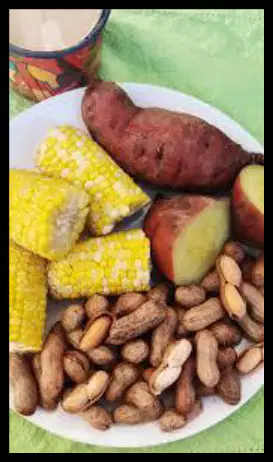
The image of maize, sweet potatoes, and peanuts highlights exports from the Americas to China during the Qing dynasty. In mercantilist terms, how would exporting such crops affect the exporting country?
It increases national wealth by selling goods abroad
It reduces wealth because food leaves the domestic market
It has no effect since food is not a traded commodity
It weakens markets by creating foreign dependence
Which statement best defines the Columbian Exchange?
Transfer of gold and silver from Europe to Africa
Movement of people between Africa and Asia
Exchange of plants and animals between Europe and the Americas
Trade of spices between India and Southeast Asia
Which consequence is a negative result of the Columbian Exchange?
Expansion of crop diversity in both hemispheres
Broader access to new food varieties
Spread of Old World diseases causing population loss
Introduction of useful livestock for labor
Which animal was brought to the Americas and transformed transportation and warfare?
Bison roaming the Great Plains
Turkey domesticated for meat
Llama common in Andean caravans
Horse used for riding and cavalry
A colony facing famine adopts a newly arrived Eurasian crop suited to temperate fields. Which choice best explains a likely short-term impact?
Labor needs vanish overnight
Yields rise and caloric intake improves
Trade halts and markets collapse
Native foods instantly disappear
An epidemic devastates Indigenous communities shortly after contact. Which mechanism best explains this outcome within the Columbian Exchange?
Overuse of draft animals in agriculture
Pathogens from Eurasia lacking local immunity
Genetic changes from new plant hybrids
Climate cooling from volcanic eruptions
Which factor best explains why maize and sweet potatoes contributed to population growth in several regions after 1500?
Dependence on imports raised food insecurity
High yields on marginal soils boosted calories
Luxury status increased elite consumption only
Short growing seasons reduced overall harvests
In the Qing dynasty, what was a key economic effect of the spread of American food crops like sweet potatoes?
Isolation from international trade networks
Expansion of cultivation into hilly terrains
Collapse of grain markets and prices
Decline in rural labor demand and migration
A governor aims to stabilize food supplies in a mountainous province with poor soils. Which crop adoption strategy aligns with historical outcomes tied to American crops?
Import wheat to maintain traditional staples
Ban tubers to prevent market distortions
Restrict maize to protect existing rice paddies
Promote sweet potatoes to utilize marginal lands
Which chain of events most accurately traces how new American crops reshaped markets?
Higher yields increased populations, expanded demand
Lower nutrition reduced labor, shrank trade
Seasonal shortages boosted prices, cut exchange
Elite-only adoption limited consumption, stagnated
Which company led Dutch expansion into Asian trade networks during the seventeenth century?
Dutch East India Company
English East India Company
French West India Company
Spanish Manila Company
Portuguese State Trading
Why did European powers compete intensely in Southeast Asia during the early modern period?
Conversion of local rulers
Defense against Ottoman fleets
Access to silver mines
Building Atlantic colonies
Control over the spice trade
English merchants established coastal trading posts in India primarily to obtain which goods for European markets?
Fine cotton textiles
Raw gold bullion
Tea and porcelain
Furs and whale oil
Timber and ship masts
A ruler in Southeast Asia wants to weaken Dutch dominance without fighting a major war. Which strategy would most effectively reduce Dutch leverage?
Diversify exports beyond spices
Impose heavier tribute on peasants
Close all ports to foreign ships
Rely solely on Portuguese alliances
Focus trade only on nutmeg islands
In a triangular trade diagram, which leg typically transported enslaved Africans from West Africa to the Americas?
Africa to Americas leg
Europe to Africa leg
Americas to Europe leg
Europe to Americas leg
Which region was the primary source of enslaved Africans during the Atlantic Slave Trade?
South Pacific
West Africa
East Asia
Northern Europe
Identify the sequence that correctly matches each leg of the triangular trade with its typical cargo.
Europe→Americas: enslaved Africans; Africa→Europe: raw materials; Americas→Africa: manufactured goods
Europe→Africa: manufactured goods; Africa→Americas: enslaved Africans; Americas→Europe: raw materials
Europe→Africa: raw materials; Africa→Europe: manufactured goods; Americas→Europe: enslaved Africans
Europe→Americas: raw materials; Africa→Europe: enslaved Africans; Americas→Africa: manufactured goods
A ship leaves Europe carrying textiles and guns, arrives in West Africa, then sails to the Caribbean. What is the most likely cargo on the second leg?
European merchants
Manufactured goods again
Enslaved Africans aboard
Raw sugar barrels
Which term best describes the transatlantic voyage that forcibly transported enslaved Africans to the Americas?
Middle Passage across the Atlantic
Columbian Exchange migration lane
Triangular Trade leg to the Americas
Atlantic Charter shipping route
During the Middle Passage, mortality among enslaved Africans was primarily driven by which factor?
Limited wind patterns on long voyages
Disease, malnutrition, and brutal conditions
Navigation errors by inexperienced captains
Low demand for labor in American colonies
Referencing the Treaty of Tordesillas line in the map, which colonial outcome best explains why Brazil’s official language differs from most of Latin America?
France occupied Brazil after the treaty
Spain retained exclusive rights to Brazil
The line divided Brazil between Spain and France
The line granted Portugal territory in Brazil
Which group sat at the top of the colonial social hierarchy in Latin America?
Local indigenous elites
Mixed-race citizens
Peninsulares from Iberia
Creoles born in the colonies
Who were creoles in colonial Latin America?
Indigenous laborers on estates
American-born of European descent
Africans enslaved in mines
Spaniards born in Iberia
Enslaved Africans in colonial Latin America were primarily forced into which type of work?
University instruction roles
Plantation and mining labor
Clerical office administration
Independent artisan workshops
If a viceroy was appointed to rule a colony, what does this reveal about political control?
Local councils held sovereign power
Merchants elected governors democratically
Monarch exercised authority through officials
Religious orders governed independently
Which consequence likely followed from Spaniards holding major offices in New Spain?
African laborers governed provincial districts
Peninsulares maintained stronger imperial control
Indigenous leaders dominated administration
Creoles gained equal political influence
Which position represented the Portuguese monarchy’s central authority in its American colonies?
Governor-general
Viceroy of Peru
Audiencia judge
Cabildo alcalde
Who appointed viceroys to govern major regions in the Spanish American empire?
Spanish king
Portuguese king
Local cabildos
Jesuit order
What was the main function of a viceroy within the Spanish imperial system?
Royal representative
Mission supervisor
Military recruiter
Tax farmer
Which role most directly exemplifies state efforts to maintain control over distant colonial territories?
Native caciques
Mission profits
Private encomenderos
Viceroyalty framework

