
 Worksheets
Q2 QSE Reviewv25/26
Total questions: 55
Worksheet time: 50mins

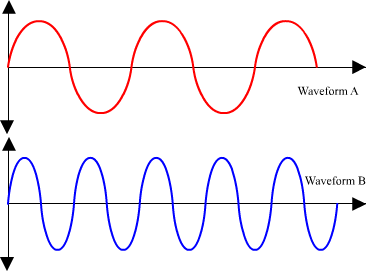
Which transverse wave has the highest frequency?
1
2
3
4
The number of waves that passes a certain point in a set period of time
Frequency
Amplitude
Wavelength
Amplength
Which one shows the amplitude of a wave?


Which one shows the wavelength of a wave?


Which of the following occurs as the frequency of a wave decreases?
The wavelength increases
The wavelength decreases
The Wavelength increases and then decreases
The wavelength remains the same
What is the unit used to measure the frequency of a wave?
Watts
Joules
Newtons
Hertz
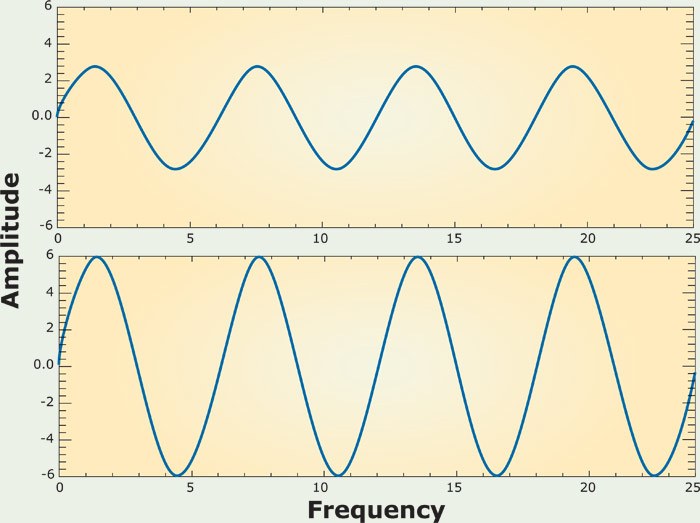
What happens to the amplitude of a transverse wave when the energy it carries increases?
It decreases
It increases
It remains the same
It becomes zero
What is the relationship between energy and wavelength in transverse waves?
More energy results in a longer wavelength.
More energy results in a shorter wavelength.
Energy has no effect on wavelength.
Energy makes the wavelength disappear.

All stars begin their life as a
Main Sequence
Nebula
Protostar
Black Dwarf


How do main sequence stars like the sun make their energy?
fusion of hydrogen into helium
fission of hydrogen into helium
fusion of helium into hydrogen
fission of helium into hydrogen

After a small star has used up all of it's hydrogen, it will become a......
white dwarf
red giant
interstellar cloud
supernova

Which word below represents the phase found at number 4 in the diagram of the life cycle of a low mass star?
Main Sequence
Protostar/
Nebula
Planetary Nebula
Red Giant
White Dwarf

A Hertzsprung-Russell (H-R) diagram is shown. A star that has a luminosity of 10−2 and a temperature of 5,000 K is most likely a . (a)

The Hertzsprung-Russell diagram shown is divided into four sections. Which section of the diagram includes the coolest, dimmest stars? Select ONE correct answer.
Section 1
Section 2
Section 3
Section 4
The Hertzsprung-Russell diagram shown is divided into four sections. Which section of the diagram includes the hottest and brightest stars? Select ONE correct answer.
Section 1
Section 2
Section 3
Section 4
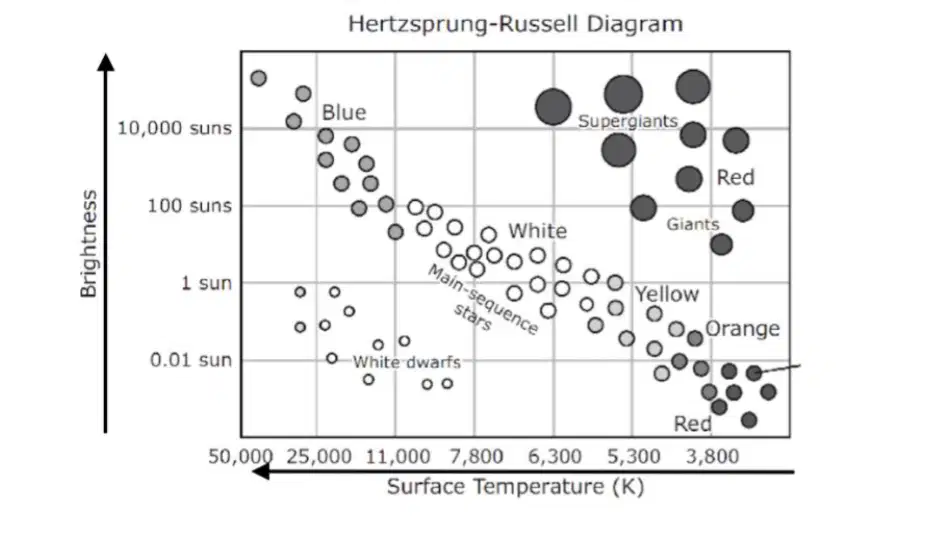
What is the general relationship between the surface temperature and brightness of a main sequence star?
As the temperature increases, the brightness decreases.
As the temperature increases, the brightness increases.
As the temperature increases, the brightness remains the same.
As the temperature remains the same, the brightness increases.


What holds a galaxy together?
pressure
glue
gravity
planets
The classification of Galaxy is based on its observable characteristics. Which of these characteristics is used to classify galaxies?
shape
temperature
types of forces
chemical elements

The Sun is a star in the Milky Way galaxy. Which location above best represents the location of the Sun? (8.8B)
W
X
Y
Z

What does the Hertzsprung-Russell diagram tell us about the star, Betelgeuse? (8.8A)
It has a low surface temperature and high luminosity
It has high surface temperature and high luminosity
It has low surface temperature and low luminosity
It has high surface temperature and low luminosity
As light from other stars travels through space, it gets reflected. Why do other stars look much dimmer than the sun? --8.8A
The sun appears yellow, which is more visible than other colors.
The sun is much closer to Earth than other stars are.
Other stars are made up of different gases than the sun is.
As light from other stars travels through space, it gets reflected.
What is the source of energy that heats our planet's atmosphere and oceans?
the weather
the wind
the Sun
the Earth's core
The Sun warms the atmosphere and drives convection currents because
warm air is less dense and rises
warm air is less dense and sinks
warm air is more dense and rises
warm air is more dense and sinks
Why does the Earth experience unequal heating?
The oceans are not equally distributed around the Earth.
The Earth's revolution brings it closer to the Sun at certain points during the year.
The Earth's axis is tilted.
The atmosphere is not equally distributed around the Earth.

A map of sea surface temperatures is provided. The patterns that are observed are due to the fact that
the earth is wider at the equator, so this area spins faster than the poles.
the equator receives more of the Sun's radiation than other parts of the Earth.
the salt content is greater at the poles than at the equator.
the warm, less dense water near the equator sinks, while the colder water rises.
What is the primary or most important factor that influences climate?
latitude
longitude
elevation
climate zone

Winds in our atmosphere are created as a result of which of the following processes?
Energy that is absorbed in the atmosphere
Gravitational attraction from the Moon
Density of the air particles in the atmosphere
Uneven heating of the air in the atmosphere
Which of the following changes would remove the source of energy that generates the convection which makes wind here on Earth?
Growing more vegetation in barren areas.
Removing all the salt from sea water.
Blocking all solar radiation.
Reversing the rotation of Earth.

An illustration of how a convection current creates a wind, called a land breeze, is provided.Which of the following best explains what creates this convection current?
The rotation of Earth makes the air above it rotate, but not the same over land and water.
Because of its mass, Earth’s gravity creates a high pressure area over both the land and water.
Salt in the ocean makes it more dense than the land, so its gravity pulls more on the air above it.
During the evening, the land cools off more quickly than the water, so the air is different temperatures.

An illustration of how a convection current creates a wind, called a sea breeze, is provided. Which of the following best explains what creates this convection current?
Salt in the ocean makes it more dense than the land, so its gravity pulls more on the air above it.
During the day, the Sun’s energy heats up the land faster, which makes the air above it warmer.
The rotation of Earth makes the air above it rotate, but not the same over land and water.
During the day, Earth’s gravity creates a high pressure area over both the land and water.
West Coast Currents = (a)
East Coast Currents = (b)

Air moves from _______ pressure to ________ pressure.
high to low
low to high
high to high
low to low
What heats up and cools down faster?
Land
Water
Label the Water Cycle below:

