
 Worksheets
REVIEW 1st Semester units 1-5
Total questions: 106
Worksheet time: 53mins
What is one reason why Absolute Monarchies rose in Europe?
Political legislatures lost influence
The church lost power after the Reformation
A series of state coups gave all the power to a small number of men
Poverty allowed the seizing of all the power
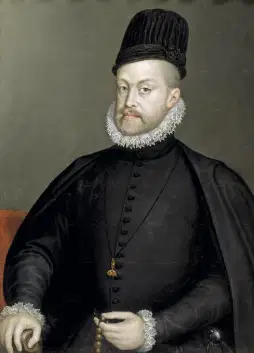
Spain’s King Phillip II (pictured below) claimed…?
To be a servant to his people
He was the smartest and most capable to rule
Divine Right: his power came directly from God
Moral responsibility for his people.
What is TRUE about England’s King Henry VIII?
He broke with the Catholic Church in order to get a divorce.
He was married to 1 woman for his entire life.
He had many male children.
He was a Hapsburg King.
Who was called “The Sun King”?
Henry VIII
Phillip II
Louis XIV
King Leo II
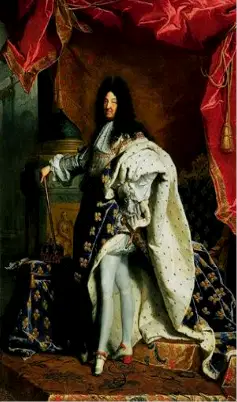
Louis XIV (pictured below) built…?
The Louvre
Les Invalides Hospital
The Palace of Versailles
Opera Garnier
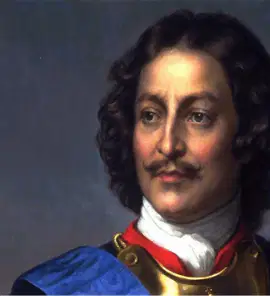
Peter the Great ruled over…?
France
England
Russia
Greece
Louis XIV could best be described as a(n)
Elected parliamentary leader of France.
Constitutional monarch.
Absolute monarch of France.
Heirless king of France.
The French phrase “L’état, c’est moi” means… ?
The state above all
The state is under my rule
I am the state/ The State is me
I am the ultimate ruler
Why was Catherine II of Russia nicknamed “Catherine the Great”?
She was known for being Czar Nicholas’ favorite wife
She turned Russia into a great power that was able to threaten other countries
She was known for her outrageous sexual escapades
She was known for being the first Russian female in the military
What was the purpose of the Petition of Right?
To create unlimited rights for the King
To limit the rights of the King
To allow women to hold a job in public
To grant all men the ability to serve in the English legislature
When William and Mary took power in England, it began a(n)…?
democracy
parliamentary republic
constitutional monarchy
oligarchy
Which below was against “Divine Right of Kings?”
Cardnial Richelou
Louis XIV
John Locke
James I
The Petition of Right was sent by Parliament to King Charles I in 1628. In it, Parliament asked the king to guarantee the protection of certain rights for individuals. This excerpt describes the rights that Parliament is asking for. “They do therefore humbly pray your most excellent Majesty,that no man hereafter be compelled to make or yield any gift,loan, benevolence, tax, or such like charge, without common consent by act of parliament;” According to the quote, what right was the people of England asking to be protected?
The King can collect taxes as he sees fit
Parliament can rest soldiers where they need to be without consent
The King can only tax if the need is great enough
Parliament only can ask for money from the people
Read the following from James I. Answer the question about the reading. The state of monarchy is the supremest thing upon earth,for kings are not only God’s lieutenants upon earth and sit upon God’s throne, but even by God himself they are called gods. There be three principal [comparisons] that illustrate the state of monarchy: one taken out of the word of God, and the two other out of the grounds of policy and philosophy. In the Scriptures kings are called gods, and so their power after a certain relation compared to the Divine power. Kings are also compared to fathers of families; for a king is truly parens patriae [parent of the country], the politic father of his people. And lastly, kings are compared to the head of this microcosm of the body of man . . . What is true about the reading?
Kings are place here by God
Kings are compared to Fathers of the family
both
neither
Which below is true about why Absolutism spread in Europe?
Church gained power after the reformation
No wealth produced from the colonies
Large armies due to constant conflict
People voted for it
Why was Charles I the King of England executed?
He lost Civil War against Oliver Cromwell
He lost in election after the Petition of Right went into effect?
both
neither
What was England’s problem after the Death of Elizabeth I?
Phillip II sent Armada
The people wanted to hold elections for the first time
Elizabeth I had no heirs
Louis XIV raised taxes on England
Who is described by the following achievements? 1. Westernized country 2. Took Orthodox Church under his control 3. Took power away from the Boyars(nobility) 4. Built capital closer to Western nation to be more like the west.
Peter the Great
Catherine the Great
Phillip II
Louis XIV
“Without government, our lives would be nasty, brutish, and short!” Who said this?
Thomas Hobbes
John Locke
Montesquieu
Voltaire
John Locke believed that life, liberty, and property were all…?
Sins
Government rights
Natural rights
Disposable rights
Philosopher who developed a theory on separation of powers?
Adam Smith
Voltaire
Montesquieu
John Locke
Which of the following is NOT a topic Voltaire wrote about?
Gender equality
Freedom of speech
Religious toleration
Separation of church and state
The Social Contract dictates (says) that…?
Democracy is the ultimate form of government
Freedom is a privilege given by the government
People have the right to elect a government
Government is an agreement between the ruler and the people
Which Enlightenment writer advocated for Women’s Rights?
Jean Jacques Rousseau
Montesquieu
Ben Franklin
Mary Wollstonecraft
The Enlightenment was the age of applying…?
Reason to the human and natural worlds
Absolute ideals to government
The concept of social equality to a tax-free state
Religious superiority to society
What was the purpose of The Stamp Act?
To increase the sales tax in Britain
Have colonies help pay for the war
To require literary tests for political participation
To lessen the wealth gap in Britain
The federal system created by the U.S. is a(n) …
form of government with 3 separate branches
unitary government with one ruler
oligarch with power in the hands of 8 individuals
system to concentrate power at the federal level
Nicolaus Copernicus discovered that….?
The sun rotates around the Earth
The Moon is its own planet
The sun is at the center of the universe
Earth is square
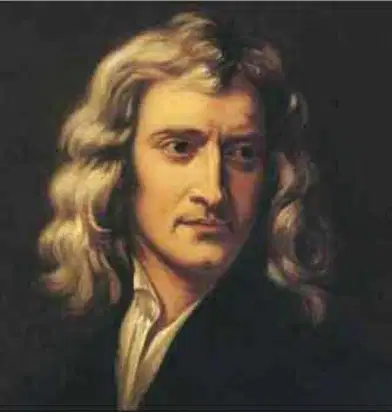
The image below depicts which famous mathematician who formulated a theory of gravity?
Isaac Newton
William Harvey
Francis Bacon
Rene Descartes
Who developed the heliocentric model?
Copernicus
Galileo
Tycho Brahe
Johannes Kepler
Which statement reflects an argument of Enlightenment philosophers against the belief in the divine right of kings?
The power of the government is derived from the governed
A capitalist economic system is necessary for democracy
Independence is built by military might
A process of stating a problem, a hypothesis, a research process, and conclusion?
experiment
ellipse
scientific method
formal logic

Which of the following best fits in the sequence of events illustrated on the timeline above? Copernicus publishes the heliocentric theory; Kepler writes about the elliptical orbits; Galileo uses telescope to view moons revolving around Jupiter; ?
Boyle’s new chemical experiments show water exists on Mars.
Heliocentric theory is accepted and discussed by European scientists.
Scientists publish thoughts on anatomy and circulation.
The geocentric theory is proven by Leeuwenhoek.
The goal of the Enlightenment writers was to
Limit the government from interfering with the rights of the people
Uphold the Divine Right Theory
Increase support for European military conquests
Support the European monarchs
Which country can best argue that it was basically born out of rationalist thought in the Enlightenment era?
England
France
United States
Mexico
What did John Locke and Thomas Jefferson believe the people should do if their government did not protect their natural rights?
Appeal to the national religion to protect their natural rights
Peacefully protest to a higher authority
Change their natural rights
Overthrow their government
"I may not agree with a word you have to say but I will fight to my death for your right to say it." The quote above illustrates which of the following concepts:
Freedom of Petition
Freedom of Speech
Freedom of Assembly
Freedom of Religion
And that all men may be restrained from invading others' rights, and from doing hurt to one another, and the law of Nature be observed, which willeth the peace and preservation of all mankind, the execution of the law of Nature is in that state put into every man's hands, whereby every one has a right to punish the transgressors of that law to such a degree as may hinder its violation. This quote from John Locke means
government should be separated into three parts
Women should be involved in government
science should be used to determine truth
society should protect people from wrongs caused by others
The American Declaration of Independence (1776) states: "We hold these truths to be self-evident, that all men are created equal, that they are endowed by their Creator with certain unalienable Rights, that among these are Life, Liberty and the pursuit of Happiness." Thomas Jefferson was influenced by __________ using this quote.
Absolute power
Enlightenment
Scientific Revolution
French Revolution
Who would have said this? All men are free yet they are in chains. Only when man controls the society can man truly be free.
Johannes Kepler
Jean-Jacques Rousseau
Rene Descartes
Galileo Galilei
What happened on July 14, 1789 Bastille Day?
Robespierre was executed by guillotine.
French women marched all the way to Versailles.
A mob stormed a prison looking for gunpowder.
All of the above are true.
About what percentage of France's population belonged to the Third Estate?
1
10
50
98
Which group most strongly embraced the ideals and principles of the Enlightenment?
the nobility
the bourgeoisie
the peasant classes
the clergy
Which of the following is an accurate description of the tax system in France in the years preceding the French Revolution?
The members of the Third Estate paid almost all of the taxes.
The nobility paid taxes only on land, not on income.
Only about 2 percent of the nobility paid any taxes.
Only peasants and the clergy paid taxes.
Which group imposed the Reign of Terror?
the Committee of Public Safety
the National Assembly
the king's Swiss guard
the Second Coalition
During the Reign of Terror, who was safe from the guillotine?
only Maximilian Robespierre
known revolutionaries
no one
the nobility
What was Napoleon able to accomplish during peacetime?
He set up government-run public schools.
He set up a comprehensive system of laws.
He established a fairer tax code.
All of the above are true
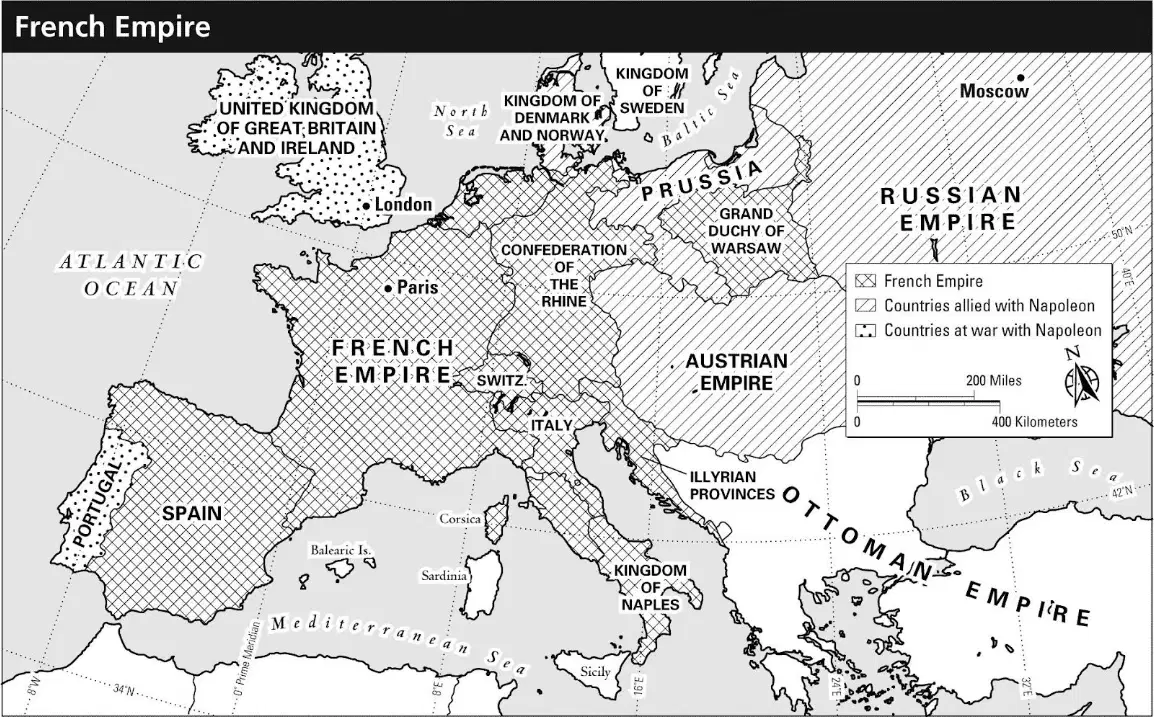
The geographic advantage helped Britain resist conquest?
It was larger.
It was farther north.
It was an island.
It was far from France.
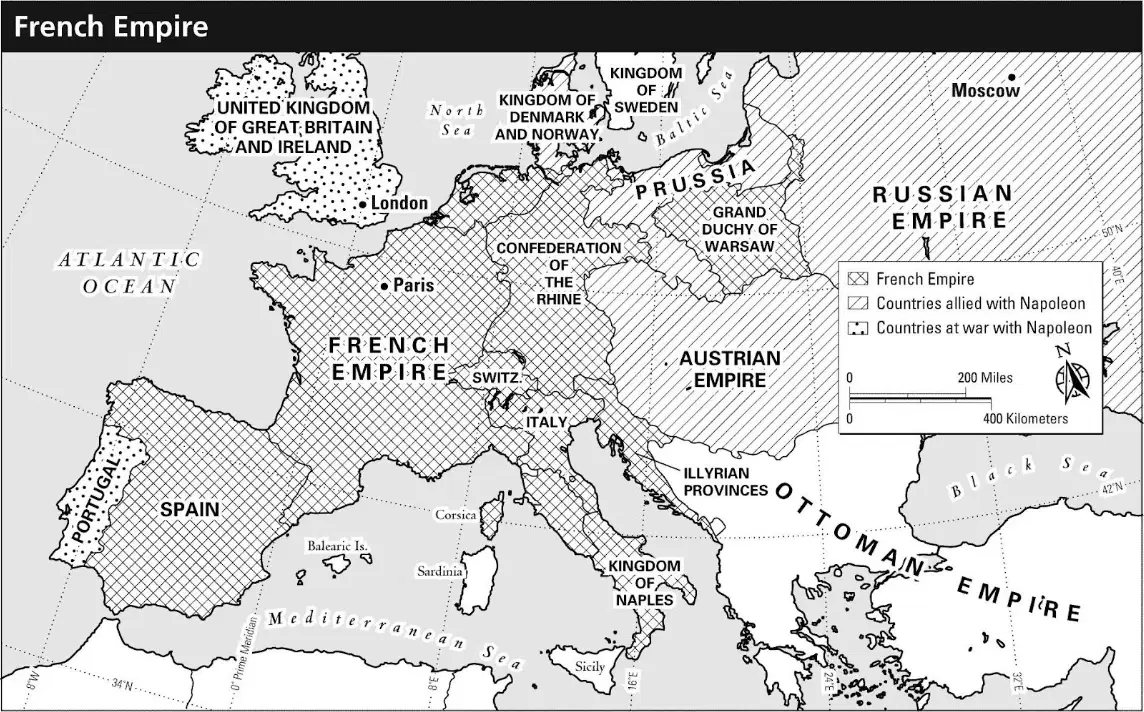
What pattern best describes Napoleon's conquests?
conquering islands for French shipping
conquering countries that surrounded France
conquering Asia and Africa
conquering the nations with the largest amount of land
What happened during The Great Fear?
Farmers lost all crops
Famine swept France
Peasants rioted throughout France
The King massacred any and all dissidents
To many people in France, the Bastille was a symbol of…?
The monarchy’s abuses and tyranny
France’s might and power
France’s superior legal system
Justice and equality
The King was seen as a traitor for…?
attempting to flee the country in tumultuous times
leaving Marie Antoinette and marrying his mistress
refusing to help his starving people
Providing help to the English enemies
How did Napoleon manage to seize power?
King Louis died
He organized a coup d'etat
He was elected by the people
Marie Antoinette gave him power
Who restored Europe’s “legitimate” monarchies at the Congress of Vienna?
Abee Sieyes
Georges Danton
Prince Metternich
Robespierre
America becoming a country; John Locke spreading his ideas; People starving in France. All these lead to
The building of Versailles Palace
The start of the French Revolution
The beginning of Napoleon's Coup d'etat
The formation of the 7th Collation
“Liberty consists in the freedom to do everything which injures no one else; hence the exercise of the natural rights of each man has no limits except those which assure to the other members of the society the enjoyment of the same rights. These limits can only be determined by law.” — Declaration of the Rights of Man and Citizen (1789). According to the quote, which statement is true below
People should limit the liberty of the government
People have to totally obey the government
People are limited in their actions only by the impact on other people
People have the freedom to do anything they wish
Whose goals were the following? Create a balance of power in Europe; Place the legitimate rulers back in power; Contain France to maintain peace
Committee of Public Safety
The National Assembly
Congress of Vienna
Tennis Court Committee
Napoleon never conquered this island so he tried to blockade it.
Elba
St. Helena
Great Britain
Haiti
Which below is not true about Napoleon's rise to power?
He got rid of all religion
He created a Bank of France
He created a system of laws
He got rid of the Estates system
Why did the Estates General not solve the problems of unfair taxes when it was called into order by Louis XVI?
The Third Estate lost due to being outvoted by the other two Estates.
Louis XVI and Marie Antoinette were unable to compromise
Abbé Sieyès wanted too much power for the clergy
The Tennis Court Oath stripped the meeting of its power to change taxes
Which of the following below stated a constitution must be created for France.
The Declaration of the Rights of Man
Women's March on Versailles
The Great Fear
Tennis Court Oath
Which below is the correct order for the governments of France from 1789–1799?
Republic, Constitutional Monarchy, Directory, Absolute Monarchy, Napoleon
Napoleon, Absolute Rule, Republic, Constitutional Monarchy, Directory
Directory, Constitutional Monarchy, Republic, Napoleon, Absolute Rule
Absolute Rule, Constitutional Monarchy, Republic, Directory, Napoleon
What do the three below have in common? Marie Antoinette Maximilian Robespierre Louis XVI
Elected to positions in France's government
Executed for being traitors to France
Wrote the Tennis Court Oath
Supporters of Napoleon's empire

Minard's Map of Napoleon's March to Moscow shows much lost of life because
The extreme cold conditions soldiers had to endure without shelter due to "scorched earth"
The great skill and technological advantage Russia had over the French
The quickness in which Napoleon defeated the Russian army lead him to stay to long
The impact that the battle of Waterloo had on troops lead to major losses of moral and life
Where did the Industrial Revolution begin?
England
Germany
Rome
The United States
Which industry was the first to become “industrialized”?
Farming
Textile
Coal
War machinery
Industrialization entailed…?
Increasing the price of goods
The mass production of goods using machines
Increasing labor in factories
Decreasing the sales tax on all goods
Why did the Industrial Revolution begin in England?
Labor was cheap
Production technology was booming
There were abundant natural resources
The King demanded better production methods
For the first time during the Industrial Revolution, rivers were used for…?
Fishing
Swimming
Water power and transportation
Trade
During the Agricultural revolution, crop rotation ensured that…?
People had plenty food to eat
The soil stayed healthy in order to help growing last longer
A variety of foods were available to the population
Pesticides weren’t used to harm crops
James Watt invented the …?
Spinning Jenny
Steam Engine
Steel process
Plow
A negative impact of the Industrial Revolution was…?
Increased taxes of goods
Higher demand, lower supply
Poor working conditions for lower class
An increasing wealth gap between the classes
A positive impact of the Industrial Revolution was…?
Available jobs for women
No political corruption
More and better education
A tax-free sales system
Small cottage industries entailed…?
Producing one crop at a time during farming season
Making products by hand
Selling goods at a competitively low price
Providing goods to middle and upper class citizens only
The Spinning Jenny…?
Produced cotton at a faster rate than humans
Was an automated cotton-picking machine
Reduced the amount of work needed to produce cloth
Produced metal goods at a 10x faster rate
The Industrial Revolution led to an unprecedented…?
Jump in gender equality
Level of participation in political life
Growth in disease
Rise in the population growth
Who developed the assembly line production method for producing Model Ts?
James Watt
Ford Motor Company
Thomas Edison
Victor Tatin
Factory owners could set the terms for work because there were more…?
Female employees
Child workers
Unskilled workers
Desperate workers
What was an impact of the Industrial Revolution on living patterns?
Increase in rural living
Rapid urbanization
Growth of suburban regions
Rapid immigration into England
What was a negative impact of the Revolution on the environment?
Increased use of chemicals and pesticides
The beginning of global warming
Increased pollution
The destruction of the Ozone
In a communist system, property is...?
Privately owned
Owned by the government
Publicly owned
Owned by the oligarchy
Who insisted the capitalism needed to be completely overturned in order to advance society?
Robert Owen
Adolf Hitler
Charles Fourier
Karl Marx
In Japan, the strongest samurais became...?
Emperors
Political leaders
Teachers
Daimyo (warrior-chieftains)
Land labor and capital are
mass productions
factors of production
Communism and Socialism
Capitalism and Socialism
What was the Industrial Revolution?
increased output of machine-made goods that began in England during the 18th-century
increased purchases of land by wealthy landowners to cultivate larger fields
a widespread use of teenagers as factory laborers who worked 14-hour days, 6 days a week
increased populations of urban areas during the 1800s
Which of the following was a key idea in the free-market system?
government should not interfere in economic matters
government should have complete control of the means of production
government should establish minimum wages and maximum working hours
government should protect the nation's industries from foreign competition
What impact did technological advances have on industry?
Production of goods was increased.
Number of factory workers decreased.
Quality of products was decreased.
All are true.
By pursuing his own interest he frequently promotes that of the society more effectually than when he really intends to promote it" and "[He] is led by an invisible hand to promote an end which was no part of his intention". Who might have said this quote about government role in business?
Adam Smith
Karl Marx
John Lennon
Charles Fourier
The Congress of Vienna, was held after _____ finally lost power?
Czar Alexander I
Prince Klemens Kalakov
Napoleon Bonaparte
Viscount Castlereagh
The Congress of Vienna wanted the Kings of Europe…?
Jailed and punished
Exiled
Restored to power
Executed
Who revolted in Saint Domingue in the name of Haitian independence?
Local farmers
Enslaved Africans
Mixed race peasants
Lower and middle class citizens
Who was the leader of the Haitian revolution for independence?
Toussaint Louverture
Nyongo Dessange
Jacques Le Cartier
Toleroy Dante
Which country(ies) dominated Latin America in the 1700s?
The French
The English
Spain and Portugal
Germany
Define the term “viceroy”?
Merchant ships
Spanish monks
Haitian slaves
Royal officials who rule
European colonization brought with it…?
Famine
Gender inequality
A rigid class system
A new banking system
Who were the Peninsulares?
The lowest peasant farmers
Bankers and lawyers
Religious officials
Those born in Spain and the only ones allowed to hold high offices
The Creoles were…?
People of Native American descent.
100% Spanish natives.
People born in the New World to Spanish parents.
People with pure Haitian descent.
Which group of people had the fewest rights within the class system?
Mulattos
Creoles
Peninsulares
Native Americans
Simon Bolivar (pictured above) led which country towards independence?
Columbia
Venezuela
Nicaragua
Chile
Who liberated Argentina from Spanish rule?
Simon Bolivar
Hernando Cortes
Jose de San Martin
Toussaint Louverture
Who served in Miguel Hidalgo’s army in the quest for Mexican independence?
Farmers and peasants
Doctors and lawyers
Mestizo and indigenous people
Religious monks
The Monroe Doctrine, created by U.S. President James Monroe, stated…?
America has the right to colonize Latin America.
Latin America is not under God’s protection.
Latin America must remain independent.
Only God can protect Latin America.
Nationalism can best be described as -
Loyalty to the majority group of citizens in a country
Loyalty and devotion to the state with an emphasis on a common history and culture
A dislike towards a state’s common politics
A love of one’s own culture
Who (pictured above) led the volunteer Red Shirts to unite Southern Italy?
Giuseppe Garibaldi
Camillo Cavour
King Victor Emmanuel
King Leonardo II
Who used nationalism to appeal to German speakers?
Otto Von Bismarck
Adolf Hitler
Max Von Hausen
Moriz von Lycker
What was the result of German unification?
Higher taxes.
Increased inner turmoil.
Germany becomes an economic and military powerhouse
Protestantism spread.

