
 Worksheets
EWA FINAL EXAM REVIEW
Total questions: 50
Worksheet time: 25mins
Mesopotamia is credited for the achievement of the first written language. What is the name of this early form of writing?
Hieroglyphics
Cuneiform
Sanskrit
Latin
Written language is not the only achievement that the Ancient Mesopotamians can be credited with. What are some other achievements that they are credited for?
Development of the wheel, irrigation systems, and early mathematics
Construction of the Great Wall of China
Invention of the printing press
Discovery of electricity
During Mesopotamian times what building was used as a center for religion, businesses, government, and a safe zone during war. What is the name of this temple?
Pyramid of Giza
Ziggurat
Parthenon
Colosseum
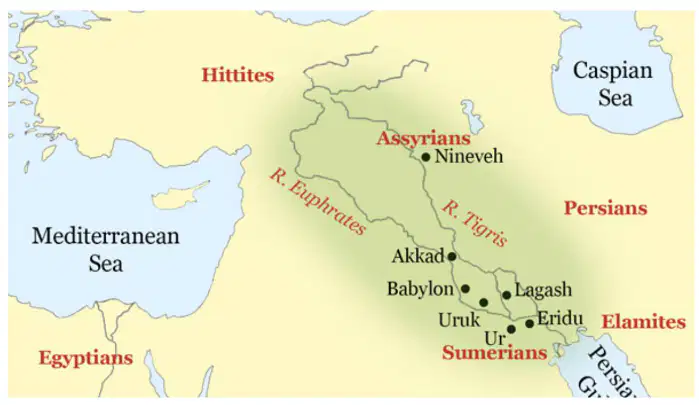
Why were most of the city-states in Mesopotamia located near the two largest rivers in the area?
The rivers provided a source of fresh water and fertile land for agriculture.
The rivers were used as barriers to protect the city-states from invaders.
The rivers were a source of gold and precious metals.
The rivers were used only for religious ceremonies.
What was the name given to the area in Mesopotamia because of the two rivers, the Tigris and Euphrates, that helped the Mesopotamians thrive from 3,000 BC to 100 AD?
The Fertile Crescent
The Golden Valley
The River Kingdom
The Crescent of Gold
What is the MAIN reason why Sparta and Athens went to war?
They were too different.
Sparta wanted to conquer Athens for its wealth.
Athens attacked Sparta without warning.
They wanted to share power equally.
The Greeks and Romans believed in many gods and goddesses. Some of these gods/goddesses represented different things like love, war, hunting, and weather patterns. If they believed in many gods, this made them...
Monotheistic.
Polytheistic.
Atheistic.
Agnostic.
Toward the end of the Roman Republic, Ancient Rome started gaining land throughout Europe, West Asia, and Northern Africa. Once Augustus Caesar took power after Julius Caesar, the Roman Republic turned into...
A democracy.
A monarchy.
An empire.
A city-state.
Which answer choice BEST describes the connection between the emperor named Commodus and the golden age of Roman emperors?
Commodus expanded the Roman Empire to its greatest size.
Commodus was a strong leader who brought peace to Rome.
Commodus ended the golden age of Roman emperors due to his greed and poor leadership.
Commodus was the last emperor to rule during the golden age.

What was the name of the social/economic hierarchy in Middle Ages in Europe?
Feudal System
Caste System
Capitalist System
Tribal System
What conclusion can we make about Constantinople?
Constantinople was a weak and poorly defended city.
Constantinople was a thriving, well-protected, and resourceful city.
Constantinople had no significant resources or strategic importance.
Constantinople was a small, insignificant city in the Byzantine Empire.
What movement was created during the Renaissance that helped showcase art, thought, and literature?
Industrial Revolution
Humanism
Enlightenment
Scientific Revolution
What does Renaissance mean?
Rebirth
Revolution
Enlightenment
Revival of Science
What did Martin Luther post on the door of Wittenberg Church?
95 arguments against the pope
95 theses supporting the pope
95 laws for the church
95 prayers for reform
Which choice best states how Martin Luther feels about indulgences?
Martin Luther believes indulgences are a way to show love and devotion to God.
Martin Luther believes indulgences are a corrupt practice that cannot truly forgive sins.
Martin Luther believes indulgences are necessary for salvation.
Martin Luther believes indulgences are a minor issue in the church.
The most logical and precise definition of indulgences would be...
A way to gain wealth and power in the church.
A payment to the church for the forgiveness of sins.
A method to ensure salvation through good deeds.
A practice of donating to the church for charity.
Which sentence BEST explains what the explorers did with the wealth they found?
They used the wealth to build their own empires.
They sent the wealth back to the pope to fund church projects.
They shared the wealth with the native populations.
They used the wealth to fund further explorations.
Why did king Henry VIII want to separate from the Catholic Church?
He wanted a divorce
He supported Martin Luther
He was atheist
He didn't
What was the main reason Columbus sought help from King Ferdinand?
To gain military support for his explorations.
To compete with other European countries like France and Spain.
To secure funding for his voyages to explore new lands.
To establish trade routes with the Aztecs and Incas.
What is one reason why King Ferdinand and Queen Isabella helped Columbus?
They wanted to find a new route to India.
They wanted to expand their empire to Africa.
They wanted to establish trade with China.
They wanted to spread Christianity to Europe.
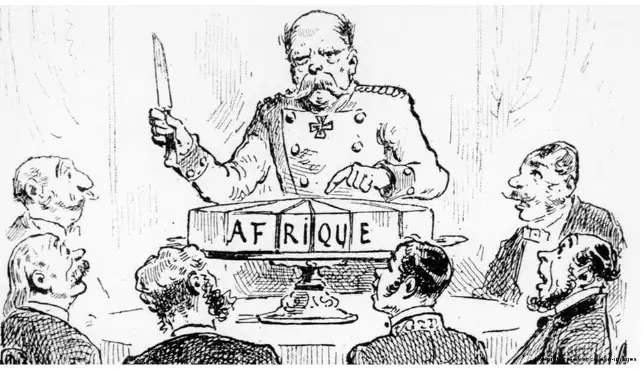
Based on the picture, which choice most logically illustrates the picture?
The division of Africa among European powers.
A meeting to discuss the Industrial Revolution.
A debate about the abolition of slavery.
A discussion about trade routes to India.
What is true about mass production?
It required fewer raw materials than traditional production methods.
It allowed goods to be made quickly and cheaply.
It led to the decline of factory jobs in cities.
It was primarily powered by wind energy.
The most logical and precise definition of monopoly would be...
A game played by European leaders.
Exclusive control over the production and sale of certain goods in a specific area.
A system of shared trade between colonies and European nations.
A method of producing goods using steam engines.
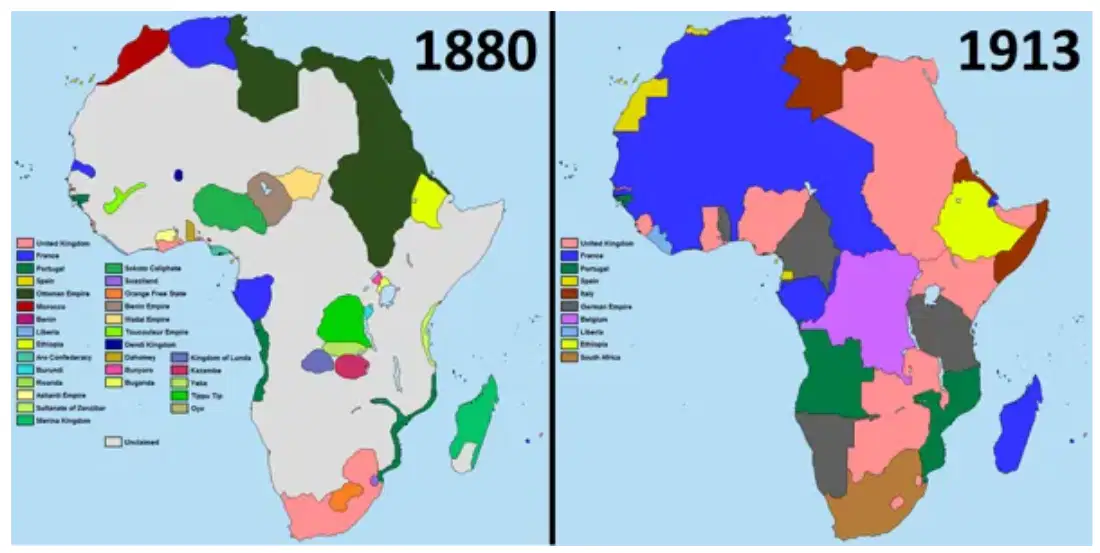
Based on the maps above, which choice most logically illustrates the picture?
The maps show the gradual independence of African nations from European control.
The maps illustrate the colonization of Africa by European powers over time.
The maps depict the unification of African territories under a single empire.
The maps highlight the decline of European influence in Africa.
According to All Quiet on the Western Front, what is true about the Germans' feelings about going to war?
They were reluctant and hesitant to serve their country.
They were excited and proud to serve their country.
They were indifferent and uninterested in the war.
They were fearful and tried to avoid going to war.
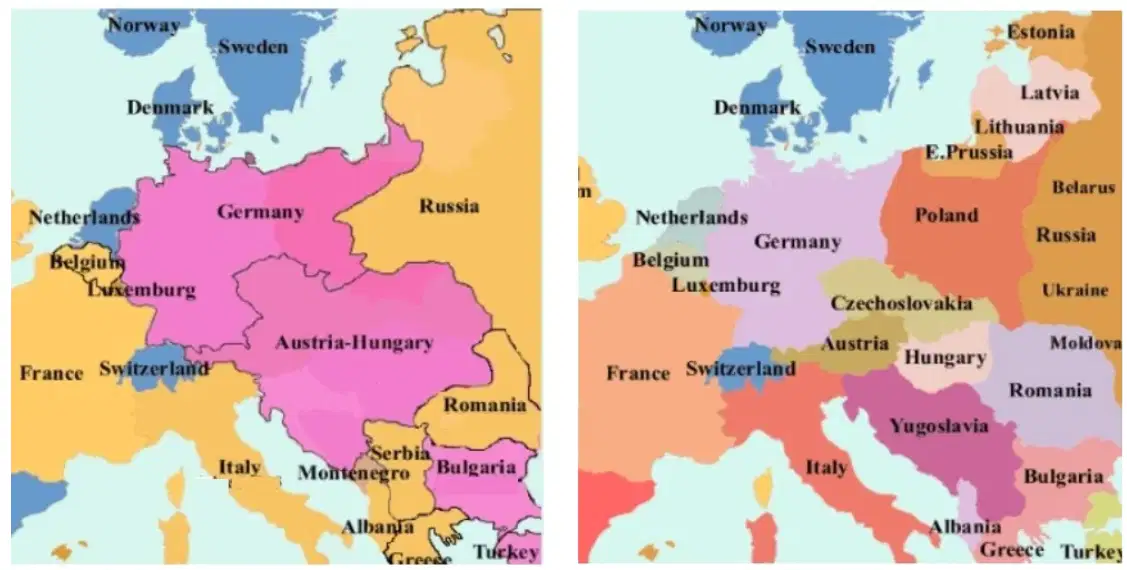
Based on the maps above, which country’s borders remained unchanged after World War I?
Switzerland
Austria
Germany
Hungary
Above is a piece of the Treaty that ended World War I. This treaty forced Germany to give up their military, take 100% of the blame, pay the Allied countries, and stopped them from being friends with Austria. What is the name of that Treaty?
The Treaty of Versailles
The Treaty of Paris
The Treaty of Vienna
The Treaty of Tordesillas
What is true about the start of World War I?
It started in 1914 after the assassination of Archduke Franz Ferdinand of Austria.
It started in 1918 after Germany declared war on the Allied Powers.
It started in 1914 due to the Treaty of Versailles.
It started in 1918 after the Central Powers formed an alliance.
The most logical and precise definition of 'dictator' would be...
A leader with absolute power and authority over a country.
A leader elected by the people to serve a limited term.
A leader who shares power with a parliament.
A leader who rules only during times of war.
What is true about the end of World War II?
Nazi Germany collapsed just 11 years after Hitler's rise to power.
The Third Reich lasted for a thousand years as promised by Hitler.
Germany's democratic government was restored immediately after the war.
Hitler remained in power until the end of the war.
The most logical and precise definition of communism would be...
A system where the government controls all farms and factories.
A system where people freely trade goods and services.
A system where private businesses thrive without government interference.
A system where the government encourages individual wealth.
Which sentence explains a problem the Soviet government had?
The Soviet Union had plenty of money and resources.
The government farms could not produce enough food for the people.
Farming and factories made the country successful.
The Soviet Union did not need to buy food from other countries.
Select the sentence that BEST explains WHY the Soviet Union ended.
The Soviet Union was replaced by 15 separate countries.
Gorbachev wanted to build a stronger economy and give people more freedom.
Many countries became independent and no longer wanted to be ruled by the Soviets.
The people wanted more freedom and rejected communist rule.

Based on the picture, which choice most logically illustrates the picture?
The division between East and West Germany during the Cold War.
The construction of the Berlin Wall to protect East Germany.
The fall of the Berlin Wall and the reunification of Germany.
The cultural differences between East and West Germany.
Read the following two sentences from the article: "The Berlin Wall fell as people broke through it with hammers." "Things are better in the East: people can travel freely, and they don’t face government spying." Which sentence BEST describes the relationship between the two sentences?
The sentences describe the historical significance of the Berlin Wall.
The sentences highlight the impact of the Berlin Wall's fall on freedom in the East.
The sentences compare the construction and destruction of the Berlin Wall.
The sentences explain the cultural differences between East and West Germany.
What signaled the end of the Cold War?
The Cold War tensions.
The fall of the Berlin Wall.
The cultural differences between East and West Germany.
The reunification of Germany.
Which ancient civilization developed a system of laws known as Hammurabi's Code?
Ancient Rome
Ancient Greece
Mesopotamia
Ancient Egypt
What was the main reason the Romans built roads throughout their empire?
To separate social classes
To improve trade and communication
To decorate their cities
To prevent flooding
Which river was essential for the development of agriculture in Mesopotamia?
Tigris River
Amazon River
Yangtze River
Nile River
Which of these statements reflects an influence of the Renaissance?
dominance of the church
constant feudal warfare
lack of any governance
increased interest in the arts
Which ancient classical civilization was an important influence on the Renaissance humanists?
river valley civilizations
Mesoamerican and North American civilizations
Greek and Roman civilizations
feudalism
What was the primary purpose of the Berlin Wall when it was first constructed?
To prevent East Germans from fleeing to West Berlin
To protect Berlin from foreign invasion
To separate industrial and residential areas
To commemorate the end of World War II
Which invention during the Renaissance had the greatest impact on the spread of knowledge?
Printing press
Steam engine
Compass
Telephone

What does Mein Kampf mean?
My Life
My Cause
My Struggle
My Goals
WWII officially began when England and France declared war on Germany when Germany invaded which country?
Poland
France
Russia
Austria
A state of extreme, aggressive military preparedness
Alliances
Imperialism
Militarism
Nationalism
The policy of forming and maintaining an empire, by establishing colonies and/or dominating the affairs of weaker nations
Alliances
Imperialism
Militarism
Nationalism
A close association of nations acting together for a common objective
Alliances
Imperialism
Militarism
Nationalism
What made WWI different and more deadly than previous wars?
Faster Horses
It was the first war ever
It was a peaceful war
The technology of weaponry

