wayground logo

Free Printable Worksheets

Font size

S
M
L
XL
Worksheets

Environmental Systems Fall Exam Review

Total questions: 82

Worksheet time: 2hrs 37mins

Name
Class
Date
1.
Which of the following is the super-continent from 300 million years ago?
a)
Continental drift
b)
Pangaea
c)
Giganto continent
d)
Euromerica Asia
2.
What is the name of the plate boundary that pulls apart?
a)
Divergent
b)
Convergent
c)
Transform
d)
Tug Of War
3.
What is the name of the plate boundary that pushes together?
a)
Divergent
b)
Convergent
c)
Transform
d)
A Chest Bump
4.
What is the name of the plate boundary that slides past each other?
a)
Divergent
b)
Convergent
c)
Transform
d)
Mr. C the Slide Man
5.
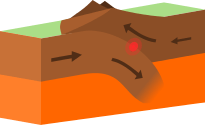
What type of plate boundary is this?
a)
Plate
b)
Divergent
c)
Convergent
d)
Transform
6.
What geologic feature/event you be most likely to find at a transform boundary?
a)
Earthquakes
b)
Volcanoes
c)
Mountains
d)
Rift Valleys
7.
What geologic feature/event would you most likely to find at a divergent boundary between two pieces of continental crust?
a)
Mid-Ocean Ridge
b)
Mountain
c)
Rift Valley
d)
Island Arc
8.
A subduction zone is formed...
a)
when one tectonic plate sinks below another
b)
at every type of convergent plate boundary
c)
at every type of divergent plate boundary
d)
at transform boundaries
9.

Which of the following causes Earth's tectonic plates to move?

a)

Energy from the Sun

b)

Magnetic Pole Reversal

c)

Convection currents in the mantle

d)

Faults in Mountain Ranges

10.
The San Andréa fault in California is one example of a...  
a)
Divergent boundary
b)
Convergent boundary
c)
Transform boundary
d)
All of the above
11.
The cracks in Earth's crust are called ___________.
a)
tectonic plates
b)
faults
c)
magma
d)
lava
12.
What are the puzzle pieces of the Earth's surface called?
a)
Tectonic plates
b)
Puzzles
c)
Earthquakes
13.

What occurs when two plates come together and the denser one is forced under back into the mantle?

a)

reduction

b)

conduction

c)

subduction

d)

convection

14.

What is the process that continually adds new crust to the ocean floor along both sides of the mid-ocean ridge?

a)

subduction

b)

continental drift

c)

convergent

d)

sea floor spreading

15.

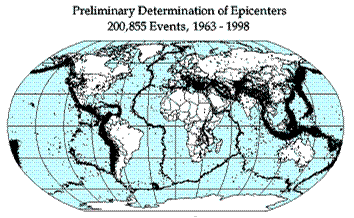
Earthquake epicenters (center of where the earthquakes started) were mapped for a 35 year period in the diagram above. The black dots indicate these epicenters. The black dots appear along what feature on Earth?

a)

hot spots

b)

plate boundaries

c)

rift zones

d)

sea floor spreading

16.
Fossils of a particular animal species have been found in both southern Africa and South America but nowhere else.  Which of the following is MOST LIKELY the reason why?
a)
The fossils evolved into different organisms
b)
The climate changed and became much colder.
c)
In the past, Africa and South America were part of the same continent
d)
In the future, Africa and South America will be part of the same continent.
17.
What does the theory of continental drift state?
a)
The continents were once joined in a super-continent and have moved over time
b)
Continents are stationary and do not move
c)
The Earth is broken into lithospheric plates that move due to convection currents
d)
none of the above
18.
What are the two types of crust?
a)
continental and oceanic
b)
ocean and basin
c)
lower and upper
d)
thick and thin
19.
A collision between two pieces of continental crust at a converging boundary produces a 
a)
mid-ocean ridge
b)
deep ocean trench
c)
volcanic mountain range
d)
folded mountain range
20.

This land formation occurs at a divergent boundary.

a)

mid ocean ridge

b)

deep ocean trench

c)

pacific hot spot

d)

mountain range

21.
Mountains are created when....
a)
Two continental plates collide
b)
Two oceanic plates pull apart
c)
An Oceanic plate subducts under a Continental Plate
d)
Two continental plates pull apart
22.

Which geologic landform is formed from a convergent continental/oceanic boundary?

a)

mid ocean ridge

b)

ocean trench

c)

mountain range

d)

fault

23.

what does Geo mean?

a)

life

b)

earth/ground

c)

air/gas

d)

water

24.

what does Hydro mean?

a)

life

b)

earth/ground

c)

air/gas

d)

water

25.

what does atmo mean?

a)

life

b)

earth/ground

c)

air/gas

d)

water

26.

what does Bio mean?

a)

life

b)

earth/ground

c)

air/gas

d)

water

27.

what is included in the biosphere?

a)

all living things on earth

b)

all the gases

c)

all the water fresh & saltwater

d)

all the rocks and minerals

28.

what is included in the atmosphere?

a)

all living things on earth

b)

all the gases

c)

all the water fresh & saltwater

d)

all the rocks and minerals

29.

what is included in the hydrosphere?

a)

all living things on earth

b)

all the gases

c)

all the water fresh & saltwater

d)

all the rocks and minerals

30.

what is included in the geosphere/lithosphere?

a)

all living things on earth

b)

all the gases

c)

all the water fresh & saltwater

d)

all the rocks and minerals

31.

Mountains, Volcanoes, Canyons and Beaches are landforms found in what sphere?

a)

geosphere

b)

atmosphere

c)

biosphere

d)

hydrosphere

32.

Oceans, Rivers, Seas, Glaciers are landforms found in what sphere?

a)

geosphere

b)

atmosphere

c)

biosphere

d)

hydrosphere

33.

Grass, animals, bacteria, living organisms are found in what sphere?

a)

geosphere

b)

atmosphere

c)

biosphere

d)

hydrosphere

34.

When a dead plant decomposes into the soil, the interaction is between the __________ and the _____________.

a)

atmosphere and hydrosphere

b)

biosphere and geosphere

c)

hydrosphere and biosphere

d)

atmosphere and geosphere

35.

When a volcano erupts adding Carbon Dioxide to the air the interaction is between the ____________ and ___________ .

a)

biosphere and geosphere

b)

hydrosphere and biosphere

c)

geosphere and atmosphere

d)

atmosphere and hydrosphere

36.

When living organisms give off moisture through respiration (breathing) the interaction is between the ______________ and ___________

a)

biosphere and geosphere

b)

biosphere and hydrosphere

c)

atmosphere and geosphere

d)

atmosphere and hydrosphere

37.

A pattern of survival over time in which there is high survival throughout most of the life span, but then individuals start to die in large numbers as they approach old age.

a)

Type i survivorship

b)

Type ii survivorship

c)

Type iii survivorship

38.

A pattern of survival over time in which there is a relatively constant decline in survivorship throughout most of the life span.

a)

Type ii survivorship

b)

Type i survivorship

c)

Type iii survivorship

39.

Which would have the lowest survival rate in the beginning, but if it survives to maturity, it can live a long time.

Type III survivor

a)

Oak tree

b)

Elephant

c)

Mockingbird

40.

Type 1 curve represents what type of group

a)

Birds

b)

Humans

c)

Trees and plants

d)

Marine life

41.

What are survivorship curves?

a)

curves that describe the number of survivors over time

b)

curves that tell us what the limiting factors are

c)

curve that tells us about the carrying capacity

d)

a curve

42.

Type 2 curve shows us

a)

deaths at the end

b)

the graph going down

c)

constant death at all stages

d)

death at the beginning

43.

Tracks organisms that tend to live long lives (low death rate and high survivorship rate); toward the end of their life expectancies, however, there is a dramatic increase in the death rate.

a)

Type I

b)

Type II

c)

Type III

d)

Type IV

44.

Describes organisms with a high death rate (or low survivorship rate) immediately following birth. Examples include bacteria, fishes, and invertebrates.

a)

Type I

b)

Type II

c)

Type III

d)

Type IV

45.

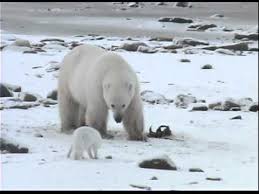
Two arctic fox are fighting with a polar bear for a sea lion carcass. One fox distracts the bear while the other eats. What type of limiting factor is the polar bear?

a)

Predator-Prey Relationships

b)

Competition

c)

Herbivory Effect

d)

Weather

46.

Which of these factors do not respond to the density of a population in an ecosystem?

a)

Density Dependent Limiting Factors

b)

Density Independent Limiting Factors

c)

Herbivory Effect

d)

Competition

47.

Which of the following is a density-dependent limiting factor?

a)

human activities

b)

unusual weather

c)

competition

d)

natural disaster

48.
Which of the following is a density-independent limiting factor?
a)
natural disaster
b)
predation
c)
disease
d)
parasitism
49.

Which of the following would NOT be an example of a density dependent limiting factor?

a)

fire

b)

disease

c)

lack of food

d)

space

50.

Which of the following would NOT be an example of a density independent factor?

a)

predation

b)

tornado

c)

hurricane

d)

fire

51.

The total number of individuals that can survive in an habitat over time with the resources it has available.
a)
Carrying capacity
b)
Limiting factors
c)
Resources
d)
Population
52.
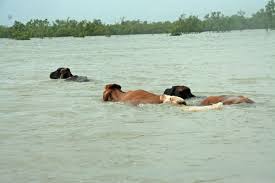
Excessive amounts of rain caused a flood in the southwest United States that resulted in substantial amounts of deaths in the rabbit population? This situation is an example of a density _____________ limiting factor.
a)
density-independent
b)
density-dependent
c)
density- too high
d)
density- too low
53.

Natural disasters can be considered limiting factors.

a)

true: density independent limiting factors

b)

false; natural disasters are not limiting factors

c)

true: density dependent limiting factors

d)

false: because Mrs. Burroughs said so

54.
Limiting factors which impact the size of a population no matter how large that population is.
a)
Density Independent Limiting Factors
b)
Density Dependent Limiting Factors
c)
Carrying Capacity
d)
Exponential Growth
55.
An environmental factor such as storms and extreme heat or cold that decrease a population are considered to be. 
a)
density- dependent factor
b)
population density
c)
dispersion
d)
density- independent factor
56.

A lion and a cheetah attempt to occupy the same niche. The more aggressive lion survives; the cheetah does not.

a)

Density-Dependent: Competition

b)

Density-Independent: Competition

c)

Density-Dependent: Predator-Prey

d)

Density-Independent: Predator-Prey

57.

Coyotes cross the winter pack ice and enter Newfoundland. The moose population starts to decline.

a)

Density-Dependent: Competition

b)

Density-Independent: Competition

c)

Density-Dependent: Predator-Prey

d)

Density-Independent: Predator-Prey

58.
Fourth largest continent, known as Latin America. 
a)
North America
b)
South America
c)
Asia
d)
Europe
59.
Smallest continent, home of the Outback, and the Great Barrier Reef. 
a)
Antarctica 
b)
Europe
c)
Austrilia
d)
South America
60.
5th largest continent and is both an island and a continent. It is the home of the South Pole. 
a)
Antarctica 
b)
Asia
c)
Africa 
d)
Europe
61.
Largest continent and home of the most populated country: China. 
a)
Europe
b)
Africa 
c)
South America
d)
Asia
62.
Second largest continent. Home of the Pyramids, Sahara Desert, and the Nile River. 
a)
Asia
b)
North America
c)
Africa
d)
South America
63.
Third largest continent and home to the second largest country in the world: Canada. 
a)
North America
b)
South America
c)
Europe
d)
Austrilia
64.
Sixth largest continent and owned most of the world at one time. 
a)
Australia
b)
Europe
c)
Antarctica
d)
North America
65.
The continent you live on...
a)
North America
b)
South America
c)
Europe
d)
Asia
66.
How many continents are on the Earth?
a)
7
b)
4
c)
5
d)
2
67.
What is the name of the object by number 1?
a)
North America
b)
South America
c)
United States
d)
Europe 
68.
What is the name of the object by number 2?
a)
North America
b)
South America
c)
United States
d)
Europe 
69.
What is the name of the object by number 3?
a)
North America
b)
Antarctica 
c)
South Pole 
d)
Europe 
70.
What is the name of the object by number 4?
a)
North America
b)
Europe
c)
South Pole 
d)
Africa
71.
What is the name of the object by number 5?
a)
Australia  
b)
Africa
c)
Asia
d)
Europe 
72.
What is the name of the object by number 6?
a)
Australia  
b)
Africa
c)
Asia
d)
Europe 
73.
What is the name of the object by number 7?
a)
Australia  
b)
Africa
c)
Asia
d)
Europe 
74.
What is the southern most continent?
a)
Antarctica
b)
Asia
c)
None 
d)
Afica
75.
What is climate?
a)
 What's going on with the atmosphere at any particular time
b)
The type of weather that occurs during a particular season
c)
An area's pattern of weather over a long period of time
d)
How much sunshine an area gets 
76.
This is an image demonstrating...
a)
Tornado Formation
b)
The Greenhouse Effect
c)
Hurricane Formation
77.
 What is the greenhouse effect?
a)
The warming of a planet due to trapped radiation.
b)
The cooling of Earth due to air pollution.
c)
The heating of a solid, such as a rock.
78.

The most abundant greenhouse gas in the atmosphere is ___________________.

a)

oxygen

b)

nitrogen

c)

carbon dioxide

d)

argon

79.
Climate change causes extreme weather conditions such as:
a)
Flooding
b)
Heat Waves
c)
Hurricanes
d)
All of the above
80.
Which human activity contributes the MOST carbon dioxide to the atmosphere?
a)
Fishing
b)
Breathing
c)
Burning Fossil Fuels
d)
Farming
81.
Global Warming does not affect humans, only plants and animals
a)
True
b)
False
82.

Global warming is known as the gradual increase in _________________ of the atmosphere.

a)

precipitation

b)

sun spots

c)

temperature

d)

ocean currents