
 Worksheets
Unit 5 review Questions "Light"
Total questions: 59
Worksheet time: 35mins
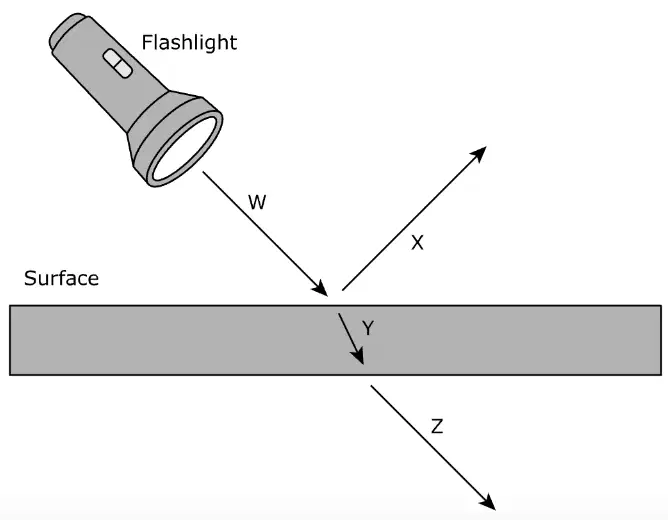
This question has two parts. First, answer Part A. Then answer Part B. The diagram shows how a ray of light behaves when it strikes a surface. Part A Which statement describes a behavior of light shown in the diagram?
A. Arrow W and Arrow X show light refracting as it interacts with the surface.
B. Arrow W and Arrow Y show light refracting as it interacts with the surface.
C. Arrow W and Arrow Z show light refracting as it interacts with the surface.
D. Arrow W and Arrow Z show light refracting as it interacts with the surface.
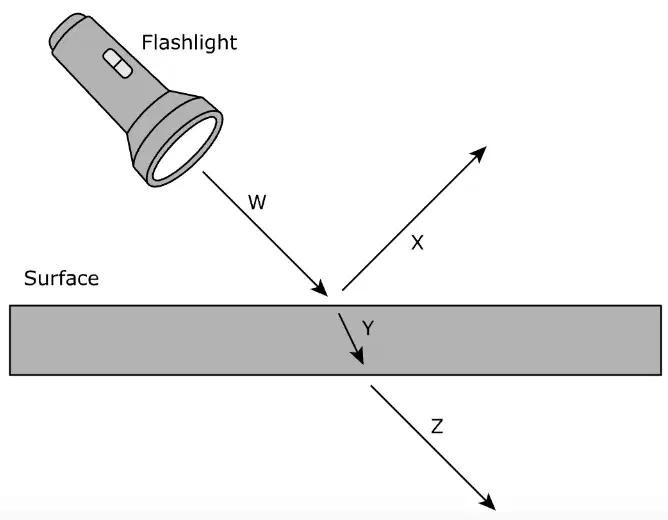
Which description of the surface best supports the answer to Part A?

Which statement describes the conditions that allow the students to see the toy?
Light rays reflect off the toy and travel to the lightbulb.
Light rays reflect off the toy and travel to the students' eyes.
Light rays refract off the toy and travel to the lightbulb.
Light rays refract off the toy and travel to the students' eyes.
The surface is a dull piece of metal.
The surface is a dull piece of metal.
The surface is a clear piece of glass.
The surface is a hard piece of wood.
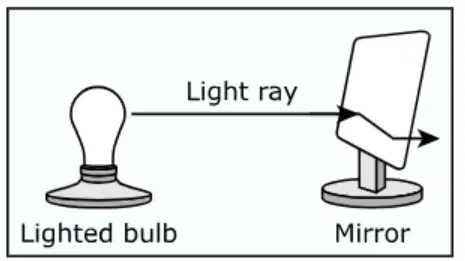
The diagram shows a light ray that is traveling toward a mirror that is tilted upward. Which drawing best shows how the light ray travels after it reaches the surface of the mirror?
[Diagram: Light ray from bulb to tilted mirror, ray reflects upward]
[Diagram: Light ray from bulb to tilted mirror, ray reflects downward]
[Diagram: Light ray from bulb to tilted mirror, ray reflects back toward bulb]
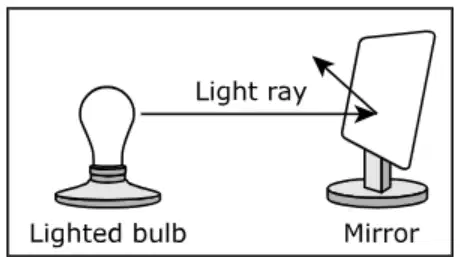
The path of the reflected light ray is:
the line that makes the same angle with the normal as the incident ray
the line perpendicular to the surface
the line parallel to the incident ray
the line that passes through the center of curvature
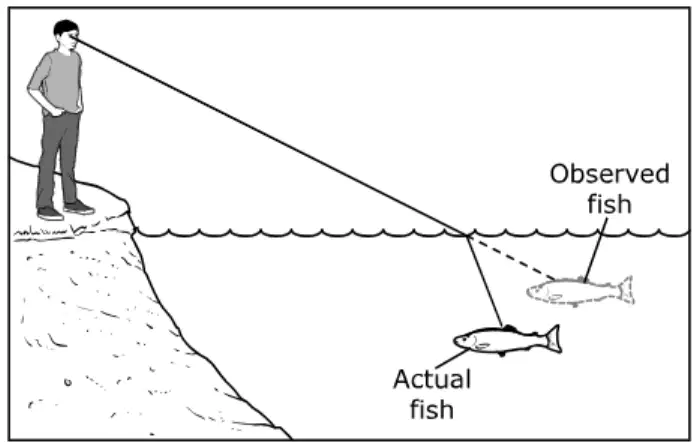
The observed position of a fish in a lake differs from its actual position because:
light bends as it passes from water to air, causing refraction
the fish moves too quickly to be seen accurately
the water distorts the image due to waves
the observer's eyes are not able to focus underwater
Which statement best explains why the observed fish appears to be closer to the surface than the actual fish?
When light travels from water into air, the light changes direction.
The light bounces off of the water and creates a reflected image of the fish.
When white light passes through the surface of the water, the light separates into colors.
The light enters the water and exits the water at the same angle.
Students were testing various materials to see which would reflect or refract light. Would a Silver spoon reflect or refract light?
A. Reflect
B. Refract
Students were testing various materials to see which would reflect or refract light. Would a Clear plastic cube reflect or refract light?
A. Reflect
B. Refract
Students were testing various materials to see which would reflect or refract light. Below are the materials that they tested. Decide if each item would reflect light or refract light. Select the correct label for each material listed. Each word can be used more than once. Would a Blue glass bottle reflect or refract light?
A. Reflect
B. Refract
Students were testing various materials to see which would reflect or refract light. Below are the materials that they tested. Decide if each item would reflect light or refract light. Select the correct label for each material listed. Each word can be used more than once. Would a Toaster reflect or refract light?
A. Reflect
B. Refract
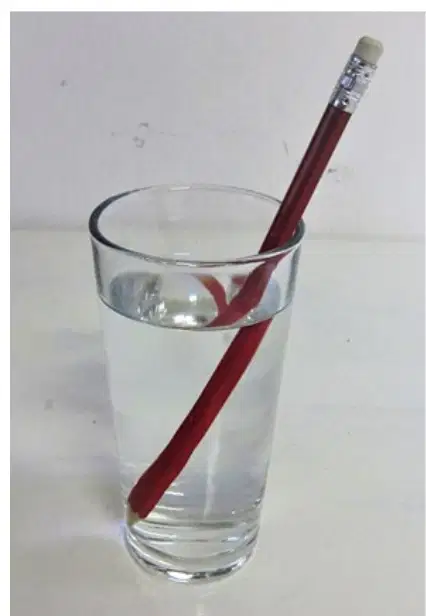
7. A student placed a pencil in a glass of water and noticed that it looked broken.
Why did the pencil appear to be broken? In the box below, name the property of light that caused the pencil to appear broken, AND explain what occurred to cause this to happen.
The pencil appeared broken because of refraction, which occurs when light bends as it passes from water to air.
The pencil appeared broken because of reflection, which occurs when light bounces off the surface of water.
The pencil appeared broken because of absorption, which occurs when light is taken in by the water.
The pencil appeared broken because of diffraction, which occurs when light spreads out after passing through a narrow opening.
A student opens a drawer and sees several items inside. Which of the items will refract light?
crystal
glass
water
plastic
wood
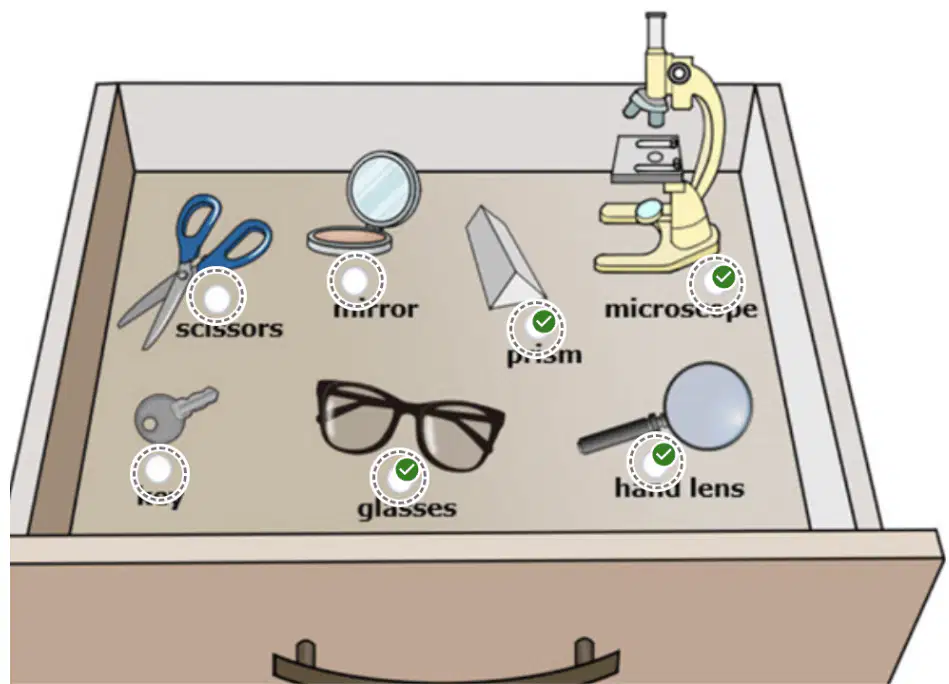
Refer to the diagram showing various science tools (scissors, mirror, prism, microscope, key, glasses, hand lens). A class observed that when white light passes through a prism at a certain angle, the light changes to a rainbow pattern as it exits the prism at a different angle. What claim best explains the behavior of the light passing through a prism?
The light reflected from the prism created a rainbow.
The light bounces off the prism in different colors.
Colored light enters the prism and changes to white light.
Light refracts as they pass through the glass prism.
A student believes that only shiny objects can reflect light. His brother tells him he is wrong because all objects can reflect light. Which statement correctly explains which objects reflect light?
His brother is correct because all objects absorb and reflect light, but it is easier to tell when objects are shiny.
Both are incorrect because reflection is the bending of light as it passes through a different medium.
The student is correct because an object must be shiny to reflect light.
Both are incorrect because objects cannot reflect light.
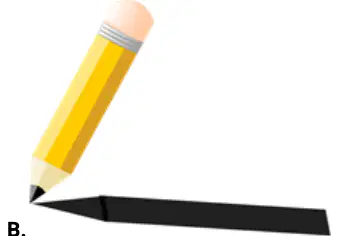
Which of these is an example of light bending as it passes from one material to another?
(Image of a straw appearing bent in a glass of water)
(Image of a flashlight shining on a wall)
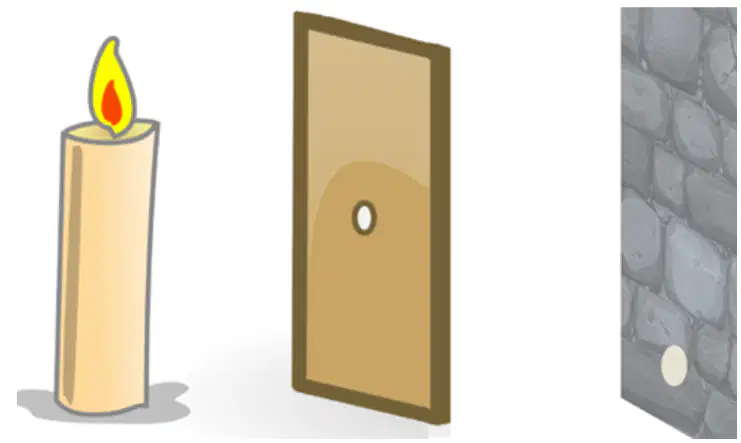
Which property of light causes the image of the candlelight to appear near the bottom of the wall?
Reflection
Refraction
Diffraction
Absorption
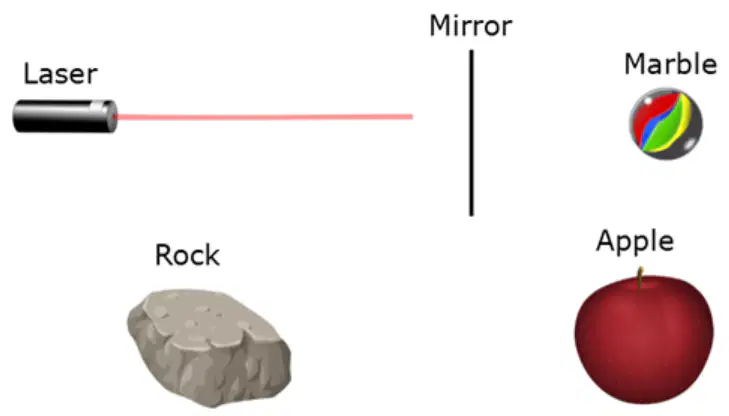
Observe the image above. After reflecting off of the mirror, which object will the light coming from the laser most likely strike next?
The marble
The apple
The rock
The laser
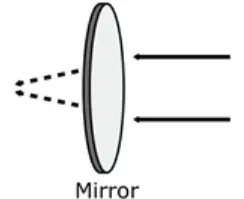
The arrows in the diagrams below represent light. Which diagram best shows how a glass mirror would reflect light?
A clear, glass beaker is filled half-full of water. A plastic spoon is placed in the beaker, and one end rests against the top edge of the beaker. When viewed from the side, the bottom of the spoon does not line up with the top of the spoon. What causes this to happen?
Light rays bend the plastic spoon.
Light rays are reflected by the water.
Light rays are refracted in the water.
Light rays are absorbed by the plastic spoon.
16. Olivia can see the reflection of the cooler on the water. What best explains why she can see the cooler on the lake?
Because light bounces off the water and creates a reflection.
Because the water absorbs all the light from the cooler.
Because the cooler is underwater.
Because the lake is frozen and acts as a mirror.
A. The lake produces a light that reflects off the cooler. B. The light refracts off the cooler then refracts off the surface of the water. C. The light reflects off the cooler then reflects off the surface of the water. D. The light reflects off the cooler then refracts off the surface of the water. Choose the correct option.
A. The lake produces a light that reflects off the cooler.
B. The light refracts off the cooler then refracts off the surface of the water.
C. The light reflects off the cooler then reflects off the surface of the water.
D. The light reflects off the cooler then refracts off the surface of the water.
The Moon does not produce light. What makes it possible to see the Moon from Earth?
The craters from the Moon absorb light.
The Moon has a thin layer of ice surrounding it.
Light from the Sun is reflected by the Moon.
Water vapor around the Moon collects light rays.
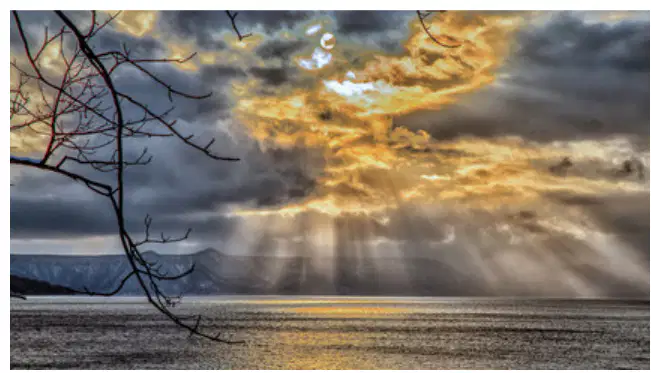
Light from the Sun is coming through the clouds and hits the surface of the lake. What does evidence from the picture prove about the path that the light travels?
The light travels in a straight path.
The light travels in waves.
The light is absorbed by the clouds.
The light strikes a shiny object and is reflected back.
The light does not travel.
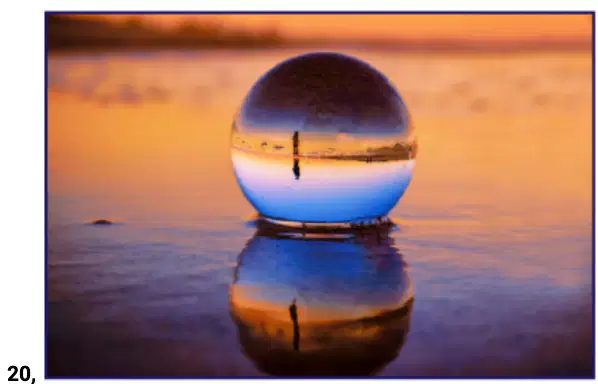
Amarie went to the beach and placed a glass ball on the edge of the shore in the water. The picture shows what it looked like on the beach. What property of light is exhibited at the bottom of the picture?
transparency
reflection
opacity
refraction
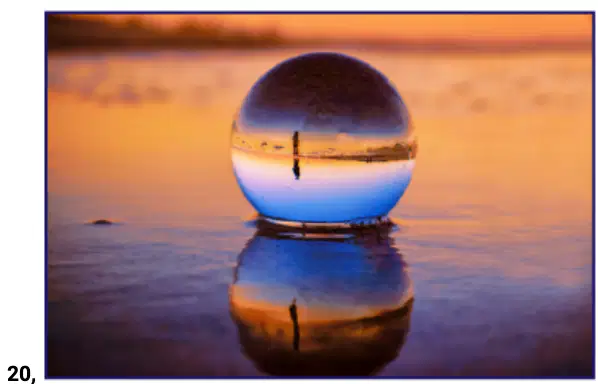
What evidence from the picture supports the answer in Part A? Select the correct answer.
The image is distorted at the bottom of the picture.
The image is mirrored in the picture.
The image is not visible in the picture.
The image is distinctly visible in the picture.
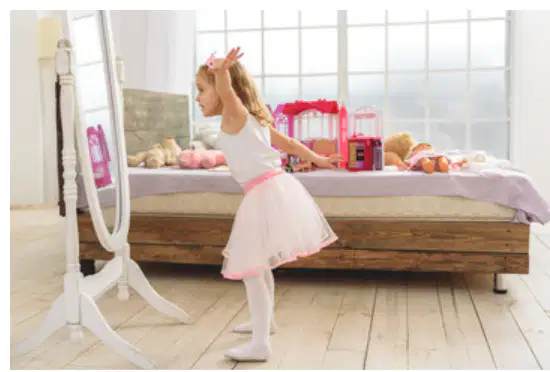
Jenny was playing dress up and wanted to see herself. As she was looking in the mirror, she noticed she could see herself and she could also see the back of her room. What was Jenny looking at?
The refraction coming from the mirror.
The reflection coming from the mirror.
The absorption coming from the mirror.
Which statement best supports the answer to Part A?
When Jenny looked at the mirror, the light travelled to the mirror and bent.
When Jenny looked in the mirror, the light was absorbed into the mirror.
When Jenny looked in the mirror, the light bounced off the mirror back to her eyes.
When Jenny looked in the mirror, the light looked fuzzy because the surface was translucent.

22, This question has two parts. First, answer Part A. Then answer Part B. Lia and Stan went for a hike through a local park. They came to a lake at the park. The picture below shows what they saw. Part A: The trees, clouds, and Sun appear on the surface of the water because:
the water reflects the images of the trees, clouds, and Sun
the water absorbs the images of the trees, clouds, and Sun
the water creates the images of the trees, clouds, and Sun
the water refracts the images of the trees, clouds, and Sun
Which statement best explains what is happening to the objects in the water?
The water is refracting the objects.
The water is reflecting the objects.
The water is absorbing the objects.
The water is blue so it shows the objects.
Which statement best supports the answer to Part A?
Light can refract air and clean water.
Light travels in straight lines and enters the water in the lake.
Light travels in straight lines and bounces off the smooth surface of the lake.
Light travels in straight lines until the water bends as it enters the lake.
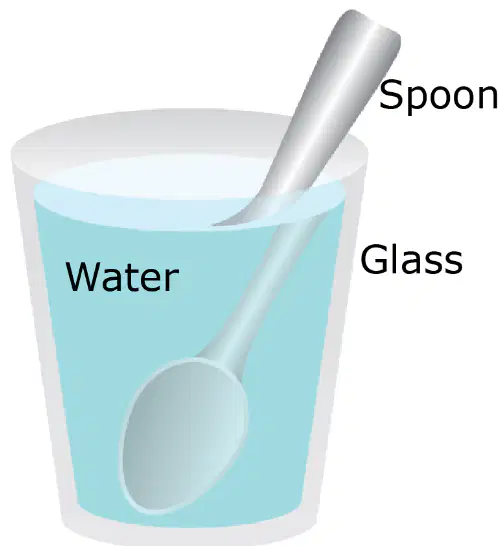
This question has two parts. First, answer Part A. Then answer Part B. The diagram below shows a plastic spoon in a glass of water. Part A The spoon's broken appearance is caused by light that is--
A. reflected
B. refracted
C. absorbed
D. vibrated
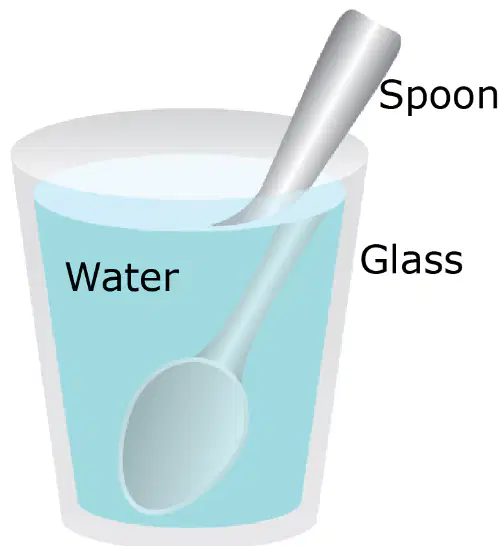
Part B: Which statement supports the answer to Part A about the appearance of the plastic spoon in the glass of water?
The spoon looks bent because light changes direction as it passes from water to air.
The spoon looks bent because water makes objects appear larger.
The spoon looks straight because water does not affect light.
The spoon looks broken because plastic reacts with water.
Which statement correctly describes the behavior of light?
Light travels in a straight line until it strikes an object and bounces off the object.
Light travels in a straight line until travels through one medium to another and bends.
Light travels in a straight line until is absorbed by the object.
Light travels in a straight line until is travels through one medium to another and moves around making sound.
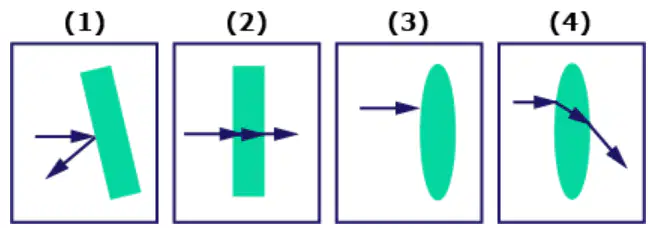
Which diagram best represents the reflection of light?
1
2
3
Which statement best supports Part A?
Lights travels in a straight line and is absorbed by the object.
Light travels in a straight line until it strikes an object and bounces back.
Light travels in a straight line until it travels from one medium to another and bends.
Light travels in a straight line until it travels from one medium to another and goes through in the same line.
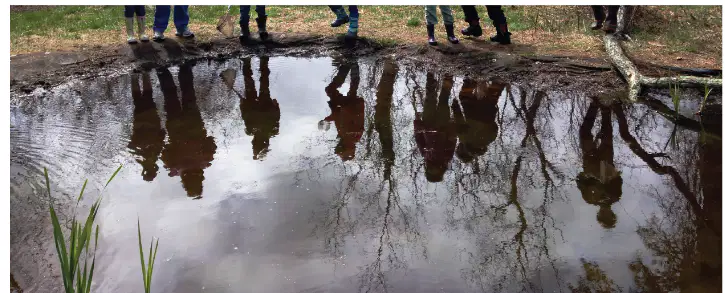
Which statements about light are supported by this picture?
Light is refracted off the surface of the pond.
(Option B is missing in the image, so cannot provide the full question.)
Which statement best explains what happens to light at the surface of a pond?
Light is reflected off the surface of the pond.
The pond is brown because light forms an image.
Light travels in a straight line until it bounces off the smooth surface of the pond.
Light travels in a straight line until it enters a different medium like the pond.
Kylie is fishing at a pond with her family. When she looks at the surface of the water she can see herself. Then, she looks at the fishing line going into the water. The line appears to be broken. Why does Kylie see herself in the water, and why does her fishing line appear broken in the water?
A. Kylie sees herself because of refraction.
B. Kylie sees herself because of reflection.
C. The fishing line appears broken because of refraction.
D. The fishing line appears broken because of reflection.
E. Kylie sees the fishing line because the light is absorbed by the water.
While riding in a car on a sunny day, a girl discovered she could move her watch around and make a spot of light appear on the roof of the car. Which of the following caused this to happen?
The watch changes the color of the light.
The watch is a different color than the car.
The watch reflects sunlight onto the roof.
The watch absorbs light from the car roof.
When walking through a parking lot, Sam notices that light rays pass through some objects, are absorbed by some objects, and bounce off some objects. When light rays bounce off an object, they are —
A. refracted
B. retracted
C. reflected
D. reabsorbed
Many cars are made with tinted windows. The tinted windows help keep sunlight out because some light —
gets trapped inside the car
is absorbed by the windows
passes through the windows
is reflected by the seats
Which of the following happens to light when it hits a window?
passes through the window
is absorbed by the glass
changes its color
bounces off the windows
Which object has the primary function of reflecting?
mirror
window
eyeglasses
camera
While washing dishes on a sunny morning, Ashley could see an image of herself in the window. Why could Ashley see her image in the glass?
Some of the light was reflected off the window.
The light passed through the window.
The light split into colors when it passed through the window.
Which camera part uses refraction to help the camera take pictures?
lens
film
flashbulb
batteries
Which of the following objects would best reflect light?
sheet of metal
piece of wood
bathroom mirror
magnifying glass

What happens to light that causes the flower stem to look as if it is bending?
Light is refracted as it passes from air to water.
Light is absorbed by the flower stem.
Light is reflected off the surface of the water.
Light is scattered by the petals.
Light bounces off the glass.
Light bounces off the glass.
Light changes color in the water.
Light bounces off the flower.
Light changes direction in the water.
What can happen to light that is traveling in a straight line when it strikes an object? Choose three correct answers.
Light can be created.
Light can be reflected.
Light can be refracted.
Light can be destroyed.
Light can be absorbed.
Which of these occurs due to the reflection of light?
an image being visible in a mirror
a straw appearing to bend in water
When light enters a prism, it
increases in speed.
continues in a straight line.
reflects off the surface.
refracts and bends.

A mirror ball is shown below. When light strikes the surface of the mirror ball, it is
(a)
What happens to light when it strikes mirrors?
refracted by the mirrors.
reflected by the mirrors.
absorbed by the mirrors.
destroyed by the mirrors.
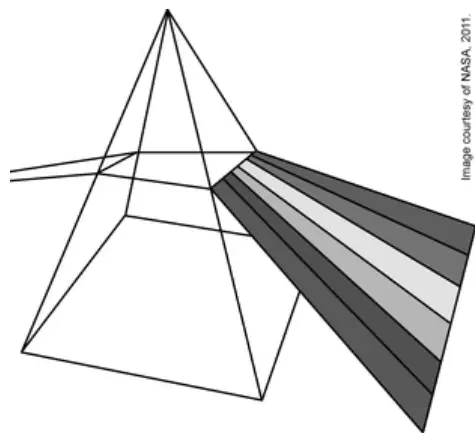
The picture below shows light passing through a prism. How does the light behave differently when it enters the prism?
The ray of light straightens as it strikes the glass.
The ray of light transforms to heat when it strikes the glass.
The ray of light bends as it strikes the glass.
The ray of light becomes shorter when it strikes the glass.
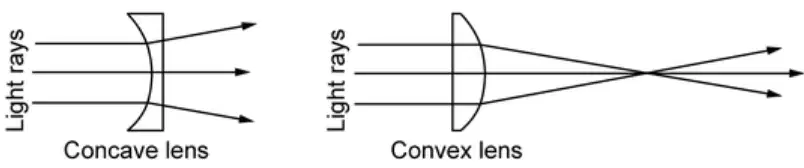
Chloe's science class has been studying the properties of light. During a lesson, she observed the properties below. Which statement most accurately describes Chloe's observations?
Lenses cause light rays to bend inward.
Lenses bend light rays in different directions.
Lenses cause light rays to spread apart.
Lenses make objects appear larger.
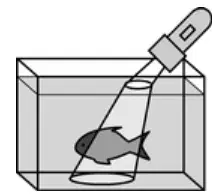
During a storm, the power went out at Sarah's house. Worried about her pet fish, Sarah used a flashlight to check on it. The diagram below shows what she saw. What property of light did Sarah observe?
Light changes direction when it passes through one kind of matter into another.
Light travels at a speed of 186,000 miles per second.

