
 Worksheets
Cardiovascular System Review
Total questions: 54
Worksheet time: 28mins
Which of the following is NOT a component of the cardiovascular system?
Heart
Blood vessels
Lungs
Blood
What are the three types of blood vessels found in the cardiovascular system?
Arteries, veins, capillaries
Arteries, veins, bronchi
Arteries, capillaries, alveoli
Veins, bronchi, alveoli
Which tissue is a key component of the cardiovascular system?
Muscle
Blood
Epithelial
Plasma
How do capillaries function within the cardiovascular system?
They transport oxygen-rich blood away from the heart.
They connect arteries and veins, allowing for exchange of nutrients and waste.
They carry blood back to the heart.
They store blood for emergencies.
Which substances are transported by the cardiovascular system?
Oxygen, carbon dioxide, nutrients, wastes, and hormones
Enzymes, vitamins, and minerals
Proteins, lipids, and carbohydrates
Water, salts, and glucose
Where is the heart located in the human body?
Between the lungs in the thoracic cavity and within the inferior mediastinum
Above the lungs in the thoracic cavity and within the superior mediastinum
Below the diaphragm in the abdominal cavity
Behind the spine in the anterior cavity
What is the function of the pericardium surrounding the heart?
Protects and supports the heart
Pumps blood to the lungs
Filters air entering the lungs
Connects the heart to the diaphragm
What is the position of the base of the heart?
Points toward the left hip
Points toward the diaphragm
Points toward the right shoulder
Points toward the sternum
Where does the apex of the heart point and rest?
Points toward the right shoulder and rests on the diaphragm
Points toward the left hip and rests on the diaphragm
Points toward the sternum and rests on the rib cage
Points toward the left shoulder and rests on the diaphragm
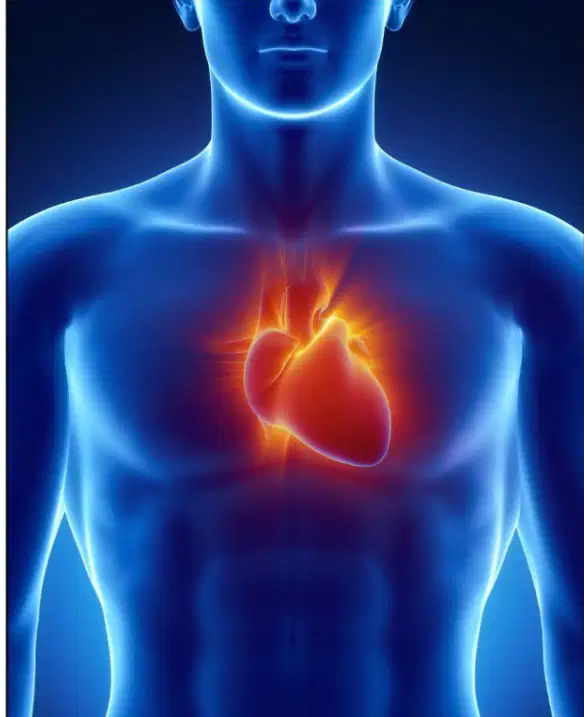
What is the approximate size of the human heart?
The size of a basketball
The size of a closed fist
The size of a tennis ball
The size of a grapefruit
What is the average weight of the human heart?
500 grams
330 grams
200 grams
400 grams
Approximately how many times does the human heart beat in a lifetime?
1 billion times
2.5 billion times
3 billion times
5 billion times
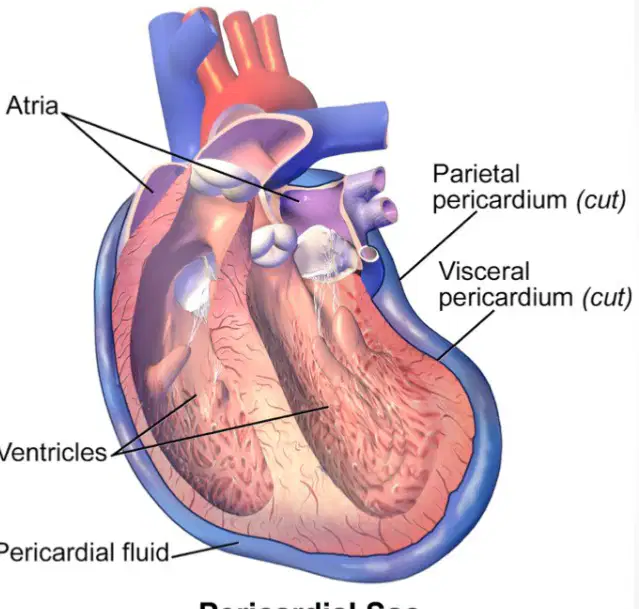
What is the name of the serous membrane that surrounds the heart?
Myocardium
Pericardium
Endocardium
Epicardium
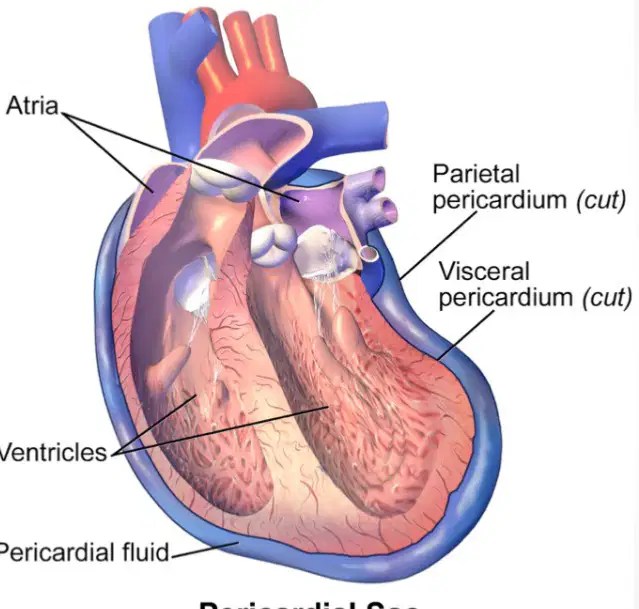
What is the primary function of the serous fluid secreted by the pericardium?
To transport oxygen
To reduce friction
To pump blood
To regulate heart rate
Which layer of the heart wall is responsible for lining the heart chambers?
Epicardium
Myocardium
Endocardium
Pericardium
What is the thick muscular layer of the heart wall called?
Epicardium
Myocardium
Endocardium
Parietal pericardium
Which of the following correctly lists the three layers of the heart wall?
Epicardium, Myocardium, Endocardium
Parietal pericardium, Myocardium, Endocardium
Visceral pericardium, Myocardium, Parietal pericardium
Epicardium, Endocardium, Pericardial cavity
What is the myocardium composed of?
Thin layers of epithelial tissue
Thick bundles of cardiac muscle twisted into ring-like arrangements
Layers of connective tissue
Smooth muscle fibers arranged in parallel
Which layer of the heart wall is responsible for contraction?
Endocardium
Epicardium
Myocardium
Pericardium
What is the name of the structure that carries oxygenated blood from the heart to the rest of the body?
Superior vena cava
Aorta
Pulmonary trunk
Pulmonary Arteries
Which part of the heart is responsible for receiving deoxygenated blood from the lower part of the body?
Superior vena cava
Inferior vena cava
Pulmonary trunk
Descending Aorta
What is the name of the vessel that carries deoxygenated blood from the upper part of the body to the heart?
Superior vena cava
Inferior vena cava
Left pulmonary artery
Coronary sinus
Which structure is responsible for carrying oxygenated blood from the lungs to the heart?
Pulmonary veins
Pulmonary arteries
Superior vena cava
Inferior vena cava
Which vessel is responsible for carrying oxygenated blood from the heart to the lower body?
Superior vena cava
Descending Aorta
Aortic Arch
Inferior vena cava
What is the role of the pulmonary trunk in the circulatory system?
It carries oxygenated blood to the lungs
It carries deoxygenated blood to the lungs
It carries oxygenated blood to the body
It carries deoxygenated blood to the heart
What is the primary function of coronary arteries?
To supply blood to the myocardium
To transport oxygen to the lungs
To remove waste products from the bloodstream
To regulate the heartbeat
What is the primary function of the atria in the heart?
To pump blood to the lungs.
To receive blood from the body and lungs.
To discharge blood to the body.
To regulate the heartbeat.
Which chambers of the heart are responsible for discharging blood?
Atria.
Ventricles.
Both atria and ventricles.
None of the above.
How are the atria and ventricles structurally positioned in the heart?
Atria are lower chambers, ventricles are upper chambers.
Atria are upper chambers, ventricles are lower chambers.
Both atria and ventricles are located on the same level.
Atria are on the left side, ventricles are on the right side.
What is the name of the structure that divides the heart longitudinally between the ventricles?
Interventricular septum
Intraventricular septum
Atrial-ventricular septum
Pulmonary septum
Which septum divides the heart longitudinally between the atria?
Intraatrial septum
Interatrial septum
Atrial-ventricular septum
Pulmonary septum
What is another name for the right atrioventricular (AV) valve?
Mitral valve
Pulmonary valve
Tricuspid valve
Aortic valve
Which valve is also referred to as the bicuspid valve?
Pulmonary valve
Mitral valve
Aortic valve
Tricuspid valve
What are the two types of semilunar valves in the heart?
Pulmonary and aortic valves
Tricuspid and mitral valves
Right and left atrioventricular valves
Pulmonary and mitral valves
Which valve prevents backflow of blood into the right ventricle?
Pulmonary valve
B valve
Aortic valve
Tricuspid valve
What is the primary function of the heart valves?
To pump blood into the lungs
To regulate the flow of blood and prevent backflow
To oxygenate the blood
To control the heart rate
Which heart valve is located between the left atrium and the left ventricle?
Tricuspid valve.
Pulmonary valve.
Bicuspid valve.
Aortic valve.
Which heart valve prevents blood from flowing back into the right ventricle?
Pulmonary valve.
Aortic valve.
Bicuspid (mitral) valve.
Tricuspid valve.
What is the role of the tricuspid valve in the heart?
To prevent blood from flowing back into the left atrium.
To prevent blood from flowing back into the right atrium.
To pump blood into the lungs.
To regulate oxygen levels in the blood.
The serous membrane surrounding the heart is called the:
myocardium
Contraction of the ventricles is called (a) , while the relaxation of the ventricles is called (b) .
Chordae tendineae help prevent:
Backflow into the ventricles
Backflow into the atria
High blood pressure
Blood clots
AV valves are open when:
Semilunar valves open
All chambers relax
Bradycardia is defined as a heart rate under
40bpm
80bpm
60bpm
100 bpm
Arteries always:
Carry oxygenated blood
Carry deoxygenated blood
Carry blood away from the heart
Carry blood to the heart
Veins differ from arteries because they:
Have thicker muscle layers
Carry blood away from the heart
Have valves to prevent backflow
Are always oxygen-rich
Capillaries connect:
Arteries to the heart
Veins to the heart
Arterioles and venules
Capillaries to arteries
Pulse is commonly measured at the:
Femoral artery
Carotid vein
Radial artery
Aorta
Normal adult blood pressure is less than:
150/80
110/60
140/60
120/80
Hypertension is another term for:
Low blood pressure
Irregular blood pressure
High blood pressure
Normal blood pressure
A heart attack is also known as a:
Stroke
Myocardial infarction
Arrhythmia
Cardiomyopathy
Endocarditis is an infection of the:
Heart muscle
Valves or lining of the heart
Coronary arteries
Septum
Arteries have thicker walls because they:
Carry more blood
Must withstand high pressure
Are not elastic
Do not contain valves
What is another name for the SA Node?
Pacemaker
Sinoatrialventricular Node
Sinoventricular Node

