
 Worksheets
What is the Nervous System?
Total questions: 81
Worksheet time: 41mins
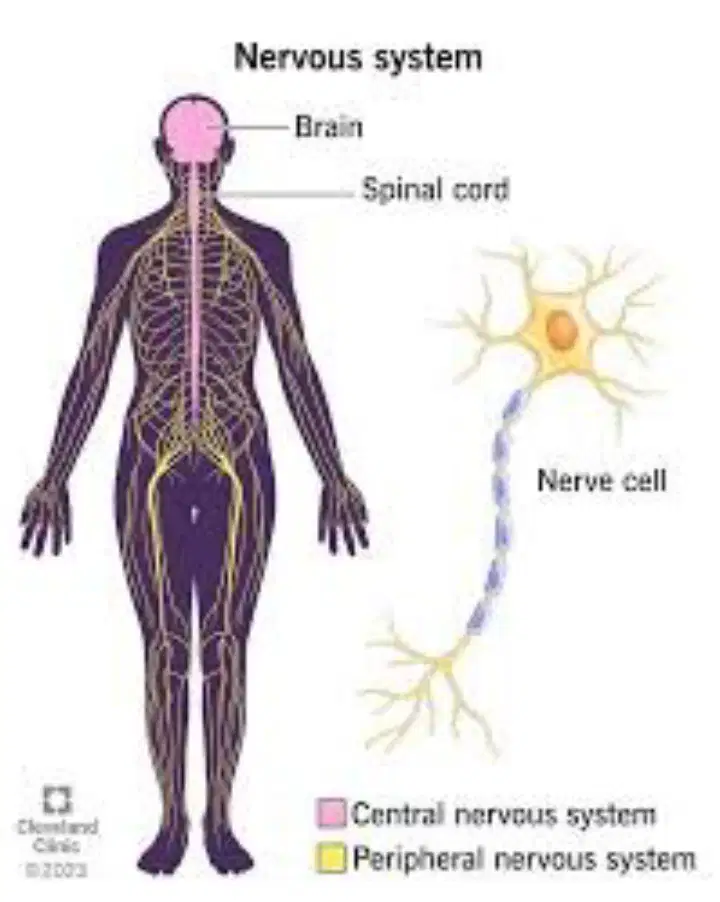
What is the nervous system?
The body's command and communication network
The body's digestive system
The body's circulatory system
The body's respiratory system
Which functions does the nervous system help control?
Thinking
Breathing
Heartbeat
Digestion
Reflexes
Fill in the blank: The nervous system sends and receives messages between the ______ and the rest of the body.
brain
heart
lungs
stomach

Which part of the nervous system is shown in pink in the diagram?
Central nervous system
Peripheral nervous system
Digestive system
Respiratory system
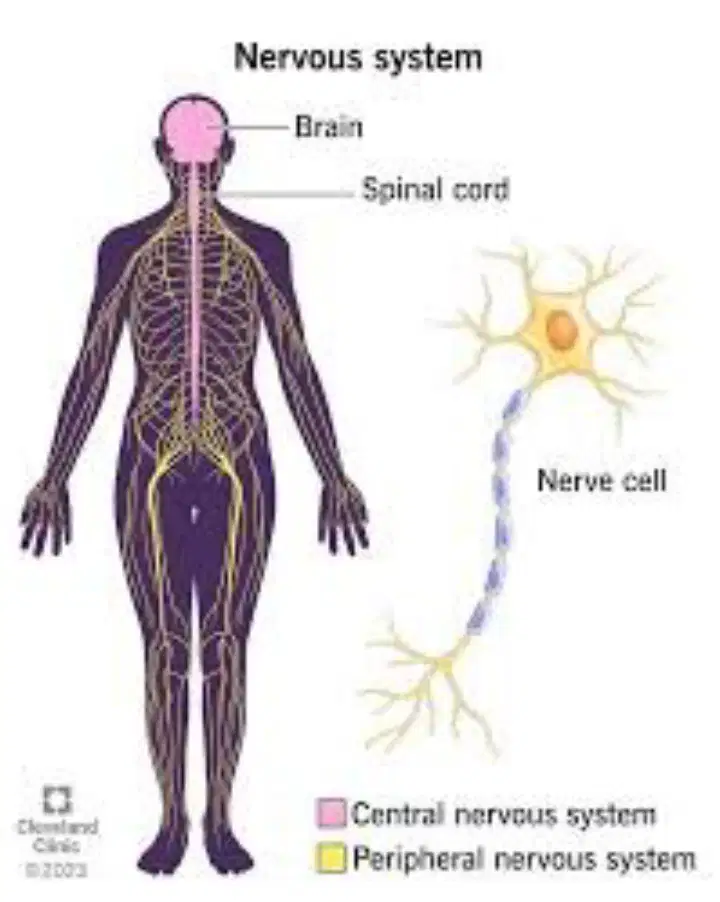
Which part of the nervous system is shown in yellow in the diagram?
Central nervous system
Peripheral nervous system
Digestive system
Respiratory system
Fill in the blank: The Central Nervous System (CNS) includes the ______ and spinal cord.
brain
heart
lungs
kidneys
Fill in the blank: The Peripheral Nervous System (PNS) includes all other nerves that branch out to the ______ and organs.
limbs
brain
spinal cord
heart
Which statement is true about the CNS and PNS?
They work independently of each other
They work together to send information back and forth
Only the CNS sends information
Only the PNS sends information
What does the Central Nervous System (CNS) include?
Only the brain
Only the spinal cord
The brain and spinal cord
The heart and lungs
Fill in the blank: The CNS is the "___" of the entire body, similar to the "CEO" or "boss".
control center
messenger
support system
energy source
Which of the following is NOT a function of the Central Nervous System (CNS)?
Processes information
Makes decisions
Sends out commands
Pumps blood
Fill in the blank: In other words, CNS = "_____, Decide, Command".
Think
Move
React
Sleep
When you accidentally touch a hot stove, what does your CNS do first?
Sends out a command
Processes and recognizes temperature and pain
Makes you hungry
None of the above
Fill in the blank: After recognizing temperature and pain, the CNS is triggered to '_____ to your muscles telling them to pull your arm back'.
send out a command
ignore the signal
increase blood flow
release hormones
Why is the CNS (Central Nervous System) important?
Because the brain controls your thoughts, emotions, memory, movement, coordination, and senses, and the spinal cord is the main highway that carries messages to and from the brain.
Because it helps in digestion and absorption of food.
Because it is responsible for producing hormones in the body.
Because it helps in the circulation of blood throughout the body.
What does the brain control?
The brain controls your thoughts, emotions, memory, movement, coordination, and senses.
The brain controls only your heartbeat and breathing.
The brain controls only your digestion and growth.
The brain controls only your hair and nails.
What is the main function of the spinal cord?
The spinal cord is the main highway that carries messages to and from the brain.
The spinal cord produces hormones for the body.
The spinal cord helps in digestion of food.
The spinal cord controls the movement of the heart.
When you touch something hot and pull your arm back, what sends a message to your brain?
The heart
The spinal cord
The lungs
The skin
What does the Peripheral Nervous System (PNS) include?
Only the brain
All nerves that branch out from the brain and spinal cord
Only the spinal cord
Only muscles
Which of the following is NOT a function of the Peripheral Nervous System (PNS)?
Picks up sensory information
Sends information to the CNS
Receives decisions (moves, react, adjust)
Controls blood sugar levels
Fill in the blank: The PNS is the communication network that connects the body to the _____
CNS
heart
lungs
muscles
The Peripheral Nervous System (PNS) includes nerves that reach your arms, legs, skin, organs, muscles, and glands.
True
False
What does the PNS do with sensory information such as touch, pain, and temperature?
Ignores it
Picks it up
Sends it to muscles
Stores it in the brain
In other words, PNS = _____ info, _____ info, _____ body. Fill in the blanks.
Collect info, deliver info, activate body
Store info, process info, relax body
Transmit info, block info, rest body
Receive info, ignore info, move body
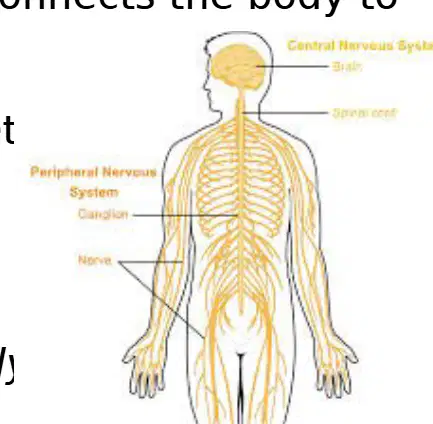
Which system is shown branching out from the spinal cord and reaching various parts of the body?
Central Nervous System
Peripheral Nervous System
Digestive System
Circulatory System
How does sensory input travel from the PNS to the CNS?
Through blood vessels
Through nerves
Through muscles
Through bones
What does the brain do when it receives a message from the PNS?
Ignores the message
Decides what to do
Sends the message back
Stops working
Fill in the blank: Your ______ sends the message through nerves to the CNS.
PNS
DNA
RBC
Liver
Which of the following is an example of the CNS making a decision?
A) "That stove is hot – pull your hand away!"
B) "The stove is cold – keep your hand there."
C) "The stove is hot – touch it longer."
D) "The stove is hot – ignore it."
Sensory input is detected by your senses and sent to the CNS.
True
False
Fill in the blank: CNS stands for ______ and is responsible for making decisions and processing information. It is referred to as 'The Boss'.
Brain and spinal cord
Heart and lungs
Muscles and bones
Eyes and ears
Fill in the blank: PNS stands for ______ and is responsible for gathering information and carrying out orders. It is referred to as 'The Messengers'.
All other nerves
Peripheral Nervous System
Primary Neural System
Posterior Nerve Segment
Which of the following is NOT an example of an action carried out by the PNS?
Pulling your hand away
Your heart rate increases
Making decisions
Opening your mouth to speak
Give one example of how your body responds when the CNS sends commands out through motor nerves.
Your hand pulls away from a hot surface.
Your eyes blink when you see bright light.
You taste sweetness when you eat candy.
Your heart beats faster when you are scared.
What are neurons?
The core cells of the nervous system that send and receive messages throughout the body
Cells that only carry oxygen
Cells that produce hormones
Cells that store fat
What is one function of neurons?
Carry electrical signals
Store nutrients
Produce enzymes
Absorb water
Fill in the blank: Neurons communicate with other neurons, sensations, and emotions, which means they are involved in _____________.
everything your brain and body do
only your thoughts
just your emotions
only your movements
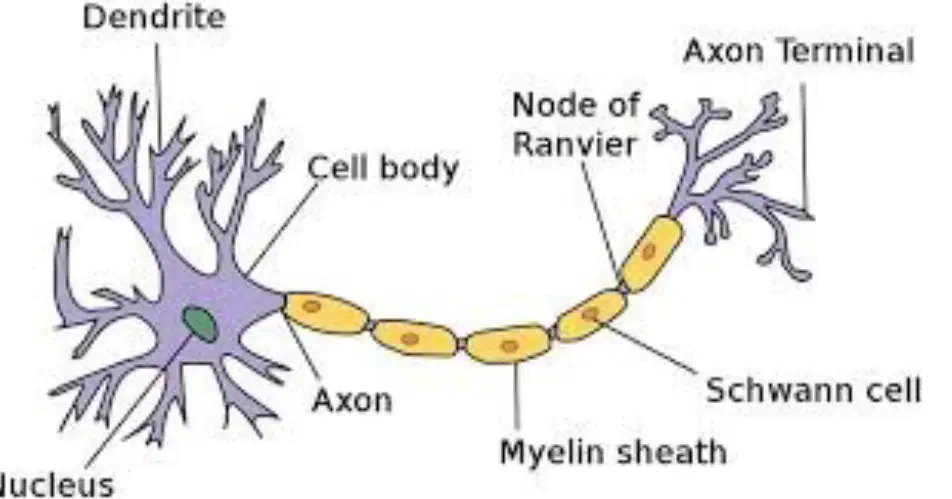
Refer to the diagram of the neuron. Fill in the blank: The short, branch-like extensions that receive messages from other neurons are called _________.
Dendrites
Axons
Synapses
Cell bodies
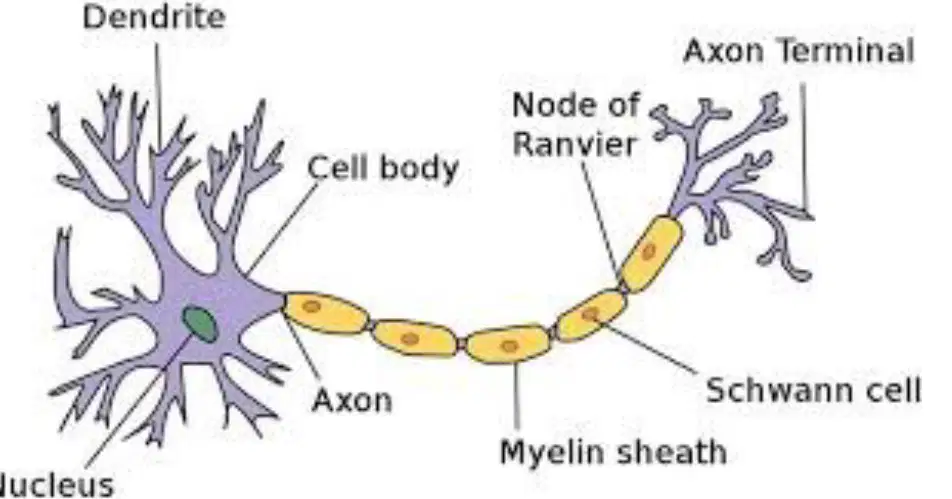
Refer to the diagram of the neuron. Fill in the blank: The part of the neuron that contains the nucleus and keeps the neuron alive and functioning is called the _________.
Cell Body (Soma)
Axon
Dendrite
Synapse
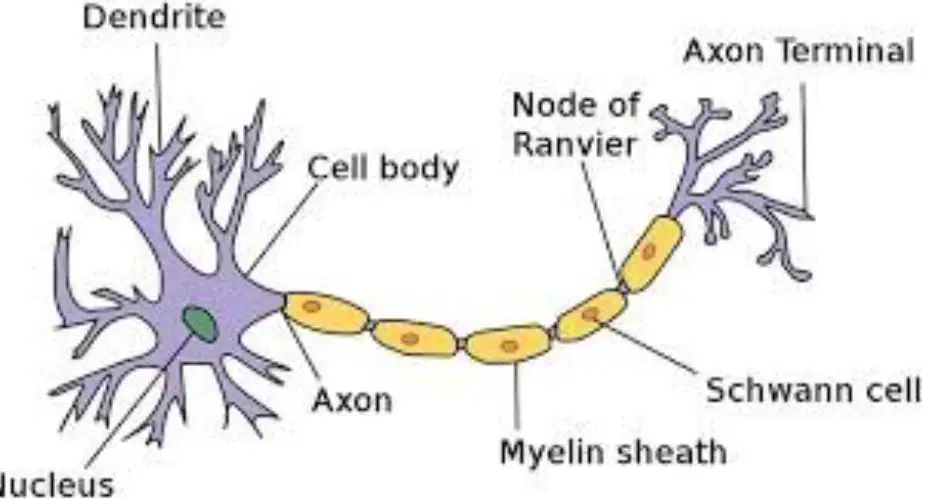
Refer to the diagram of the neuron. Fill in the blank: The long, cable-like fiber that sends electrical signals away from the cell body is called the _________.
Axon
Dendrite
Nucleus
Synapse
Which part of the neuron acts as the cell's 'listening ears'?
Axon
Cell Body (Soma)
Dendrites
Nucleus
How long can axons be?
Only microscopic
Only several feet long
Both microscopic and several feet long
Only as long as the cell body
According to the list for Wednesday, December 10th, which item will you need today?
Blank sheet of paper
Eraser
Ruler
Glue
According to the list for Wednesday, December 10th, which item will you need today?
Colors
Scissors
Tape
Stapler
According to the list for Wednesday, December 10th, which item will you need today?
Pencil
Pen
Marker
Highlighter
According to the list for Wednesday, December 10th, which item will you need today?
Laptop
Tablet
Smartphone
Calculator
What is the function of the myelin sheath in a neuron?
It releases neurotransmitters
It speeds up signal transmission
It receives signals from other neurons
It produces energy for the cell
The myelin sheath is made by specialized ______ cells.
glial
epithelial
muscle
red blood
Which analogy is used to describe the function of the myelin sheath?
Like the engine of a car
Like the plastic coating around wires
Like the roots of a tree
Like the wings of a bird
What are axon terminals?
The main body of the neuron
The branches at the end of the axon
The insulation around the axon
The nucleus of the neuron
Axon terminals release chemical messengers called ______.
neurotransmitters
hormones
enzymes
antibodies
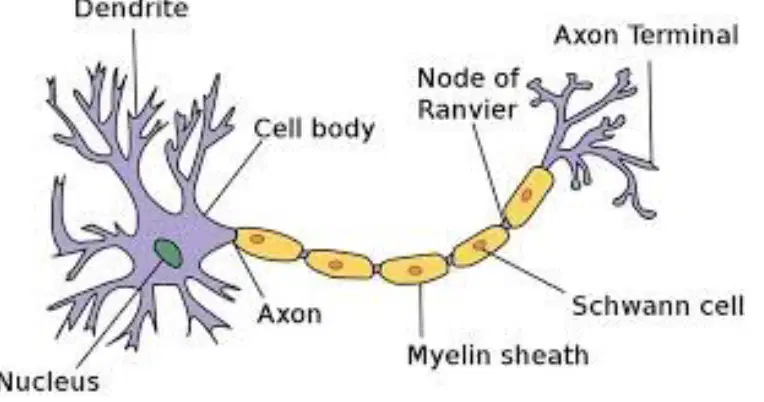
Which part of the neuron is labeled as 'Myelin sheath'?
The yellow, segmented insulation wrapped around the axon is labeled as 'Myelin sheath'.
The central cell body containing the nucleus is labeled as 'Myelin sheath'.
The branching structures at one end of the neuron are labeled as 'Myelin sheath'.
The long, thin fiber extending from the cell body is labeled as 'Myelin sheath'.
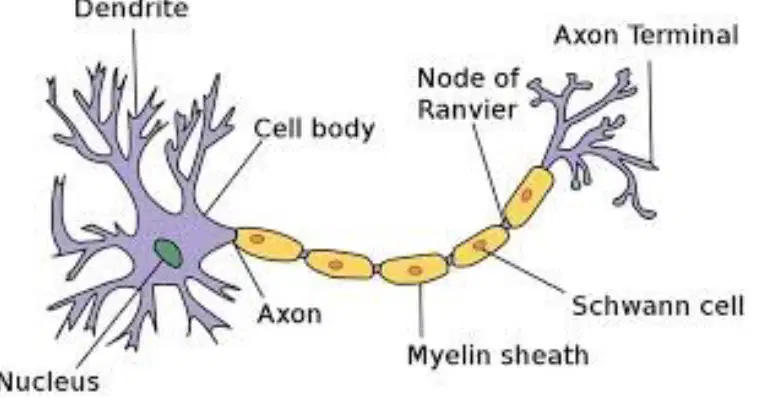
Which part of the neuron is responsible for passing signals to the next neuron or muscle?
Axon Terminal
Cell Body
Dendrite
Myelin Sheath
Neurons are classified by its function and structure. What does 'function' refer to in neuron classification?
A) Shape
B) Direction of signal
C) Size
D) Location
Neurons are classified by its function and structure. What does 'structure' refer to in neuron classification?
A) Shape
B) Direction of signal
C) Speed
D) Color
By function, there are three types of neurons. Fill in the blank: The neuron that carries signals from sensory organs to the central nervous system is called a _________?
Sensory Neuron
Motor Neuron
Interneuron
Relay Neuron
By function, there are three types of neurons. Fill in the blank: The neuron that carries signals from the central nervous system to muscles or glands is called a _________?
Motor Neuron
Sensory Neuron
Interneuron
Relay Neuron
By function, there are three types of neurons. Fill in the blank: The neuron that connects sensory and motor neurons within the central nervous system is called an _________?
Interneuron
Motor neuron
Sensory neuron
Glial cell
What do sensory neurons carry from the body TO the brain aka the CNS?
Information
Oxygen
Hormones
Blood
Which of the following stimuli can sensory neurons detect?
Sound
Temperature
All of the above
Pain
Touch
Motor neurons carry instructions FROM the brain TO ______ and organs.
muscles
bones
nerves
skin
Which of the following movements are controlled by motor neurons?
Walking
Talking
Speaking
All of the above
Where are interneurons mainly found?
In the brain and spinal cord
In the muscles
In the skin
In the bones
What is the main function of interneurons?
They transmit signals from the brain to muscles
They connect neurons to each other
They carry sensory information to the brain
They produce hormones
Interneurons are important for which of the following?
A) Thinking, decision-making, and reflexes
B) Digestion
C) Breathing
D) Circulation
According to the classification of neurons by structure, which of the following is NOT listed as a type of neuron?
Multipolar
Bipolar
Unipolar
Pseudounipolar
Anaxonic

Fill in the blank: The neuron type with a single axon and multiple dendrites is called _________.
Multipolar
Unipolar
Bipolar
Pseudounipolar
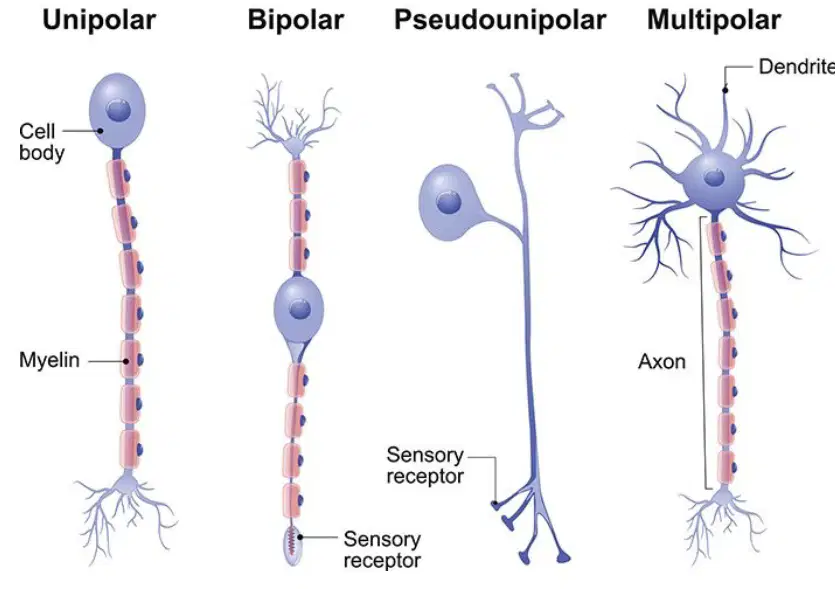
Fill in the blank: The neuron type with one process that splits into two branches, one leading to the cell body and the other to the sensory receptor, is called _________.
Pseudounipolar
Multipolar
Bipolar
Unipolar
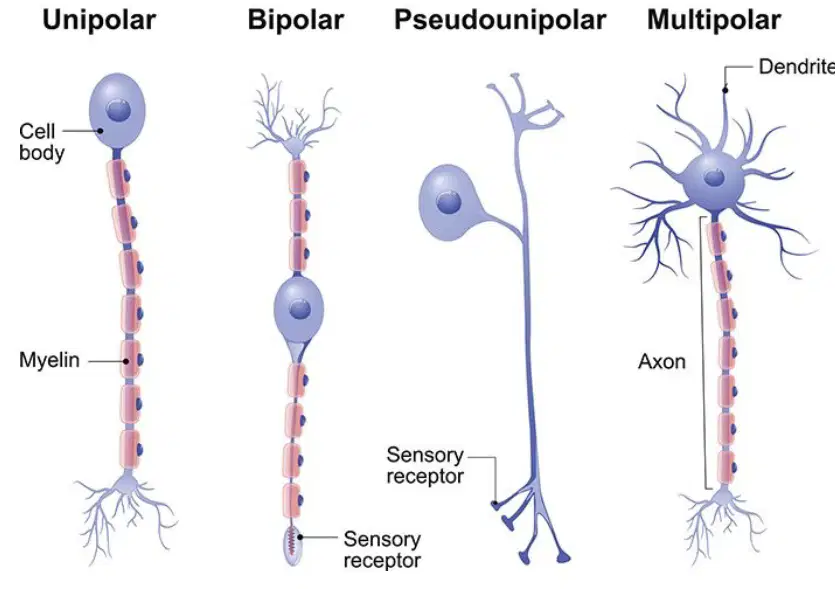
Fill in the blank: The neuron type with two processes, one axon and one dendrite, is called _________.
Bipolar
Multipolar
Unipolar
Pseudounipolar
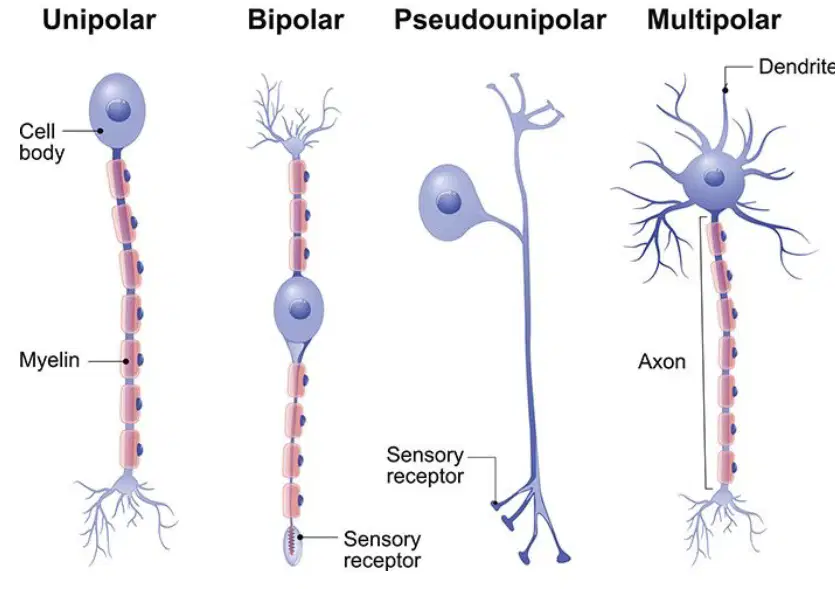
Fill in the blank: The neuron type with only one process extending from the cell body is called _________.
Unipolar
Bipolar
Multipolar
Pseudounipolar

Which is the most common type of nerve cell?
Bipolar neuron
Multipolar neuron
Unipolar neuron
Sensory neuron
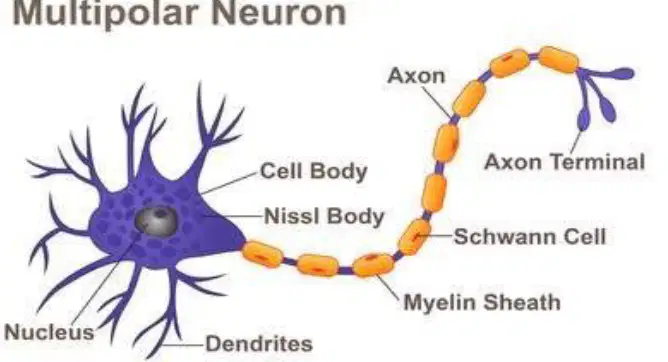
How many axons and dendrites does a multipolar neuron have?
One axon and multiple dendrites
Multiple axons and one dendrite
One axon and one dendrite
Multiple axons and multiple dendrites
Fill in the blank: The structure of a multipolar neuron allows it to receive and integrate signals from many other neurons, which is crucial for complex processing in the _____
CNS
PNS
muscle tissue
epidermis

A bipolar neuron has one ______ and one ______ extending from opposite sides of its cell body.
axon, dendrite
axon, axon
dendrite, dendrite
soma, axon
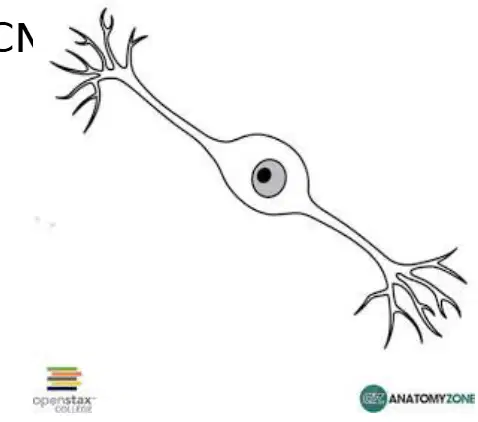
Which of the following sensory pathways involve bipolar neurons?
Retina (vision)
Olfactory system (smell)
Both A and B
Neither A nor B
Bipolar neurons transmit sensory signals to other neurons in the central nervous system (CNS).
True
False
What is a unipolar neuron?
A sensory neuron with a single process extending from the cell body that splits into two branches: a peripheral process and a central process
A motor neuron with multiple processes
A neuron with no processes
A neuron only found in the brain
Fill in the blank: The peripheral process of a unipolar neuron is responsible for receiving sensory input such as ________, pain, and temperature.
touch
hunger
balance
vision
Fill in the blank: The central process of a unipolar neuron carries signals to the ________.
CNS
muscle fibers
glands
skin
Unipolar neurons are crucial for relaying sensations from the body to the brain because:
they transmit sensory information directly to the central nervous system.
they generate motor responses in muscles.
they process visual information in the occipital lobe.
they regulate hormone release in endocrine glands.
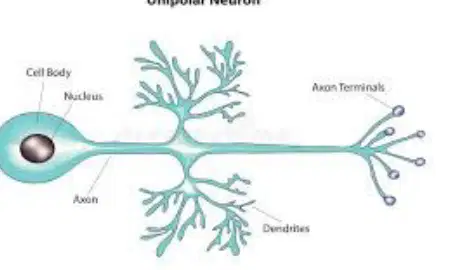
Refer to the diagram of the unipolar neuron. Which part is responsible for receiving sensory input?
Axon terminals
Peripheral process
Central process
Nucleus

