
 Worksheets
Midterm Review 2.0
Total questions: 100
Worksheet time: 2hrs 10mins
What is the atomic number?
the number of protons in the nucleus
the number of protons and neutrons in the nucleus
the number of neutrons in the nucleus
the number of protons in the energy levels
What is the mass number?
the number of protons in the nucleus
the number of protons and neutrons in the nucleus
the number of neutrons in the nucleus
the number of protons and electrons in the atom
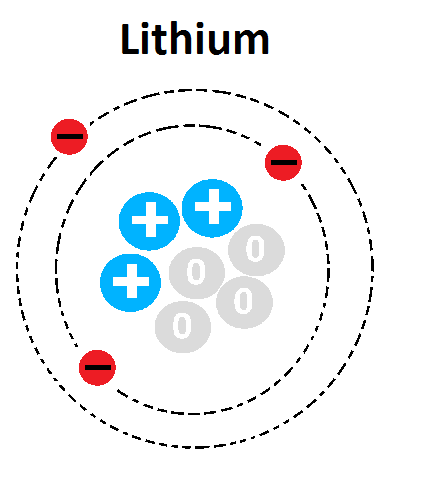
What is the atomic number of this atom?
1
3
4
7
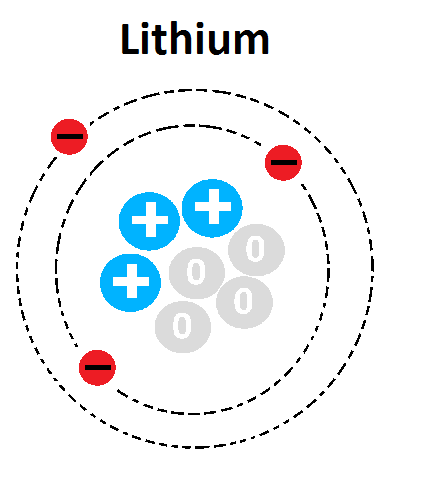
What is the mass number of this atom?
1
3
4
7
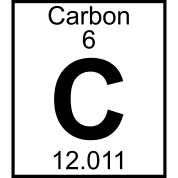

What does the 6 represent?
Atomic mass
atomic number
chemical symbol
element name
An atom has 10 protons, 15 neutrons and 10 electrons what is its mass number.
20
10
35
25
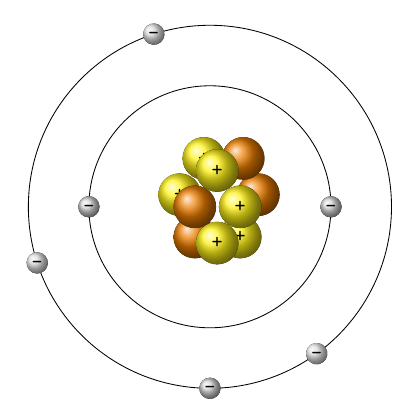
How many electrons does this atom have?
2
4
6
10


Which of the following determines the identity of an element?
number of protons
atomic mass
number of neutrons
number of shells
Carbon is considered an element, while carbon dioxide is considered a compound. This is because carbon dioxide is ---
a gas at room temperature.
made of two different elements.
given off by green plants.
useful to human beings
What is the pH range of an acid?
4-6
1-7
1-6
8-14
Which of the following pH values would be the strongest acid?
1
3
4
6
A substance is found to have the following characteristics:
Very bitter taste
Feels slippery to the touch
Produces OH- ions when dissolved in water
In what category would the substance be classified?
acid
base
enzyme
fatty acid
Which of the following is an example of COHESION?
water sticking to water
water sticking to glass
oil sticking to plastic
hydrogen sticking to oxygen
What is the correct chemical formula for water?
H2O
HO2
H2O2
2H1O
Water is polar. What does that mean?
it is a molecule with opposite charges on opposite ends
it is a molecule with no charge
it is a molecule with identical charges on opposite ends
it is a molecule with too many protons
Water sticks well to many materials. What term relates to this property of water?
cohesion
adhesion
density
surface tension
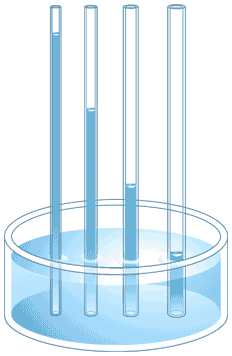
What is the term for water's ability to defy gravity and climb up a tube?
Capillary Action
Specific Heat
Universal Solvent
Magic

A water strider can skate along the top of a pond because:
covalent bonds result in water cohesion (surface tension)
hydrogen bonds result in water cohesion (surface tension)
water striders have adapted to take advantage of water cohesion
water striders are afraid of water and avoid it
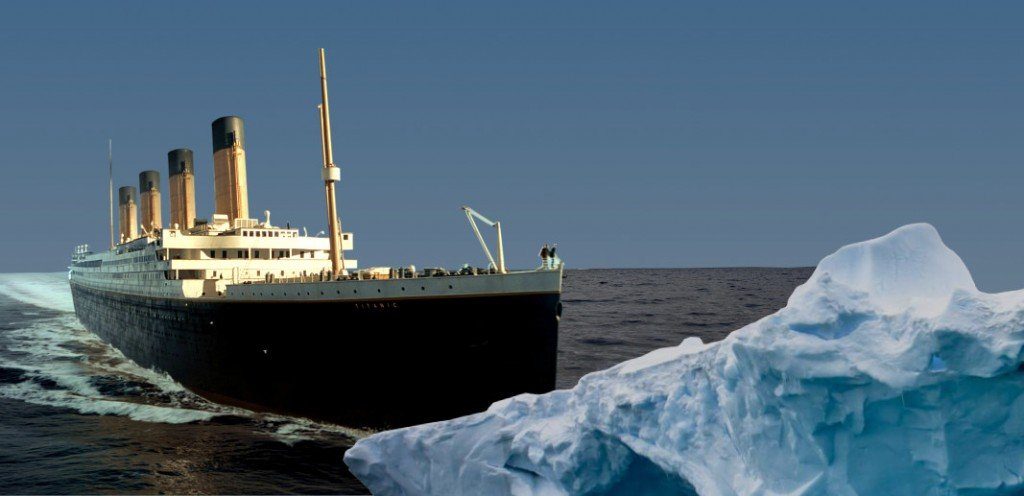
Why does ice float?
water expands when it freezes, making ice less dense than water
water compacts when it freezes, making ice more dense than water
hydrogen bonds in water push the ice to the surface
ice is afraid of water, and avoids it

What two elements make up water?
Helium and Oxygen
Hydrogen and Oxygen
Helium and Carbon
Oxygen and Carbon
How many hydrogen atoms are in a water molecule?
(HINT: H20)
5
1
2
0
How do you write the formula for sodium chloride?
NACL
NaCl
nacl
KI
How is an ionic bond formed?
Sharing of electrons
Delocalised electrons
Transfer of electrons
O2
H2O
2H2 + O2 --> 2H2O
2H2 + O2 --> 2H2O
Al + O2 --> 2Al2O3
4Fe + 3O2 --> 2Fe2O3
Mg + __HCl ---> MgCl2 + H2
2Li + Cl2 -> LiCl
Why do elements bond?
To be friends
To create a new element
To become stable
To get bigger
The octet rules states that most elements want to have _____ valence electrons.
2
4
6
8

How many valence electrons does Oxygen (O) have?
6
8
15
16
Force of attraction between atoms or ions.
Mixture
Compound
Chemical Bond
Formula
What two types of atoms make a covalent bond?
2 nonmetals
2 metals
1 metal and 1 nonmetal`
What happens to electrons in a covalent bond?
they are shared
they are transferred
they are negative
Ionic bonds are between
metals and nonmetals
2 metals
2 nonmetals

What type of bonding does this picture show?
Ionic
Covalent
Carbon and Oxygen will make a ___________ bond.
ionic
covalent
metallic
Sodium and Bromine will make a _____ bond.
ionic
covalent
metallic

When electrons are lost by one atom and gained by another, so that they both get full outer shells.
Covalent bond
Ionic bond
Pairing
Compound
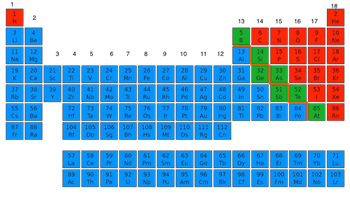
Why don't noble gases form bonds?
They all have a full octet
Noble gases do form bonds
They only bond when with eachother
none of these answers are correct
During a chemical reaction, atoms can
be destroyed to form a new substance
be created to form a new substance
be rearranged to form a new substance
What is a coefficient?
Number behind molecule (does not apply)
Number in front of molecule (applies to whole thing)
Applies to the element it follows
We balance equations to show...
Change
Reactants
Products
Conservation of mass
Subscripts apply to
The whole reaction
The individual element
The product side
The reactant side
The process by which one or more substances change to produce one or more different substances
Chemical Process
Reactant
Chemical Reaction
6CO2+ 6H2O → C6H12O6 + 6O2
The carbon atoms are balanced with ____ on each side of the reaction.
1
6
2
Determined whether the following equation is balanced or unbalanced. Ag + O2 ---> 2Ag2O
Balanced
Unbalanced
Determine whether the following equations is balanced or unbalanced. H4 + O2 ---> 2H2O
Balanced
Unbalanced
Determine whether the following equation is balanced or unbalanced. H2 + Br2 ---> 2HBr
Balanced
Unbalanced
Determine whether the following equation is balanced or unbalanced. 2Fe + 3Cl2 ---> FeCl3
Balanced
Unbalanced
In order for an equation to be balanced, there must be ...
an equal amount of atoms on both sides
a greater mass on the product side
a greater mass on the reactant side
elements with the same atomic # on both sides


Fe + S --> FeS
Al + O2 --> 2Al2O3
Determine whether the following equation is balanced or unbalanced. 4P +5O2 ---> 2P2O5
Balanced
Unbalanced
The electrons in the outermost shell (main energy level) of an atom; these are the electrons involved in forming bonds
alkali metals (group 1)
Halogens (Group 17)
atomic number
valence electrons
A subatomic particle that has a negative charge
nobles gases
protons
electrons
neutrons

