
 Worksheets
Chapter 6 Demand
Total questions: 73
Worksheet time: 37mins

Based on the image and the chapter title 'Demand', what does the concept of 'demand' refer to in economics?
The amount of goods available for sale
The desire and ability of consumers to purchase goods and services
The price at which goods are sold
The process of manufacturing goods

Demand refers to both the ________ and the ability of customers to pay a given price to buy a good or service at a given period of time.
willingness
necessity
ignorance
reluctance

Which of the following are necessary for demand?
A) Willingness to pay
B) Ability to pay
C) Both willingness and ability to pay
D) Only a given price

Explain what is meant by 'a given price' and 'a given period of time' in the context of demand.
'A given price' refers to the specific price at which demand is measured, and 'a given period of time' refers to the duration over which demand is considered.
'A given price' means any price in the market, and 'a given period of time' means any random time interval.
'A given price' refers to the average price of all goods, and 'a given period of time' refers to the lifetime of the product.
'A given price' is the lowest price possible, and 'a given period of time' is the shortest time interval.
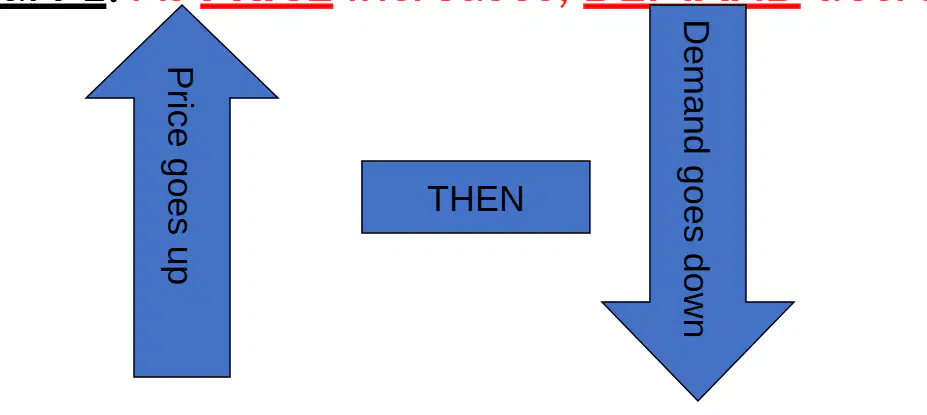
What happens to demand when price goes up?
Demand goes up
Demand goes down
Demand stays the same
Demand fluctuates
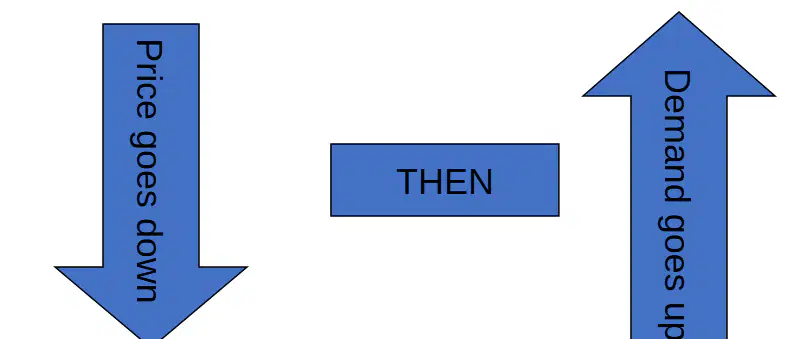
Law of Demand - Part 2: As PRICE decreases, DEMAND _________.
increases
decreases
remains constant
becomes zero
What does the Demand Curve show?
The relation between price and supply
The relation between price and quantity demanded
The relation between quantity supplied and quantity demanded
The relation between price and profit
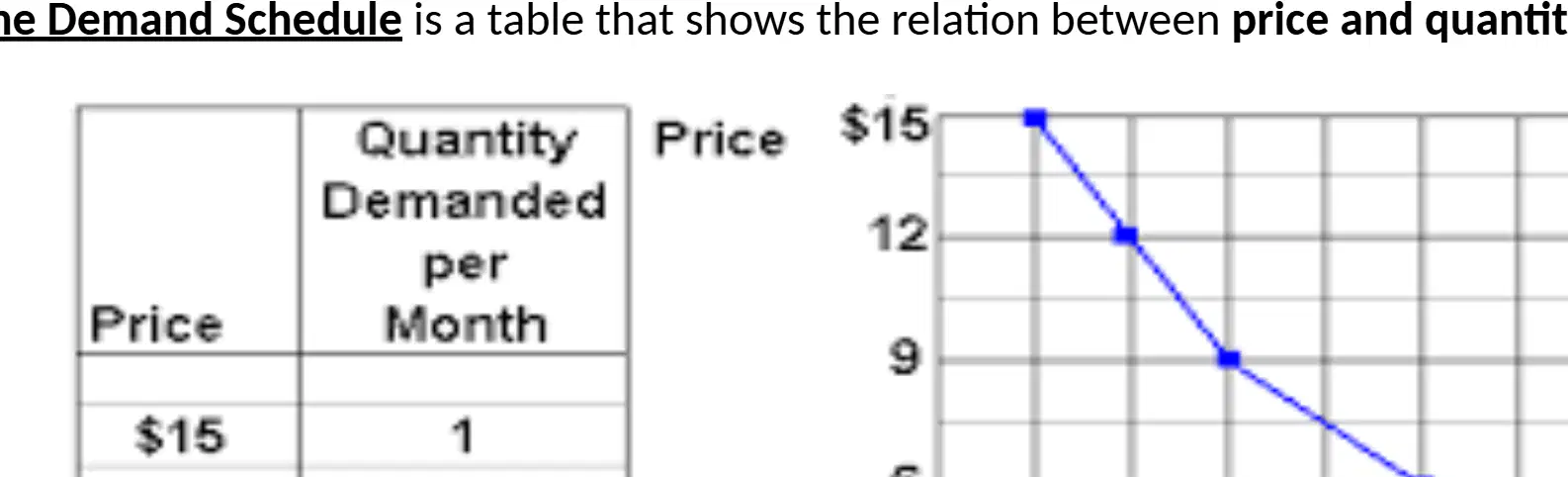
What does the Demand Schedule show?
The relation between price and supply
The relation between price and quantity demanded
The relation between quantity supplied and quantity demanded
The relation between price and profit
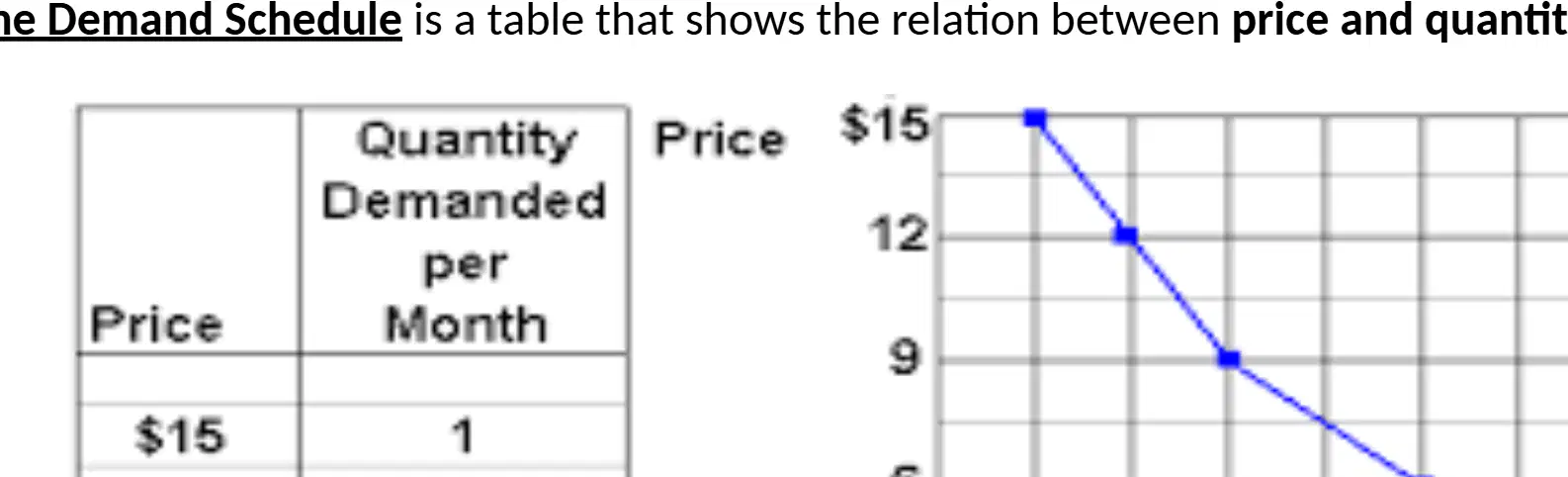
Fill in the blank: When the price is $15, the quantity demanded per month is _____
1
2
3
4
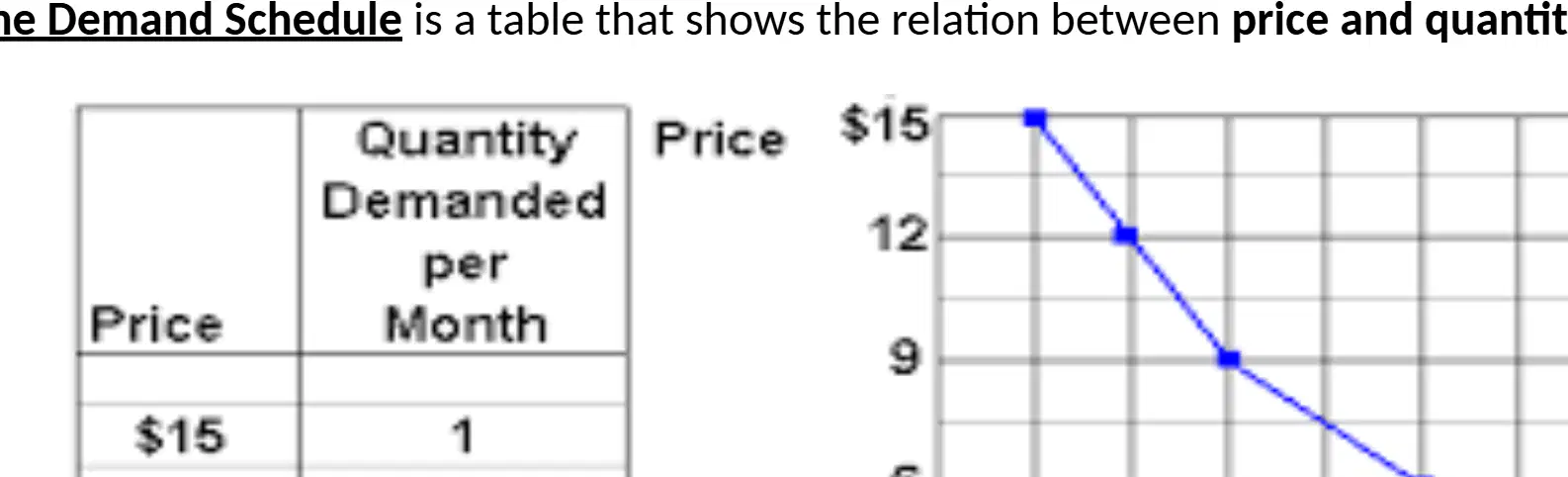
Fill in the blank: When the price is $6, the quantity demanded per month is _____
5
10
3
8
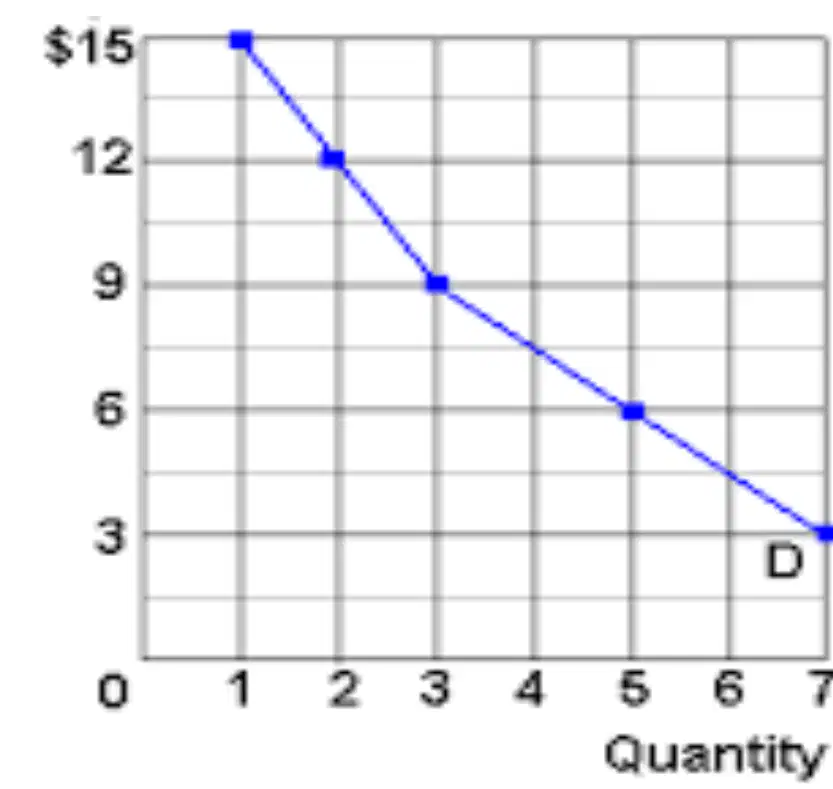
Fill in the blank: When the price is $3, the quantity demanded per month is _____.
7
5
10
3
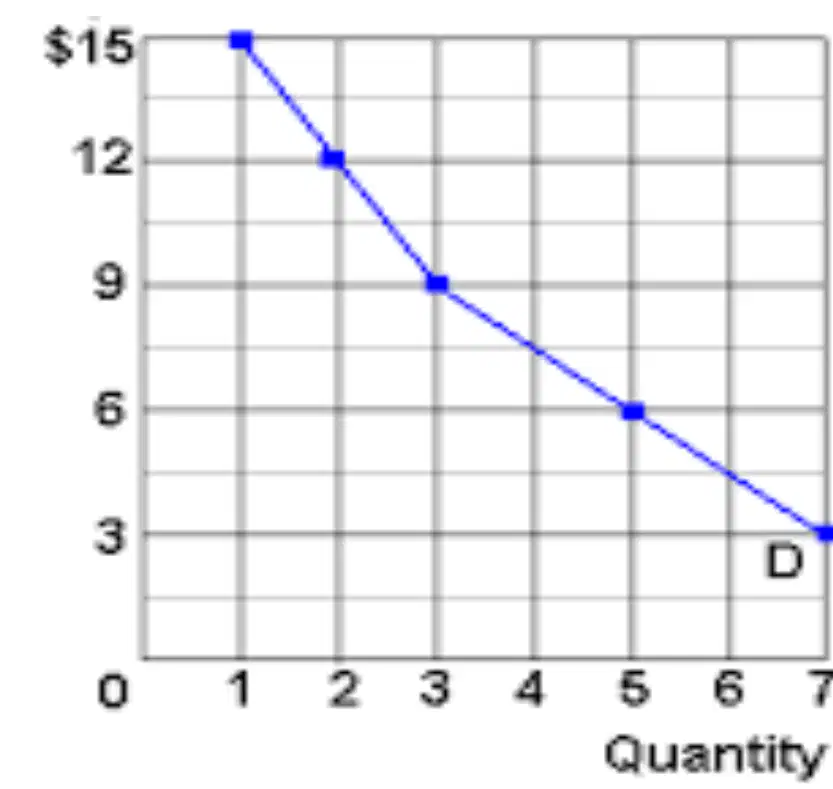
Fill in the blank: When the quantity demanded per month is 3, the price is _____
$9
$6
$12
$3
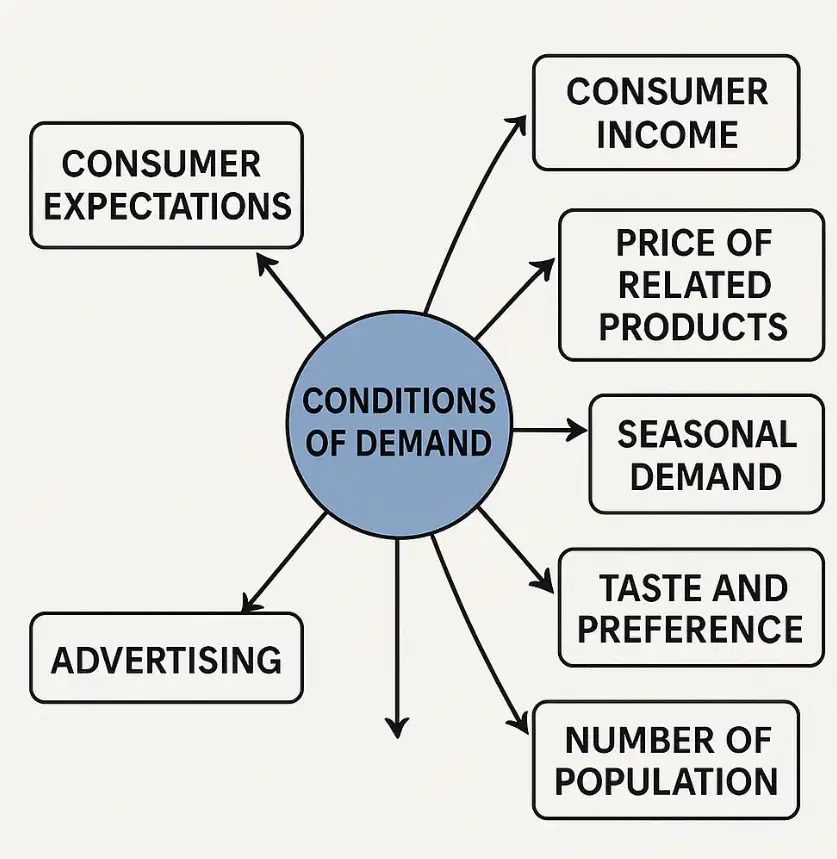
Based on the Demand Curve graph, what happens to the quantity demanded as the price decreases?
A) It increases
B) It decreases
C) It stays the same
D) It fluctuates randomly
Which of the following is a condition of demand?
Consumer Expectations
Supply Chain
Government Policy
Import Tariffs
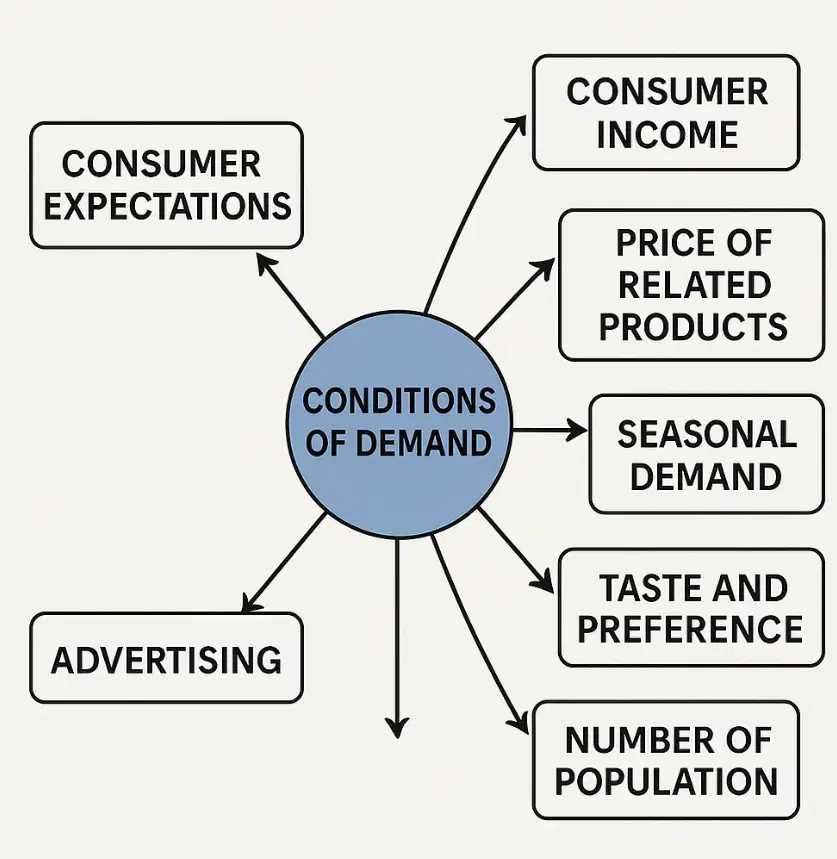
Fill in the blank: __________ is a condition of demand that refers to the financial resources available to buyers.
Consumer Income
Consumer Taste
Market Price
Advertising
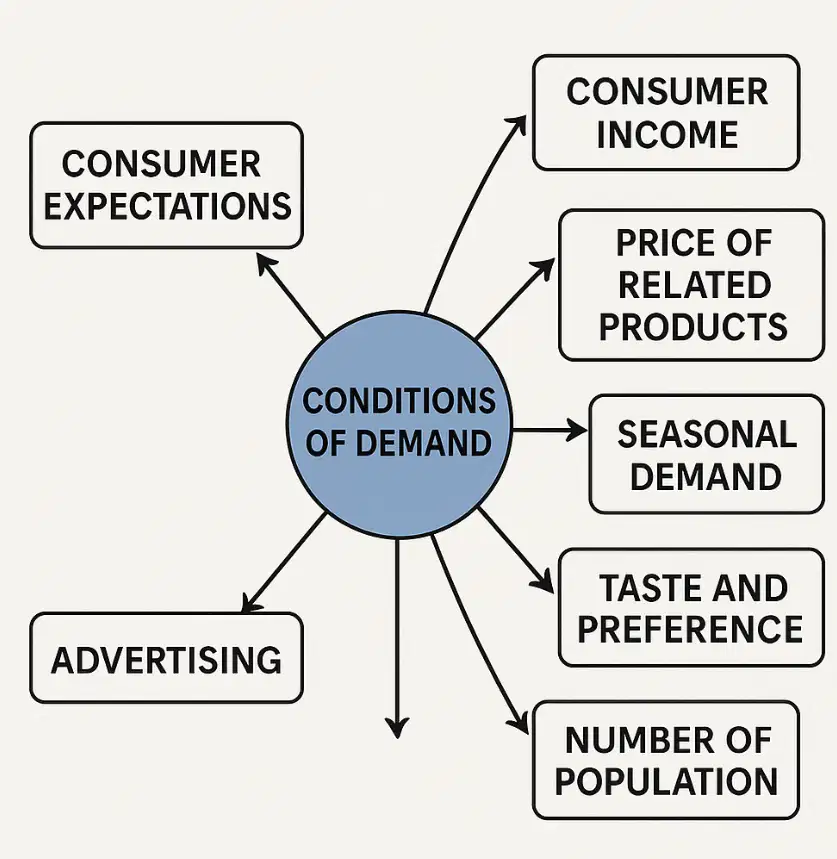
Which of the following is NOT a condition of demand?
Price of Related Products
Seasonal Demand
Advertising
Production Technology
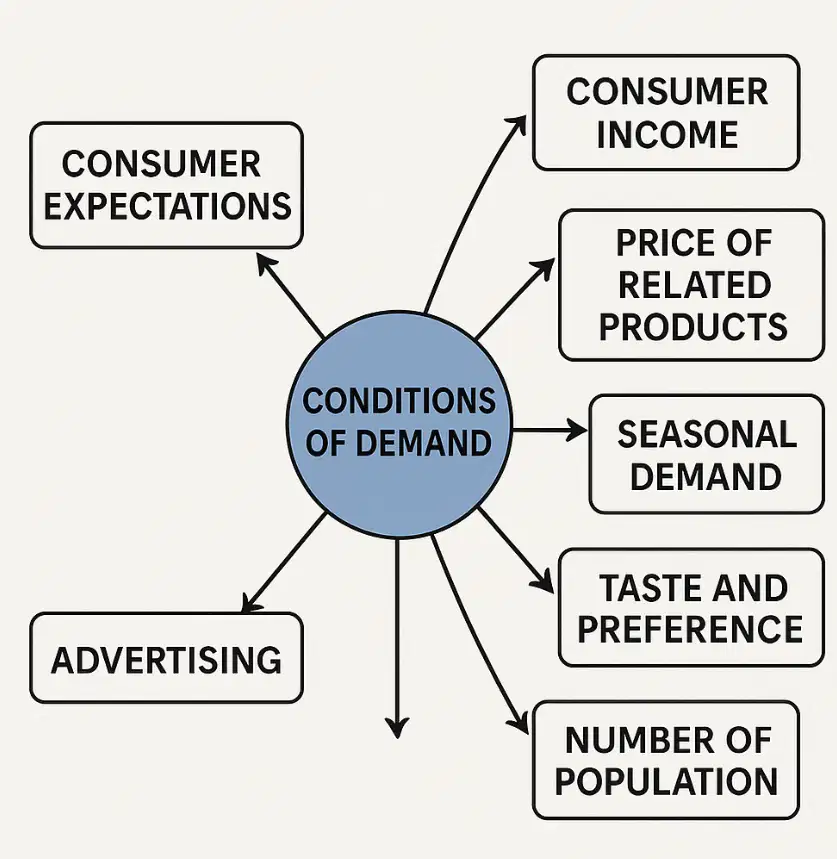
Fill in the blank: __________ refers to the impact of time of year on consumer demand.
Seasonal Demand
Market Segmentation
Price Elasticity
Brand Loyalty

Which of the following conditions of demand is related to the preferences and choices of consumers?
Taste and Preference
Number of Population
Advertising
Consumer Income
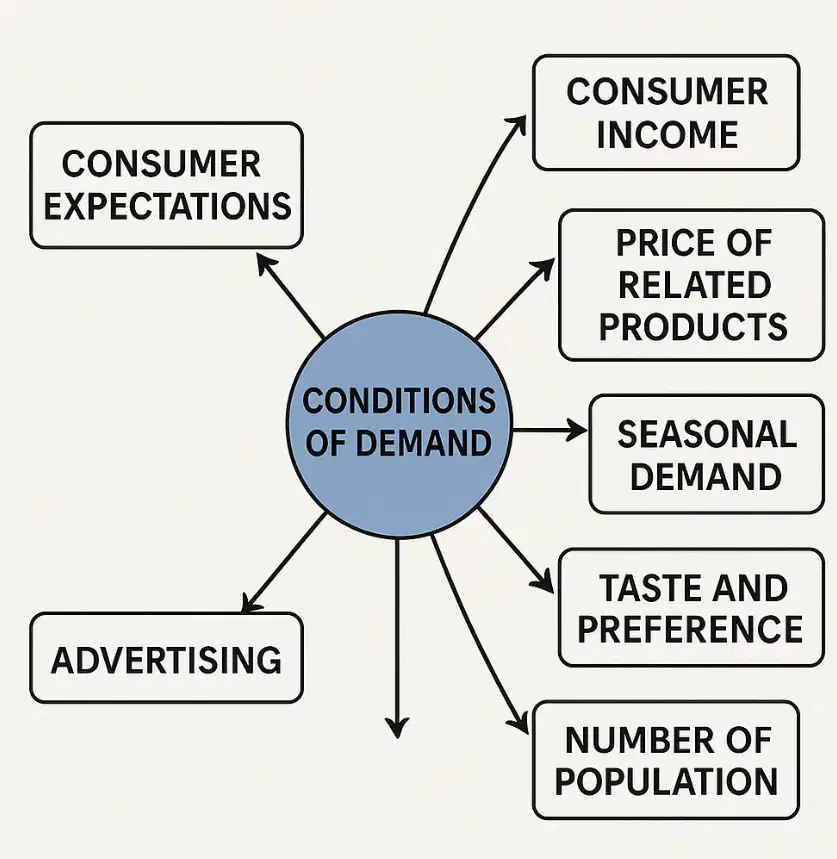
Fill in the blank: The __________ of a market can affect the overall demand for products.
Number of Population
Color of Products
Size of Packaging
Brand Logo
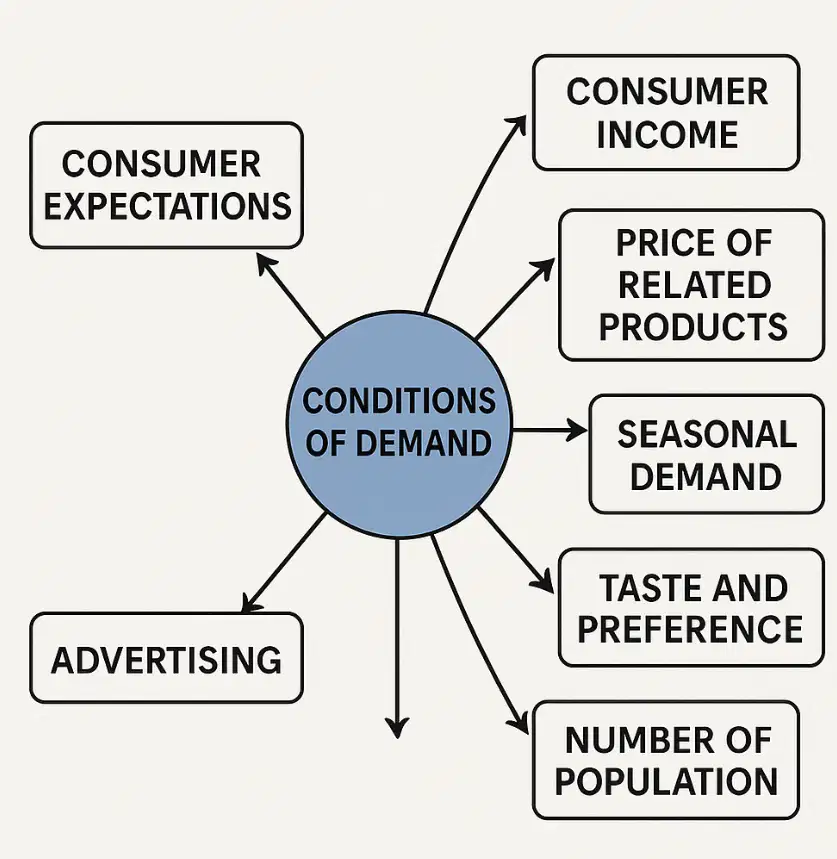
Which of the following is a condition of demand that can be influenced by marketing campaigns?
Advertising
Consumer Expectations
Price of Related Products
Seasonal Demand
Which of the following causes the demand curve to shift?
A) A change in price
B) Something other than price
C) A change in quantity demanded
D) None of the above
A shift in the demand curve is different than a change in quantity demanded.
True
False
Fill in the blank: The whole demand curve shifts left (decrease) or right (increase) when _________
something other than price causes demand to change
the price of the good changes
supply increases
consumers buy less due to higher taxes
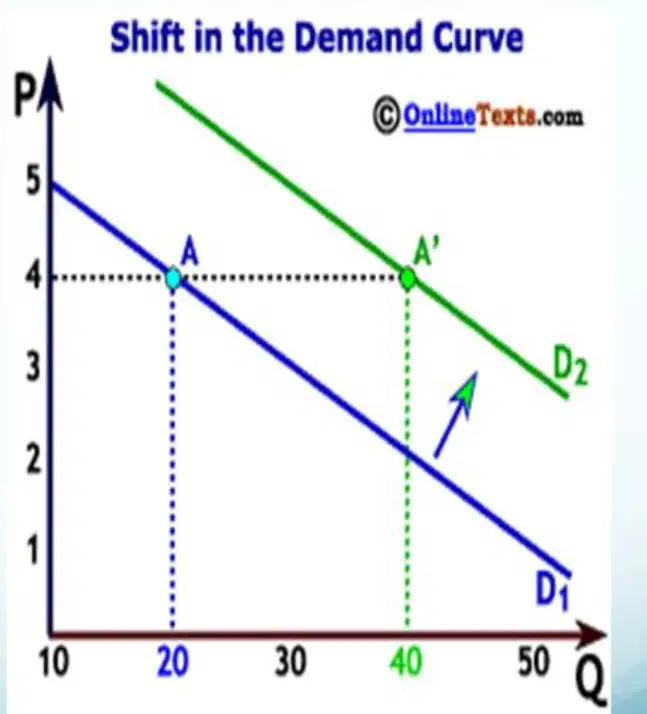
If the demand curve shifts from D1 to D2, what happens to the quantity demanded at price level 4?
It decreases
It increases
It stays the same
It cannot be determined
Factors that affect demand include:
consumer preferences, income, price of related goods, and expectations
only the price of the product
government regulations only
weather conditions only
Fill in the blank: The entire demand curve shifts rightward when ______ increases.
income or wealth
the price of the good
production costs
tax rates
Fill in the blank: The entire demand curve shifts rightward when the price of a substitute ______.
increases
decreases
remains constant
is unaffected
Fill in the blank: The entire demand curve shifts rightward when the price of a complement ______.
decreases
increases
remains constant
is unknown
Fill in the blank: The entire demand curve shifts rightward when ______ increases (related to number of people).
population
income
price
technology
Fill in the blank: The entire demand curve shifts rightward when expected price ______.
increases
decreases
remains constant
is unknown
Fill in the blank: The entire demand curve shifts rightward when tastes shift ______ the good.
toward
away from
against
beside
Multiple Choice: Which of the following will NOT cause an outward shift of the demand curve?
Increase in income
Increase in population
Decrease in price of complement
Decrease in price of substitute

In the diagram, what does the shift from D1 to D2 represent?
Decrease in demand
Increase in demand
No change in demand
Increase in supply

Which of the following is a factor that causes a demand curve to shift?
Income of the buyers
Weather conditions
Government regulations
Production technology
Which of the following is a factor that causes a demand curve to shift?
Consumer trends
Tax rates
Advertising costs
Supply chain efficiency

Which of the following is a factor that causes a demand curve to shift?
A) Expectations of future price
B) Interest rates
C) Import tariffs
D) Labor laws
Which of the following is a factor that causes a demand curve to shift?
The price of related goods
The cost of raw materials
The level of competition
The amount of advertising

Which of the following is a factor that causes a demand curve to shift?
The number of potential buyers
The number of sellers
The amount of government subsidies
The level of exports
According to the information provided, what happens to demand when consumer income increases?
Demand decreases
Demand stays the same
Demand increases
Demand curve shifts to the left
Fill in the blank: Normal goods are goods for which demand _______ as money income increases.
increases
decreases
remains constant
fluctuates unpredictably
Fill in the blank: Inferior goods are goods for which demand _______ as money income increases.
decreases
increases
remains unchanged
becomes zero
Which of the following is an example of an inferior good?
New cars
Used clothing
Designer handbags
Gourmet meals
Fill in the blank: A normal good is a good whose demand increases with an increase in _______.
income
price
tax
population
Which of the following is an example of a normal good?
Steak
Bread
Water
Salt
Which of the following is an example of a normal good?
Air travel
Tap water
Rice
Salt

Which of the following is an example of a normal good?
Jewelry
Bread
Water
Salt
What are inferior goods?
Goods for which demand increases as income increases
Goods for which demand decreases as income increases
Goods for which demand remains constant as income changes
Goods that are always expensive
Fill in the blank: If income increases, the demand for inferior goods ________.
decreases
increases
remains unchanged
doubles
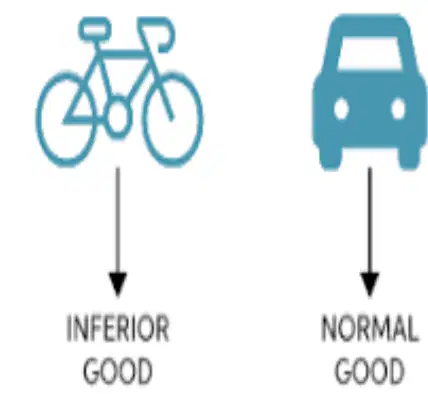
For Mr. Henry, when his salary increased from 2000to 5000, he opted to buy a car instead of a bicycle. In this case, which is the inferior good?
Car
Bicycle
Both car and bicycle
Neither
What are substitute products?
Goods that can replace each other
Goods that are used together
Goods that cannot be replaced
Goods that are always expensive
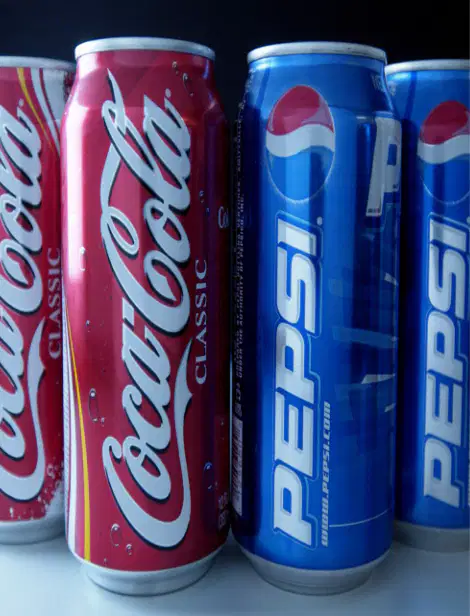
Coca-Cola and Pepsi are examples of ________ products.
substitute
complementary
luxury
inferior
A rise in the price of Coca-Cola will increase the demand for Pepsi.
True
False
What happens to the demand curve for Pepsi when the price of Coca-Cola increases?
It shifts to the left
It shifts to the right
It remains unchanged
It contracts
What are complements in economics?
Goods that are used together
Goods that are substitutes
Goods that are sold separately
Goods that are expensive
Printers and ink cartridges are examples of complementary goods.
True
False
A rise in the price of printers will ______ the demand for its complementary product ink.
reduce
increase
not affect
double
What type of relation exists between the price of printers and the demand for ink cartridges?
Direct relation
Inverse relation
No relation
Proportional relation
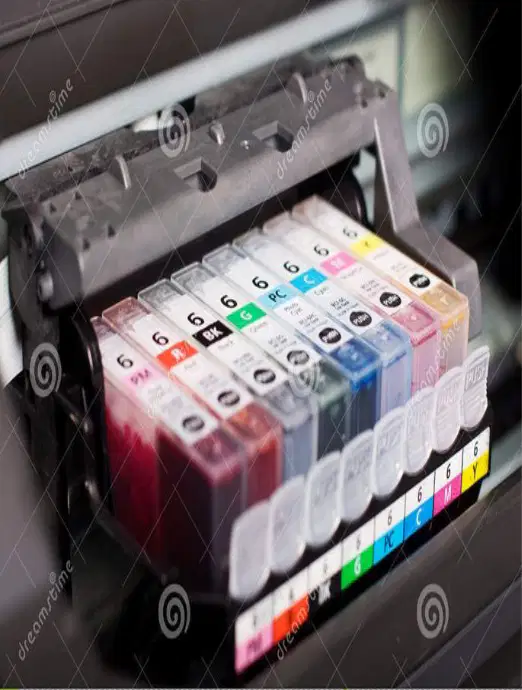
If the price of printers decreases, what happens to the demand for ink cartridges?
It decreases
It increases
It remains the same
It fluctuates

Refer to the diagram titled 'Fall in Price of Complementary Good'. What does the shift from demand curve D to D' represent?
Increase in demand due to a fall in the price of a complementary good
Decrease in demand due to a rise in the price of a complementary good
No change in demand
Increase in supply due to a fall in the price of a complementary good

In the diagram 'Fall in Price of Complementary Good', at price P, the quantity demanded increases from ___ to ___ due to the shift in demand curve.
Q to Q1
Q1 to Q
Q1 to Q2
Q2 to Q
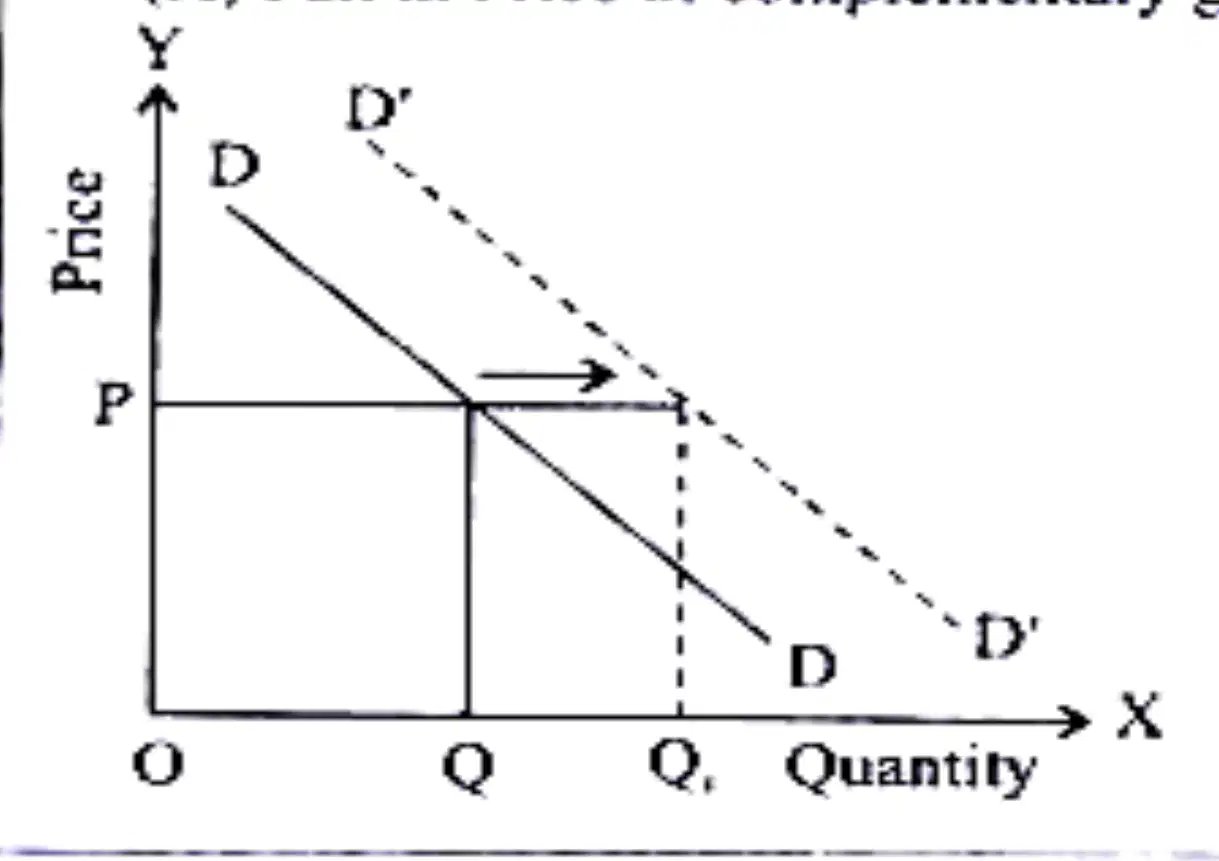
A fall in the price of a complementary good affects the demand curve, as shown in the diagram 'Fall in Price of Complementary Good'.
It causes the demand curve to shift to the right.
It causes the demand curve to shift to the left.
It leads to a movement up along the demand curve.
It causes no change in the demand curve.
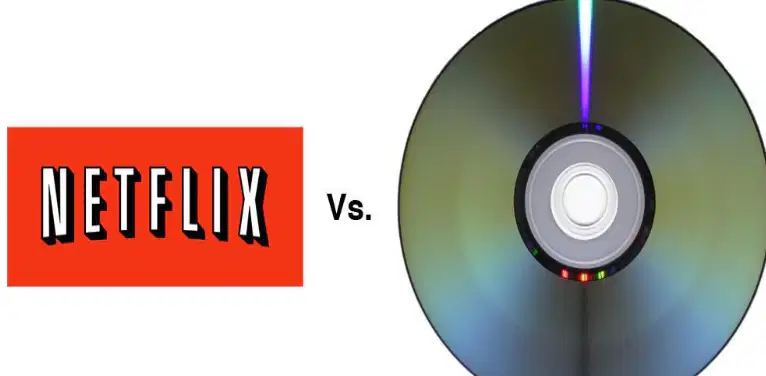
What has caused the demand curve for DVDs to shift to the left?
Increase in DVD prices
Start of streaming services like Netflix
Decrease in consumer income
Rise in popularity of Blu-ray discs
Changes in consumer taste can cause a shift in the demand curve.
True
False

When a good is very effectively advertised, what happens to its demand curve?
It shifts to the left
It shifts to the right
It remains unchanged
It becomes vertical

Degree of Advertising: Lower advertising shifts the demand curve to the _____?
left
right
top
bottom

What happens to demand when there is a rise in the population?
Demand decreases
Demand remains the same
Demand increases
Demand fluctuates

Change in population size: Other factors, such as weather, laws, interest rates etc. can also shift the _________?
demand curve
supply chain
production cost
market equilibrium
Expectations about future price rises can influence current demand. If consumers expect the price of mobile phones to rise in the future, the current demand for mobile phones will increase.
True
False
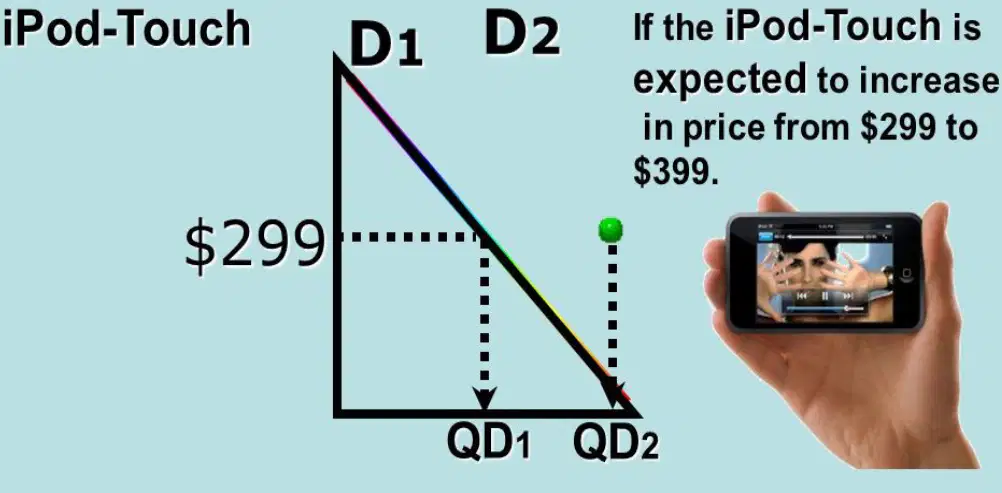
If the iPod-Touch is expected to increase in price from 299to 399, what happens to the current demand for the iPod-Touch?
It decreases
It increases
It stays the same
It becomes zero
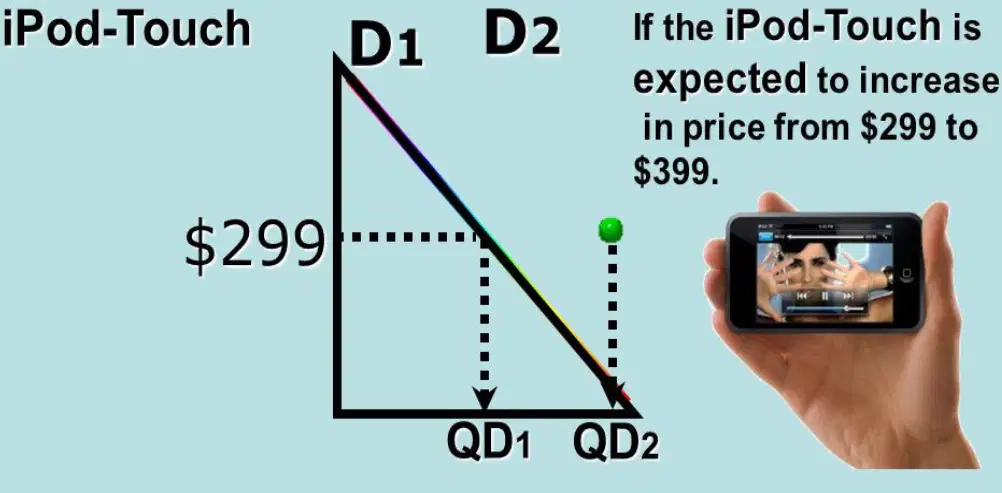
According to the diagram, when the price of the iPod-Touch is expected to increase from 299to 399, the demand curve shifts from D1 to D2. Fill in the blank: The quantity demanded at $299 changes from ____ to ____.
QD1 to QD2
D1 to D2
$299 to $399
Increase to Decrease
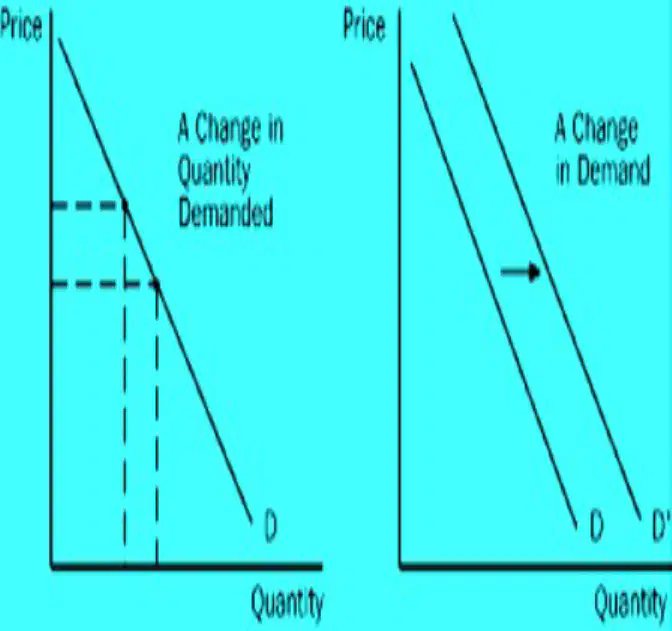
What does a change in quantity demanded refer to?
A) A shift in the demand curve
B) A movement along a demand curve
C) A change in income
D) A change in preferences
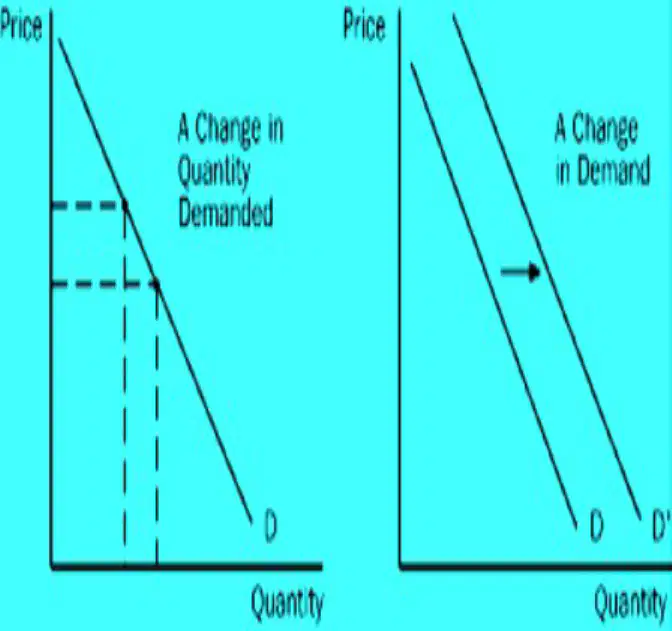
What does a change in demand refer to?
A movement along a demand curve
A shift in the demand curve
A change in price
A change in quantity demanded
Fill in the blank: A change in quantity demanded is caused by a change in _____
price
income
taste
technology

