
 Worksheets
Semester 1 Review
Total questions: 265
Worksheet time: 5hrs 55mins
Which of the following is a correct lab safety rule?
Eating during experiments is allowed
Always wear safety goggles when handling chemicals
Smell chemicals directly from the container
Use broken glassware if it looks clean
Oil and Water
Element
Compound
Homogeneous Mixture
Heterogeneous Mixture
Copper - Cu
Element
Compound
Homogeneous Mixture
Heterogeneous Mixture
Chalk - CaCO3
Element
Compound
Homogeneous Mixture
Heterogeneous Mixture
Rocks and Sand
Element
Compound
Homogeneous Mixture
Heterogeneous Mixture
Water - H2O
Element
Compound
Homogeneous Mixture
Heterogeneous Mixture
Aluminum - Al
Element
Compound
Homogeneous Mixture
Heterogeneous Mixture
Air
Element
Compound
Homogeneous Mixture
Heterogeneous Mixture
Sugar (sucrose) ----C6H22O11
Element
Compound
Homogeneous Mixture
Heterogeneous Mixture

Is melting butter for popcorn a chemical or physical change?
chemical
physical

What kind of change is it most likely if there is a color change?
Physical change
Chemical change
An ice cube is placed in the sun. Later there is a puddle of water. Later still the puddle is gone.
Physical Change
Chemical Change
Subatomic particles with a negative charge
Electrons
Neutrons
Protons
Quarks


Carbon has how many protons?
12
6
7
4

What is Oxygen's atomic number?
8
16
15
6

Iodine has ______ electrons
127
53
74
7

How many protons are in Gold
79
197
118
276
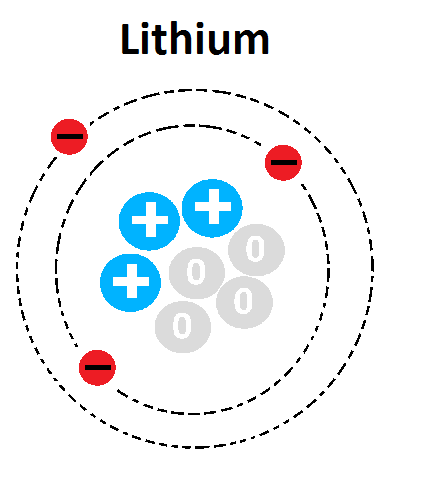
What is the atomic number of this atom?
1
3
4
7
An atom has 10 protons, 15 neutrons and 10 electrons what is its mass number.
20
10
35
25
Positively charged atoms with electrons. "Plum pudding"
Democritus
Bohr
Thomson
Dalton
conducted gold foil experiment
Schrodinger
Dalton
Heisenberg
Rutherford
Which one of these is Dalton's Model?


The two subatomic particles found in the nucleus are ____________________.
protons and electrons
protons and neutrons
neutrons and electrons
protons, neutrons, and electrons
Electrons are found in _____________.
the nucleus
the center
the electron cloud
An atom has 12 protons and 13 neutrons in its nucleus. Which is the correct symbol?


Anions are...
Positive
Negative
Neutral
An element has 25 protons and 22 electrons. It has a charge of...
3+
3-
2+
1-
What is atomic mass?
The average mass that is weighted based on the abundance of the isotopes of the element
The mass that is weighted based on the abundance of the isotopes of the element
The average mass that is weighted based on the abundance of the protons of the element
The average mass that is weighted based on the abundance of the neutrons of the element
A neutral atom always has the same number of protons and ______.
electrons
neutrons
ions
nuclei

The nucleus of which atom is represented below?
Mg
Br
Al
Na

How many neutrons are in the given atom?
92
143
235
327
Elements are known (named) based on the number of ____________ in their atom.
electrons
neutrons
ions
protons

If Carbon-14 has 6 protons, how many neutrons does it have?
6
7
8
14
Which of the following is true about isotopes?
They have different atomic numbers.
They have the same number of neutrons.
They have the same number of protons.
They are different elements.
How can you find the number of neutrons in an isotope?
Subtract the atomic number from the mass number.
Add the atomic number to the mass number.
Multiply the atomic number by 2.
Divide the mass number by the atomic number.
What is the mass number of an isotope with 20 protons and 22 neutrons?
20
22
40
42
If an isotope has an atomic number of 15 and a mass number of 31, how many neutrons does it have?
15
16
31
46
Which of the following isotopes has the most neutrons?
Oxygen-16
Oxygen-17
Oxygen-18
They all have the same number of neutrons.
A nuclear reaction involves what two parts of the atom? (that are in the nucleus)
electrons and protons
protons and neutrons
neutrons and electrons
nucleus and protons
The splitting of a nucleus into smaller, lighter nuclei is called what?
(taking a large marshmallow and tearing it into two smaller pieces)
fusion
fission
hydrogen bomb
What process occurs when two sets of nuclei merge to form one singe, large nuclei
(many small marshmallows smash together to form one big sticky marshmallow)
fission
fusion
atomic bomb
What is the process in which an unstable atomic nucleus emits charged particles or energy or both?
radioactivity
oxidation
decomposition
synthesis
The stability of an isotope nucleus depends on the ____.
atomic number
atomic mass
number of neutrons
neutron-to-proton ratio
1s22s22p63s2
1s22s22p63s23p64s23d10
How many valence Electrons does Copper Have?
1s2 2s2 2p6 3s2 3p6 4s2 3d9
6
9
17
2
[Xe] 6s25d9
[Ar]4s2
Which area on the periodic table represents the electrons in the "d" sublevel?
representative elements
columns 3-8
rare earth elements
transition elements
There are 4 different types of subshells(orbitals) s,p,d,f
true
false
What does the 1 in "1s" stand for?
energy level
number of orbitals
shape of orbitala
the number of electrons

1s22s22p63s23p64s23d10

Match the parts of the electron configuration to what it represents.
1
energy level
s
sublevel
2
number of electrons

What subatomic particle is responsible for the spectral lines seen in emission spectra diagrams? (a)

In order to go from ground state to an excited state, an electron must
emit energy
absorb energy
wiggle
When an electron returns to ground state from an excited state, the atom will (a)


What is the LOWEST possible energy level that an electron can occupy?
Excited State
Fundamental State
Ground State
Outermost State

What is the light that you can see called?
invisible light
ultraviolet light
visible light
infrared light

The unknown emissions spectra belongs to the element
Hydrogen
Mercury
Neon
Sodium
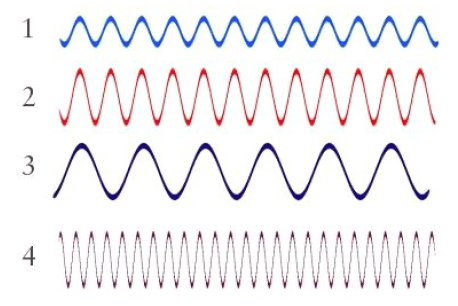

The color of emitted light with the LONGEST wavelength is
violet
green
red
indigo
The color of emitted light with the SHORTEST wavelength is
violet
green
red
indigo
The color of emitted light with the LOWEST frequency is
violet
green
red
indigo
The color of emitted light with the HIGHEST energy is
orange
green
blue
yellow
The color of emitted light with the HIGHEST frequency is
orange
green
blue
yellow
The color of emitted light with the LOWEST energy is
orange
green
blue
yellow
Which form of radiation has the highest frequency?
radio waves
ultraviolet
x-ray
gamma
A wave with a long wavelength will have a ______ frequency and _____ energy
high, low
high, high
low, high
low, low


A row on the periodic table is a _______.
group
period
range
About 3⁄4 of the elements on the periodic table are ________.
metalloids
nonmetals
metals
gases
All _________ are semiconductors.
metals
metalloids
nonmetals
gases
All _________ share properties that include luster, conductivity, malleability, and ductility.
gases
nonmetals
metalloids
metals
Elements on the periodic table are arranged in columns according to their _________.
properties
categories
atomic number
boiling point
Group 1 metals that react quickly with other elements are ___________.
metals
alkaline earth metals
alkali metals
nonmetals
Group 2 metals that are soft and silvery are _______________.
metals
alkali metals
alkaline earth metals
gases
What determines the order of elements on today's periodic table?
increasing atomic mass
decreasing atomic mass
increasing atomic number
decreasing atomic number
Look at the periodic table. Which list of elements forms a group on the periodic table?
Li, Be, B, C, N, O, F, and Ne
He, Ne, Ar, Kr, Xe, and Rn
B, Si, As, Te, and At
Sc, Ti, V, Cr, Mn, Fe, Co, Cu, Ni, and Zd
Using the periodic table, which element is a metalloid?
carbon
silicon
oxygen
aluminum
What is one similarity among elements in a group?
atomic mass
atomic weight
chemical properties
practical uses
I am a metal
I am in group 2
I am in period 6
I am…
Mo
Re
S
Ba
I am a nonmetal
I am in period 2
I am in group 16/6A
Ba
Si
Ba
O
Which scientist created the Periodic Table and arranged elements in increasing atomic mass?
Rutherford
Thomson
Mendeleev
Moseley
What is the term of an atom that will lose electron(s) and have a positive change?
cation
anion
electronegativity
ionic radius
What is the term of an atom that will gain electron(s) and have a negative change?
cation
anion
electronegativity
ionic radius

What element is in period 6 and group 14?
Ar (Argon)
O (Oxygen)
Pb (Lead)
Fe (Iron)
What period contains the element Plutonium (Pu)?
8
6
7
Plutonium doesn't exist
How many groups are there in modern periodic table?
8
9
18
17
where are the metaloids found
far left, vertical
stair step/diagonal
far right horizontal
at the bottom
What group number are the halogens found?
18 (8A)
1
2
17 (7A)
How many periods are on the periodic table?
5
6
7
8
Find an element with similar chemical properties to Barium (Ba).
Ca an Ra, because they are in the same group and have similar chemical properties.
Cs and La, b/c they are in the same period number.
Ca and Y, b/c they are 90 degree angle and have similiar properties.

The blue elements (left side) are called
The yellow elements (right side) are called

What are 3 broad classes of elements?
metals, nonmetals, and metalloids
solids, liquids, and gases
small, medium, and large
helium, neon, and argon
atoms that gain or lose electrons are called
ions
isotopes
metals
nonmetals


What is special about group 14 elements when forming ionic bonds?
They only form +4 ions.
They only form -4 ions.
They may form +4 or -4 ions.
They don't form ions.

Cations _______ electrons, becoming _______ charged.
Gain; positively (+)
Gain; negatively (-)
Lose; positively (+)
Lose; negatively (-)

Nonmetals (like Cl) typically ____ electrons when they form ionic bonds.
Gain
Lose
Keep the same
When naming a compound, which of these is written first?
Metal
Nonmetal
Anion
Cation
What is the charge of all group 17 ions, like Chlorine?
-2
Which atom can Oxygen form an ionic bond with?
Lead Chloride is an ionic compound, made up from Pb2+ ions and Cl- ions. Which is the correct formula for this compound?
PbCl3
PbCl
PbCl4
PbCl2

Ionic bonds form between metals and ____.
metalloids
metals
nonmetals
What is the charge on the iron in: iron (II) oxide
2+
2-
1+
1-
None of these.
PbS2
lead sulfide
lead sulfur
lead (II) sulfide
lead (IV) sulfide

How many valence electrons?
1
2
3
4

How many valence electrons?
1
6
7
8
What two types of atoms make a covalent bond?
2 non-metals
1 metal and 1 non-metal
2 metals
What type of bond involves the sharing of electrons between atoms?
covalent bond
ionic bond
metallic bond
transfer bond
Identify the following compound as ionic or covalent: SO2
ionic
covalent
A Metal + Nonmetal compound is a(n)...
ionic compound
covalent compound
In a(n) ________ electrons are transferred from one atom to another
ionic compound
covalent compound
A bond between two atoms that share one pair of electrons.
Double covalent bonds
Triple covalent bonds
Covalent bonds
Single covalent bond
A Lewis Dot Diagram shows which electrons?
all of them
valence only
all except valence
Name the following compound: K2O
Oxygen potasside
Potassium oxide
Potassium II oxide
Potassium dioxide
The name for CuSO4
Copper sulfide
Copper (II) sulfate
Copper (I) sulfoxide
Copper (I) sulfide
The name for CrO2
Chromium oxide
Chromium (II) oxide
Chromium (III) oxide
Chromium (IV) oxide
The formula for strontium phosphate
SrPO4
Sr2PO4
Sr(PO4)3
Sr3(PO4)2
What is the overall charge of the ionic compound NaCl
+1
+2
+3
0
What kind of Ion does Aluminum form?
Al+3
Al−3
Al−1
Al+2
A sodium ion has a charge of
-1
-2
+1
+2
Cr3+ O2-
When a neutral atom loses an electron, the atom becomes a
negatively charged cation.
negatively charged anion.
positively charged cation.
positively charged anion.
The name of FeCl₂ is
iron chloride
iron (II) chloride
iron (I) chloride
iron dichloride
Name the ionic compound SnSe2
Tin diselenide
Tin (IV) Selenide
Tin selenide
Tin (II) triselenide
The charge for oxygen is:
1-
2-
1+
2+
The correct formula for copper (II) nitride is:
CuN
CuN2
Cu3N2
Cu2N3
What is the formula for copper(II) phosphide?
Cu2P3
Cu3P2
Cu3(PO4)2
Cu2P
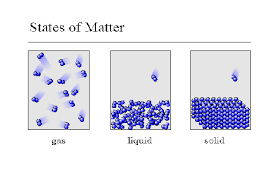
A compound consists of two or more ____________.
Molecules
Atoms
Elements
Pieces of matter
Evaporation is the change in state of a
gas to a liquid
gas to a solid
solid to a liquid
liquid to a gas

In which state are the distances between the particles greatest?
Both gas and liquid
Liquid
Gas
Solid


what state of matter is this
liquid
plasma
solid
gas

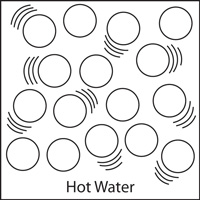


State of matter with a definite shape and definite volume.
solid
liquid
gas
State of matter with a definite volume, but no definite shape.
solid
liquid
gas
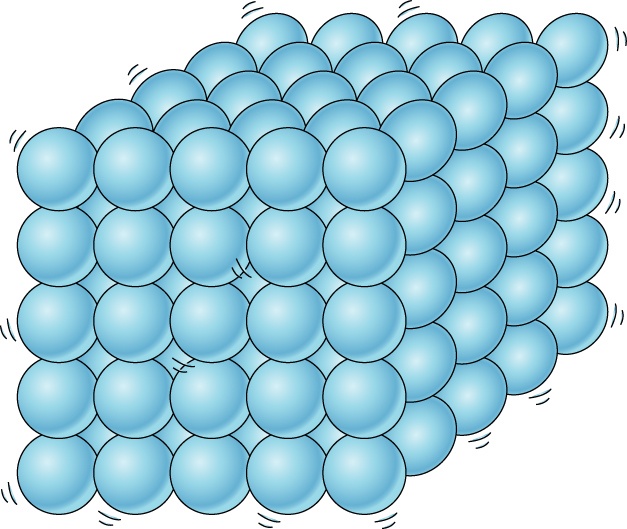
What state of matter?
Solid
Liquid
Gas
Plasma!!!


Particles are not so closely spaced and slide past each other.
solid
liquid
gas
Particles are closely spaced.
solid
liquid
gas
What are the states of matter?
Liquid, water, fizz
Solid, liquid, gas, plasma
Rain, sleet, snow
Solid and gas

What state of matter does this picture show?
(a)
H2 + O → H2O
3 Pb + 2 H3PO4 ----> 3 H2 + 1 Pb3(PO4)2
Synthesis (or combination)
Decomposition
Single replacement
Double replacement
What is the number before a chemical formula called?
Example: 2H2 + O2 ---> 2H2O
Coefficient
Atom
Subscript
Equation
2H2 + O2 --> 2H2O
What type of reaction is the following:
BaCl2+2KI −> 2KCl + BaI2
Combination
Decomposition
Single Replacement
Double Replacement
Combustion
What is the general reaction scheme for a decomposition reaction?
A + B --> AB
AB --> A + B
A + CD --> C + AD
AB + CD --> CB + AD
CxHy+O2 −> CO2+H2O
What reaction has the following general formula:
CxHy + O2 −>CO2 + H2O
Combination
Decomposition
Single Replacement
Double Replacement
Combustion
compound ---> element + element
synthesis
decomposition
combustion
single replacement
What reaction has the following general formula:
A + CD --> C + AD
Combination
Decomposition
Single Replacement
Double Replacement
Combustion
Which of the following is a common sign that a chemical change has occurred?
A chemical has turned a different color, bubbled, and/or changed temperature.
A chemical has changed to a different state of matter, such as a liquid to a solid.
A chemical has changed size.
A chemical has become a different shape.
Which type of reaction is:
3 Pb + 2 H3PO4 → 3 H2 + Pb3(PO4)2
Which of the following is an intramolecular force?
hydrogen bonding
polar covalent bonding
London dispersion forces
dipole-dipole interaction
Which intermolecular force requires hydrogen and one of the following: nitrogen, oxygen, fluorine?
Dipole-dipole
Hydrogen bonding
London dispersion forces
Intramolecular forces are the forces
within molecules
between molecules
________________________ have the strongest intermolecular forces of attraction.
Dipole- Dipole
Dispersion
Hydrogen Bonds
Which is NOT an intramolecular force?
Polar Covalent Bond
Nonpolar Covalent Bond
London Dispersion Force
Ionic Bond
Which has the strongest forces between particles (usually)?
ionic bonding
metallic bonding
covalent bonding
Which of the following types of bonding results in materials which are malleable and ductile?
ionic bonding
metallic bonding
covalent bonding
Which of the following is an intramolecular force?
hydrogen bonding
covalent bonding

