
 Worksheets
What is sourcing?
Total questions: 96
Worksheet time: 48mins
What does sourcing mean?
Deciding where and how an organization gets its goods and services.
Selling products to customers.
Marketing goods and services.
Managing employees.
Sourcing involves choosing the best suppliers who can provide what you need at the right cost, right quality, and on time.
True
False
Fill in the blank: Strategic sourcing (according to GSA, USA) means studying what the organization spends money on, understanding what the business needs, and finding suppliers who match those needs in the best and most ________ way.
cost-effective
expensive
random
delayed
Which of the following is NOT a part of strategic sourcing according to the image?
A) Studying what the organization spends money on
B) Understanding what the business needs
C) Finding suppliers who match those needs in the best and most cost-effective way
D) Increasing the price of goods and services
Strategic sourcing involves finding suppliers who match the organization's needs in the best and most cost-effective way.
True
False
What is tactical sourcing about?
Long-term strategic planning
Day-to-day, short-term buying decisions
High-risk investments
Annual budgeting
Tactical sourcing deals with which type of items?
High-risk, critical items
Low-risk, non-critical items
Luxury goods
Perishable goods
Tactical sourcing focuses on quick solutions such as where to buy, how fast can it be delivered, and who is available now.
True
False
Tactical sourcing is used when ______ needs appear.
urgent
routine
long-term
predictable
Give an example of when tactical sourcing might be used, based on the information provided.
If flooding happens and your usual supplier cannot deliver, you quickly choose another supplier just for that emergency.
You always use the same supplier for all your needs, regardless of the situation.
You plan your sourcing strategy years in advance and never change suppliers.
You only buy from suppliers who offer the lowest price, no matter the circumstances.
What is strategic sourcing? Strategic sourcing is ________ about where the organization should buy goods/services and which supplier relationships to build.
long-term planning
short-term guessing
random selection
immediate purchasing
Which of the following best describes strategic sourcing?
A) A one-time decision
B) Long-term planning about where to buy goods/services and which supplier relationships to build
C) Only about reducing costs
D) Focused only on current results
Strategic sourcing is a ________, not one decision.
continuous process
single event
random act
one-time task
Strategic sourcing balances internal needs vs. market capabilities.
True
False
Strategic sourcing focuses on both ________ and future opportunities.
current results
past mistakes
external threats
short-term gains
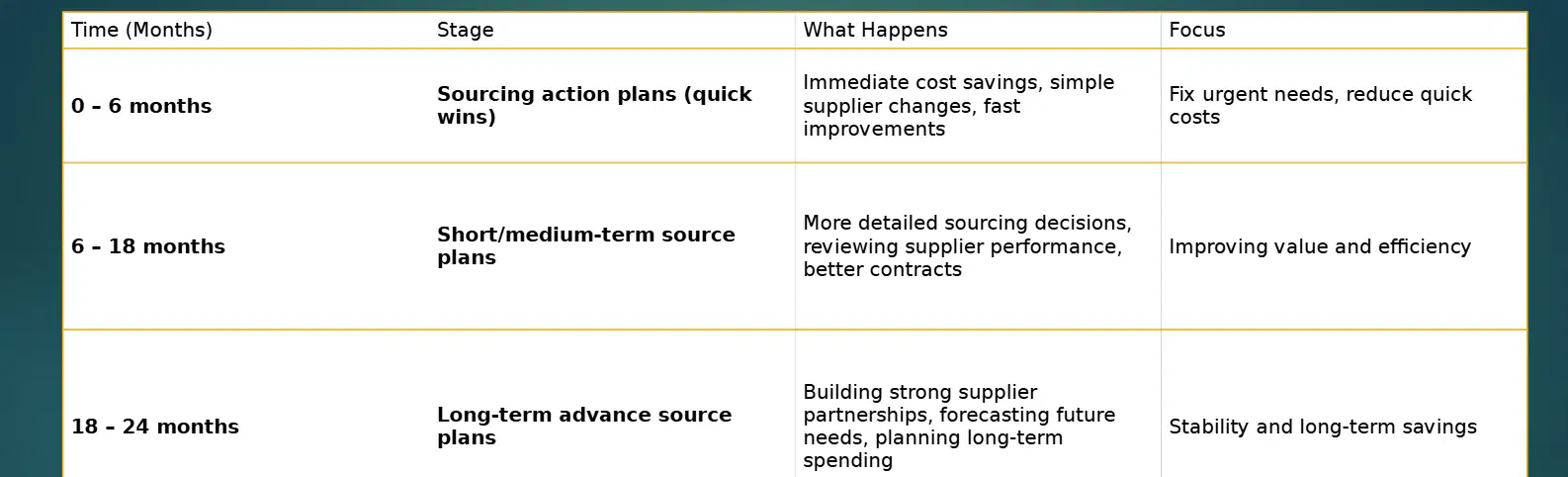
According to the 'Timeline & Development' table, what is the focus during the 'Sourcing action plans (quick wins)' stage (0-6 months)?
Improving value and efficiency
Fix urgent needs, reduce quick costs
Stability and long-term savings
Strategic advantage, innovation, risk reduction
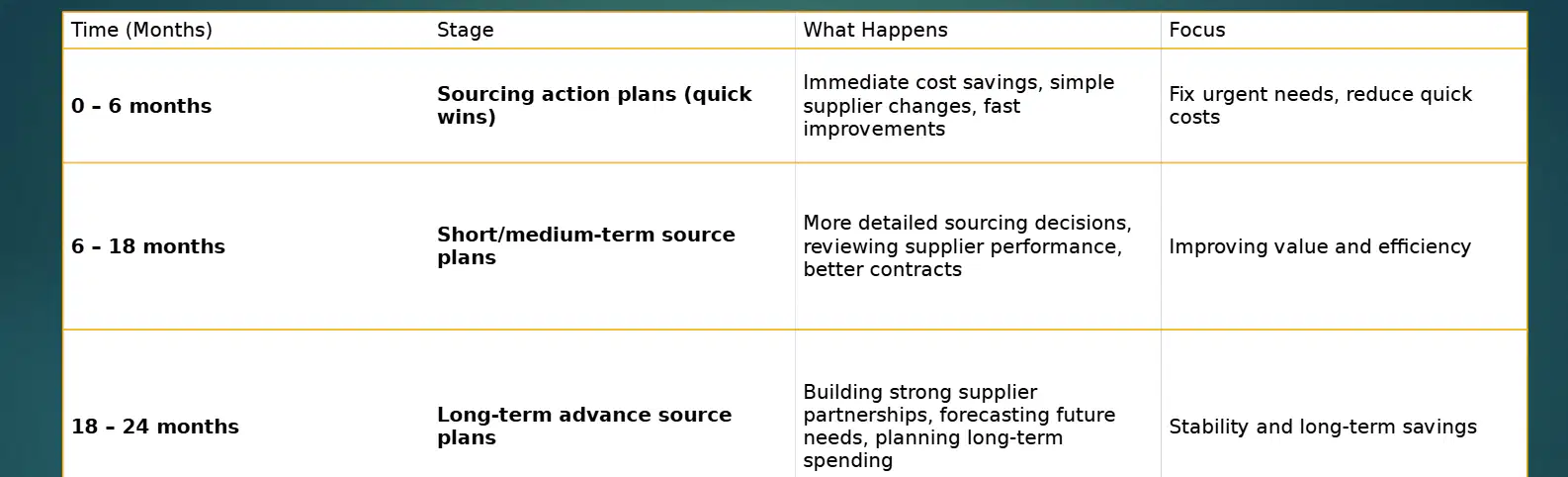
According to the 'Timeline & Development' table, which stage occurs during 6-18 months?
Sourcing action plans (quick wins)
Short/medium-term source plans
Long-term advance source plans
Procurement strategies
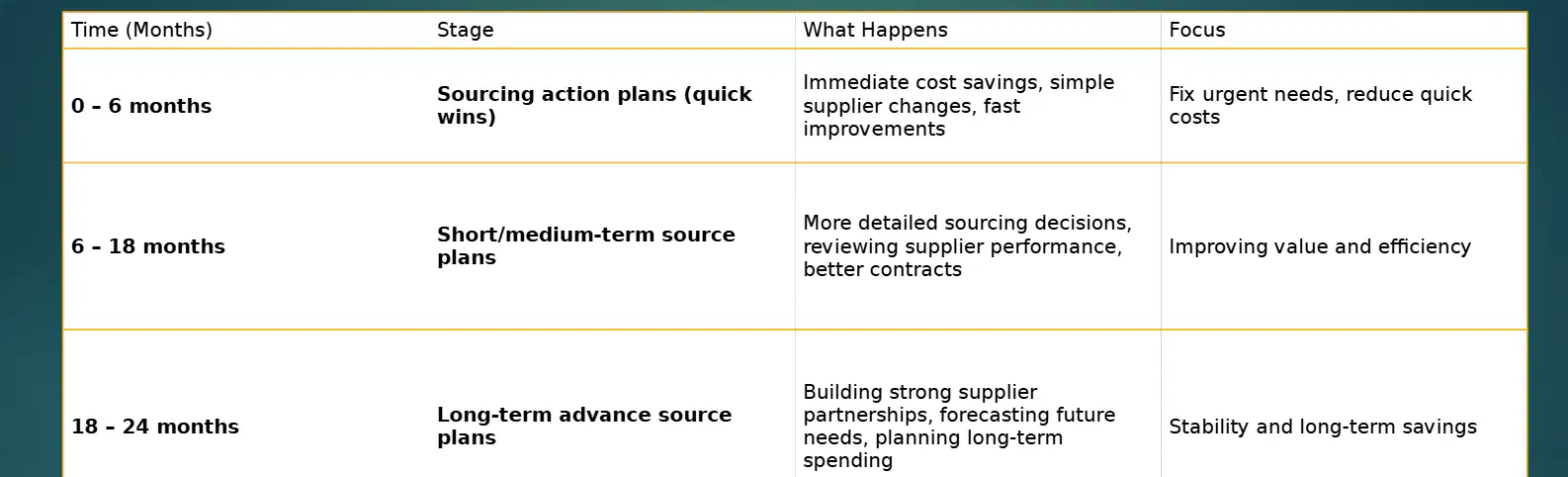
Fill in the blank: During the 'Long-term advance source plans' stage (18-24 months), the focus is _________?
Stability and long-term savings
Rapid expansion and risk-taking
Short-term profit maximization
Immediate cost-cutting measures
What happens during the 'Procurement strategies' stage (24-36 months) according to the 'Timeline & Development' table?
Full strategic sourcing: analyzing markets, aligning with business goals, innovation, supplier integration
Initial supplier identification and basic contract negotiation
Final product launch and post-implementation review
Routine procurement with no strategic alignment
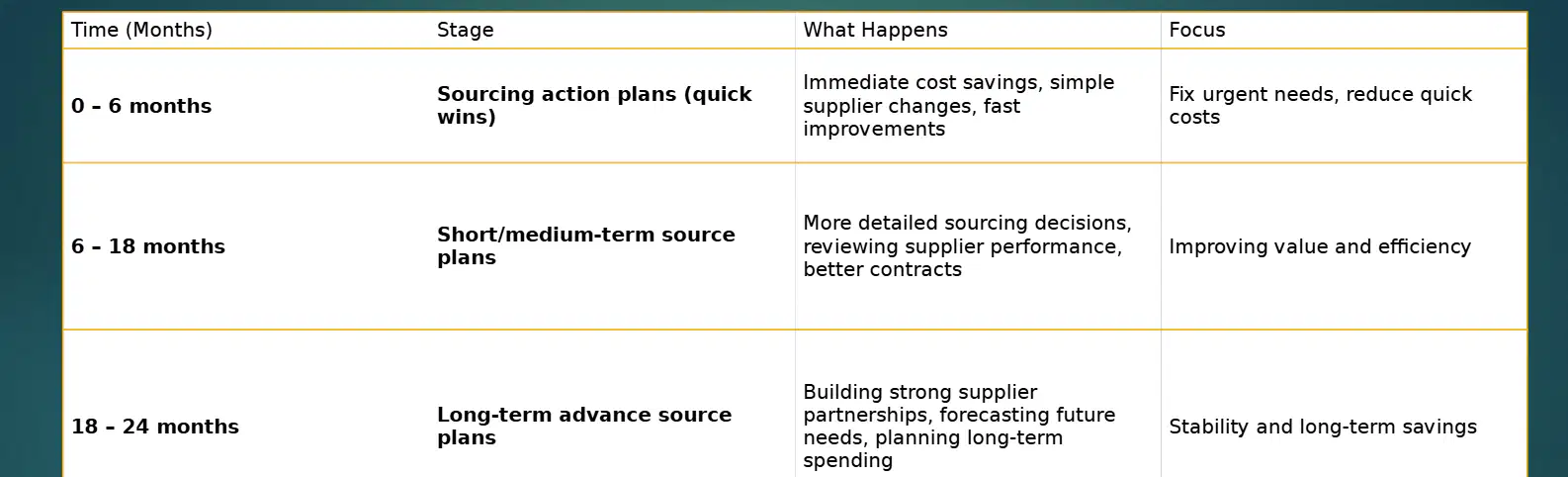
The focus during the 'Short/medium-term source plans' stage is 'Improving value and efficiency'.
True
False
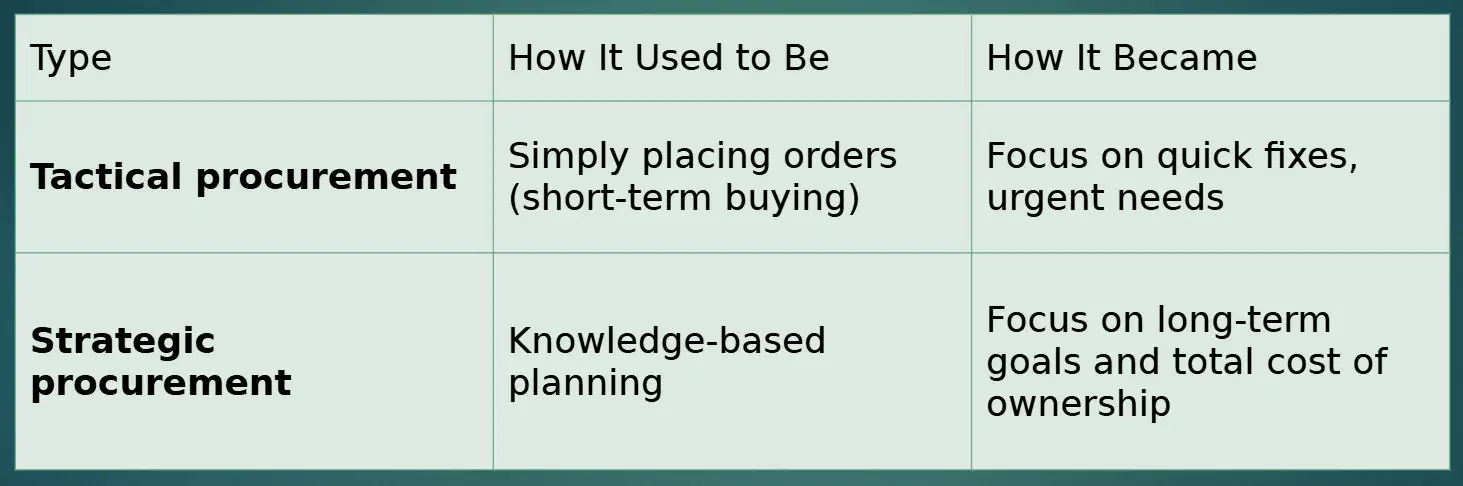
Which of the following best describes tactical procurement?
Focus on long-term goals and total cost of ownership
Simply placing orders (short-term buying)
Knowledge-based planning
Choose suppliers who help us innovate
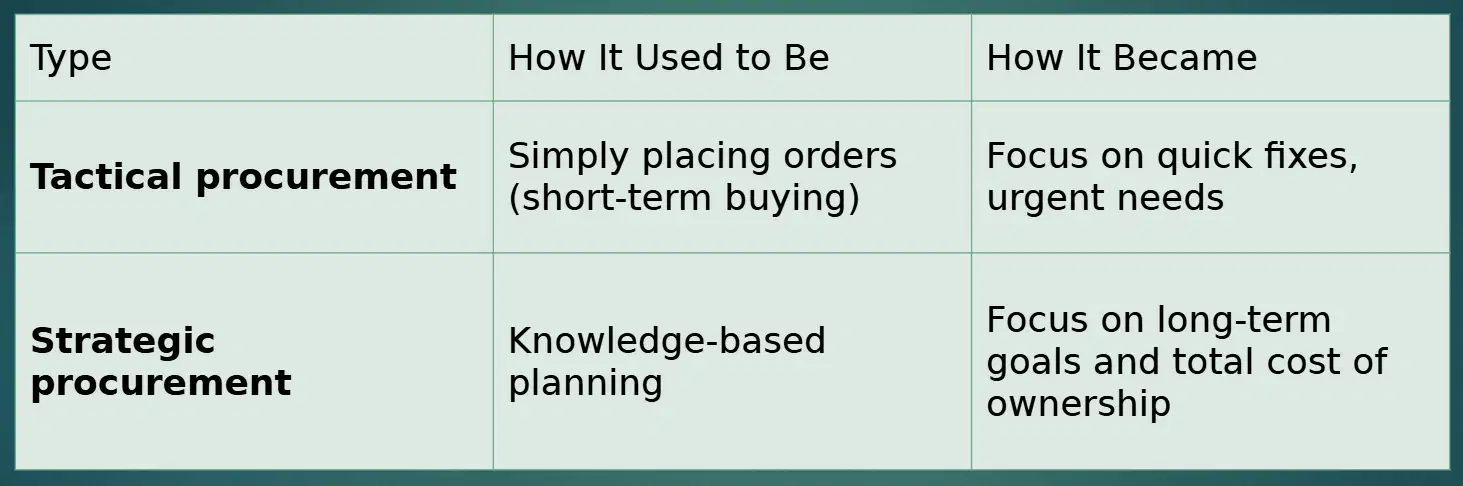
Which of the following is a characteristic of strategic procurement?
Focus on quick fixes, urgent needs
Simply placing orders
Focus on long-term goals and total cost of ownership
Buy it quickly and cheaply
Fill in the blank: In tactical sourcing, procurement means to “______ it quickly and cheaply”.
buy
sell
store
ship
Fill in the blank: In strategic sourcing, procurement means to “choose suppliers who help us innovate, save long-term costs, and stay ______”.
competitive
profitable
sustainable
reliable
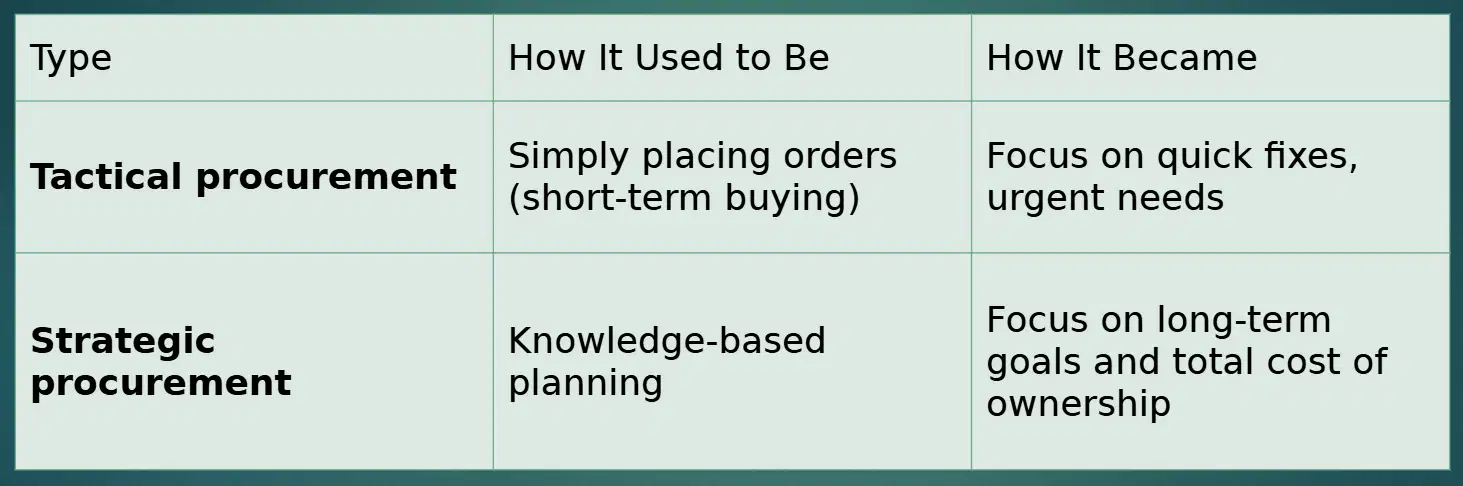
Tactical procurement used to be knowledge-based planning.
True
False
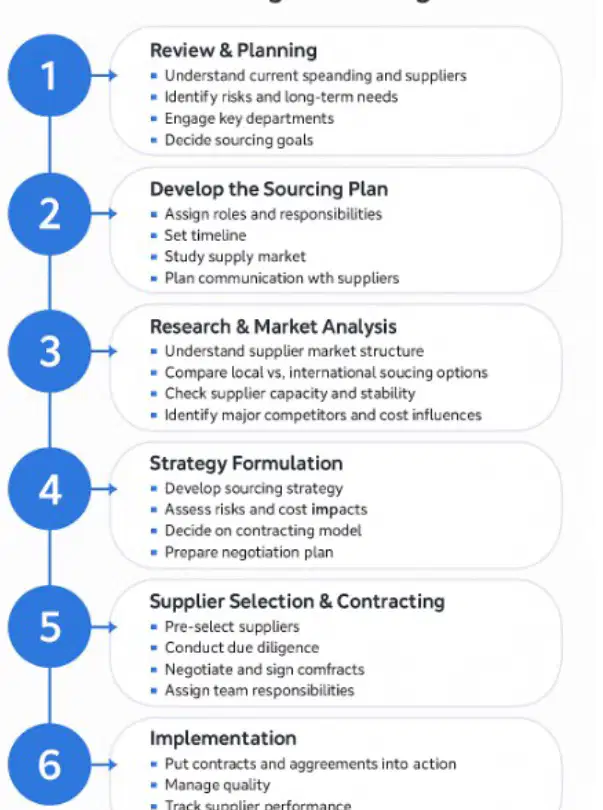
Which phase of the Seven-Phase Strategic Sourcing Process involves understanding current spending and suppliers, identifying risks and long-term needs, engaging key departments, and deciding sourcing goals?
Review & Planning
Supplier Selection
Contract Negotiation
Market Analysis
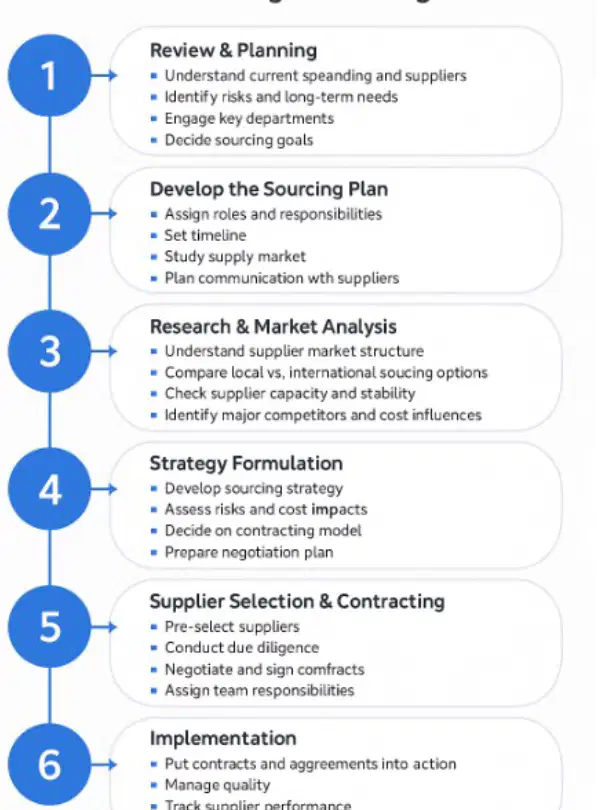
Assigning roles and responsibilities, setting timeline, studying supply market, and planning communication with suppliers are activities in which phase of the Seven-Phase Strategic Sourcing Process?
Develop the Sourcing Plan
Conduct Market Research
Negotiate Contracts
Implement the Sourcing Strategy
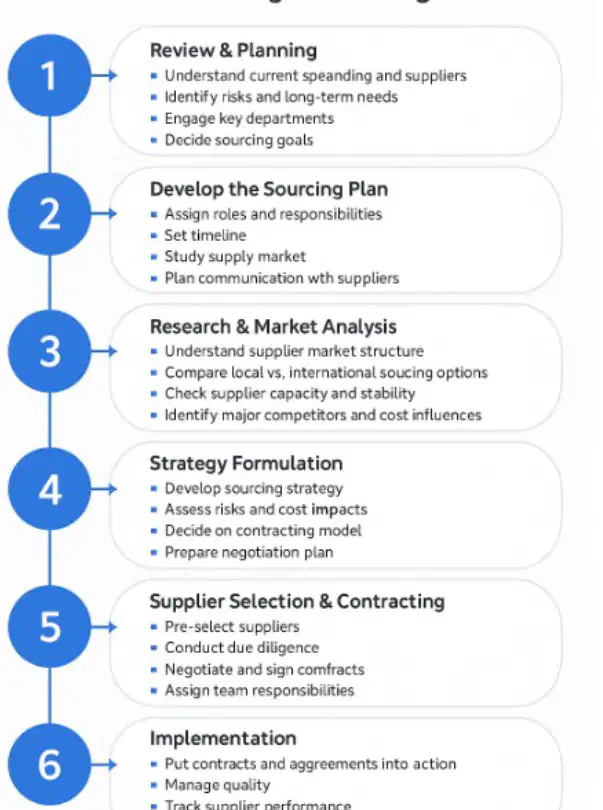
In the Seven-Phase Strategic Sourcing Process, which phase includes understanding supplier market structure, comparing local vs. international sourcing options, checking supplier capacity and stability, and identifying major competitors and cost influences?
Supplier Selection
Contract Negotiation
Research & Market Analysis
Supplier Relationship Management
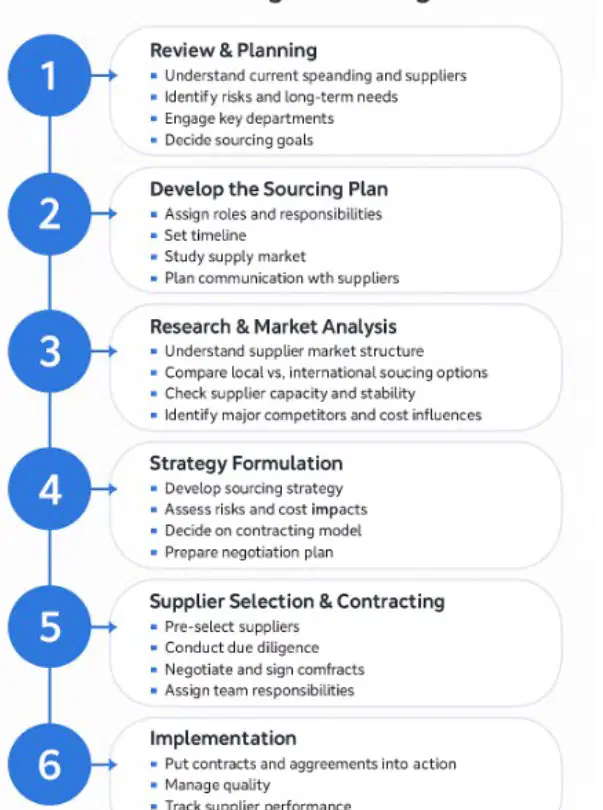
Developing sourcing strategy, assessing risks and cost impacts, deciding on contracting model, and preparing negotiation plan are part of which phase in the Seven-Phase Strategic Sourcing Process?
Strategy Formulation
Market Analysis
Supplier Selection
Contract Management
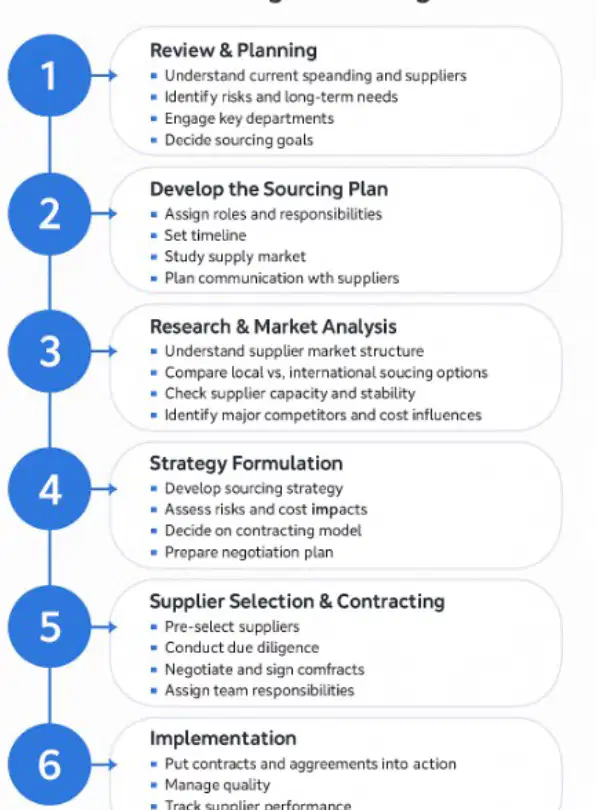
Which phase of the Seven-Phase Strategic Sourcing Process includes pre-selecting suppliers, conducting due diligence, negotiating and signing contracts, and assigning team responsibilities?
Supplier Identification
Supplier Selection & Contracting
Supplier Performance Evaluation
Supplier Relationship Management
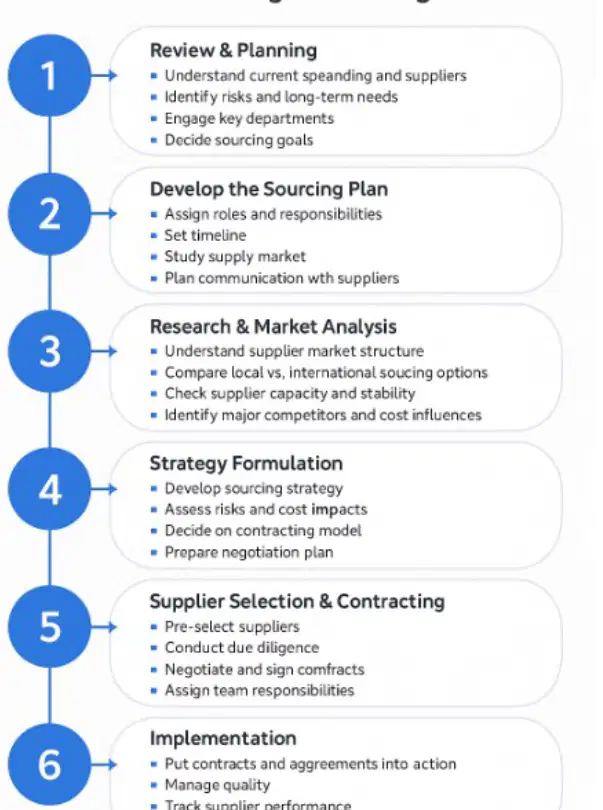
Putting contracts and agreements into action, managing quality, tracking supplier performance, and re-evaluating risks are activities in which phase of the Seven-Phase Strategic Sourcing Process?
Planning
Implementation
Evaluation
Supplier Selection
What does 'Analysis of market conditions' mean in the context of sourcing information?
Studying price trends, supply risks, demand, competition
Reviewing employee performance
Evaluating internal audit procedures
Assessing company branding strategies
Why does 'Analysis of market conditions' matter in sourcing information?
Helps predict cost changes and avoid supply problems
Ensures all suppliers are local
Guarantees immediate delivery of goods
Eliminates the need for contracts
What does 'Directives' mean in the context of sourcing information?
Internal rules, legal policies, regulations, procurement standards
External supplier contracts and agreements
Market trends and competitor analysis
Technical specifications and product manuals
Why do 'Directives' matter in sourcing information?
Ensures sourcing follows laws and company rules
They make information more entertaining
They allow unlimited access to all sources
They eliminate the need for verification
What does 'E-sourcing' mean in the context of sourcing information?
Using digital platforms for supplier selection, bidding, contracts
Manual paperwork for supplier selection
Traditional face-to-face negotiations only
Sourcing only from local suppliers
Why does 'E-sourcing' matter in sourcing information?
Saves time, increases transparency
Reduces product quality
Limits supplier options
Increases manual paperwork
What does 'Locating supplier sources' mean in the context of sourcing information?
Finding potential suppliers worldwide or locally
Negotiating prices with existing suppliers
Transporting goods from suppliers to warehouses
Auditing supplier financial records
Why does 'Locating supplier sources' matter in sourcing information?
Wider choices = better pricing & quality
It reduces the need for market research
It guarantees immediate delivery
It eliminates all risks in procurement
What does 'Supplier assessment' mean in the context of sourcing information?
Evaluating supplier reliability, capacity, quality, financial stability
Negotiating prices with suppliers
Selecting suppliers based solely on location
Ordering products from multiple suppliers
Why does 'Supplier assessment' matter in sourcing information?
Prevents choosing weak or risky suppliers
Ensures faster delivery of products
Reduces the need for contracts
Increases the number of suppliers
What does 'Supplier performance rating' mean in the context of sourcing information?
Scoring suppliers after contracts based on delivery, quality, cost
Evaluating suppliers only before signing contracts
Rating suppliers based solely on their marketing materials
Assessing suppliers based on their location
Why does 'Supplier performance rating' matter in sourcing information?
Helps decide if supplier should continue or be replaced
It increases the supplier's product prices
It determines the supplier's company logo
It changes the supplier's business location
A market is any place or system where ______ and sellers exchange goods, services, or information.
buyers
teachers
drivers
students
Which of the following is NOT a meaning of a market?
A physical or virtual place where buying and selling happen
A group of buyers and sellers for specific products
A place where only sellers meet
Supply & demand of one specific product category
A physical or virtual place where buying and selling happen is an example of a market.
True
False
Markets can change based on which of the following factors?
Inflation
Interest rates
Political conditions
All of the above
Supply & demand of one specific product category is an example of a market. (e.g., steel market, cotton market)
True
False
Overall economic conditions affecting supply & demand can influence markets. Fill in the blank: Markets can change based on ______, interest rates, political conditions, and global trade rules.
inflation
population
technology
weather
Before awarding a contract, buyers should check the supplier’s financial health.
To increase costs
To reduce the risk of future failure
To delay the contract
To avoid legal issues
A strong financial appraisal helps decide whether the supplier is stable.
True
False
A strong financial appraisal helps decide whether payment delays or bankruptcy are unlikely.
True
False
A strong financial appraisal helps decide whether a performance bond (financial guarantee) is needed.
True
False
Financial checks reduce risk but do not ______ it.
eliminate
increase
ignore
create
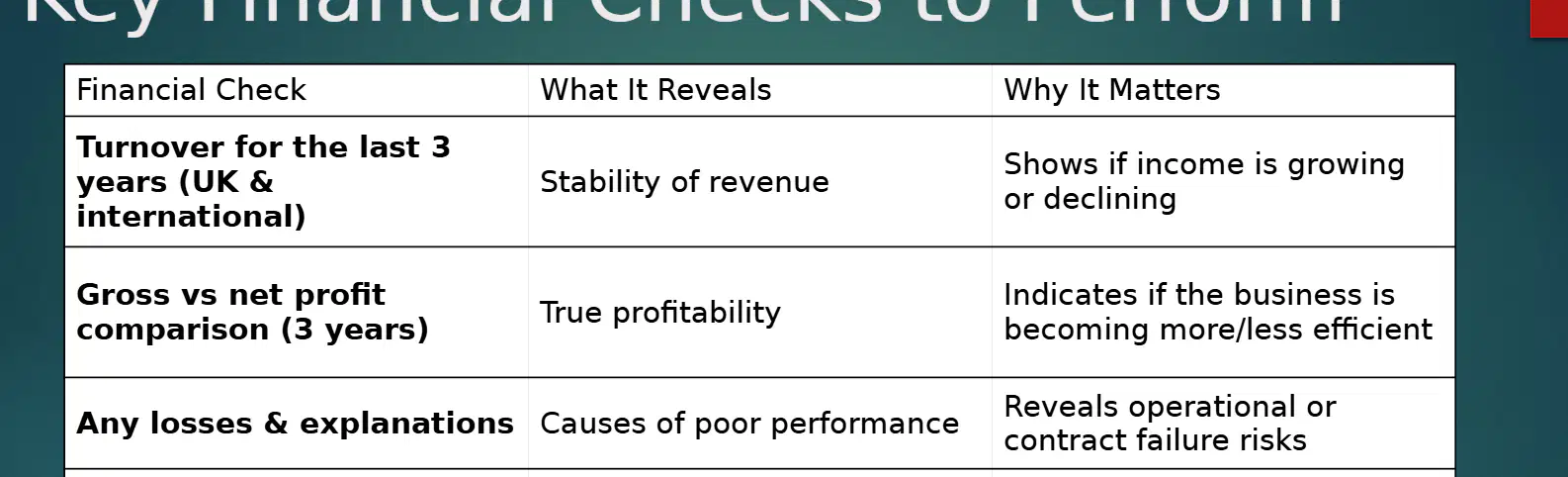
What does checking the 'Turnover for the last 3 years (UK & international)' reveal about a business?
Causes of poor performance
Stability of revenue
Debt burden
Organizational changes
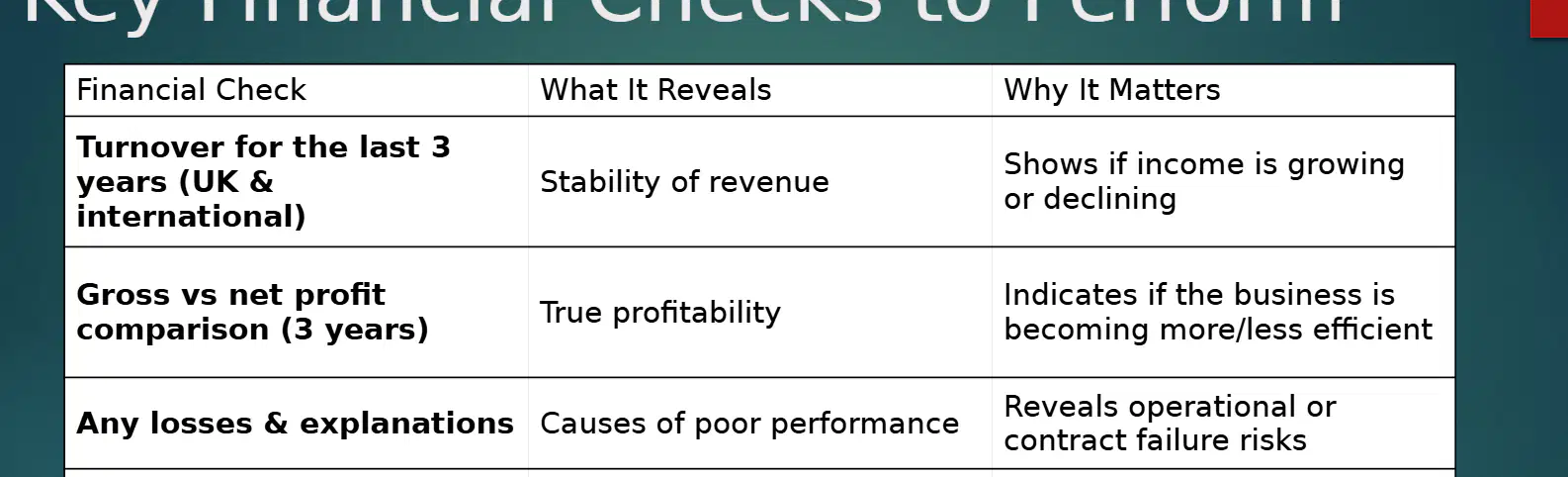
Why does it matter to compare gross vs net profit over 3 years?
Indicates if the business is becoming more or less efficient
Reveals operational risks
Shows if income is growing
May impact supply reliability
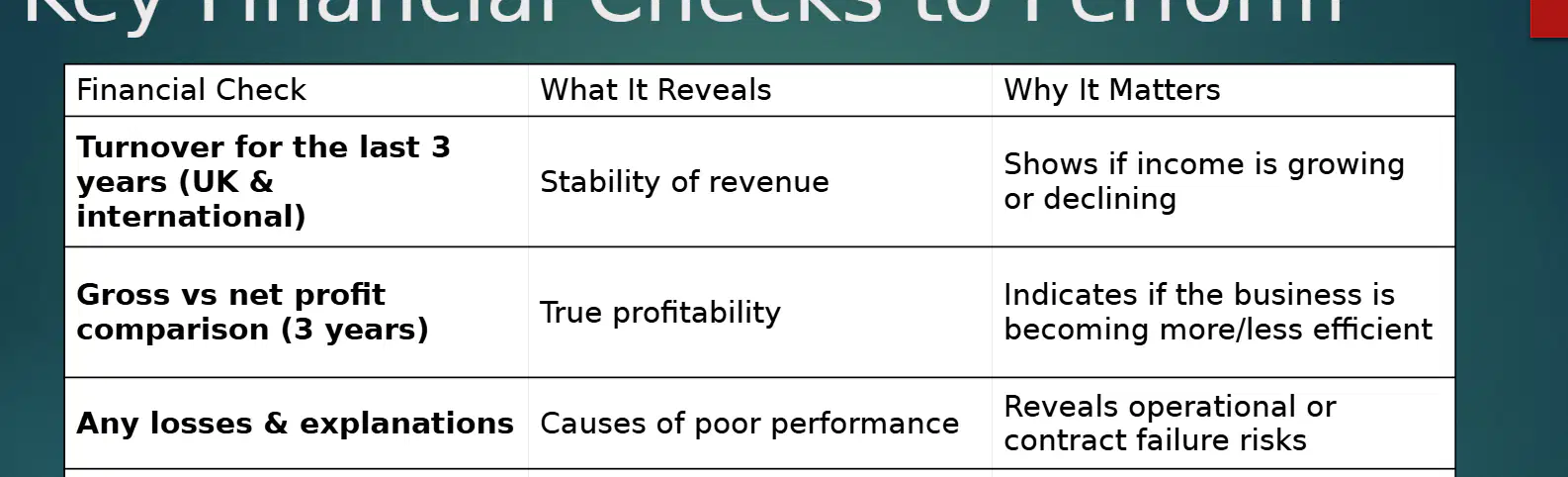
Any losses & explanations in financial checks reveal _________.
Causes of poor performance
Methods of investment
Sources of income
Future profit projections
What does a higher return on capital assets indicate?
A) Stronger financial use of resources
B) High risk of failure
C) Future liabilities
D) Organizational changes
Borrowing levels & debt-to-asset ratio reveal the ________ of a business.
Debt burden
Profitability
Liquidity
Growth potential
Takeover or merger potential may impact _________
Cash flow risk
Supply reliability
Debt burden
True profitability
A pension fund deficit represents what kind of risk for a business?
Causes of poor performance
Future liabilities
Organizational changes
Stability of revenue
Which of the following is NOT one of the five main categories of financial ratios?
Liquidity
Profitability
Revenue management
Asset management
Financial ratios help buyers understand: how healthy a company is, whether it can pay its bills, and how profitable it is.
True
False
Fill in the blank: ________ ratios help determine if a company can pay its short-term debts.
Liquidity
Profitability
Solvency
Efficiency
What does the 'Valuation' financial ratio category help determine?
What is the company worth?
How much profit the company made last year?
What are the company’s current liabilities?
How many employees does the company have?
Fill in the blank: Current assets are _________.
cash, receivables, stock, etc.
buildings, machinery, land, etc.
patents, trademarks, goodwill, etc.
long-term loans, debentures, bonds, etc.
Fill in the blank: Current liabilities are _________?
debts due within 1 year
assets owned by the company
debts due after 5 years
revenues earned in a year
Fill in the blank: The formula for the Current Ratio is Current Ratio = ________ / ________.
Current Assets / Current Liabilities
Current Liabilities / Current Assets
Total Assets / Total Liabilities
Net Income / Current Liabilities
Why is the Current Ratio important?
It shows if a business can pay its bills on time without needing emergency financing, loans, or selling long-term assets.
It shows the profit margin of a company.
It shows the total assets of a company.
It shows the company's market share.
Which of the following is NOT a reason buyers use the current ratio in procurement?
To check if the supplier will survive during the contract
To check if the supplier can fund production until they get paid
To check if the supplier will face cash crises that delay delivery
To check the supplier's marketing strategy
If the current ratio is too low (< 1.0), which of the following might the business do?
Pay suppliers late
Increase profits
Reduce liabilities
Expand operations
If the current ratio is too low (< 1.0), which of the following might the business do?
Delay delivery of goods
Increase sales
Hire more employees
Lower prices
If the current ratio is too low (< 1.0), which of the following might the business need?
Emergency loans
More inventory
New equipment
Higher wages
If the current ratio is too low (< 1.0), the business risks bankruptcy if revenue drops.
True
False
If Current Assets = 400,000andCurrentLiabilities= 600,000, the Current Ratio is ________.
0.67
1.5
0.25
2.0
If the current ratio is 0.67, this means the company can only cover 67% of its immediate obligations.
True
False
What can a current ratio higher than 2.0 signal for a company?
Efficiency
Inefficiency
High profitability
Low debt
Which of the following is a possible reason for a high current ratio?
Holding too much unsold inventory
High sales growth
Low cash reserves
Fast sales cycle
If a company's current ratio is 3.0, what does it mean?
The company has 3 times more assets than needed
The company has 3 times more liabilities than assets
The company is highly efficient
The company has no cash
Fill in the blank: For most industries, a healthy and balanced current ratio is between ____ and _____.
1.5 and 2.0
0.5 and 1.0
2.5 and 3.0
3.5 and 4.0
A current ratio that is too high means the company may have too much idle cash, causing performance to suffer.
True
False
Which of the following is NOT a sign of inefficiency due to a high current ratio?
A) Cash sitting unused
B) Not reinvesting in growth
C) Slow sales cycle
D) High debt repayment
What does a ratio value greater than 2.0 mean for a company?
Strong position
Too high
Acceptable
Dangerous
If a company's ratio value is between 1.5 and 2.0, what does it indicate?
Just enough
Strong position
Dangerous
Acceptable
A ratio value of 1.0 - 1.5 is considered ________.
Acceptable
Unacceptable
Critical
Marginal
What is the interpretation if a company's ratio value is exactly 1.0?
Company has a safe cash buffer
Break-even liquidity → no room for error
Company may not be using cash efficiently
Company cannot pay short-term debts → risk of default
Profitability ratios show how well a company turns revenue into _______.
profit
loss
assets
expenses
Which of the following questions do profitability ratios help answer?
Is the supplier making enough profit to survive?
Are their products priced correctly?
Are costs under control?
All of the above.
Profitability ratios are crucial in procurement because even if a company has liquidity today, long-term supply depends on ongoing ________.
profitability
inventory
expenses
liquidity
Profitability ratios are important only for companies with liquidity.
True
False
What does COGS stand for?
Cost of Goods Sold
Cost of Gross Sales
Cash on Goods Sold
Cost of Goods and Services
Fill in the blank: Gross Profit = _______ – COGS.
Revenue
Assets
Liabilities
Expenses
Which of the following best describes Operating Profit (EBIT)?
A) Gross Profit – Operating Expenses
B) Revenue – COGS
C) EBIT – Interest – Taxes
D) Cost of Goods Sold
Net Profit is calculated as:
EBIT – Interest – Taxes
Gross Profit – Operating Expenses
Revenue – COGS
Cost of Goods Sold
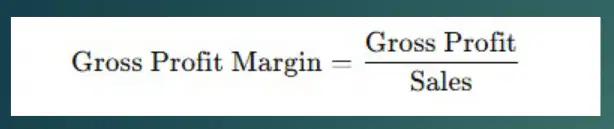
What is the formula for Gross Profit Margin?
Gross Profit / Sales
Sales / Gross Profit
Gross Profit x Sales
Sales - Gross Profit
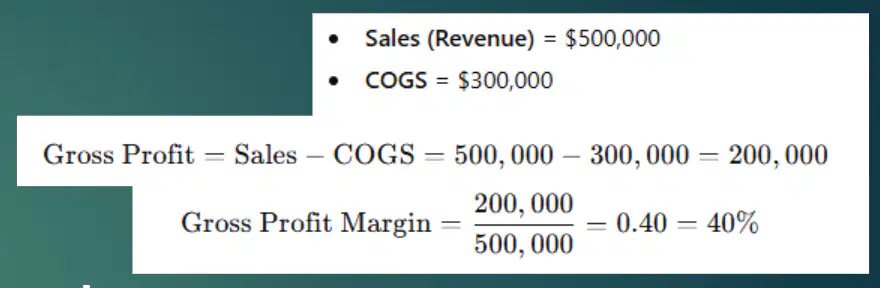
Given Sales (Revenue) = 500,000andCOGS= 300,000, what is the Gross Profit?
$800,000
$200,000
$300,000
$500,000

