
 Worksheets
CHEMISTRY HONORS EXAM SEMESTER 1 PRACTICE
Total questions: 161
Worksheet time: 6hrs 23mins
Which piece of lab equipment will be safe to use when heating a flammable substance?
Bunsen burner
Hot plate
stricker
burette
Which two of Dalton’s theories statements are wrong? (Select all that apply)
atoms are indivisible (subatomic particles exist)
matter is composed of atoms
atoms of a given element are identical (isotopes exist)
different atoms combined in definite proportion to form compounds
In a chemistry lab, what is the proper technique to mix water and acid?
Add water to acid.
Add acid to water.
Heat the water then add acid.
Water and acid should not be mixed.
Identify the type of reaction shown. Mg + AgNO3 → Ag + Mg(NO3)2
synthesis
combustion
single displacement
double displacement
decomposition
What are the two categories of matter?
pure substance and solution
elements and compounds
homogeneous and heterogeneous
pure substance and mixture
Which of the following subatomic particles identifies an element?
proton
electron
neutron
antineutrino
What are two types of pure substance?
elements and solution
elements and compounds
homogeneous and heterogeneous
solution and compounds
Which subatomic particles are inside the nucleus?
protons and neutrons
electrons and protons
neutrons and electrons
protons and antineutrinos
When an electron moves from the excited state to the ground state, which of the following has occurred?
An electron absorbs light.
An electron moves from a lower to a higher energy level.
An electron emits light.
An electron becomes excited.
Which subatomic particle has a negative charge, a negligible mass, and is located outside the nucleus?
proton
neutron
electron
positron
1. When a wavelength increases the frequency________and the energy _________.
decreases, decreases
increases, increases
stays the same, stays the same
decreases, increases
What is an isotope?
atoms of the same element, but different numbers of protons
atoms of the same element, but different numbers of neutrons
atoms the different elements with the same number of protons, but different neutrons
atoms of different elements with different protons, but same number of neutrons
An element has an atomic number of 76. The number of protons and electrons in a neutral atom of the element are ____.
152 protons and 76 electrons
76 protons and 0 electrons
38 protons and 38 electrons
76 protons and 76 electrons
Which is the mass of the electron?
0
1
depending on the element
-1
Which of the following is the use of nuclear science?
generating power
in medical field
military applications
all of the above
An atom is the smallest particle of an element that still has the properties of that element.
True
False
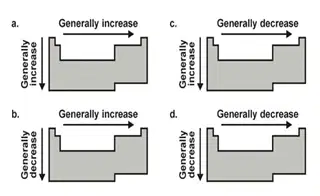
According to the picture, _____ depicts the trend for electronegativity and ______ is the correct one for atomic radii.
a. diagram a, diagram c
b. diagram b, diagram c
c. diagram c, diagram a
d. diagram b, diagram d
In the following reaction, the substance that is reduced is ____ and the one that oxidizes is ____. K(s) + Br2(g) → KBr(s)
b. Br2, K
a. K, Br2
c. KBr, K
d. Br2, KBr
The atomic mass of an element is the ____.
total number of subatomic particles in its nucleus
weighted average of the masses of the isotopes of the element
total mass of the isotopes of the element
average of the mass number and the atomic number for the element
An atom has no electrical charge because:
its subatomic particles are neither positively nor negatively charged
the positively charged neutrons cancel out the negatively charged protons
positively charged protons cancel out the negatively charged electrons
the positively charged protons cancel out the negatively charged neutrons
In a nuclear reaction, changes happen in the nucleus and the identity of your radioactive isotope changes.
True
False
A (n) ____ of energy is the amount of energy required to move an electron from its present energy level to the next higher one.
quantum
frequency
quark
amplitude
Which block is element “Y” most likely found in?
Element Block Characteristics
X s Soft, shiny grey metal; highly reactive, lightweight
Y ? Liquid at room temperature; has the highest electronegativity in its period
Z p Used as a semiconductor due to its electricity-conducting properties
s-block
p-block
d-block
f-block
Polar compounds tend to have _____ melting & boiling points than nonpolar compounds because of ______ intermolecular forces.
higher, stronger
frequency
lower, weaker
Which of the following in order of INCREASING strength?
Dipole-dipole, London Dispersion Forces, Ion-dipole and Hydrogen bond
Hydrogen bond, Ion-dipole, London Dispersion Forces and Dipole-dipole
London Dispersion Forces, Dipole-dipole, Hydrogen bond and Ion-dipole
Hydrogen bond, London Dispersion Forces, Ion-dipole and Dipole-dipole
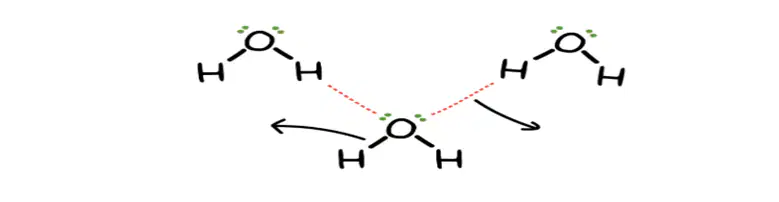
The arrows on the pictures show ________ intermolecular force.
ion-dipole
dipole-dipole
hydrogen bond
London Dispersion
Which of the following is the correct molecular shape and molecule polarity for carbon dioxide.
tetrahedral, non-polar
trigonal pyramidal, polar
linear, non-polar
bent, polar
trigonal planar, non-polar
Which element has the following electron configuration: 1s²2s²2p⁶3s²3p⁶4s²3d¹⁰4p⁶5s²4d³?
scandium (Sc)
niobium (Nb)
vanadium (V)
arsenic (As)
Salt water can be classified as a(n) ________.
element
mixture
compound
alloy
Which of the following subatomic particles identifies an isotope?
proton
neutron
electron
antineutrino
Fusion is defined as the splitting of atoms, but in fission atoms are combined.
True
False
Calcium atoms are ________ than calcium ions.
bigger
smaller
the same size
Fluorine atoms are ______ than fluorine ions.
bigger
smaller
the same size
What is the formula for copper (II) sulfate.
Cu₂SO₄
CuSO₄
CuSO₃
CuS
What is the proper name of CCl₄
monocarbon tetrachloride
carbon chloride
carbon quadrachlorine
carbon tetrachloride
What is the chemical formula formed of aluminum and nitrogen?
AlN
Al₃N₃
Al₂N₃
Al(NO₃)₃
Which of these isotopes has the most influence (abundant) on sodium elements?
sodium-22
sodium-24
sodium-23
they all contribute equal amount
What are the properties of covalent compounds?
mostly gases at room temperature, except Br₂
conducts electricity
has low melting and boiling points
form between two or more non-metals
have weak bonds
Covalent compounds involve ________ valence electrons and ionic compounds ________ their valence electrons.
transferring, sharing
sharing, transferring
A barium atom______ electrons to form a ______, while a fluorine atom ______ electrons to form a(an) ____.
gain, cation, lose, anion
lose, cation, gain, anion
lose, anion, gains, cation
gains, cation, lose, anion
Identify which of the following processes are endothermic.
Melting of ice
Condensation of steam
Freezing of water
Combustion of methane
What makes an atom’s nucleus unstable?
the ratio between n⁰ and p⁺
the ratio between e⁻ and n⁰
the ratio between p⁺, n⁰ and e⁻
an atom’s nucleus cannot get unstable
Which of the following is NOT an example of fission?
energy from a nuclear power plant
radiation therapy
the energy produced by the sun
a nuclear bomb
Which of the following is an attractive force occurring between neighboring molecules holding them together?
intermolecular forces
Van de Graff forces
intramolecular forces
dipole moments
Which of the following states of matter is highly compressible because its particles are very far from each other?
liquid
solid
gas
plasma
According to the law of conservation of mass, when sodium, hydrogen, and oxygen react to form a compound, the mass of the compound is ___ the sum of the masses of the individual elements.
equal to
less than
greater than
either greater than or less than
Which of the following is the correct number of protons, neutrons and electron in a S−2?
16 protons; 16 electrons; 16 neutrons
18 protons; 16 electrons; 16 neutrons
6 protons; 6 electrons; 6 neutrons
16 protons; 18 electrons; 16 neutrons
Which of the following is the correct time-line for the development of atomic models?
Planetary, Nuclear, Plum Pudding, Billiard Ball
Planetary, Plum Pudding, Nuclear, Billiard Ball
Billiard Ball, Nuclear, Plum Pudding, Planetary
Billiard Ball, Plum Pudding, Nuclear, Planetary
Which of the following is the correct time-line for the discovery of subatomic particles?
nucleus, protons, electrons, neutrons
neutrons, electrons, nucleus, protons
electrons, nucleus, protons, neutrons
electrons, protons, nucleus, neutrons

1s22s22p63s23p64s23d10
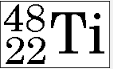


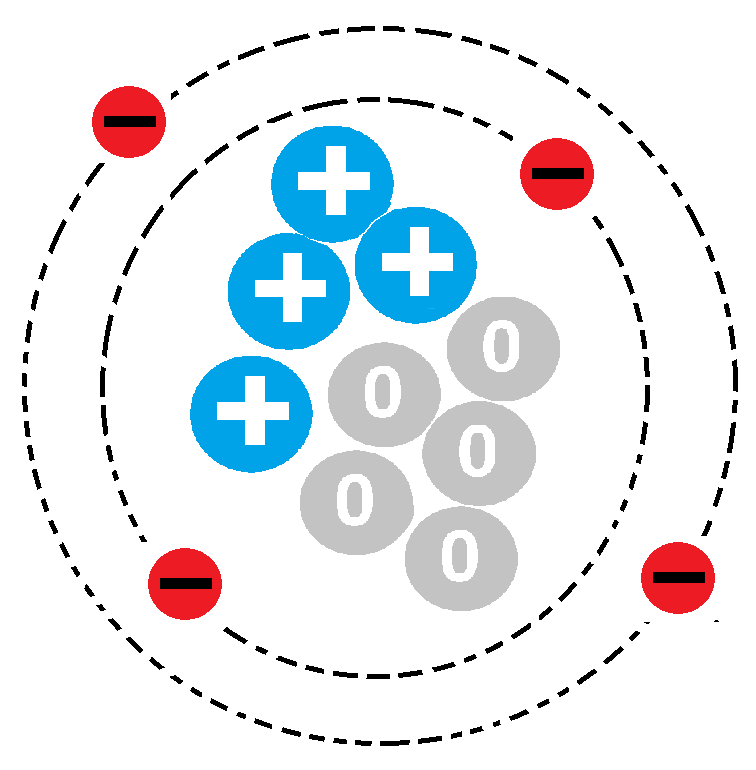

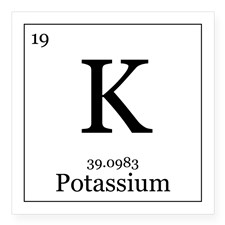
1
19
20

Which color has the longest wavelength?
Yellow
Red
Green
Purple


In the Bohr model, what is the term for the lowest energy level of an electron in an atom?
Excited state
Ground state
Ionized state
Neutral state

Which orbital does the image represent?
s
p
d
f

As you move across from left to right the Periodic Table
The atomic radius_____.


Which element is found in group 6A period 5?
Chromium (Cr)
Tungsten (W)
Molybdenum (Mo)
Lead (Pb)
Match the example with the correct classification of matter.
Element
Magnesium
Compound
Epson Salt (MgSO4)
Mixture
Steel
What is the proper name for the lab technique used to smell a substance?
whiffing
wafting
waffling
waving
Which of the following is NOT evidence of a chemical change?
gas bubbles formation
changes in color
changes in temperature/energy
changes in size of a substance
Name the compound NH4OH
ammonium hydroxide
ammonia oxyhydride
mononitrogen tetraoxihydride
hydrogen nitrate
Name the compound CuO
copper (II) oxide
copper oxide
copper (I) oxide
carbon uranium oxide
What is the formula for calcium phosphide?
Ca3(PO4)2
Ca2P3
Ca3P2
Ca2P
Ca3(PO3)2
Name the compound Fe(NO2)3
Which of the following is a brittle, crystalline solid that conducts electricity when dissolved in water?
SCl3
H2O
CH4
NH4OH
Which of the following compounds has a low melting point?
NH4OH
H2O
K2O
NaH
What is the correct Lewis Dot Structure for ammonia NH3


Which is the correct molecular structure for carbon dioxide?


CO2 has how many lone pairs?
0
1
2
3
4
Carbonate (CO32-) has how many double bonds?
0
1
2
3

What are resonance structures?
Structural the same structures that have different bond arrangements
Structures that are similar, but not the same VSEPR shape
Structures that have been drawn three times
How many bonds can hydrogen make?
Only 1
1 or 2 Bonds
1 bond with 6 electrons on it
It never makes bonds

This could be the dot diagram of
Mg
Cl
C
O

This is a correct dot diagram for neon (Ne)
true
false

What is the noble gas configuration for Cobalt?
[Kr] 4s2 3d7
[Kr] 4s2 4d7
[Ar] 4s2 3d7
[Ar] 4s2 4d7
The periodic table is organized by increasing__________.


Which element is the most reactive?
Silicon
Oxygen
Lithium
Aluminum

Which color on the image of the periodic table corresponds with the halogens.
red
black
blue
orange
Which color on the image of the periodic table corresponds with the noble gases.
red
black
blue
orange
Which color on the image of the periodic table corresponds with the transition metals.
red
black
blue
orange
Which color on the image of the periodic table corresponds with the alkaline earth metals.
yellow
dark yellow
blue/green
teal

What block is represented by the colour red?
p-block
d-block
s-block
f-block
What block is represented by the colour blue?
p-block
d-block
s-block
f-block
What block is represented by the colour green?
p-block
d-block
s-block
f-block
What block is represented by the colour yellow?
p-block
d-block
s-block
f-block
________ arranged the periodic table in order of atomic mass contrary to its modern arrangement by increasing atomic number.
Moseley
Newland
Bohr
Mendeleev
A roman numeral is used to indicate the ______ of common transition metal ions.
number
charge
symbol
protons
Which of the following is NOT a diatomic molecule?
nitrogen
carbon
hydrogen
iodine
The sum of the protons and neutrons in an atom equals the ____.
atomic number
nucleus number
mass number
atomic mass
Which of the following compounds would have the WEAKEST bonds?
CaCO3
CH4
NaCl
FeO
Carbon is able to make so many bonds because:
it is an active non-metal
it has four valence electrons to share and get a full octet
it has six electrons and protons when is neutral
none of the above
Put these in increasing order of electronegativity
F, N, B
Cl or Al?


Order the following in increasing atomic radii:
Fe, K, Br, Ca, As
with 1 being the smaller ...
Br
As
Fe
Ca
K
Which substance would have the weakest intermolecular forces of attraction?
CH4
NaCl
H2O
MgF2
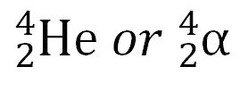
Which type of radiation can be stop by metals, such aluminum?



What can change shape, but not volume?
solid
liquid
gas
Definite volume, but change shape to the shape of the container its in.
Solid
Liquid
Gas
Superfluid
Definite shape and volume. Particles are held close together and vibrate in place.
Solid
Liquid
Gas
Fluid
liquids, gases, solids

What phase of matter is shown here?
Match the following, remember the rules
The algebraic sum of oxidation numbers of a neutral atom (alone atom) or molecule is equal to
0 (zero)
The oxidation number of a polyatomic ion must be equal to:
the charge of the ion
NO3-
The oxidation number is -1
N−3
the oxidation number is -3
The oxidation number is Zero (0)
Cu
4Si + S8 --> 2Si2S4
What type of reaction is this?
Synthesis
Decomposition
Single displacement
Double displacement
AgNO3 + NaCl → AgCl + NaNO3
2HI --> H2 + I2
What type of reaction is C3H8 + 5O2 => 3CO2 + 4H2O?
Subatomic particles with a negative charge
Electrons
Neutrons
Protons
Quarks

What is the center of an atom called?
The headquarters
The centrometer
The hypothesis
The nucleus
How many electrons are shared in a single bond?
4
6
2
0

